Itzik Levy, CEO of vcita explains how to bring your business back to full steam after months of Covid lockdowns.
FM
As the country reopens and businesses unlock their doors and prepare to welcome back their customers, we talk to Itzik Levy, CEO of vcita, the all-in-one business management app for small businesses, to get his perspective on how to bring your business back to full steam after COVID-19 shutdowns.
Is it too soon for small in-person businesses to fire up again?
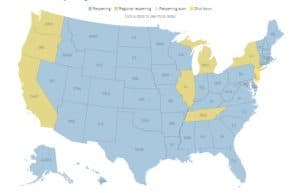
Definitely not! The country is reopening. As you can see in the image below, all 50 states have reopened to some extent, and 42 have fully reopened. By the time you read this, it’s possible that all 50 will have fully reopened.
Bear in mind that your customers expect you to return to business. If you don’t reopen at the right time, they’ll find a different provider to take your place.
How can small businesses reopen successfully?
The first step is to check the restrictions and guidelines for your area to verify what you need to do to reopen. Prepare policies about how and how often you disinfect equipment, deep clean the premises, wipe surfaces, etc. and rearrange the furniture in your premises to support social distancing as needed.
You’ll also need to make sure that your employees have the necessary PPE, or get hold of it for them.
Next, review your budgets. If you were able to get hold of any of the government and SBA’s special Coronavirus relief funding, and you still have some of it left, use it to fund your reopening.
Now may also be a good time to seek a small business loan, if needed, because you’ll probably need to spend money in order to retain your experienced employees, expand your services, and possibly add new services lines.
The government is pushing banks to offer better terms for small business loans.
What should businesses do to attract new and existing customers once more?
Hopefully, you kept in touch with your customers throughout the lockdown period, so you can send each one a personalized message through email and/or text message to invite them to return in person.
Personalized invitations are far more successful than generic messages.
You’ll want to make sure that everyone knows that your doors are open again, so use every marketing channel to advertise that you’re reopening.
I’m talking email newsletters with bold subject lines, social media posts, banner ads on your website, physical banners on your premises, physical flyers, and ads in print publications.
I even recommend that you go all the way and stage a celebratory reopening with some balloons and streamers. You don’t have to spend a lot of money to make a splash.
Video is the most effective marketing format today, so put it to good use to announce your return by shooting short video segments for your social media that show you cleaning the premises, preparing your supplies, sanitizing your equipment, etc.
You can post these videos to your Instagram, Facebook, and WhatsApp stories, and they’ll also help reassure your customers about your commitment to their health.
How can businesses reassure customers that it’s safe to return?
Obviously, it’s no use reopening your doors if your customers don’t feel safe returning to your business, so it’s vital to demonstrate that you’re taking health and safety seriously.
Communicate every measure you are taking, across every channel; email, social media, your website, etc.
Share steps like:
Our employees wear masks at all times
We check our employees’ temperature every day
We deep clean our premises/salon/gym/office every week
We’ve changed our scheduling to limit the number of clients on the premises at once
We check each customer’s temperature
Visually show your commitment by posting images of your staff wearing masks, and placing hand gel on the front desk and throughout the premises.
As a bonus, you can tailor your messaging to high-risk customers (i.e. the elderly, those with preexisting health conditions, those with respiratory problems).
They may not be ready to return in person, or could need extra reassurance, so you could:
Tell them you’ll still be offering your remote service;
Keep in touch with them to track their confidence in returning in person;
Find out what they need to give them the confidence to return. Perhaps they need to know that they are your first appointment of the day, or want to be the only one on the premises? You won’t know until you ask.
What are your “secret tips” for small businesses looking not just to reopen, but to roar back even better than before?
Much depends on the groundwork you put into place during the lockdown, namely keeping contact with your customers and delivering value through different channels.
But there are also specific tips you should follow to expand your business once more.
Make your marketing reassuring and positive. We’ve all had enough of doom and gloom; now your customers want to hear messages of hope and inspiration.
Listen to what your customers want and need, because their needs may have changed during the lockdown.
Offer “post-corona specials” to entice customers. For example, a beautician could offer a post-lockdown beauty special of eyebrow shaping, facial, and mani-pedi; a personal trainer could offer a short post-corona boot camp for people who put on unwanted pounds during the lockdown; etc.
Offer strategic discounts. Even loyal customers could be cash-strapped and hesitant about spending money again, so consider offering a small discount on certain services, or bundling services together as a special offer.
Don’t abandon the work you put into providing remote or online services during the lockdown. This can and should continue as a valuable extra revenue stream.
It might take some hard work at the beginning, and plenty of patience, but hopefully you’ll soon see your efforts pay off as your business bounces back and even become better than before Corona.
As the country reopens and businesses unlock their doors and prepare to welcome back their customers, we talk to Itzik Levy, CEO of vcita, the all-in-one business management app for small businesses, to get his perspective on how to bring your business back to full steam after COVID-19 shutdowns.
Is it too soon for small in-person businesses to fire up again?
Definitely not! The country is reopening. As you can see in the image below, all 50 states have reopened to some extent, and 42 have fully reopened. By the time you read this, it’s possible that all 50 will have fully reopened.
Bear in mind that your customers expect you to return to business. If you don’t reopen at the right time, they’ll find a different provider to take your place.
How can small businesses reopen successfully?
The first step is to check the restrictions and guidelines for your area to verify what you need to do to reopen. Prepare policies about how and how often you disinfect equipment, deep clean the premises, wipe surfaces, etc. and rearrange the furniture in your premises to support social distancing as needed.
You’ll also need to make sure that your employees have the necessary PPE, or get hold of it for them.
Next, review your budgets. If you were able to get hold of any of the government and SBA’s special Coronavirus relief funding, and you still have some of it left, use it to fund your reopening.
Now may also be a good time to seek a small business loan, if needed, because you’ll probably need to spend money in order to retain your experienced employees, expand your services, and possibly add new services lines.
The government is pushing banks to offer better terms for small business loans.
What should businesses do to attract new and existing customers once more?
Hopefully, you kept in touch with your customers throughout the lockdown period, so you can send each one a personalized message through email and/or text message to invite them to return in person.
Personalized invitations are far more successful than generic messages.
You’ll want to make sure that everyone knows that your doors are open again, so use every marketing channel to advertise that you’re reopening.
I’m talking email newsletters with bold subject lines, social media posts, banner ads on your website, physical banners on your premises, physical flyers, and ads in print publications.
I even recommend that you go all the way and stage a celebratory reopening with some balloons and streamers. You don’t have to spend a lot of money to make a splash.
Video is the most effective marketing format today, so put it to good use to announce your return by shooting short video segments for your social media that show you cleaning the premises, preparing your supplies, sanitizing your equipment, etc.
You can post these videos to your Instagram, Facebook, and WhatsApp stories, and they’ll also help reassure your customers about your commitment to their health.
How can businesses reassure customers that it’s safe to return?
Obviously, it’s no use reopening your doors if your customers don’t feel safe returning to your business, so it’s vital to demonstrate that you’re taking health and safety seriously.
Communicate every measure you are taking, across every channel; email, social media, your website, etc.
Share steps like:
Our employees wear masks at all times
We check our employees’ temperature every day
We deep clean our premises/salon/gym/office every week
We’ve changed our scheduling to limit the number of clients on the premises at once
We check each customer’s temperature
Visually show your commitment by posting images of your staff wearing masks, and placing hand gel on the front desk and throughout the premises.
As a bonus, you can tailor your messaging to high-risk customers (i.e. the elderly, those with preexisting health conditions, those with respiratory problems).
They may not be ready to return in person, or could need extra reassurance, so you could:
Tell them you’ll still be offering your remote service;
Keep in touch with them to track their confidence in returning in person;
Find out what they need to give them the confidence to return. Perhaps they need to know that they are your first appointment of the day, or want to be the only one on the premises? You won’t know until you ask.
What are your “secret tips” for small businesses looking not just to reopen, but to roar back even better than before?
Much depends on the groundwork you put into place during the lockdown, namely keeping contact with your customers and delivering value through different channels.
But there are also specific tips you should follow to expand your business once more.
Make your marketing reassuring and positive. We’ve all had enough of doom and gloom; now your customers want to hear messages of hope and inspiration.
Listen to what your customers want and need, because their needs may have changed during the lockdown.
Offer “post-corona specials” to entice customers. For example, a beautician could offer a post-lockdown beauty special of eyebrow shaping, facial, and mani-pedi; a personal trainer could offer a short post-corona boot camp for people who put on unwanted pounds during the lockdown; etc.
Offer strategic discounts. Even loyal customers could be cash-strapped and hesitant about spending money again, so consider offering a small discount on certain services, or bundling services together as a special offer.
Don’t abandon the work you put into providing remote or online services during the lockdown. This can and should continue as a valuable extra revenue stream.
It might take some hard work at the beginning, and plenty of patience, but hopefully you’ll soon see your efforts pay off as your business bounces back and even become better than before Corona.
FP Markets Winner Spotlight 🏆 | Global Broker of the Year 2025 #Trading #Broker #Innovation #Shorts
FP Markets Winner Spotlight 🏆 | Global Broker of the Year 2025 #Trading #Broker #Innovation #Shorts
FP Markets Winner Spotlight 🏆 | Global Broker of the Year 2025 #Trading #Broker #Innovation #Shorts
FP Markets Winner Spotlight 🏆 | Global Broker of the Year 2025 #Trading #Broker #Innovation #Shorts
FP Markets takes the spotlight as Global Broker of the Year 2025 at the Finance Magnates Awards.
Martin Stoilov, Head of Client Experience, shares that trust, innovation, and people played a key role in the company’s success, supported by a strong foundation of integrity and client-centricity.
Following this milestone, FP Markets continues to focus on growth, technology investment, and its core values of transparency and excellence.
👉 Be part of FM Awards 2026: https://awards.financemagnates.com/#nominate
FP Markets takes the spotlight as Global Broker of the Year 2025 at the Finance Magnates Awards.
Martin Stoilov, Head of Client Experience, shares that trust, innovation, and people played a key role in the company’s success, supported by a strong foundation of integrity and client-centricity.
Following this milestone, FP Markets continues to focus on growth, technology investment, and its core values of transparency and excellence.
👉 Be part of FM Awards 2026: https://awards.financemagnates.com/#nominate
FP Markets takes the spotlight as Global Broker of the Year 2025 at the Finance Magnates Awards.
Martin Stoilov, Head of Client Experience, shares that trust, innovation, and people played a key role in the company’s success, supported by a strong foundation of integrity and client-centricity.
Following this milestone, FP Markets continues to focus on growth, technology investment, and its core values of transparency and excellence.
👉 Be part of FM Awards 2026: https://awards.financemagnates.com/#nominate
FP Markets takes the spotlight as Global Broker of the Year 2025 at the Finance Magnates Awards.
Martin Stoilov, Head of Client Experience, shares that trust, innovation, and people played a key role in the company’s success, supported by a strong foundation of integrity and client-centricity.
Following this milestone, FP Markets continues to focus on growth, technology investment, and its core values of transparency and excellence.
👉 Be part of FM Awards 2026: https://awards.financemagnates.com/#nominate
In this video, we review @HolaPrimeMarketsOfficial, a multi-asset forex and CFDs broker offering different account types, trading platforms, and flexible trading conditions.
We cover the broker’s overall offering, including account options, trading environment, platforms like MT4 and MT5, and additional services such as managed accounts and fast withdrawals.
Watch the full video to see if Hola Prime Markets fits your trading needs.
📣 Stay up to date with the latest in finance and trading. Follow Finance Magnates for industry news, insights, and global event coverage.
Connect with us:
🔗 LinkedIn: /financemagnates
👍 Facebook: /financemagnates
📸 Instagram: https://www.instagram.com/financemagnates
🐦 X: https://x.com/financemagnates
🎥 TikTok: https://www.tiktok.com/tag/financemagnates
▶️ YouTube: /@financemagnates_official
#HolaPrime #ForexBroker #CFDTrading #FinanceMagnates #Trading #Forex #BrokerReview
In this video, we review @HolaPrimeMarketsOfficial, a multi-asset forex and CFDs broker offering different account types, trading platforms, and flexible trading conditions.
We cover the broker’s overall offering, including account options, trading environment, platforms like MT4 and MT5, and additional services such as managed accounts and fast withdrawals.
Watch the full video to see if Hola Prime Markets fits your trading needs.
📣 Stay up to date with the latest in finance and trading. Follow Finance Magnates for industry news, insights, and global event coverage.
Connect with us:
🔗 LinkedIn: /financemagnates
👍 Facebook: /financemagnates
📸 Instagram: https://www.instagram.com/financemagnates
🐦 X: https://x.com/financemagnates
🎥 TikTok: https://www.tiktok.com/tag/financemagnates
▶️ YouTube: /@financemagnates_official
#HolaPrime #ForexBroker #CFDTrading #FinanceMagnates #Trading #Forex #BrokerReview
In this video, we review @HolaPrimeMarketsOfficial, a multi-asset forex and CFDs broker offering different account types, trading platforms, and flexible trading conditions.
We cover the broker’s overall offering, including account options, trading environment, platforms like MT4 and MT5, and additional services such as managed accounts and fast withdrawals.
Watch the full video to see if Hola Prime Markets fits your trading needs.
📣 Stay up to date with the latest in finance and trading. Follow Finance Magnates for industry news, insights, and global event coverage.
Connect with us:
🔗 LinkedIn: /financemagnates
👍 Facebook: /financemagnates
📸 Instagram: https://www.instagram.com/financemagnates
🐦 X: https://x.com/financemagnates
🎥 TikTok: https://www.tiktok.com/tag/financemagnates
▶️ YouTube: /@financemagnates_official
#HolaPrime #ForexBroker #CFDTrading #FinanceMagnates #Trading #Forex #BrokerReview
In this video, we review @HolaPrimeMarketsOfficial, a multi-asset forex and CFDs broker offering different account types, trading platforms, and flexible trading conditions.
We cover the broker’s overall offering, including account options, trading environment, platforms like MT4 and MT5, and additional services such as managed accounts and fast withdrawals.
Watch the full video to see if Hola Prime Markets fits your trading needs.
📣 Stay up to date with the latest in finance and trading. Follow Finance Magnates for industry news, insights, and global event coverage.
Connect with us:
🔗 LinkedIn: /financemagnates
👍 Facebook: /financemagnates
📸 Instagram: https://www.instagram.com/financemagnates
🐦 X: https://x.com/financemagnates
🎥 TikTok: https://www.tiktok.com/tag/financemagnates
▶️ YouTube: /@financemagnates_official
#HolaPrime #ForexBroker #CFDTrading #FinanceMagnates #Trading #Forex #BrokerReview
In this video, we review @HolaPrimeMarketsOfficial, a multi-asset forex and CFDs broker offering different account types, trading platforms, and flexible trading conditions.
We cover the broker’s overall offering, including account options, trading environment, platforms like MT4 and MT5, and additional services such as managed accounts and fast withdrawals.
Watch the full video to see if Hola Prime Markets fits your trading needs.
📣 Stay up to date with the latest in finance and trading. Follow Finance Magnates for industry news, insights, and global event coverage.
Connect with us:
🔗 LinkedIn: /financemagnates
👍 Facebook: /financemagnates
📸 Instagram: https://www.instagram.com/financemagnates
🐦 X: https://x.com/financemagnates
🎥 TikTok: https://www.tiktok.com/tag/financemagnates
▶️ YouTube: /@financemagnates_official
#HolaPrime #ForexBroker #CFDTrading #FinanceMagnates #Trading #Forex #BrokerReview
In this video, we review @HolaPrimeMarketsOfficial, a multi-asset forex and CFDs broker offering different account types, trading platforms, and flexible trading conditions.
We cover the broker’s overall offering, including account options, trading environment, platforms like MT4 and MT5, and additional services such as managed accounts and fast withdrawals.
Watch the full video to see if Hola Prime Markets fits your trading needs.
📣 Stay up to date with the latest in finance and trading. Follow Finance Magnates for industry news, insights, and global event coverage.
Connect with us:
🔗 LinkedIn: /financemagnates
👍 Facebook: /financemagnates
📸 Instagram: https://www.instagram.com/financemagnates
🐦 X: https://x.com/financemagnates
🎥 TikTok: https://www.tiktok.com/tag/financemagnates
▶️ YouTube: /@financemagnates_official
#HolaPrime #ForexBroker #CFDTrading #FinanceMagnates #Trading #Forex #BrokerReview
Hola Prime Review: What You Need to Know | Full Breakdown by Finance Magnates
Hola Prime Review: What You Need to Know | Full Breakdown by Finance Magnates
Hola Prime Review: What You Need to Know | Full Breakdown by Finance Magnates
Hola Prime Review: What You Need to Know | Full Breakdown by Finance Magnates
Hola Prime Review: What You Need to Know | Full Breakdown by Finance Magnates
Hola Prime Review: What You Need to Know | Full Breakdown by Finance Magnates
In this video, we review @HolaPrime_Global, a proprietary trading firm offering evaluation programs and performance-based payouts in simulated market environments.
We cover how the challenge model works, including account types, profit splits (up to 95%), trading rules, and what it takes to reach a funded account. You’ll also learn about available platforms like MT4, MT5, cTrader, and more, along with insights into payouts, support, and trading conditions.
Watch the full video to see if Hola Prime fits your trading style.
📣 Stay up to date with the latest in finance and trading. Follow Finance Magnates for industry news, insights, and global event coverage.
Connect with us:
🔗 LinkedIn: /financemagnates
👍 Facebook: /financemagnates
📸 Instagram: https://www.instagram.com/financemagnates
🐦 X: https://x.com/financemagnates
🎥 TikTok: https://www.tiktok.com/tag/financemagnates
▶️ YouTube: /@financemagnates_official
#HolaPrime #PropFirm #Trading #FinanceMagnates #Forex #FuturesTrading #TradingReview #PropFirmReview
In this video, we review @HolaPrime_Global, a proprietary trading firm offering evaluation programs and performance-based payouts in simulated market environments.
We cover how the challenge model works, including account types, profit splits (up to 95%), trading rules, and what it takes to reach a funded account. You’ll also learn about available platforms like MT4, MT5, cTrader, and more, along with insights into payouts, support, and trading conditions.
Watch the full video to see if Hola Prime fits your trading style.
📣 Stay up to date with the latest in finance and trading. Follow Finance Magnates for industry news, insights, and global event coverage.
Connect with us:
🔗 LinkedIn: /financemagnates
👍 Facebook: /financemagnates
📸 Instagram: https://www.instagram.com/financemagnates
🐦 X: https://x.com/financemagnates
🎥 TikTok: https://www.tiktok.com/tag/financemagnates
▶️ YouTube: /@financemagnates_official
#HolaPrime #PropFirm #Trading #FinanceMagnates #Forex #FuturesTrading #TradingReview #PropFirmReview
In this video, we review @HolaPrime_Global, a proprietary trading firm offering evaluation programs and performance-based payouts in simulated market environments.
We cover how the challenge model works, including account types, profit splits (up to 95%), trading rules, and what it takes to reach a funded account. You’ll also learn about available platforms like MT4, MT5, cTrader, and more, along with insights into payouts, support, and trading conditions.
Watch the full video to see if Hola Prime fits your trading style.
📣 Stay up to date with the latest in finance and trading. Follow Finance Magnates for industry news, insights, and global event coverage.
Connect with us:
🔗 LinkedIn: /financemagnates
👍 Facebook: /financemagnates
📸 Instagram: https://www.instagram.com/financemagnates
🐦 X: https://x.com/financemagnates
🎥 TikTok: https://www.tiktok.com/tag/financemagnates
▶️ YouTube: /@financemagnates_official
#HolaPrime #PropFirm #Trading #FinanceMagnates #Forex #FuturesTrading #TradingReview #PropFirmReview
In this video, we review @HolaPrime_Global, a proprietary trading firm offering evaluation programs and performance-based payouts in simulated market environments.
We cover how the challenge model works, including account types, profit splits (up to 95%), trading rules, and what it takes to reach a funded account. You’ll also learn about available platforms like MT4, MT5, cTrader, and more, along with insights into payouts, support, and trading conditions.
Watch the full video to see if Hola Prime fits your trading style.
📣 Stay up to date with the latest in finance and trading. Follow Finance Magnates for industry news, insights, and global event coverage.
Connect with us:
🔗 LinkedIn: /financemagnates
👍 Facebook: /financemagnates
📸 Instagram: https://www.instagram.com/financemagnates
🐦 X: https://x.com/financemagnates
🎥 TikTok: https://www.tiktok.com/tag/financemagnates
▶️ YouTube: /@financemagnates_official
#HolaPrime #PropFirm #Trading #FinanceMagnates #Forex #FuturesTrading #TradingReview #PropFirmReview
In this video, we review @HolaPrime_Global, a proprietary trading firm offering evaluation programs and performance-based payouts in simulated market environments.
We cover how the challenge model works, including account types, profit splits (up to 95%), trading rules, and what it takes to reach a funded account. You’ll also learn about available platforms like MT4, MT5, cTrader, and more, along with insights into payouts, support, and trading conditions.
Watch the full video to see if Hola Prime fits your trading style.
📣 Stay up to date with the latest in finance and trading. Follow Finance Magnates for industry news, insights, and global event coverage.
Connect with us:
🔗 LinkedIn: /financemagnates
👍 Facebook: /financemagnates
📸 Instagram: https://www.instagram.com/financemagnates
🐦 X: https://x.com/financemagnates
🎥 TikTok: https://www.tiktok.com/tag/financemagnates
▶️ YouTube: /@financemagnates_official
#HolaPrime #PropFirm #Trading #FinanceMagnates #Forex #FuturesTrading #TradingReview #PropFirmReview
In this video, we review @HolaPrime_Global, a proprietary trading firm offering evaluation programs and performance-based payouts in simulated market environments.
We cover how the challenge model works, including account types, profit splits (up to 95%), trading rules, and what it takes to reach a funded account. You’ll also learn about available platforms like MT4, MT5, cTrader, and more, along with insights into payouts, support, and trading conditions.
Watch the full video to see if Hola Prime fits your trading style.
📣 Stay up to date with the latest in finance and trading. Follow Finance Magnates for industry news, insights, and global event coverage.
Connect with us:
🔗 LinkedIn: /financemagnates
👍 Facebook: /financemagnates
📸 Instagram: https://www.instagram.com/financemagnates
🐦 X: https://x.com/financemagnates
🎥 TikTok: https://www.tiktok.com/tag/financemagnates
▶️ YouTube: /@financemagnates_official
#HolaPrime #PropFirm #Trading #FinanceMagnates #Forex #FuturesTrading #TradingReview #PropFirmReview
Axi Winner Spotlight 🏆 | Global Most Innovative Broker 2025 #Innovation #Trading #Fintech #Broker
Axi Winner Spotlight 🏆 | Global Most Innovative Broker 2025 #Innovation #Trading #Fintech #Broker
Axi Winner Spotlight 🏆 | Global Most Innovative Broker 2025 #Innovation #Trading #Fintech #Broker
Axi Winner Spotlight 🏆 | Global Most Innovative Broker 2025 #Innovation #Trading #Fintech #Broker
Axi Winner Spotlight 🏆 | Global Most Innovative Broker 2025 #Innovation #Trading #Fintech #Broker
Axi Winner Spotlight 🏆 | Global Most Innovative Broker 2025 #Innovation #Trading #Fintech #Broker
Axi takes the spotlight at the Finance Magnates Awards, winning Global Most Innovative Broker 2025.
Olivia Xenofontos and Ivanna Openko share how the team will feel: proud, motivated, and ready to keep delivering.
They also describe the night as well-organized, focused, and enjoyable for all.
👉 Be part of FM Awards 2026.
Axi takes the spotlight at the Finance Magnates Awards, winning Global Most Innovative Broker 2025.
Olivia Xenofontos and Ivanna Openko share how the team will feel: proud, motivated, and ready to keep delivering.
They also describe the night as well-organized, focused, and enjoyable for all.
👉 Be part of FM Awards 2026.
Axi takes the spotlight at the Finance Magnates Awards, winning Global Most Innovative Broker 2025.
Olivia Xenofontos and Ivanna Openko share how the team will feel: proud, motivated, and ready to keep delivering.
They also describe the night as well-organized, focused, and enjoyable for all.
👉 Be part of FM Awards 2026.
Axi takes the spotlight at the Finance Magnates Awards, winning Global Most Innovative Broker 2025.
Olivia Xenofontos and Ivanna Openko share how the team will feel: proud, motivated, and ready to keep delivering.
They also describe the night as well-organized, focused, and enjoyable for all.
👉 Be part of FM Awards 2026.
Axi takes the spotlight at the Finance Magnates Awards, winning Global Most Innovative Broker 2025.
Olivia Xenofontos and Ivanna Openko share how the team will feel: proud, motivated, and ready to keep delivering.
They also describe the night as well-organized, focused, and enjoyable for all.
👉 Be part of FM Awards 2026.
Axi takes the spotlight at the Finance Magnates Awards, winning Global Most Innovative Broker 2025.
Olivia Xenofontos and Ivanna Openko share how the team will feel: proud, motivated, and ready to keep delivering.
They also describe the night as well-organized, focused, and enjoyable for all.
👉 Be part of FM Awards 2026.
Recognition that matters.
Built on transparency.
Driven by the industry.
The Finance Magnates Awards 2026.
Nominations are now open.
🔗 https://awards.financemagnates.com/?utm_source=SM&utm_medium=social&utm_campaign=recognition-matters
Recognition that matters.
Built on transparency.
Driven by the industry.
The Finance Magnates Awards 2026.
Nominations are now open.
🔗 https://awards.financemagnates.com/?utm_source=SM&utm_medium=social&utm_campaign=recognition-matters
Recognition that matters.
Built on transparency.
Driven by the industry.
The Finance Magnates Awards 2026.
Nominations are now open.
🔗 https://awards.financemagnates.com/?utm_source=SM&utm_medium=social&utm_campaign=recognition-matters
Recognition that matters.
Built on transparency.
Driven by the industry.
The Finance Magnates Awards 2026.
Nominations are now open.
🔗 https://awards.financemagnates.com/?utm_source=SM&utm_medium=social&utm_campaign=recognition-matters
Recognition that matters.
Built on transparency.
Driven by the industry.
The Finance Magnates Awards 2026.
Nominations are now open.
🔗 https://awards.financemagnates.com/?utm_source=SM&utm_medium=social&utm_campaign=recognition-matters
Recognition that matters.
Built on transparency.
Driven by the industry.
The Finance Magnates Awards 2026.
Nominations are now open.
🔗 https://awards.financemagnates.com/?utm_source=SM&utm_medium=social&utm_campaign=recognition-matters