

As broker and prop firm technology stacks grow, one problem keeps reappearing: systems collect more data but don't always use it quickly or consistently enough to support good decisions.
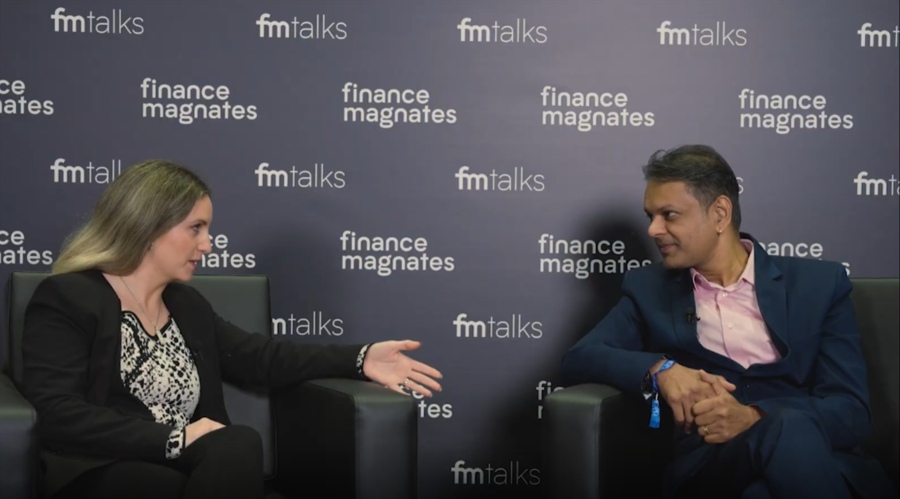
In an executive interview at iFX Dubai, Andrea Badiola Mateos spoke with Sunil Jadhav, CTO at Altima, about the operational and infrastructure challenges facing CFD brokers and prop firms, and how Altima is addressing them through a unified, real-time architecture.
Jadhav pointed to two core issues: delayed data processing and fragmented systems with separate sources of truth. His argument was straightforward: broker and prop firm teams need systems that can react to "live data" and "real events," not delayed snapshots passed between disconnected tools.
A familiar market and a strong event turnout
Jadhav began on a positive note, saying the expo had seen strong footfall and describing Dubai as an important market for Altima.
He then shifted to a broader issue in the operations of brokers and prop firms. As firms add more products and tools across trading, CRM, risk, and client management, the challenge is no longer only collecting data. It ensures that data is processed quickly and shared consistently.
The first issue: delayed data processing
Jadhav said trading platforms generate large volumes of data, but many surrounding systems, including CRM and risk management tools, still process it too slowly.
According to him, many of these systems work in a batch-processing model rather than reacting to live events. That delay can create structural problems because operational actions may be taken after the trading situation has already changed.
"The speed at which the data is being generated requires it to be operated in real time. Peripheral products like risk management systems or CRM really need to operate on live data, real events."
Jadhav said this matters because delayed processing can lead to incorrect decisions across the business, especially when firms are dealing with fast-moving trading activity and risk thresholds.
The second issue: fragmented systems and conflicting data
The second challenge Jadhav highlighted was data fragmentation.
He said many firms use multiple applications, each with its own database and internal logic. In practice, this means different systems can end up working with different versions of the same information.
"Today, the different peripheral products all have their own source of truth. They all maintain their own database or data, and none of these systems is really talking to each other in a very coherent way."
For Jadhav, this creates a decision-making problem. A user operating in one system may be acting on information that does not fully match what another team or platform sees at the same moment.
Altima’s answer: one shared event backbone
To address both issues, Jadhav described Altima’s architecture as a unified event layer that distributes the same events across products in real time.
The goal, he said, is to ensure that CRM, risk tools, IB systems, and other modules can all react to the same signals with the same context.
"Altima essentially is trying to solve these problems by having one single backbone of event mechanism, giving the same events to all the peripheral products at the same time."
This is central to Altima's stack positioning. Rather than offering standalone tools, Jadhav described a connected ecosystem designed to support more consistent operational decisions.
A modular but unified product ecosystem
Jadhav described Altima’s ecosystem as "modular yet unified," with products that can work as modules while sharing the same intelligence and event-management layers.
In the interview, he referenced several products, including:
Altima CRM
Altima Prop
Altima IB
Altima VOIP
Altima Trader
"Altima ecosystem is modular yet unified. All of these products are linked to each other. They share the same intelligence layer and the same event management layer."
His emphasis was on interoperability. The products are designed to complement each other through shared event flows rather than operate as isolated systems.
Altima CRM: a risk-aware CRM
A major focus of the interview was Altima CRM.
Jadhav said many CRMs on the market are primarily used as record-keeping tools and offer limited insight into trade activity or compliance-related signals. He positioned Altima CRM differently, describing it as a risk-aware product that continuously profiles and scores users.
"Altima CRM essentially is a risk-aware product. At the same time, Altima CRM is constantly profiling and scoring the users."
He said that when an event is generated in one part of the stack, it can be shared across CRM, the trading platform, IB systems, and VIP tools, helping users across the business make better-informed decisions.
Altima CRM is also featured in Finance Magnates' Best CRMs for Forex Brokers in 2026 comparison, which examines broker CRM and back-office options for different operating needs.
Altima Prop and built-in risk management
Jadhav also highlighted Altima Prop, which he described as a comprehensive prop operating system comprising a CRM module, a prop engine, and a risk management module.
He said Altima goes further by embedding risk management directly into the prop solution, rather than relying on a separate tool. Configurability was a key differentiator, he emphasised.
"As far as the risk management module within Altima Prop is concerned, it is highly configurable, and you can even tweak it as you go forward."
Jadhav added that firms can use historical data and use cases to adjust thresholds over time, which he said can reduce manual intervention and improve flexibility.
A practical example of event-driven coordination
To show how the ecosystem works in practice, Jadhav gave a margin-related use case.
He said that if a trader’s balance falls below a threshold or reaches a low-margin level, an event can be automatically generated and shared across the Altima ecosystem. In the example he described, the event is sent to Altima VOIP and another module, AltimaCRM, which then places a call and connects an agent with the trader.
Even with one product reference, the use case illustrates Altima’s main point: faster coordination across systems and teams through live event sharing.
Final Takeaway
Jadhav’s message at iFX Dubai was clear. For brokers and prop firms, the challenge is not only managing high volumes of trading data but also ensuring that data is processed and shared across systems in real time.
Altima’s response is a connected, event-driven infrastructure that aligns CRM, prop, risk, IB, and related tools through a shared backbone. As firms continue to expand their technology stacks, that kind of synchronised architecture may become increasingly important for day-to-day operations and decision quality.
About Altima
Altima is a trading technology provider focused on building a modular but unified product ecosystem for CFD brokers and prop firms. In the interview, Sunil Jadhav referenced products including Altima CRM, Altima Prop, Altima IB, and VIP and trader-related tools.
According to Jadhav, Altima’s core approach is a shared intelligence layer and event-management framework designed to reduce delayed processing, improve cross-system coordination, and support more consistent operational and risk decisions.


