

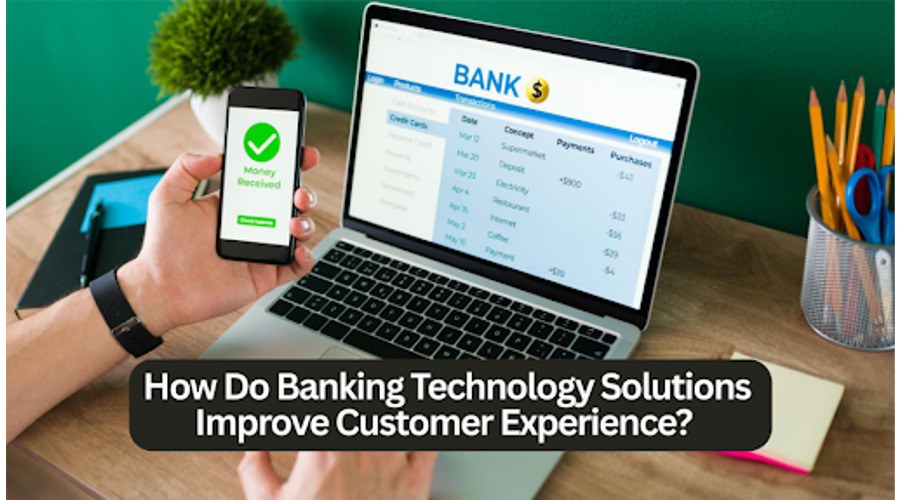
Customers who are digital first demand smart apps, real-time dealings, custom advice on finances, and a seamless experience through the channel. As a result, with expectations increasing, banks are being urged to provide an experience that is smooth, reactive, and personalized. In this context, an industry statistics report established that more than 80% of financial institutions that prioritize customer experience report stronger customer loyalty.
However, most banks continue to work with old systems and disjointed customer experiences that restrict flexibility and customization. Such isolated platforms, fragmented data, and low-tech operations cause stale points at key contact points, such as onboarding and service requests.
To address these challenges, banking technology solutions grant banks the ability to upgrade platforms, unlock insights through data, and automate customer-centric experiences.
This article discusses how banking technology solutions enhance customer experience across digital platforms.
1. Modernizing Digital Banking Platforms for Seamless Experiences
Traditional banking systems do not always allow the provision of uniform digital experiences. As a result, monolithic core systems and highly bound applications slow innovation and produce more disjointed customer experiences. In turn, these restrictions create inconsistent interfaces, repeated data entry, and cross-channel delays.
In this context, banking technology solutions built on cloud-based and modular architectures provide a practical modernization path. Cloud platforms support faster development and deployment, while modular services allow banks to enhance individual capabilities.
Modern digital platforms also shape how customers perceive ease of use and reliability. A financial UX blog analysis highlights that well-designed digital banking experiences reduce friction across everyday interactions. It also significantly improves customer trust and long-term engagement by creating intuitive, consistent journeys across channels
2. Enabling Hyper-Personalization Through Data and AI

In banking, personalization has become a key area of customer experience. Customers expect relevant offers and proactive guidance that reflects their financial behavior and goals. Hence, this needs deeper than outward categorizing.
Unified customer data platforms consolidate transactional, behavioral, and interaction data into a single view. Artificial intelligence and machine learning models then analyze this data to generate actionable insights. Banks can use these insights to recommend tailored products, deliver contextual alerts, and adjust engagement strategies in real time.
As an example, a retail bank might recognize a trend that indicates that a client always keeps the account balances high but rarely invests. In response, the bank provides a personalized investment recommendation based on the risk profile of the customer using AI-driven insights. As a result, the relevant and timely suggestion enhances interaction and uptake of the product without pushing their marketing.
3. Streamlining Customer Onboarding and Journeys
Onboarding sets the tone for the entire banking relationship. Lengthy forms, manual checks, and delayed approvals often lead to abandonment and frustration. Technology-driven onboarding addresses these challenges directly.
Onboarding digital platforms is automated to enable customers to open an account with a minimum of effort. Since identity authentication is carried out in real-time, document processing is automated, and embedded compliance checks are performed. As a result, this minimizes processing time, and regulatory standards are not compromised.
For instance, a small business owner who makes an application for a new business account online benefits from these automated processes. The compliance and verification checks are done in minutes. Thereby providing the same-day approval. Hence, the business gains immediate access to banking services, establishing trust from the first interaction.
4. Enhancing Payments and Transaction Experiences

One of the most common banking operations is payments. Failure in fast processing or being incapable of making payments may destroy trust among customers. Therefore, payment systems in the modern world make them faster, transparent, and reliable.
The payment services of the real-time allow direct transfer and immediate update of the balance. Enriching payment information with a more precise description of transactions and contexts lets a customer see their spending habits. These capabilities enhance convenience, besides helping to make smarter financial decisions.
Operationally, intelligent payment processing results in fewer exceptions and human interventions. Customers have less risk of problems clearing cheques, and banks are more efficient and scalable.
5. Improving Service Delivery with AI and Automation
Digital adoption has changed the expectations of customer service. Customers desire to see immediate replies, reduced waiting periods, and the ubiquity of support channels. The key aspects of fulfilling these expectations are AI and automation.
AI-based chatbots and virtual assistants have constant queries like checking your balance, transaction details, or managing your card. Therefore, complex topics are steered to the applicable service teams in full context. This method enhances the levels of resolution through intelligent automation. Moreover, self-service features give customers the power and enhance service efficiency.
The ideal mix of human capabilities and robotization is a good service strategy. Technology leads to speed in response, whereas human agents handle subtle or delicate interactions. Consequently, this balance boosts interest and service delivery.
6. Strengthening Security, Compliance, and Trust
Customer experience in banking is based on trust. The customers want powerful security controls without unnecessary hassle. Both goals are supported by advanced security technologies.
The use of AI in fraud detection considers transactions on a real-time basis to detect anomalies and minimize false positives. Constant surveillance enhances regulatory compliance through automated assessment and policy compliance. Hence, protected data management keeps the data of the customers secure and personalized.
When security is running smoothly in the background, the customers get fewer disruptions. Hence, the level of trust in digital channels grows, which promotes wider usage of online and mobile banking services.
7. Driving Continuous CX Innovation Through Fintech Collaboration
Customer expectations continue to evolve, making continuous innovation essential.
Open banking frameworks, APIs, and fintech partnerships enable banks to expand capabilities quickly and cost-effectively. Cloud native architecture embraces quick integration with third parties, such as digital wallets and financial planning solutions. Teamwork enhances quick market product releases and enables banks to react more quickly to market dynamics. Hence, the customers enjoy enhanced experiences due to digital modernity.
Overall, by embracing ecosystem-driven innovation, banks maintain relevance while preserving control over core customer relationships.
Conclusion
Technology solutions in banking enhance customer experience with the sophistication of digital platforms, streamlining customer journeys, and optimizing payments. Every capability adds to a unified end-to-end experience to satisfy the increasing customer expectations.
Moreover, banks that integrate AI and digital platforms strategically incorporate customer experience in all their interactions. Rather than approaching it as a standalone program. Hence, adopting intelligent, integrated technology will define the next level of customer-centric financial services.
The strategic institutions that engage in investment would be in a better position to offer smoother, secure, and customized banking experiences.


