
The week brought significant developments across retail trading, fintech and financial regulation. Prop Firm Match faced a growing backlash from prop trading firms over its affiliate tracking practices, while eToro agreed to acquire an Argentine fintech business as it continued expanding through acquisitions.
Capital.com also secured a new regulatory licence in Singapore and appointed a former IG executive to lead its local operations.
London's trading industry is coming home!
Regulatory developments included new UK initiatives covering quantum computing and financial crime, alongside changes to transaction reporting requirements. South Africa's regulator also made its withdrawal of Mixirite's licence final.
Meanwhile, artificial intelligence remained a key industry topic, with discussions focusing on how brokers attract customers through AI search and whether investment in the technology can deliver a lasting competitive advantage.
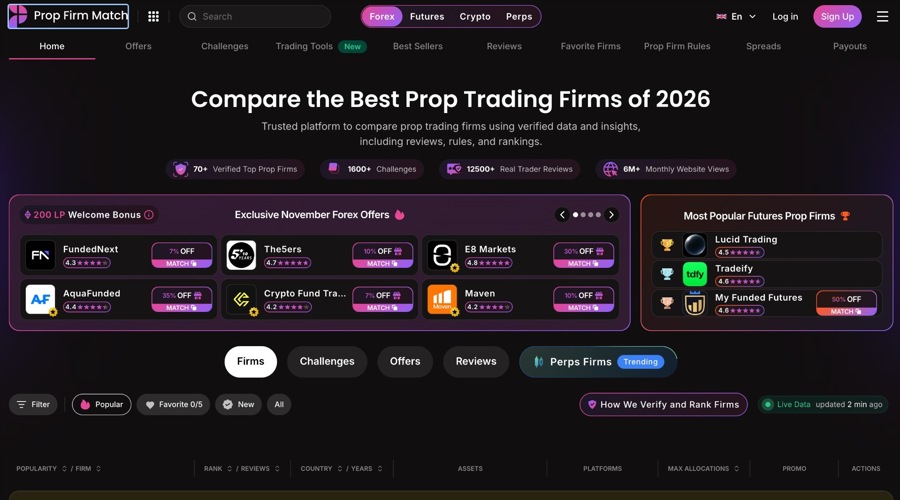
Prop Firm Match Loses Around 21 Partners Over Affiliate Redirect Controversy
Prop Firm Match has lost around 21 prop trading firm partners after acknowledging that clicks on firm profiles and promotional codes opened partner websites through its affiliate links. The exits include Apex Trader Funding, Tradeify, Lucid Trading, Goat Funded Trader, FundingPips and Blue Guardian.
The platform said it disabled the functionality on 29 October and estimated that the potential impact on referral attribution represented a low single-digit percentage of its commissions.
Three years ago, Prop Firm Match launched. Two traders saw a gap in the market for a platform providing simplicity and transparency for prop firm traders. We developed new features not seen before: verified reviews, payout tracking across all payment methods, live spreads, rule overviews, simple ways to compare prop firms, and prop firm expos. Three years in, PFM has had over 25M website visits, reached over 370,000 members, and has given out free challenge accounts worth over $1,400,000 to the PFM community. Over 100 firms apply to be listed each year and go through one of the industry’s most rigorous compliance processes. We also got something wrong. Until yesterday, when someone clicked on a firm or a code on our site, a new tab would open the firm’s site through our affiliate link. This should not have happened. We take full responsibility for it. We have reached out to each of our partners to review this together and reconcile any inaccuracies. We respect any decisions firms have made based on this. We truly appreciate the partners and traders who value the relationship we have built together over the years. We promise you that we will learn from this, hold ourselves to the highest standard, and come back stronger and better.
— Prop Firm Match (@PropFirmMatch) October 31, 2026
However, a source close to the matter said misattributed sales could have appeared as ordinary referrals because tracking cookie periods varied between firms. FundingPips' CEO also said his company had identified the practice in August. The platform has invited current and former partners to review its findings.
eToro Agrees to Acquire Argentine Fintech LB Finanzas
eToro has agreed to acquire Argentine financial app LB Finanzas for an undisclosed amount, marking its fourth acquisition of 2026. The transaction remains subject to customary closing conditions and is intended to establish a stronger local presence in Latin America.
- Finance Magnates Awards 2026 Brings Financial Industry Together in Limassol
- FINRA Fines Webull $4.2M After 120K Accounts Bypassed Proper ID Checks
- South Africa’s Regulator Makes Mixirite Licence Withdrawal Final Over “Sales Misconduct”
LB Finanzas operates an investment platform offering access to equities, cryptocurrencies and payment services. It is regulated by Argentina's National Securities Commission and Central Bank. The acquisition adds local operations and regulatory infrastructure to eToro's regional expansion plans.
Earlier this year, the company agreed to acquire crypto wallet provider Zengo, completed its purchase of Israeli exchange Bit2C and announced an agreement to acquire US brokerage TradeZero, which is expected to close in 2027.
Capital.com Secures Singapore Licence

Capital.com has received a licence from the Monetary Authority of Singapore (MAS), allowing its local entity to offer securities, collective investment schemes and over-the-counter derivatives, including contracts for differences (CFDs).
The broker plans to begin onboarding clients in early 2027. It has appointed Tony Lim as Chief Executive of its Singapore operations. Lim previously spent nine years at IG Group's Singapore division as CEO and Managing Director. The appointment follows Capital.com's recent regulatory expansion in South Africa and its recruitment of local executives in Brazil and Chile.
The broker has also been exploring licensing opportunities in markets including Japan and Turkey as it expands its international operations.
FCA Invites Financial Firms to Test Quantum Computing

The UK Financial Conduct Authority (FCA) has invited financial firms, quantum computing providers and research institutions to test whether quantum technology can improve money laundering and fraud detection.
Participants will join its new Quantum Experimentation Group and work with an artificial dataset developed by the regulator. The trials will compare quantum machine learning approaches with conventional techniques to address financial crime problems identified by the FCA. Registration closes on 31 December, with the programme scheduled to begin in the first quarter of 2027.
The initiative follows the regulator's wider preparations for quantum computing, including a separate warning about the need to adopt encryption capable of withstanding future quantum attacks.
South Africa Makes Mixirite Licence Withdrawal Final
South Africa's Financial Sector Conduct Authority (FSCA) has made the withdrawal of Mixirite's financial services licence final, citing material breaches of financial sector laws and failures in client protection.
The decision takes immediate effect after the regulator concluded that the company no longer meets the requirements to operate as a financial services provider. The investigation found that Mixirite's agents used aggressive sales techniques, while unauthorised individuals provided financial advice.
The regulator also identified promises of unrealistic or guaranteed returns, inadequate suitability assessments and governance failures. Mixirite did not oppose the final withdrawal but disputed the findings. Separately, the FSCA expanded its investigation to include four other companies: Complyxpert, Start Stream, Rayn Investments and Advice 365.
Brokers Face New Challenges as AI Chatbots Change Customer Discovery
Artificial intelligence chatbots are changing how retail traders discover and compare brokers, with industry experts warning that strong Google rankings no longer guarantee visibility. Andy Francos, Growth Consultant at Pepperstone, said AI assistants increasingly provide prospective customers with shortlists before they visit individual broker websites.
Wordflow founder Zay Yang highlighted that regulators, comparison platforms and independent media frequently appear ahead of brokers' own websites in AI-generated recommendations. The experts said brokers need accurate, accessible information about licensing, fees and account offerings, preferably presented in plain text rather than scripts or PDFs.
Third-party coverage and credible industry references are also becoming important as AI search engines increasingly determine which brands users consider.
AI Investment Could Raise Costs Without Giving Retail Brokers a Lasting Advantage
Artificial intelligence could help retail brokers improve customer acquisition, automate support and provide more sophisticated trading tools, but the technology may not create a lasting competitive advantage, according to a Finance Magnates analysis by Paul Golden.
Natural language screeners, portfolio analysis and automated execution are among the features changing the trading experience. However, widely available AI models could make these services difficult to differentiate.
Brokers also face integration, monitoring and compliance costs, while increased customer engagement does not necessarily translate into better retention or profitability. The analysis highlights another challenge: as traders increasingly use independent AI agents to compare platforms and execute transactions, brokers could lose control of customer relationships to technology providers.
FCA Revises UK Transaction Reporting Rules
The FCA has finalised changes to the UK's MiFIR transaction reporting framework, aiming to reduce industry costs by more than £100 million annually. The reforms will cut reportable fields from 65 to 52, remove around seven million instruments traded exclusively on EU venues from UK reporting requirements and eliminate duplicate reporting of FX derivatives under MiFIR.
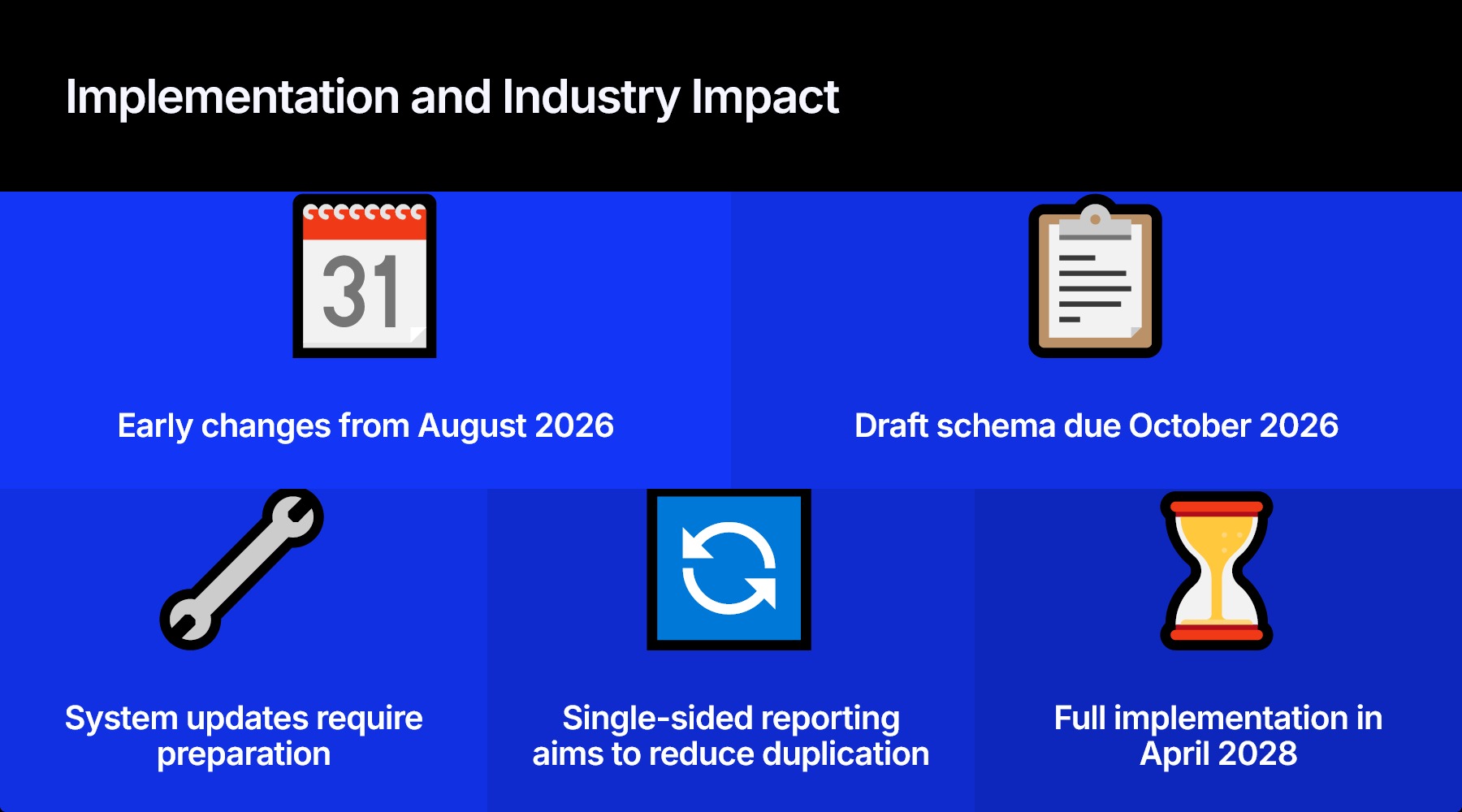
The maximum period for correcting historical reporting errors will also fall from five years to three. The regulator estimates that firms currently spend £493 million annually on transaction reporting. However, implementation will require changes to reporting systems, data management and validation processes.
Quinn Perrott, Co-CEO of TRAction, highlights the operational work firms will need to undertake to adapt to the revised requirements. The new regime will become fully effective on 3 April 2028, although some changes can be adopted earlier.


