Kevin Rodgers' recently published book tells the tale of change, computers and perpetual crisis through the lens of FX
Bloomberg
Kevin Rodgers
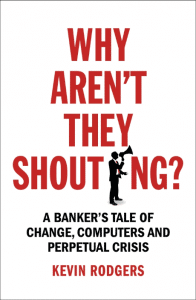
The following two pieces are excerpts from "Why Aren't They Shouting, A Banker’s Tale of Change, Computers and Perpetual Crisis" by Kevin Rodgers, recently published by Penguin Random House.
Kevin Rodgers started his career as a trader with Merrill Lynch before joining another American bank, Bankers Trust. From there he went on to work as a managing director of Deutsche Bank for 15 years and latterly as global head of foreign exchange. He will speak at Finance Magnates' upcoming London Summit.
Some Disappointing Penguins
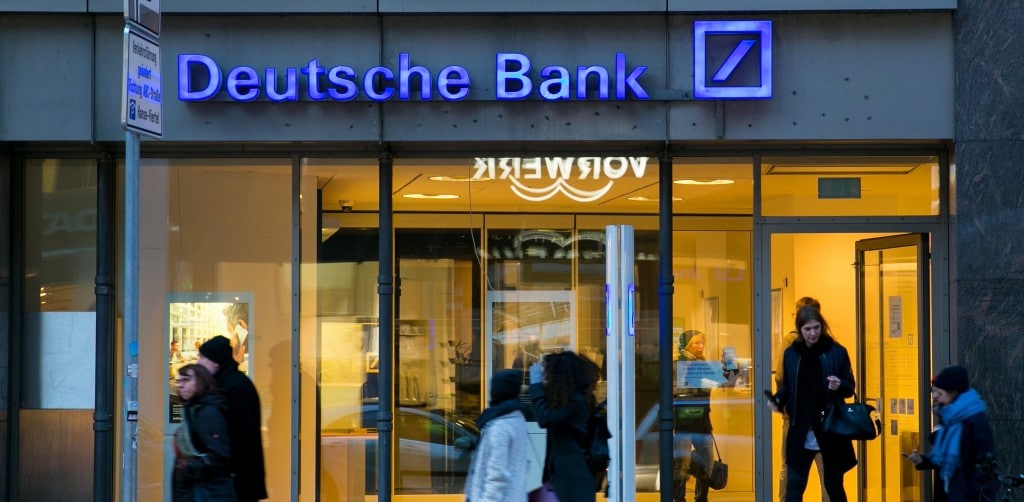
It was a quiet day on Deutsche Bank’s London trading floor sometime in the summer of 2012. That it was quiet was no surprise. The trading business moves according to the seasons, the day of the week and even the time of the day. January is always busy – Christmas, quiet. The first Friday of every month (when the US releases nonfarm payroll data) is usually a big day as intense anticipation gives way to a frantic hour or so of activity after the release.
Curiously, but consistently, the least interesting day of the week, statistically speaking, is Wednesday. But summers (barring a crisis) are always a snooze as customers, competitors and colleagues drift off on holiday and the energy drains from the market.
As usual, I was sitting at my desk on the trading floor rather than in my office and I was doing some kind of administrative chore. Maybe I was reading some research or answering one of the hundreds of emails that poured into my in tray each day (‘URGENT – Rescheduled GUI priorities meeting’, perhaps). Or possibly I was doing some online compliance training (‘Anti-money laundering basics: estimated time to complete, 30 minutes’) while occasionally flicking my gaze to screens showing the latest market rates.
Whatever it was, I was not busy when the phone rang on my private line. It was a lady from reception and she was flustered. She was responsible for organising a trading floor tour for a group of the bank’s managers from the retail branches in Germany.
These tours were commonly laid on for out-of-town visitors. If the visitor was some kind of VIP (a billionaire client, our CEO, regulators), the whole process was carefully choreographed and sometimes even scripted in advance. More middling visitors would simply be shown around by a guide, with no prior warning given to the folk actually working on the floor – it was a frequent occurrence to look up from my screen and suddenly find with a start that a knot of eager Cambridge undergraduates or a group of Japanese industrialists was staring at me intently.
‘Why . . .’ she said, indicating with a broad sweep of her hand the rows of oblivious traders and salespeople, ‘aren’t they shouting?’
That day, the receptionist’s problem was that the designated tour guide had called in sick and she needed a replacement – a senior replacement, since the party were all managing directors and, by custom, it was considered the proper etiquette to provide a similarly senior guide. Would I do it? Reluctantly I agreed and met the party at one end of the floor. They were a group of about a dozen men and women (median age about 40 by my reckoning), all serious, sober-suited and polite, who – as was usual with Germans – spoke English impeccably.
The trading floor we were on was one of three in Deutsche’s London office. Each was stacked on top of the next like tiers in a huge wedding cake. One was given over to the specialised trading of equities, another one was for interest rate and credit products and a third – mine – housed Foreign Exchange, Money Markets and Commodities.
In truth, all the floors looked practically identical: row upon row of seats in back-to-back aisles arranged over large, approximately rowing-boat-shaped rooms the size of football pitches. Regardless, I went through the practiced stages of my tour smoothly. I pointed out where various teams sat: here was Money Markets; here Commodities; and last, proudly, here was Foreign Exchange, my department.
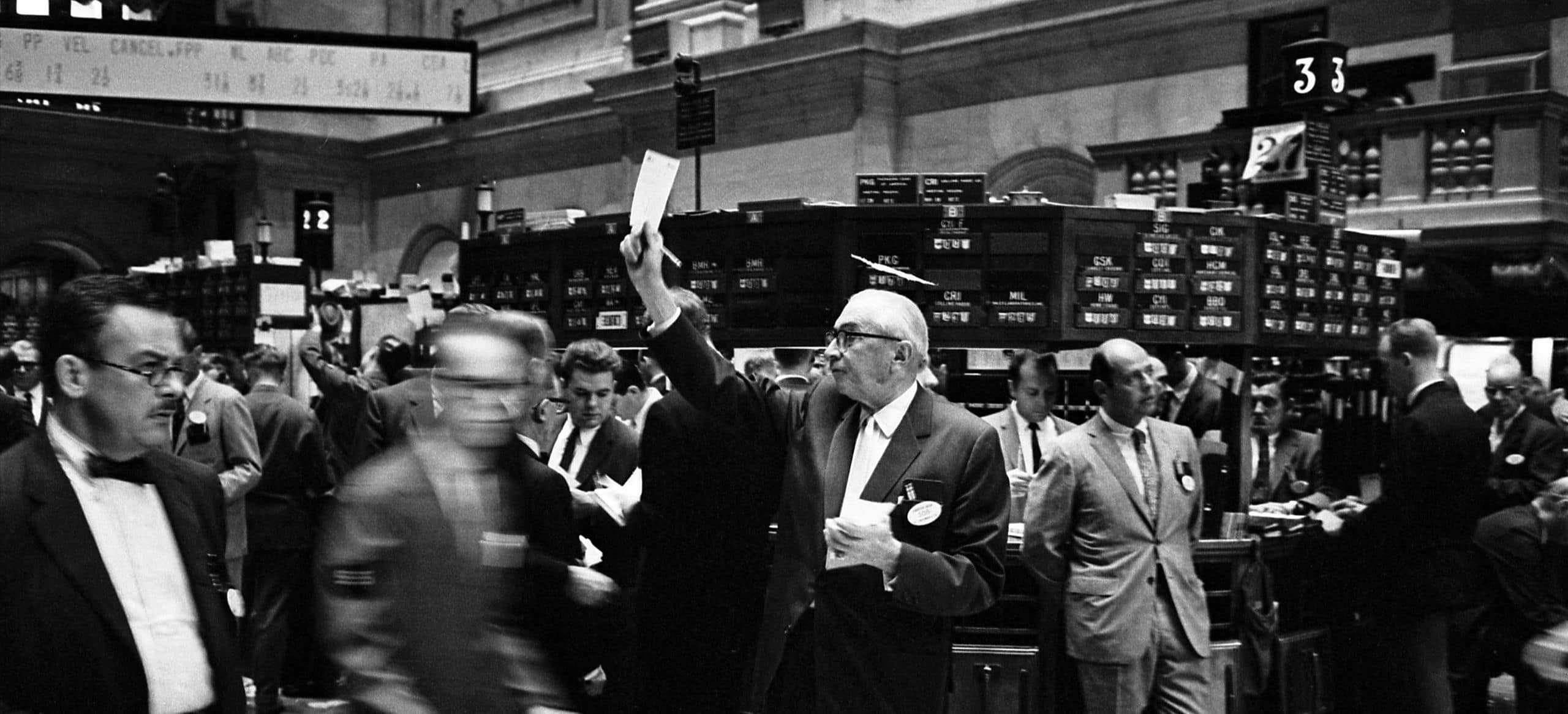
I was starting to explain the various roles of the people sitting there when a lady in the group suddenly interrupted me: ‘Excuse me, I must ask you a question.’ All eyes in our little party turned to her. ‘Why . . .’ she said, indicating with a broad sweep of her hand the rows of oblivious traders and salespeople, ‘aren’t they shouting?’ For a split second I was completely confused (What? Why aren’t they shouting?) but then I saw the look on her face and understood in an instant. It was a look that, as a parent, I was all too familiar with – the unhappy, sulky look of a child unfairly denied a long-awaited treat.
A few weeks earlier, my wife and I had taken our youngest, penguin-obsessed son, Arthur, aged seven, to London Zoo. The aim was to watch penguin-feeding time but we were too late. Instead of watching penguins merrily cavorting and jostling, diving and hopping in pursuit of fish, we merely saw the somnolent after-effects: replete and frankly lacklustre penguins engaged in the slow, lethargic process of digestion. My son’s almost tearful expression of disappointment that day was now mirrored in the face of my German colleague. She had heard about trading floors.
She had thought she knew what to expect. There would be excitement. There would be people on two phones simultaneously. Maybe there would be some swearing or some wild, primitive gesticulation! Certainly there would be a great deal of shouting. Instead, this! A sea of people tapping on keyboards, walking slowly to and fro, chatting at normal volume: a great susurrating nothingness. I understood that her real question to me was this: why is your zoo so damn boring?
Meetings Monkey and Cat Herder
A few months later, in early 2000, FX was reorganised. Jim was promoted to a role running FX in Europe and I was asked, along with my colleague Matt, to take over his old job running the options business globally. This made me happy, but nervous. Happy because Deutsche’s options business was a large and successful one and because I was returning to the product where I had started my career and which I knew best.
Nervous because previously, at Bankers Trust, I had only managed three or four traders in one location and I would now need to manage dozens scattered around the globe. Although the options business was less important than spot or forwards, it still contributed around a quarter of depart mental revenues. The bank couldn’t afford for us to screw it up, a fact made plain to me by Hal (‘Mate, don’t screw it up’). Although we were co-heads, Matt and I split the workload. A likeable, good natured and cheerful (if occasionally short-tempered) Anglo German, he was an outstanding mathematician and an expert in the more abstruse end of the derivatives market – so-called ‘structured products’. He concentrated on that and I focused more on the day-to-day concerns around simpler products (which made up the bulk of the trades) and the automation project.
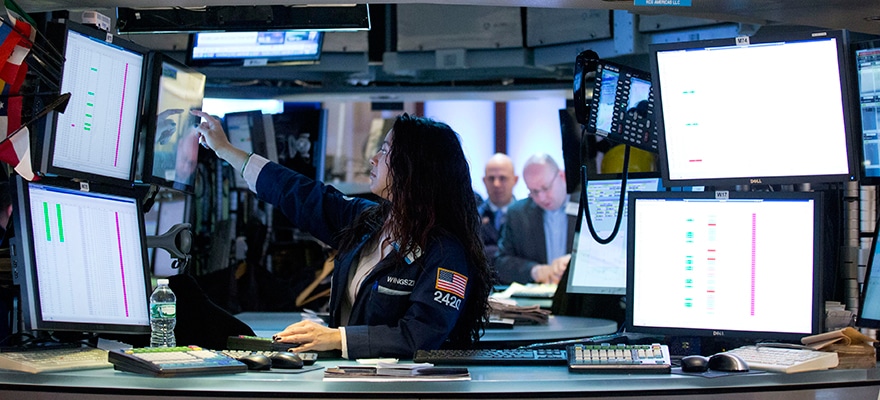
A new role. (Photo: Bloomberg)
Managing a trading business was, and still is, like being in charge of a factory with a very active arbitration department. Along with the daily routine (checking risk reports; watching the markets;
making sure there was cover for a trader who was on holiday or who was ill), Matt and I were constantly called on to intervene in disputes. Salesman A’s customer thought trader B’s spreads were
too wide. Salesman C believed credit officer D was being too difficult about a credit line. Traders E and F were at loggerheads about cutting or adding to a position. All needed to be dealt with.
Even looking at options in isolation, Mark’s system chart was a jumble. A number of different systems needed to talk to each other in order to report risk to traders, for example. This resulted in frequent errors and meant that junior traders were often obliged to stay at the office until 10 or 11pm each night to reconcile positions. Having had to suffer through this myself early in my career I was determined to put a stop to it. The plan was to take one home-grown risk management system (which Mark had dubbed RMS in a fanciful Northern flourish of imagination) and to extend its scope away from its original purpose of handling a small number of complicated derivatives to a new role covering all of our needs. A similar proposal was put in place for settlements. Last in the new blueprint were some brand-new pieces of software that would automatically show live options prices in small size to salesmen anywhere within the bank; they could then quote the prices to their customers. It wasn’t quite my vision of allowing customers to click and deal directly with the bank but it was a good start towards that goal and would save a lot of effort and shouting.
To allow the correct prices to be shown to the salespeople, traders had to keep the system updated... But they wouldn't do it
I soon discovered that there was a very simple, if not very glamorous trick to getting new technology created. Meetings: lots and lots and lots of meetings. Meetings to thrash out the exact design
requirements; meetings to discuss hiring new programmers for the IT department; meetings to assess progress. I once even went to a meeting to discuss the exact way to organise another, separate series of meetings (about how to control the release of new pricing models, if you care). To be honest, it was a slog. But gradually, as the months passed, I started to see some progress – in the spring I was shown a prototype version of the system to broadcast prices to salespeople. In time, this system went live and I discovered that building computer systems was the relatively easy bit; as had been the case with EBS in its first years, getting the traders to use them properly was a great deal harder.
To make sure that the option prices on this new system were correct (and that Deutsche Bank didn’t turn into the shop quoting the price of jumpers at 38/40 when you could buy them for £36 every
It wasn’t a massively onerous task. Back then, except in very violently moving markets, three or four updates in a ten-hour trading session would suffice and the system had been designed with features to make the task as easy as it could be. But the traders wouldn’t do it. Like spot traders in the early days of EBS, they were used to how things had always worked and what I was asking was something new and strange and bothersome. As a result, salespeople would try to use the system and it would very often flash back, ‘Prices stale – refer to trading desk’. This was worse than no progress at all. I appealed to the traders’ better natures. I cajoled and threatened.
I had a wonderful, awful idea: I’d let our prop traders loose on the screen
In some weeks there was a slight improvement, then back to ‘Prices stale’. The nuclear option was just to turn off the ‘stale price’ system check and let salespeople deal for their customers on whatever was shown on the screen, wrong or not, but this would necessarily result in losses for the bank – definitely a step too far. I was a new manager and, despite progress since Cannes, I still had the taint of being one of the ‘Bankers bastards’.
Then, like Doctor Seuss’s ‘Grinch Who Stole Christmas’, I had a wonderful, awful idea: I’d let our prop traders loose on the screen. I took this slightly controversial plan to Jim who, when he had finished laughing, endorsed it heartily. The small team of proprietary traders looked at me hungrily in wonder and disbelief when I announced that they could deal on the new screen even if prices were wrong. All their birthdays had come early! The options traders were appalled in equal measure. The beauty of the scheme was that I knew that the prop guys would scour the screens all day long looking for discrepancies but, if they found them and dealt, the money that they’d make (and the options guys would lose as a consequence) would stay within the FX department and, more importantly, within the bank – the shareholders wouldn’t lose out.
What made it even neater was that there was little love lost between the two teams: the options guys thought the prop team was a bunch of cowboys and the proprietary traders looked down on what they saw as the dull, coupon-clipping, customer-facing farmers on the option desk. Losing money to the proprietary team was the op tions traders’ worst nightmare and, as I had hoped, they set out to make sure it didn’t happen. Within a day, the number of volatility updates went up from a desultory and inadequate one a day, to ten a day or even more for the more important currencies. The system was now fit for our customers’ needs. It had been a rotten low trick of mine, I admit, but it had worked. A small milestone had been reached on a long journey.
Kevin Rodgers
The following two pieces are excerpts from "Why Aren't They Shouting, A Banker’s Tale of Change, Computers and Perpetual Crisis" by Kevin Rodgers, recently published by Penguin Random House.
Kevin Rodgers started his career as a trader with Merrill Lynch before joining another American bank, Bankers Trust. From there he went on to work as a managing director of Deutsche Bank for 15 years and latterly as global head of foreign exchange. He will speak at Finance Magnates' upcoming London Summit.
Some Disappointing Penguins
It was a quiet day on Deutsche Bank’s London trading floor sometime in the summer of 2012. That it was quiet was no surprise. The trading business moves according to the seasons, the day of the week and even the time of the day. January is always busy – Christmas, quiet. The first Friday of every month (when the US releases nonfarm payroll data) is usually a big day as intense anticipation gives way to a frantic hour or so of activity after the release.
Curiously, but consistently, the least interesting day of the week, statistically speaking, is Wednesday. But summers (barring a crisis) are always a snooze as customers, competitors and colleagues drift off on holiday and the energy drains from the market.
As usual, I was sitting at my desk on the trading floor rather than in my office and I was doing some kind of administrative chore. Maybe I was reading some research or answering one of the hundreds of emails that poured into my in tray each day (‘URGENT – Rescheduled GUI priorities meeting’, perhaps). Or possibly I was doing some online compliance training (‘Anti-money laundering basics: estimated time to complete, 30 minutes’) while occasionally flicking my gaze to screens showing the latest market rates.
Whatever it was, I was not busy when the phone rang on my private line. It was a lady from reception and she was flustered. She was responsible for organising a trading floor tour for a group of the bank’s managers from the retail branches in Germany.
These tours were commonly laid on for out-of-town visitors. If the visitor was some kind of VIP (a billionaire client, our CEO, regulators), the whole process was carefully choreographed and sometimes even scripted in advance. More middling visitors would simply be shown around by a guide, with no prior warning given to the folk actually working on the floor – it was a frequent occurrence to look up from my screen and suddenly find with a start that a knot of eager Cambridge undergraduates or a group of Japanese industrialists was staring at me intently.
‘Why . . .’ she said, indicating with a broad sweep of her hand the rows of oblivious traders and salespeople, ‘aren’t they shouting?’
That day, the receptionist’s problem was that the designated tour guide had called in sick and she needed a replacement – a senior replacement, since the party were all managing directors and, by custom, it was considered the proper etiquette to provide a similarly senior guide. Would I do it? Reluctantly I agreed and met the party at one end of the floor. They were a group of about a dozen men and women (median age about 40 by my reckoning), all serious, sober-suited and polite, who – as was usual with Germans – spoke English impeccably.
The trading floor we were on was one of three in Deutsche’s London office. Each was stacked on top of the next like tiers in a huge wedding cake. One was given over to the specialised trading of equities, another one was for interest rate and credit products and a third – mine – housed Foreign Exchange, Money Markets and Commodities.
In truth, all the floors looked practically identical: row upon row of seats in back-to-back aisles arranged over large, approximately rowing-boat-shaped rooms the size of football pitches. Regardless, I went through the practiced stages of my tour smoothly. I pointed out where various teams sat: here was Money Markets; here Commodities; and last, proudly, here was Foreign Exchange, my department.
I was starting to explain the various roles of the people sitting there when a lady in the group suddenly interrupted me: ‘Excuse me, I must ask you a question.’ All eyes in our little party turned to her. ‘Why . . .’ she said, indicating with a broad sweep of her hand the rows of oblivious traders and salespeople, ‘aren’t they shouting?’ For a split second I was completely confused (What? Why aren’t they shouting?) but then I saw the look on her face and understood in an instant. It was a look that, as a parent, I was all too familiar with – the unhappy, sulky look of a child unfairly denied a long-awaited treat.
A few weeks earlier, my wife and I had taken our youngest, penguin-obsessed son, Arthur, aged seven, to London Zoo. The aim was to watch penguin-feeding time but we were too late. Instead of watching penguins merrily cavorting and jostling, diving and hopping in pursuit of fish, we merely saw the somnolent after-effects: replete and frankly lacklustre penguins engaged in the slow, lethargic process of digestion. My son’s almost tearful expression of disappointment that day was now mirrored in the face of my German colleague. She had heard about trading floors.
She had thought she knew what to expect. There would be excitement. There would be people on two phones simultaneously. Maybe there would be some swearing or some wild, primitive gesticulation! Certainly there would be a great deal of shouting. Instead, this! A sea of people tapping on keyboards, walking slowly to and fro, chatting at normal volume: a great susurrating nothingness. I understood that her real question to me was this: why is your zoo so damn boring?
Meetings Monkey and Cat Herder
A few months later, in early 2000, FX was reorganised. Jim was promoted to a role running FX in Europe and I was asked, along with my colleague Matt, to take over his old job running the options business globally. This made me happy, but nervous. Happy because Deutsche’s options business was a large and successful one and because I was returning to the product where I had started my career and which I knew best.
Nervous because previously, at Bankers Trust, I had only managed three or four traders in one location and I would now need to manage dozens scattered around the globe. Although the options business was less important than spot or forwards, it still contributed around a quarter of depart mental revenues. The bank couldn’t afford for us to screw it up, a fact made plain to me by Hal (‘Mate, don’t screw it up’). Although we were co-heads, Matt and I split the workload. A likeable, good natured and cheerful (if occasionally short-tempered) Anglo German, he was an outstanding mathematician and an expert in the more abstruse end of the derivatives market – so-called ‘structured products’. He concentrated on that and I focused more on the day-to-day concerns around simpler products (which made up the bulk of the trades) and the automation project.
A new role. (Photo: Bloomberg)
Managing a trading business was, and still is, like being in charge of a factory with a very active arbitration department. Along with the daily routine (checking risk reports; watching the markets;
making sure there was cover for a trader who was on holiday or who was ill), Matt and I were constantly called on to intervene in disputes. Salesman A’s customer thought trader B’s spreads were
too wide. Salesman C believed credit officer D was being too difficult about a credit line. Traders E and F were at loggerheads about cutting or adding to a position. All needed to be dealt with.
Even looking at options in isolation, Mark’s system chart was a jumble. A number of different systems needed to talk to each other in order to report risk to traders, for example. This resulted in frequent errors and meant that junior traders were often obliged to stay at the office until 10 or 11pm each night to reconcile positions. Having had to suffer through this myself early in my career I was determined to put a stop to it. The plan was to take one home-grown risk management system (which Mark had dubbed RMS in a fanciful Northern flourish of imagination) and to extend its scope away from its original purpose of handling a small number of complicated derivatives to a new role covering all of our needs. A similar proposal was put in place for settlements. Last in the new blueprint were some brand-new pieces of software that would automatically show live options prices in small size to salesmen anywhere within the bank; they could then quote the prices to their customers. It wasn’t quite my vision of allowing customers to click and deal directly with the bank but it was a good start towards that goal and would save a lot of effort and shouting.
To allow the correct prices to be shown to the salespeople, traders had to keep the system updated... But they wouldn't do it
I soon discovered that there was a very simple, if not very glamorous trick to getting new technology created. Meetings: lots and lots and lots of meetings. Meetings to thrash out the exact design
requirements; meetings to discuss hiring new programmers for the IT department; meetings to assess progress. I once even went to a meeting to discuss the exact way to organise another, separate series of meetings (about how to control the release of new pricing models, if you care). To be honest, it was a slog. But gradually, as the months passed, I started to see some progress – in the spring I was shown a prototype version of the system to broadcast prices to salespeople. In time, this system went live and I discovered that building computer systems was the relatively easy bit; as had been the case with EBS in its first years, getting the traders to use them properly was a great deal harder.
To make sure that the option prices on this new system were correct (and that Deutsche Bank didn’t turn into the shop quoting the price of jumpers at 38/40 when you could buy them for £36 every
It wasn’t a massively onerous task. Back then, except in very violently moving markets, three or four updates in a ten-hour trading session would suffice and the system had been designed with features to make the task as easy as it could be. But the traders wouldn’t do it. Like spot traders in the early days of EBS, they were used to how things had always worked and what I was asking was something new and strange and bothersome. As a result, salespeople would try to use the system and it would very often flash back, ‘Prices stale – refer to trading desk’. This was worse than no progress at all. I appealed to the traders’ better natures. I cajoled and threatened.
I had a wonderful, awful idea: I’d let our prop traders loose on the screen
In some weeks there was a slight improvement, then back to ‘Prices stale’. The nuclear option was just to turn off the ‘stale price’ system check and let salespeople deal for their customers on whatever was shown on the screen, wrong or not, but this would necessarily result in losses for the bank – definitely a step too far. I was a new manager and, despite progress since Cannes, I still had the taint of being one of the ‘Bankers bastards’.
Then, like Doctor Seuss’s ‘Grinch Who Stole Christmas’, I had a wonderful, awful idea: I’d let our prop traders loose on the screen. I took this slightly controversial plan to Jim who, when he had finished laughing, endorsed it heartily. The small team of proprietary traders looked at me hungrily in wonder and disbelief when I announced that they could deal on the new screen even if prices were wrong. All their birthdays had come early! The options traders were appalled in equal measure. The beauty of the scheme was that I knew that the prop guys would scour the screens all day long looking for discrepancies but, if they found them and dealt, the money that they’d make (and the options guys would lose as a consequence) would stay within the FX department and, more importantly, within the bank – the shareholders wouldn’t lose out.
What made it even neater was that there was little love lost between the two teams: the options guys thought the prop team was a bunch of cowboys and the proprietary traders looked down on what they saw as the dull, coupon-clipping, customer-facing farmers on the option desk. Losing money to the proprietary team was the op tions traders’ worst nightmare and, as I had hoped, they set out to make sure it didn’t happen. Within a day, the number of volatility updates went up from a desultory and inadequate one a day, to ten a day or even more for the more important currencies. The system was now fit for our customers’ needs. It had been a rotten low trick of mine, I admit, but it had worked. A small milestone had been reached on a long journey.
Singapore Independent Wealth Sector Has Less Than 10% Market Share, but Vast Room for Growth
Featured Videos
FP Markets Winner Spotlight 🏆 | Global Broker of the Year 2025 #Trading #Broker #Innovation #Shorts
FP Markets Winner Spotlight 🏆 | Global Broker of the Year 2025 #Trading #Broker #Innovation #Shorts
FP Markets Winner Spotlight 🏆 | Global Broker of the Year 2025 #Trading #Broker #Innovation #Shorts
FP Markets Winner Spotlight 🏆 | Global Broker of the Year 2025 #Trading #Broker #Innovation #Shorts
FP Markets takes the spotlight as Global Broker of the Year 2025 at the Finance Magnates Awards.
Martin Stoilov, Head of Client Experience, shares that trust, innovation, and people played a key role in the company’s success, supported by a strong foundation of integrity and client-centricity.
Following this milestone, FP Markets continues to focus on growth, technology investment, and its core values of transparency and excellence.
👉 Be part of FM Awards 2026: https://awards.financemagnates.com/#nominate
FP Markets takes the spotlight as Global Broker of the Year 2025 at the Finance Magnates Awards.
Martin Stoilov, Head of Client Experience, shares that trust, innovation, and people played a key role in the company’s success, supported by a strong foundation of integrity and client-centricity.
Following this milestone, FP Markets continues to focus on growth, technology investment, and its core values of transparency and excellence.
👉 Be part of FM Awards 2026: https://awards.financemagnates.com/#nominate
FP Markets takes the spotlight as Global Broker of the Year 2025 at the Finance Magnates Awards.
Martin Stoilov, Head of Client Experience, shares that trust, innovation, and people played a key role in the company’s success, supported by a strong foundation of integrity and client-centricity.
Following this milestone, FP Markets continues to focus on growth, technology investment, and its core values of transparency and excellence.
👉 Be part of FM Awards 2026: https://awards.financemagnates.com/#nominate
FP Markets takes the spotlight as Global Broker of the Year 2025 at the Finance Magnates Awards.
Martin Stoilov, Head of Client Experience, shares that trust, innovation, and people played a key role in the company’s success, supported by a strong foundation of integrity and client-centricity.
Following this milestone, FP Markets continues to focus on growth, technology investment, and its core values of transparency and excellence.
👉 Be part of FM Awards 2026: https://awards.financemagnates.com/#nominate
In this video, we review @HolaPrimeMarketsOfficial, a multi-asset forex and CFDs broker offering different account types, trading platforms, and flexible trading conditions.
We cover the broker’s overall offering, including account options, trading environment, platforms like MT4 and MT5, and additional services such as managed accounts and fast withdrawals.
Watch the full video to see if Hola Prime Markets fits your trading needs.
📣 Stay up to date with the latest in finance and trading. Follow Finance Magnates for industry news, insights, and global event coverage.
Connect with us:
🔗 LinkedIn: /financemagnates
👍 Facebook: /financemagnates
📸 Instagram: https://www.instagram.com/financemagnates
🐦 X: https://x.com/financemagnates
🎥 TikTok: https://www.tiktok.com/tag/financemagnates
▶️ YouTube: /@financemagnates_official
#HolaPrime #ForexBroker #CFDTrading #FinanceMagnates #Trading #Forex #BrokerReview
In this video, we review @HolaPrimeMarketsOfficial, a multi-asset forex and CFDs broker offering different account types, trading platforms, and flexible trading conditions.
We cover the broker’s overall offering, including account options, trading environment, platforms like MT4 and MT5, and additional services such as managed accounts and fast withdrawals.
Watch the full video to see if Hola Prime Markets fits your trading needs.
📣 Stay up to date with the latest in finance and trading. Follow Finance Magnates for industry news, insights, and global event coverage.
Connect with us:
🔗 LinkedIn: /financemagnates
👍 Facebook: /financemagnates
📸 Instagram: https://www.instagram.com/financemagnates
🐦 X: https://x.com/financemagnates
🎥 TikTok: https://www.tiktok.com/tag/financemagnates
▶️ YouTube: /@financemagnates_official
#HolaPrime #ForexBroker #CFDTrading #FinanceMagnates #Trading #Forex #BrokerReview
In this video, we review @HolaPrimeMarketsOfficial, a multi-asset forex and CFDs broker offering different account types, trading platforms, and flexible trading conditions.
We cover the broker’s overall offering, including account options, trading environment, platforms like MT4 and MT5, and additional services such as managed accounts and fast withdrawals.
Watch the full video to see if Hola Prime Markets fits your trading needs.
📣 Stay up to date with the latest in finance and trading. Follow Finance Magnates for industry news, insights, and global event coverage.
Connect with us:
🔗 LinkedIn: /financemagnates
👍 Facebook: /financemagnates
📸 Instagram: https://www.instagram.com/financemagnates
🐦 X: https://x.com/financemagnates
🎥 TikTok: https://www.tiktok.com/tag/financemagnates
▶️ YouTube: /@financemagnates_official
#HolaPrime #ForexBroker #CFDTrading #FinanceMagnates #Trading #Forex #BrokerReview
In this video, we review @HolaPrimeMarketsOfficial, a multi-asset forex and CFDs broker offering different account types, trading platforms, and flexible trading conditions.
We cover the broker’s overall offering, including account options, trading environment, platforms like MT4 and MT5, and additional services such as managed accounts and fast withdrawals.
Watch the full video to see if Hola Prime Markets fits your trading needs.
📣 Stay up to date with the latest in finance and trading. Follow Finance Magnates for industry news, insights, and global event coverage.
Connect with us:
🔗 LinkedIn: /financemagnates
👍 Facebook: /financemagnates
📸 Instagram: https://www.instagram.com/financemagnates
🐦 X: https://x.com/financemagnates
🎥 TikTok: https://www.tiktok.com/tag/financemagnates
▶️ YouTube: /@financemagnates_official
#HolaPrime #ForexBroker #CFDTrading #FinanceMagnates #Trading #Forex #BrokerReview
In this video, we review @HolaPrimeMarketsOfficial, a multi-asset forex and CFDs broker offering different account types, trading platforms, and flexible trading conditions.
We cover the broker’s overall offering, including account options, trading environment, platforms like MT4 and MT5, and additional services such as managed accounts and fast withdrawals.
Watch the full video to see if Hola Prime Markets fits your trading needs.
📣 Stay up to date with the latest in finance and trading. Follow Finance Magnates for industry news, insights, and global event coverage.
Connect with us:
🔗 LinkedIn: /financemagnates
👍 Facebook: /financemagnates
📸 Instagram: https://www.instagram.com/financemagnates
🐦 X: https://x.com/financemagnates
🎥 TikTok: https://www.tiktok.com/tag/financemagnates
▶️ YouTube: /@financemagnates_official
#HolaPrime #ForexBroker #CFDTrading #FinanceMagnates #Trading #Forex #BrokerReview
In this video, we review @HolaPrimeMarketsOfficial, a multi-asset forex and CFDs broker offering different account types, trading platforms, and flexible trading conditions.
We cover the broker’s overall offering, including account options, trading environment, platforms like MT4 and MT5, and additional services such as managed accounts and fast withdrawals.
Watch the full video to see if Hola Prime Markets fits your trading needs.
📣 Stay up to date with the latest in finance and trading. Follow Finance Magnates for industry news, insights, and global event coverage.
Connect with us:
🔗 LinkedIn: /financemagnates
👍 Facebook: /financemagnates
📸 Instagram: https://www.instagram.com/financemagnates
🐦 X: https://x.com/financemagnates
🎥 TikTok: https://www.tiktok.com/tag/financemagnates
▶️ YouTube: /@financemagnates_official
#HolaPrime #ForexBroker #CFDTrading #FinanceMagnates #Trading #Forex #BrokerReview
Hola Prime Review: What You Need to Know | Full Breakdown by Finance Magnates
Hola Prime Review: What You Need to Know | Full Breakdown by Finance Magnates
Hola Prime Review: What You Need to Know | Full Breakdown by Finance Magnates
Hola Prime Review: What You Need to Know | Full Breakdown by Finance Magnates
Hola Prime Review: What You Need to Know | Full Breakdown by Finance Magnates
Hola Prime Review: What You Need to Know | Full Breakdown by Finance Magnates
In this video, we review @HolaPrime_Global, a proprietary trading firm offering evaluation programs and performance-based payouts in simulated market environments.
We cover how the challenge model works, including account types, profit splits (up to 95%), trading rules, and what it takes to reach a funded account. You’ll also learn about available platforms like MT4, MT5, cTrader, and more, along with insights into payouts, support, and trading conditions.
Watch the full video to see if Hola Prime fits your trading style.
📣 Stay up to date with the latest in finance and trading. Follow Finance Magnates for industry news, insights, and global event coverage.
Connect with us:
🔗 LinkedIn: /financemagnates
👍 Facebook: /financemagnates
📸 Instagram: https://www.instagram.com/financemagnates
🐦 X: https://x.com/financemagnates
🎥 TikTok: https://www.tiktok.com/tag/financemagnates
▶️ YouTube: /@financemagnates_official
#HolaPrime #PropFirm #Trading #FinanceMagnates #Forex #FuturesTrading #TradingReview #PropFirmReview
In this video, we review @HolaPrime_Global, a proprietary trading firm offering evaluation programs and performance-based payouts in simulated market environments.
We cover how the challenge model works, including account types, profit splits (up to 95%), trading rules, and what it takes to reach a funded account. You’ll also learn about available platforms like MT4, MT5, cTrader, and more, along with insights into payouts, support, and trading conditions.
Watch the full video to see if Hola Prime fits your trading style.
📣 Stay up to date with the latest in finance and trading. Follow Finance Magnates for industry news, insights, and global event coverage.
Connect with us:
🔗 LinkedIn: /financemagnates
👍 Facebook: /financemagnates
📸 Instagram: https://www.instagram.com/financemagnates
🐦 X: https://x.com/financemagnates
🎥 TikTok: https://www.tiktok.com/tag/financemagnates
▶️ YouTube: /@financemagnates_official
#HolaPrime #PropFirm #Trading #FinanceMagnates #Forex #FuturesTrading #TradingReview #PropFirmReview
In this video, we review @HolaPrime_Global, a proprietary trading firm offering evaluation programs and performance-based payouts in simulated market environments.
We cover how the challenge model works, including account types, profit splits (up to 95%), trading rules, and what it takes to reach a funded account. You’ll also learn about available platforms like MT4, MT5, cTrader, and more, along with insights into payouts, support, and trading conditions.
Watch the full video to see if Hola Prime fits your trading style.
📣 Stay up to date with the latest in finance and trading. Follow Finance Magnates for industry news, insights, and global event coverage.
Connect with us:
🔗 LinkedIn: /financemagnates
👍 Facebook: /financemagnates
📸 Instagram: https://www.instagram.com/financemagnates
🐦 X: https://x.com/financemagnates
🎥 TikTok: https://www.tiktok.com/tag/financemagnates
▶️ YouTube: /@financemagnates_official
#HolaPrime #PropFirm #Trading #FinanceMagnates #Forex #FuturesTrading #TradingReview #PropFirmReview
In this video, we review @HolaPrime_Global, a proprietary trading firm offering evaluation programs and performance-based payouts in simulated market environments.
We cover how the challenge model works, including account types, profit splits (up to 95%), trading rules, and what it takes to reach a funded account. You’ll also learn about available platforms like MT4, MT5, cTrader, and more, along with insights into payouts, support, and trading conditions.
Watch the full video to see if Hola Prime fits your trading style.
📣 Stay up to date with the latest in finance and trading. Follow Finance Magnates for industry news, insights, and global event coverage.
Connect with us:
🔗 LinkedIn: /financemagnates
👍 Facebook: /financemagnates
📸 Instagram: https://www.instagram.com/financemagnates
🐦 X: https://x.com/financemagnates
🎥 TikTok: https://www.tiktok.com/tag/financemagnates
▶️ YouTube: /@financemagnates_official
#HolaPrime #PropFirm #Trading #FinanceMagnates #Forex #FuturesTrading #TradingReview #PropFirmReview
In this video, we review @HolaPrime_Global, a proprietary trading firm offering evaluation programs and performance-based payouts in simulated market environments.
We cover how the challenge model works, including account types, profit splits (up to 95%), trading rules, and what it takes to reach a funded account. You’ll also learn about available platforms like MT4, MT5, cTrader, and more, along with insights into payouts, support, and trading conditions.
Watch the full video to see if Hola Prime fits your trading style.
📣 Stay up to date with the latest in finance and trading. Follow Finance Magnates for industry news, insights, and global event coverage.
Connect with us:
🔗 LinkedIn: /financemagnates
👍 Facebook: /financemagnates
📸 Instagram: https://www.instagram.com/financemagnates
🐦 X: https://x.com/financemagnates
🎥 TikTok: https://www.tiktok.com/tag/financemagnates
▶️ YouTube: /@financemagnates_official
#HolaPrime #PropFirm #Trading #FinanceMagnates #Forex #FuturesTrading #TradingReview #PropFirmReview
In this video, we review @HolaPrime_Global, a proprietary trading firm offering evaluation programs and performance-based payouts in simulated market environments.
We cover how the challenge model works, including account types, profit splits (up to 95%), trading rules, and what it takes to reach a funded account. You’ll also learn about available platforms like MT4, MT5, cTrader, and more, along with insights into payouts, support, and trading conditions.
Watch the full video to see if Hola Prime fits your trading style.
📣 Stay up to date with the latest in finance and trading. Follow Finance Magnates for industry news, insights, and global event coverage.
Connect with us:
🔗 LinkedIn: /financemagnates
👍 Facebook: /financemagnates
📸 Instagram: https://www.instagram.com/financemagnates
🐦 X: https://x.com/financemagnates
🎥 TikTok: https://www.tiktok.com/tag/financemagnates
▶️ YouTube: /@financemagnates_official
#HolaPrime #PropFirm #Trading #FinanceMagnates #Forex #FuturesTrading #TradingReview #PropFirmReview
Axi Winner Spotlight 🏆 | Global Most Innovative Broker 2025 #Innovation #Trading #Fintech #Broker
Axi Winner Spotlight 🏆 | Global Most Innovative Broker 2025 #Innovation #Trading #Fintech #Broker
Axi Winner Spotlight 🏆 | Global Most Innovative Broker 2025 #Innovation #Trading #Fintech #Broker
Axi Winner Spotlight 🏆 | Global Most Innovative Broker 2025 #Innovation #Trading #Fintech #Broker
Axi Winner Spotlight 🏆 | Global Most Innovative Broker 2025 #Innovation #Trading #Fintech #Broker
Axi Winner Spotlight 🏆 | Global Most Innovative Broker 2025 #Innovation #Trading #Fintech #Broker
Axi takes the spotlight at the Finance Magnates Awards, winning Global Most Innovative Broker 2025.
Olivia Xenofontos and Ivanna Openko share how the team will feel: proud, motivated, and ready to keep delivering.
They also describe the night as well-organized, focused, and enjoyable for all.
👉 Be part of FM Awards 2026.
Axi takes the spotlight at the Finance Magnates Awards, winning Global Most Innovative Broker 2025.
Olivia Xenofontos and Ivanna Openko share how the team will feel: proud, motivated, and ready to keep delivering.
They also describe the night as well-organized, focused, and enjoyable for all.
👉 Be part of FM Awards 2026.
Axi takes the spotlight at the Finance Magnates Awards, winning Global Most Innovative Broker 2025.
Olivia Xenofontos and Ivanna Openko share how the team will feel: proud, motivated, and ready to keep delivering.
They also describe the night as well-organized, focused, and enjoyable for all.
👉 Be part of FM Awards 2026.
Axi takes the spotlight at the Finance Magnates Awards, winning Global Most Innovative Broker 2025.
Olivia Xenofontos and Ivanna Openko share how the team will feel: proud, motivated, and ready to keep delivering.
They also describe the night as well-organized, focused, and enjoyable for all.
👉 Be part of FM Awards 2026.
Axi takes the spotlight at the Finance Magnates Awards, winning Global Most Innovative Broker 2025.
Olivia Xenofontos and Ivanna Openko share how the team will feel: proud, motivated, and ready to keep delivering.
They also describe the night as well-organized, focused, and enjoyable for all.
👉 Be part of FM Awards 2026.
Axi takes the spotlight at the Finance Magnates Awards, winning Global Most Innovative Broker 2025.
Olivia Xenofontos and Ivanna Openko share how the team will feel: proud, motivated, and ready to keep delivering.
They also describe the night as well-organized, focused, and enjoyable for all.
👉 Be part of FM Awards 2026.
Recognition that matters.
Built on transparency.
Driven by the industry.
The Finance Magnates Awards 2026.
Nominations are now open.
🔗 https://awards.financemagnates.com/?utm_source=SM&utm_medium=social&utm_campaign=recognition-matters
Recognition that matters.
Built on transparency.
Driven by the industry.
The Finance Magnates Awards 2026.
Nominations are now open.
🔗 https://awards.financemagnates.com/?utm_source=SM&utm_medium=social&utm_campaign=recognition-matters
Recognition that matters.
Built on transparency.
Driven by the industry.
The Finance Magnates Awards 2026.
Nominations are now open.
🔗 https://awards.financemagnates.com/?utm_source=SM&utm_medium=social&utm_campaign=recognition-matters
Recognition that matters.
Built on transparency.
Driven by the industry.
The Finance Magnates Awards 2026.
Nominations are now open.
🔗 https://awards.financemagnates.com/?utm_source=SM&utm_medium=social&utm_campaign=recognition-matters
Recognition that matters.
Built on transparency.
Driven by the industry.
The Finance Magnates Awards 2026.
Nominations are now open.
🔗 https://awards.financemagnates.com/?utm_source=SM&utm_medium=social&utm_campaign=recognition-matters
Recognition that matters.
Built on transparency.
Driven by the industry.
The Finance Magnates Awards 2026.
Nominations are now open.
🔗 https://awards.financemagnates.com/?utm_source=SM&utm_medium=social&utm_campaign=recognition-matters