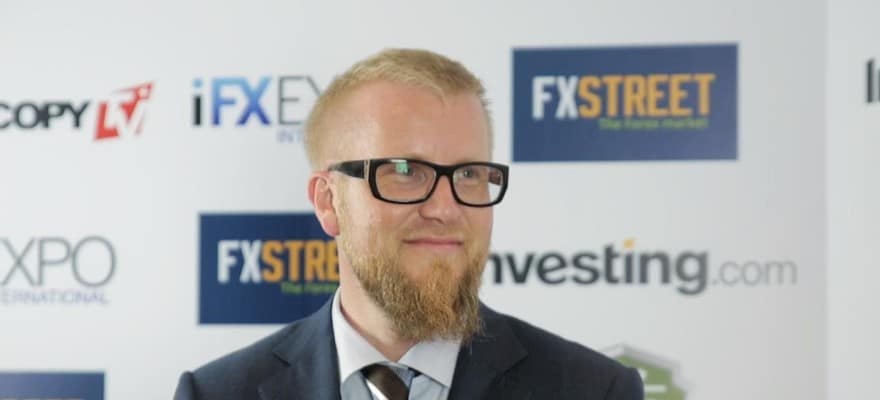
Half a year into his role, Tolat has been jetting between TradAir’s Singapore, London, Tel Aviv and New York offices. All of this to ensure he can provide the firm with the boost he was brought in to give.
Last week, amidst a busy schedule, Finance Magnates managed to catch up with Tolat at his firm’s Tel Aviv office. Over the course of our half-hour conversation, we discussed his first few months at TradAir, plans for growth and the cryptocurrency craze.
Acclimatizing
“We didn’t announce my appointment immediately,” said Tolat as we started our discussion, “If we’d made it public, I would have been barraged with requests for interviews and so on. For those first few months, I just wanted to understand the company, the people, the clients and the processes so that we can take it to the next level.”
That “next level” is the reason Tolat was hired. TradAir has been performing well over the past few years, but it appears the company’s shareholders believe growth can be accelerated.
“The investors brought me in as they thought that there was an opportunity to grow this company.” Tolat told Finance Magnates, “With our products, I think that’s certain to happen if we do things the right way.”
“We lead with our front-end user experience,” said Tolat, “A lot of other white labels, you just stick your company logo on it, but you can see it’s the same thing. We are more flexible with our reconfigurability. Two customers may be using our technology, but you wouldn’t be able to tell that it’s the same product. In the institutional space, that’s really important. Our clients want their own brand; they don’t want what everyone else has.”
Viral Tolat, CEO, Tradair
That’s all well and good but how accessible is the product? Trading, after all, can be a high-speed game, requiring connections to specific data centers and access to decent hardware.
“If you’re a high-frequency trader and 10 microseconds makes a difference to you, we offer a fully hosted solution." Said Tolat, "For our less latency sensitive customers who want a great end-user system, we offer a cloud-based solution that can be deployed quickly pretty much anywhere in the world."
Ease of access isn’t the only perk that comes with TradAir’s white label. The speed with which its technology can be put into action was on display recently too. At the beginning of July, the firm announced it had formed a partnership with BlockFill - a cryptocurrency broker for institutional clients.
Riding the crypto wave
Once all the necessary paperwork had been signed, it took only two weeks for TradAir to set up the requisite technology. That, according to Tolat, should have come as no surprise.
“We see a lot of opportunity in crypto,” Tolat told Finance Magnates, “and we already had all the systems in place to provide CFDs for FX, so it was a natural progression for us into the crypto market.”
“We’re finding a lot of crypto brokers who are dealing with clients using bad tech - over instant messaging apps for instance.” Noted Tolat, “They are coming to us saying, ‘we need a platform where clients can click-and-deal with us.’ We can provide that service and, because we’re cloud-based, we can do it fast.”
Does that mean TradAir is going all-in on cryptocurrency? Not exactly. There are, Tolat claimed, still a number of problems that the market has to deal with.
“A huge problem is custody,” said Tolat, “moving fiat currency between exchanges is a long-winded process. On top of that, there is no solid regulation. Each country has its own rules and, until there is some sort of regulatory consolidation, banks aren’t going to get involved. So we’re not overly concerned with driving the crypto craze, we’re just riding the wave.”
Asian expansion
Moving away from cryptocurrency, our conversation turned to the East. In the past couple of years, TradAir has also taken steps to grow in the Asian market.
A notable example of this came last year when the firm announced it was partnering with Snap Innovations, a provider of trading software based in Singapore. Since then the two companies have been working together on providing FX trading solutions for the Asian market.
“That investment, along with our other efforts in Singapore, is paying off,” Tolat said happily, “Asia is one of the biggest markets in the world for FX and we continue to see a lot of opportunity for growth there.”
We couldn’t leave without asking about an old court case. In 2016, Tolat was accused by one of his old companies, Integral, of having used source-code to build another system at EBS Dealing Resources, the firm at which he was previously Chief Technology Officer. To date, no court has issued a statement indicating that the code was used outside of Integral.
“I’m happy to say,” said Tolat, “that everything has been settled and it’s finished. That’s all behind us.”
For TradAir’s investors, that’s sure to be good news. With the firm getting started in the cryptocurrency space and doing well in Asia, it looks as though Tolat might just be able to bring TradAir to that ‘next level.’
Half a year into his role, Tolat has been jetting between TradAir’s Singapore, London, Tel Aviv and New York offices. All of this to ensure he can provide the firm with the boost he was brought in to give.
Last week, amidst a busy schedule, Finance Magnates managed to catch up with Tolat at his firm’s Tel Aviv office. Over the course of our half-hour conversation, we discussed his first few months at TradAir, plans for growth and the cryptocurrency craze.
Acclimatizing
“We didn’t announce my appointment immediately,” said Tolat as we started our discussion, “If we’d made it public, I would have been barraged with requests for interviews and so on. For those first few months, I just wanted to understand the company, the people, the clients and the processes so that we can take it to the next level.”
That “next level” is the reason Tolat was hired. TradAir has been performing well over the past few years, but it appears the company’s shareholders believe growth can be accelerated.
“The investors brought me in as they thought that there was an opportunity to grow this company.” Tolat told Finance Magnates, “With our products, I think that’s certain to happen if we do things the right way.”
“We lead with our front-end user experience,” said Tolat, “A lot of other white labels, you just stick your company logo on it, but you can see it’s the same thing. We are more flexible with our reconfigurability. Two customers may be using our technology, but you wouldn’t be able to tell that it’s the same product. In the institutional space, that’s really important. Our clients want their own brand; they don’t want what everyone else has.”
Viral Tolat, CEO, Tradair
That’s all well and good but how accessible is the product? Trading, after all, can be a high-speed game, requiring connections to specific data centers and access to decent hardware.
“If you’re a high-frequency trader and 10 microseconds makes a difference to you, we offer a fully hosted solution." Said Tolat, "For our less latency sensitive customers who want a great end-user system, we offer a cloud-based solution that can be deployed quickly pretty much anywhere in the world."
Ease of access isn’t the only perk that comes with TradAir’s white label. The speed with which its technology can be put into action was on display recently too. At the beginning of July, the firm announced it had formed a partnership with BlockFill - a cryptocurrency broker for institutional clients.
Riding the crypto wave
Once all the necessary paperwork had been signed, it took only two weeks for TradAir to set up the requisite technology. That, according to Tolat, should have come as no surprise.
“We see a lot of opportunity in crypto,” Tolat told Finance Magnates, “and we already had all the systems in place to provide CFDs for FX, so it was a natural progression for us into the crypto market.”
“We’re finding a lot of crypto brokers who are dealing with clients using bad tech - over instant messaging apps for instance.” Noted Tolat, “They are coming to us saying, ‘we need a platform where clients can click-and-deal with us.’ We can provide that service and, because we’re cloud-based, we can do it fast.”
Does that mean TradAir is going all-in on cryptocurrency? Not exactly. There are, Tolat claimed, still a number of problems that the market has to deal with.
“A huge problem is custody,” said Tolat, “moving fiat currency between exchanges is a long-winded process. On top of that, there is no solid regulation. Each country has its own rules and, until there is some sort of regulatory consolidation, banks aren’t going to get involved. So we’re not overly concerned with driving the crypto craze, we’re just riding the wave.”
Asian expansion
Moving away from cryptocurrency, our conversation turned to the East. In the past couple of years, TradAir has also taken steps to grow in the Asian market.
A notable example of this came last year when the firm announced it was partnering with Snap Innovations, a provider of trading software based in Singapore. Since then the two companies have been working together on providing FX trading solutions for the Asian market.
“That investment, along with our other efforts in Singapore, is paying off,” Tolat said happily, “Asia is one of the biggest markets in the world for FX and we continue to see a lot of opportunity for growth there.”
We couldn’t leave without asking about an old court case. In 2016, Tolat was accused by one of his old companies, Integral, of having used source-code to build another system at EBS Dealing Resources, the firm at which he was previously Chief Technology Officer. To date, no court has issued a statement indicating that the code was used outside of Integral.
“I’m happy to say,” said Tolat, “that everything has been settled and it’s finished. That’s all behind us.”
For TradAir’s investors, that’s sure to be good news. With the firm getting started in the cryptocurrency space and doing well in Asia, it looks as though Tolat might just be able to bring TradAir to that ‘next level.’
Singapore Independent Wealth Sector Has Less Than 10% Market Share, but Vast Room for Growth
Featured Videos
FP Markets Winner Spotlight 🏆 | Global Broker of the Year 2025 #Trading #Broker #Innovation #Shorts
FP Markets Winner Spotlight 🏆 | Global Broker of the Year 2025 #Trading #Broker #Innovation #Shorts
FP Markets Winner Spotlight 🏆 | Global Broker of the Year 2025 #Trading #Broker #Innovation #Shorts
FP Markets Winner Spotlight 🏆 | Global Broker of the Year 2025 #Trading #Broker #Innovation #Shorts
FP Markets takes the spotlight as Global Broker of the Year 2025 at the Finance Magnates Awards.
Martin Stoilov, Head of Client Experience, shares that trust, innovation, and people played a key role in the company’s success, supported by a strong foundation of integrity and client-centricity.
Following this milestone, FP Markets continues to focus on growth, technology investment, and its core values of transparency and excellence.
👉 Be part of FM Awards 2026: https://awards.financemagnates.com/#nominate
FP Markets takes the spotlight as Global Broker of the Year 2025 at the Finance Magnates Awards.
Martin Stoilov, Head of Client Experience, shares that trust, innovation, and people played a key role in the company’s success, supported by a strong foundation of integrity and client-centricity.
Following this milestone, FP Markets continues to focus on growth, technology investment, and its core values of transparency and excellence.
👉 Be part of FM Awards 2026: https://awards.financemagnates.com/#nominate
FP Markets takes the spotlight as Global Broker of the Year 2025 at the Finance Magnates Awards.
Martin Stoilov, Head of Client Experience, shares that trust, innovation, and people played a key role in the company’s success, supported by a strong foundation of integrity and client-centricity.
Following this milestone, FP Markets continues to focus on growth, technology investment, and its core values of transparency and excellence.
👉 Be part of FM Awards 2026: https://awards.financemagnates.com/#nominate
FP Markets takes the spotlight as Global Broker of the Year 2025 at the Finance Magnates Awards.
Martin Stoilov, Head of Client Experience, shares that trust, innovation, and people played a key role in the company’s success, supported by a strong foundation of integrity and client-centricity.
Following this milestone, FP Markets continues to focus on growth, technology investment, and its core values of transparency and excellence.
👉 Be part of FM Awards 2026: https://awards.financemagnates.com/#nominate
In this video, we review @HolaPrimeMarketsOfficial, a multi-asset forex and CFDs broker offering different account types, trading platforms, and flexible trading conditions.
We cover the broker’s overall offering, including account options, trading environment, platforms like MT4 and MT5, and additional services such as managed accounts and fast withdrawals.
Watch the full video to see if Hola Prime Markets fits your trading needs.
📣 Stay up to date with the latest in finance and trading. Follow Finance Magnates for industry news, insights, and global event coverage.
Connect with us:
🔗 LinkedIn: /financemagnates
👍 Facebook: /financemagnates
📸 Instagram: https://www.instagram.com/financemagnates
🐦 X: https://x.com/financemagnates
🎥 TikTok: https://www.tiktok.com/tag/financemagnates
▶️ YouTube: /@financemagnates_official
#HolaPrime #ForexBroker #CFDTrading #FinanceMagnates #Trading #Forex #BrokerReview
In this video, we review @HolaPrimeMarketsOfficial, a multi-asset forex and CFDs broker offering different account types, trading platforms, and flexible trading conditions.
We cover the broker’s overall offering, including account options, trading environment, platforms like MT4 and MT5, and additional services such as managed accounts and fast withdrawals.
Watch the full video to see if Hola Prime Markets fits your trading needs.
📣 Stay up to date with the latest in finance and trading. Follow Finance Magnates for industry news, insights, and global event coverage.
Connect with us:
🔗 LinkedIn: /financemagnates
👍 Facebook: /financemagnates
📸 Instagram: https://www.instagram.com/financemagnates
🐦 X: https://x.com/financemagnates
🎥 TikTok: https://www.tiktok.com/tag/financemagnates
▶️ YouTube: /@financemagnates_official
#HolaPrime #ForexBroker #CFDTrading #FinanceMagnates #Trading #Forex #BrokerReview
In this video, we review @HolaPrimeMarketsOfficial, a multi-asset forex and CFDs broker offering different account types, trading platforms, and flexible trading conditions.
We cover the broker’s overall offering, including account options, trading environment, platforms like MT4 and MT5, and additional services such as managed accounts and fast withdrawals.
Watch the full video to see if Hola Prime Markets fits your trading needs.
📣 Stay up to date with the latest in finance and trading. Follow Finance Magnates for industry news, insights, and global event coverage.
Connect with us:
🔗 LinkedIn: /financemagnates
👍 Facebook: /financemagnates
📸 Instagram: https://www.instagram.com/financemagnates
🐦 X: https://x.com/financemagnates
🎥 TikTok: https://www.tiktok.com/tag/financemagnates
▶️ YouTube: /@financemagnates_official
#HolaPrime #ForexBroker #CFDTrading #FinanceMagnates #Trading #Forex #BrokerReview
In this video, we review @HolaPrimeMarketsOfficial, a multi-asset forex and CFDs broker offering different account types, trading platforms, and flexible trading conditions.
We cover the broker’s overall offering, including account options, trading environment, platforms like MT4 and MT5, and additional services such as managed accounts and fast withdrawals.
Watch the full video to see if Hola Prime Markets fits your trading needs.
📣 Stay up to date with the latest in finance and trading. Follow Finance Magnates for industry news, insights, and global event coverage.
Connect with us:
🔗 LinkedIn: /financemagnates
👍 Facebook: /financemagnates
📸 Instagram: https://www.instagram.com/financemagnates
🐦 X: https://x.com/financemagnates
🎥 TikTok: https://www.tiktok.com/tag/financemagnates
▶️ YouTube: /@financemagnates_official
#HolaPrime #ForexBroker #CFDTrading #FinanceMagnates #Trading #Forex #BrokerReview
In this video, we review @HolaPrimeMarketsOfficial, a multi-asset forex and CFDs broker offering different account types, trading platforms, and flexible trading conditions.
We cover the broker’s overall offering, including account options, trading environment, platforms like MT4 and MT5, and additional services such as managed accounts and fast withdrawals.
Watch the full video to see if Hola Prime Markets fits your trading needs.
📣 Stay up to date with the latest in finance and trading. Follow Finance Magnates for industry news, insights, and global event coverage.
Connect with us:
🔗 LinkedIn: /financemagnates
👍 Facebook: /financemagnates
📸 Instagram: https://www.instagram.com/financemagnates
🐦 X: https://x.com/financemagnates
🎥 TikTok: https://www.tiktok.com/tag/financemagnates
▶️ YouTube: /@financemagnates_official
#HolaPrime #ForexBroker #CFDTrading #FinanceMagnates #Trading #Forex #BrokerReview
In this video, we review @HolaPrimeMarketsOfficial, a multi-asset forex and CFDs broker offering different account types, trading platforms, and flexible trading conditions.
We cover the broker’s overall offering, including account options, trading environment, platforms like MT4 and MT5, and additional services such as managed accounts and fast withdrawals.
Watch the full video to see if Hola Prime Markets fits your trading needs.
📣 Stay up to date with the latest in finance and trading. Follow Finance Magnates for industry news, insights, and global event coverage.
Connect with us:
🔗 LinkedIn: /financemagnates
👍 Facebook: /financemagnates
📸 Instagram: https://www.instagram.com/financemagnates
🐦 X: https://x.com/financemagnates
🎥 TikTok: https://www.tiktok.com/tag/financemagnates
▶️ YouTube: /@financemagnates_official
#HolaPrime #ForexBroker #CFDTrading #FinanceMagnates #Trading #Forex #BrokerReview
Hola Prime Review: What You Need to Know | Full Breakdown by Finance Magnates
Hola Prime Review: What You Need to Know | Full Breakdown by Finance Magnates
Hola Prime Review: What You Need to Know | Full Breakdown by Finance Magnates
Hola Prime Review: What You Need to Know | Full Breakdown by Finance Magnates
Hola Prime Review: What You Need to Know | Full Breakdown by Finance Magnates
Hola Prime Review: What You Need to Know | Full Breakdown by Finance Magnates
In this video, we review @HolaPrime_Global, a proprietary trading firm offering evaluation programs and performance-based payouts in simulated market environments.
We cover how the challenge model works, including account types, profit splits (up to 95%), trading rules, and what it takes to reach a funded account. You’ll also learn about available platforms like MT4, MT5, cTrader, and more, along with insights into payouts, support, and trading conditions.
Watch the full video to see if Hola Prime fits your trading style.
📣 Stay up to date with the latest in finance and trading. Follow Finance Magnates for industry news, insights, and global event coverage.
Connect with us:
🔗 LinkedIn: /financemagnates
👍 Facebook: /financemagnates
📸 Instagram: https://www.instagram.com/financemagnates
🐦 X: https://x.com/financemagnates
🎥 TikTok: https://www.tiktok.com/tag/financemagnates
▶️ YouTube: /@financemagnates_official
#HolaPrime #PropFirm #Trading #FinanceMagnates #Forex #FuturesTrading #TradingReview #PropFirmReview
In this video, we review @HolaPrime_Global, a proprietary trading firm offering evaluation programs and performance-based payouts in simulated market environments.
We cover how the challenge model works, including account types, profit splits (up to 95%), trading rules, and what it takes to reach a funded account. You’ll also learn about available platforms like MT4, MT5, cTrader, and more, along with insights into payouts, support, and trading conditions.
Watch the full video to see if Hola Prime fits your trading style.
📣 Stay up to date with the latest in finance and trading. Follow Finance Magnates for industry news, insights, and global event coverage.
Connect with us:
🔗 LinkedIn: /financemagnates
👍 Facebook: /financemagnates
📸 Instagram: https://www.instagram.com/financemagnates
🐦 X: https://x.com/financemagnates
🎥 TikTok: https://www.tiktok.com/tag/financemagnates
▶️ YouTube: /@financemagnates_official
#HolaPrime #PropFirm #Trading #FinanceMagnates #Forex #FuturesTrading #TradingReview #PropFirmReview
In this video, we review @HolaPrime_Global, a proprietary trading firm offering evaluation programs and performance-based payouts in simulated market environments.
We cover how the challenge model works, including account types, profit splits (up to 95%), trading rules, and what it takes to reach a funded account. You’ll also learn about available platforms like MT4, MT5, cTrader, and more, along with insights into payouts, support, and trading conditions.
Watch the full video to see if Hola Prime fits your trading style.
📣 Stay up to date with the latest in finance and trading. Follow Finance Magnates for industry news, insights, and global event coverage.
Connect with us:
🔗 LinkedIn: /financemagnates
👍 Facebook: /financemagnates
📸 Instagram: https://www.instagram.com/financemagnates
🐦 X: https://x.com/financemagnates
🎥 TikTok: https://www.tiktok.com/tag/financemagnates
▶️ YouTube: /@financemagnates_official
#HolaPrime #PropFirm #Trading #FinanceMagnates #Forex #FuturesTrading #TradingReview #PropFirmReview
In this video, we review @HolaPrime_Global, a proprietary trading firm offering evaluation programs and performance-based payouts in simulated market environments.
We cover how the challenge model works, including account types, profit splits (up to 95%), trading rules, and what it takes to reach a funded account. You’ll also learn about available platforms like MT4, MT5, cTrader, and more, along with insights into payouts, support, and trading conditions.
Watch the full video to see if Hola Prime fits your trading style.
📣 Stay up to date with the latest in finance and trading. Follow Finance Magnates for industry news, insights, and global event coverage.
Connect with us:
🔗 LinkedIn: /financemagnates
👍 Facebook: /financemagnates
📸 Instagram: https://www.instagram.com/financemagnates
🐦 X: https://x.com/financemagnates
🎥 TikTok: https://www.tiktok.com/tag/financemagnates
▶️ YouTube: /@financemagnates_official
#HolaPrime #PropFirm #Trading #FinanceMagnates #Forex #FuturesTrading #TradingReview #PropFirmReview
In this video, we review @HolaPrime_Global, a proprietary trading firm offering evaluation programs and performance-based payouts in simulated market environments.
We cover how the challenge model works, including account types, profit splits (up to 95%), trading rules, and what it takes to reach a funded account. You’ll also learn about available platforms like MT4, MT5, cTrader, and more, along with insights into payouts, support, and trading conditions.
Watch the full video to see if Hola Prime fits your trading style.
📣 Stay up to date with the latest in finance and trading. Follow Finance Magnates for industry news, insights, and global event coverage.
Connect with us:
🔗 LinkedIn: /financemagnates
👍 Facebook: /financemagnates
📸 Instagram: https://www.instagram.com/financemagnates
🐦 X: https://x.com/financemagnates
🎥 TikTok: https://www.tiktok.com/tag/financemagnates
▶️ YouTube: /@financemagnates_official
#HolaPrime #PropFirm #Trading #FinanceMagnates #Forex #FuturesTrading #TradingReview #PropFirmReview
In this video, we review @HolaPrime_Global, a proprietary trading firm offering evaluation programs and performance-based payouts in simulated market environments.
We cover how the challenge model works, including account types, profit splits (up to 95%), trading rules, and what it takes to reach a funded account. You’ll also learn about available platforms like MT4, MT5, cTrader, and more, along with insights into payouts, support, and trading conditions.
Watch the full video to see if Hola Prime fits your trading style.
📣 Stay up to date with the latest in finance and trading. Follow Finance Magnates for industry news, insights, and global event coverage.
Connect with us:
🔗 LinkedIn: /financemagnates
👍 Facebook: /financemagnates
📸 Instagram: https://www.instagram.com/financemagnates
🐦 X: https://x.com/financemagnates
🎥 TikTok: https://www.tiktok.com/tag/financemagnates
▶️ YouTube: /@financemagnates_official
#HolaPrime #PropFirm #Trading #FinanceMagnates #Forex #FuturesTrading #TradingReview #PropFirmReview
Axi Winner Spotlight 🏆 | Global Most Innovative Broker 2025 #Innovation #Trading #Fintech #Broker
Axi Winner Spotlight 🏆 | Global Most Innovative Broker 2025 #Innovation #Trading #Fintech #Broker
Axi Winner Spotlight 🏆 | Global Most Innovative Broker 2025 #Innovation #Trading #Fintech #Broker
Axi Winner Spotlight 🏆 | Global Most Innovative Broker 2025 #Innovation #Trading #Fintech #Broker
Axi Winner Spotlight 🏆 | Global Most Innovative Broker 2025 #Innovation #Trading #Fintech #Broker
Axi Winner Spotlight 🏆 | Global Most Innovative Broker 2025 #Innovation #Trading #Fintech #Broker
Axi takes the spotlight at the Finance Magnates Awards, winning Global Most Innovative Broker 2025.
Olivia Xenofontos and Ivanna Openko share how the team will feel: proud, motivated, and ready to keep delivering.
They also describe the night as well-organized, focused, and enjoyable for all.
👉 Be part of FM Awards 2026.
Axi takes the spotlight at the Finance Magnates Awards, winning Global Most Innovative Broker 2025.
Olivia Xenofontos and Ivanna Openko share how the team will feel: proud, motivated, and ready to keep delivering.
They also describe the night as well-organized, focused, and enjoyable for all.
👉 Be part of FM Awards 2026.
Axi takes the spotlight at the Finance Magnates Awards, winning Global Most Innovative Broker 2025.
Olivia Xenofontos and Ivanna Openko share how the team will feel: proud, motivated, and ready to keep delivering.
They also describe the night as well-organized, focused, and enjoyable for all.
👉 Be part of FM Awards 2026.
Axi takes the spotlight at the Finance Magnates Awards, winning Global Most Innovative Broker 2025.
Olivia Xenofontos and Ivanna Openko share how the team will feel: proud, motivated, and ready to keep delivering.
They also describe the night as well-organized, focused, and enjoyable for all.
👉 Be part of FM Awards 2026.
Axi takes the spotlight at the Finance Magnates Awards, winning Global Most Innovative Broker 2025.
Olivia Xenofontos and Ivanna Openko share how the team will feel: proud, motivated, and ready to keep delivering.
They also describe the night as well-organized, focused, and enjoyable for all.
👉 Be part of FM Awards 2026.
Axi takes the spotlight at the Finance Magnates Awards, winning Global Most Innovative Broker 2025.
Olivia Xenofontos and Ivanna Openko share how the team will feel: proud, motivated, and ready to keep delivering.
They also describe the night as well-organized, focused, and enjoyable for all.
👉 Be part of FM Awards 2026.
Recognition that matters.
Built on transparency.
Driven by the industry.
The Finance Magnates Awards 2026.
Nominations are now open.
🔗 https://awards.financemagnates.com/?utm_source=SM&utm_medium=social&utm_campaign=recognition-matters
Recognition that matters.
Built on transparency.
Driven by the industry.
The Finance Magnates Awards 2026.
Nominations are now open.
🔗 https://awards.financemagnates.com/?utm_source=SM&utm_medium=social&utm_campaign=recognition-matters
Recognition that matters.
Built on transparency.
Driven by the industry.
The Finance Magnates Awards 2026.
Nominations are now open.
🔗 https://awards.financemagnates.com/?utm_source=SM&utm_medium=social&utm_campaign=recognition-matters
Recognition that matters.
Built on transparency.
Driven by the industry.
The Finance Magnates Awards 2026.
Nominations are now open.
🔗 https://awards.financemagnates.com/?utm_source=SM&utm_medium=social&utm_campaign=recognition-matters
Recognition that matters.
Built on transparency.
Driven by the industry.
The Finance Magnates Awards 2026.
Nominations are now open.
🔗 https://awards.financemagnates.com/?utm_source=SM&utm_medium=social&utm_campaign=recognition-matters
Recognition that matters.
Built on transparency.
Driven by the industry.
The Finance Magnates Awards 2026.
Nominations are now open.
🔗 https://awards.financemagnates.com/?utm_source=SM&utm_medium=social&utm_campaign=recognition-matters