Continental Anti-HFT Sentiment: European Parliament Reaches Draft Deal To Curb Practice
Sunday,27/10/2013|14:01GMTby
Andrew Saks McLeod
The latest development within the European Parliament relating to proposed rulings to curb HFT was announced at the end of last week, whereby a draft deal has been reached to apply strict controls to participants.
As last week drew to a close, lawmakers within the European Parliament reached a draft deal with national governments within the member states relating to curbs on high-frequency trading (HFT), representing the latest development within plans to tighten the financial market rulebook on a continental level.
Ongoing Disdain For HFT
European financial regulators and governmental bodies have for some time displayed something of a disdain for the practice of HFT, characterized by German regulatory authority BaFin having moved forward with a set of new rules on HFT in July 2012, spearheading a response to concerns regarding high-frequency traders and their potential impact on market stability.
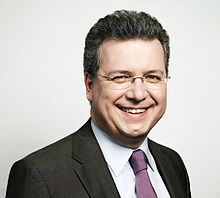
Following last week's draft deal, Bavarian Member of the European Parliament, Markus Ferber announced that from his perspective a major breakthrough relating to certain aspects of the legislation has now been achieved.
Markus Ferber MEP
“The area of high-frequency trading is lacking suitable regulation. This is why it was high time to find a decent solution to this pressing problem," stated Mr. Ferber in an email on Wednesday last week.
The provisional deal reached by legislators and officials from Lithuania, which holds the EU’s rotating presidency, includes a so-called tick size regime limiting the minimum size of price movements on financial markets according to Mr. Ferber.
“This will slow down high-frequency trading significantly,” he said.
A Long Time Coming
The initial discussions surrounding the implementation of a tick size regime took place in mid-2009, when a number of European Exchanges along with some of the region's multilateral trading facilities (MTFs) had engaged in negotiations with the Federation of European Securities Exchanges (FESE).
At that particular time, strong incentives existed among trading venues to undercut others in terms of tick sizes, which is not in the interest of market efficiency nor the users and end investors. This might, in turn lead to excessively reduced tick sizes in the market.
As a result of the discussions, it was agreed that excessively granular tick sizes in securities can have a detrimental effect to market depth, and in particular to Liquidity .
Similarly, three years ago a number of senior figures in European politics voiced extremely skeptical opinions on certain components of HFT, including dark pools, the proliferation of which Bank of France Governor Christian Noyer considered "a tragic error".
In addition, a European Parliament report in November 2010 deemed that the European Parliament considers layering, or quote stuffing, to be market abuse and therefore should be made illegal, as well as explicitly ruling out flash orders.
Electronic Intervention By Authorities
Mr. Ferber detailed to the European Parliament last week that part of the provisional agreement states that traders will be obliged to have their algorithms tested on trading venues and authorized by financial markets regulators, therefore being subject to assessment as to how systemic risk can be minimized.
In addition, circuit breakers will be introduced, which will stop the trading process if price Volatility gets to high.
The draft high-frequency trading measures are part of a broader overhaul of the EU’s financial market rules proposed by European Commissioner Michel Barnier. Other parts of Commissioner Barnier’s proposals seek to push more derivatives trading onto regulated markets, and restrict commodity speculation.
This ongoing attempt to purge the European continent of HFT and algorithmic trading runs counter to the opinion of other jurisdictions. Australia's increasingly well-respected regulator ASIC, announced in June this year that it recognizes HFT and dark pools as part of the financial landscape, and therefore has no plans to stem it, as well as TMX Atrium having connected the UBS MTF dark pool via Points of Presence that very same week to facilitate dark pool connectivity between Russia, the UK and North America.
The new measures, which must be voted on by the EU Parliament and approved by national governments in the 28-nation EU before they can take effect, would update the EU’s Markets in Financial Instruments Directive (MiFID) to include the rulings, and therefore would be applicable to all market participants in the European Union.
As last week drew to a close, lawmakers within the European Parliament reached a draft deal with national governments within the member states relating to curbs on high-frequency trading (HFT), representing the latest development within plans to tighten the financial market rulebook on a continental level.
Ongoing Disdain For HFT
European financial regulators and governmental bodies have for some time displayed something of a disdain for the practice of HFT, characterized by German regulatory authority BaFin having moved forward with a set of new rules on HFT in July 2012, spearheading a response to concerns regarding high-frequency traders and their potential impact on market stability.
Following last week's draft deal, Bavarian Member of the European Parliament, Markus Ferber announced that from his perspective a major breakthrough relating to certain aspects of the legislation has now been achieved.
Markus Ferber MEP
“The area of high-frequency trading is lacking suitable regulation. This is why it was high time to find a decent solution to this pressing problem," stated Mr. Ferber in an email on Wednesday last week.
The provisional deal reached by legislators and officials from Lithuania, which holds the EU’s rotating presidency, includes a so-called tick size regime limiting the minimum size of price movements on financial markets according to Mr. Ferber.
“This will slow down high-frequency trading significantly,” he said.
A Long Time Coming
The initial discussions surrounding the implementation of a tick size regime took place in mid-2009, when a number of European Exchanges along with some of the region's multilateral trading facilities (MTFs) had engaged in negotiations with the Federation of European Securities Exchanges (FESE).
At that particular time, strong incentives existed among trading venues to undercut others in terms of tick sizes, which is not in the interest of market efficiency nor the users and end investors. This might, in turn lead to excessively reduced tick sizes in the market.
As a result of the discussions, it was agreed that excessively granular tick sizes in securities can have a detrimental effect to market depth, and in particular to Liquidity .
Similarly, three years ago a number of senior figures in European politics voiced extremely skeptical opinions on certain components of HFT, including dark pools, the proliferation of which Bank of France Governor Christian Noyer considered "a tragic error".
In addition, a European Parliament report in November 2010 deemed that the European Parliament considers layering, or quote stuffing, to be market abuse and therefore should be made illegal, as well as explicitly ruling out flash orders.
Electronic Intervention By Authorities
Mr. Ferber detailed to the European Parliament last week that part of the provisional agreement states that traders will be obliged to have their algorithms tested on trading venues and authorized by financial markets regulators, therefore being subject to assessment as to how systemic risk can be minimized.
In addition, circuit breakers will be introduced, which will stop the trading process if price Volatility gets to high.
The draft high-frequency trading measures are part of a broader overhaul of the EU’s financial market rules proposed by European Commissioner Michel Barnier. Other parts of Commissioner Barnier’s proposals seek to push more derivatives trading onto regulated markets, and restrict commodity speculation.
This ongoing attempt to purge the European continent of HFT and algorithmic trading runs counter to the opinion of other jurisdictions. Australia's increasingly well-respected regulator ASIC, announced in June this year that it recognizes HFT and dark pools as part of the financial landscape, and therefore has no plans to stem it, as well as TMX Atrium having connected the UBS MTF dark pool via Points of Presence that very same week to facilitate dark pool connectivity between Russia, the UK and North America.
The new measures, which must be voted on by the EU Parliament and approved by national governments in the 28-nation EU before they can take effect, would update the EU’s Markets in Financial Instruments Directive (MiFID) to include the rulings, and therefore would be applicable to all market participants in the European Union.
dxFeed Launches Aggregated Overnight Feed for Retail, Institutional Trading
FP Markets Winner Spotlight 🏆 | Global Broker of the Year 2025 #Trading #Broker #Innovation #Shorts
FP Markets Winner Spotlight 🏆 | Global Broker of the Year 2025 #Trading #Broker #Innovation #Shorts
FP Markets takes the spotlight as Global Broker of the Year 2025 at the Finance Magnates Awards.
Martin Stoilov, Head of Client Experience, shares that trust, innovation, and people played a key role in the company’s success, supported by a strong foundation of integrity and client-centricity.
Following this milestone, FP Markets continues to focus on growth, technology investment, and its core values of transparency and excellence.
👉 Be part of FM Awards 2026: https://awards.financemagnates.com/#nominate
FP Markets takes the spotlight as Global Broker of the Year 2025 at the Finance Magnates Awards.
Martin Stoilov, Head of Client Experience, shares that trust, innovation, and people played a key role in the company’s success, supported by a strong foundation of integrity and client-centricity.
Following this milestone, FP Markets continues to focus on growth, technology investment, and its core values of transparency and excellence.
👉 Be part of FM Awards 2026: https://awards.financemagnates.com/#nominate
In this video, we review @HolaPrimeMarketsOfficial, a multi-asset forex and CFDs broker offering different account types, trading platforms, and flexible trading conditions.
We cover the broker’s overall offering, including account options, trading environment, platforms like MT4 and MT5, and additional services such as managed accounts and fast withdrawals.
Watch the full video to see if Hola Prime Markets fits your trading needs.
📣 Stay up to date with the latest in finance and trading. Follow Finance Magnates for industry news, insights, and global event coverage.
Connect with us:
🔗 LinkedIn: /financemagnates
👍 Facebook: /financemagnates
📸 Instagram: https://www.instagram.com/financemagnates
🐦 X: https://x.com/financemagnates
🎥 TikTok: https://www.tiktok.com/tag/financemagnates
▶️ YouTube: /@financemagnates_official
#HolaPrime #ForexBroker #CFDTrading #FinanceMagnates #Trading #Forex #BrokerReview
In this video, we review @HolaPrimeMarketsOfficial, a multi-asset forex and CFDs broker offering different account types, trading platforms, and flexible trading conditions.
We cover the broker’s overall offering, including account options, trading environment, platforms like MT4 and MT5, and additional services such as managed accounts and fast withdrawals.
Watch the full video to see if Hola Prime Markets fits your trading needs.
📣 Stay up to date with the latest in finance and trading. Follow Finance Magnates for industry news, insights, and global event coverage.
Connect with us:
🔗 LinkedIn: /financemagnates
👍 Facebook: /financemagnates
📸 Instagram: https://www.instagram.com/financemagnates
🐦 X: https://x.com/financemagnates
🎥 TikTok: https://www.tiktok.com/tag/financemagnates
▶️ YouTube: /@financemagnates_official
#HolaPrime #ForexBroker #CFDTrading #FinanceMagnates #Trading #Forex #BrokerReview
Hola Prime Review: What You Need to Know | Full Breakdown by Finance Magnates
Hola Prime Review: What You Need to Know | Full Breakdown by Finance Magnates
In this video, we review @HolaPrime_Global, a proprietary trading firm offering evaluation programs and performance-based payouts in simulated market environments.
We cover how the challenge model works, including account types, profit splits (up to 95%), trading rules, and what it takes to reach a funded account. You’ll also learn about available platforms like MT4, MT5, cTrader, and more, along with insights into payouts, support, and trading conditions.
Watch the full video to see if Hola Prime fits your trading style.
📣 Stay up to date with the latest in finance and trading. Follow Finance Magnates for industry news, insights, and global event coverage.
Connect with us:
🔗 LinkedIn: /financemagnates
👍 Facebook: /financemagnates
📸 Instagram: https://www.instagram.com/financemagnates
🐦 X: https://x.com/financemagnates
🎥 TikTok: https://www.tiktok.com/tag/financemagnates
▶️ YouTube: /@financemagnates_official
#HolaPrime #PropFirm #Trading #FinanceMagnates #Forex #FuturesTrading #TradingReview #PropFirmReview
In this video, we review @HolaPrime_Global, a proprietary trading firm offering evaluation programs and performance-based payouts in simulated market environments.
We cover how the challenge model works, including account types, profit splits (up to 95%), trading rules, and what it takes to reach a funded account. You’ll also learn about available platforms like MT4, MT5, cTrader, and more, along with insights into payouts, support, and trading conditions.
Watch the full video to see if Hola Prime fits your trading style.
📣 Stay up to date with the latest in finance and trading. Follow Finance Magnates for industry news, insights, and global event coverage.
Connect with us:
🔗 LinkedIn: /financemagnates
👍 Facebook: /financemagnates
📸 Instagram: https://www.instagram.com/financemagnates
🐦 X: https://x.com/financemagnates
🎥 TikTok: https://www.tiktok.com/tag/financemagnates
▶️ YouTube: /@financemagnates_official
#HolaPrime #PropFirm #Trading #FinanceMagnates #Forex #FuturesTrading #TradingReview #PropFirmReview
Axi Winner Spotlight 🏆 | Global Most Innovative Broker 2025 #Innovation #Trading #Fintech #Broker
Axi Winner Spotlight 🏆 | Global Most Innovative Broker 2025 #Innovation #Trading #Fintech #Broker
Axi takes the spotlight at the Finance Magnates Awards, winning Global Most Innovative Broker 2025.
Olivia Xenofontos and Ivanna Openko share how the team will feel: proud, motivated, and ready to keep delivering.
They also describe the night as well-organized, focused, and enjoyable for all.
👉 Be part of FM Awards 2026.
Axi takes the spotlight at the Finance Magnates Awards, winning Global Most Innovative Broker 2025.
Olivia Xenofontos and Ivanna Openko share how the team will feel: proud, motivated, and ready to keep delivering.
They also describe the night as well-organized, focused, and enjoyable for all.
👉 Be part of FM Awards 2026.
Recognition that matters.
Built on transparency.
Driven by the industry.
The Finance Magnates Awards 2026.
Nominations are now open.
🔗 https://awards.financemagnates.com/?utm_source=SM&utm_medium=social&utm_campaign=recognition-matters
Recognition that matters.
Built on transparency.
Driven by the industry.
The Finance Magnates Awards 2026.
Nominations are now open.
🔗 https://awards.financemagnates.com/?utm_source=SM&utm_medium=social&utm_campaign=recognition-matters