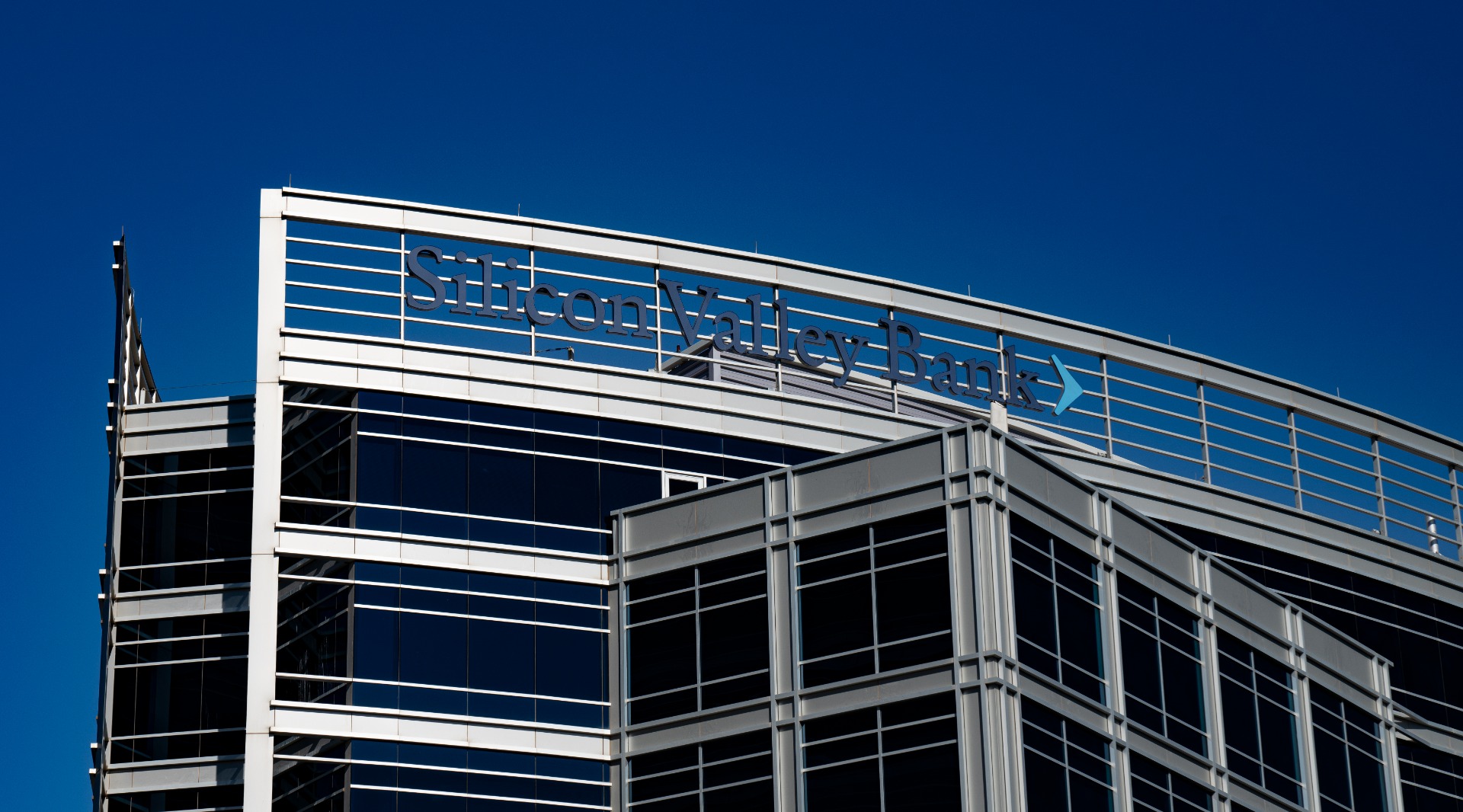
First Citizens Bank acquired failed SVB, stabilizing its operations and calming market concerns.
FDIC-approved takeover sees First Citizens Bank assume control of Silicon Valley Bank's loans and deposits.
The US
Federal Deposit and Insurance Corporation (FDIC) has approved North Carolina-based
First Citizens Bank's takeover of all loans and deposits from the failed
Silicon Valley Bank (SVB). All 17 branches of the institution that triggered
the global banking crisis in March opened as First Citizens Bank and Trust Company
on Monday, and customers have been automatically transferred with their
deposits.
Silicon Valley Bank Acquired
by First Citizens Bank
Following the closure of Silicon Valley Bank by the California Department of Financial
Protection and Innovation, the FDIC established Silicon Valley Bridge Bank,
National Association, to stabilize the institution and market the franchise.
The FDIC
projects that the collapse of Silicon Valley Bank will incur a cost of around
$20 billion for its Deposit Insurance Fund (DIF). The precise amount will be
ascertained once the FDIC concludes the receivership process.
As of 10
March 2023, SVB had approximately $167 billion in total assets and around $119
billion in total deposits. The acquisition included the purchase of about $72
billion of the bank's assets at a $16.5 billion discount. The FDIC will dispose
of the remaining $90 billion in securities and other assets in the
receivership. Moreover, the FDIC received equity appreciation rights in First
Citizens BancShares, Inc., with a potential value of up to $500 million.
A
loss-share transaction was agreed upon between the FDIC and First-Citizens Bank
& Trust Company for commercial loans purchased from the former Silicon
Valley Bridge Bank. Both parties will share losses and potential recoveries on
loans covered by the loss-share agreement. This arrangement is expected to
maximize asset recoveries by maintaining them in the private sector, minimize
disruptions for loan customers, and allow First-Citizens Bank & Trust
Company to assume all loan-related Qualified Financial Contracts.
Although
the situation surrounding SVB is beginning to stabilize and the bank is
returning to normal operations, its closure sent a wave of immense concern
through the market and led to instability in the banking sector.
This
resulted in a record slump in Swiss lending giant Credit Suisse shares, which UBS subsequently acquired in a transaction worth CHF 3 billion. UBS
agreed to take on $5.4 billion in losses generated by the troubled institution.
Just when
it seemed that the crisis might end, alarming news began to
emerge from Deutsche Bank last Friday with its shares on the German stock
exchange falling by 15% and testing the EUR 8 level, which is the lowest since October and
the strongest since the first days of panic due to the pandemic in 2020.
Deutsche Bank Shares. Source: Yahoo Finance
The move
took place after the publication of information that the lender plans to
repurchase debt, which is usually seen as a sign of market strength.
Therefore,
analysts had a significant problem explaining the discount, and according to
Citigroup, it was irrational.
The US
Federal Deposit and Insurance Corporation (FDIC) has approved North Carolina-based
First Citizens Bank's takeover of all loans and deposits from the failed
Silicon Valley Bank (SVB). All 17 branches of the institution that triggered
the global banking crisis in March opened as First Citizens Bank and Trust Company
on Monday, and customers have been automatically transferred with their
deposits.
Silicon Valley Bank Acquired
by First Citizens Bank
Following the closure of Silicon Valley Bank by the California Department of Financial
Protection and Innovation, the FDIC established Silicon Valley Bridge Bank,
National Association, to stabilize the institution and market the franchise.
The FDIC
projects that the collapse of Silicon Valley Bank will incur a cost of around
$20 billion for its Deposit Insurance Fund (DIF). The precise amount will be
ascertained once the FDIC concludes the receivership process.
As of 10
March 2023, SVB had approximately $167 billion in total assets and around $119
billion in total deposits. The acquisition included the purchase of about $72
billion of the bank's assets at a $16.5 billion discount. The FDIC will dispose
of the remaining $90 billion in securities and other assets in the
receivership. Moreover, the FDIC received equity appreciation rights in First
Citizens BancShares, Inc., with a potential value of up to $500 million.
A
loss-share transaction was agreed upon between the FDIC and First-Citizens Bank
& Trust Company for commercial loans purchased from the former Silicon
Valley Bridge Bank. Both parties will share losses and potential recoveries on
loans covered by the loss-share agreement. This arrangement is expected to
maximize asset recoveries by maintaining them in the private sector, minimize
disruptions for loan customers, and allow First-Citizens Bank & Trust
Company to assume all loan-related Qualified Financial Contracts.
Although
the situation surrounding SVB is beginning to stabilize and the bank is
returning to normal operations, its closure sent a wave of immense concern
through the market and led to instability in the banking sector.
This
resulted in a record slump in Swiss lending giant Credit Suisse shares, which UBS subsequently acquired in a transaction worth CHF 3 billion. UBS
agreed to take on $5.4 billion in losses generated by the troubled institution.
Just when
it seemed that the crisis might end, alarming news began to
emerge from Deutsche Bank last Friday with its shares on the German stock
exchange falling by 15% and testing the EUR 8 level, which is the lowest since October and
the strongest since the first days of panic due to the pandemic in 2020.
Deutsche Bank Shares. Source: Yahoo Finance
The move
took place after the publication of information that the lender plans to
repurchase debt, which is usually seen as a sign of market strength.
Therefore,
analysts had a significant problem explaining the discount, and according to
Citigroup, it was irrational.
Damian Chmiel is a Senior Analyst & Editor at Finance Magnates with more than 15 years of experience in the CFD and online trading industry. Active as both a trader and journalist since 2010, he focuses on broker coverage, fintech innovation, and regulatory developments across Europe, the Middle East, and Asia.
His work includes interviews with C-level leaders at major brokerages and fintech platforms, as well as co-authoring Finance Magnates’ quarterly industry benchmarking reports. Damian’s reporting is data-driven, market-aware, and grounded in direct industry engagement. His analysis and commentary have also been cited by external media outlets, including Investing.com, Binance, The Asset, Stockhead, and Dispatch.
Education:
MA in Finance and Accounting, Cracow University of Economics
FIS Adds Clearing for Prediction Market Contracts, Building on OTC Trading
CMC Markets’ Artur Delijergijevs on Metals Demand, Volatility, & Stable Execution
CMC Markets’ Artur Delijergijevs on Metals Demand, Volatility, & Stable Execution
In this exclusive Executive Interview, Finance Magnates speaks with Artur Delijergijevs, Head of Systematic Market Making at CMC Markets, about the current state of metals demand and market volatility.
Delijergijevs offers a desk-level view on:
- Metals Demand: Why metals are seeing the strongest demand from both retail and institutional clients right now.
- The Safe-Haven Debate: Questioning whether gold still fits the classic safe-haven definition given large daily price movements.
- Volatile Market Prep: How a market-making desk prepares its systems and pricing for stressed market conditions and high-impact economic events.
- Hybrid Execution: Why the best execution model combines electronic speed with human relationship support, especially during volatility.
- AI in Workflow: Where CMC Markets is integrating machine learning for risk management and pricing, and the limitations of AI during stressed markets.
- Dubai's Role: The strategic importance of Dubai’s location for covering global trading sessions across Asia, Europe, and the US.
Watch to understand how CMC Markets maintains stable pricing and reliable execution quality in high-volatility environments.
#CMCmarkets #forex #metals #gold #trading #volatility #MarketMaking #iFXDubai #FinanceMagnates #Finance #Fintech #Execution #AlgorithmicTrading #RiskManagement
In this exclusive Executive Interview, Finance Magnates speaks with Artur Delijergijevs, Head of Systematic Market Making at CMC Markets, about the current state of metals demand and market volatility.
Delijergijevs offers a desk-level view on:
- Metals Demand: Why metals are seeing the strongest demand from both retail and institutional clients right now.
- The Safe-Haven Debate: Questioning whether gold still fits the classic safe-haven definition given large daily price movements.
- Volatile Market Prep: How a market-making desk prepares its systems and pricing for stressed market conditions and high-impact economic events.
- Hybrid Execution: Why the best execution model combines electronic speed with human relationship support, especially during volatility.
- AI in Workflow: Where CMC Markets is integrating machine learning for risk management and pricing, and the limitations of AI during stressed markets.
- Dubai's Role: The strategic importance of Dubai’s location for covering global trading sessions across Asia, Europe, and the US.
Watch to understand how CMC Markets maintains stable pricing and reliable execution quality in high-volatility environments.
#CMCmarkets #forex #metals #gold #trading #volatility #MarketMaking #iFXDubai #FinanceMagnates #Finance #Fintech #Execution #AlgorithmicTrading #RiskManagement
Finance Magnates Awards 2026 – Nominations Now Open
Finance Magnates Awards 2026 – Nominations Now Open
The Finance Magnates Awards 2026 nominations are now open. 🏆
From fintech innovators to leading brokers, this is where the finance industry celebrates its biggest achievements.
Winners will be announced at the Cyprus Gala Dinner on November 6, 2026.
Nominate your brand now.
https://awards.financemagnates.com/?utm_source=linkedin&utm_medium=video&utm_campaign=nominations-open
#FMAwards #FinanceMagnates #FintechAwards #Fintech #FinanceIndustry
The Finance Magnates Awards 2026 nominations are now open. 🏆
From fintech innovators to leading brokers, this is where the finance industry celebrates its biggest achievements.
Winners will be announced at the Cyprus Gala Dinner on November 6, 2026.
Nominate your brand now.
https://awards.financemagnates.com/?utm_source=linkedin&utm_medium=video&utm_campaign=nominations-open
#FMAwards #FinanceMagnates #FintechAwards #Fintech #FinanceIndustry
Finance Magnates Awards 2026 | Nominations Now Open 🏆#Fintech #FMAwards #TradingIndustry
Finance Magnates Awards 2026 | Nominations Now Open 🏆#Fintech #FMAwards #TradingIndustry
Lights on. Cameras ready. 🎬
Finance Magnates Awards 2026 nominations are now open. 🏆
#FMAwards #FinanceMagnates #FintechAwards #Fintech
Lights on. Cameras ready. 🎬
Finance Magnates Awards 2026 nominations are now open. 🏆
#FMAwards #FinanceMagnates #FintechAwards #Fintech
Exness sees trust as the key theme for growth in MENA Trading Growth for 2026
Exness sees trust as the key theme for growth in MENA Trading Growth for 2026
Mohammad Amer, Regional Commercial Director at Exness, sits down to discuss the booming MENA financial trading market. Find out why Dubai is key to the company's growth strategy, how a mobile-first generation is changing expectations, and why trust will be the defining theme for traders in 2026.
In this interview, you'll learn:
* Why Dubai and the MENA region are critical growth markets for fintech and online trading.
* How Exness is addressing the demands of mobile-first, younger traders through engineering, platform stability, and transparent conditions.
* The essential role local talent plays in providing a culturally relevant and compliant user experience.
* Mohammad Amer's outlook on the future of the online trading industry and why stronger controls and systems are necessary.
* Why "trust" isn't just a brand value, but has commercial value—and why he predicts 2026 will be the "Year of Trust."
Key Takeaways:
➡️ The MENA region is rapidly shaping global financial markets.
➡️ New traders expect stability, precise execution, and transparency.
➡️ Local expertise is key to regulatory compliance and user experience.
➡️ Future success belongs to firms capable of meeting rising standards across regulation and platform consistency.
Read the full article at: https://www.financemagnates.com/thought-leadership/exness-sees-trust-as-the-key-theme-for-growth-in-mena-trading-growth-for-2026/
#Exness #MENA #Trading #FinTech #Dubai #OnlineTrading #FinanceMagnates #MohammadAmer #Trust #MobileTrading
Mohammad Amer, Regional Commercial Director at Exness, sits down to discuss the booming MENA financial trading market. Find out why Dubai is key to the company's growth strategy, how a mobile-first generation is changing expectations, and why trust will be the defining theme for traders in 2026.
In this interview, you'll learn:
* Why Dubai and the MENA region are critical growth markets for fintech and online trading.
* How Exness is addressing the demands of mobile-first, younger traders through engineering, platform stability, and transparent conditions.
* The essential role local talent plays in providing a culturally relevant and compliant user experience.
* Mohammad Amer's outlook on the future of the online trading industry and why stronger controls and systems are necessary.
* Why "trust" isn't just a brand value, but has commercial value—and why he predicts 2026 will be the "Year of Trust."
Key Takeaways:
➡️ The MENA region is rapidly shaping global financial markets.
➡️ New traders expect stability, precise execution, and transparency.
➡️ Local expertise is key to regulatory compliance and user experience.
➡️ Future success belongs to firms capable of meeting rising standards across regulation and platform consistency.
Read the full article at: https://www.financemagnates.com/thought-leadership/exness-sees-trust-as-the-key-theme-for-growth-in-mena-trading-growth-for-2026/
#Exness #MENA #Trading #FinTech #Dubai #OnlineTrading #FinanceMagnates #MohammadAmer #Trust #MobileTrading
Paytiko CEO Razi Salih on Why Payment Orchestration is a MUST-HAVE for Brokers in 2026
Paytiko CEO Razi Salih on Why Payment Orchestration is a MUST-HAVE for Brokers in 2026
At iFX Expo Dubai, Finance Magnates spoke with Razi Salih, CEO at Paytiko, about the evolution of the payments ecosystem and why payment orchestration has shifted from an option to a necessity for brokers, prop firms, and exchanges.
Mr. Salih explains how global expansion, the need for deep localisation, and the sheer number of new payment methods, from instant banking to stablecoins, are driving this critical infrastructure shift.
#PaymentOrchestration #Fintech #Brokerage #TradingPayments #RaziSalih #Paytiko #iFXExpoDubai #Stablecoins #AIinFintech
At iFX Expo Dubai, Finance Magnates spoke with Razi Salih, CEO at Paytiko, about the evolution of the payments ecosystem and why payment orchestration has shifted from an option to a necessity for brokers, prop firms, and exchanges.
Mr. Salih explains how global expansion, the need for deep localisation, and the sheer number of new payment methods, from instant banking to stablecoins, are driving this critical infrastructure shift.
#PaymentOrchestration #Fintech #Brokerage #TradingPayments #RaziSalih #Paytiko #iFXExpoDubai #Stablecoins #AIinFintech