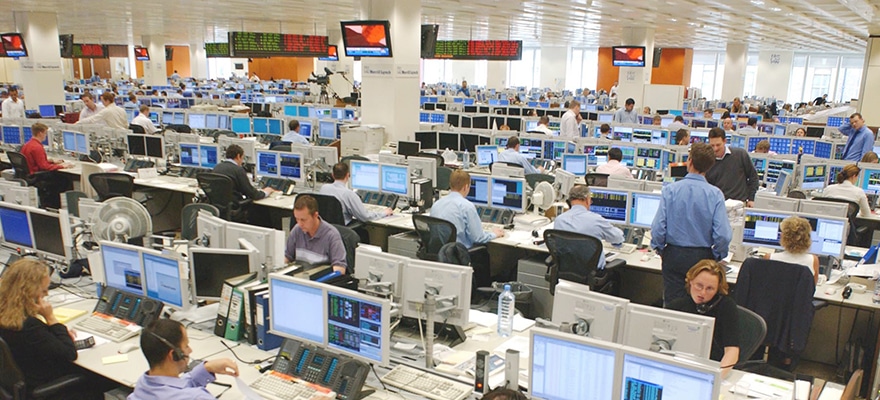
The question of examining execution quality and comparing rates for a fragmented market has gained interest over the past two years with the revelations of banks manipulating FX fixing rates. Ultimately leading to billions in fines from global regulators and ongoing litigation from clients, the FX fixing scandal revealed inconsistencies in how FX trades are executed. But, even before the current scandals, cases have emerged of banks mishandling customer executions and filling them well out of the range of prevalent market prices.
FEMR
In reaction to trading practices within the FX market, the Bank of England (BoE) recently concluded a preliminary review of executions and released the Fair and Effective Markets Review (FEMR) report. Among the findings was the FEMR’s opinion on ‘Last Look’ practices.
‘Last Look’
As opposed to equities which is order driven with centralized order books of matching trades, OTC FX has emerged as a quote driven market. In this model, banks and other liquidity providers stream pricing to their clients or ECNs. With a last look model, once clients select to execute a trade at a given bid or ask price, banks are provided the opportunity to accept or reject their client’s requested order. For bank customers, last look puts them in jeopardy of trades being rejected. Specifically in fast moving markets, this can cause bank clients to be unable to enter or exit positions due to trade rejections.
Last look is used to guard against arbitragers
The rationale behind last look pricing is twofold. Firstly, as banks stream liquidity to multiple clients and ECNs simultaneously, the aggregated market depth being shown is well above their available currencies to trade. For example, a bank may have on stock $1 billion of the EUR/USD to buy or sell within five pips market depth of the current mid-range market price of 1.1550. At the same time, they are quoting individual customers the ability to buy or sell up to $100 million in that five pip range. However, when aggregating the $100 million in market depth being quoted to clients, the sum totals are well above $1 billion. As a result, last look allows banks to reject orders when simultaneous requests are made well above their $1 billion in available currency for trade.
Secondly, last look is used to guard against arbitragers that are taking advantage of any latency in quote distribution from liquidity providers. Even for non-arbitragers, last look pricing and the ability to reject or requote orders is used to handle customers that are physically farther away. As such, a client from Brazil that connects to a London bank will experience slight delays in receiving pricing and sending orders due to latency attributed to transfer of data between the two far locations.
Risks of Last Look
John Adam, Head of Product Development at Portware
While there is an operational rationale for the use of last look pricing, the ability to reject trades at a bank’s discretions also comes with risks to clients. In this regard, the FEMR recommended the enactment of global standards for both last look prices and time stamps. However, the BoE didn’t go as far as to recommend outlawing last look. Their bottom line was that improving pricing transparency as well as favorable technology trends will lead to fairer executions.
Nonetheless, even before the FEMR release, last look practices have been declining. Prior to the FEMR report, Thomson Reuters and HotspotFX both announced that they were limiting last look features on their FX dealing platforms, reducing the time available for dealers to reject trades. In addition, due to negative backlash from the FX fixing scandal, more primary bank dealers have decreased the use of last look with their relationship- based customers.
As such, the move away from last look is being driven both by the need to satisfy customers as much regulators. On this, John Adam, Head of Product Management at Portware, stated to Finance Magnates, “Everyone knew that last look isn’t a fair practice.” He added that it therefore “makes sense that Hotspot, Thomson Reuters and others have gone ahead of the curve,” as they applied new rules ahead of the FEMR report’s release.
Smarter Buy-Side through Technology
Beyond just regulatory pressure to police pricing, technological advancements allow the buy-side easier access to monitoring their executions. Among the most prevalent practices advised are to monitor rejection rates. With this data, buy-side firms can adjust their orders to be sent to banks that are their most consistent providers of liquidity.
Another important tool is transaction cost analysis (TCA), which is used to compare a firm’s execution compared to overall market prices at the time of the trade. Using TCA, a buy-side firm can monitor not only whether trades are being rejected, but the quality of executed orders. In relation to last look, Portware’s Adam explained that the “buy-side are creating monitoring systems to understand why last look is happening.” With the systems in place, it allows them to prove to their banks when their executions are being poorly filled, which can then lead to better pricing.
Overall, it can be stated that more than regulations, its market knowledge from products such as TCA systems is leading the decrease of last look pricing. Even factoring into account that ECNs are becoming more aggressive in monitoring execution quality on their platforms, Adam still believed TCA will continue to be used by the buy-side. He explained, “Even after ECNs police for last look, you still need to monitor for it since not everybody is implementing.”
Reliable Market Data
While in theory TCA products make sense for traders to better understand their executions, and are pushing to fairer FX markets, the question remains as to what benchmark data should be used. As mentioned above, the FX market is one that is fragmented and deciding what is the prevalent rate of the EUR/USD, let alone an exotic pair like the AUD/RUB may be easier said than done.
The industry views TCA as the ‘next big thing’
Speaking to Finance Magnates, Shai Popat, Director, Global Business Manager, Content & Real-Time Feeds at Interactive Data, stated that the industry views TCA as the ‘next big thing’. As a result, there is a lot of demand for financial technology vendors that provide TCA systems for reliable pricing data that can be used to create benchmark rates to compare trade executions and price quotes.
Shai Popat, Director, Global Business Manager, Content & Real-Time Feeds at Interactive Data
Popat explained, “Customers are wanting to see data from numerous places such as ECNs, banks, and brokers.” He added though, that when providing FX data two questions that need to be answered are how to deal with fragmentation of market data and distinguishing between executable and indicative rates. Popat explained that when reviewing multiple data streams to create a benchmark “part of the process is prioritizing based on where it is being originated from.”
Among current trends of sourcing reliable market data, Popat said that there is more demand in the market for emerging market prices, such as forwards and NDFs. However, low liquidity and fragmentation are an obstacle for deciphering what prices are actually tradable. Popat described that sometimes to understand what the real rates are, it means getting on the phones with banks and leveraging relationships to manually gather and analyze prices. As an example, Popat cited last December’s Russian ruble crisis when many foreign and local banks stopped trading in the ruble, which left traders in the cold of what current rates were supposed to be.
Improving Market Conditions
Overall, the trend of the buy-side having greater analysis prowess as well as regulatory initiatives are leading to improved execution quality, with a greater percentage of participants having access to fair prices. However, a counterview is that as banks lose the ability to control their liquidity and trades, they will widen their available spreads to mitigate latency and arbitrage risks.
Discussing how the removal of last look policies could affect spreads, John Adam answered that it “remains to be seen.” He added though, that the argument from banks is that “we are doing this because this is the only way to guard against price moves.” However, Adam explained that in any time of change, the initial tendency is to use caution which typically results in wider spreads, but ultimately pricing may not be adversely affected.
Over the longer term, competition may limit how wide banks can change their pricing. Already competing against banks and traditional FX dealers are a growing class of non-bank market makers. Often coming from buy-side backgrounds, these non-bank players can be better suited at handling order flow from their buy-side colleagues. In addition, order driven platforms such as LMAX Exchange are eliminating the availability of last look pricing on ECNs. As such, with the growing availability of non-last look pricing alternatives, as well as technological safeguards used by the buy-side, even if last look continues to exist in the FX market, its future may be limited.
The question of examining execution quality and comparing rates for a fragmented market has gained interest over the past two years with the revelations of banks manipulating FX fixing rates. Ultimately leading to billions in fines from global regulators and ongoing litigation from clients, the FX fixing scandal revealed inconsistencies in how FX trades are executed. But, even before the current scandals, cases have emerged of banks mishandling customer executions and filling them well out of the range of prevalent market prices.
FEMR
In reaction to trading practices within the FX market, the Bank of England (BoE) recently concluded a preliminary review of executions and released the Fair and Effective Markets Review (FEMR) report. Among the findings was the FEMR’s opinion on ‘Last Look’ practices.
‘Last Look’
As opposed to equities which is order driven with centralized order books of matching trades, OTC FX has emerged as a quote driven market. In this model, banks and other liquidity providers stream pricing to their clients or ECNs. With a last look model, once clients select to execute a trade at a given bid or ask price, banks are provided the opportunity to accept or reject their client’s requested order. For bank customers, last look puts them in jeopardy of trades being rejected. Specifically in fast moving markets, this can cause bank clients to be unable to enter or exit positions due to trade rejections.
Last look is used to guard against arbitragers
The rationale behind last look pricing is twofold. Firstly, as banks stream liquidity to multiple clients and ECNs simultaneously, the aggregated market depth being shown is well above their available currencies to trade. For example, a bank may have on stock $1 billion of the EUR/USD to buy or sell within five pips market depth of the current mid-range market price of 1.1550. At the same time, they are quoting individual customers the ability to buy or sell up to $100 million in that five pip range. However, when aggregating the $100 million in market depth being quoted to clients, the sum totals are well above $1 billion. As a result, last look allows banks to reject orders when simultaneous requests are made well above their $1 billion in available currency for trade.
Secondly, last look is used to guard against arbitragers that are taking advantage of any latency in quote distribution from liquidity providers. Even for non-arbitragers, last look pricing and the ability to reject or requote orders is used to handle customers that are physically farther away. As such, a client from Brazil that connects to a London bank will experience slight delays in receiving pricing and sending orders due to latency attributed to transfer of data between the two far locations.
Risks of Last Look
John Adam, Head of Product Development at Portware
While there is an operational rationale for the use of last look pricing, the ability to reject trades at a bank’s discretions also comes with risks to clients. In this regard, the FEMR recommended the enactment of global standards for both last look prices and time stamps. However, the BoE didn’t go as far as to recommend outlawing last look. Their bottom line was that improving pricing transparency as well as favorable technology trends will lead to fairer executions.
Nonetheless, even before the FEMR release, last look practices have been declining. Prior to the FEMR report, Thomson Reuters and HotspotFX both announced that they were limiting last look features on their FX dealing platforms, reducing the time available for dealers to reject trades. In addition, due to negative backlash from the FX fixing scandal, more primary bank dealers have decreased the use of last look with their relationship- based customers.
As such, the move away from last look is being driven both by the need to satisfy customers as much regulators. On this, John Adam, Head of Product Management at Portware, stated to Finance Magnates, “Everyone knew that last look isn’t a fair practice.” He added that it therefore “makes sense that Hotspot, Thomson Reuters and others have gone ahead of the curve,” as they applied new rules ahead of the FEMR report’s release.
Smarter Buy-Side through Technology
Beyond just regulatory pressure to police pricing, technological advancements allow the buy-side easier access to monitoring their executions. Among the most prevalent practices advised are to monitor rejection rates. With this data, buy-side firms can adjust their orders to be sent to banks that are their most consistent providers of liquidity.
Another important tool is transaction cost analysis (TCA), which is used to compare a firm’s execution compared to overall market prices at the time of the trade. Using TCA, a buy-side firm can monitor not only whether trades are being rejected, but the quality of executed orders. In relation to last look, Portware’s Adam explained that the “buy-side are creating monitoring systems to understand why last look is happening.” With the systems in place, it allows them to prove to their banks when their executions are being poorly filled, which can then lead to better pricing.
Overall, it can be stated that more than regulations, its market knowledge from products such as TCA systems is leading the decrease of last look pricing. Even factoring into account that ECNs are becoming more aggressive in monitoring execution quality on their platforms, Adam still believed TCA will continue to be used by the buy-side. He explained, “Even after ECNs police for last look, you still need to monitor for it since not everybody is implementing.”
Reliable Market Data
While in theory TCA products make sense for traders to better understand their executions, and are pushing to fairer FX markets, the question remains as to what benchmark data should be used. As mentioned above, the FX market is one that is fragmented and deciding what is the prevalent rate of the EUR/USD, let alone an exotic pair like the AUD/RUB may be easier said than done.
The industry views TCA as the ‘next big thing’
Speaking to Finance Magnates, Shai Popat, Director, Global Business Manager, Content & Real-Time Feeds at Interactive Data, stated that the industry views TCA as the ‘next big thing’. As a result, there is a lot of demand for financial technology vendors that provide TCA systems for reliable pricing data that can be used to create benchmark rates to compare trade executions and price quotes.
Shai Popat, Director, Global Business Manager, Content & Real-Time Feeds at Interactive Data
Popat explained, “Customers are wanting to see data from numerous places such as ECNs, banks, and brokers.” He added though, that when providing FX data two questions that need to be answered are how to deal with fragmentation of market data and distinguishing between executable and indicative rates. Popat explained that when reviewing multiple data streams to create a benchmark “part of the process is prioritizing based on where it is being originated from.”
Among current trends of sourcing reliable market data, Popat said that there is more demand in the market for emerging market prices, such as forwards and NDFs. However, low liquidity and fragmentation are an obstacle for deciphering what prices are actually tradable. Popat described that sometimes to understand what the real rates are, it means getting on the phones with banks and leveraging relationships to manually gather and analyze prices. As an example, Popat cited last December’s Russian ruble crisis when many foreign and local banks stopped trading in the ruble, which left traders in the cold of what current rates were supposed to be.
Improving Market Conditions
Overall, the trend of the buy-side having greater analysis prowess as well as regulatory initiatives are leading to improved execution quality, with a greater percentage of participants having access to fair prices. However, a counterview is that as banks lose the ability to control their liquidity and trades, they will widen their available spreads to mitigate latency and arbitrage risks.
Discussing how the removal of last look policies could affect spreads, John Adam answered that it “remains to be seen.” He added though, that the argument from banks is that “we are doing this because this is the only way to guard against price moves.” However, Adam explained that in any time of change, the initial tendency is to use caution which typically results in wider spreads, but ultimately pricing may not be adversely affected.
Over the longer term, competition may limit how wide banks can change their pricing. Already competing against banks and traditional FX dealers are a growing class of non-bank market makers. Often coming from buy-side backgrounds, these non-bank players can be better suited at handling order flow from their buy-side colleagues. In addition, order driven platforms such as LMAX Exchange are eliminating the availability of last look pricing on ECNs. As such, with the growing availability of non-last look pricing alternatives, as well as technological safeguards used by the buy-side, even if last look continues to exist in the FX market, its future may be limited.
GTC Prime Adds Centroid Bridge as Multi-Asset Liquidity Distribution Channel
Featured Videos
AvaTrade to Acquire Most of FXCM; NAGA Raises $8M
AvaTrade to Acquire Most of FXCM; NAGA Raises $8M
AvaTrade to Acquire Most of FXCM; NAGA Raises $8M
AvaTrade to Acquire Most of FXCM; NAGA Raises $8M
Today’s financial news recap covers AvaTrade agrees to acquire most of FXCM, NAGA secures eight million dollars in new financing, and Wise seeks a tax settlement in the UK.
Finance Magnates Daily Recap brings you the latest news from forex and CFD brokers, fintech, payments, cryptocurrency, digital assets, trading platforms, financial regulation and global markets.
Get the key company news, executive moves, deals, regulatory updates and market developments of the day, in just a few minutes. New episodes published every weekday.
Read more: https://www.financemagnates.com
#FinanceMagnates #ForexNews #FintechNews
Today’s financial news recap covers AvaTrade agrees to acquire most of FXCM, NAGA secures eight million dollars in new financing, and Wise seeks a tax settlement in the UK.
Finance Magnates Daily Recap brings you the latest news from forex and CFD brokers, fintech, payments, cryptocurrency, digital assets, trading platforms, financial regulation and global markets.
Get the key company news, executive moves, deals, regulatory updates and market developments of the day, in just a few minutes. New episodes published every weekday.
Read more: https://www.financemagnates.com
#FinanceMagnates #ForexNews #FintechNews
Today’s financial news recap covers AvaTrade agrees to acquire most of FXCM, NAGA secures eight million dollars in new financing, and Wise seeks a tax settlement in the UK.
Finance Magnates Daily Recap brings you the latest news from forex and CFD brokers, fintech, payments, cryptocurrency, digital assets, trading platforms, financial regulation and global markets.
Get the key company news, executive moves, deals, regulatory updates and market developments of the day, in just a few minutes. New episodes published every weekday.
Read more: https://www.financemagnates.com
#FinanceMagnates #ForexNews #FintechNews
Today’s financial news recap covers AvaTrade agrees to acquire most of FXCM, NAGA secures eight million dollars in new financing, and Wise seeks a tax settlement in the UK.
Finance Magnates Daily Recap brings you the latest news from forex and CFD brokers, fintech, payments, cryptocurrency, digital assets, trading platforms, financial regulation and global markets.
Get the key company news, executive moves, deals, regulatory updates and market developments of the day, in just a few minutes. New episodes published every weekday.
Read more: https://www.financemagnates.com
#FinanceMagnates #ForexNews #FintechNews
XTB Adds Overnight US Stock Trading; Nasdaq Ventures Invests in One Trading
XTB Adds Overnight US Stock Trading; Nasdaq Ventures Invests in One Trading
XTB Adds Overnight US Stock Trading; Nasdaq Ventures Invests in One Trading
XTB Adds Overnight US Stock Trading; Nasdaq Ventures Invests in One Trading
XTB Adds Overnight US Stock Trading; Nasdaq Ventures Invests in One Trading
XTB Adds Overnight US Stock Trading; Nasdaq Ventures Invests in One Trading
Today’s financial news recap covers XTB expands overnight US stock trading, Fortrade reports higher revenue, Nasdaq backs One Trading, and Vest Labs raises 13 million dollars.
Finance Magnates Daily Recap brings you the latest news from forex and CFD brokers, fintech, payments, cryptocurrency, digital assets, trading platforms, financial regulation and global markets.
Get the key company news, executive moves, deals, regulatory updates and market developments of the day, in just a few minutes. New episodes published every weekday.
Read more: https://www.financemagnates.com
#FinanceMagnates #ForexNews #FintechNews
Today’s financial news recap covers XTB expands overnight US stock trading, Fortrade reports higher revenue, Nasdaq backs One Trading, and Vest Labs raises 13 million dollars.
Finance Magnates Daily Recap brings you the latest news from forex and CFD brokers, fintech, payments, cryptocurrency, digital assets, trading platforms, financial regulation and global markets.
Get the key company news, executive moves, deals, regulatory updates and market developments of the day, in just a few minutes. New episodes published every weekday.
Read more: https://www.financemagnates.com
#FinanceMagnates #ForexNews #FintechNews
Today’s financial news recap covers XTB expands overnight US stock trading, Fortrade reports higher revenue, Nasdaq backs One Trading, and Vest Labs raises 13 million dollars.
Finance Magnates Daily Recap brings you the latest news from forex and CFD brokers, fintech, payments, cryptocurrency, digital assets, trading platforms, financial regulation and global markets.
Get the key company news, executive moves, deals, regulatory updates and market developments of the day, in just a few minutes. New episodes published every weekday.
Read more: https://www.financemagnates.com
#FinanceMagnates #ForexNews #FintechNews
Today’s financial news recap covers XTB expands overnight US stock trading, Fortrade reports higher revenue, Nasdaq backs One Trading, and Vest Labs raises 13 million dollars.
Finance Magnates Daily Recap brings you the latest news from forex and CFD brokers, fintech, payments, cryptocurrency, digital assets, trading platforms, financial regulation and global markets.
Get the key company news, executive moves, deals, regulatory updates and market developments of the day, in just a few minutes. New episodes published every weekday.
Read more: https://www.financemagnates.com
#FinanceMagnates #ForexNews #FintechNews
Today’s financial news recap covers XTB expands overnight US stock trading, Fortrade reports higher revenue, Nasdaq backs One Trading, and Vest Labs raises 13 million dollars.
Finance Magnates Daily Recap brings you the latest news from forex and CFD brokers, fintech, payments, cryptocurrency, digital assets, trading platforms, financial regulation and global markets.
Get the key company news, executive moves, deals, regulatory updates and market developments of the day, in just a few minutes. New episodes published every weekday.
Read more: https://www.financemagnates.com
#FinanceMagnates #ForexNews #FintechNews
Today’s financial news recap covers XTB expands overnight US stock trading, Fortrade reports higher revenue, Nasdaq backs One Trading, and Vest Labs raises 13 million dollars.
Finance Magnates Daily Recap brings you the latest news from forex and CFD brokers, fintech, payments, cryptocurrency, digital assets, trading platforms, financial regulation and global markets.
Get the key company news, executive moves, deals, regulatory updates and market developments of the day, in just a few minutes. New episodes published every weekday.
Read more: https://www.financemagnates.com
#FinanceMagnates #ForexNews #FintechNews
CMC Founder Downplays Volatility Hit; Devexperts Names CEO
CMC Founder Downplays Volatility Hit; Devexperts Names CEO
CMC Founder Downplays Volatility Hit; Devexperts Names CEO
CMC Founder Downplays Volatility Hit; Devexperts Names CEO
CMC Founder Downplays Volatility Hit; Devexperts Names CEO
CMC Founder Downplays Volatility Hit; Devexperts Names CEO
Today’s financial news recap covers low volatility pressures brokers, Devexperts names a new CEO, Saxo cuts onboarding time, and OKX reaches a 25 billion dollar valuation.
Finance Magnates Daily Recap brings you the latest news from forex and CFD brokers, fintech, payments, cryptocurrency, digital assets, trading platforms, financial regulation and global markets.
Get the key company news, executive moves, deals, regulatory updates and market developments of the day, in just a few minutes. New episodes published every weekday.
Read more: https://www.financemagnates.com
#FinanceMagnates #ForexNews #FintechNews
Today’s financial news recap covers low volatility pressures brokers, Devexperts names a new CEO, Saxo cuts onboarding time, and OKX reaches a 25 billion dollar valuation.
Finance Magnates Daily Recap brings you the latest news from forex and CFD brokers, fintech, payments, cryptocurrency, digital assets, trading platforms, financial regulation and global markets.
Get the key company news, executive moves, deals, regulatory updates and market developments of the day, in just a few minutes. New episodes published every weekday.
Read more: https://www.financemagnates.com
#FinanceMagnates #ForexNews #FintechNews
Today’s financial news recap covers low volatility pressures brokers, Devexperts names a new CEO, Saxo cuts onboarding time, and OKX reaches a 25 billion dollar valuation.
Finance Magnates Daily Recap brings you the latest news from forex and CFD brokers, fintech, payments, cryptocurrency, digital assets, trading platforms, financial regulation and global markets.
Get the key company news, executive moves, deals, regulatory updates and market developments of the day, in just a few minutes. New episodes published every weekday.
Read more: https://www.financemagnates.com
#FinanceMagnates #ForexNews #FintechNews
Today’s financial news recap covers low volatility pressures brokers, Devexperts names a new CEO, Saxo cuts onboarding time, and OKX reaches a 25 billion dollar valuation.
Finance Magnates Daily Recap brings you the latest news from forex and CFD brokers, fintech, payments, cryptocurrency, digital assets, trading platforms, financial regulation and global markets.
Get the key company news, executive moves, deals, regulatory updates and market developments of the day, in just a few minutes. New episodes published every weekday.
Read more: https://www.financemagnates.com
#FinanceMagnates #ForexNews #FintechNews
Today’s financial news recap covers low volatility pressures brokers, Devexperts names a new CEO, Saxo cuts onboarding time, and OKX reaches a 25 billion dollar valuation.
Finance Magnates Daily Recap brings you the latest news from forex and CFD brokers, fintech, payments, cryptocurrency, digital assets, trading platforms, financial regulation and global markets.
Get the key company news, executive moves, deals, regulatory updates and market developments of the day, in just a few minutes. New episodes published every weekday.
Read more: https://www.financemagnates.com
#FinanceMagnates #ForexNews #FintechNews
Today’s financial news recap covers low volatility pressures brokers, Devexperts names a new CEO, Saxo cuts onboarding time, and OKX reaches a 25 billion dollar valuation.
Finance Magnates Daily Recap brings you the latest news from forex and CFD brokers, fintech, payments, cryptocurrency, digital assets, trading platforms, financial regulation and global markets.
Get the key company news, executive moves, deals, regulatory updates and market developments of the day, in just a few minutes. New episodes published every weekday.
Read more: https://www.financemagnates.com
#FinanceMagnates #ForexNews #FintechNews
Today’s financial news recap covers Trade Nation buys FXCM's UK client book, Trading 212 reports higher revenue, the CFTC's move to allow perpetual index futures.
Finance Magnates Daily Recap brings you the latest news from forex and CFD brokers, fintech, payments, cryptocurrency, digital assets, trading platforms, financial regulation and global markets.
Get the key company news, executive moves, deals, regulatory updates and market developments of the day, in just a few minutes. New episodes published every weekday.
Read more: https://www.financemagnates.com
#FinanceMagnates #ForexNews #FintechNews
Today’s financial news recap covers Trade Nation buys FXCM's UK client book, Trading 212 reports higher revenue, the CFTC's move to allow perpetual index futures.
Finance Magnates Daily Recap brings you the latest news from forex and CFD brokers, fintech, payments, cryptocurrency, digital assets, trading platforms, financial regulation and global markets.
Get the key company news, executive moves, deals, regulatory updates and market developments of the day, in just a few minutes. New episodes published every weekday.
Read more: https://www.financemagnates.com
#FinanceMagnates #ForexNews #FintechNews
Today’s financial news recap covers Trade Nation buys FXCM's UK client book, Trading 212 reports higher revenue, the CFTC's move to allow perpetual index futures.
Finance Magnates Daily Recap brings you the latest news from forex and CFD brokers, fintech, payments, cryptocurrency, digital assets, trading platforms, financial regulation and global markets.
Get the key company news, executive moves, deals, regulatory updates and market developments of the day, in just a few minutes. New episodes published every weekday.
Read more: https://www.financemagnates.com
#FinanceMagnates #ForexNews #FintechNews
Today’s financial news recap covers Trade Nation buys FXCM's UK client book, Trading 212 reports higher revenue, the CFTC's move to allow perpetual index futures.
Finance Magnates Daily Recap brings you the latest news from forex and CFD brokers, fintech, payments, cryptocurrency, digital assets, trading platforms, financial regulation and global markets.
Get the key company news, executive moves, deals, regulatory updates and market developments of the day, in just a few minutes. New episodes published every weekday.
Read more: https://www.financemagnates.com
#FinanceMagnates #ForexNews #FintechNews
Today’s financial news recap covers Trade Nation buys FXCM's UK client book, Trading 212 reports higher revenue, the CFTC's move to allow perpetual index futures.
Finance Magnates Daily Recap brings you the latest news from forex and CFD brokers, fintech, payments, cryptocurrency, digital assets, trading platforms, financial regulation and global markets.
Get the key company news, executive moves, deals, regulatory updates and market developments of the day, in just a few minutes. New episodes published every weekday.
Read more: https://www.financemagnates.com
#FinanceMagnates #ForexNews #FintechNews
Today’s financial news recap covers Trade Nation buys FXCM's UK client book, Trading 212 reports higher revenue, the CFTC's move to allow perpetual index futures.
Finance Magnates Daily Recap brings you the latest news from forex and CFD brokers, fintech, payments, cryptocurrency, digital assets, trading platforms, financial regulation and global markets.
Get the key company news, executive moves, deals, regulatory updates and market developments of the day, in just a few minutes. New episodes published every weekday.
Read more: https://www.financemagnates.com
#FinanceMagnates #ForexNews #FintechNews
Your career isn’t a linear path.
Your career isn’t a linear path.
Your career isn’t a linear path.
Your career isn’t a linear path.
Your career isn’t a linear path.
Your career isn’t a linear path.
Roles change. Career goals change. Sometimes you want a completely new challenge.
But the skills and knowledge you build along the way can stay with you and give you something to build on.
For Jeff Patterson, that continued growth is key to long-term career development.
You bring the skills. FM Academy helps you build the knowledge.
#FMAcademy #FinanceMagnates #FinanceCareers #ProfessionalDevelopment #Fintech
Roles change. Career goals change. Sometimes you want a completely new challenge.
But the skills and knowledge you build along the way can stay with you and give you something to build on.
For Jeff Patterson, that continued growth is key to long-term career development.
You bring the skills. FM Academy helps you build the knowledge.
#FMAcademy #FinanceMagnates #FinanceCareers #ProfessionalDevelopment #Fintech
Roles change. Career goals change. Sometimes you want a completely new challenge.
But the skills and knowledge you build along the way can stay with you and give you something to build on.
For Jeff Patterson, that continued growth is key to long-term career development.
You bring the skills. FM Academy helps you build the knowledge.
#FMAcademy #FinanceMagnates #FinanceCareers #ProfessionalDevelopment #Fintech
Roles change. Career goals change. Sometimes you want a completely new challenge.
But the skills and knowledge you build along the way can stay with you and give you something to build on.
For Jeff Patterson, that continued growth is key to long-term career development.
You bring the skills. FM Academy helps you build the knowledge.
#FMAcademy #FinanceMagnates #FinanceCareers #ProfessionalDevelopment #Fintech
Roles change. Career goals change. Sometimes you want a completely new challenge.
But the skills and knowledge you build along the way can stay with you and give you something to build on.
For Jeff Patterson, that continued growth is key to long-term career development.
You bring the skills. FM Academy helps you build the knowledge.
#FMAcademy #FinanceMagnates #FinanceCareers #ProfessionalDevelopment #Fintech
Roles change. Career goals change. Sometimes you want a completely new challenge.
But the skills and knowledge you build along the way can stay with you and give you something to build on.
For Jeff Patterson, that continued growth is key to long-term career development.
You bring the skills. FM Academy helps you build the knowledge.
#FMAcademy #FinanceMagnates #FinanceCareers #ProfessionalDevelopment #Fintech