London is aggressively courting Asian companies for stock listings as the city faces its worst IPO drought in years.
Despite a six-year-old stock connect program with China, London has struggled to attract meaningful Chinese participation.
London's
financial district is ramping up efforts to lure Chinese companies to its stock
exchange as the city grapples with one of its worst IPO droughts in recent
memory. The push comes as Europe's largest financial center watches Hong Kong
rake in billions while London struggles to attract new listings.
Hong Kong's Success
Highlights London's Struggles
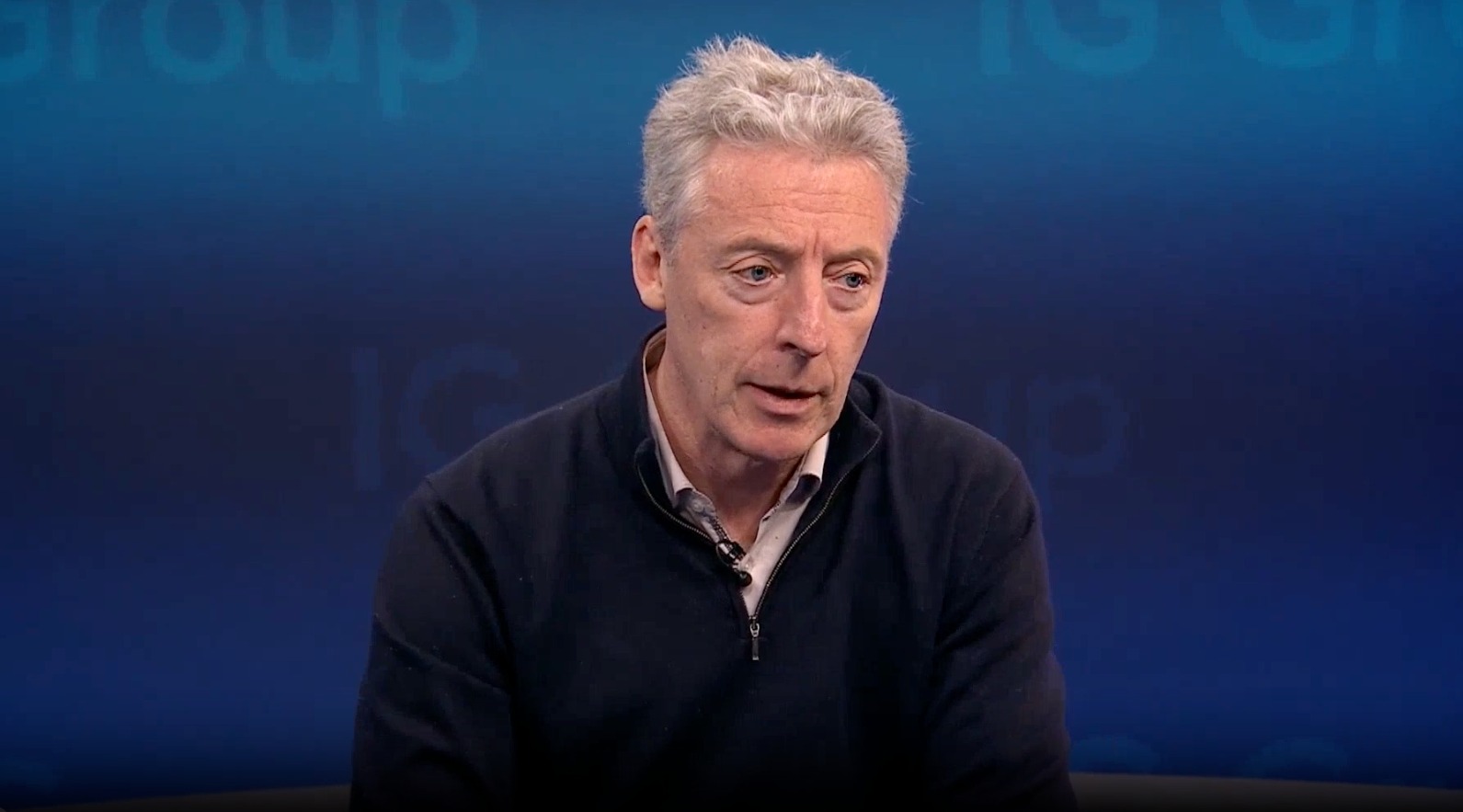
Chris Hayward, Policy Chairman of the City of London Corporation
Chris
Hayward, who leads policy for the City of London Corporation, didn't mince
words about the challenge facing Britain's capital markets. "We need to
get more IPOs happening in London," he told reporters during a visit to
Shanghai this week. "We don't want to lose business across the
Atlantic."
The
contrast between the two financial hubs couldn't be starker. Hong Kong has
pulled in more than $27 billion from new share sales and additional offerings
in just the first half of 2025, already surpassing the annual totals from the
previous three years. Meanwhile, London has managed only four pending or
trading IPOs this year, a figure that underscores how far the city has fallen
behind its Asian rival.
London's
stock connect program with China, launched back in 2019, was supposed to bridge
this gap. The initiative allows companies from both countries to list on each
other's exchanges through depositary receipts, giving investors easier access
to cross-border opportunities.
But six
years later, the results have been disappointing - only a handful of Chinese
firms, including Huatai Securities, have taken advantage of the program,
raising a combined $6.6 billion with lackluster trading volumes.
Regulatory Hurdles and
Market Dynamics
LSE has
been trying to make itself more attractive to Chinese companies by relaxing
some listing requirements. David Schwimmer, CEO of the London Stock Exchange
Group, previously indicated the exchange was looking at more flexible
accounting standards to accommodate Chinese listings through Global Depository
Receipts.
However,
Chinese companies face their own regulatory challenges at home. China's
securities regulator has tightened oversight of overseas listings, creating
additional hurdles for companies looking to raise capital abroad. Some
high-profile cases, like fast-fashion giant Shein, have seen companies abandon
London IPO plans due to regulatory delays and pivot to other markets like Hong
Kong.
Beyond
attracting listings, London is also working to strengthen its position as an
offshore yuan trading center. The city established a working group with China's
central bank in 2018 to monitor yuan markets in the UK capital. Hayward said
the authority has been encouraging global asset managers to create new
yuan-denominated products to boost the currency's international use.
Market
IPO Count
Proceeds
YoY Change
(Proceeds)
Global
Ranking
USA
176
$33.0 billion
+48%
#2 globally
Hong Kong
63
$10.7
billion*
+78%
#4 globally
UK
18
$0.95
billion*
-18.3%
Outside top
10
*Converted
to USD at approximate exchange rates
Challenges at Home
London's
IPO struggles aren't just about competition from Asia. The city faces domestic
headwinds, including recent tax changes affecting wealthy non-domiciled
residents and tighter immigration policies. While Hayward downplayed these
concerns, he acknowledged they could impact London's appeal as a global
financial center and urged the government to review the non-dom tax situation.
The London
market's valuation discount compared to other global exchanges has also made it
less attractive for companies considering where to list their shares. This
structural challenge, combined with broader European deal drought conditions,
has created a perfect storm for London's equity markets.
As Hayward
heads to Hong Kong later this week for IPO discussions, the pressure is on to
find ways to reverse London's fortunes and reclaim its position as a premier
destination for global capital raising.
London's
financial district is ramping up efforts to lure Chinese companies to its stock
exchange as the city grapples with one of its worst IPO droughts in recent
memory. The push comes as Europe's largest financial center watches Hong Kong
rake in billions while London struggles to attract new listings.
Hong Kong's Success
Highlights London's Struggles
Chris Hayward, Policy Chairman of the City of London Corporation
Chris
Hayward, who leads policy for the City of London Corporation, didn't mince
words about the challenge facing Britain's capital markets. "We need to
get more IPOs happening in London," he told reporters during a visit to
Shanghai this week. "We don't want to lose business across the
Atlantic."
The
contrast between the two financial hubs couldn't be starker. Hong Kong has
pulled in more than $27 billion from new share sales and additional offerings
in just the first half of 2025, already surpassing the annual totals from the
previous three years. Meanwhile, London has managed only four pending or
trading IPOs this year, a figure that underscores how far the city has fallen
behind its Asian rival.
London's
stock connect program with China, launched back in 2019, was supposed to bridge
this gap. The initiative allows companies from both countries to list on each
other's exchanges through depositary receipts, giving investors easier access
to cross-border opportunities.
But six
years later, the results have been disappointing - only a handful of Chinese
firms, including Huatai Securities, have taken advantage of the program,
raising a combined $6.6 billion with lackluster trading volumes.
Regulatory Hurdles and
Market Dynamics
LSE has
been trying to make itself more attractive to Chinese companies by relaxing
some listing requirements. David Schwimmer, CEO of the London Stock Exchange
Group, previously indicated the exchange was looking at more flexible
accounting standards to accommodate Chinese listings through Global Depository
Receipts.
However,
Chinese companies face their own regulatory challenges at home. China's
securities regulator has tightened oversight of overseas listings, creating
additional hurdles for companies looking to raise capital abroad. Some
high-profile cases, like fast-fashion giant Shein, have seen companies abandon
London IPO plans due to regulatory delays and pivot to other markets like Hong
Kong.
Beyond
attracting listings, London is also working to strengthen its position as an
offshore yuan trading center. The city established a working group with China's
central bank in 2018 to monitor yuan markets in the UK capital. Hayward said
the authority has been encouraging global asset managers to create new
yuan-denominated products to boost the currency's international use.
Market
IPO Count
Proceeds
YoY Change
(Proceeds)
Global
Ranking
USA
176
$33.0 billion
+48%
#2 globally
Hong Kong
63
$10.7
billion*
+78%
#4 globally
UK
18
$0.95
billion*
-18.3%
Outside top
10
*Converted
to USD at approximate exchange rates
Challenges at Home
London's
IPO struggles aren't just about competition from Asia. The city faces domestic
headwinds, including recent tax changes affecting wealthy non-domiciled
residents and tighter immigration policies. While Hayward downplayed these
concerns, he acknowledged they could impact London's appeal as a global
financial center and urged the government to review the non-dom tax situation.
The London
market's valuation discount compared to other global exchanges has also made it
less attractive for companies considering where to list their shares. This
structural challenge, combined with broader European deal drought conditions,
has created a perfect storm for London's equity markets.
As Hayward
heads to Hong Kong later this week for IPO discussions, the pressure is on to
find ways to reverse London's fortunes and reclaim its position as a premier
destination for global capital raising.
Damian Chmiel is a Senior Analyst & Editor at Finance Magnates with more than 15 years of experience in the CFD and online trading industry. Active as both a trader and journalist since 2010, he focuses on broker coverage, fintech innovation, and regulatory developments across Europe, the Middle East, and Asia.
His work includes interviews with C-level leaders at major brokerages and fintech platforms, as well as co-authoring Finance Magnates’ quarterly industry benchmarking reports. Damian’s reporting is data-driven, market-aware, and grounded in direct industry engagement. His analysis and commentary have also been cited by external media outlets, including Investing.com, Binance, The Asset, Stockhead, and Dispatch.
Education:
MA in Finance and Accounting, Cracow University of Economics
Singapore Independent Wealth Sector Has Less Than 10% Market Share, but Vast Room for Growth
FP Markets Winner Spotlight 🏆 | Global Broker of the Year 2025 #Trading #Broker #Innovation #Shorts
FP Markets Winner Spotlight 🏆 | Global Broker of the Year 2025 #Trading #Broker #Innovation #Shorts
FP Markets takes the spotlight as Global Broker of the Year 2025 at the Finance Magnates Awards.
Martin Stoilov, Head of Client Experience, shares that trust, innovation, and people played a key role in the company’s success, supported by a strong foundation of integrity and client-centricity.
Following this milestone, FP Markets continues to focus on growth, technology investment, and its core values of transparency and excellence.
👉 Be part of FM Awards 2026: https://awards.financemagnates.com/#nominate
FP Markets takes the spotlight as Global Broker of the Year 2025 at the Finance Magnates Awards.
Martin Stoilov, Head of Client Experience, shares that trust, innovation, and people played a key role in the company’s success, supported by a strong foundation of integrity and client-centricity.
Following this milestone, FP Markets continues to focus on growth, technology investment, and its core values of transparency and excellence.
👉 Be part of FM Awards 2026: https://awards.financemagnates.com/#nominate
In this video, we review @HolaPrimeMarketsOfficial, a multi-asset forex and CFDs broker offering different account types, trading platforms, and flexible trading conditions.
We cover the broker’s overall offering, including account options, trading environment, platforms like MT4 and MT5, and additional services such as managed accounts and fast withdrawals.
Watch the full video to see if Hola Prime Markets fits your trading needs.
📣 Stay up to date with the latest in finance and trading. Follow Finance Magnates for industry news, insights, and global event coverage.
Connect with us:
🔗 LinkedIn: /financemagnates
👍 Facebook: /financemagnates
📸 Instagram: https://www.instagram.com/financemagnates
🐦 X: https://x.com/financemagnates
🎥 TikTok: https://www.tiktok.com/tag/financemagnates
▶️ YouTube: /@financemagnates_official
#HolaPrime #ForexBroker #CFDTrading #FinanceMagnates #Trading #Forex #BrokerReview
In this video, we review @HolaPrimeMarketsOfficial, a multi-asset forex and CFDs broker offering different account types, trading platforms, and flexible trading conditions.
We cover the broker’s overall offering, including account options, trading environment, platforms like MT4 and MT5, and additional services such as managed accounts and fast withdrawals.
Watch the full video to see if Hola Prime Markets fits your trading needs.
📣 Stay up to date with the latest in finance and trading. Follow Finance Magnates for industry news, insights, and global event coverage.
Connect with us:
🔗 LinkedIn: /financemagnates
👍 Facebook: /financemagnates
📸 Instagram: https://www.instagram.com/financemagnates
🐦 X: https://x.com/financemagnates
🎥 TikTok: https://www.tiktok.com/tag/financemagnates
▶️ YouTube: /@financemagnates_official
#HolaPrime #ForexBroker #CFDTrading #FinanceMagnates #Trading #Forex #BrokerReview
Hola Prime Review: What You Need to Know | Full Breakdown by Finance Magnates
Hola Prime Review: What You Need to Know | Full Breakdown by Finance Magnates
In this video, we review @HolaPrime_Global, a proprietary trading firm offering evaluation programs and performance-based payouts in simulated market environments.
We cover how the challenge model works, including account types, profit splits (up to 95%), trading rules, and what it takes to reach a funded account. You’ll also learn about available platforms like MT4, MT5, cTrader, and more, along with insights into payouts, support, and trading conditions.
Watch the full video to see if Hola Prime fits your trading style.
📣 Stay up to date with the latest in finance and trading. Follow Finance Magnates for industry news, insights, and global event coverage.
Connect with us:
🔗 LinkedIn: /financemagnates
👍 Facebook: /financemagnates
📸 Instagram: https://www.instagram.com/financemagnates
🐦 X: https://x.com/financemagnates
🎥 TikTok: https://www.tiktok.com/tag/financemagnates
▶️ YouTube: /@financemagnates_official
#HolaPrime #PropFirm #Trading #FinanceMagnates #Forex #FuturesTrading #TradingReview #PropFirmReview
In this video, we review @HolaPrime_Global, a proprietary trading firm offering evaluation programs and performance-based payouts in simulated market environments.
We cover how the challenge model works, including account types, profit splits (up to 95%), trading rules, and what it takes to reach a funded account. You’ll also learn about available platforms like MT4, MT5, cTrader, and more, along with insights into payouts, support, and trading conditions.
Watch the full video to see if Hola Prime fits your trading style.
📣 Stay up to date with the latest in finance and trading. Follow Finance Magnates for industry news, insights, and global event coverage.
Connect with us:
🔗 LinkedIn: /financemagnates
👍 Facebook: /financemagnates
📸 Instagram: https://www.instagram.com/financemagnates
🐦 X: https://x.com/financemagnates
🎥 TikTok: https://www.tiktok.com/tag/financemagnates
▶️ YouTube: /@financemagnates_official
#HolaPrime #PropFirm #Trading #FinanceMagnates #Forex #FuturesTrading #TradingReview #PropFirmReview
Axi Winner Spotlight 🏆 | Global Most Innovative Broker 2025 #Innovation #Trading #Fintech #Broker
Axi Winner Spotlight 🏆 | Global Most Innovative Broker 2025 #Innovation #Trading #Fintech #Broker
Axi takes the spotlight at the Finance Magnates Awards, winning Global Most Innovative Broker 2025.
Olivia Xenofontos and Ivanna Openko share how the team will feel: proud, motivated, and ready to keep delivering.
They also describe the night as well-organized, focused, and enjoyable for all.
👉 Be part of FM Awards 2026.
Axi takes the spotlight at the Finance Magnates Awards, winning Global Most Innovative Broker 2025.
Olivia Xenofontos and Ivanna Openko share how the team will feel: proud, motivated, and ready to keep delivering.
They also describe the night as well-organized, focused, and enjoyable for all.
👉 Be part of FM Awards 2026.
Recognition that matters.
Built on transparency.
Driven by the industry.
The Finance Magnates Awards 2026.
Nominations are now open.
🔗 https://awards.financemagnates.com/?utm_source=SM&utm_medium=social&utm_campaign=recognition-matters
Recognition that matters.
Built on transparency.
Driven by the industry.
The Finance Magnates Awards 2026.
Nominations are now open.
🔗 https://awards.financemagnates.com/?utm_source=SM&utm_medium=social&utm_campaign=recognition-matters