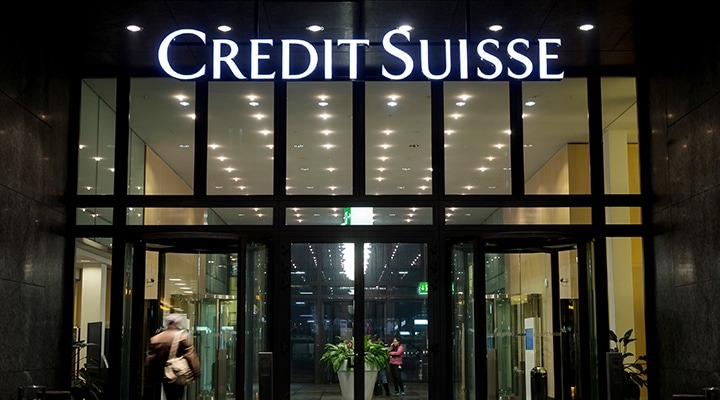
Big banks' shares are falling after the SVB collapse, confirmed on 10 March 2023.
Swiss lender's stock price touched a new record low on Monday morning.
Credit Suisse
Shares of
the troubled banking giant Credit Suisse reached new record lows on Monday,
falling more than 10% in the early morning trading on the Swiss stock exchange, SIX. Banks worldwide, including Europe, have been losing ground since Friday
following news that technology company-backed Silicon Valley Bank (SVB) is
declaring bankruptcy.
This has
raised fears that it could be a new 'black swan' for the financial market and
bring a scenario similar to the collapse of Lehman Brothers in 2008.
SVB Crisis Pushes Credit
Suisse to Record Lows
Shares in
Credit Suisse (SIX: CSGN) started this week at EUR 2.5 but are down around
11% since the start of the session and currently cost EUR 2.21, which is an all-time
low. The lender has been losing around 20% since the beginning of the year
after its shares lost almost 70% in 2022.
Although
the most recent slump is directly connected with the SVB crisis, previous declines
are largely to blame for the bank's internal problems, shrinking revenues and
regulatory and legal controversies.
Credit Suisse Shares Test New All-Time Low. Source: Tradingview.com
The black
clouds have been hanging over Swiss banking for a more extended period. Last week, the
company announced postponing
the annual report following the US Securities and Exchange Commission (SEC)
call. In addition, the investment banking team in Japan has been significantly
reduced.
As per
reports in the media, Credit Suisse was compelled to postpone the release of
its annual report as it received a subpoena from the SEC in the prior evening
concerning cash flow statements that go back three years.
Credit Suisse Reported CHF
7.3 Billion in Annual Losses
The Swiss
lender reported massive annual losses that missed analyst expectations a month
ago. According to the financial statement, Credit Suisse lost CHF 7.3 billion
in 2022 compared to CHF 6.53 forecasted by industry experts. The fourth quarter
results fell short of projections and were a nail in the lender's coffin. The
net loss amounted to CHF 1.4 billion, which was CHF 800 million higher than was
forecasted.
In the
third quarter of 2022, the bank disclosed a larger loss of CHF 3.8 billion and
acknowledged the necessity for "radical restructuring." This
included plans to generate $4 billion in fresh capital, terminate 9,000 jobs,
and establish CS First Boston as an independent investment entity in the United
States. Credit Suisse commenced job cuts in January, beginning with European
investment bankers.
Currently, Credit
Suisse is facing the most significant reputation crisis in its
166-year history. A string of recent scandals, such as the $5.5 billion loss in
the Archegos collapse and the imposed settlements of $495 million in the US and $234 million in France, have considerably tarnished its image.
Although
the CS Management Board wanted to distance itself from further scandals, the
Swiss Financial Market Supervisory Authority, FINMA, recently concluded enforcement
proceedings regarding Credit Suisse's business relationship with financier Lex
Greensill and his companies. The financial watchdog states that the lender
"seriously breached" supervision responsibilities.
Large Banks Lose Together
with Credit Suisse
Credit
Suisse's declines at the start of the week are not alone. The Dow Jones U.S.
Banks Index, which measures the health of the largest banks that make up the
benchmark, saw steep declines and now stands at 432.98, which is its lowest level since
October.
Dow Jones U.S. Banks Index. Source: CNBC.com
Goldman
Sachs shares lost 4.2% on Friday and closed at $327.67, which is the lowest level in
five months. Ahead of Monday's session opening on Wall Street, the shares are losing 1.78%
and falling in pre-trading to $321.85. Investors
fear that the collapse of SBV will trigger a wave of bank failures.
Furthermore, SVB's
collapse triggered increased volatility in cryptocurrencies and
traditional currencies. Bitcoin (BTC) was briefly testing levels below the
psychological threshold of $20,000. At the same time, the dollar index rebounded
from a three-month high amid renewed concerns that the US Federal Reserve will
abandon further interest rate increases.
Shares of
the troubled banking giant Credit Suisse reached new record lows on Monday,
falling more than 10% in the early morning trading on the Swiss stock exchange, SIX. Banks worldwide, including Europe, have been losing ground since Friday
following news that technology company-backed Silicon Valley Bank (SVB) is
declaring bankruptcy.
This has
raised fears that it could be a new 'black swan' for the financial market and
bring a scenario similar to the collapse of Lehman Brothers in 2008.
SVB Crisis Pushes Credit
Suisse to Record Lows
Shares in
Credit Suisse (SIX: CSGN) started this week at EUR 2.5 but are down around
11% since the start of the session and currently cost EUR 2.21, which is an all-time
low. The lender has been losing around 20% since the beginning of the year
after its shares lost almost 70% in 2022.
Although
the most recent slump is directly connected with the SVB crisis, previous declines
are largely to blame for the bank's internal problems, shrinking revenues and
regulatory and legal controversies.
Credit Suisse Shares Test New All-Time Low. Source: Tradingview.com
The black
clouds have been hanging over Swiss banking for a more extended period. Last week, the
company announced postponing
the annual report following the US Securities and Exchange Commission (SEC)
call. In addition, the investment banking team in Japan has been significantly
reduced.
As per
reports in the media, Credit Suisse was compelled to postpone the release of
its annual report as it received a subpoena from the SEC in the prior evening
concerning cash flow statements that go back three years.
Credit Suisse Reported CHF
7.3 Billion in Annual Losses
The Swiss
lender reported massive annual losses that missed analyst expectations a month
ago. According to the financial statement, Credit Suisse lost CHF 7.3 billion
in 2022 compared to CHF 6.53 forecasted by industry experts. The fourth quarter
results fell short of projections and were a nail in the lender's coffin. The
net loss amounted to CHF 1.4 billion, which was CHF 800 million higher than was
forecasted.
In the
third quarter of 2022, the bank disclosed a larger loss of CHF 3.8 billion and
acknowledged the necessity for "radical restructuring." This
included plans to generate $4 billion in fresh capital, terminate 9,000 jobs,
and establish CS First Boston as an independent investment entity in the United
States. Credit Suisse commenced job cuts in January, beginning with European
investment bankers.
Currently, Credit
Suisse is facing the most significant reputation crisis in its
166-year history. A string of recent scandals, such as the $5.5 billion loss in
the Archegos collapse and the imposed settlements of $495 million in the US and $234 million in France, have considerably tarnished its image.
Although
the CS Management Board wanted to distance itself from further scandals, the
Swiss Financial Market Supervisory Authority, FINMA, recently concluded enforcement
proceedings regarding Credit Suisse's business relationship with financier Lex
Greensill and his companies. The financial watchdog states that the lender
"seriously breached" supervision responsibilities.
Large Banks Lose Together
with Credit Suisse
Credit
Suisse's declines at the start of the week are not alone. The Dow Jones U.S.
Banks Index, which measures the health of the largest banks that make up the
benchmark, saw steep declines and now stands at 432.98, which is its lowest level since
October.
Dow Jones U.S. Banks Index. Source: CNBC.com
Goldman
Sachs shares lost 4.2% on Friday and closed at $327.67, which is the lowest level in
five months. Ahead of Monday's session opening on Wall Street, the shares are losing 1.78%
and falling in pre-trading to $321.85. Investors
fear that the collapse of SBV will trigger a wave of bank failures.
Furthermore, SVB's
collapse triggered increased volatility in cryptocurrencies and
traditional currencies. Bitcoin (BTC) was briefly testing levels below the
psychological threshold of $20,000. At the same time, the dollar index rebounded
from a three-month high amid renewed concerns that the US Federal Reserve will
abandon further interest rate increases.
Damian Chmiel is a Senior Analyst & Editor at Finance Magnates with more than 15 years of experience in the CFD and online trading industry. Active as both a trader and journalist since 2010, he focuses on broker coverage, fintech innovation, and regulatory developments across Europe, the Middle East, and Asia.
His work includes interviews with C-level leaders at major brokerages and fintech platforms, as well as co-authoring Finance Magnates’ quarterly industry benchmarking reports. Damian’s reporting is data-driven, market-aware, and grounded in direct industry engagement. His analysis and commentary have also been cited by external media outlets, including Investing.com, Binance, The Asset, Stockhead, and Dispatch.
Education:
MA in Finance and Accounting, Cracow University of Economics
MetaTrader 5 Brokers Gain Direct Access to Vantage Liquidity via MetaQuotes’ Ultency
FP Markets Winner Spotlight 🏆 | Global Broker of the Year 2025 #Trading #Broker #Innovation #Shorts
FP Markets Winner Spotlight 🏆 | Global Broker of the Year 2025 #Trading #Broker #Innovation #Shorts
FP Markets takes the spotlight as Global Broker of the Year 2025 at the Finance Magnates Awards.
Martin Stoilov, Head of Client Experience, shares that trust, innovation, and people played a key role in the company’s success, supported by a strong foundation of integrity and client-centricity.
Following this milestone, FP Markets continues to focus on growth, technology investment, and its core values of transparency and excellence.
👉 Be part of FM Awards 2026: https://awards.financemagnates.com/#nominate
FP Markets takes the spotlight as Global Broker of the Year 2025 at the Finance Magnates Awards.
Martin Stoilov, Head of Client Experience, shares that trust, innovation, and people played a key role in the company’s success, supported by a strong foundation of integrity and client-centricity.
Following this milestone, FP Markets continues to focus on growth, technology investment, and its core values of transparency and excellence.
👉 Be part of FM Awards 2026: https://awards.financemagnates.com/#nominate
In this video, we review @HolaPrimeMarketsOfficial, a multi-asset forex and CFDs broker offering different account types, trading platforms, and flexible trading conditions.
We cover the broker’s overall offering, including account options, trading environment, platforms like MT4 and MT5, and additional services such as managed accounts and fast withdrawals.
Watch the full video to see if Hola Prime Markets fits your trading needs.
📣 Stay up to date with the latest in finance and trading. Follow Finance Magnates for industry news, insights, and global event coverage.
Connect with us:
🔗 LinkedIn: /financemagnates
👍 Facebook: /financemagnates
📸 Instagram: https://www.instagram.com/financemagnates
🐦 X: https://x.com/financemagnates
🎥 TikTok: https://www.tiktok.com/tag/financemagnates
▶️ YouTube: /@financemagnates_official
#HolaPrime #ForexBroker #CFDTrading #FinanceMagnates #Trading #Forex #BrokerReview
In this video, we review @HolaPrimeMarketsOfficial, a multi-asset forex and CFDs broker offering different account types, trading platforms, and flexible trading conditions.
We cover the broker’s overall offering, including account options, trading environment, platforms like MT4 and MT5, and additional services such as managed accounts and fast withdrawals.
Watch the full video to see if Hola Prime Markets fits your trading needs.
📣 Stay up to date with the latest in finance and trading. Follow Finance Magnates for industry news, insights, and global event coverage.
Connect with us:
🔗 LinkedIn: /financemagnates
👍 Facebook: /financemagnates
📸 Instagram: https://www.instagram.com/financemagnates
🐦 X: https://x.com/financemagnates
🎥 TikTok: https://www.tiktok.com/tag/financemagnates
▶️ YouTube: /@financemagnates_official
#HolaPrime #ForexBroker #CFDTrading #FinanceMagnates #Trading #Forex #BrokerReview
Hola Prime Review: What You Need to Know | Full Breakdown by Finance Magnates
Hola Prime Review: What You Need to Know | Full Breakdown by Finance Magnates
In this video, we review @HolaPrime_Global, a proprietary trading firm offering evaluation programs and performance-based payouts in simulated market environments.
We cover how the challenge model works, including account types, profit splits (up to 95%), trading rules, and what it takes to reach a funded account. You’ll also learn about available platforms like MT4, MT5, cTrader, and more, along with insights into payouts, support, and trading conditions.
Watch the full video to see if Hola Prime fits your trading style.
📣 Stay up to date with the latest in finance and trading. Follow Finance Magnates for industry news, insights, and global event coverage.
Connect with us:
🔗 LinkedIn: /financemagnates
👍 Facebook: /financemagnates
📸 Instagram: https://www.instagram.com/financemagnates
🐦 X: https://x.com/financemagnates
🎥 TikTok: https://www.tiktok.com/tag/financemagnates
▶️ YouTube: /@financemagnates_official
#HolaPrime #PropFirm #Trading #FinanceMagnates #Forex #FuturesTrading #TradingReview #PropFirmReview
In this video, we review @HolaPrime_Global, a proprietary trading firm offering evaluation programs and performance-based payouts in simulated market environments.
We cover how the challenge model works, including account types, profit splits (up to 95%), trading rules, and what it takes to reach a funded account. You’ll also learn about available platforms like MT4, MT5, cTrader, and more, along with insights into payouts, support, and trading conditions.
Watch the full video to see if Hola Prime fits your trading style.
📣 Stay up to date with the latest in finance and trading. Follow Finance Magnates for industry news, insights, and global event coverage.
Connect with us:
🔗 LinkedIn: /financemagnates
👍 Facebook: /financemagnates
📸 Instagram: https://www.instagram.com/financemagnates
🐦 X: https://x.com/financemagnates
🎥 TikTok: https://www.tiktok.com/tag/financemagnates
▶️ YouTube: /@financemagnates_official
#HolaPrime #PropFirm #Trading #FinanceMagnates #Forex #FuturesTrading #TradingReview #PropFirmReview
Axi Winner Spotlight 🏆 | Global Most Innovative Broker 2025 #Innovation #Trading #Fintech #Broker
Axi Winner Spotlight 🏆 | Global Most Innovative Broker 2025 #Innovation #Trading #Fintech #Broker
Axi takes the spotlight at the Finance Magnates Awards, winning Global Most Innovative Broker 2025.
Olivia Xenofontos and Ivanna Openko share how the team will feel: proud, motivated, and ready to keep delivering.
They also describe the night as well-organized, focused, and enjoyable for all.
👉 Be part of FM Awards 2026.
Axi takes the spotlight at the Finance Magnates Awards, winning Global Most Innovative Broker 2025.
Olivia Xenofontos and Ivanna Openko share how the team will feel: proud, motivated, and ready to keep delivering.
They also describe the night as well-organized, focused, and enjoyable for all.
👉 Be part of FM Awards 2026.
Recognition that matters.
Built on transparency.
Driven by the industry.
The Finance Magnates Awards 2026.
Nominations are now open.
🔗 https://awards.financemagnates.com/?utm_source=SM&utm_medium=social&utm_campaign=recognition-matters
Recognition that matters.
Built on transparency.
Driven by the industry.
The Finance Magnates Awards 2026.
Nominations are now open.
🔗 https://awards.financemagnates.com/?utm_source=SM&utm_medium=social&utm_campaign=recognition-matters