Lars Steffensen comes from a Danish shipping family, but found his calling in metals and commodities leading to a career spanning some 30 years. He’s worked in London, Hong Kong, Switzerland and the US. In 2007, he started his own fund, Ebullio, located in a UK resort town, Southend-on-Sea.
Finance Magnates spoke with Managing Partner Steffensen about ultra-high risk investments, and to [name redacted], about using advanced trading technologies.
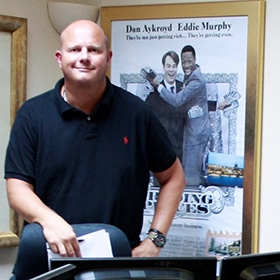
Lars Steffensen- comes from a Danish shipping family.
Finance Magnates: Which commodities are you invested in?
Lars Steffensen: Primarily energy, and base and precious metals. We have diversified over the last four years from being a pure futures or physical trading fund to also owning production - again base metals and precious only. In terms of geographies, we trade in the UK and US.
We manage $250 million and that is spread across futures managed accounts. By the nature of the fact that we are in the very high risk end of the commodity hedge fund segment, our AuM will always be limited. We won’t take more than 5% of anyone’s money.
Our cornerstone investors are mainly family offices, high net worths, or fund of funds. As their own AuMs grow they will allocate more to us, but they will stay within the 5% threshold.
We are building Europe’s largest copper mine in Turkey with a Russian and Chinese consortium. In the last month in particular it’s become very difficult with the various Russian sanctions that have been put on Turkey over the downing of the Russian combat aircraft. We are still going ahead with the project, but we are managing the political intricacies of what we are doing with the utmost tact.
The quant system trades across all commodities and it’s a long/short system so whether the prices go up or down, doesn’t really matter to us as long as we get it right
FM: You also run an internal quant system?
LS: Yes, for the last three or four years. The quant fund is at $4 million, $2 million in-house and $2 million from cornerstone investors. It will open at about $125 million, meaning we expect to have commitments from people who know us and the joint portfolio managers, to open with that kind of money spread between the fund, and managed accounts that will be trading the system.
The commodities space in terms of fundraising has become increasingly difficult with the slide in energy prices and with the decimation of all of the natural resources stocks, however, the quant system trades across all commodities and it’s a long/short system so whether the prices go up or down, doesn’t really matter to us as long as we get it right.
FM: When did you launch?
LS: We launched January 1, 2015 with a Cayman Island fund. The reason I even looked at quant is that before 2008 the best performing systems out there were AHL Man or the Goldman quant system. They all got absolutely hammered in the first one or two years of the crisis, but when the markets do return to ‘normal’ one can expect that these systems will make steady money without too many big drawdowns.
[name redacted]: We build our own software from scratch, and built a back testing application. It works more like a walk forward application, and our methodology is very trend-based.
We choose our signals very carefully in regards to how our portfolio is constructed. We go for a very balanced portfolio because we don’t want to end up with a portfolio that is very one-sided - so being long heat oil/crude oil and natural gas/crude oil, or other interrelated commodities.
Because we use a balancing methodology in our portfolio, that will limit the signals that we generate. We are also moving into the artificial intelligence and machine learning space, trying to weed out these false breaks, these false signals.
FM: What do you mean by artificial intelligence exactly?
[name redacted]: Like decisions trees. We are now actively constructing something that would give us meaningful vetting of our signals. All our signals are price signals, we are not into the market sentiment space at all.
We are not high frequency either, we are trying to capture the longer-based trends. Holding period is around two to six weeks on successful trades. Unsuccessful trades are closed down very early on. We have a very narrow stop loss. False signals get taken out fairly soon if it doesn’t go in our direction.
We are having pretty good success on the decision trees at the moment but it requires more testing.
FM: Do investors worry about the system being a ‘black box’?
Lars Steffensen: There is a whole segment of our current investor base that will send us more money for stuff like the quant system. Our other funds are very high risk products.
We take risk for a living and there are two things in life that will never change - gravity and the risk/reward ratio. You cannot make the kind of money that we sometimes make without taking large risks.
One of our many virtues here is patience. We are prepared to sit and wait for a trade that is in the 99th percentile of probability to make money as long as it takes. Even if people start giving us a nickname like ‘Sitting Bull’, we will sit on the bloody trade until it goes where we think it’s going to go. There’s a saying: if you sit by the river long enough the bodies of your enemies will drift by. If you sit by the river long enough the trade will come by.
A Waiting Game
FM: What are you patiently waiting for at the moment?
LS: Our ‘gimme’ trade for the last seven to eight years has been gold/platinum. Whenever gold goes above platinum, we will sell the gold and buy the platinum. We will wait and we will make money.
Platinum has been pressured down by the trend guys, the quant systems have sold platinum. As soon as their momentum goes away, plat stabilizes, price goes to moving average and they all stop out.
If we can get platinum to rally a bit more we might get them long and that’s what’s going to put it back at level against gold. We can sit for a year and not trade it but when we do trade it, we trade big.
The big risks I take tend to be some sort of intra-commodities spread, like WTI-Brent or zinc-lead.
Technical trading is an avalanche these days. We have someone who follows MACH counts quite closely and gives us a weekly report. We certainly take it into account when trading because we don’t particularly want to go against it.
As a proxy to go short China, commodities have been an obvious candidate. Iron ore, copper in particular
FM: Any predictions for the commodities markets? They’ve certainly dropped off from the boom years.
LS: We’ve been sold off quite a bit. A lot of the big macro guys are struggling to find a way to sell China short.
You couldn’t sell the stock market short if you ever want to be able to talk to the Chinese again for political reasons, it’s very difficult to get a swap out there, or anyone that wants to take that kind of risk because they can’t hedge it. So, as a proxy to go short China, commodities have been an obvious candidate. Iron ore, copper in particular.
There’s a lot of short macro money in commodities that doesn’t really want to be there, just wants to be short China. That goes for the producers stocks as well, the big conglomerates. China is going to go up and down, but it’s not going away and I don’t think they are going to stop growing.
All the markets could fall further, we could still see some sellouts and capitulation on the markets. But when people start to get out, they will go up as fast as they went down because there isn’t the volume to allow them out. Particularly not if some fundamentals change.
I think a lot of markets are going to behave very volatile and in very weird and wonderful ways, including bond and equity markets. I think it’s going to be a good time for us.
This interview has been edited and condensed,
May 30, 2018: Name of interviewee was redacted upon request
Lars Steffensen comes from a Danish shipping family, but found his calling in metals and commodities leading to a career spanning some 30 years. He’s worked in London, Hong Kong, Switzerland and the US. In 2007, he started his own fund, Ebullio, located in a UK resort town, Southend-on-Sea.
Finance Magnates spoke with Managing Partner Steffensen about ultra-high risk investments, and to [name redacted], about using advanced trading technologies.
Lars Steffensen- comes from a Danish shipping family.
Finance Magnates: Which commodities are you invested in?
Lars Steffensen: Primarily energy, and base and precious metals. We have diversified over the last four years from being a pure futures or physical trading fund to also owning production - again base metals and precious only. In terms of geographies, we trade in the UK and US.
We manage $250 million and that is spread across futures managed accounts. By the nature of the fact that we are in the very high risk end of the commodity hedge fund segment, our AuM will always be limited. We won’t take more than 5% of anyone’s money.
Our cornerstone investors are mainly family offices, high net worths, or fund of funds. As their own AuMs grow they will allocate more to us, but they will stay within the 5% threshold.
We are building Europe’s largest copper mine in Turkey with a Russian and Chinese consortium. In the last month in particular it’s become very difficult with the various Russian sanctions that have been put on Turkey over the downing of the Russian combat aircraft. We are still going ahead with the project, but we are managing the political intricacies of what we are doing with the utmost tact.
The quant system trades across all commodities and it’s a long/short system so whether the prices go up or down, doesn’t really matter to us as long as we get it right
FM: You also run an internal quant system?
LS: Yes, for the last three or four years. The quant fund is at $4 million, $2 million in-house and $2 million from cornerstone investors. It will open at about $125 million, meaning we expect to have commitments from people who know us and the joint portfolio managers, to open with that kind of money spread between the fund, and managed accounts that will be trading the system.
The commodities space in terms of fundraising has become increasingly difficult with the slide in energy prices and with the decimation of all of the natural resources stocks, however, the quant system trades across all commodities and it’s a long/short system so whether the prices go up or down, doesn’t really matter to us as long as we get it right.
FM: When did you launch?
LS: We launched January 1, 2015 with a Cayman Island fund. The reason I even looked at quant is that before 2008 the best performing systems out there were AHL Man or the Goldman quant system. They all got absolutely hammered in the first one or two years of the crisis, but when the markets do return to ‘normal’ one can expect that these systems will make steady money without too many big drawdowns.
[name redacted]: We build our own software from scratch, and built a back testing application. It works more like a walk forward application, and our methodology is very trend-based.
We choose our signals very carefully in regards to how our portfolio is constructed. We go for a very balanced portfolio because we don’t want to end up with a portfolio that is very one-sided - so being long heat oil/crude oil and natural gas/crude oil, or other interrelated commodities.
Because we use a balancing methodology in our portfolio, that will limit the signals that we generate. We are also moving into the artificial intelligence and machine learning space, trying to weed out these false breaks, these false signals.
FM: What do you mean by artificial intelligence exactly?
[name redacted]: Like decisions trees. We are now actively constructing something that would give us meaningful vetting of our signals. All our signals are price signals, we are not into the market sentiment space at all.
We are not high frequency either, we are trying to capture the longer-based trends. Holding period is around two to six weeks on successful trades. Unsuccessful trades are closed down very early on. We have a very narrow stop loss. False signals get taken out fairly soon if it doesn’t go in our direction.
We are having pretty good success on the decision trees at the moment but it requires more testing.
FM: Do investors worry about the system being a ‘black box’?
Lars Steffensen: There is a whole segment of our current investor base that will send us more money for stuff like the quant system. Our other funds are very high risk products.
We take risk for a living and there are two things in life that will never change - gravity and the risk/reward ratio. You cannot make the kind of money that we sometimes make without taking large risks.
One of our many virtues here is patience. We are prepared to sit and wait for a trade that is in the 99th percentile of probability to make money as long as it takes. Even if people start giving us a nickname like ‘Sitting Bull’, we will sit on the bloody trade until it goes where we think it’s going to go. There’s a saying: if you sit by the river long enough the bodies of your enemies will drift by. If you sit by the river long enough the trade will come by.
A Waiting Game
FM: What are you patiently waiting for at the moment?
LS: Our ‘gimme’ trade for the last seven to eight years has been gold/platinum. Whenever gold goes above platinum, we will sell the gold and buy the platinum. We will wait and we will make money.
Platinum has been pressured down by the trend guys, the quant systems have sold platinum. As soon as their momentum goes away, plat stabilizes, price goes to moving average and they all stop out.
If we can get platinum to rally a bit more we might get them long and that’s what’s going to put it back at level against gold. We can sit for a year and not trade it but when we do trade it, we trade big.
The big risks I take tend to be some sort of intra-commodities spread, like WTI-Brent or zinc-lead.
Technical trading is an avalanche these days. We have someone who follows MACH counts quite closely and gives us a weekly report. We certainly take it into account when trading because we don’t particularly want to go against it.
As a proxy to go short China, commodities have been an obvious candidate. Iron ore, copper in particular
FM: Any predictions for the commodities markets? They’ve certainly dropped off from the boom years.
LS: We’ve been sold off quite a bit. A lot of the big macro guys are struggling to find a way to sell China short.
You couldn’t sell the stock market short if you ever want to be able to talk to the Chinese again for political reasons, it’s very difficult to get a swap out there, or anyone that wants to take that kind of risk because they can’t hedge it. So, as a proxy to go short China, commodities have been an obvious candidate. Iron ore, copper in particular.
There’s a lot of short macro money in commodities that doesn’t really want to be there, just wants to be short China. That goes for the producers stocks as well, the big conglomerates. China is going to go up and down, but it’s not going away and I don’t think they are going to stop growing.
All the markets could fall further, we could still see some sellouts and capitulation on the markets. But when people start to get out, they will go up as fast as they went down because there isn’t the volume to allow them out. Particularly not if some fundamentals change.
I think a lot of markets are going to behave very volatile and in very weird and wonderful ways, including bond and equity markets. I think it’s going to be a good time for us.
This interview has been edited and condensed,
May 30, 2018: Name of interviewee was redacted upon request
Singapore Independent Wealth Sector Has Less Than 10% Market Share, but Vast Room for Growth
Featured Videos
FP Markets Winner Spotlight 🏆 | Global Broker of the Year 2025 #Trading #Broker #Innovation #Shorts
FP Markets Winner Spotlight 🏆 | Global Broker of the Year 2025 #Trading #Broker #Innovation #Shorts
FP Markets Winner Spotlight 🏆 | Global Broker of the Year 2025 #Trading #Broker #Innovation #Shorts
FP Markets Winner Spotlight 🏆 | Global Broker of the Year 2025 #Trading #Broker #Innovation #Shorts
FP Markets takes the spotlight as Global Broker of the Year 2025 at the Finance Magnates Awards.
Martin Stoilov, Head of Client Experience, shares that trust, innovation, and people played a key role in the company’s success, supported by a strong foundation of integrity and client-centricity.
Following this milestone, FP Markets continues to focus on growth, technology investment, and its core values of transparency and excellence.
👉 Be part of FM Awards 2026: https://awards.financemagnates.com/#nominate
FP Markets takes the spotlight as Global Broker of the Year 2025 at the Finance Magnates Awards.
Martin Stoilov, Head of Client Experience, shares that trust, innovation, and people played a key role in the company’s success, supported by a strong foundation of integrity and client-centricity.
Following this milestone, FP Markets continues to focus on growth, technology investment, and its core values of transparency and excellence.
👉 Be part of FM Awards 2026: https://awards.financemagnates.com/#nominate
FP Markets takes the spotlight as Global Broker of the Year 2025 at the Finance Magnates Awards.
Martin Stoilov, Head of Client Experience, shares that trust, innovation, and people played a key role in the company’s success, supported by a strong foundation of integrity and client-centricity.
Following this milestone, FP Markets continues to focus on growth, technology investment, and its core values of transparency and excellence.
👉 Be part of FM Awards 2026: https://awards.financemagnates.com/#nominate
FP Markets takes the spotlight as Global Broker of the Year 2025 at the Finance Magnates Awards.
Martin Stoilov, Head of Client Experience, shares that trust, innovation, and people played a key role in the company’s success, supported by a strong foundation of integrity and client-centricity.
Following this milestone, FP Markets continues to focus on growth, technology investment, and its core values of transparency and excellence.
👉 Be part of FM Awards 2026: https://awards.financemagnates.com/#nominate
In this video, we review @HolaPrimeMarketsOfficial, a multi-asset forex and CFDs broker offering different account types, trading platforms, and flexible trading conditions.
We cover the broker’s overall offering, including account options, trading environment, platforms like MT4 and MT5, and additional services such as managed accounts and fast withdrawals.
Watch the full video to see if Hola Prime Markets fits your trading needs.
📣 Stay up to date with the latest in finance and trading. Follow Finance Magnates for industry news, insights, and global event coverage.
Connect with us:
🔗 LinkedIn: /financemagnates
👍 Facebook: /financemagnates
📸 Instagram: https://www.instagram.com/financemagnates
🐦 X: https://x.com/financemagnates
🎥 TikTok: https://www.tiktok.com/tag/financemagnates
▶️ YouTube: /@financemagnates_official
#HolaPrime #ForexBroker #CFDTrading #FinanceMagnates #Trading #Forex #BrokerReview
In this video, we review @HolaPrimeMarketsOfficial, a multi-asset forex and CFDs broker offering different account types, trading platforms, and flexible trading conditions.
We cover the broker’s overall offering, including account options, trading environment, platforms like MT4 and MT5, and additional services such as managed accounts and fast withdrawals.
Watch the full video to see if Hola Prime Markets fits your trading needs.
📣 Stay up to date with the latest in finance and trading. Follow Finance Magnates for industry news, insights, and global event coverage.
Connect with us:
🔗 LinkedIn: /financemagnates
👍 Facebook: /financemagnates
📸 Instagram: https://www.instagram.com/financemagnates
🐦 X: https://x.com/financemagnates
🎥 TikTok: https://www.tiktok.com/tag/financemagnates
▶️ YouTube: /@financemagnates_official
#HolaPrime #ForexBroker #CFDTrading #FinanceMagnates #Trading #Forex #BrokerReview
In this video, we review @HolaPrimeMarketsOfficial, a multi-asset forex and CFDs broker offering different account types, trading platforms, and flexible trading conditions.
We cover the broker’s overall offering, including account options, trading environment, platforms like MT4 and MT5, and additional services such as managed accounts and fast withdrawals.
Watch the full video to see if Hola Prime Markets fits your trading needs.
📣 Stay up to date with the latest in finance and trading. Follow Finance Magnates for industry news, insights, and global event coverage.
Connect with us:
🔗 LinkedIn: /financemagnates
👍 Facebook: /financemagnates
📸 Instagram: https://www.instagram.com/financemagnates
🐦 X: https://x.com/financemagnates
🎥 TikTok: https://www.tiktok.com/tag/financemagnates
▶️ YouTube: /@financemagnates_official
#HolaPrime #ForexBroker #CFDTrading #FinanceMagnates #Trading #Forex #BrokerReview
In this video, we review @HolaPrimeMarketsOfficial, a multi-asset forex and CFDs broker offering different account types, trading platforms, and flexible trading conditions.
We cover the broker’s overall offering, including account options, trading environment, platforms like MT4 and MT5, and additional services such as managed accounts and fast withdrawals.
Watch the full video to see if Hola Prime Markets fits your trading needs.
📣 Stay up to date with the latest in finance and trading. Follow Finance Magnates for industry news, insights, and global event coverage.
Connect with us:
🔗 LinkedIn: /financemagnates
👍 Facebook: /financemagnates
📸 Instagram: https://www.instagram.com/financemagnates
🐦 X: https://x.com/financemagnates
🎥 TikTok: https://www.tiktok.com/tag/financemagnates
▶️ YouTube: /@financemagnates_official
#HolaPrime #ForexBroker #CFDTrading #FinanceMagnates #Trading #Forex #BrokerReview
In this video, we review @HolaPrimeMarketsOfficial, a multi-asset forex and CFDs broker offering different account types, trading platforms, and flexible trading conditions.
We cover the broker’s overall offering, including account options, trading environment, platforms like MT4 and MT5, and additional services such as managed accounts and fast withdrawals.
Watch the full video to see if Hola Prime Markets fits your trading needs.
📣 Stay up to date with the latest in finance and trading. Follow Finance Magnates for industry news, insights, and global event coverage.
Connect with us:
🔗 LinkedIn: /financemagnates
👍 Facebook: /financemagnates
📸 Instagram: https://www.instagram.com/financemagnates
🐦 X: https://x.com/financemagnates
🎥 TikTok: https://www.tiktok.com/tag/financemagnates
▶️ YouTube: /@financemagnates_official
#HolaPrime #ForexBroker #CFDTrading #FinanceMagnates #Trading #Forex #BrokerReview
In this video, we review @HolaPrimeMarketsOfficial, a multi-asset forex and CFDs broker offering different account types, trading platforms, and flexible trading conditions.
We cover the broker’s overall offering, including account options, trading environment, platforms like MT4 and MT5, and additional services such as managed accounts and fast withdrawals.
Watch the full video to see if Hola Prime Markets fits your trading needs.
📣 Stay up to date with the latest in finance and trading. Follow Finance Magnates for industry news, insights, and global event coverage.
Connect with us:
🔗 LinkedIn: /financemagnates
👍 Facebook: /financemagnates
📸 Instagram: https://www.instagram.com/financemagnates
🐦 X: https://x.com/financemagnates
🎥 TikTok: https://www.tiktok.com/tag/financemagnates
▶️ YouTube: /@financemagnates_official
#HolaPrime #ForexBroker #CFDTrading #FinanceMagnates #Trading #Forex #BrokerReview
Hola Prime Review: What You Need to Know | Full Breakdown by Finance Magnates
Hola Prime Review: What You Need to Know | Full Breakdown by Finance Magnates
Hola Prime Review: What You Need to Know | Full Breakdown by Finance Magnates
Hola Prime Review: What You Need to Know | Full Breakdown by Finance Magnates
Hola Prime Review: What You Need to Know | Full Breakdown by Finance Magnates
Hola Prime Review: What You Need to Know | Full Breakdown by Finance Magnates
In this video, we review @HolaPrime_Global, a proprietary trading firm offering evaluation programs and performance-based payouts in simulated market environments.
We cover how the challenge model works, including account types, profit splits (up to 95%), trading rules, and what it takes to reach a funded account. You’ll also learn about available platforms like MT4, MT5, cTrader, and more, along with insights into payouts, support, and trading conditions.
Watch the full video to see if Hola Prime fits your trading style.
📣 Stay up to date with the latest in finance and trading. Follow Finance Magnates for industry news, insights, and global event coverage.
Connect with us:
🔗 LinkedIn: /financemagnates
👍 Facebook: /financemagnates
📸 Instagram: https://www.instagram.com/financemagnates
🐦 X: https://x.com/financemagnates
🎥 TikTok: https://www.tiktok.com/tag/financemagnates
▶️ YouTube: /@financemagnates_official
#HolaPrime #PropFirm #Trading #FinanceMagnates #Forex #FuturesTrading #TradingReview #PropFirmReview
In this video, we review @HolaPrime_Global, a proprietary trading firm offering evaluation programs and performance-based payouts in simulated market environments.
We cover how the challenge model works, including account types, profit splits (up to 95%), trading rules, and what it takes to reach a funded account. You’ll also learn about available platforms like MT4, MT5, cTrader, and more, along with insights into payouts, support, and trading conditions.
Watch the full video to see if Hola Prime fits your trading style.
📣 Stay up to date with the latest in finance and trading. Follow Finance Magnates for industry news, insights, and global event coverage.
Connect with us:
🔗 LinkedIn: /financemagnates
👍 Facebook: /financemagnates
📸 Instagram: https://www.instagram.com/financemagnates
🐦 X: https://x.com/financemagnates
🎥 TikTok: https://www.tiktok.com/tag/financemagnates
▶️ YouTube: /@financemagnates_official
#HolaPrime #PropFirm #Trading #FinanceMagnates #Forex #FuturesTrading #TradingReview #PropFirmReview
In this video, we review @HolaPrime_Global, a proprietary trading firm offering evaluation programs and performance-based payouts in simulated market environments.
We cover how the challenge model works, including account types, profit splits (up to 95%), trading rules, and what it takes to reach a funded account. You’ll also learn about available platforms like MT4, MT5, cTrader, and more, along with insights into payouts, support, and trading conditions.
Watch the full video to see if Hola Prime fits your trading style.
📣 Stay up to date with the latest in finance and trading. Follow Finance Magnates for industry news, insights, and global event coverage.
Connect with us:
🔗 LinkedIn: /financemagnates
👍 Facebook: /financemagnates
📸 Instagram: https://www.instagram.com/financemagnates
🐦 X: https://x.com/financemagnates
🎥 TikTok: https://www.tiktok.com/tag/financemagnates
▶️ YouTube: /@financemagnates_official
#HolaPrime #PropFirm #Trading #FinanceMagnates #Forex #FuturesTrading #TradingReview #PropFirmReview
In this video, we review @HolaPrime_Global, a proprietary trading firm offering evaluation programs and performance-based payouts in simulated market environments.
We cover how the challenge model works, including account types, profit splits (up to 95%), trading rules, and what it takes to reach a funded account. You’ll also learn about available platforms like MT4, MT5, cTrader, and more, along with insights into payouts, support, and trading conditions.
Watch the full video to see if Hola Prime fits your trading style.
📣 Stay up to date with the latest in finance and trading. Follow Finance Magnates for industry news, insights, and global event coverage.
Connect with us:
🔗 LinkedIn: /financemagnates
👍 Facebook: /financemagnates
📸 Instagram: https://www.instagram.com/financemagnates
🐦 X: https://x.com/financemagnates
🎥 TikTok: https://www.tiktok.com/tag/financemagnates
▶️ YouTube: /@financemagnates_official
#HolaPrime #PropFirm #Trading #FinanceMagnates #Forex #FuturesTrading #TradingReview #PropFirmReview
In this video, we review @HolaPrime_Global, a proprietary trading firm offering evaluation programs and performance-based payouts in simulated market environments.
We cover how the challenge model works, including account types, profit splits (up to 95%), trading rules, and what it takes to reach a funded account. You’ll also learn about available platforms like MT4, MT5, cTrader, and more, along with insights into payouts, support, and trading conditions.
Watch the full video to see if Hola Prime fits your trading style.
📣 Stay up to date with the latest in finance and trading. Follow Finance Magnates for industry news, insights, and global event coverage.
Connect with us:
🔗 LinkedIn: /financemagnates
👍 Facebook: /financemagnates
📸 Instagram: https://www.instagram.com/financemagnates
🐦 X: https://x.com/financemagnates
🎥 TikTok: https://www.tiktok.com/tag/financemagnates
▶️ YouTube: /@financemagnates_official
#HolaPrime #PropFirm #Trading #FinanceMagnates #Forex #FuturesTrading #TradingReview #PropFirmReview
In this video, we review @HolaPrime_Global, a proprietary trading firm offering evaluation programs and performance-based payouts in simulated market environments.
We cover how the challenge model works, including account types, profit splits (up to 95%), trading rules, and what it takes to reach a funded account. You’ll also learn about available platforms like MT4, MT5, cTrader, and more, along with insights into payouts, support, and trading conditions.
Watch the full video to see if Hola Prime fits your trading style.
📣 Stay up to date with the latest in finance and trading. Follow Finance Magnates for industry news, insights, and global event coverage.
Connect with us:
🔗 LinkedIn: /financemagnates
👍 Facebook: /financemagnates
📸 Instagram: https://www.instagram.com/financemagnates
🐦 X: https://x.com/financemagnates
🎥 TikTok: https://www.tiktok.com/tag/financemagnates
▶️ YouTube: /@financemagnates_official
#HolaPrime #PropFirm #Trading #FinanceMagnates #Forex #FuturesTrading #TradingReview #PropFirmReview
Axi Winner Spotlight 🏆 | Global Most Innovative Broker 2025 #Innovation #Trading #Fintech #Broker
Axi Winner Spotlight 🏆 | Global Most Innovative Broker 2025 #Innovation #Trading #Fintech #Broker
Axi Winner Spotlight 🏆 | Global Most Innovative Broker 2025 #Innovation #Trading #Fintech #Broker
Axi Winner Spotlight 🏆 | Global Most Innovative Broker 2025 #Innovation #Trading #Fintech #Broker
Axi Winner Spotlight 🏆 | Global Most Innovative Broker 2025 #Innovation #Trading #Fintech #Broker
Axi Winner Spotlight 🏆 | Global Most Innovative Broker 2025 #Innovation #Trading #Fintech #Broker
Axi takes the spotlight at the Finance Magnates Awards, winning Global Most Innovative Broker 2025.
Olivia Xenofontos and Ivanna Openko share how the team will feel: proud, motivated, and ready to keep delivering.
They also describe the night as well-organized, focused, and enjoyable for all.
👉 Be part of FM Awards 2026.
Axi takes the spotlight at the Finance Magnates Awards, winning Global Most Innovative Broker 2025.
Olivia Xenofontos and Ivanna Openko share how the team will feel: proud, motivated, and ready to keep delivering.
They also describe the night as well-organized, focused, and enjoyable for all.
👉 Be part of FM Awards 2026.
Axi takes the spotlight at the Finance Magnates Awards, winning Global Most Innovative Broker 2025.
Olivia Xenofontos and Ivanna Openko share how the team will feel: proud, motivated, and ready to keep delivering.
They also describe the night as well-organized, focused, and enjoyable for all.
👉 Be part of FM Awards 2026.
Axi takes the spotlight at the Finance Magnates Awards, winning Global Most Innovative Broker 2025.
Olivia Xenofontos and Ivanna Openko share how the team will feel: proud, motivated, and ready to keep delivering.
They also describe the night as well-organized, focused, and enjoyable for all.
👉 Be part of FM Awards 2026.
Axi takes the spotlight at the Finance Magnates Awards, winning Global Most Innovative Broker 2025.
Olivia Xenofontos and Ivanna Openko share how the team will feel: proud, motivated, and ready to keep delivering.
They also describe the night as well-organized, focused, and enjoyable for all.
👉 Be part of FM Awards 2026.
Axi takes the spotlight at the Finance Magnates Awards, winning Global Most Innovative Broker 2025.
Olivia Xenofontos and Ivanna Openko share how the team will feel: proud, motivated, and ready to keep delivering.
They also describe the night as well-organized, focused, and enjoyable for all.
👉 Be part of FM Awards 2026.
Recognition that matters.
Built on transparency.
Driven by the industry.
The Finance Magnates Awards 2026.
Nominations are now open.
🔗 https://awards.financemagnates.com/?utm_source=SM&utm_medium=social&utm_campaign=recognition-matters
Recognition that matters.
Built on transparency.
Driven by the industry.
The Finance Magnates Awards 2026.
Nominations are now open.
🔗 https://awards.financemagnates.com/?utm_source=SM&utm_medium=social&utm_campaign=recognition-matters
Recognition that matters.
Built on transparency.
Driven by the industry.
The Finance Magnates Awards 2026.
Nominations are now open.
🔗 https://awards.financemagnates.com/?utm_source=SM&utm_medium=social&utm_campaign=recognition-matters
Recognition that matters.
Built on transparency.
Driven by the industry.
The Finance Magnates Awards 2026.
Nominations are now open.
🔗 https://awards.financemagnates.com/?utm_source=SM&utm_medium=social&utm_campaign=recognition-matters
Recognition that matters.
Built on transparency.
Driven by the industry.
The Finance Magnates Awards 2026.
Nominations are now open.
🔗 https://awards.financemagnates.com/?utm_source=SM&utm_medium=social&utm_campaign=recognition-matters
Recognition that matters.
Built on transparency.
Driven by the industry.
The Finance Magnates Awards 2026.
Nominations are now open.
🔗 https://awards.financemagnates.com/?utm_source=SM&utm_medium=social&utm_campaign=recognition-matters