Investment banks' costs rose more than 25% over a year.
The stock market reaction shows an evident disappointment among investors.
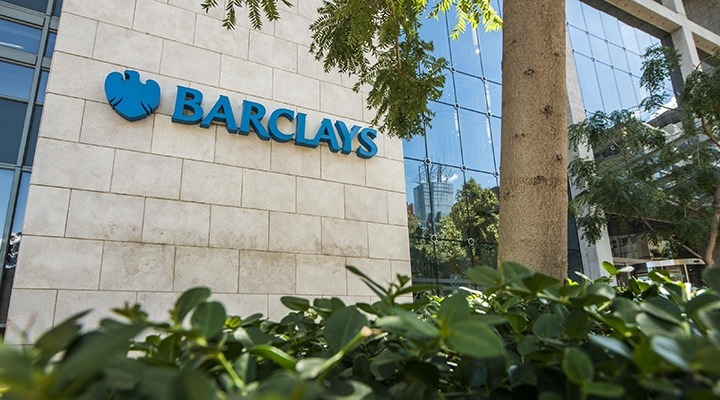
Barclays, the
UK-based financial giant, has reported worse-than-expected 2022 financial results,
as regulatory fines and a slide in dealmaking fees negatively affected overall revenues.
The lender set aside £1.2 billion to cover potential loan losses.
Barclays 2022 Report below
Expectations
According
to the financial statement published on Wednesday, one of the biggest UK
lenders' profit came in at £7 billion in 2022, falling significantly by 14%
year-over-year (YoY), despite rising interest rates and good performance of the fixed-income trading department.
However, Barclays
was hit hard by the reduction in dealmaking fees, which fell 39% YoY to £2.2
billion. Although it was one of the most minor declines compared to rival banks
in Europe and Wall Street, it still negatively impacted the final results,
which came in below analysts' consensus.
"Barclays
performed strongly in 2022. Each business delivered income growth, with Group
income up 14%. We achieved our RoTE target of over 10%, maintained a strong
Common Equity Tier 1 (CET1) capital ratio of 13.9%, and returned capital to
shareholders. We are cautious about global economic conditions, but continue to
see growth opportunities across our businesses through 2023," C. S.
Venkatakrishnan, the Group Chief Executive, commented.
While Barclays'
CEO believes that 2022 was a strong year for the Group, investors in the London
stock market have a completely different view.
Watch the recent FMLS22 panel on constructing collaboration between fintech and banks.
Barclays Falls 9% on LSE
Wednesday's
session for Barclays shares on the London Stock Exchange (LSE:BARC) began with
a sharp downward gap. At the time of writing, shares in the lending giant are
losing 9.4% and trading at £169.8, which is the lowest in a month.
If the
session closes at current levels, it could be the worst trading day for
Barclays since April 2020, almost three years ago. The bank's shares have
rebounded from their October lows at £132 by nearly 50%, reaching a one-year
peak in early February. However, they have depreciated slightly since then,
with financial results drastically exacerbating the sell-off.
Barclays shares fall sharply after financial results. Source: Tradingview.com
Although,
not every financial metric in Barclays' report looks negative. The
aforementioned fixed income department, which additionally includes currencies
and commodities (FICC), increased profits by 65%, performing far better than
rival Goldman Sachs and Morgan Stanley, which reported growth in FICC trading of
38% and 20% YoY, respectively, in 2022.
£1.6 Billion in Charges
for Barclays
The
investment bank had to pay £1.6bn in penalties and restitution to clients this
year in relation to the over-selling of securities in the US. The firm has
decided to reduce the remuneration of top executives by a total of £1m due to
regulatory failings.
In
September 2022, the Securities and Exchange Commission (SEC) announced that 15
broker-dealers and one affiliated investment adviser have agreed to pay
combined penalties of over $1.1 billion for their recordkeeping failures. The
charged firms included Barclays, Bank of America, Citigroup, Credit Suisse,
Deutsche Bank, Goldman Sachs, Morgan Stanley and UBS. Barclays agreed to pay a penalty
of $125 million.
Barclays, the
UK-based financial giant, has reported worse-than-expected 2022 financial results,
as regulatory fines and a slide in dealmaking fees negatively affected overall revenues.
The lender set aside £1.2 billion to cover potential loan losses.
Barclays 2022 Report below
Expectations
According
to the financial statement published on Wednesday, one of the biggest UK
lenders' profit came in at £7 billion in 2022, falling significantly by 14%
year-over-year (YoY), despite rising interest rates and good performance of the fixed-income trading department.
However, Barclays
was hit hard by the reduction in dealmaking fees, which fell 39% YoY to £2.2
billion. Although it was one of the most minor declines compared to rival banks
in Europe and Wall Street, it still negatively impacted the final results,
which came in below analysts' consensus.
"Barclays
performed strongly in 2022. Each business delivered income growth, with Group
income up 14%. We achieved our RoTE target of over 10%, maintained a strong
Common Equity Tier 1 (CET1) capital ratio of 13.9%, and returned capital to
shareholders. We are cautious about global economic conditions, but continue to
see growth opportunities across our businesses through 2023," C. S.
Venkatakrishnan, the Group Chief Executive, commented.
While Barclays'
CEO believes that 2022 was a strong year for the Group, investors in the London
stock market have a completely different view.
Watch the recent FMLS22 panel on constructing collaboration between fintech and banks.
Barclays Falls 9% on LSE
Wednesday's
session for Barclays shares on the London Stock Exchange (LSE:BARC) began with
a sharp downward gap. At the time of writing, shares in the lending giant are
losing 9.4% and trading at £169.8, which is the lowest in a month.
If the
session closes at current levels, it could be the worst trading day for
Barclays since April 2020, almost three years ago. The bank's shares have
rebounded from their October lows at £132 by nearly 50%, reaching a one-year
peak in early February. However, they have depreciated slightly since then,
with financial results drastically exacerbating the sell-off.
Barclays shares fall sharply after financial results. Source: Tradingview.com
Although,
not every financial metric in Barclays' report looks negative. The
aforementioned fixed income department, which additionally includes currencies
and commodities (FICC), increased profits by 65%, performing far better than
rival Goldman Sachs and Morgan Stanley, which reported growth in FICC trading of
38% and 20% YoY, respectively, in 2022.
£1.6 Billion in Charges
for Barclays
The
investment bank had to pay £1.6bn in penalties and restitution to clients this
year in relation to the over-selling of securities in the US. The firm has
decided to reduce the remuneration of top executives by a total of £1m due to
regulatory failings.
In
September 2022, the Securities and Exchange Commission (SEC) announced that 15
broker-dealers and one affiliated investment adviser have agreed to pay
combined penalties of over $1.1 billion for their recordkeeping failures. The
charged firms included Barclays, Bank of America, Citigroup, Credit Suisse,
Deutsche Bank, Goldman Sachs, Morgan Stanley and UBS. Barclays agreed to pay a penalty
of $125 million.
Damian Chmiel is a Senior Analyst & Editor at Finance Magnates with more than 15 years of experience in the CFD and online trading industry. Active as both a trader and journalist since 2010, he focuses on broker coverage, fintech innovation, and regulatory developments across Europe, the Middle East, and Asia.
His work includes interviews with C-level leaders at major brokerages and fintech platforms, as well as co-authoring Finance Magnates’ quarterly industry benchmarking reports. Damian’s reporting is data-driven, market-aware, and grounded in direct industry engagement. His analysis and commentary have also been cited by external media outlets, including Investing.com, Binance, The Asset, Stockhead, and Dispatch.
Education:
MA in Finance and Accounting, Cracow University of Economics
MetaTrader 5 Brokers Gain Direct Access to Vantage Liquidity via MetaQuotes’ Ultency
FP Markets Winner Spotlight 🏆 | Global Broker of the Year 2025 #Trading #Broker #Innovation #Shorts
FP Markets Winner Spotlight 🏆 | Global Broker of the Year 2025 #Trading #Broker #Innovation #Shorts
FP Markets takes the spotlight as Global Broker of the Year 2025 at the Finance Magnates Awards.
Martin Stoilov, Head of Client Experience, shares that trust, innovation, and people played a key role in the company’s success, supported by a strong foundation of integrity and client-centricity.
Following this milestone, FP Markets continues to focus on growth, technology investment, and its core values of transparency and excellence.
👉 Be part of FM Awards 2026: https://awards.financemagnates.com/#nominate
FP Markets takes the spotlight as Global Broker of the Year 2025 at the Finance Magnates Awards.
Martin Stoilov, Head of Client Experience, shares that trust, innovation, and people played a key role in the company’s success, supported by a strong foundation of integrity and client-centricity.
Following this milestone, FP Markets continues to focus on growth, technology investment, and its core values of transparency and excellence.
👉 Be part of FM Awards 2026: https://awards.financemagnates.com/#nominate
In this video, we review @HolaPrimeMarketsOfficial, a multi-asset forex and CFDs broker offering different account types, trading platforms, and flexible trading conditions.
We cover the broker’s overall offering, including account options, trading environment, platforms like MT4 and MT5, and additional services such as managed accounts and fast withdrawals.
Watch the full video to see if Hola Prime Markets fits your trading needs.
📣 Stay up to date with the latest in finance and trading. Follow Finance Magnates for industry news, insights, and global event coverage.
Connect with us:
🔗 LinkedIn: /financemagnates
👍 Facebook: /financemagnates
📸 Instagram: https://www.instagram.com/financemagnates
🐦 X: https://x.com/financemagnates
🎥 TikTok: https://www.tiktok.com/tag/financemagnates
▶️ YouTube: /@financemagnates_official
#HolaPrime #ForexBroker #CFDTrading #FinanceMagnates #Trading #Forex #BrokerReview
In this video, we review @HolaPrimeMarketsOfficial, a multi-asset forex and CFDs broker offering different account types, trading platforms, and flexible trading conditions.
We cover the broker’s overall offering, including account options, trading environment, platforms like MT4 and MT5, and additional services such as managed accounts and fast withdrawals.
Watch the full video to see if Hola Prime Markets fits your trading needs.
📣 Stay up to date with the latest in finance and trading. Follow Finance Magnates for industry news, insights, and global event coverage.
Connect with us:
🔗 LinkedIn: /financemagnates
👍 Facebook: /financemagnates
📸 Instagram: https://www.instagram.com/financemagnates
🐦 X: https://x.com/financemagnates
🎥 TikTok: https://www.tiktok.com/tag/financemagnates
▶️ YouTube: /@financemagnates_official
#HolaPrime #ForexBroker #CFDTrading #FinanceMagnates #Trading #Forex #BrokerReview
Hola Prime Review: What You Need to Know | Full Breakdown by Finance Magnates
Hola Prime Review: What You Need to Know | Full Breakdown by Finance Magnates
In this video, we review @HolaPrime_Global, a proprietary trading firm offering evaluation programs and performance-based payouts in simulated market environments.
We cover how the challenge model works, including account types, profit splits (up to 95%), trading rules, and what it takes to reach a funded account. You’ll also learn about available platforms like MT4, MT5, cTrader, and more, along with insights into payouts, support, and trading conditions.
Watch the full video to see if Hola Prime fits your trading style.
📣 Stay up to date with the latest in finance and trading. Follow Finance Magnates for industry news, insights, and global event coverage.
Connect with us:
🔗 LinkedIn: /financemagnates
👍 Facebook: /financemagnates
📸 Instagram: https://www.instagram.com/financemagnates
🐦 X: https://x.com/financemagnates
🎥 TikTok: https://www.tiktok.com/tag/financemagnates
▶️ YouTube: /@financemagnates_official
#HolaPrime #PropFirm #Trading #FinanceMagnates #Forex #FuturesTrading #TradingReview #PropFirmReview
In this video, we review @HolaPrime_Global, a proprietary trading firm offering evaluation programs and performance-based payouts in simulated market environments.
We cover how the challenge model works, including account types, profit splits (up to 95%), trading rules, and what it takes to reach a funded account. You’ll also learn about available platforms like MT4, MT5, cTrader, and more, along with insights into payouts, support, and trading conditions.
Watch the full video to see if Hola Prime fits your trading style.
📣 Stay up to date with the latest in finance and trading. Follow Finance Magnates for industry news, insights, and global event coverage.
Connect with us:
🔗 LinkedIn: /financemagnates
👍 Facebook: /financemagnates
📸 Instagram: https://www.instagram.com/financemagnates
🐦 X: https://x.com/financemagnates
🎥 TikTok: https://www.tiktok.com/tag/financemagnates
▶️ YouTube: /@financemagnates_official
#HolaPrime #PropFirm #Trading #FinanceMagnates #Forex #FuturesTrading #TradingReview #PropFirmReview
Axi Winner Spotlight 🏆 | Global Most Innovative Broker 2025 #Innovation #Trading #Fintech #Broker
Axi Winner Spotlight 🏆 | Global Most Innovative Broker 2025 #Innovation #Trading #Fintech #Broker
Axi takes the spotlight at the Finance Magnates Awards, winning Global Most Innovative Broker 2025.
Olivia Xenofontos and Ivanna Openko share how the team will feel: proud, motivated, and ready to keep delivering.
They also describe the night as well-organized, focused, and enjoyable for all.
👉 Be part of FM Awards 2026.
Axi takes the spotlight at the Finance Magnates Awards, winning Global Most Innovative Broker 2025.
Olivia Xenofontos and Ivanna Openko share how the team will feel: proud, motivated, and ready to keep delivering.
They also describe the night as well-organized, focused, and enjoyable for all.
👉 Be part of FM Awards 2026.
Recognition that matters.
Built on transparency.
Driven by the industry.
The Finance Magnates Awards 2026.
Nominations are now open.
🔗 https://awards.financemagnates.com/?utm_source=SM&utm_medium=social&utm_campaign=recognition-matters
Recognition that matters.
Built on transparency.
Driven by the industry.
The Finance Magnates Awards 2026.
Nominations are now open.
🔗 https://awards.financemagnates.com/?utm_source=SM&utm_medium=social&utm_campaign=recognition-matters