Financial and Business News

Banks Begin Applying Insider Trading Rules to Prediction Markets

Tuesday, 17/03/2026 | 10:51 GMT by Tanya Chepkova
  • Internal policy reviews mark one of the first signs that prediction markets are entering formal corporate oversight.
  • Banks are beginning to treat event-based trading as a potential compliance risk rather than a fringe product.
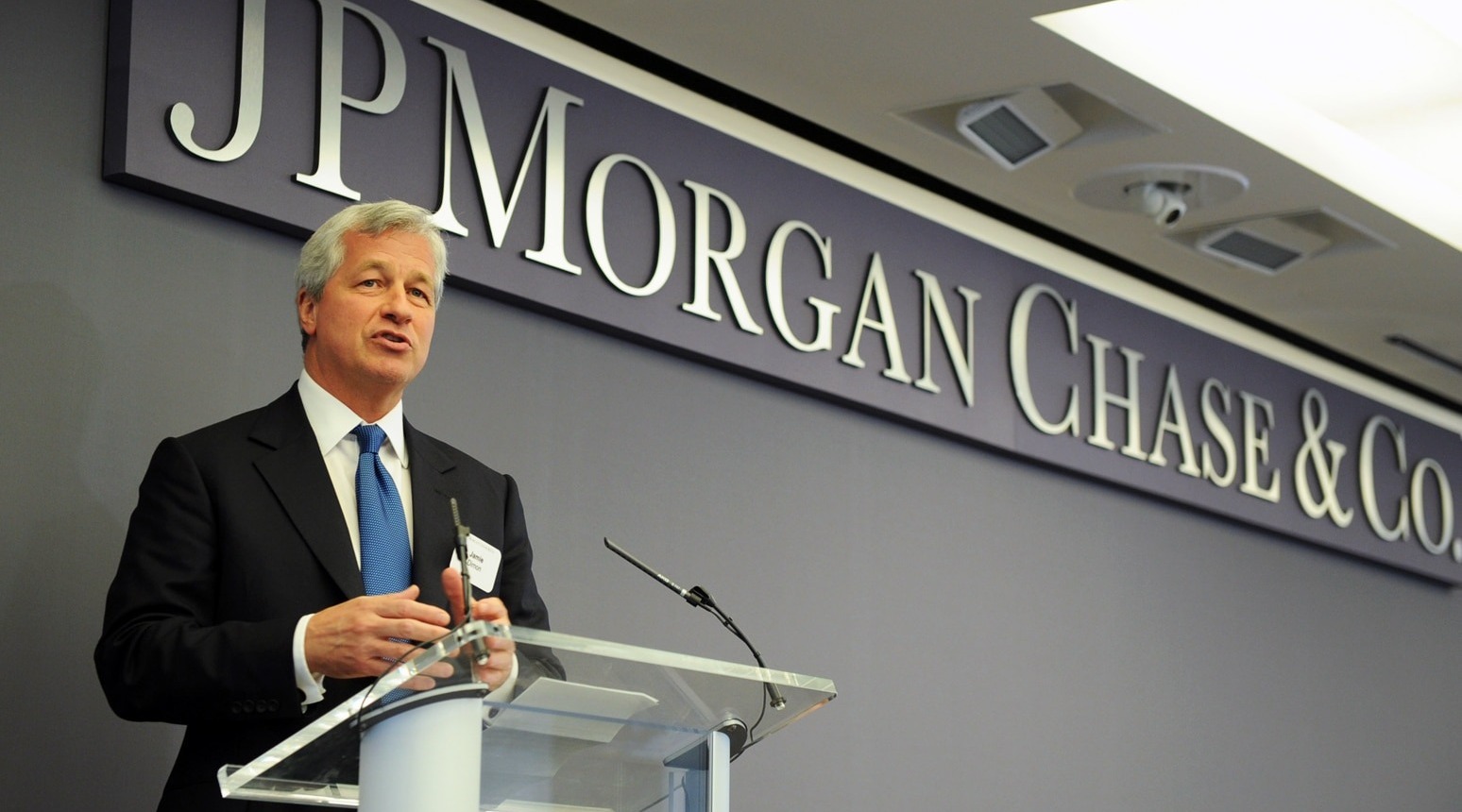
JP MORGAN
Jamie Dimon, JPMorgan Chief Executive

Large financial institutions are beginning to address how existing compliance frameworks apply to prediction markets, marking one of the first clear signs that the sector is entering the scope of formal corporate policy.

JPMorgan Chase is among the first to review its internal rules on employee participation in event-based trading. According to Barron’s, citing sources familiar with the matter, the bank is considering whether to issue more explicit guidance for its roughly 320,000 employees on the use of platforms such as Kalshi and Polymarket.

The review does not signal a move into prediction markets as a business line. Instead, it highlights a more immediate issue: how established rules — particularly around insider trading and the use of confidential information — extend to a new type of asset.

Extending Existing Rules to a New Asset Class

In practice, this means applying existing standards to unfamiliar ground. If adopted, such guidance would make it explicit that employees cannot use material non-public information when trading event contracts, just as they cannot in equities or derivatives. This effectively brings prediction markets into the same compliance perimeter as traditional financial instruments.

This is one of the first institutional responses to prediction markets as a category rather than a curiosity. Until recently, activity on these platforms largely sat outside formal corporate policies. The shift also reflects a broader alignment between corporate compliance and regulatory thinking.

The U.S. Commodity Futures Trading Commission (CFTC) has already indicated that insider trading rules can apply to prediction markets, particularly in cases involving misappropriation of confidential information. Lawmakers have also begun to examine whether additional restrictions are needed for trading tied to sensitive events.

Why This Is Becoming a Compliance Issue

Recent market activity has made these questions harder to ignore. Contracts linked to geopolitical developments, corporate events, and economic outcomes create scenarios where informational advantages can exist — even if proving misuse remains complex.

At the same time, prediction markets are increasingly used as a source of alternative data and sentiment signals. This creates a tension for institutions: the same markets that provide useful information may also introduce new compliance risks.

JPMorgan’s review is an early example of how that tension is being addressed. More broadly, it suggests that prediction markets are moving into a phase where both regulators and corporations are beginning to treat them as part of the financial system’s existing rule set, rather than as a separate category.


Large financial institutions are beginning to address how existing compliance frameworks apply to prediction markets, marking one of the first clear signs that the sector is entering the scope of formal corporate policy.

JPMorgan Chase is among the first to review its internal rules on employee participation in event-based trading. According to Barron’s, citing sources familiar with the matter, the bank is considering whether to issue more explicit guidance for its roughly 320,000 employees on the use of platforms such as Kalshi and Polymarket.

The review does not signal a move into prediction markets as a business line. Instead, it highlights a more immediate issue: how established rules — particularly around insider trading and the use of confidential information — extend to a new type of asset.

Extending Existing Rules to a New Asset Class

In practice, this means applying existing standards to unfamiliar ground. If adopted, such guidance would make it explicit that employees cannot use material non-public information when trading event contracts, just as they cannot in equities or derivatives. This effectively brings prediction markets into the same compliance perimeter as traditional financial instruments.

This is one of the first institutional responses to prediction markets as a category rather than a curiosity. Until recently, activity on these platforms largely sat outside formal corporate policies. The shift also reflects a broader alignment between corporate compliance and regulatory thinking.

The U.S. Commodity Futures Trading Commission (CFTC) has already indicated that insider trading rules can apply to prediction markets, particularly in cases involving misappropriation of confidential information. Lawmakers have also begun to examine whether additional restrictions are needed for trading tied to sensitive events.

Why This Is Becoming a Compliance Issue

Recent market activity has made these questions harder to ignore. Contracts linked to geopolitical developments, corporate events, and economic outcomes create scenarios where informational advantages can exist — even if proving misuse remains complex.

At the same time, prediction markets are increasingly used as a source of alternative data and sentiment signals. This creates a tension for institutions: the same markets that provide useful information may also introduce new compliance risks.

JPMorgan’s review is an early example of how that tension is being addressed. More broadly, it suggests that prediction markets are moving into a phase where both regulators and corporations are beginning to treat them as part of the financial system’s existing rule set, rather than as a separate category.

About the Author: Tanya Chepkova
Tanya Chepkova
  • 124 Articles
Tanya Chepkova is a News Editor at Finance Magnates with more than 16 years of experience in financial journalism, covering forex, crypto, and digital asset markets. Her work spans daily industry reporting and data-driven, long-form explainers focused on market structure, trading models, and regulatory shifts. Before joining Finance Magnates, she led the editorial team of a cryptocurrency-focused media outlet for six years. Her reporting combines analytical depth with clear storytelling, with particular attention to how structural changes in trading, stablecoin infrastructure, and emerging products such as prediction markets reshape the broader financial ecosystem. She covers global developments and provides additional insight into CIS markets. Areas of Coverage: Crypto and digital asset markets Prediction markets Stablecoins and cross-border payments Industry analysis and long-form explainers

More from the Author

Institutional FX