‘You Know Where Gold Is Going?’ ‘No’: What Happens When a Broker’s AI Makes the Call

Wednesday, 11/11/2026 | 04:29 GMT by Anish Lal
  • Anish Lal, Chief Business Development Officer at BlackBull Markets, highlights the risks of automated mis-selling as forex brokers adopt AI voice agents.
  • Forex brokers can use AI to chase leads, collect documents and book calls, not provide advice.
ai

A phone rings at 7:02 am.

Ava (AI): Good morning, this is Ava from [Broker X]. Before we go any further, I should say that I am an AI.

CLIENT: Great. So you know where gold is going?

AVA: No. Nobody does, including the people on social media who say they do.

CLIENT: Then what are you for?

AVA: I can tell you which documents you need to open an account, send you a secure link to upload them, and call you tomorrow if you forget. I will not tell you to deposit more.

CLIENT: That is more honest than my last broker.

AVA: I will pass that remark to the compliance team.

CLIENT: Can I speak to a human?

AVA: Of course. Connecting you now. Fair warning: she is also unsure where gold is going.

End of call.

Anish Lal, Chief Business Development Officer at BlackBull Markets

Nobody was pressured. Everybody was confused about gold, which is the normal state of the market.

That call is invented. The questions behind it are not: what can a voice agent do, what should it never do, and can a business built on trust let a machine pick up the phone?

Brokers have more leads than people to call them. AI voice agents promise to close the gap. They can do part of the job well, but only if the industry keeps its most important asset, trust, out of the experiment.

Every retail broker knows the arithmetic. Marketing brings in thousands of sign-ups. A few hundred get a call in time. The rest wait, cool off and open an account somewhere else. Add the work that follows a sign-up, such as chasing documents, answering the same funding question in six languages and rebooking missed calls, and it is easy to see why AI voice agents have gone from a curiosity to a standing item on the agenda. I have been looking at them closely.

My short answer is that they work for some jobs, they are dangerous for others, and the difference is not the technology. It is what we ask them to do.

Does It Work?

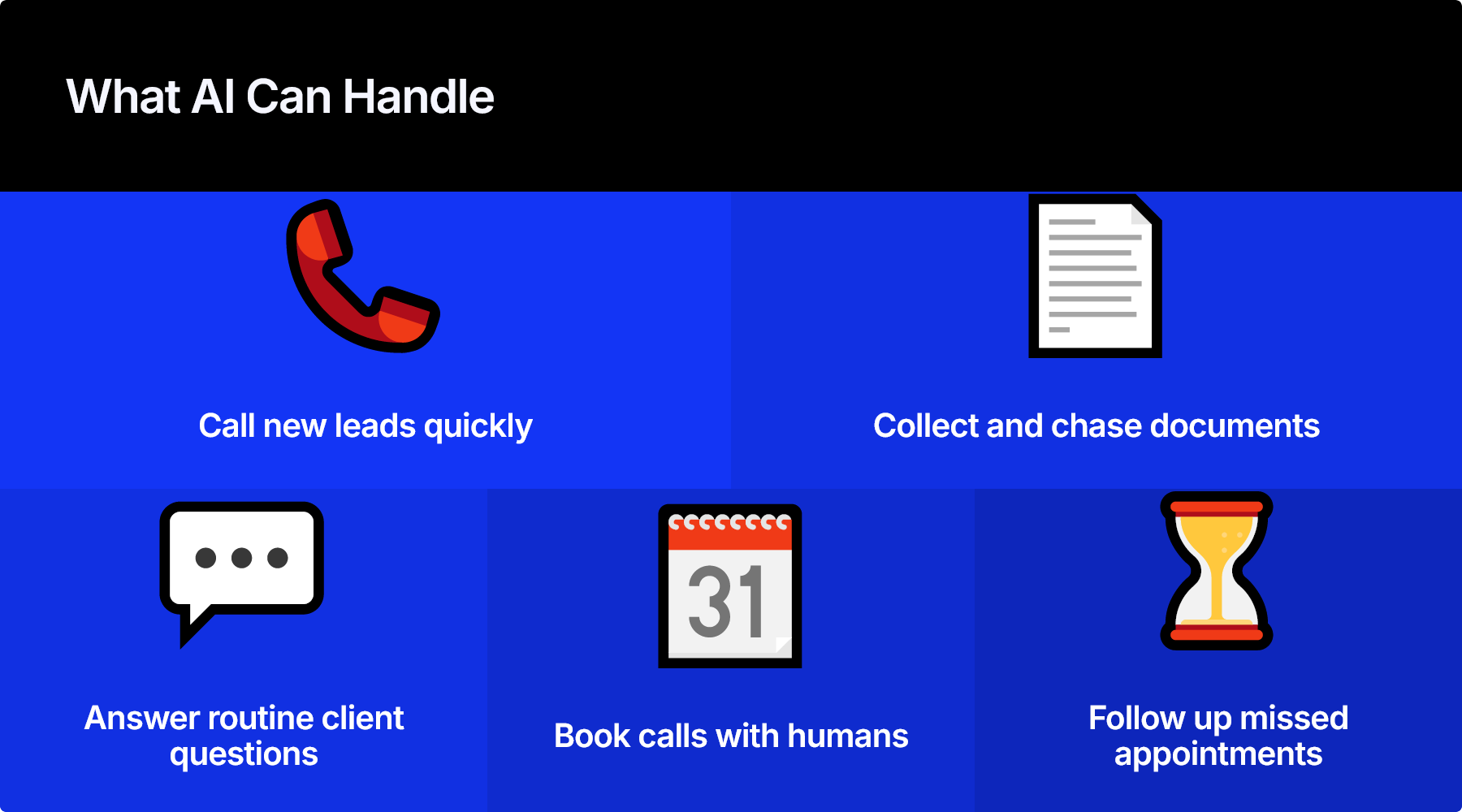
For narrow, repeatable tasks, yes. A voice agent can call a new lead within minutes rather than hours, confirm the basics, answer common questions about how an account works and book a call with a human. It can ring back someone who missed an appointment. It does not get tired at the end of a long shift or skip the script when the day is going badly. It can also speak the client’s language, which matters in a business that serves dozens of markets.

It does not work, and should not be used, where the conversation needs judgement, for example, with a client in distress after a loss, a complaint, a vulnerable customer, or anything that sounds like advice. A voice agent that drifts from explaining to persuading is a compliance problem running at machine speed.

The test I would use is not minutes saved. It is whether more leads reach a human with the right information, whether clients finish onboarding, and whether complaints stay flat.
ai

Where Trust Is the Product, Is It a Solution?

Not as a replacement for people. A broker sells a promise to hold a client’s money and execute fairly. Clients are often handing funds to a firm they will never meet, and a human voice has been a large part of how that trust is built. That is exactly why the rules for using voice agents need to be stricter than the technology requires.

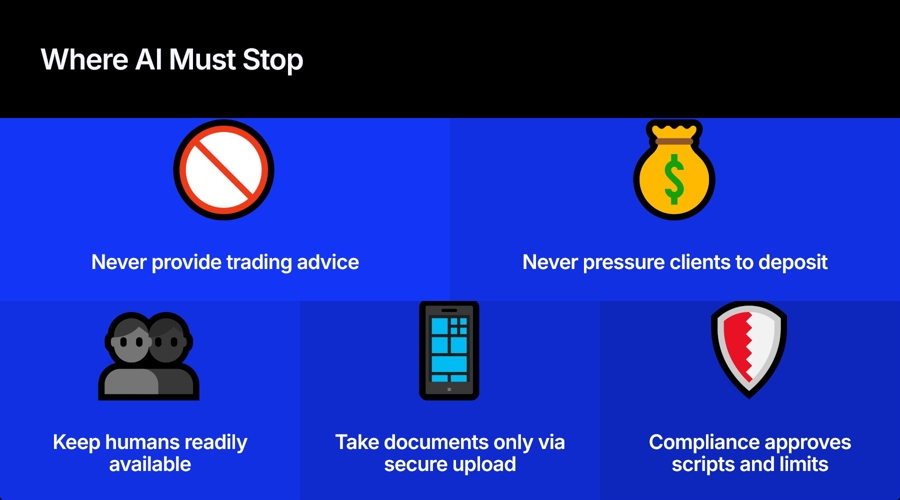
Tell people at the start of the call that they are speaking to an AI and never imply otherwise. Keep the agent away from recommendations, leverage and anything that reads as pressure to deposit. Have the compliance team approve the scripts and the limits. Give the client an obvious, immediate route to a human. Record, retain and review calls, and check what consent and calling rules apply in each market, because they differ.

Done that way, the agent is a receptionist and an administrator, not a salesperson. Done the other way, the industry will give regulators and the press a story about automated mis-selling, and it will deserve the headline.

Document Collection Is the Obvious Place to Start

If I had to pick one use, it would be the least glamorous. Onboarding is where many applicants drop out. They are asked for proof of identity, proof of address and sometimes source-of-funds evidence. They are unsure what counts, and the process stalls. A voice agent can explain in plain language what is needed and why, answer the question every applicant asks (will a bank statement or a utility bill do?), send a secure link for the upload and follow up the next day if nothing arrives.

Two limits matter. First, documents and card details should never be taken over the phone. They go through the secure upload, not the call. Second, the agent collects and chases; it does not decide. Whether a document is acceptable, and whether an application is approved, stays with trained staff under the broker’s own rules. Used like this, an agent shortens the wait for the client and takes repetitive work off the compliance team.

Many brokers are now exploring these tools. But trust is key to any business, and they must build it on human interaction. Blackbull's view is that AI can be used at scale for menial tasks, such as chasing documents, answering routine questions and booking calls, while the core relationships stay with people. That is where we stand for now, and we will keep testing it against what our clients tell us.

How should the industry adopt these tools? Start small and measure honestly. Pick one market and one task. Disclose that it is AI. Keep a human a button-press away. Compare the results with the same task done by people, and be ready to switch it off. The firms that gain most from this technology will be the ones that start with the boring jobs and earn the right to do more.

A phone rings at 7:02 am.

Ava (AI): Good morning, this is Ava from [Broker X]. Before we go any further, I should say that I am an AI.

CLIENT: Great. So you know where gold is going?

AVA: No. Nobody does, including the people on social media who say they do.

CLIENT: Then what are you for?

AVA: I can tell you which documents you need to open an account, send you a secure link to upload them, and call you tomorrow if you forget. I will not tell you to deposit more.

CLIENT: That is more honest than my last broker.

AVA: I will pass that remark to the compliance team.

CLIENT: Can I speak to a human?

AVA: Of course. Connecting you now. Fair warning: she is also unsure where gold is going.

End of call.

Anish Lal, Chief Business Development Officer at BlackBull Markets

Nobody was pressured. Everybody was confused about gold, which is the normal state of the market.

That call is invented. The questions behind it are not: what can a voice agent do, what should it never do, and can a business built on trust let a machine pick up the phone?

Brokers have more leads than people to call them. AI voice agents promise to close the gap. They can do part of the job well, but only if the industry keeps its most important asset, trust, out of the experiment.

Every retail broker knows the arithmetic. Marketing brings in thousands of sign-ups. A few hundred get a call in time. The rest wait, cool off and open an account somewhere else. Add the work that follows a sign-up, such as chasing documents, answering the same funding question in six languages and rebooking missed calls, and it is easy to see why AI voice agents have gone from a curiosity to a standing item on the agenda. I have been looking at them closely.

My short answer is that they work for some jobs, they are dangerous for others, and the difference is not the technology. It is what we ask them to do.

Does It Work?

For narrow, repeatable tasks, yes. A voice agent can call a new lead within minutes rather than hours, confirm the basics, answer common questions about how an account works and book a call with a human. It can ring back someone who missed an appointment. It does not get tired at the end of a long shift or skip the script when the day is going badly. It can also speak the client’s language, which matters in a business that serves dozens of markets.

It does not work, and should not be used, where the conversation needs judgement, for example, with a client in distress after a loss, a complaint, a vulnerable customer, or anything that sounds like advice. A voice agent that drifts from explaining to persuading is a compliance problem running at machine speed.

The test I would use is not minutes saved. It is whether more leads reach a human with the right information, whether clients finish onboarding, and whether complaints stay flat.

ai

Where Trust Is the Product, Is It a Solution?

Not as a replacement for people. A broker sells a promise to hold a client’s money and execute fairly. Clients are often handing funds to a firm they will never meet, and a human voice has been a large part of how that trust is built. That is exactly why the rules for using voice agents need to be stricter than the technology requires.

Tell people at the start of the call that they are speaking to an AI and never imply otherwise. Keep the agent away from recommendations, leverage and anything that reads as pressure to deposit. Have the compliance team approve the scripts and the limits. Give the client an obvious, immediate route to a human. Record, retain and review calls, and check what consent and calling rules apply in each market, because they differ.

Done that way, the agent is a receptionist and an administrator, not a salesperson. Done the other way, the industry will give regulators and the press a story about automated mis-selling, and it will deserve the headline.

Document Collection Is the Obvious Place to Start

If I had to pick one use, it would be the least glamorous. Onboarding is where many applicants drop out. They are asked for proof of identity, proof of address and sometimes source-of-funds evidence. They are unsure what counts, and the process stalls. A voice agent can explain in plain language what is needed and why, answer the question every applicant asks (will a bank statement or a utility bill do?), send a secure link for the upload and follow up the next day if nothing arrives.

Two limits matter. First, documents and card details should never be taken over the phone. They go through the secure upload, not the call. Second, the agent collects and chases; it does not decide. Whether a document is acceptable, and whether an application is approved, stays with trained staff under the broker’s own rules. Used like this, an agent shortens the wait for the client and takes repetitive work off the compliance team.

Many brokers are now exploring these tools. But trust is key to any business, and they must build it on human interaction. Blackbull's view is that AI can be used at scale for menial tasks, such as chasing documents, answering routine questions and booking calls, while the core relationships stay with people. That is where we stand for now, and we will keep testing it against what our clients tell us.

How should the industry adopt these tools? Start small and measure honestly. Pick one market and one task. Disclose that it is AI. Keep a human a button-press away. Compare the results with the same task done by people, and be ready to switch it off. The firms that gain most from this technology will be the ones that start with the boring jobs and earn the right to do more.

About the Author: Anish Lal
Anish  Lal
  • 3 Articles
  • 2 Followers
About the Author: Anish Lal
Anish Lal is Chief Business Development Officer at BlackBull Markets, the New Zealand-headquartered multi-asset brokerage. He leads strategic growth, partnerships, and the firm’s global commercial footprint across retail and institutional trading. In his current role he is responsible for around $10 billion of daily trading volume and oversees nearly $1 billion in client funds, with a focus on execution quality, liquidity, and institutional-grade infrastructure. With more than 15 years in forex and brokerage, Anish specialises in business development, trading infrastructure, and client acquisition. He has overseen major platform and technology integrations, including TradingView and Brokeree, and is a regular industry contributor on execution, partnerships, and the commercial model of retail FX. anish.trade
  • 3 Articles
  • 2 Followers

More from the Author

Retail FX

!"#$%&'()*+,-./0123456789:;<=>?@ABCDEFGHIJKLMNOPQRSTUVWXYZ[\]^_`abcdefghijklmnopqrstuvwxyz{|} !"#$%&'()*+,-./0123456789:;<=>?@ABCDEFGHIJKLMNOPQRSTUVWXYZ[\]^_`abcdefghijklmnopqrstuvwxyz{|}