News breaks in seconds, stock prices shift in real time, and
consumers expect instant results. For a growing generation of digital-native
investors, waiting days to move money no longer makes sense.
This is especially relevant for investment platforms, which
face rising competition and higher user expectations. Delays in funding or
accessing capital clash with the seamless digital experiences users are
accustomed to.
Join
IG, CMC, and Robinhood at London’s leading trading industry event!
Instant payments today also generate data, offering brokers,
prop firms, and trading platforms both competitive insight and improved user
experience.
Fast Markets Require Fast Funding
Timing is critical for institutional investors, who act on
market shifts in real time. Retail investors have not always had the same
advantage. Slow settlement times and outdated methods, like manual transfers or
failed card payments, can delay trades and disrupt the user journey.
Instant account funding directly impacts engagement, letting
investors act when motivation is highest. It enables smooth entry into
positions or withdrawals, creating a more confident experience. For platforms,
this improves conversion rates and user satisfaction.
Funding patterns also provide insights. Spikes in deposits
before major announcements help brokers anticipate surges, giving an edge in
fast markets like forex and CFDs.
Frictionless Funding That Drives Conversion
The moment a user decides to invest is critical—curiosity
becomes commitment. If the process is cumbersome, requiring manual input or
card details, users are likely to drop off.
Instant, bank-based payments
Payments
One of the bases of mediums of exchange in the modern world, a payment constitutes the transfer of a legal currency or equivalent from one party in exchange for goods or services to another entity. The payments industry has become a fixture of modern commerce, though the players involved and means of exchange have dramatically shifted over time.In particular, a party making a payment is referred to as a payer, with the payee reflecting the individual or entity receiving the payment. Most commonl
One of the bases of mediums of exchange in the modern world, a payment constitutes the transfer of a legal currency or equivalent from one party in exchange for goods or services to another entity. The payments industry has become a fixture of modern commerce, though the players involved and means of exchange have dramatically shifted over time.In particular, a party making a payment is referred to as a payer, with the payee reflecting the individual or entity receiving the payment. Most commonl
Read this Term, such as Pay by Bank, remove
these barriers. Users can top up accounts quickly and securely with minimal
friction. This simplicity improves first-time conversion rates and encourages
repeat investing.
Withdrawals have historically caused frustration. Investors
often wait days to access funds, despite expecting instant access elsewhere in
their financial lives. This delay signals a lack of control and can undermine
trust.
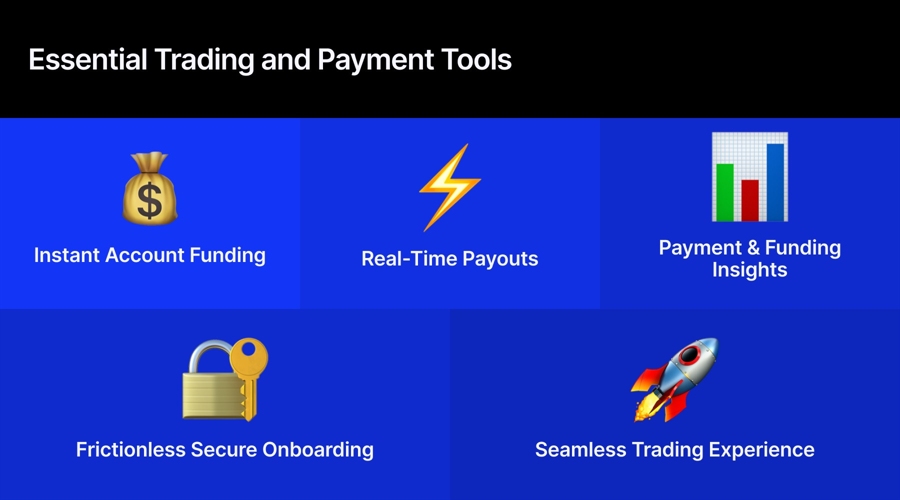
Real-time payouts change this dynamic, putting users in
charge of their money. Immediate access builds confidence and strengthens a
platform’s reputation. In an industry where trust is critical, providing fast
and predictable access to funds is a key differentiator.
Turning Payments into Intelligence
Modern payment infrastructure increasingly offers built-in
intelligence, particularly through open banking frameworks. Features like
real-time account verification, identity checks, and balance confirmation
streamline onboarding, reduce fraud, and support compliance.
For brokers and prop firms, instant payment flows provide
aggregated signals of investor behaviour. Data on deposits, withdrawals, and
funding geographies helps optimise liquidity
Liquidity
The term liquidity refers to the process, speed, and ease of which a given asset or security can be converted into cash. Notably, liquidity surmises a retention in market price, with the most liquid assets representing cash.The most liquid asset of all is cash itself.· In economics, liquidity is defined by how efficiently and quickly an asset can be converted into usable cash without materially affecting its market price. · Nothing is more liquid than cash, while other assets represent
The term liquidity refers to the process, speed, and ease of which a given asset or security can be converted into cash. Notably, liquidity surmises a retention in market price, with the most liquid assets representing cash.The most liquid asset of all is cash itself.· In economics, liquidity is defined by how efficiently and quickly an asset can be converted into usable cash without materially affecting its market price. · Nothing is more liquid than cash, while other assets represent
Read this Term management, refine risk models,
and anticipate demand for certain asset classes. Payments, therefore, become a
forward-looking market indicator rather than just a back-office function.
Designing for a Real-Time Financial Future
Instant payments enhance user experience at every stage,
from onboarding and funding to withdrawals and re-engagement. They boost usage
while creating confidence and control for investors.
For brokers and trading firms, fast payments combined with
behavioural insights offer operational speed and strategic foresight. In
fast-moving markets like forex and CFDs, that combination is increasingly
decisive.
Beyond individual platforms, instant money movement allows
capital to flow across the wider ecosystem. Users can fund or withdraw from a
single account, transfer between platforms, access new assets, and respond to
opportunities immediately.
Platforms that meet these expectations stand out—not just by
moving money quickly, but by providing seamless, secure, and responsive digital
experiences.
The Competitive Edge Where Instant Equals Impact
Real-time payments are already transforming industries such
as retail, lending, travel, and gig work. Investment platforms are next.
Instant money movement helps new users fund accounts immediately, gives
experienced investors access to returns without delay, and provides embedded
data for compliance and operational insights. The ability to move money
instantly is changing what successful investing looks like.
For platforms, the combination of speed, convenience, and
intelligence is no longer optional—it’s a competitive requirement. For
investors, it is increasingly a baseline expectation. The platforms that
succeed will be those that align with user expectations, support confident
decision-making, and deliver a seamless experience from the moment curiosity
turns into commitment.
News breaks in seconds, stock prices shift in real time, and
consumers expect instant results. For a growing generation of digital-native
investors, waiting days to move money no longer makes sense.
This is especially relevant for investment platforms, which
face rising competition and higher user expectations. Delays in funding or
accessing capital clash with the seamless digital experiences users are
accustomed to.
Join
IG, CMC, and Robinhood at London’s leading trading industry event!
Instant payments today also generate data, offering brokers,
prop firms, and trading platforms both competitive insight and improved user
experience.
Fast Markets Require Fast Funding
Timing is critical for institutional investors, who act on
market shifts in real time. Retail investors have not always had the same
advantage. Slow settlement times and outdated methods, like manual transfers or
failed card payments, can delay trades and disrupt the user journey.
Instant account funding directly impacts engagement, letting
investors act when motivation is highest. It enables smooth entry into
positions or withdrawals, creating a more confident experience. For platforms,
this improves conversion rates and user satisfaction.
Funding patterns also provide insights. Spikes in deposits
before major announcements help brokers anticipate surges, giving an edge in
fast markets like forex and CFDs.
Frictionless Funding That Drives Conversion
The moment a user decides to invest is critical—curiosity
becomes commitment. If the process is cumbersome, requiring manual input or
card details, users are likely to drop off.
Instant, bank-based payments
Payments
One of the bases of mediums of exchange in the modern world, a payment constitutes the transfer of a legal currency or equivalent from one party in exchange for goods or services to another entity. The payments industry has become a fixture of modern commerce, though the players involved and means of exchange have dramatically shifted over time.In particular, a party making a payment is referred to as a payer, with the payee reflecting the individual or entity receiving the payment. Most commonl
One of the bases of mediums of exchange in the modern world, a payment constitutes the transfer of a legal currency or equivalent from one party in exchange for goods or services to another entity. The payments industry has become a fixture of modern commerce, though the players involved and means of exchange have dramatically shifted over time.In particular, a party making a payment is referred to as a payer, with the payee reflecting the individual or entity receiving the payment. Most commonl
Read this Term, such as Pay by Bank, remove
these barriers. Users can top up accounts quickly and securely with minimal
friction. This simplicity improves first-time conversion rates and encourages
repeat investing.
Withdrawals have historically caused frustration. Investors
often wait days to access funds, despite expecting instant access elsewhere in
their financial lives. This delay signals a lack of control and can undermine
trust.
Real-time payouts change this dynamic, putting users in
charge of their money. Immediate access builds confidence and strengthens a
platform’s reputation. In an industry where trust is critical, providing fast
and predictable access to funds is a key differentiator.
Turning Payments into Intelligence
Modern payment infrastructure increasingly offers built-in
intelligence, particularly through open banking frameworks. Features like
real-time account verification, identity checks, and balance confirmation
streamline onboarding, reduce fraud, and support compliance.
For brokers and prop firms, instant payment flows provide
aggregated signals of investor behaviour. Data on deposits, withdrawals, and
funding geographies helps optimise liquidity
Liquidity
The term liquidity refers to the process, speed, and ease of which a given asset or security can be converted into cash. Notably, liquidity surmises a retention in market price, with the most liquid assets representing cash.The most liquid asset of all is cash itself.· In economics, liquidity is defined by how efficiently and quickly an asset can be converted into usable cash without materially affecting its market price. · Nothing is more liquid than cash, while other assets represent
The term liquidity refers to the process, speed, and ease of which a given asset or security can be converted into cash. Notably, liquidity surmises a retention in market price, with the most liquid assets representing cash.The most liquid asset of all is cash itself.· In economics, liquidity is defined by how efficiently and quickly an asset can be converted into usable cash without materially affecting its market price. · Nothing is more liquid than cash, while other assets represent
Read this Term management, refine risk models,
and anticipate demand for certain asset classes. Payments, therefore, become a
forward-looking market indicator rather than just a back-office function.
Designing for a Real-Time Financial Future
Instant payments enhance user experience at every stage,
from onboarding and funding to withdrawals and re-engagement. They boost usage
while creating confidence and control for investors.
For brokers and trading firms, fast payments combined with
behavioural insights offer operational speed and strategic foresight. In
fast-moving markets like forex and CFDs, that combination is increasingly
decisive.
Beyond individual platforms, instant money movement allows
capital to flow across the wider ecosystem. Users can fund or withdraw from a
single account, transfer between platforms, access new assets, and respond to
opportunities immediately.
Platforms that meet these expectations stand out—not just by
moving money quickly, but by providing seamless, secure, and responsive digital
experiences.
The Competitive Edge Where Instant Equals Impact
Real-time payments are already transforming industries such
as retail, lending, travel, and gig work. Investment platforms are next.
Instant money movement helps new users fund accounts immediately, gives
experienced investors access to returns without delay, and provides embedded
data for compliance and operational insights. The ability to move money
instantly is changing what successful investing looks like.
For platforms, the combination of speed, convenience, and
intelligence is no longer optional—it’s a competitive requirement. For
investors, it is increasingly a baseline expectation. The platforms that
succeed will be those that align with user expectations, support confident
decision-making, and deliver a seamless experience from the moment curiosity
turns into commitment.