Axi, CFI, and Taurex are some of the big names in the retail trading space that recently launched institutional offerings.
“Insti clients understand the markets far better than retail clients, so they cause fewer issues,” said Gold-i CEO.
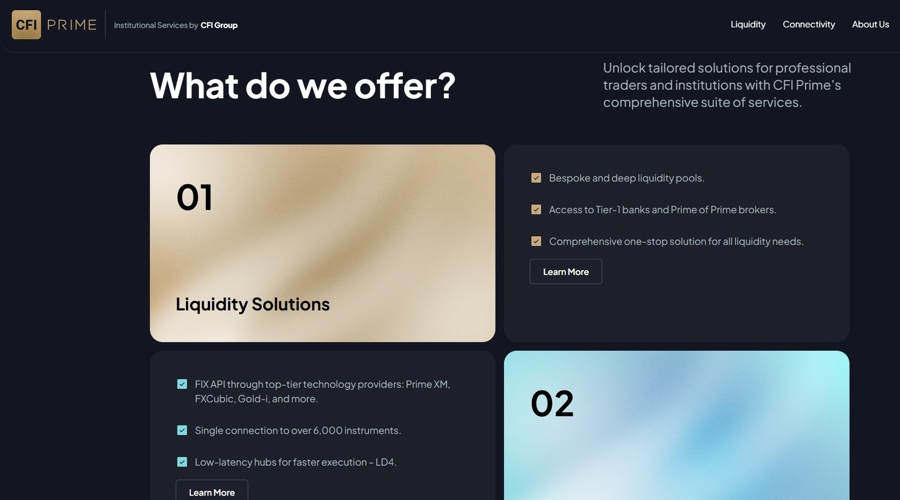
A screenshot of CFI Prime website
Axi, CFI, and Taurex are three big names in the retail trading industry that have launched institutional services in recent months. But their entry into this market is not new for contracts for differences (CFDs) brokers.
Whether it is publicly traded IG Group and CMC Markets or privately held Exness, Saxo Bank, Pepperstone, Tickmill, and others, they all have institutional offerings along with their retail services. But the question remains: why are retail brokers moving into the institutional business?
“Like many companies, they aim to diversify their revenue, reducing reliance on retail clients, especially during market swings,” Stanislav Bunimovich, Managing Director of APAC and Strategic Adviser at GCEX, pointed to as one reason why retail brokers are entering the institutional space.
Stanislav Bunimovich, Managing Director of APAC and Strategic Adviser at GCEX
“For some retail brokers, the move into the institutional space is seen as a natural step,” he added. “As they grow and their knowledge increases, they look for more steady sources of income. Institutional services attract clients with larger capital and regular trading activity. Broadening income helps reduce risks and meets shareholder demands for stable growth.”
Gold-i’s Tom Higgins also called the move a “natural progression,” noting that “most of the functions needed by a large retail broker are also needed for smaller institutional services.”
Tom Higgins, CEO of Gold-i
There are many parts to institutional services. The most common among retail brokers is offering prime-of-prime liquidity pools—bringing together bank and non-bank quotes, then giving funds to banks or brokers through a single account with deep pricing and high leverage.
Other services include multi-asset prime brokerage, direct market access, white-label brokerage platforms, and data feeds.
Axi, the latest to launch institutional services under the Axi Prime brand, is offering only liquidity services. In contrast, CFI Prime, the institutional arm of CFI Financial Group, has broader offerings. These include liquidity and access to seven asset classes. CFI Prime clients can also trade through its own platform or third-party platforms such as MetaTrader.
Taurex Prime has also added services for prop trading platforms, alongside liquidity and API-based trading. For prop firms, it offers “turnkey solutions, institutional liquidity, advanced platforms, and full back-office control.”
B2B Brings Solid Revenue
Although many brokers offer institutional services alongside retail, the financial details of their operations are not always clear. However, the few public brokers do give some insight into how much revenue comes from retail and institutional streams.
In the financial year ending 31 March 2025, London-listed CMC Markets made a total trading revenue of £248.9 million. Of that, the direct-to-consumer stream (retail services) brought in £149.1 million, while the rest—£99.8 million—came from platform-as-a-service (B2B and B2B2C).
Under this model, CMC offers trading platform technology and execution services through open APIs and also white-label solutions.
IG Group, meanwhile, publishes combined figures for institutional and emerging markets. Its trading revenue from that stream for the first half of fiscal 2025 was £41.6 million, compared to total trading revenue of £451.7 million.
These figures show the potential of institutional business for retail-focused brokers, but the final success depends on each broker’s ability to grow their institutional services.
CMC Markets
£99.8 million in revenue came from platform-as-a-service (B2B and B2B2C).
IG Group
£41.6 million generated from institutional and emerging markets.
“Insti Clients Know How the Markets Work”
Besides income, institutional services offer other benefits to retail brokers. An institutional (or “insti”) broker only takes on businesses or professional traders, meaning larger sums of money.
“It can actually be easier as insti clients understand the markets far better than retail, so they cause fewer issues,” Higgins added. “Liquidity will need to be more customised for each insti client as their needs are very specific, while retail traders generally get the same type of liquidity.”
Also, rules are much more relaxed when it comes to protecting institutional clients. “Insti clients have little protection from the FCA as they are seen as ‘grown-up’, which lowers the operational risk for the broker,” Higgins said.
Retail brokers can also use their current tech systems to serve institutional clients, and doing both boosts their reputation.
Interestingly, multiple brokers launched their institutional business after the pandemic. Although revenue stream diversification is a strong justification for extending institutional services, it might also be to cope with the declining retail trading volumes after the pandemic.
Expanding into B2B enables brokers to target more sophisticated clients while gaining tighter control over pricing and execution. The aim is to strengthen their position in a market that’s always changing.
However, not all brokers who enter the “insti” succeed. FXPro, a big name in the retail space, entered the institutional side with prime-of-prime services in 2014 but quietly shuttered them around late 2019 or the beginning of 2020.
Other names that pulled out of institutional services are Boston Technologies, GCM Prime (now EC Markets), and London Capital Group, which is now an introducing broker. ADSS is another big name that walked away from the institutional offerings. Even Axi, which recently entered the institutional scene with liquidity services, first launched prime brokerage business in 2014, but wind it down around late 2020-2021.
These exits demonstrate that slapping a Prime logo is easy, but its difficult to sustainably offer those services.
There are many challenges in offering institutional services. “One of the challenges is that the sales cycles are much longer, as insti clients will KYC the broker as well as the broker KYCing them,” the Gold-i CEO explained.
According to GCEX’s Bunimovich, supporting institutional work, especially prime brokerage, needs strong starting capital and good reserves to manage risk and provide liquidity. “It also needs advanced risk systems and know-how to monitor exposure and swings in value due to bigger and more complex trades,” he added.
Axi, CFI, and Taurex are three big names in the retail trading industry that have launched institutional services in recent months. But their entry into this market is not new for contracts for differences (CFDs) brokers.
Whether it is publicly traded IG Group and CMC Markets or privately held Exness, Saxo Bank, Pepperstone, Tickmill, and others, they all have institutional offerings along with their retail services. But the question remains: why are retail brokers moving into the institutional business?
“Like many companies, they aim to diversify their revenue, reducing reliance on retail clients, especially during market swings,” Stanislav Bunimovich, Managing Director of APAC and Strategic Adviser at GCEX, pointed to as one reason why retail brokers are entering the institutional space.
Stanislav Bunimovich, Managing Director of APAC and Strategic Adviser at GCEX
“For some retail brokers, the move into the institutional space is seen as a natural step,” he added. “As they grow and their knowledge increases, they look for more steady sources of income. Institutional services attract clients with larger capital and regular trading activity. Broadening income helps reduce risks and meets shareholder demands for stable growth.”
Gold-i’s Tom Higgins also called the move a “natural progression,” noting that “most of the functions needed by a large retail broker are also needed for smaller institutional services.”
Tom Higgins, CEO of Gold-i
There are many parts to institutional services. The most common among retail brokers is offering prime-of-prime liquidity pools—bringing together bank and non-bank quotes, then giving funds to banks or brokers through a single account with deep pricing and high leverage.
Other services include multi-asset prime brokerage, direct market access, white-label brokerage platforms, and data feeds.
Axi, the latest to launch institutional services under the Axi Prime brand, is offering only liquidity services. In contrast, CFI Prime, the institutional arm of CFI Financial Group, has broader offerings. These include liquidity and access to seven asset classes. CFI Prime clients can also trade through its own platform or third-party platforms such as MetaTrader.
Taurex Prime has also added services for prop trading platforms, alongside liquidity and API-based trading. For prop firms, it offers “turnkey solutions, institutional liquidity, advanced platforms, and full back-office control.”
B2B Brings Solid Revenue
Although many brokers offer institutional services alongside retail, the financial details of their operations are not always clear. However, the few public brokers do give some insight into how much revenue comes from retail and institutional streams.
In the financial year ending 31 March 2025, London-listed CMC Markets made a total trading revenue of £248.9 million. Of that, the direct-to-consumer stream (retail services) brought in £149.1 million, while the rest—£99.8 million—came from platform-as-a-service (B2B and B2B2C).
Under this model, CMC offers trading platform technology and execution services through open APIs and also white-label solutions.
IG Group, meanwhile, publishes combined figures for institutional and emerging markets. Its trading revenue from that stream for the first half of fiscal 2025 was £41.6 million, compared to total trading revenue of £451.7 million.
These figures show the potential of institutional business for retail-focused brokers, but the final success depends on each broker’s ability to grow their institutional services.
CMC Markets
£99.8 million in revenue came from platform-as-a-service (B2B and B2B2C).
IG Group
£41.6 million generated from institutional and emerging markets.
“Insti Clients Know How the Markets Work”
Besides income, institutional services offer other benefits to retail brokers. An institutional (or “insti”) broker only takes on businesses or professional traders, meaning larger sums of money.
“It can actually be easier as insti clients understand the markets far better than retail, so they cause fewer issues,” Higgins added. “Liquidity will need to be more customised for each insti client as their needs are very specific, while retail traders generally get the same type of liquidity.”
Also, rules are much more relaxed when it comes to protecting institutional clients. “Insti clients have little protection from the FCA as they are seen as ‘grown-up’, which lowers the operational risk for the broker,” Higgins said.
Retail brokers can also use their current tech systems to serve institutional clients, and doing both boosts their reputation.
Interestingly, multiple brokers launched their institutional business after the pandemic. Although revenue stream diversification is a strong justification for extending institutional services, it might also be to cope with the declining retail trading volumes after the pandemic.
Expanding into B2B enables brokers to target more sophisticated clients while gaining tighter control over pricing and execution. The aim is to strengthen their position in a market that’s always changing.
However, not all brokers who enter the “insti” succeed. FXPro, a big name in the retail space, entered the institutional side with prime-of-prime services in 2014 but quietly shuttered them around late 2019 or the beginning of 2020.
Other names that pulled out of institutional services are Boston Technologies, GCM Prime (now EC Markets), and London Capital Group, which is now an introducing broker. ADSS is another big name that walked away from the institutional offerings. Even Axi, which recently entered the institutional scene with liquidity services, first launched prime brokerage business in 2014, but wind it down around late 2020-2021.
These exits demonstrate that slapping a Prime logo is easy, but its difficult to sustainably offer those services.
There are many challenges in offering institutional services. “One of the challenges is that the sales cycles are much longer, as insti clients will KYC the broker as well as the broker KYCing them,” the Gold-i CEO explained.
According to GCEX’s Bunimovich, supporting institutional work, especially prime brokerage, needs strong starting capital and good reserves to manage risk and provide liquidity. “It also needs advanced risk systems and know-how to monitor exposure and swings in value due to bigger and more complex trades,” he added.
Arnab Shome is an electronics engineer-turned-financial editor. He holds a Bachelor of Technology from the National Institute of Technology, Agartala. He entered the retail trading industry about a decade ago, covering the cryptocurrency market for Finance Magnates, and later expanded his coverage to include forex and CFDs as well.
His work at Finance Magnates includes C-level interviews, data-driven analysis, opinion pieces, and scoops of industry exclusives. He also contributes to Finance Magnates’ quarterly industry report.
Area of coverage:
1. CFD broker-related news
2. Industry-related Regulatory updates and developments
3. New retail trading trends
4. Prop trading industry updates
5. Executive interviews
Education:
Bachelor of Technology - National Institute of Technology, Agartala (India)
$1.5 Million Raised for Forex Trading, Spent on Everything Else
Featured Videos
FM Daily Brief – 29 June 2026
FM Daily Brief – 29 June 2026
FM Daily Brief – 29 June 2026
FM Daily Brief – 29 June 2026
Today’s Monday, the 29th of June 2026, and these are our main stories: why foreign brokers are abandoning South Africa’s ODP licence regime, Plus500’s expansion into sports prediction markets, and regulatory concerns over staff trading controls in Dubai.
Today’s Monday, the 29th of June 2026, and these are our main stories: why foreign brokers are abandoning South Africa’s ODP licence regime, Plus500’s expansion into sports prediction markets, and regulatory concerns over staff trading controls in Dubai.
Today’s Monday, the 29th of June 2026, and these are our main stories: why foreign brokers are abandoning South Africa’s ODP licence regime, Plus500’s expansion into sports prediction markets, and regulatory concerns over staff trading controls in Dubai.
Today’s Monday, the 29th of June 2026, and these are our main stories: why foreign brokers are abandoning South Africa’s ODP licence regime, Plus500’s expansion into sports prediction markets, and regulatory concerns over staff trading controls in Dubai.
Shift Markets Review: The Shift Platform & White Label Prediction Markets
Shift Markets Review: The Shift Platform & White Label Prediction Markets
Shift Markets Review: The Shift Platform & White Label Prediction Markets
Shift Markets Review: The Shift Platform & White Label Prediction Markets
Shift Markets Review: The Shift Platform & White Label Prediction Markets
Shift Markets Review: The Shift Platform & White Label Prediction Markets
In this video, we review The Shift Platform by Shift Markets, a white label crypto exchange solution designed for brokerages, crypto exchanges, fintechs, banks, and other digital asset businesses.
We explore the platform's exchange infrastructure, including spot and derivatives trading, liquidity aggregation, market-making tools, digital asset ledger, API-first architecture, back-office management, and third-party integrations. We also take a look at Shift Markets' White Label Prediction Markets solution, which enables businesses to launch fully branded prediction markets for real-world events.
Watch the full video for a clear, fact-based overview of The Shift Platform, its core features, use cases, and the infrastructure powering modern digital asset trading businesses.
#ShiftMarkets #ShiftPlatform #WhiteLabelCryptoExchange #PredictionMarkets #WhiteLabelPredictionMarkets #CryptoExchange #CryptoInfrastructure #DigitalAssets #Fintech #FinanceMagnates #CryptoTrading #TradingTechnology
In this video, we review The Shift Platform by Shift Markets, a white label crypto exchange solution designed for brokerages, crypto exchanges, fintechs, banks, and other digital asset businesses.
We explore the platform's exchange infrastructure, including spot and derivatives trading, liquidity aggregation, market-making tools, digital asset ledger, API-first architecture, back-office management, and third-party integrations. We also take a look at Shift Markets' White Label Prediction Markets solution, which enables businesses to launch fully branded prediction markets for real-world events.
Watch the full video for a clear, fact-based overview of The Shift Platform, its core features, use cases, and the infrastructure powering modern digital asset trading businesses.
#ShiftMarkets #ShiftPlatform #WhiteLabelCryptoExchange #PredictionMarkets #WhiteLabelPredictionMarkets #CryptoExchange #CryptoInfrastructure #DigitalAssets #Fintech #FinanceMagnates #CryptoTrading #TradingTechnology
In this video, we review The Shift Platform by Shift Markets, a white label crypto exchange solution designed for brokerages, crypto exchanges, fintechs, banks, and other digital asset businesses.
We explore the platform's exchange infrastructure, including spot and derivatives trading, liquidity aggregation, market-making tools, digital asset ledger, API-first architecture, back-office management, and third-party integrations. We also take a look at Shift Markets' White Label Prediction Markets solution, which enables businesses to launch fully branded prediction markets for real-world events.
Watch the full video for a clear, fact-based overview of The Shift Platform, its core features, use cases, and the infrastructure powering modern digital asset trading businesses.
#ShiftMarkets #ShiftPlatform #WhiteLabelCryptoExchange #PredictionMarkets #WhiteLabelPredictionMarkets #CryptoExchange #CryptoInfrastructure #DigitalAssets #Fintech #FinanceMagnates #CryptoTrading #TradingTechnology
In this video, we review The Shift Platform by Shift Markets, a white label crypto exchange solution designed for brokerages, crypto exchanges, fintechs, banks, and other digital asset businesses.
We explore the platform's exchange infrastructure, including spot and derivatives trading, liquidity aggregation, market-making tools, digital asset ledger, API-first architecture, back-office management, and third-party integrations. We also take a look at Shift Markets' White Label Prediction Markets solution, which enables businesses to launch fully branded prediction markets for real-world events.
Watch the full video for a clear, fact-based overview of The Shift Platform, its core features, use cases, and the infrastructure powering modern digital asset trading businesses.
#ShiftMarkets #ShiftPlatform #WhiteLabelCryptoExchange #PredictionMarkets #WhiteLabelPredictionMarkets #CryptoExchange #CryptoInfrastructure #DigitalAssets #Fintech #FinanceMagnates #CryptoTrading #TradingTechnology
In this video, we review The Shift Platform by Shift Markets, a white label crypto exchange solution designed for brokerages, crypto exchanges, fintechs, banks, and other digital asset businesses.
We explore the platform's exchange infrastructure, including spot and derivatives trading, liquidity aggregation, market-making tools, digital asset ledger, API-first architecture, back-office management, and third-party integrations. We also take a look at Shift Markets' White Label Prediction Markets solution, which enables businesses to launch fully branded prediction markets for real-world events.
Watch the full video for a clear, fact-based overview of The Shift Platform, its core features, use cases, and the infrastructure powering modern digital asset trading businesses.
#ShiftMarkets #ShiftPlatform #WhiteLabelCryptoExchange #PredictionMarkets #WhiteLabelPredictionMarkets #CryptoExchange #CryptoInfrastructure #DigitalAssets #Fintech #FinanceMagnates #CryptoTrading #TradingTechnology
In this video, we review The Shift Platform by Shift Markets, a white label crypto exchange solution designed for brokerages, crypto exchanges, fintechs, banks, and other digital asset businesses.
We explore the platform's exchange infrastructure, including spot and derivatives trading, liquidity aggregation, market-making tools, digital asset ledger, API-first architecture, back-office management, and third-party integrations. We also take a look at Shift Markets' White Label Prediction Markets solution, which enables businesses to launch fully branded prediction markets for real-world events.
Watch the full video for a clear, fact-based overview of The Shift Platform, its core features, use cases, and the infrastructure powering modern digital asset trading businesses.
#ShiftMarkets #ShiftPlatform #WhiteLabelCryptoExchange #PredictionMarkets #WhiteLabelPredictionMarkets #CryptoExchange #CryptoInfrastructure #DigitalAssets #Fintech #FinanceMagnates #CryptoTrading #TradingTechnology
FM Daily Brief – 26 June 2026
FM Daily Brief – 26 June 2026
FM Daily Brief – 26 June 2026
FM Daily Brief – 26 June 2026
FM Daily Brief – 26 June 2026
FM Daily Brief – 26 June 2026
Today’s Friday, the 26th of June 2026, and these are our main stories: retail prop trading slips down Europe’s regulatory agenda, Mica reaches a major milestone for crypto markets, and Naga reports stronger audited results.
Today’s Friday, the 26th of June 2026, and these are our main stories: retail prop trading slips down Europe’s regulatory agenda, Mica reaches a major milestone for crypto markets, and Naga reports stronger audited results.
Today’s Friday, the 26th of June 2026, and these are our main stories: retail prop trading slips down Europe’s regulatory agenda, Mica reaches a major milestone for crypto markets, and Naga reports stronger audited results.
Today’s Friday, the 26th of June 2026, and these are our main stories: retail prop trading slips down Europe’s regulatory agenda, Mica reaches a major milestone for crypto markets, and Naga reports stronger audited results.
Today’s Friday, the 26th of June 2026, and these are our main stories: retail prop trading slips down Europe’s regulatory agenda, Mica reaches a major milestone for crypto markets, and Naga reports stronger audited results.
Today’s Friday, the 26th of June 2026, and these are our main stories: retail prop trading slips down Europe’s regulatory agenda, Mica reaches a major milestone for crypto markets, and Naga reports stronger audited results.
AI is changing every industry, but is it a threat or an opportunity?
AI is changing every industry, but is it a threat or an opportunity?
AI is changing every industry, but is it a threat or an opportunity?
AI is changing every industry, but is it a threat or an opportunity?
AI is changing every industry, but is it a threat or an opportunity?
AI is changing every industry, but is it a threat or an opportunity?
We asked attendees at IFX Expo International to share their thoughts, and while opinions differed, one message came through loud and clear: AI is a powerful opportunity when used responsibly.
Where do you stand? Let us know in the comments.
#AI #IFXExpo #Fintech #ArtificialIntelligence #Technology #Innovation
We asked attendees at IFX Expo International to share their thoughts, and while opinions differed, one message came through loud and clear: AI is a powerful opportunity when used responsibly.
Where do you stand? Let us know in the comments.
#AI #IFXExpo #Fintech #ArtificialIntelligence #Technology #Innovation
We asked attendees at IFX Expo International to share their thoughts, and while opinions differed, one message came through loud and clear: AI is a powerful opportunity when used responsibly.
Where do you stand? Let us know in the comments.
#AI #IFXExpo #Fintech #ArtificialIntelligence #Technology #Innovation
We asked attendees at IFX Expo International to share their thoughts, and while opinions differed, one message came through loud and clear: AI is a powerful opportunity when used responsibly.
Where do you stand? Let us know in the comments.
#AI #IFXExpo #Fintech #ArtificialIntelligence #Technology #Innovation
We asked attendees at IFX Expo International to share their thoughts, and while opinions differed, one message came through loud and clear: AI is a powerful opportunity when used responsibly.
Where do you stand? Let us know in the comments.
#AI #IFXExpo #Fintech #ArtificialIntelligence #Technology #Innovation
We asked attendees at IFX Expo International to share their thoughts, and while opinions differed, one message came through loud and clear: AI is a powerful opportunity when used responsibly.
Where do you stand? Let us know in the comments.
#AI #IFXExpo #Fintech #ArtificialIntelligence #Technology #Innovation
FM Daily Brief – 25 June 2026
FM Daily Brief – 25 June 2026
FM Daily Brief – 25 June 2026
FM Daily Brief – 25 June 2026
FM Daily Brief – 25 June 2026
FM Daily Brief – 25 June 2026
Today’s Thursday, the 25th of June 2026, and these are our main stories: AI agents are reshaping how traders access markets, XTB steps up its challenge to Trade Republic in Germany, and Indonesia tightens rules on finfluencers.
Today’s Thursday, the 25th of June 2026, and these are our main stories: AI agents are reshaping how traders access markets, XTB steps up its challenge to Trade Republic in Germany, and Indonesia tightens rules on finfluencers.
Today’s Thursday, the 25th of June 2026, and these are our main stories: AI agents are reshaping how traders access markets, XTB steps up its challenge to Trade Republic in Germany, and Indonesia tightens rules on finfluencers.
Today’s Thursday, the 25th of June 2026, and these are our main stories: AI agents are reshaping how traders access markets, XTB steps up its challenge to Trade Republic in Germany, and Indonesia tightens rules on finfluencers.
Today’s Thursday, the 25th of June 2026, and these are our main stories: AI agents are reshaping how traders access markets, XTB steps up its challenge to Trade Republic in Germany, and Indonesia tightens rules on finfluencers.
Today’s Thursday, the 25th of June 2026, and these are our main stories: AI agents are reshaping how traders access markets, XTB steps up its challenge to Trade Republic in Germany, and Indonesia tightens rules on finfluencers.