Can AI accurately predict FX moves? Research points to LLMs’ edge in news analysis.
Capital.com seeks a Turkey license, in the process of hiring a local CEO.
CFD broker Neex announces new license in the UAE
CFD accounts near 6 million
The retail
CFD industry continued to grow in the second quarter of 2025, with total global
active accounts reaching 5.68 million, according to Finance Magnates’ latest
Quarterly Intelligence Report.
The
milestone, which excludes Japan, reflects steady momentum from the previous
quarter, when the market first crossed the 5 million account threshold.
Eleven
brokers now manage more than 100,000 monthly active accounts, underscoring the
sector’s strong expansion. XTB retained its lead with 750,000 accounts.
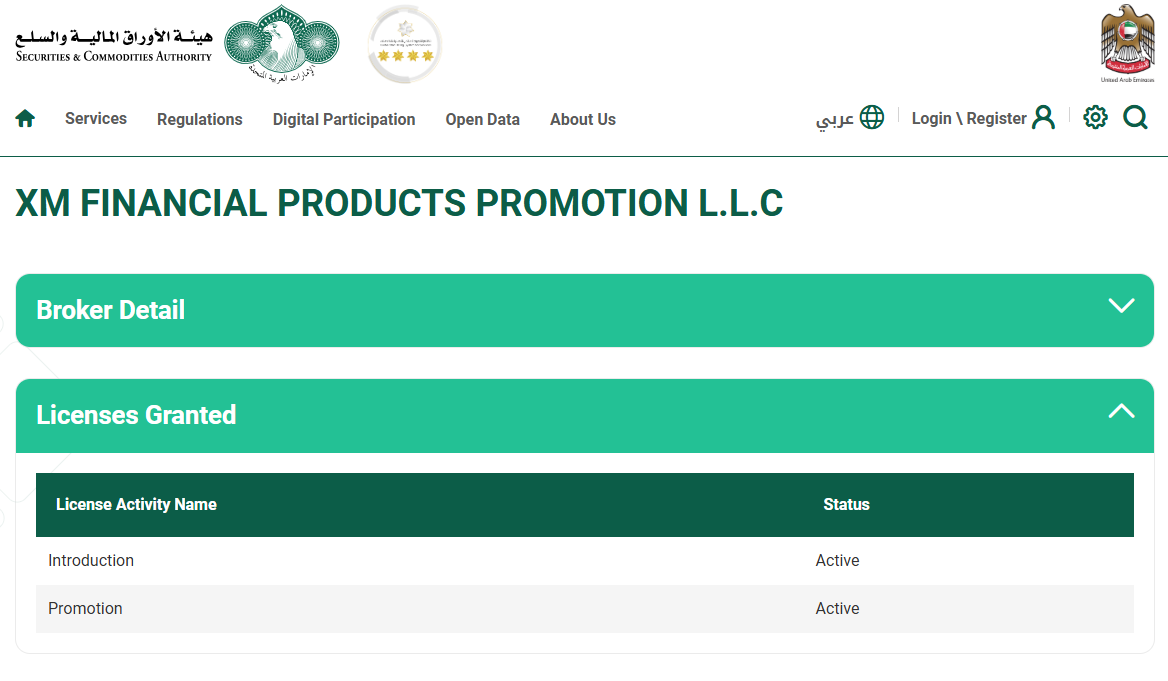
The rising account numbers can partly be attributed to an increase in regulatory approvals in the brokerage space. XM secured a Category 5 license from Dubai’s Securities and Commodities Authority. The approval was granted to its locally incorporated entity, XM Financial Products Promotion, which was established in January 2025.
Details of XM' SCA license on the regulator's website
The company has also established a regional base in Dubai’s
Opus Building at Business Bay and intends to activate the new license before
the end of the year.
Capital.com plans Turkey entry
Capital.com also confirmed it is seeking a financial services licence in Türkiye and hiring a Chief Executive to lead its local
operations. Salim Sebbata, Head of Corporate Development at Capital.com,
said the move is part of the broker’s broader strategy to explore licenses in
multiple markets.
Salim Sebbata, Head of Corporate Development at Capital.com,
said the move is part of the broker’s broader strategy to explore licenses in
multiple markets. Capital.com is also pursuing a license in Japan.
Offshore CFD broker Monaxa gains South Africa's license
Monaxa, a newer contract for differences (CFDs) broker, also
obtained a South African license as part of a shift from offshore to onshore
operations. The firm is now planning to seek MiFID II authorization to expand
its reach into Europe.
CEO Chris Trikomitis confirmed the South African approval on
LinkedIn, noting the company’s intention to progress with its European entity.
It remains unclear whether Monaxa will pursue MiFID II authorization through
Cyprus or via another European jurisdiction.
The study showed that fine-tuned LLMs captured the nuances
of news articles more effectively, especially when trained on a mix of
human-labelled and distant-labelled datasets. Researchers also noted that
domain-adapted LLMs had an edge over pre-trained financial models.
IG Prime launches white-label platform
Meanwhile, IG Prime unveiled a white label trading platform that enables partner institutions to offer multi-asset trading services under their own brand. An unnamed international banking group has become the platform’s first client, marking the start of IG Prime’s expansion into technology partnerships beyond its traditional brokerage services.
The new platform gives the bank’s hedge fund clients access to IG’s global trading infrastructure while keeping the bank’s branding consistent across the user experience. The launch reflects IG Prime’s strategy to broaden its offerings and deepen relationships with financial institutions through tailored technology solutions.
More CFD brokers are exploring opportunities in the crypto
space. Axi launched fiat-settled crypto perpetual contracts, allowing traders
to access crypto derivatives without converting their funds into stablecoins
eToro recently expanded its cryptoasset offering by adding five new tokens: LayerZero, ZKsync, Pyth, EigenLayer, and Swell.
Google adds stablecoin payments to AI apps
In the crypto space, Google is moving into digital payments for artificial intelligence, unveiling a new protocol that enables AI applications to send and
receive money, including stablecoins pegged to traditional currencies.
The initiative is being developed in partnership with
Coinbase, the Ethereum Foundation, and more than 60 other firms across the
finance and technology sectors.
FCA wants to apply traditional financial rules to crypto
Even as crypto adoption grows, regulations are tightening. The UK’s financial watchdog is seeking public feedback on how its existing rulebook should apply to the fast-evolving crypto sector.
The Financial Conduct Authority published a consultation paper examining how current provisions in its handbook could apply to firms engaged in regulated crypto asset activities. The initiative comes as HM Treasury prepares legislation to establish a new regulatory framework for the sector.
The CFTC’s move to simplify access for global crypto platforms to US customers could increase liquidity for American traders, though
the change largely formalizes access that already existed. In late August, the
acting CFTC chair highlighted the foreign board of trade registration framework.
Elon Musk buys $1B in Tesla stock
Outside the industry, Elon Musk purchased roughly $1 billion of Tesla shares, marking his first open-market buy since early 2020. The
acquisition included 2.57 million shares at prices ranging from $372.37 to
$396.54.
The move has reinvigorated the Tesla narrative and captured
the attention of retail investors, coinciding with Musk’s push for greater
control of the company and a substantial executive pay plan.
Nvidia invests $5B in Intel
Lastly, Nvidia is investing in Intel and collaborating on product development, focusing on CPU and interconnect synergy rather than solving
Intel’s manufacturing challenges. The announcement sent shares higher,
reflecting investor optimism about the partnership.
NEWS: @NVIDIA and @Intel to develop AI infrastructure and personal computing products.
The $5 billion investment in Intel’s common stock, priced at
$23.28 per share and subject to regulatory approval, is part of a broader
roadmap.
CFD accounts near 6 million
The retail
CFD industry continued to grow in the second quarter of 2025, with total global
active accounts reaching 5.68 million, according to Finance Magnates’ latest
Quarterly Intelligence Report.
The
milestone, which excludes Japan, reflects steady momentum from the previous
quarter, when the market first crossed the 5 million account threshold.
Eleven
brokers now manage more than 100,000 monthly active accounts, underscoring the
sector’s strong expansion. XTB retained its lead with 750,000 accounts.
The rising account numbers can partly be attributed to an increase in regulatory approvals in the brokerage space. XM secured a Category 5 license from Dubai’s Securities and Commodities Authority. The approval was granted to its locally incorporated entity, XM Financial Products Promotion, which was established in January 2025.
Details of XM' SCA license on the regulator's website
The company has also established a regional base in Dubai’s
Opus Building at Business Bay and intends to activate the new license before
the end of the year.
Capital.com plans Turkey entry
Capital.com also confirmed it is seeking a financial services licence in Türkiye and hiring a Chief Executive to lead its local
operations. Salim Sebbata, Head of Corporate Development at Capital.com,
said the move is part of the broker’s broader strategy to explore licenses in
multiple markets.
Salim Sebbata, Head of Corporate Development at Capital.com,
said the move is part of the broker’s broader strategy to explore licenses in
multiple markets. Capital.com is also pursuing a license in Japan.
Offshore CFD broker Monaxa gains South Africa's license
Monaxa, a newer contract for differences (CFDs) broker, also
obtained a South African license as part of a shift from offshore to onshore
operations. The firm is now planning to seek MiFID II authorization to expand
its reach into Europe.
CEO Chris Trikomitis confirmed the South African approval on
LinkedIn, noting the company’s intention to progress with its European entity.
It remains unclear whether Monaxa will pursue MiFID II authorization through
Cyprus or via another European jurisdiction.
The study showed that fine-tuned LLMs captured the nuances
of news articles more effectively, especially when trained on a mix of
human-labelled and distant-labelled datasets. Researchers also noted that
domain-adapted LLMs had an edge over pre-trained financial models.
IG Prime launches white-label platform
Meanwhile, IG Prime unveiled a white label trading platform that enables partner institutions to offer multi-asset trading services under their own brand. An unnamed international banking group has become the platform’s first client, marking the start of IG Prime’s expansion into technology partnerships beyond its traditional brokerage services.
The new platform gives the bank’s hedge fund clients access to IG’s global trading infrastructure while keeping the bank’s branding consistent across the user experience. The launch reflects IG Prime’s strategy to broaden its offerings and deepen relationships with financial institutions through tailored technology solutions.
More CFD brokers are exploring opportunities in the crypto
space. Axi launched fiat-settled crypto perpetual contracts, allowing traders
to access crypto derivatives without converting their funds into stablecoins
eToro recently expanded its cryptoasset offering by adding five new tokens: LayerZero, ZKsync, Pyth, EigenLayer, and Swell.
Google adds stablecoin payments to AI apps
In the crypto space, Google is moving into digital payments for artificial intelligence, unveiling a new protocol that enables AI applications to send and
receive money, including stablecoins pegged to traditional currencies.
The initiative is being developed in partnership with
Coinbase, the Ethereum Foundation, and more than 60 other firms across the
finance and technology sectors.
FCA wants to apply traditional financial rules to crypto
Even as crypto adoption grows, regulations are tightening. The UK’s financial watchdog is seeking public feedback on how its existing rulebook should apply to the fast-evolving crypto sector.
The Financial Conduct Authority published a consultation paper examining how current provisions in its handbook could apply to firms engaged in regulated crypto asset activities. The initiative comes as HM Treasury prepares legislation to establish a new regulatory framework for the sector.
The CFTC’s move to simplify access for global crypto platforms to US customers could increase liquidity for American traders, though
the change largely formalizes access that already existed. In late August, the
acting CFTC chair highlighted the foreign board of trade registration framework.
Elon Musk buys $1B in Tesla stock
Outside the industry, Elon Musk purchased roughly $1 billion of Tesla shares, marking his first open-market buy since early 2020. The
acquisition included 2.57 million shares at prices ranging from $372.37 to
$396.54.
The move has reinvigorated the Tesla narrative and captured
the attention of retail investors, coinciding with Musk’s push for greater
control of the company and a substantial executive pay plan.
Nvidia invests $5B in Intel
Lastly, Nvidia is investing in Intel and collaborating on product development, focusing on CPU and interconnect synergy rather than solving
Intel’s manufacturing challenges. The announcement sent shares higher,
reflecting investor optimism about the partnership.
NEWS: @NVIDIA and @Intel to develop AI infrastructure and personal computing products.
Jared Kirui is an Editor at Finance Magnates with more than five years of experience in financial journalism. He covers online trading, fintech, payments, and crypto industries with a focus on companies, regulation and compliance, executive moves, trading technology, and market analysis.
His work has been featured in other media outlets, including Benzinga, ZyCrypto, The Distributed, and The Daily Hodl.
Education:
Bachelor of Commerce degree (Finance option), University of Nairobi
Retail Traders Can Now Access Prediction Markets Through Binance Wallet
Featured Videos
FP Markets Winner Spotlight 🏆 | Global Broker of the Year 2025 #Trading #Broker #Innovation #Shorts
FP Markets Winner Spotlight 🏆 | Global Broker of the Year 2025 #Trading #Broker #Innovation #Shorts
FP Markets Winner Spotlight 🏆 | Global Broker of the Year 2025 #Trading #Broker #Innovation #Shorts
FP Markets Winner Spotlight 🏆 | Global Broker of the Year 2025 #Trading #Broker #Innovation #Shorts
FP Markets takes the spotlight as Global Broker of the Year 2025 at the Finance Magnates Awards.
Martin Stoilov, Head of Client Experience, shares that trust, innovation, and people played a key role in the company’s success, supported by a strong foundation of integrity and client-centricity.
Following this milestone, FP Markets continues to focus on growth, technology investment, and its core values of transparency and excellence.
👉 Be part of FM Awards 2026: https://awards.financemagnates.com/#nominate
FP Markets takes the spotlight as Global Broker of the Year 2025 at the Finance Magnates Awards.
Martin Stoilov, Head of Client Experience, shares that trust, innovation, and people played a key role in the company’s success, supported by a strong foundation of integrity and client-centricity.
Following this milestone, FP Markets continues to focus on growth, technology investment, and its core values of transparency and excellence.
👉 Be part of FM Awards 2026: https://awards.financemagnates.com/#nominate
FP Markets takes the spotlight as Global Broker of the Year 2025 at the Finance Magnates Awards.
Martin Stoilov, Head of Client Experience, shares that trust, innovation, and people played a key role in the company’s success, supported by a strong foundation of integrity and client-centricity.
Following this milestone, FP Markets continues to focus on growth, technology investment, and its core values of transparency and excellence.
👉 Be part of FM Awards 2026: https://awards.financemagnates.com/#nominate
FP Markets takes the spotlight as Global Broker of the Year 2025 at the Finance Magnates Awards.
Martin Stoilov, Head of Client Experience, shares that trust, innovation, and people played a key role in the company’s success, supported by a strong foundation of integrity and client-centricity.
Following this milestone, FP Markets continues to focus on growth, technology investment, and its core values of transparency and excellence.
👉 Be part of FM Awards 2026: https://awards.financemagnates.com/#nominate
In this video, we review @HolaPrimeMarketsOfficial, a multi-asset forex and CFDs broker offering different account types, trading platforms, and flexible trading conditions.
We cover the broker’s overall offering, including account options, trading environment, platforms like MT4 and MT5, and additional services such as managed accounts and fast withdrawals.
Watch the full video to see if Hola Prime Markets fits your trading needs.
📣 Stay up to date with the latest in finance and trading. Follow Finance Magnates for industry news, insights, and global event coverage.
Connect with us:
🔗 LinkedIn: /financemagnates
👍 Facebook: /financemagnates
📸 Instagram: https://www.instagram.com/financemagnates
🐦 X: https://x.com/financemagnates
🎥 TikTok: https://www.tiktok.com/tag/financemagnates
▶️ YouTube: /@financemagnates_official
#HolaPrime #ForexBroker #CFDTrading #FinanceMagnates #Trading #Forex #BrokerReview
In this video, we review @HolaPrimeMarketsOfficial, a multi-asset forex and CFDs broker offering different account types, trading platforms, and flexible trading conditions.
We cover the broker’s overall offering, including account options, trading environment, platforms like MT4 and MT5, and additional services such as managed accounts and fast withdrawals.
Watch the full video to see if Hola Prime Markets fits your trading needs.
📣 Stay up to date with the latest in finance and trading. Follow Finance Magnates for industry news, insights, and global event coverage.
Connect with us:
🔗 LinkedIn: /financemagnates
👍 Facebook: /financemagnates
📸 Instagram: https://www.instagram.com/financemagnates
🐦 X: https://x.com/financemagnates
🎥 TikTok: https://www.tiktok.com/tag/financemagnates
▶️ YouTube: /@financemagnates_official
#HolaPrime #ForexBroker #CFDTrading #FinanceMagnates #Trading #Forex #BrokerReview
In this video, we review @HolaPrimeMarketsOfficial, a multi-asset forex and CFDs broker offering different account types, trading platforms, and flexible trading conditions.
We cover the broker’s overall offering, including account options, trading environment, platforms like MT4 and MT5, and additional services such as managed accounts and fast withdrawals.
Watch the full video to see if Hola Prime Markets fits your trading needs.
📣 Stay up to date with the latest in finance and trading. Follow Finance Magnates for industry news, insights, and global event coverage.
Connect with us:
🔗 LinkedIn: /financemagnates
👍 Facebook: /financemagnates
📸 Instagram: https://www.instagram.com/financemagnates
🐦 X: https://x.com/financemagnates
🎥 TikTok: https://www.tiktok.com/tag/financemagnates
▶️ YouTube: /@financemagnates_official
#HolaPrime #ForexBroker #CFDTrading #FinanceMagnates #Trading #Forex #BrokerReview
In this video, we review @HolaPrimeMarketsOfficial, a multi-asset forex and CFDs broker offering different account types, trading platforms, and flexible trading conditions.
We cover the broker’s overall offering, including account options, trading environment, platforms like MT4 and MT5, and additional services such as managed accounts and fast withdrawals.
Watch the full video to see if Hola Prime Markets fits your trading needs.
📣 Stay up to date with the latest in finance and trading. Follow Finance Magnates for industry news, insights, and global event coverage.
Connect with us:
🔗 LinkedIn: /financemagnates
👍 Facebook: /financemagnates
📸 Instagram: https://www.instagram.com/financemagnates
🐦 X: https://x.com/financemagnates
🎥 TikTok: https://www.tiktok.com/tag/financemagnates
▶️ YouTube: /@financemagnates_official
#HolaPrime #ForexBroker #CFDTrading #FinanceMagnates #Trading #Forex #BrokerReview
In this video, we review @HolaPrimeMarketsOfficial, a multi-asset forex and CFDs broker offering different account types, trading platforms, and flexible trading conditions.
We cover the broker’s overall offering, including account options, trading environment, platforms like MT4 and MT5, and additional services such as managed accounts and fast withdrawals.
Watch the full video to see if Hola Prime Markets fits your trading needs.
📣 Stay up to date with the latest in finance and trading. Follow Finance Magnates for industry news, insights, and global event coverage.
Connect with us:
🔗 LinkedIn: /financemagnates
👍 Facebook: /financemagnates
📸 Instagram: https://www.instagram.com/financemagnates
🐦 X: https://x.com/financemagnates
🎥 TikTok: https://www.tiktok.com/tag/financemagnates
▶️ YouTube: /@financemagnates_official
#HolaPrime #ForexBroker #CFDTrading #FinanceMagnates #Trading #Forex #BrokerReview
In this video, we review @HolaPrimeMarketsOfficial, a multi-asset forex and CFDs broker offering different account types, trading platforms, and flexible trading conditions.
We cover the broker’s overall offering, including account options, trading environment, platforms like MT4 and MT5, and additional services such as managed accounts and fast withdrawals.
Watch the full video to see if Hola Prime Markets fits your trading needs.
📣 Stay up to date with the latest in finance and trading. Follow Finance Magnates for industry news, insights, and global event coverage.
Connect with us:
🔗 LinkedIn: /financemagnates
👍 Facebook: /financemagnates
📸 Instagram: https://www.instagram.com/financemagnates
🐦 X: https://x.com/financemagnates
🎥 TikTok: https://www.tiktok.com/tag/financemagnates
▶️ YouTube: /@financemagnates_official
#HolaPrime #ForexBroker #CFDTrading #FinanceMagnates #Trading #Forex #BrokerReview
Hola Prime Review: What You Need to Know | Full Breakdown by Finance Magnates
Hola Prime Review: What You Need to Know | Full Breakdown by Finance Magnates
Hola Prime Review: What You Need to Know | Full Breakdown by Finance Magnates
Hola Prime Review: What You Need to Know | Full Breakdown by Finance Magnates
Hola Prime Review: What You Need to Know | Full Breakdown by Finance Magnates
Hola Prime Review: What You Need to Know | Full Breakdown by Finance Magnates
In this video, we review @HolaPrime_Global, a proprietary trading firm offering evaluation programs and performance-based payouts in simulated market environments.
We cover how the challenge model works, including account types, profit splits (up to 95%), trading rules, and what it takes to reach a funded account. You’ll also learn about available platforms like MT4, MT5, cTrader, and more, along with insights into payouts, support, and trading conditions.
Watch the full video to see if Hola Prime fits your trading style.
📣 Stay up to date with the latest in finance and trading. Follow Finance Magnates for industry news, insights, and global event coverage.
Connect with us:
🔗 LinkedIn: /financemagnates
👍 Facebook: /financemagnates
📸 Instagram: https://www.instagram.com/financemagnates
🐦 X: https://x.com/financemagnates
🎥 TikTok: https://www.tiktok.com/tag/financemagnates
▶️ YouTube: /@financemagnates_official
#HolaPrime #PropFirm #Trading #FinanceMagnates #Forex #FuturesTrading #TradingReview #PropFirmReview
In this video, we review @HolaPrime_Global, a proprietary trading firm offering evaluation programs and performance-based payouts in simulated market environments.
We cover how the challenge model works, including account types, profit splits (up to 95%), trading rules, and what it takes to reach a funded account. You’ll also learn about available platforms like MT4, MT5, cTrader, and more, along with insights into payouts, support, and trading conditions.
Watch the full video to see if Hola Prime fits your trading style.
📣 Stay up to date with the latest in finance and trading. Follow Finance Magnates for industry news, insights, and global event coverage.
Connect with us:
🔗 LinkedIn: /financemagnates
👍 Facebook: /financemagnates
📸 Instagram: https://www.instagram.com/financemagnates
🐦 X: https://x.com/financemagnates
🎥 TikTok: https://www.tiktok.com/tag/financemagnates
▶️ YouTube: /@financemagnates_official
#HolaPrime #PropFirm #Trading #FinanceMagnates #Forex #FuturesTrading #TradingReview #PropFirmReview
In this video, we review @HolaPrime_Global, a proprietary trading firm offering evaluation programs and performance-based payouts in simulated market environments.
We cover how the challenge model works, including account types, profit splits (up to 95%), trading rules, and what it takes to reach a funded account. You’ll also learn about available platforms like MT4, MT5, cTrader, and more, along with insights into payouts, support, and trading conditions.
Watch the full video to see if Hola Prime fits your trading style.
📣 Stay up to date with the latest in finance and trading. Follow Finance Magnates for industry news, insights, and global event coverage.
Connect with us:
🔗 LinkedIn: /financemagnates
👍 Facebook: /financemagnates
📸 Instagram: https://www.instagram.com/financemagnates
🐦 X: https://x.com/financemagnates
🎥 TikTok: https://www.tiktok.com/tag/financemagnates
▶️ YouTube: /@financemagnates_official
#HolaPrime #PropFirm #Trading #FinanceMagnates #Forex #FuturesTrading #TradingReview #PropFirmReview
In this video, we review @HolaPrime_Global, a proprietary trading firm offering evaluation programs and performance-based payouts in simulated market environments.
We cover how the challenge model works, including account types, profit splits (up to 95%), trading rules, and what it takes to reach a funded account. You’ll also learn about available platforms like MT4, MT5, cTrader, and more, along with insights into payouts, support, and trading conditions.
Watch the full video to see if Hola Prime fits your trading style.
📣 Stay up to date with the latest in finance and trading. Follow Finance Magnates for industry news, insights, and global event coverage.
Connect with us:
🔗 LinkedIn: /financemagnates
👍 Facebook: /financemagnates
📸 Instagram: https://www.instagram.com/financemagnates
🐦 X: https://x.com/financemagnates
🎥 TikTok: https://www.tiktok.com/tag/financemagnates
▶️ YouTube: /@financemagnates_official
#HolaPrime #PropFirm #Trading #FinanceMagnates #Forex #FuturesTrading #TradingReview #PropFirmReview
In this video, we review @HolaPrime_Global, a proprietary trading firm offering evaluation programs and performance-based payouts in simulated market environments.
We cover how the challenge model works, including account types, profit splits (up to 95%), trading rules, and what it takes to reach a funded account. You’ll also learn about available platforms like MT4, MT5, cTrader, and more, along with insights into payouts, support, and trading conditions.
Watch the full video to see if Hola Prime fits your trading style.
📣 Stay up to date with the latest in finance and trading. Follow Finance Magnates for industry news, insights, and global event coverage.
Connect with us:
🔗 LinkedIn: /financemagnates
👍 Facebook: /financemagnates
📸 Instagram: https://www.instagram.com/financemagnates
🐦 X: https://x.com/financemagnates
🎥 TikTok: https://www.tiktok.com/tag/financemagnates
▶️ YouTube: /@financemagnates_official
#HolaPrime #PropFirm #Trading #FinanceMagnates #Forex #FuturesTrading #TradingReview #PropFirmReview
In this video, we review @HolaPrime_Global, a proprietary trading firm offering evaluation programs and performance-based payouts in simulated market environments.
We cover how the challenge model works, including account types, profit splits (up to 95%), trading rules, and what it takes to reach a funded account. You’ll also learn about available platforms like MT4, MT5, cTrader, and more, along with insights into payouts, support, and trading conditions.
Watch the full video to see if Hola Prime fits your trading style.
📣 Stay up to date with the latest in finance and trading. Follow Finance Magnates for industry news, insights, and global event coverage.
Connect with us:
🔗 LinkedIn: /financemagnates
👍 Facebook: /financemagnates
📸 Instagram: https://www.instagram.com/financemagnates
🐦 X: https://x.com/financemagnates
🎥 TikTok: https://www.tiktok.com/tag/financemagnates
▶️ YouTube: /@financemagnates_official
#HolaPrime #PropFirm #Trading #FinanceMagnates #Forex #FuturesTrading #TradingReview #PropFirmReview
Axi Winner Spotlight 🏆 | Global Most Innovative Broker 2025 #Innovation #Trading #Fintech #Broker
Axi Winner Spotlight 🏆 | Global Most Innovative Broker 2025 #Innovation #Trading #Fintech #Broker
Axi Winner Spotlight 🏆 | Global Most Innovative Broker 2025 #Innovation #Trading #Fintech #Broker
Axi Winner Spotlight 🏆 | Global Most Innovative Broker 2025 #Innovation #Trading #Fintech #Broker
Axi Winner Spotlight 🏆 | Global Most Innovative Broker 2025 #Innovation #Trading #Fintech #Broker
Axi Winner Spotlight 🏆 | Global Most Innovative Broker 2025 #Innovation #Trading #Fintech #Broker
Axi takes the spotlight at the Finance Magnates Awards, winning Global Most Innovative Broker 2025.
Olivia Xenofontos and Ivanna Openko share how the team will feel: proud, motivated, and ready to keep delivering.
They also describe the night as well-organized, focused, and enjoyable for all.
👉 Be part of FM Awards 2026.
Axi takes the spotlight at the Finance Magnates Awards, winning Global Most Innovative Broker 2025.
Olivia Xenofontos and Ivanna Openko share how the team will feel: proud, motivated, and ready to keep delivering.
They also describe the night as well-organized, focused, and enjoyable for all.
👉 Be part of FM Awards 2026.
Axi takes the spotlight at the Finance Magnates Awards, winning Global Most Innovative Broker 2025.
Olivia Xenofontos and Ivanna Openko share how the team will feel: proud, motivated, and ready to keep delivering.
They also describe the night as well-organized, focused, and enjoyable for all.
👉 Be part of FM Awards 2026.
Axi takes the spotlight at the Finance Magnates Awards, winning Global Most Innovative Broker 2025.
Olivia Xenofontos and Ivanna Openko share how the team will feel: proud, motivated, and ready to keep delivering.
They also describe the night as well-organized, focused, and enjoyable for all.
👉 Be part of FM Awards 2026.
Axi takes the spotlight at the Finance Magnates Awards, winning Global Most Innovative Broker 2025.
Olivia Xenofontos and Ivanna Openko share how the team will feel: proud, motivated, and ready to keep delivering.
They also describe the night as well-organized, focused, and enjoyable for all.
👉 Be part of FM Awards 2026.
Axi takes the spotlight at the Finance Magnates Awards, winning Global Most Innovative Broker 2025.
Olivia Xenofontos and Ivanna Openko share how the team will feel: proud, motivated, and ready to keep delivering.
They also describe the night as well-organized, focused, and enjoyable for all.
👉 Be part of FM Awards 2026.
Recognition that matters.
Built on transparency.
Driven by the industry.
The Finance Magnates Awards 2026.
Nominations are now open.
🔗 https://awards.financemagnates.com/?utm_source=SM&utm_medium=social&utm_campaign=recognition-matters
Recognition that matters.
Built on transparency.
Driven by the industry.
The Finance Magnates Awards 2026.
Nominations are now open.
🔗 https://awards.financemagnates.com/?utm_source=SM&utm_medium=social&utm_campaign=recognition-matters
Recognition that matters.
Built on transparency.
Driven by the industry.
The Finance Magnates Awards 2026.
Nominations are now open.
🔗 https://awards.financemagnates.com/?utm_source=SM&utm_medium=social&utm_campaign=recognition-matters
Recognition that matters.
Built on transparency.
Driven by the industry.
The Finance Magnates Awards 2026.
Nominations are now open.
🔗 https://awards.financemagnates.com/?utm_source=SM&utm_medium=social&utm_campaign=recognition-matters
Recognition that matters.
Built on transparency.
Driven by the industry.
The Finance Magnates Awards 2026.
Nominations are now open.
🔗 https://awards.financemagnates.com/?utm_source=SM&utm_medium=social&utm_campaign=recognition-matters
Recognition that matters.
Built on transparency.
Driven by the industry.
The Finance Magnates Awards 2026.
Nominations are now open.
🔗 https://awards.financemagnates.com/?utm_source=SM&utm_medium=social&utm_campaign=recognition-matters