In other developments, Ripple secured a regulatory license in Dubai, while Revolut and Visa challenged the UK Payment Systems Regulator in court.
In the financial reports, IG Group posted a 12% increase in total revenue, while Futu Holdings nearly doubled its fourth-quarter net income.
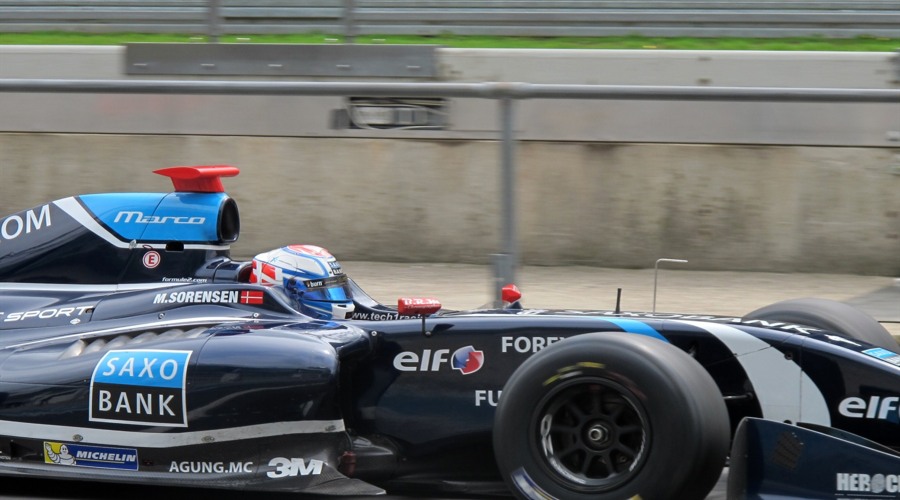
Saxo Bank branding on a Formula One car
Trustpilot’s Reputation Casino
Top on our weekly news recap is an interesting development involving prop trading firms and Trustpilot. Recently, the online review platform abruptly wiped out over 1,300 reviews from the profile of prop firm Hola Prime, leaving just 49 behind. The reason? The firm had allegedly flooded the platform with fake reviews to boost its rating.
Enter: Formula 1. Because nothing says “cutting-edge fintech” quite like slapping your brand on the world’s fastest (and most expensive) billboard. Airwallex isn’t just making waves in fintech—it’s merging speed, culture, and creativity in spectacular fashion. Ahead of the Australian Grand Prix, the company gifted Oscar Piastri a custom-wrapped McLaren supercar featuring an electrifying design by First Nations artist Reko Rennie.
NAGA Founder Announced New Crypto Startup
Benjamin Bilski, the former CEO and founder of NAGA is preparing to launch a new cryptocurrency trading platform. Following his departure from NAGA after its acquisition by CAPEX.com, Bilski is now eying the opportunities in the crypto landscape.
Now, he believes he has identified a major inefficiency in the industry—one he claims could “change everything.” His LinkedIn post suggested that the new platform would address structural issues in market-making and liquidity provision. He emphasized democratized liquidity pools, an independent blockchain optimized for scale, social investing elements, and an AI-driven ecosystem tailored for traders.
The approval represents Ripple's first license in the Middle East and allows the company to offer regulated crypto payment services to businesses throughout the UAE, strengthening its position in a region where it already maintains about 20% of its global customer base. This is reportedly a continuation of the regulatory moves initiated by the company in the Middle East late last year when, in October, it obtained an in-principle license to launch cross-border payment services.
Ripple has secured regulatory approval from the Dubai Financial Services Authority (DFSA), making us the first blockchain payments provider licensed in the DIFC. https://t.co/6oHWtnjODr
This milestone unlocks fully regulated cross-border crypto payments in the UAE, bringing…
Several companies posted their financial results this week. Doo Group reported a total trading volume of $134.11 billion in February 2025, a 25.33% increase from January. The company faced lower trading activity in January due to seasonal factors and market adjustments. Despite initial challenges, trading volume rebounded in February as market conditions stabilized.
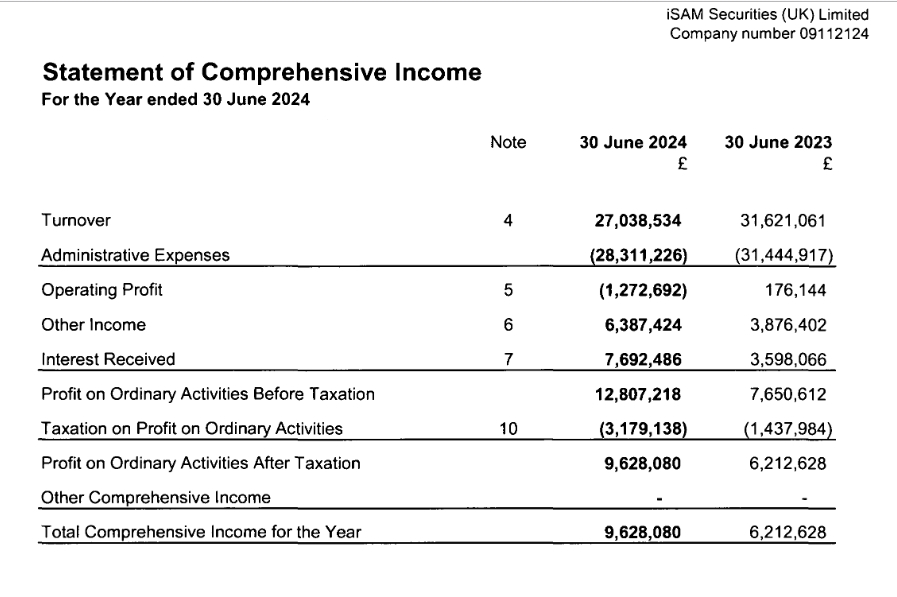
iSAM Securities (UK) Limited also registered its results, reporting a total turnover of £27.04 million for the financial year ending 30 June 2024, reflecting a decline from £31.62 million in the previous year. Despite lower revenue, administrative expenses saw a slight reduction, standing at £28.31 million compared to £31.44 million in 2023.
Source: Company Information Service UK
Meanwhile, Futu Holdings Limited (Nasdaq: FUTU) saw its fourth-quarter net income more than double as trading volume surged to an all-time high amid increased investor activity in AI and cryptocurrency stocks. Also reporting strong results, IG Group (LSE: IGG) reported a 12% increase in total revenue for the third quarter of fiscal year 2025 (Q3 FY25), reaching £268.0 million as stronger market conditions and an uptick in active clients drove performance.
Yuh, the mobile-focused finance app developed by Swissquote and PostFinance, reported a profit of CHF 1.7 million in 2024—its first profitable year since launching in May 2021. “We originally planned to break even by 2025—proof that a well-thought-out strategy, decisive action, and an unwavering focus on our customers can achieve great things,” said Markus Schwab, CEO of Yuh.
In the prop trading space, Maven Securities Holding Limited, a UK-based proprietary trading firm, recorded a 30% decline in revenue to £84 million for the fiscal year that ended June 30, 2024, while increasing profit before tax to £15.6 million, according to the company's annual financial statements.
The Flock of Hedge Funds to GCC
Meanwhile, the most recent Global Financial Centres Index illustrates the growing influence of the GCC’s (Gulf Cooperation Council) two main financial centers. Dubai moved up four places to 16th, and Abu Dhabi advanced from 37th to 35th. Riyadh, Doha, and Kuwait City also made big moves, albeit from a much lower base.
The region's increasing appeal to hedge funds is a significant factor in this growth. A report published by Dubai International Financial Centre (DIFC) in September 2024 notes that the number of hedge funds establishing operations in the center rose by 125% in 2023.
The Fintech-Bank Marriage is Broken
The latest findings show a strained relationship between banks and the fintech sector. Regulatory scrutiny intensified last spring after middleware provider Synapse collapsed, leaving thousands of online customers’ deposits in the lurch.
Last summer, federal banking agencies released an interagency statement providing guidance for banks working with third parties on deposit products, as well as a request for information related to the bank-fintech relationship. In September, the Federal Deposit Insurance Corporation (FDIC) proposed new recordkeeping rules for banks that take deposits from fintech customers.
Israeli Court Orders Panda CFD Technology Provider Sale
A FX/CFD tech partnership that generated millions in wealth reached its breaking point this week, according to the Israeli media outlet TheMarker.com. An Israeli economic court ordered the sale of fintech company Panda Trading Systems to a third party after years of escalating conflict between its equal shareholders.
Samuel Gutman and Maor Lahav, who founded Panda in 2007 and each owns 50% of the company, reportedly failed to establish any mechanism for resolving disputes or separating their interests. The court noted this oversight created significant potential for expensive and lengthy legal proceedings when disagreements emerged.
Revolut vs. The UK Regulator
Additionally, Revolut and Visa took on the UK Payment Systems Regulator over proposed caps on interchange fees, arguing that innovation and competition are at stake.
Revolut and Visa filed legal challenges against the UK payments regulator, PSR, arguing that it has overstepped its powers with a proposed cap on international transaction fees. They asked the court to review and ultimately overturn the PSR’s decision.https://t.co/1WaTpKWxTj
The legal challenge, filed separately by both companies, contends that the PSR’s move is unnecessary and could have unintended consequences for consumers and businesses alike. Given Revolut’s rapid rise and Visa’s global dominance, this isn’t just another regulatory spat—it’s a battle for the future of fintech.
The new owner will purchase Finnish Mandatum's stake of 19.8 percent in Saxo as well as the 49.9 percent stake in Chinese group Geely. Saxo Bank’s founder and CEO, Kim Fournais, will continue to hold his 28 percent stake in the company. He will also remain the CEO of the company.
Trustpilot’s Reputation Casino
Top on our weekly news recap is an interesting development involving prop trading firms and Trustpilot. Recently, the online review platform abruptly wiped out over 1,300 reviews from the profile of prop firm Hola Prime, leaving just 49 behind. The reason? The firm had allegedly flooded the platform with fake reviews to boost its rating.
Enter: Formula 1. Because nothing says “cutting-edge fintech” quite like slapping your brand on the world’s fastest (and most expensive) billboard. Airwallex isn’t just making waves in fintech—it’s merging speed, culture, and creativity in spectacular fashion. Ahead of the Australian Grand Prix, the company gifted Oscar Piastri a custom-wrapped McLaren supercar featuring an electrifying design by First Nations artist Reko Rennie.
NAGA Founder Announced New Crypto Startup
Benjamin Bilski, the former CEO and founder of NAGA is preparing to launch a new cryptocurrency trading platform. Following his departure from NAGA after its acquisition by CAPEX.com, Bilski is now eying the opportunities in the crypto landscape.
Now, he believes he has identified a major inefficiency in the industry—one he claims could “change everything.” His LinkedIn post suggested that the new platform would address structural issues in market-making and liquidity provision. He emphasized democratized liquidity pools, an independent blockchain optimized for scale, social investing elements, and an AI-driven ecosystem tailored for traders.
The approval represents Ripple's first license in the Middle East and allows the company to offer regulated crypto payment services to businesses throughout the UAE, strengthening its position in a region where it already maintains about 20% of its global customer base. This is reportedly a continuation of the regulatory moves initiated by the company in the Middle East late last year when, in October, it obtained an in-principle license to launch cross-border payment services.
Ripple has secured regulatory approval from the Dubai Financial Services Authority (DFSA), making us the first blockchain payments provider licensed in the DIFC. https://t.co/6oHWtnjODr
This milestone unlocks fully regulated cross-border crypto payments in the UAE, bringing…
Several companies posted their financial results this week. Doo Group reported a total trading volume of $134.11 billion in February 2025, a 25.33% increase from January. The company faced lower trading activity in January due to seasonal factors and market adjustments. Despite initial challenges, trading volume rebounded in February as market conditions stabilized.
iSAM Securities (UK) Limited also registered its results, reporting a total turnover of £27.04 million for the financial year ending 30 June 2024, reflecting a decline from £31.62 million in the previous year. Despite lower revenue, administrative expenses saw a slight reduction, standing at £28.31 million compared to £31.44 million in 2023.
Source: Company Information Service UK
Meanwhile, Futu Holdings Limited (Nasdaq: FUTU) saw its fourth-quarter net income more than double as trading volume surged to an all-time high amid increased investor activity in AI and cryptocurrency stocks. Also reporting strong results, IG Group (LSE: IGG) reported a 12% increase in total revenue for the third quarter of fiscal year 2025 (Q3 FY25), reaching £268.0 million as stronger market conditions and an uptick in active clients drove performance.
Yuh, the mobile-focused finance app developed by Swissquote and PostFinance, reported a profit of CHF 1.7 million in 2024—its first profitable year since launching in May 2021. “We originally planned to break even by 2025—proof that a well-thought-out strategy, decisive action, and an unwavering focus on our customers can achieve great things,” said Markus Schwab, CEO of Yuh.
In the prop trading space, Maven Securities Holding Limited, a UK-based proprietary trading firm, recorded a 30% decline in revenue to £84 million for the fiscal year that ended June 30, 2024, while increasing profit before tax to £15.6 million, according to the company's annual financial statements.
The Flock of Hedge Funds to GCC
Meanwhile, the most recent Global Financial Centres Index illustrates the growing influence of the GCC’s (Gulf Cooperation Council) two main financial centers. Dubai moved up four places to 16th, and Abu Dhabi advanced from 37th to 35th. Riyadh, Doha, and Kuwait City also made big moves, albeit from a much lower base.
The region's increasing appeal to hedge funds is a significant factor in this growth. A report published by Dubai International Financial Centre (DIFC) in September 2024 notes that the number of hedge funds establishing operations in the center rose by 125% in 2023.
The Fintech-Bank Marriage is Broken
The latest findings show a strained relationship between banks and the fintech sector. Regulatory scrutiny intensified last spring after middleware provider Synapse collapsed, leaving thousands of online customers’ deposits in the lurch.
Last summer, federal banking agencies released an interagency statement providing guidance for banks working with third parties on deposit products, as well as a request for information related to the bank-fintech relationship. In September, the Federal Deposit Insurance Corporation (FDIC) proposed new recordkeeping rules for banks that take deposits from fintech customers.
Israeli Court Orders Panda CFD Technology Provider Sale
A FX/CFD tech partnership that generated millions in wealth reached its breaking point this week, according to the Israeli media outlet TheMarker.com. An Israeli economic court ordered the sale of fintech company Panda Trading Systems to a third party after years of escalating conflict between its equal shareholders.
Samuel Gutman and Maor Lahav, who founded Panda in 2007 and each owns 50% of the company, reportedly failed to establish any mechanism for resolving disputes or separating their interests. The court noted this oversight created significant potential for expensive and lengthy legal proceedings when disagreements emerged.
Revolut vs. The UK Regulator
Additionally, Revolut and Visa took on the UK Payment Systems Regulator over proposed caps on interchange fees, arguing that innovation and competition are at stake.
Revolut and Visa filed legal challenges against the UK payments regulator, PSR, arguing that it has overstepped its powers with a proposed cap on international transaction fees. They asked the court to review and ultimately overturn the PSR’s decision.https://t.co/1WaTpKWxTj
The legal challenge, filed separately by both companies, contends that the PSR’s move is unnecessary and could have unintended consequences for consumers and businesses alike. Given Revolut’s rapid rise and Visa’s global dominance, this isn’t just another regulatory spat—it’s a battle for the future of fintech.
The new owner will purchase Finnish Mandatum's stake of 19.8 percent in Saxo as well as the 49.9 percent stake in Chinese group Geely. Saxo Bank’s founder and CEO, Kim Fournais, will continue to hold his 28 percent stake in the company. He will also remain the CEO of the company.
Jared Kirui is an Editor at Finance Magnates with more than five years of experience in financial journalism. He covers online trading, fintech, payments, and crypto industries with a focus on companies, regulation and compliance, executive moves, trading technology, and market analysis.
His work has been featured in other media outlets, including Benzinga, ZyCrypto, The Distributed, and The Daily Hodl.
Education:
Bachelor of Commerce degree (Finance option), University of Nairobi
Retail Traders Can Now Access Prediction Markets Through Binance Wallet
Featured Videos
FP Markets Winner Spotlight 🏆 | Global Broker of the Year 2025 #Trading #Broker #Innovation #Shorts
FP Markets Winner Spotlight 🏆 | Global Broker of the Year 2025 #Trading #Broker #Innovation #Shorts
FP Markets Winner Spotlight 🏆 | Global Broker of the Year 2025 #Trading #Broker #Innovation #Shorts
FP Markets Winner Spotlight 🏆 | Global Broker of the Year 2025 #Trading #Broker #Innovation #Shorts
FP Markets takes the spotlight as Global Broker of the Year 2025 at the Finance Magnates Awards.
Martin Stoilov, Head of Client Experience, shares that trust, innovation, and people played a key role in the company’s success, supported by a strong foundation of integrity and client-centricity.
Following this milestone, FP Markets continues to focus on growth, technology investment, and its core values of transparency and excellence.
👉 Be part of FM Awards 2026: https://awards.financemagnates.com/#nominate
FP Markets takes the spotlight as Global Broker of the Year 2025 at the Finance Magnates Awards.
Martin Stoilov, Head of Client Experience, shares that trust, innovation, and people played a key role in the company’s success, supported by a strong foundation of integrity and client-centricity.
Following this milestone, FP Markets continues to focus on growth, technology investment, and its core values of transparency and excellence.
👉 Be part of FM Awards 2026: https://awards.financemagnates.com/#nominate
FP Markets takes the spotlight as Global Broker of the Year 2025 at the Finance Magnates Awards.
Martin Stoilov, Head of Client Experience, shares that trust, innovation, and people played a key role in the company’s success, supported by a strong foundation of integrity and client-centricity.
Following this milestone, FP Markets continues to focus on growth, technology investment, and its core values of transparency and excellence.
👉 Be part of FM Awards 2026: https://awards.financemagnates.com/#nominate
FP Markets takes the spotlight as Global Broker of the Year 2025 at the Finance Magnates Awards.
Martin Stoilov, Head of Client Experience, shares that trust, innovation, and people played a key role in the company’s success, supported by a strong foundation of integrity and client-centricity.
Following this milestone, FP Markets continues to focus on growth, technology investment, and its core values of transparency and excellence.
👉 Be part of FM Awards 2026: https://awards.financemagnates.com/#nominate
In this video, we review @HolaPrimeMarketsOfficial, a multi-asset forex and CFDs broker offering different account types, trading platforms, and flexible trading conditions.
We cover the broker’s overall offering, including account options, trading environment, platforms like MT4 and MT5, and additional services such as managed accounts and fast withdrawals.
Watch the full video to see if Hola Prime Markets fits your trading needs.
📣 Stay up to date with the latest in finance and trading. Follow Finance Magnates for industry news, insights, and global event coverage.
Connect with us:
🔗 LinkedIn: /financemagnates
👍 Facebook: /financemagnates
📸 Instagram: https://www.instagram.com/financemagnates
🐦 X: https://x.com/financemagnates
🎥 TikTok: https://www.tiktok.com/tag/financemagnates
▶️ YouTube: /@financemagnates_official
#HolaPrime #ForexBroker #CFDTrading #FinanceMagnates #Trading #Forex #BrokerReview
In this video, we review @HolaPrimeMarketsOfficial, a multi-asset forex and CFDs broker offering different account types, trading platforms, and flexible trading conditions.
We cover the broker’s overall offering, including account options, trading environment, platforms like MT4 and MT5, and additional services such as managed accounts and fast withdrawals.
Watch the full video to see if Hola Prime Markets fits your trading needs.
📣 Stay up to date with the latest in finance and trading. Follow Finance Magnates for industry news, insights, and global event coverage.
Connect with us:
🔗 LinkedIn: /financemagnates
👍 Facebook: /financemagnates
📸 Instagram: https://www.instagram.com/financemagnates
🐦 X: https://x.com/financemagnates
🎥 TikTok: https://www.tiktok.com/tag/financemagnates
▶️ YouTube: /@financemagnates_official
#HolaPrime #ForexBroker #CFDTrading #FinanceMagnates #Trading #Forex #BrokerReview
In this video, we review @HolaPrimeMarketsOfficial, a multi-asset forex and CFDs broker offering different account types, trading platforms, and flexible trading conditions.
We cover the broker’s overall offering, including account options, trading environment, platforms like MT4 and MT5, and additional services such as managed accounts and fast withdrawals.
Watch the full video to see if Hola Prime Markets fits your trading needs.
📣 Stay up to date with the latest in finance and trading. Follow Finance Magnates for industry news, insights, and global event coverage.
Connect with us:
🔗 LinkedIn: /financemagnates
👍 Facebook: /financemagnates
📸 Instagram: https://www.instagram.com/financemagnates
🐦 X: https://x.com/financemagnates
🎥 TikTok: https://www.tiktok.com/tag/financemagnates
▶️ YouTube: /@financemagnates_official
#HolaPrime #ForexBroker #CFDTrading #FinanceMagnates #Trading #Forex #BrokerReview
In this video, we review @HolaPrimeMarketsOfficial, a multi-asset forex and CFDs broker offering different account types, trading platforms, and flexible trading conditions.
We cover the broker’s overall offering, including account options, trading environment, platforms like MT4 and MT5, and additional services such as managed accounts and fast withdrawals.
Watch the full video to see if Hola Prime Markets fits your trading needs.
📣 Stay up to date with the latest in finance and trading. Follow Finance Magnates for industry news, insights, and global event coverage.
Connect with us:
🔗 LinkedIn: /financemagnates
👍 Facebook: /financemagnates
📸 Instagram: https://www.instagram.com/financemagnates
🐦 X: https://x.com/financemagnates
🎥 TikTok: https://www.tiktok.com/tag/financemagnates
▶️ YouTube: /@financemagnates_official
#HolaPrime #ForexBroker #CFDTrading #FinanceMagnates #Trading #Forex #BrokerReview
In this video, we review @HolaPrimeMarketsOfficial, a multi-asset forex and CFDs broker offering different account types, trading platforms, and flexible trading conditions.
We cover the broker’s overall offering, including account options, trading environment, platforms like MT4 and MT5, and additional services such as managed accounts and fast withdrawals.
Watch the full video to see if Hola Prime Markets fits your trading needs.
📣 Stay up to date with the latest in finance and trading. Follow Finance Magnates for industry news, insights, and global event coverage.
Connect with us:
🔗 LinkedIn: /financemagnates
👍 Facebook: /financemagnates
📸 Instagram: https://www.instagram.com/financemagnates
🐦 X: https://x.com/financemagnates
🎥 TikTok: https://www.tiktok.com/tag/financemagnates
▶️ YouTube: /@financemagnates_official
#HolaPrime #ForexBroker #CFDTrading #FinanceMagnates #Trading #Forex #BrokerReview
In this video, we review @HolaPrimeMarketsOfficial, a multi-asset forex and CFDs broker offering different account types, trading platforms, and flexible trading conditions.
We cover the broker’s overall offering, including account options, trading environment, platforms like MT4 and MT5, and additional services such as managed accounts and fast withdrawals.
Watch the full video to see if Hola Prime Markets fits your trading needs.
📣 Stay up to date with the latest in finance and trading. Follow Finance Magnates for industry news, insights, and global event coverage.
Connect with us:
🔗 LinkedIn: /financemagnates
👍 Facebook: /financemagnates
📸 Instagram: https://www.instagram.com/financemagnates
🐦 X: https://x.com/financemagnates
🎥 TikTok: https://www.tiktok.com/tag/financemagnates
▶️ YouTube: /@financemagnates_official
#HolaPrime #ForexBroker #CFDTrading #FinanceMagnates #Trading #Forex #BrokerReview
Hola Prime Review: What You Need to Know | Full Breakdown by Finance Magnates
Hola Prime Review: What You Need to Know | Full Breakdown by Finance Magnates
Hola Prime Review: What You Need to Know | Full Breakdown by Finance Magnates
Hola Prime Review: What You Need to Know | Full Breakdown by Finance Magnates
Hola Prime Review: What You Need to Know | Full Breakdown by Finance Magnates
Hola Prime Review: What You Need to Know | Full Breakdown by Finance Magnates
In this video, we review @HolaPrime_Global, a proprietary trading firm offering evaluation programs and performance-based payouts in simulated market environments.
We cover how the challenge model works, including account types, profit splits (up to 95%), trading rules, and what it takes to reach a funded account. You’ll also learn about available platforms like MT4, MT5, cTrader, and more, along with insights into payouts, support, and trading conditions.
Watch the full video to see if Hola Prime fits your trading style.
📣 Stay up to date with the latest in finance and trading. Follow Finance Magnates for industry news, insights, and global event coverage.
Connect with us:
🔗 LinkedIn: /financemagnates
👍 Facebook: /financemagnates
📸 Instagram: https://www.instagram.com/financemagnates
🐦 X: https://x.com/financemagnates
🎥 TikTok: https://www.tiktok.com/tag/financemagnates
▶️ YouTube: /@financemagnates_official
#HolaPrime #PropFirm #Trading #FinanceMagnates #Forex #FuturesTrading #TradingReview #PropFirmReview
In this video, we review @HolaPrime_Global, a proprietary trading firm offering evaluation programs and performance-based payouts in simulated market environments.
We cover how the challenge model works, including account types, profit splits (up to 95%), trading rules, and what it takes to reach a funded account. You’ll also learn about available platforms like MT4, MT5, cTrader, and more, along with insights into payouts, support, and trading conditions.
Watch the full video to see if Hola Prime fits your trading style.
📣 Stay up to date with the latest in finance and trading. Follow Finance Magnates for industry news, insights, and global event coverage.
Connect with us:
🔗 LinkedIn: /financemagnates
👍 Facebook: /financemagnates
📸 Instagram: https://www.instagram.com/financemagnates
🐦 X: https://x.com/financemagnates
🎥 TikTok: https://www.tiktok.com/tag/financemagnates
▶️ YouTube: /@financemagnates_official
#HolaPrime #PropFirm #Trading #FinanceMagnates #Forex #FuturesTrading #TradingReview #PropFirmReview
In this video, we review @HolaPrime_Global, a proprietary trading firm offering evaluation programs and performance-based payouts in simulated market environments.
We cover how the challenge model works, including account types, profit splits (up to 95%), trading rules, and what it takes to reach a funded account. You’ll also learn about available platforms like MT4, MT5, cTrader, and more, along with insights into payouts, support, and trading conditions.
Watch the full video to see if Hola Prime fits your trading style.
📣 Stay up to date with the latest in finance and trading. Follow Finance Magnates for industry news, insights, and global event coverage.
Connect with us:
🔗 LinkedIn: /financemagnates
👍 Facebook: /financemagnates
📸 Instagram: https://www.instagram.com/financemagnates
🐦 X: https://x.com/financemagnates
🎥 TikTok: https://www.tiktok.com/tag/financemagnates
▶️ YouTube: /@financemagnates_official
#HolaPrime #PropFirm #Trading #FinanceMagnates #Forex #FuturesTrading #TradingReview #PropFirmReview
In this video, we review @HolaPrime_Global, a proprietary trading firm offering evaluation programs and performance-based payouts in simulated market environments.
We cover how the challenge model works, including account types, profit splits (up to 95%), trading rules, and what it takes to reach a funded account. You’ll also learn about available platforms like MT4, MT5, cTrader, and more, along with insights into payouts, support, and trading conditions.
Watch the full video to see if Hola Prime fits your trading style.
📣 Stay up to date with the latest in finance and trading. Follow Finance Magnates for industry news, insights, and global event coverage.
Connect with us:
🔗 LinkedIn: /financemagnates
👍 Facebook: /financemagnates
📸 Instagram: https://www.instagram.com/financemagnates
🐦 X: https://x.com/financemagnates
🎥 TikTok: https://www.tiktok.com/tag/financemagnates
▶️ YouTube: /@financemagnates_official
#HolaPrime #PropFirm #Trading #FinanceMagnates #Forex #FuturesTrading #TradingReview #PropFirmReview
In this video, we review @HolaPrime_Global, a proprietary trading firm offering evaluation programs and performance-based payouts in simulated market environments.
We cover how the challenge model works, including account types, profit splits (up to 95%), trading rules, and what it takes to reach a funded account. You’ll also learn about available platforms like MT4, MT5, cTrader, and more, along with insights into payouts, support, and trading conditions.
Watch the full video to see if Hola Prime fits your trading style.
📣 Stay up to date with the latest in finance and trading. Follow Finance Magnates for industry news, insights, and global event coverage.
Connect with us:
🔗 LinkedIn: /financemagnates
👍 Facebook: /financemagnates
📸 Instagram: https://www.instagram.com/financemagnates
🐦 X: https://x.com/financemagnates
🎥 TikTok: https://www.tiktok.com/tag/financemagnates
▶️ YouTube: /@financemagnates_official
#HolaPrime #PropFirm #Trading #FinanceMagnates #Forex #FuturesTrading #TradingReview #PropFirmReview
In this video, we review @HolaPrime_Global, a proprietary trading firm offering evaluation programs and performance-based payouts in simulated market environments.
We cover how the challenge model works, including account types, profit splits (up to 95%), trading rules, and what it takes to reach a funded account. You’ll also learn about available platforms like MT4, MT5, cTrader, and more, along with insights into payouts, support, and trading conditions.
Watch the full video to see if Hola Prime fits your trading style.
📣 Stay up to date with the latest in finance and trading. Follow Finance Magnates for industry news, insights, and global event coverage.
Connect with us:
🔗 LinkedIn: /financemagnates
👍 Facebook: /financemagnates
📸 Instagram: https://www.instagram.com/financemagnates
🐦 X: https://x.com/financemagnates
🎥 TikTok: https://www.tiktok.com/tag/financemagnates
▶️ YouTube: /@financemagnates_official
#HolaPrime #PropFirm #Trading #FinanceMagnates #Forex #FuturesTrading #TradingReview #PropFirmReview
Axi Winner Spotlight 🏆 | Global Most Innovative Broker 2025 #Innovation #Trading #Fintech #Broker
Axi Winner Spotlight 🏆 | Global Most Innovative Broker 2025 #Innovation #Trading #Fintech #Broker
Axi Winner Spotlight 🏆 | Global Most Innovative Broker 2025 #Innovation #Trading #Fintech #Broker
Axi Winner Spotlight 🏆 | Global Most Innovative Broker 2025 #Innovation #Trading #Fintech #Broker
Axi Winner Spotlight 🏆 | Global Most Innovative Broker 2025 #Innovation #Trading #Fintech #Broker
Axi Winner Spotlight 🏆 | Global Most Innovative Broker 2025 #Innovation #Trading #Fintech #Broker
Axi takes the spotlight at the Finance Magnates Awards, winning Global Most Innovative Broker 2025.
Olivia Xenofontos and Ivanna Openko share how the team will feel: proud, motivated, and ready to keep delivering.
They also describe the night as well-organized, focused, and enjoyable for all.
👉 Be part of FM Awards 2026.
Axi takes the spotlight at the Finance Magnates Awards, winning Global Most Innovative Broker 2025.
Olivia Xenofontos and Ivanna Openko share how the team will feel: proud, motivated, and ready to keep delivering.
They also describe the night as well-organized, focused, and enjoyable for all.
👉 Be part of FM Awards 2026.
Axi takes the spotlight at the Finance Magnates Awards, winning Global Most Innovative Broker 2025.
Olivia Xenofontos and Ivanna Openko share how the team will feel: proud, motivated, and ready to keep delivering.
They also describe the night as well-organized, focused, and enjoyable for all.
👉 Be part of FM Awards 2026.
Axi takes the spotlight at the Finance Magnates Awards, winning Global Most Innovative Broker 2025.
Olivia Xenofontos and Ivanna Openko share how the team will feel: proud, motivated, and ready to keep delivering.
They also describe the night as well-organized, focused, and enjoyable for all.
👉 Be part of FM Awards 2026.
Axi takes the spotlight at the Finance Magnates Awards, winning Global Most Innovative Broker 2025.
Olivia Xenofontos and Ivanna Openko share how the team will feel: proud, motivated, and ready to keep delivering.
They also describe the night as well-organized, focused, and enjoyable for all.
👉 Be part of FM Awards 2026.
Axi takes the spotlight at the Finance Magnates Awards, winning Global Most Innovative Broker 2025.
Olivia Xenofontos and Ivanna Openko share how the team will feel: proud, motivated, and ready to keep delivering.
They also describe the night as well-organized, focused, and enjoyable for all.
👉 Be part of FM Awards 2026.
Recognition that matters.
Built on transparency.
Driven by the industry.
The Finance Magnates Awards 2026.
Nominations are now open.
🔗 https://awards.financemagnates.com/?utm_source=SM&utm_medium=social&utm_campaign=recognition-matters
Recognition that matters.
Built on transparency.
Driven by the industry.
The Finance Magnates Awards 2026.
Nominations are now open.
🔗 https://awards.financemagnates.com/?utm_source=SM&utm_medium=social&utm_campaign=recognition-matters
Recognition that matters.
Built on transparency.
Driven by the industry.
The Finance Magnates Awards 2026.
Nominations are now open.
🔗 https://awards.financemagnates.com/?utm_source=SM&utm_medium=social&utm_campaign=recognition-matters
Recognition that matters.
Built on transparency.
Driven by the industry.
The Finance Magnates Awards 2026.
Nominations are now open.
🔗 https://awards.financemagnates.com/?utm_source=SM&utm_medium=social&utm_campaign=recognition-matters
Recognition that matters.
Built on transparency.
Driven by the industry.
The Finance Magnates Awards 2026.
Nominations are now open.
🔗 https://awards.financemagnates.com/?utm_source=SM&utm_medium=social&utm_campaign=recognition-matters
Recognition that matters.
Built on transparency.
Driven by the industry.
The Finance Magnates Awards 2026.
Nominations are now open.
🔗 https://awards.financemagnates.com/?utm_source=SM&utm_medium=social&utm_campaign=recognition-matters