Moneta Markets received FCA approval in what might signal a comeback to the UK.
How Vibe Coding is reshaping how fintech teams build trading tools—and the security concerns it raises.
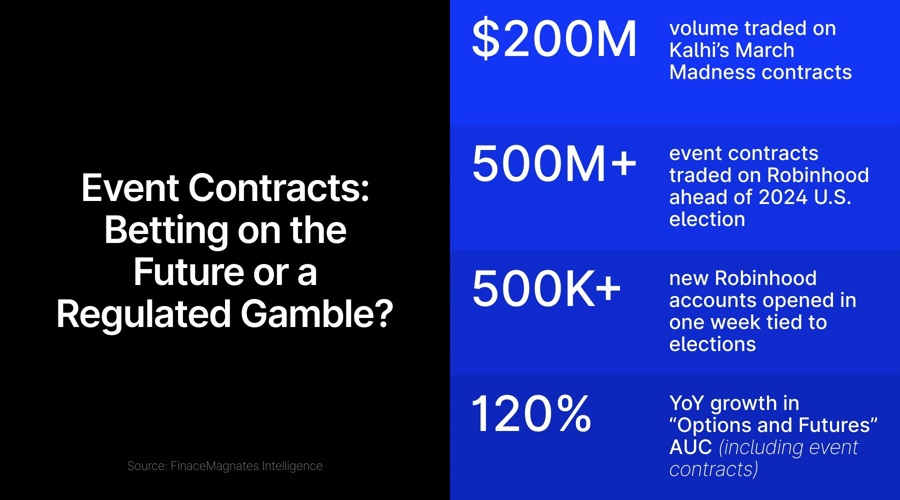
CFTC eases rules for event contracts with Railbird Exchange relief
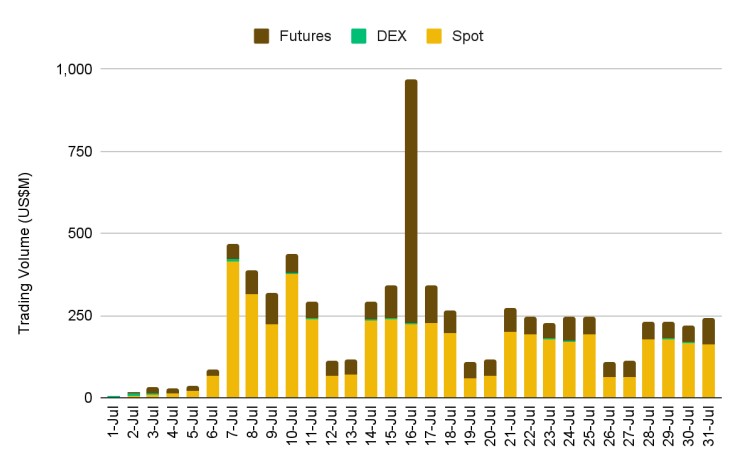
Tokenized stocks surge in July
Interest in tokenized stocks rose sharply in July, with the
combined market capitalization of TSLA and SPY reaching $53.6 million,
according to a report by Binance. This marked a 220% increase compared to June.
The number of on-chain addresses associated with tokenized
stock assets grew significantly, rising from 1,600 to over 90,000 within a
month.
Tokenized stocks volumes experienced notable growth in July, Source: Binance
Binance noted that if just 1% of global equities were
tokenized, the sector could reach a market size of $1.3 trillion—over eight
times the peak value of the decentralized finance sector.
The FCA license followed Moneta Markets’ recent entry into
sports sponsorship through a regional partnership with Spanish football club
Atlético de Madrid.
Is the tide turning for UK brokerage? In his weekly feature, Paul Golden observed that Moneta and Ultima Markets' move comes after several
years of CFD brokers retreating from the UK.
The moves by both firms suggest a renewed interest in the UK
CFD space, which some view as a now more mature and stable market environment
compared to earlier in the decade.
This week in numbers: IG Group, Plus500, XTB, and CMC Markets
Publicly traded CFD brokers IG Group, Plus500, CMC Markets,
and XTB all reported strong results this week, largely fueled by growth in
active client numbers.
Metric
IG Markets Limited
IG Index Limited
IG Trading and Investments Limited
Net Trading Revenue
FY25
£384.9m
£228.3m
£27.2m
FY24
£343.0m
£211.7m
£20.4m
Change
+£41.9m (+12.2%)
+£16.6m (+7.8%)
+£6.8m (+33.3%)
Operating Profit
FY25
£140.5m
£127.2m
£23.8m
FY24
£106.1m
£102.3m
£20.5m
Change
+£34.4m (+32.4%)
+£24.9m (+24.3%)
+£3.3m (+16.1%)
Profit After Tax
FY25
£131.2m
£92.7m
£21.9m
FY24
£102.5m
£73.0m
£20.7m
Change
+£28.7m (+28.0%)
+£19.7m (+27.0%)
+£1.2m (+5.8%)
IG led in both client volume and profitability, posting the
highest average revenue per user (ARPU) at $3,240. Plus500 came in second with
an ARPU of $2,310, followed by CMC Markets at $1,350 and XTB at just $350.
For IG, the performance was further reinforced by strong subsidiary earnings. Three of its key units recorded higher profits in fiscal
year 2025, reversing the mixed results seen in the previous year.
The5ers Founder speaks to Financemagnates.com
In our exclusive interview with Gil Ben Hur, the founder and CEO of The5ers, we discussed execution among prop trading firms. In
his view, the two-step evaluation model used by many proprietary trading firms
was incompatible with A-book execution.
He made the remarks following the collapse of Funded
Unicorn, a prop trading firm that had promised greater transparency by
operating on an A-book model but shut down shortly after.
While most proprietary trading firms do not publicly
disclose their risk management approaches, some may still be operating A-book
setups.
Turning point for event contracts?
Interestingly, event contracts received a regulatory boost this week after
the Commodity Futures Trading Commission granted relief to Railbird Exchange
and its clearing partner from certain swap reporting obligations.
The decision marked a shift toward a more accommodating
regulatory stance in the U.S., which could support the growth of this emerging
asset class.
Financial industry reacts to GPT-5 launch
OpenAI launched GPT-5 this week, introducing its most advanced AI model to date. The rollout marked a significant shift, as the model
was made available to all ChatGPT users, including those on the free tier.
AI researcher Dave Wang described GPT-5 as a potential game-changer for finance and investing. He highlighted the model’s increased speed,
accuracy, and reasoning as features.
Finance Magnates Data Lab found that out of nearly 1,000 finance jobs, only one in three had “AI” in the title. These positions offered salaries that were, on average, 4% higher than those of other roles. However, over 70% of
finance job descriptions referenced AI tools or skills.
The observation emerged from a casual office discussion
about how AI was reshaping work and hiring trends.
Can you trust Vibe coding for trading tools?
Finally, Vibe coding has emerged as a new approach to software development, enabling fintech teams to build trading tools through fast,
visual, and AI-assisted methods.
It is used for tasks such as simulating KYC flows, mocking order-routing logic, and streamlining the development process.
Instead of starting with complex architecture or boilerplate
code, developers could construct data flows and logic through simple prompts or
drag-and-drop elements.
Tokenized stocks surge in July
Interest in tokenized stocks rose sharply in July, with the
combined market capitalization of TSLA and SPY reaching $53.6 million,
according to a report by Binance. This marked a 220% increase compared to June.
The number of on-chain addresses associated with tokenized
stock assets grew significantly, rising from 1,600 to over 90,000 within a
month.
Tokenized stocks volumes experienced notable growth in July, Source: Binance
Binance noted that if just 1% of global equities were
tokenized, the sector could reach a market size of $1.3 trillion—over eight
times the peak value of the decentralized finance sector.
The FCA license followed Moneta Markets’ recent entry into
sports sponsorship through a regional partnership with Spanish football club
Atlético de Madrid.
Is the tide turning for UK brokerage? In his weekly feature, Paul Golden observed that Moneta and Ultima Markets' move comes after several
years of CFD brokers retreating from the UK.
The moves by both firms suggest a renewed interest in the UK
CFD space, which some view as a now more mature and stable market environment
compared to earlier in the decade.
This week in numbers: IG Group, Plus500, XTB, and CMC Markets
Publicly traded CFD brokers IG Group, Plus500, CMC Markets,
and XTB all reported strong results this week, largely fueled by growth in
active client numbers.
Metric
IG Markets Limited
IG Index Limited
IG Trading and Investments Limited
Net Trading Revenue
FY25
£384.9m
£228.3m
£27.2m
FY24
£343.0m
£211.7m
£20.4m
Change
+£41.9m (+12.2%)
+£16.6m (+7.8%)
+£6.8m (+33.3%)
Operating Profit
FY25
£140.5m
£127.2m
£23.8m
FY24
£106.1m
£102.3m
£20.5m
Change
+£34.4m (+32.4%)
+£24.9m (+24.3%)
+£3.3m (+16.1%)
Profit After Tax
FY25
£131.2m
£92.7m
£21.9m
FY24
£102.5m
£73.0m
£20.7m
Change
+£28.7m (+28.0%)
+£19.7m (+27.0%)
+£1.2m (+5.8%)
IG led in both client volume and profitability, posting the
highest average revenue per user (ARPU) at $3,240. Plus500 came in second with
an ARPU of $2,310, followed by CMC Markets at $1,350 and XTB at just $350.
For IG, the performance was further reinforced by strong subsidiary earnings. Three of its key units recorded higher profits in fiscal
year 2025, reversing the mixed results seen in the previous year.
The5ers Founder speaks to Financemagnates.com
In our exclusive interview with Gil Ben Hur, the founder and CEO of The5ers, we discussed execution among prop trading firms. In
his view, the two-step evaluation model used by many proprietary trading firms
was incompatible with A-book execution.
He made the remarks following the collapse of Funded
Unicorn, a prop trading firm that had promised greater transparency by
operating on an A-book model but shut down shortly after.
While most proprietary trading firms do not publicly
disclose their risk management approaches, some may still be operating A-book
setups.
Turning point for event contracts?
Interestingly, event contracts received a regulatory boost this week after
the Commodity Futures Trading Commission granted relief to Railbird Exchange
and its clearing partner from certain swap reporting obligations.
The decision marked a shift toward a more accommodating
regulatory stance in the U.S., which could support the growth of this emerging
asset class.
Financial industry reacts to GPT-5 launch
OpenAI launched GPT-5 this week, introducing its most advanced AI model to date. The rollout marked a significant shift, as the model
was made available to all ChatGPT users, including those on the free tier.
AI researcher Dave Wang described GPT-5 as a potential game-changer for finance and investing. He highlighted the model’s increased speed,
accuracy, and reasoning as features.
Finance Magnates Data Lab found that out of nearly 1,000 finance jobs, only one in three had “AI” in the title. These positions offered salaries that were, on average, 4% higher than those of other roles. However, over 70% of
finance job descriptions referenced AI tools or skills.
The observation emerged from a casual office discussion
about how AI was reshaping work and hiring trends.
Can you trust Vibe coding for trading tools?
Finally, Vibe coding has emerged as a new approach to software development, enabling fintech teams to build trading tools through fast,
visual, and AI-assisted methods.
It is used for tasks such as simulating KYC flows, mocking order-routing logic, and streamlining the development process.
Instead of starting with complex architecture or boilerplate
code, developers could construct data flows and logic through simple prompts or
drag-and-drop elements.
Jared Kirui is an Editor at Finance Magnates with more than five years of experience in financial journalism. He covers online trading, fintech, payments, and crypto industries with a focus on companies, regulation and compliance, executive moves, trading technology, and market analysis.
His work has been featured in other media outlets, including Benzinga, ZyCrypto, The Distributed, and The Daily Hodl.
Education:
Bachelor of Commerce degree (Finance option), University of Nairobi
Retail Traders Can Now Access Prediction Markets Through Binance Wallet
Featured Videos
FP Markets Winner Spotlight 🏆 | Global Broker of the Year 2025 #Trading #Broker #Innovation #Shorts
FP Markets Winner Spotlight 🏆 | Global Broker of the Year 2025 #Trading #Broker #Innovation #Shorts
FP Markets Winner Spotlight 🏆 | Global Broker of the Year 2025 #Trading #Broker #Innovation #Shorts
FP Markets Winner Spotlight 🏆 | Global Broker of the Year 2025 #Trading #Broker #Innovation #Shorts
FP Markets takes the spotlight as Global Broker of the Year 2025 at the Finance Magnates Awards.
Martin Stoilov, Head of Client Experience, shares that trust, innovation, and people played a key role in the company’s success, supported by a strong foundation of integrity and client-centricity.
Following this milestone, FP Markets continues to focus on growth, technology investment, and its core values of transparency and excellence.
👉 Be part of FM Awards 2026: https://awards.financemagnates.com/#nominate
FP Markets takes the spotlight as Global Broker of the Year 2025 at the Finance Magnates Awards.
Martin Stoilov, Head of Client Experience, shares that trust, innovation, and people played a key role in the company’s success, supported by a strong foundation of integrity and client-centricity.
Following this milestone, FP Markets continues to focus on growth, technology investment, and its core values of transparency and excellence.
👉 Be part of FM Awards 2026: https://awards.financemagnates.com/#nominate
FP Markets takes the spotlight as Global Broker of the Year 2025 at the Finance Magnates Awards.
Martin Stoilov, Head of Client Experience, shares that trust, innovation, and people played a key role in the company’s success, supported by a strong foundation of integrity and client-centricity.
Following this milestone, FP Markets continues to focus on growth, technology investment, and its core values of transparency and excellence.
👉 Be part of FM Awards 2026: https://awards.financemagnates.com/#nominate
FP Markets takes the spotlight as Global Broker of the Year 2025 at the Finance Magnates Awards.
Martin Stoilov, Head of Client Experience, shares that trust, innovation, and people played a key role in the company’s success, supported by a strong foundation of integrity and client-centricity.
Following this milestone, FP Markets continues to focus on growth, technology investment, and its core values of transparency and excellence.
👉 Be part of FM Awards 2026: https://awards.financemagnates.com/#nominate
In this video, we review @HolaPrimeMarketsOfficial, a multi-asset forex and CFDs broker offering different account types, trading platforms, and flexible trading conditions.
We cover the broker’s overall offering, including account options, trading environment, platforms like MT4 and MT5, and additional services such as managed accounts and fast withdrawals.
Watch the full video to see if Hola Prime Markets fits your trading needs.
📣 Stay up to date with the latest in finance and trading. Follow Finance Magnates for industry news, insights, and global event coverage.
Connect with us:
🔗 LinkedIn: /financemagnates
👍 Facebook: /financemagnates
📸 Instagram: https://www.instagram.com/financemagnates
🐦 X: https://x.com/financemagnates
🎥 TikTok: https://www.tiktok.com/tag/financemagnates
▶️ YouTube: /@financemagnates_official
#HolaPrime #ForexBroker #CFDTrading #FinanceMagnates #Trading #Forex #BrokerReview
In this video, we review @HolaPrimeMarketsOfficial, a multi-asset forex and CFDs broker offering different account types, trading platforms, and flexible trading conditions.
We cover the broker’s overall offering, including account options, trading environment, platforms like MT4 and MT5, and additional services such as managed accounts and fast withdrawals.
Watch the full video to see if Hola Prime Markets fits your trading needs.
📣 Stay up to date with the latest in finance and trading. Follow Finance Magnates for industry news, insights, and global event coverage.
Connect with us:
🔗 LinkedIn: /financemagnates
👍 Facebook: /financemagnates
📸 Instagram: https://www.instagram.com/financemagnates
🐦 X: https://x.com/financemagnates
🎥 TikTok: https://www.tiktok.com/tag/financemagnates
▶️ YouTube: /@financemagnates_official
#HolaPrime #ForexBroker #CFDTrading #FinanceMagnates #Trading #Forex #BrokerReview
In this video, we review @HolaPrimeMarketsOfficial, a multi-asset forex and CFDs broker offering different account types, trading platforms, and flexible trading conditions.
We cover the broker’s overall offering, including account options, trading environment, platforms like MT4 and MT5, and additional services such as managed accounts and fast withdrawals.
Watch the full video to see if Hola Prime Markets fits your trading needs.
📣 Stay up to date with the latest in finance and trading. Follow Finance Magnates for industry news, insights, and global event coverage.
Connect with us:
🔗 LinkedIn: /financemagnates
👍 Facebook: /financemagnates
📸 Instagram: https://www.instagram.com/financemagnates
🐦 X: https://x.com/financemagnates
🎥 TikTok: https://www.tiktok.com/tag/financemagnates
▶️ YouTube: /@financemagnates_official
#HolaPrime #ForexBroker #CFDTrading #FinanceMagnates #Trading #Forex #BrokerReview
In this video, we review @HolaPrimeMarketsOfficial, a multi-asset forex and CFDs broker offering different account types, trading platforms, and flexible trading conditions.
We cover the broker’s overall offering, including account options, trading environment, platforms like MT4 and MT5, and additional services such as managed accounts and fast withdrawals.
Watch the full video to see if Hola Prime Markets fits your trading needs.
📣 Stay up to date with the latest in finance and trading. Follow Finance Magnates for industry news, insights, and global event coverage.
Connect with us:
🔗 LinkedIn: /financemagnates
👍 Facebook: /financemagnates
📸 Instagram: https://www.instagram.com/financemagnates
🐦 X: https://x.com/financemagnates
🎥 TikTok: https://www.tiktok.com/tag/financemagnates
▶️ YouTube: /@financemagnates_official
#HolaPrime #ForexBroker #CFDTrading #FinanceMagnates #Trading #Forex #BrokerReview
In this video, we review @HolaPrimeMarketsOfficial, a multi-asset forex and CFDs broker offering different account types, trading platforms, and flexible trading conditions.
We cover the broker’s overall offering, including account options, trading environment, platforms like MT4 and MT5, and additional services such as managed accounts and fast withdrawals.
Watch the full video to see if Hola Prime Markets fits your trading needs.
📣 Stay up to date with the latest in finance and trading. Follow Finance Magnates for industry news, insights, and global event coverage.
Connect with us:
🔗 LinkedIn: /financemagnates
👍 Facebook: /financemagnates
📸 Instagram: https://www.instagram.com/financemagnates
🐦 X: https://x.com/financemagnates
🎥 TikTok: https://www.tiktok.com/tag/financemagnates
▶️ YouTube: /@financemagnates_official
#HolaPrime #ForexBroker #CFDTrading #FinanceMagnates #Trading #Forex #BrokerReview
In this video, we review @HolaPrimeMarketsOfficial, a multi-asset forex and CFDs broker offering different account types, trading platforms, and flexible trading conditions.
We cover the broker’s overall offering, including account options, trading environment, platforms like MT4 and MT5, and additional services such as managed accounts and fast withdrawals.
Watch the full video to see if Hola Prime Markets fits your trading needs.
📣 Stay up to date with the latest in finance and trading. Follow Finance Magnates for industry news, insights, and global event coverage.
Connect with us:
🔗 LinkedIn: /financemagnates
👍 Facebook: /financemagnates
📸 Instagram: https://www.instagram.com/financemagnates
🐦 X: https://x.com/financemagnates
🎥 TikTok: https://www.tiktok.com/tag/financemagnates
▶️ YouTube: /@financemagnates_official
#HolaPrime #ForexBroker #CFDTrading #FinanceMagnates #Trading #Forex #BrokerReview
Hola Prime Review: What You Need to Know | Full Breakdown by Finance Magnates
Hola Prime Review: What You Need to Know | Full Breakdown by Finance Magnates
Hola Prime Review: What You Need to Know | Full Breakdown by Finance Magnates
Hola Prime Review: What You Need to Know | Full Breakdown by Finance Magnates
Hola Prime Review: What You Need to Know | Full Breakdown by Finance Magnates
Hola Prime Review: What You Need to Know | Full Breakdown by Finance Magnates
In this video, we review @HolaPrime_Global, a proprietary trading firm offering evaluation programs and performance-based payouts in simulated market environments.
We cover how the challenge model works, including account types, profit splits (up to 95%), trading rules, and what it takes to reach a funded account. You’ll also learn about available platforms like MT4, MT5, cTrader, and more, along with insights into payouts, support, and trading conditions.
Watch the full video to see if Hola Prime fits your trading style.
📣 Stay up to date with the latest in finance and trading. Follow Finance Magnates for industry news, insights, and global event coverage.
Connect with us:
🔗 LinkedIn: /financemagnates
👍 Facebook: /financemagnates
📸 Instagram: https://www.instagram.com/financemagnates
🐦 X: https://x.com/financemagnates
🎥 TikTok: https://www.tiktok.com/tag/financemagnates
▶️ YouTube: /@financemagnates_official
#HolaPrime #PropFirm #Trading #FinanceMagnates #Forex #FuturesTrading #TradingReview #PropFirmReview
In this video, we review @HolaPrime_Global, a proprietary trading firm offering evaluation programs and performance-based payouts in simulated market environments.
We cover how the challenge model works, including account types, profit splits (up to 95%), trading rules, and what it takes to reach a funded account. You’ll also learn about available platforms like MT4, MT5, cTrader, and more, along with insights into payouts, support, and trading conditions.
Watch the full video to see if Hola Prime fits your trading style.
📣 Stay up to date with the latest in finance and trading. Follow Finance Magnates for industry news, insights, and global event coverage.
Connect with us:
🔗 LinkedIn: /financemagnates
👍 Facebook: /financemagnates
📸 Instagram: https://www.instagram.com/financemagnates
🐦 X: https://x.com/financemagnates
🎥 TikTok: https://www.tiktok.com/tag/financemagnates
▶️ YouTube: /@financemagnates_official
#HolaPrime #PropFirm #Trading #FinanceMagnates #Forex #FuturesTrading #TradingReview #PropFirmReview
In this video, we review @HolaPrime_Global, a proprietary trading firm offering evaluation programs and performance-based payouts in simulated market environments.
We cover how the challenge model works, including account types, profit splits (up to 95%), trading rules, and what it takes to reach a funded account. You’ll also learn about available platforms like MT4, MT5, cTrader, and more, along with insights into payouts, support, and trading conditions.
Watch the full video to see if Hola Prime fits your trading style.
📣 Stay up to date with the latest in finance and trading. Follow Finance Magnates for industry news, insights, and global event coverage.
Connect with us:
🔗 LinkedIn: /financemagnates
👍 Facebook: /financemagnates
📸 Instagram: https://www.instagram.com/financemagnates
🐦 X: https://x.com/financemagnates
🎥 TikTok: https://www.tiktok.com/tag/financemagnates
▶️ YouTube: /@financemagnates_official
#HolaPrime #PropFirm #Trading #FinanceMagnates #Forex #FuturesTrading #TradingReview #PropFirmReview
In this video, we review @HolaPrime_Global, a proprietary trading firm offering evaluation programs and performance-based payouts in simulated market environments.
We cover how the challenge model works, including account types, profit splits (up to 95%), trading rules, and what it takes to reach a funded account. You’ll also learn about available platforms like MT4, MT5, cTrader, and more, along with insights into payouts, support, and trading conditions.
Watch the full video to see if Hola Prime fits your trading style.
📣 Stay up to date with the latest in finance and trading. Follow Finance Magnates for industry news, insights, and global event coverage.
Connect with us:
🔗 LinkedIn: /financemagnates
👍 Facebook: /financemagnates
📸 Instagram: https://www.instagram.com/financemagnates
🐦 X: https://x.com/financemagnates
🎥 TikTok: https://www.tiktok.com/tag/financemagnates
▶️ YouTube: /@financemagnates_official
#HolaPrime #PropFirm #Trading #FinanceMagnates #Forex #FuturesTrading #TradingReview #PropFirmReview
In this video, we review @HolaPrime_Global, a proprietary trading firm offering evaluation programs and performance-based payouts in simulated market environments.
We cover how the challenge model works, including account types, profit splits (up to 95%), trading rules, and what it takes to reach a funded account. You’ll also learn about available platforms like MT4, MT5, cTrader, and more, along with insights into payouts, support, and trading conditions.
Watch the full video to see if Hola Prime fits your trading style.
📣 Stay up to date with the latest in finance and trading. Follow Finance Magnates for industry news, insights, and global event coverage.
Connect with us:
🔗 LinkedIn: /financemagnates
👍 Facebook: /financemagnates
📸 Instagram: https://www.instagram.com/financemagnates
🐦 X: https://x.com/financemagnates
🎥 TikTok: https://www.tiktok.com/tag/financemagnates
▶️ YouTube: /@financemagnates_official
#HolaPrime #PropFirm #Trading #FinanceMagnates #Forex #FuturesTrading #TradingReview #PropFirmReview
In this video, we review @HolaPrime_Global, a proprietary trading firm offering evaluation programs and performance-based payouts in simulated market environments.
We cover how the challenge model works, including account types, profit splits (up to 95%), trading rules, and what it takes to reach a funded account. You’ll also learn about available platforms like MT4, MT5, cTrader, and more, along with insights into payouts, support, and trading conditions.
Watch the full video to see if Hola Prime fits your trading style.
📣 Stay up to date with the latest in finance and trading. Follow Finance Magnates for industry news, insights, and global event coverage.
Connect with us:
🔗 LinkedIn: /financemagnates
👍 Facebook: /financemagnates
📸 Instagram: https://www.instagram.com/financemagnates
🐦 X: https://x.com/financemagnates
🎥 TikTok: https://www.tiktok.com/tag/financemagnates
▶️ YouTube: /@financemagnates_official
#HolaPrime #PropFirm #Trading #FinanceMagnates #Forex #FuturesTrading #TradingReview #PropFirmReview
Axi Winner Spotlight 🏆 | Global Most Innovative Broker 2025 #Innovation #Trading #Fintech #Broker
Axi Winner Spotlight 🏆 | Global Most Innovative Broker 2025 #Innovation #Trading #Fintech #Broker
Axi Winner Spotlight 🏆 | Global Most Innovative Broker 2025 #Innovation #Trading #Fintech #Broker
Axi Winner Spotlight 🏆 | Global Most Innovative Broker 2025 #Innovation #Trading #Fintech #Broker
Axi Winner Spotlight 🏆 | Global Most Innovative Broker 2025 #Innovation #Trading #Fintech #Broker
Axi Winner Spotlight 🏆 | Global Most Innovative Broker 2025 #Innovation #Trading #Fintech #Broker
Axi takes the spotlight at the Finance Magnates Awards, winning Global Most Innovative Broker 2025.
Olivia Xenofontos and Ivanna Openko share how the team will feel: proud, motivated, and ready to keep delivering.
They also describe the night as well-organized, focused, and enjoyable for all.
👉 Be part of FM Awards 2026.
Axi takes the spotlight at the Finance Magnates Awards, winning Global Most Innovative Broker 2025.
Olivia Xenofontos and Ivanna Openko share how the team will feel: proud, motivated, and ready to keep delivering.
They also describe the night as well-organized, focused, and enjoyable for all.
👉 Be part of FM Awards 2026.
Axi takes the spotlight at the Finance Magnates Awards, winning Global Most Innovative Broker 2025.
Olivia Xenofontos and Ivanna Openko share how the team will feel: proud, motivated, and ready to keep delivering.
They also describe the night as well-organized, focused, and enjoyable for all.
👉 Be part of FM Awards 2026.
Axi takes the spotlight at the Finance Magnates Awards, winning Global Most Innovative Broker 2025.
Olivia Xenofontos and Ivanna Openko share how the team will feel: proud, motivated, and ready to keep delivering.
They also describe the night as well-organized, focused, and enjoyable for all.
👉 Be part of FM Awards 2026.
Axi takes the spotlight at the Finance Magnates Awards, winning Global Most Innovative Broker 2025.
Olivia Xenofontos and Ivanna Openko share how the team will feel: proud, motivated, and ready to keep delivering.
They also describe the night as well-organized, focused, and enjoyable for all.
👉 Be part of FM Awards 2026.
Axi takes the spotlight at the Finance Magnates Awards, winning Global Most Innovative Broker 2025.
Olivia Xenofontos and Ivanna Openko share how the team will feel: proud, motivated, and ready to keep delivering.
They also describe the night as well-organized, focused, and enjoyable for all.
👉 Be part of FM Awards 2026.
Recognition that matters.
Built on transparency.
Driven by the industry.
The Finance Magnates Awards 2026.
Nominations are now open.
🔗 https://awards.financemagnates.com/?utm_source=SM&utm_medium=social&utm_campaign=recognition-matters
Recognition that matters.
Built on transparency.
Driven by the industry.
The Finance Magnates Awards 2026.
Nominations are now open.
🔗 https://awards.financemagnates.com/?utm_source=SM&utm_medium=social&utm_campaign=recognition-matters
Recognition that matters.
Built on transparency.
Driven by the industry.
The Finance Magnates Awards 2026.
Nominations are now open.
🔗 https://awards.financemagnates.com/?utm_source=SM&utm_medium=social&utm_campaign=recognition-matters
Recognition that matters.
Built on transparency.
Driven by the industry.
The Finance Magnates Awards 2026.
Nominations are now open.
🔗 https://awards.financemagnates.com/?utm_source=SM&utm_medium=social&utm_campaign=recognition-matters
Recognition that matters.
Built on transparency.
Driven by the industry.
The Finance Magnates Awards 2026.
Nominations are now open.
🔗 https://awards.financemagnates.com/?utm_source=SM&utm_medium=social&utm_campaign=recognition-matters
Recognition that matters.
Built on transparency.
Driven by the industry.
The Finance Magnates Awards 2026.
Nominations are now open.
🔗 https://awards.financemagnates.com/?utm_source=SM&utm_medium=social&utm_campaign=recognition-matters