The US Dollar Index has dropped 12% over the last five months to its lowest level since early 2022, which was accelerated by US President Trump's tariffs.
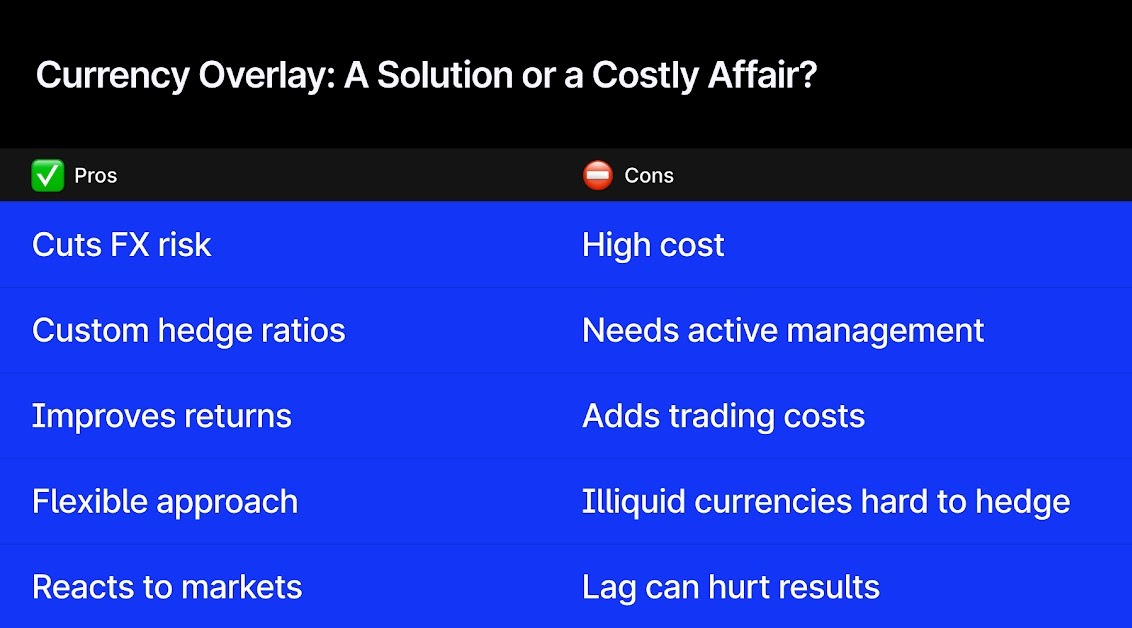
Although currency overlay is a solution in such a volatile environment, it needs active management and adds trading costs.
FX risk may not be the number one priority for asset managers, but this year’s currency volatility has increased the potential of overlay programmes to help investors take advantage of favourable movements.
Elevated geopolitical risk has become the norm. Yet the scale of the upheaval caused by President Trump’s trade war has taken even experienced market watchers by surprise. A glance at some of the indices that track the US dollar underlines just how sharply it has moved since the start of 2025. For example, the US Dollar Index has dropped 12% over the last five months to its lowest level since early 2022.
US Tariff Policies Has Placed Investors in Uncharted Territory
There is an argument to be made that the uncertainty in financial markets created by random and inconsistent US tariff policies has placed investors in uncharted territory – especially when we consider that around two-thirds of global portfolios have the greenback as their base currency. Uncertainty around investment decisions has focused attention on minimising the impact of currency movements, the cost of which is often overlooked by portfolio managers focused on investment returns.
The conventional strategy for mitigating currency volatility is fixed hedging using either forward contracts or options. However, a uniform fixed hedge ratio across all exposures does not take account of persistent negative correlations that can exist between certain currencies in globally diversified portfolios, meaning that some currency exposures may already serve a risk-reducing function.
In addition, certain currencies may be illiquid, costly to trade, or burdened by substantial negative forward points due to pronounced interest rate differentials. In these scenarios, the cost of hedging may exceed the potential risk-reduction benefit.
Currency Overlay Is a Solution, but There Are Challenges
Currency overlay represents an opportunity for more flexible management of currency exposure. Rather than focusing on specific currency transactions, a currency overlay programme considers the overall impact of exchange rate movements on the investments within a portfolio. It assigns distinct hedge ratios to each currency, creating a more favourable risk-adjusted return profile for the portfolio. By dynamically adjusting the hedge ratio, investors benefit from favourable currency movements, boosting risk-adjusted returns.
Steve Fenty, Global Head of Currency Management at State Street
But it doesn’t come cheap. “In a well-monitored programme, higher volatility typically results in more position-rebalancing activity to maintain target hedge ratios,” explains Steve Fenty, Global Head of Currency Management at State Street.
“With higher volatility comes wider spreads, and higher volume at wider spreads increases the costs of the programme,” he observes.
Calibrating tolerances with a long-term horizon – including historically volatile periods – is recommended. “However, even with this calibration, a manager may consider adjusting settings during specific market events such as elections,” he adds.
Beyond analysis of the currency exposure of a portfolio, coordination of the hedging process with the cash management of the fund plays a critical role in the efficiency of the hedging.
“Perfect alignment of timings and FX rates between cash conversions and corresponding hedging adjustments is a key component,” says Yann Rault, Head of Passive Currency Overlay at BNP Paribas, who is sceptical about the ability of transaction cost analysis (TCA) to measure the performance of a currency overlay programme.
Yann Rault, Head of Passive Currency Overlay at BNP Paribas
“TCA provides information about the quality of the execution of the FX trades and this is certainly an interesting indicator,” he adds. “But it will not capture important components such as the speed of processing and the unavoidable impact of the time lag in terms of hedging adjustments and coordination or mismatches between cash and hedging.”
According to Kellen Jibb, Associate Director, Market Services Solutions, RBC Investor Services, the top priority should be assessing whether the overlay met its objective – namely, risk mitigation or alpha generation. “Transparency in FX rates is also essential, whether through internal data or third-party benchmarks,” he says. “TCA becomes valuable after those primary questions are answered, helping firms evaluate the quality of their rates.”
The regulatory requirement for firms that execute orders on behalf of investors to get the best possible price for every trade means portfolio managers need to be able to demonstrate best execution.
This is more challenging in the forwards market but is possible to achieve by executing with multiple providers, sending out two-way price requests to multiple banks or counterparties at the same time, and picking the best price.
Overlay providers will not always put a trade out to the market, particularly if they can do it internally by matching opposite trades from other clients. This is an important consideration for fund managers, since working with providers that use only a single dealer will negatively impact their execution costs.
Volatile Market Conditions Might Need Frequent Rebalances
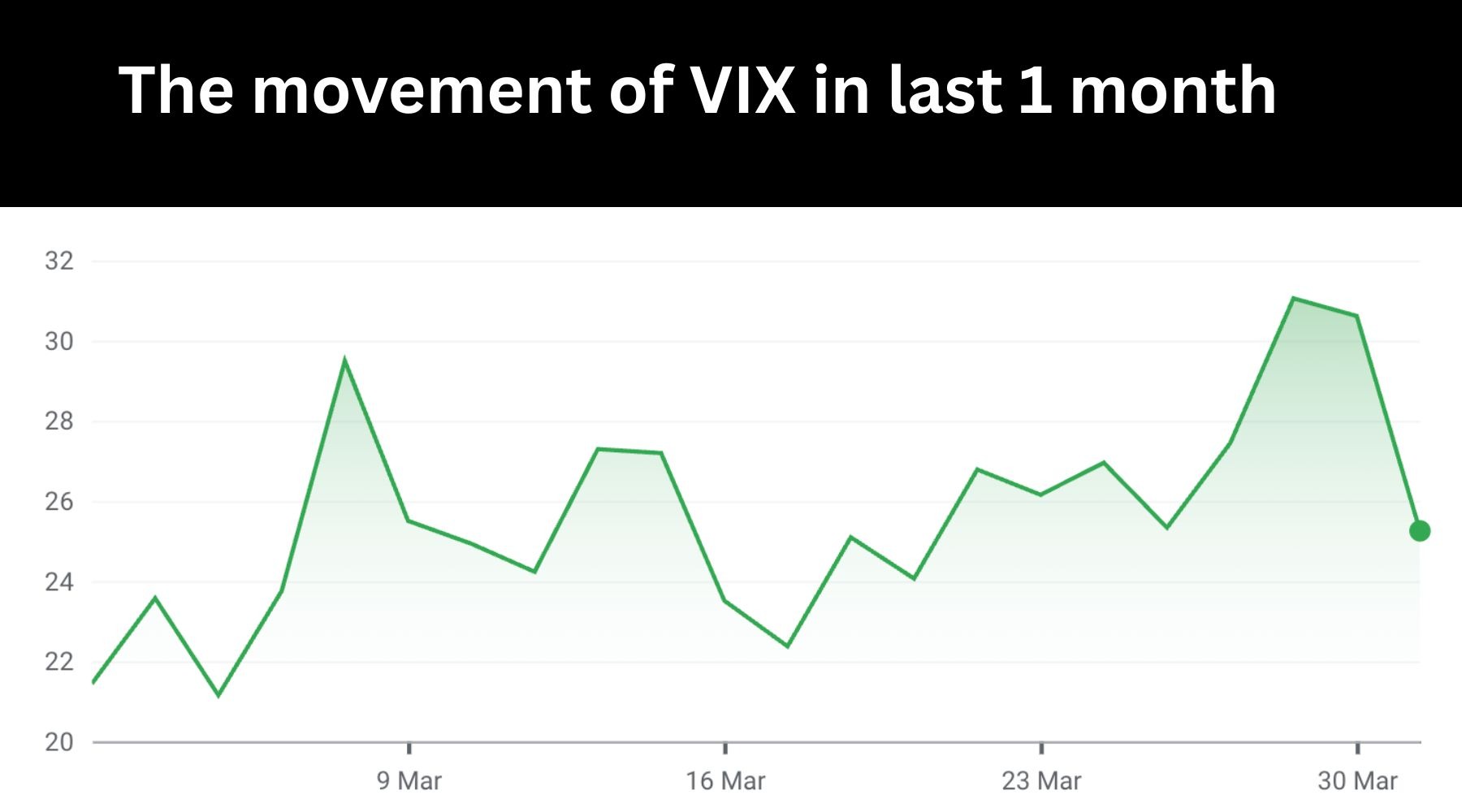
Bid-offer spreads are unlikely to expand, as the variation during a normal trading day is greater than the variation created by recent market volatility. However, volatile market conditions can cause sharp fluctuations in asset values and currency exposures, triggering frequent rebalance activity to realign positions with target allocations.
These rebalances may subsequently need to be reversed as market prices exhibit mean reversion and swing back, creating a cycle of trading activity that adds to costs without necessarily improving risk reduction.
Carl Beckley, Director, Record Financial Group
This is important since the performance of any currency overlay strategy will need to be included in the financial reporting of the client.
“Valuations can be carried out daily, or even intraday if required, though many asset owners may only require monthly or quarterly valuations,” explains Carl Beckley, Director, Record Financial Group. “Depending upon the type of client and their domicile, regulatory reporting may also be required.”
Assessing key developments that will impact future overlay programmes, Fenty refers to changes in market liquidity and the effectiveness of hedging instruments. “Over time, markets can become more accessible and there is also growing availability of cleared derivatives – such as FX futures – which may play a larger role in institutional overlay programmes,” he says.
As the complexity of the overlay strategy increases, the likelihood of requiring a specialist provider also increases. More sophisticated or customised programmes typically demand dedicated expertise and infrastructure beyond what is offered in standard custody or administrative service packages.
“Clients with large overlay mandates should consider outsourcing their FX requirements to a specialist FX manager, as it is critical to have an understanding of different FX hedging processes for different asset types – whether that be high volatility or low volatility assets – or the effects that hedging risk-on versus risk-off currencies can have on your portfolio,” Beckley concludes.
FX risk may not be the number one priority for asset managers, but this year’s currency volatility has increased the potential of overlay programmes to help investors take advantage of favourable movements.
Elevated geopolitical risk has become the norm. Yet the scale of the upheaval caused by President Trump’s trade war has taken even experienced market watchers by surprise. A glance at some of the indices that track the US dollar underlines just how sharply it has moved since the start of 2025. For example, the US Dollar Index has dropped 12% over the last five months to its lowest level since early 2022.
US Tariff Policies Has Placed Investors in Uncharted Territory
There is an argument to be made that the uncertainty in financial markets created by random and inconsistent US tariff policies has placed investors in uncharted territory – especially when we consider that around two-thirds of global portfolios have the greenback as their base currency. Uncertainty around investment decisions has focused attention on minimising the impact of currency movements, the cost of which is often overlooked by portfolio managers focused on investment returns.
The conventional strategy for mitigating currency volatility is fixed hedging using either forward contracts or options. However, a uniform fixed hedge ratio across all exposures does not take account of persistent negative correlations that can exist between certain currencies in globally diversified portfolios, meaning that some currency exposures may already serve a risk-reducing function.
In addition, certain currencies may be illiquid, costly to trade, or burdened by substantial negative forward points due to pronounced interest rate differentials. In these scenarios, the cost of hedging may exceed the potential risk-reduction benefit.
Currency Overlay Is a Solution, but There Are Challenges
Currency overlay represents an opportunity for more flexible management of currency exposure. Rather than focusing on specific currency transactions, a currency overlay programme considers the overall impact of exchange rate movements on the investments within a portfolio. It assigns distinct hedge ratios to each currency, creating a more favourable risk-adjusted return profile for the portfolio. By dynamically adjusting the hedge ratio, investors benefit from favourable currency movements, boosting risk-adjusted returns.
Steve Fenty, Global Head of Currency Management at State Street
But it doesn’t come cheap. “In a well-monitored programme, higher volatility typically results in more position-rebalancing activity to maintain target hedge ratios,” explains Steve Fenty, Global Head of Currency Management at State Street.
“With higher volatility comes wider spreads, and higher volume at wider spreads increases the costs of the programme,” he observes.
Calibrating tolerances with a long-term horizon – including historically volatile periods – is recommended. “However, even with this calibration, a manager may consider adjusting settings during specific market events such as elections,” he adds.
Beyond analysis of the currency exposure of a portfolio, coordination of the hedging process with the cash management of the fund plays a critical role in the efficiency of the hedging.
“Perfect alignment of timings and FX rates between cash conversions and corresponding hedging adjustments is a key component,” says Yann Rault, Head of Passive Currency Overlay at BNP Paribas, who is sceptical about the ability of transaction cost analysis (TCA) to measure the performance of a currency overlay programme.
Yann Rault, Head of Passive Currency Overlay at BNP Paribas
“TCA provides information about the quality of the execution of the FX trades and this is certainly an interesting indicator,” he adds. “But it will not capture important components such as the speed of processing and the unavoidable impact of the time lag in terms of hedging adjustments and coordination or mismatches between cash and hedging.”
According to Kellen Jibb, Associate Director, Market Services Solutions, RBC Investor Services, the top priority should be assessing whether the overlay met its objective – namely, risk mitigation or alpha generation. “Transparency in FX rates is also essential, whether through internal data or third-party benchmarks,” he says. “TCA becomes valuable after those primary questions are answered, helping firms evaluate the quality of their rates.”
The regulatory requirement for firms that execute orders on behalf of investors to get the best possible price for every trade means portfolio managers need to be able to demonstrate best execution.
This is more challenging in the forwards market but is possible to achieve by executing with multiple providers, sending out two-way price requests to multiple banks or counterparties at the same time, and picking the best price.
Overlay providers will not always put a trade out to the market, particularly if they can do it internally by matching opposite trades from other clients. This is an important consideration for fund managers, since working with providers that use only a single dealer will negatively impact their execution costs.
Volatile Market Conditions Might Need Frequent Rebalances
Bid-offer spreads are unlikely to expand, as the variation during a normal trading day is greater than the variation created by recent market volatility. However, volatile market conditions can cause sharp fluctuations in asset values and currency exposures, triggering frequent rebalance activity to realign positions with target allocations.
These rebalances may subsequently need to be reversed as market prices exhibit mean reversion and swing back, creating a cycle of trading activity that adds to costs without necessarily improving risk reduction.
Carl Beckley, Director, Record Financial Group
This is important since the performance of any currency overlay strategy will need to be included in the financial reporting of the client.
“Valuations can be carried out daily, or even intraday if required, though many asset owners may only require monthly or quarterly valuations,” explains Carl Beckley, Director, Record Financial Group. “Depending upon the type of client and their domicile, regulatory reporting may also be required.”
Assessing key developments that will impact future overlay programmes, Fenty refers to changes in market liquidity and the effectiveness of hedging instruments. “Over time, markets can become more accessible and there is also growing availability of cleared derivatives – such as FX futures – which may play a larger role in institutional overlay programmes,” he says.
As the complexity of the overlay strategy increases, the likelihood of requiring a specialist provider also increases. More sophisticated or customised programmes typically demand dedicated expertise and infrastructure beyond what is offered in standard custody or administrative service packages.
“Clients with large overlay mandates should consider outsourcing their FX requirements to a specialist FX manager, as it is critical to have an understanding of different FX hedging processes for different asset types – whether that be high volatility or low volatility assets – or the effects that hedging risk-on versus risk-off currencies can have on your portfolio,” Beckley concludes.
Paul Golden is an experienced freelance financial journalist with a strong institutional background. Over the past two decades, he has written for globally recognised financial publications, covering topics such as market structure, regulation, trading behaviour, and economic policy.
Webull Spent Big to Hit Record Revenue, and the Bill Is in the Fine Print
FP Markets Winner Spotlight 🏆 | Global Broker of the Year 2025 #Trading #Broker #Innovation #Shorts
FP Markets Winner Spotlight 🏆 | Global Broker of the Year 2025 #Trading #Broker #Innovation #Shorts
FP Markets takes the spotlight as Global Broker of the Year 2025 at the Finance Magnates Awards.
Martin Stoilov, Head of Client Experience, shares that trust, innovation, and people played a key role in the company’s success, supported by a strong foundation of integrity and client-centricity.
Following this milestone, FP Markets continues to focus on growth, technology investment, and its core values of transparency and excellence.
👉 Be part of FM Awards 2026: https://awards.financemagnates.com/#nominate
FP Markets takes the spotlight as Global Broker of the Year 2025 at the Finance Magnates Awards.
Martin Stoilov, Head of Client Experience, shares that trust, innovation, and people played a key role in the company’s success, supported by a strong foundation of integrity and client-centricity.
Following this milestone, FP Markets continues to focus on growth, technology investment, and its core values of transparency and excellence.
👉 Be part of FM Awards 2026: https://awards.financemagnates.com/#nominate
In this video, we review @HolaPrimeMarketsOfficial, a multi-asset forex and CFDs broker offering different account types, trading platforms, and flexible trading conditions.
We cover the broker’s overall offering, including account options, trading environment, platforms like MT4 and MT5, and additional services such as managed accounts and fast withdrawals.
Watch the full video to see if Hola Prime Markets fits your trading needs.
📣 Stay up to date with the latest in finance and trading. Follow Finance Magnates for industry news, insights, and global event coverage.
Connect with us:
🔗 LinkedIn: /financemagnates
👍 Facebook: /financemagnates
📸 Instagram: https://www.instagram.com/financemagnates
🐦 X: https://x.com/financemagnates
🎥 TikTok: https://www.tiktok.com/tag/financemagnates
▶️ YouTube: /@financemagnates_official
#HolaPrime #ForexBroker #CFDTrading #FinanceMagnates #Trading #Forex #BrokerReview
In this video, we review @HolaPrimeMarketsOfficial, a multi-asset forex and CFDs broker offering different account types, trading platforms, and flexible trading conditions.
We cover the broker’s overall offering, including account options, trading environment, platforms like MT4 and MT5, and additional services such as managed accounts and fast withdrawals.
Watch the full video to see if Hola Prime Markets fits your trading needs.
📣 Stay up to date with the latest in finance and trading. Follow Finance Magnates for industry news, insights, and global event coverage.
Connect with us:
🔗 LinkedIn: /financemagnates
👍 Facebook: /financemagnates
📸 Instagram: https://www.instagram.com/financemagnates
🐦 X: https://x.com/financemagnates
🎥 TikTok: https://www.tiktok.com/tag/financemagnates
▶️ YouTube: /@financemagnates_official
#HolaPrime #ForexBroker #CFDTrading #FinanceMagnates #Trading #Forex #BrokerReview
Hola Prime Review: What You Need to Know | Full Breakdown by Finance Magnates
Hola Prime Review: What You Need to Know | Full Breakdown by Finance Magnates
In this video, we review @HolaPrime_Global, a proprietary trading firm offering evaluation programs and performance-based payouts in simulated market environments.
We cover how the challenge model works, including account types, profit splits (up to 95%), trading rules, and what it takes to reach a funded account. You’ll also learn about available platforms like MT4, MT5, cTrader, and more, along with insights into payouts, support, and trading conditions.
Watch the full video to see if Hola Prime fits your trading style.
📣 Stay up to date with the latest in finance and trading. Follow Finance Magnates for industry news, insights, and global event coverage.
Connect with us:
🔗 LinkedIn: /financemagnates
👍 Facebook: /financemagnates
📸 Instagram: https://www.instagram.com/financemagnates
🐦 X: https://x.com/financemagnates
🎥 TikTok: https://www.tiktok.com/tag/financemagnates
▶️ YouTube: /@financemagnates_official
#HolaPrime #PropFirm #Trading #FinanceMagnates #Forex #FuturesTrading #TradingReview #PropFirmReview
In this video, we review @HolaPrime_Global, a proprietary trading firm offering evaluation programs and performance-based payouts in simulated market environments.
We cover how the challenge model works, including account types, profit splits (up to 95%), trading rules, and what it takes to reach a funded account. You’ll also learn about available platforms like MT4, MT5, cTrader, and more, along with insights into payouts, support, and trading conditions.
Watch the full video to see if Hola Prime fits your trading style.
📣 Stay up to date with the latest in finance and trading. Follow Finance Magnates for industry news, insights, and global event coverage.
Connect with us:
🔗 LinkedIn: /financemagnates
👍 Facebook: /financemagnates
📸 Instagram: https://www.instagram.com/financemagnates
🐦 X: https://x.com/financemagnates
🎥 TikTok: https://www.tiktok.com/tag/financemagnates
▶️ YouTube: /@financemagnates_official
#HolaPrime #PropFirm #Trading #FinanceMagnates #Forex #FuturesTrading #TradingReview #PropFirmReview
Axi Winner Spotlight 🏆 | Global Most Innovative Broker 2025 #Innovation #Trading #Fintech #Broker
Axi Winner Spotlight 🏆 | Global Most Innovative Broker 2025 #Innovation #Trading #Fintech #Broker
Axi takes the spotlight at the Finance Magnates Awards, winning Global Most Innovative Broker 2025.
Olivia Xenofontos and Ivanna Openko share how the team will feel: proud, motivated, and ready to keep delivering.
They also describe the night as well-organized, focused, and enjoyable for all.
👉 Be part of FM Awards 2026.
Axi takes the spotlight at the Finance Magnates Awards, winning Global Most Innovative Broker 2025.
Olivia Xenofontos and Ivanna Openko share how the team will feel: proud, motivated, and ready to keep delivering.
They also describe the night as well-organized, focused, and enjoyable for all.
👉 Be part of FM Awards 2026.
Recognition that matters.
Built on transparency.
Driven by the industry.
The Finance Magnates Awards 2026.
Nominations are now open.
🔗 https://awards.financemagnates.com/?utm_source=SM&utm_medium=social&utm_campaign=recognition-matters
Recognition that matters.
Built on transparency.
Driven by the industry.
The Finance Magnates Awards 2026.
Nominations are now open.
🔗 https://awards.financemagnates.com/?utm_source=SM&utm_medium=social&utm_campaign=recognition-matters