


The financial space is reeling from the political chaos in South Korea, which has caused the Korean won to fall against the US dollar, with ripple effects extending to the crypto market.
The development also poses a potential impact on the region's already struggling forex and CFD space. The sector currently operates under tight regulations amid cases of stock manipulation.
South Korean President Yoon Suk Yeol declared martial law, citing the urgent need to protect the nation from what he described as anti-state forces and North Korean communist threats, the KoreaTimes, among several other international media houses, reported.
Yoon’s actions have since caused widespread controversy, raising questions about its potential impact on South Korea’s democracy and economic stability.
South Korea's main opposition calls in lawmakers to Nat'l Assembly following declaration of martial law https://t.co/N71DzQBl5a
— The Korea Times (@koreatimescokr) December 3, 2024
Martial Law in South Korea
Yoon emphasized that this emergency measure was vital to safeguarding South Korea’s constitutional order, promising that it would ensure the continuation of the nation's freedom and democracy. However, this decision has caused tension between the presidency and the Parliament.
Additionally, the decision has caused a serious economic impact on the country. South Korea's won tumbled against the US dollar, reaching its lowest point since 2022. The currency dropped to 1,420 won per dollar, reflecting a broader sense of instability in the financial markets. The volatility in the won prompted wider market reactions, with the euro recovering from its recent losses, Reuters reported.

The speaker of South Korea's parliament has reportedly declared the move invalid, and lawmakers voted to reject it. Tensions reportedly escalated when military personnel attempted to enter the parliamentary building to impose martial law.
Impact on the Financial Space
Even as the political landscape in South Korea remains volatile, the extent to which recent developments could affect the forex and CFD space remains to be seen. Recently, local securities firms that had suspended CFD trading in June due to alleged stock manipulation schemes reportedly resumed service under tighter regulations.
BREAKING: South Korea's parliament votes 190-0 to lift martial law pic.twitter.com/08Sf0HHZ0C
— BNO News (@BNONews) December 3, 2024
However, the companies Meritz Securities Korea, Kyobo Securities, Eugene Investment, and Yuanta Securities reportedly resumed trading under new rules aimed at preventing manipulation. Additionally, individual investors must now meet stricter criteria to qualify for CFD trading, including a higher monthly balance requirement of 300 million won.
Yoon criticized the main opposition party, the Democratic Party of Korea, for exercising their legislative powers in a way that endangered South Korea’s national governance.
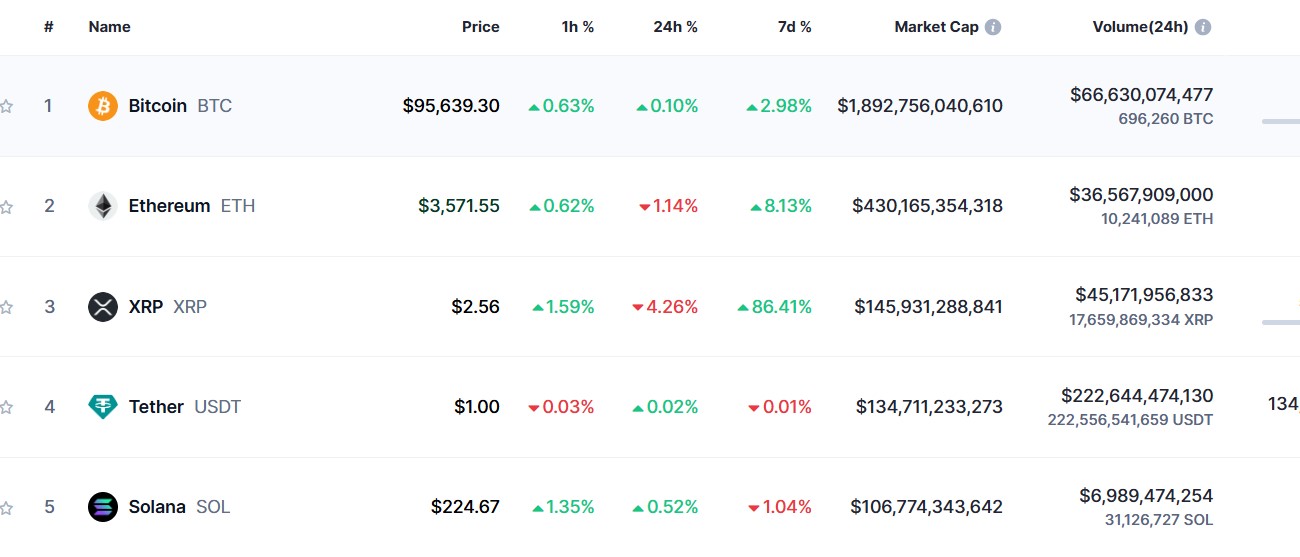
In the crypto space, political uncertainty has clawed back gains recently enjoyed in the sector. Last month, Bitcoin surged to an all-time high of $99K but now trades at around $95K. XRP, which also soared more than 100%, also dropped by 12% at some point on Tuesday as the market reacted to the news.
Commenting about the impact on the crypto market, Nigel Green, the CEO of deVere Group, said: “When governments falter or act unpredictably, people inevitably seek alternatives that don’t rely on institutional trust. That’s where decentralized currencies come in.”


