Recently, the UK Gambling Commission (UKGC) said that as of the 14th of April, people would be banned from using credit cards to place bets in Britain, in an attempt to curb problem gambling.
Although this was a development in the gambling sector, the UK’s retail forex and contracts for difference (CFD) trading sectors are linked, which has led to some people within the industry including former GKFX CEO, Rod Martenstyn, forecasting that the Financial Conduct Authority (FCA) might soon do the same.
Debt shouldn’t be creating more debt
In fact, people such as Martenstyn are surprised that the British regulator hasn’t already imposed restrictions on credit cards already, as “Debt shouldn’t be creating more debt for the retail consumer.”

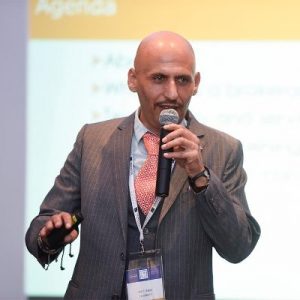
Rod Martenstyn, the CEO and Founder of OSS Consult Ltd
So when could we expect these changes to come into play? Well, according to Martenstyn, the CEO & Founder at OSS Consult Ltd: "It would not surprise me if such a ban was imposed within the next 12 months, but there again, the FCA has been publicly slammed and hurt as a result of the London Capital & Finance mini-bond scandal, and has focussed more on the mini-bond sector in the last year, plus it remains to be seen how the approach of the new Chief Executive of the FCA will impact the retail fx/cfd sector in the UK, once the current incumbent, Andrew Bailey, moves on to his new role as governor of the Bank of England in March 2020."
"There is a second question, which is whether the credit card companies may decide to restrict transactions regardless of any regulatory requirement. Again there is no indication yet this will happen Even if it does, gaming has already built enough of alternative payments industry to reduce the effects should this occur."
In 2018 the retail FX and CFD industry changed dramatically when the European Securities and Markets Authority (ESMA) implemented its temporary product intervention measures on CFDs in August, which have now become permanent.
This regulation had a huge impact on the retail trading sector - lower volumes, brokers going out business, many of those who have remained have needed to diversify their product offering and an offshore migration to avoid the regulatory restrictions.
Is further FCA intervention necessary?
Further restrictions such as banning credit cards could also have a large impact on the industry, as it would likely drive away even more retail investors, resulting in lower volumes and, therefore, lowing trading revenues on brokers who are already struggling in the new regulatory environment.
When asked if this type of regulation is needed for the retail trading industry, Martenstyn said that in his own view, people should only be able to gamble/trade with what they can directly afford to lose. If they don’t have the money to gamble/trade without taking a loan out to do so, then they shouldn’t be trading/gambling.
When asked whether the regulations implemented by ESMA in 2018 were enough, Martenstyn replied: "In answer to the first part of your question, not really, some of the measures were not thoroughly thought out, and just opened up methods of circumvention (which the sector did state in their consultative feedback to ESMA and national regulators that could be the case, all of which was dismissed)- whether that be firms taking steps to re-categorise retail clients as professional clients, opening up offshore entities with ‘lighter’ regulation or moving clients to group overseas regulated entities, or the issuing of products such as turbos."
The trading sector needs to come together
If the trading sector wants to avoid potential credit card regulation coming into place, Lewis suggests that the industry needs to come together: "One of the biggest shortcomings of the gaming industry was (and is) a failure to come together as a single voice to negotiate and advise on a governmental level. Back in November, I was a summit of Gaming Leaders. The Gaming Commission had already issued warnings that it was about to pass a raft of new restrictions and had given an open call for the Gaming Industry to come to the table or they would make decisions unilaterally. History has now shown that they could not."
"The Financial Trading sector needs to learn from this as a matter of urgency and set up a council of leaders that can negotiate and advise on a governmental and regulatory level. If not we could see unilateral decisions being made in the future for Finance too. The second lesson to be learned from Gaming is that Financial Trading industry needs to be seen to be responsible and promoting consumer protection, as this will fend off the eyes of the public, the press and the regulator."
Recently, the UK Gambling Commission (UKGC) said that as of the 14th of April, people would be banned from using credit cards to place bets in Britain, in an attempt to curb problem gambling.
Although this was a development in the gambling sector, the UK’s retail forex and contracts for difference (CFD) trading sectors are linked, which has led to some people within the industry including former GKFX CEO, Rod Martenstyn, forecasting that the Financial Conduct Authority (FCA) might soon do the same.
Debt shouldn’t be creating more debt
In fact, people such as Martenstyn are surprised that the British regulator hasn’t already imposed restrictions on credit cards already, as “Debt shouldn’t be creating more debt for the retail consumer.”
Rod Martenstyn, the CEO and Founder of OSS Consult Ltd
So when could we expect these changes to come into play? Well, according to Martenstyn, the CEO & Founder at OSS Consult Ltd: "It would not surprise me if such a ban was imposed within the next 12 months, but there again, the FCA has been publicly slammed and hurt as a result of the London Capital & Finance mini-bond scandal, and has focussed more on the mini-bond sector in the last year, plus it remains to be seen how the approach of the new Chief Executive of the FCA will impact the retail fx/cfd sector in the UK, once the current incumbent, Andrew Bailey, moves on to his new role as governor of the Bank of England in March 2020."
"There is a second question, which is whether the credit card companies may decide to restrict transactions regardless of any regulatory requirement. Again there is no indication yet this will happen Even if it does, gaming has already built enough of alternative payments industry to reduce the effects should this occur."
In 2018 the retail FX and CFD industry changed dramatically when the European Securities and Markets Authority (ESMA) implemented its temporary product intervention measures on CFDs in August, which have now become permanent.
This regulation had a huge impact on the retail trading sector - lower volumes, brokers going out business, many of those who have remained have needed to diversify their product offering and an offshore migration to avoid the regulatory restrictions.
Is further FCA intervention necessary?
Further restrictions such as banning credit cards could also have a large impact on the industry, as it would likely drive away even more retail investors, resulting in lower volumes and, therefore, lowing trading revenues on brokers who are already struggling in the new regulatory environment.
When asked if this type of regulation is needed for the retail trading industry, Martenstyn said that in his own view, people should only be able to gamble/trade with what they can directly afford to lose. If they don’t have the money to gamble/trade without taking a loan out to do so, then they shouldn’t be trading/gambling.
When asked whether the regulations implemented by ESMA in 2018 were enough, Martenstyn replied: "In answer to the first part of your question, not really, some of the measures were not thoroughly thought out, and just opened up methods of circumvention (which the sector did state in their consultative feedback to ESMA and national regulators that could be the case, all of which was dismissed)- whether that be firms taking steps to re-categorise retail clients as professional clients, opening up offshore entities with ‘lighter’ regulation or moving clients to group overseas regulated entities, or the issuing of products such as turbos."
The trading sector needs to come together
If the trading sector wants to avoid potential credit card regulation coming into place, Lewis suggests that the industry needs to come together: "One of the biggest shortcomings of the gaming industry was (and is) a failure to come together as a single voice to negotiate and advise on a governmental level. Back in November, I was a summit of Gaming Leaders. The Gaming Commission had already issued warnings that it was about to pass a raft of new restrictions and had given an open call for the Gaming Industry to come to the table or they would make decisions unilaterally. History has now shown that they could not."
"The Financial Trading sector needs to learn from this as a matter of urgency and set up a council of leaders that can negotiate and advise on a governmental and regulatory level. If not we could see unilateral decisions being made in the future for Finance too. The second lesson to be learned from Gaming is that Financial Trading industry needs to be seen to be responsible and promoting consumer protection, as this will fend off the eyes of the public, the press and the regulator."
Retail Trading & Prop Firms in 2025: Five Defining Trends - And One Prediction for 2026
Featured Videos
Executive Interview | Charlotte Bullock | Chief Product Officer, Bank of London | FMLS:25
In this interview, we sat down with Charlotte Bullock, Head of Product at The Bank of London, previously at SAP and now shaping product at one of the sector’s most ambitious new banking players.
Charlotte reflects on the Summit so far and talks about the culture inside fintech banks today. We look at the pressures that come with scaling, and how firms can hold onto the nimble approach that made them stand out early on.
We also cover the state of payments ahead of her appearance on the payments roundtable: the blockages financial firms face, the areas that still need fixing, and what a realistic solution looks like in 2026.
In this interview, we sat down with Charlotte Bullock, Head of Product at The Bank of London, previously at SAP and now shaping product at one of the sector’s most ambitious new banking players.
Charlotte reflects on the Summit so far and talks about the culture inside fintech banks today. We look at the pressures that come with scaling, and how firms can hold onto the nimble approach that made them stand out early on.
We also cover the state of payments ahead of her appearance on the payments roundtable: the blockages financial firms face, the areas that still need fixing, and what a realistic solution looks like in 2026.
In this interview, we sat down with Charlotte Bullock, Head of Product at The Bank of London, previously at SAP and now shaping product at one of the sector’s most ambitious new banking players.
Charlotte reflects on the Summit so far and talks about the culture inside fintech banks today. We look at the pressures that come with scaling, and how firms can hold onto the nimble approach that made them stand out early on.
We also cover the state of payments ahead of her appearance on the payments roundtable: the blockages financial firms face, the areas that still need fixing, and what a realistic solution looks like in 2026.
In this interview, we sat down with Charlotte Bullock, Head of Product at The Bank of London, previously at SAP and now shaping product at one of the sector’s most ambitious new banking players.
Charlotte reflects on the Summit so far and talks about the culture inside fintech banks today. We look at the pressures that come with scaling, and how firms can hold onto the nimble approach that made them stand out early on.
We also cover the state of payments ahead of her appearance on the payments roundtable: the blockages financial firms face, the areas that still need fixing, and what a realistic solution looks like in 2026.
In this conversation, we sit down with Drew Niv, CSO at ATFX Connect and one of the most influential figures in modern FX.
We speak about market structure, the institutional view on liquidity, and the sharp rise of prop trading, a sector Drew has been commenting on in recent months. Drew explains why he once dismissed prop trading, why his view changed, and what he now thinks the model means for brokers, clients and risk managers.
We explore subscription-fee dependency, the high reneging rate, and the long-term challenge: how brokers can build a more stable and honest version of the model. Drew also talks about the traffic advantage standalone prop firms have built and why brokers may still win in the long run if they take the right approach.
In this conversation, we sit down with Drew Niv, CSO at ATFX Connect and one of the most influential figures in modern FX.
We speak about market structure, the institutional view on liquidity, and the sharp rise of prop trading, a sector Drew has been commenting on in recent months. Drew explains why he once dismissed prop trading, why his view changed, and what he now thinks the model means for brokers, clients and risk managers.
We explore subscription-fee dependency, the high reneging rate, and the long-term challenge: how brokers can build a more stable and honest version of the model. Drew also talks about the traffic advantage standalone prop firms have built and why brokers may still win in the long run if they take the right approach.
In this conversation, we sit down with Drew Niv, CSO at ATFX Connect and one of the most influential figures in modern FX.
We speak about market structure, the institutional view on liquidity, and the sharp rise of prop trading, a sector Drew has been commenting on in recent months. Drew explains why he once dismissed prop trading, why his view changed, and what he now thinks the model means for brokers, clients and risk managers.
We explore subscription-fee dependency, the high reneging rate, and the long-term challenge: how brokers can build a more stable and honest version of the model. Drew also talks about the traffic advantage standalone prop firms have built and why brokers may still win in the long run if they take the right approach.
In this conversation, we sit down with Drew Niv, CSO at ATFX Connect and one of the most influential figures in modern FX.
We speak about market structure, the institutional view on liquidity, and the sharp rise of prop trading, a sector Drew has been commenting on in recent months. Drew explains why he once dismissed prop trading, why his view changed, and what he now thinks the model means for brokers, clients and risk managers.
We explore subscription-fee dependency, the high reneging rate, and the long-term challenge: how brokers can build a more stable and honest version of the model. Drew also talks about the traffic advantage standalone prop firms have built and why brokers may still win in the long run if they take the right approach.
In this conversation, we sit down with Drew Niv, CSO at ATFX Connect and one of the most influential figures in modern FX.
We speak about market structure, the institutional view on liquidity, and the sharp rise of prop trading, a sector Drew has been commenting on in recent months. Drew explains why he once dismissed prop trading, why his view changed, and what he now thinks the model means for brokers, clients and risk managers.
We explore subscription-fee dependency, the high reneging rate, and the long-term challenge: how brokers can build a more stable and honest version of the model. Drew also talks about the traffic advantage standalone prop firms have built and why brokers may still win in the long run if they take the right approach.
In this conversation, we sit down with Drew Niv, CSO at ATFX Connect and one of the most influential figures in modern FX.
We speak about market structure, the institutional view on liquidity, and the sharp rise of prop trading, a sector Drew has been commenting on in recent months. Drew explains why he once dismissed prop trading, why his view changed, and what he now thinks the model means for brokers, clients and risk managers.
We explore subscription-fee dependency, the high reneging rate, and the long-term challenge: how brokers can build a more stable and honest version of the model. Drew also talks about the traffic advantage standalone prop firms have built and why brokers may still win in the long run if they take the right approach.
Executive Interview | Remonda Z. Kirketerp Møller| CEO & Founder Muinmos | FMLS:25
In this interview, Remonda Z. Kirketerp Møller, founder of Muinmos, breaks down the state of AI in regtech and what responsible adoption really looks like for brokers. We talk about rising fragmentation, the pressures around compliance accuracy, and why most firms are still in the early stages of AI maturity.
Ramanda also shares insights on regulator sandboxes, shifting expectations around accountability, and the current reality of MiCA licensing and passporting in Europe.
A concise look at where compliance, onboarding, and AI-driven processes are heading next.
In this interview, Remonda Z. Kirketerp Møller, founder of Muinmos, breaks down the state of AI in regtech and what responsible adoption really looks like for brokers. We talk about rising fragmentation, the pressures around compliance accuracy, and why most firms are still in the early stages of AI maturity.
Ramanda also shares insights on regulator sandboxes, shifting expectations around accountability, and the current reality of MiCA licensing and passporting in Europe.
A concise look at where compliance, onboarding, and AI-driven processes are heading next.
In this interview, Remonda Z. Kirketerp Møller, founder of Muinmos, breaks down the state of AI in regtech and what responsible adoption really looks like for brokers. We talk about rising fragmentation, the pressures around compliance accuracy, and why most firms are still in the early stages of AI maturity.
Ramanda also shares insights on regulator sandboxes, shifting expectations around accountability, and the current reality of MiCA licensing and passporting in Europe.
A concise look at where compliance, onboarding, and AI-driven processes are heading next.
In this interview, Remonda Z. Kirketerp Møller, founder of Muinmos, breaks down the state of AI in regtech and what responsible adoption really looks like for brokers. We talk about rising fragmentation, the pressures around compliance accuracy, and why most firms are still in the early stages of AI maturity.
Ramanda also shares insights on regulator sandboxes, shifting expectations around accountability, and the current reality of MiCA licensing and passporting in Europe.
A concise look at where compliance, onboarding, and AI-driven processes are heading next.
In this interview, Remonda Z. Kirketerp Møller, founder of Muinmos, breaks down the state of AI in regtech and what responsible adoption really looks like for brokers. We talk about rising fragmentation, the pressures around compliance accuracy, and why most firms are still in the early stages of AI maturity.
Ramanda also shares insights on regulator sandboxes, shifting expectations around accountability, and the current reality of MiCA licensing and passporting in Europe.
A concise look at where compliance, onboarding, and AI-driven processes are heading next.
In this interview, Remonda Z. Kirketerp Møller, founder of Muinmos, breaks down the state of AI in regtech and what responsible adoption really looks like for brokers. We talk about rising fragmentation, the pressures around compliance accuracy, and why most firms are still in the early stages of AI maturity.
Ramanda also shares insights on regulator sandboxes, shifting expectations around accountability, and the current reality of MiCA licensing and passporting in Europe.
A concise look at where compliance, onboarding, and AI-driven processes are heading next.
In this conversation, we speak with Aydin Bonabi, CEO and co-founder of Surveill, a firm focused on fraud detection and AI-driven compliance tools for financial institutions.
We start with Aydin’s view of the Summit and the challenges brokers face as fraud tactics grow more complex. He explains how firms can stay ahead through real-time signals, data patterns, and early-stage detection.
We also talk about AI training and why compliance teams often struggle to keep models accurate, fair, and aligned with regulatory expectations. Aydin breaks down what “good” AI training looks like inside a financial environment, including the importance of clean data, domain expertise, and human oversight.
He closes with a clear message: fraud is scaling, and so must the tools that stop it.
In this conversation, we speak with Aydin Bonabi, CEO and co-founder of Surveill, a firm focused on fraud detection and AI-driven compliance tools for financial institutions.
We start with Aydin’s view of the Summit and the challenges brokers face as fraud tactics grow more complex. He explains how firms can stay ahead through real-time signals, data patterns, and early-stage detection.
We also talk about AI training and why compliance teams often struggle to keep models accurate, fair, and aligned with regulatory expectations. Aydin breaks down what “good” AI training looks like inside a financial environment, including the importance of clean data, domain expertise, and human oversight.
He closes with a clear message: fraud is scaling, and so must the tools that stop it.
In this conversation, we speak with Aydin Bonabi, CEO and co-founder of Surveill, a firm focused on fraud detection and AI-driven compliance tools for financial institutions.
We start with Aydin’s view of the Summit and the challenges brokers face as fraud tactics grow more complex. He explains how firms can stay ahead through real-time signals, data patterns, and early-stage detection.
We also talk about AI training and why compliance teams often struggle to keep models accurate, fair, and aligned with regulatory expectations. Aydin breaks down what “good” AI training looks like inside a financial environment, including the importance of clean data, domain expertise, and human oversight.
He closes with a clear message: fraud is scaling, and so must the tools that stop it.
In this conversation, we speak with Aydin Bonabi, CEO and co-founder of Surveill, a firm focused on fraud detection and AI-driven compliance tools for financial institutions.
We start with Aydin’s view of the Summit and the challenges brokers face as fraud tactics grow more complex. He explains how firms can stay ahead through real-time signals, data patterns, and early-stage detection.
We also talk about AI training and why compliance teams often struggle to keep models accurate, fair, and aligned with regulatory expectations. Aydin breaks down what “good” AI training looks like inside a financial environment, including the importance of clean data, domain expertise, and human oversight.
He closes with a clear message: fraud is scaling, and so must the tools that stop it.
In this conversation, we speak with Aydin Bonabi, CEO and co-founder of Surveill, a firm focused on fraud detection and AI-driven compliance tools for financial institutions.
We start with Aydin’s view of the Summit and the challenges brokers face as fraud tactics grow more complex. He explains how firms can stay ahead through real-time signals, data patterns, and early-stage detection.
We also talk about AI training and why compliance teams often struggle to keep models accurate, fair, and aligned with regulatory expectations. Aydin breaks down what “good” AI training looks like inside a financial environment, including the importance of clean data, domain expertise, and human oversight.
He closes with a clear message: fraud is scaling, and so must the tools that stop it.
In this conversation, we speak with Aydin Bonabi, CEO and co-founder of Surveill, a firm focused on fraud detection and AI-driven compliance tools for financial institutions.
We start with Aydin’s view of the Summit and the challenges brokers face as fraud tactics grow more complex. He explains how firms can stay ahead through real-time signals, data patterns, and early-stage detection.
We also talk about AI training and why compliance teams often struggle to keep models accurate, fair, and aligned with regulatory expectations. Aydin breaks down what “good” AI training looks like inside a financial environment, including the importance of clean data, domain expertise, and human oversight.
He closes with a clear message: fraud is scaling, and so must the tools that stop it.
Exness expands its presence in Africa: Inside our interview with Paul Margarites in Cape Town
Finance Magnates met with Paul Margarites, Exness regional commercial director for Sub-Saharan Africa, during a visit to the firm’s office opening in Cape Town. In this talk, led by Andrea Badiola Mateos, Co-CEO at Finance Magnates, Paul shares views on the South African trading space, local user behavior, mobile trends, regulation, team growth, and how Exness plans to grow in more markets across the region. @Exness
Read the article at: https://www.financemagnates.com/thought-leadership/exness-expands-its-presence-in-africa-inside-our-interview-with-paul-margarites/
#exness #financemagnates #exnesstrading #CFDtrading #tradeonline #africanews #capetown
Finance Magnates met with Paul Margarites, Exness regional commercial director for Sub-Saharan Africa, during a visit to the firm’s office opening in Cape Town. In this talk, led by Andrea Badiola Mateos, Co-CEO at Finance Magnates, Paul shares views on the South African trading space, local user behavior, mobile trends, regulation, team growth, and how Exness plans to grow in more markets across the region. @Exness
Read the article at: https://www.financemagnates.com/thought-leadership/exness-expands-its-presence-in-africa-inside-our-interview-with-paul-margarites/
#exness #financemagnates #exnesstrading #CFDtrading #tradeonline #africanews #capetown
Finance Magnates met with Paul Margarites, Exness regional commercial director for Sub-Saharan Africa, during a visit to the firm’s office opening in Cape Town. In this talk, led by Andrea Badiola Mateos, Co-CEO at Finance Magnates, Paul shares views on the South African trading space, local user behavior, mobile trends, regulation, team growth, and how Exness plans to grow in more markets across the region. @Exness
Read the article at: https://www.financemagnates.com/thought-leadership/exness-expands-its-presence-in-africa-inside-our-interview-with-paul-margarites/
#exness #financemagnates #exnesstrading #CFDtrading #tradeonline #africanews #capetown
Finance Magnates met with Paul Margarites, Exness regional commercial director for Sub-Saharan Africa, during a visit to the firm’s office opening in Cape Town. In this talk, led by Andrea Badiola Mateos, Co-CEO at Finance Magnates, Paul shares views on the South African trading space, local user behavior, mobile trends, regulation, team growth, and how Exness plans to grow in more markets across the region. @Exness
Read the article at: https://www.financemagnates.com/thought-leadership/exness-expands-its-presence-in-africa-inside-our-interview-with-paul-margarites/
#exness #financemagnates #exnesstrading #CFDtrading #tradeonline #africanews #capetown
Finance Magnates met with Paul Margarites, Exness regional commercial director for Sub-Saharan Africa, during a visit to the firm’s office opening in Cape Town. In this talk, led by Andrea Badiola Mateos, Co-CEO at Finance Magnates, Paul shares views on the South African trading space, local user behavior, mobile trends, regulation, team growth, and how Exness plans to grow in more markets across the region. @Exness
Read the article at: https://www.financemagnates.com/thought-leadership/exness-expands-its-presence-in-africa-inside-our-interview-with-paul-margarites/
#exness #financemagnates #exnesstrading #CFDtrading #tradeonline #africanews #capetown
Finance Magnates met with Paul Margarites, Exness regional commercial director for Sub-Saharan Africa, during a visit to the firm’s office opening in Cape Town. In this talk, led by Andrea Badiola Mateos, Co-CEO at Finance Magnates, Paul shares views on the South African trading space, local user behavior, mobile trends, regulation, team growth, and how Exness plans to grow in more markets across the region. @Exness
Read the article at: https://www.financemagnates.com/thought-leadership/exness-expands-its-presence-in-africa-inside-our-interview-with-paul-margarites/
#exness #financemagnates #exnesstrading #CFDtrading #tradeonline #africanews #capetown