Trump Accounts Go Live as US Brokers Line Up for Rollover Business

Wednesday, 08/07/2026 | 19:59 GMT by Damian Chmiel
  • The federal children's savings program launched on July 4 with more than 6 million accounts already opened.
  • Robinhood and BNY built the initial platform, but Fidelity, Schwab and Vanguard are positioning to hold the money once transfers open.
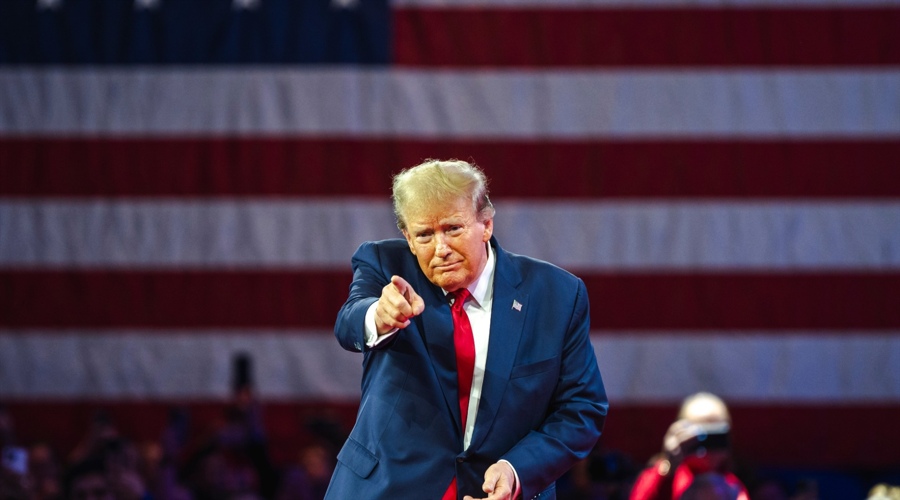
Donald Trump

Trump Accounts, the federal savings program that deposits $1,000 into accounts for eligible newborns, went live on July 4. For US brokers, the launch opens a new pool of long-term retirement money, and a fresh contest over who gets to hold it.

The accounts are custodial traditional IRAs for children under 18, created under the tax law President Donald Trump signed in July 2025.

The Treasury runs them at the start, but families can later move the balance to a private broker, and that hand-off is what the industry is chasing.

Robinhood Built the Rails, Rivals Want the Rollovers

The Treasury tapped Robinhood to build the Trump Accounts app, with Bank of New York Mellon acting as the financial agent holding the assets. Robinhood supplied the technology and customer service, giving it the first look at millions of new account holders.

Vlad Tenev, Chairman and Chief Executive Officer of Robinhood
Vlad Tenev, Chairman and Chief Executive Officer of Robinhood, Source: LinkedIn

Robinhood CEO Vlad Tenev said the company's "mission has always been to democratize finance for all." The firm serves as the program's initial trustee, a role that puts it ahead of rivals at the starting line.

Under the rules, families can run a trustee-to-trustee transfer to any approved custodian once their Treasury account exists. Full balances move without a tax hit, which turns the rollover into the real prize for firms that were not picked to build the platform.

Wall Street Lines Up as Approved Trustees

Fidelity, Charles Schwab, Vanguard and Bank of America are all cleared to hold Trump Accounts, each offering an S&P 500 or broad-market index fund inside the 0.10% fee cap the law allows. Fidelity and Schwab have already published guides telling families they can transfer accounts once the option opens.

The competition echoes earlier fights over US retail money. Morgan Stanley folded E*Trade into its wealth arm after a $13 billion takeover in 2020, and later rolled out a platform aimed at active traders.

Trump Accounts hand these firms a new reason to court parents early, before the child turns 18 and the account converts to a standard IRA.

Employers are piling in too, though as benefit sponsors rather than custodians. Micron committed $250 million to seed accounts, the Dell family pledged $6.25 billion in $250 grants for lower-income children, and Schwab, JPMorgan, Uber and Chipotle are matching deposits for employees' kids.

Those contributions do not settle where the money ends up, which keeps the custody race open.

FINRA Clears a Compliance Step

Regulators are smoothing the edges. The Financial Industry Regulatory Authority has amended Rule 3210 so broker-dealer employees no longer need written permission from their employer to open a Trump Account at an outside firm.

The change adds Trump Accounts to a list of routine products, alongside 529 college plans and standard investment funds, that sit outside the consent requirement. On its own it is minor plumbing, but it fits a wider pattern in which Washington has eased constraints on financial firms under the current administration.

FINRA filed the amendment with the Securities and Exchange Commission for immediate effect, meaning it applied the day it landed.

The Money Lands in Index Funds

Every dollar at launch flows into a State Street S&P 500 exchange-traded fund by default, with iShares, Vanguard and additional State Street funds available once an allocation tool goes live. Private contributions are capped at $5,000 a year from all sources combined, while the federal seed and charitable gifts sit outside that limit.

For brokers, the appeal is scale. Robinhood alone said it would invest an additional $100 million in the interface, betting that early access to millions of young accounts pays off as balances grow over decades.

Treasury Secretary Scott Bessent, who called the accounts "now live, giving every child a stake in the American Dream," estimated the initial $1,000 could reach roughly $674,000 by retirement, based on an assumed 10.5% annual return.

Critics say the design favors families who can afford to contribute. Households that max the yearly limit stand to gain the most, while poorer families may capture little beyond the government seed, a point that has drawn warnings the program could widen the wealth gap rather than close it.

Trump Accounts, the federal savings program that deposits $1,000 into accounts for eligible newborns, went live on July 4. For US brokers, the launch opens a new pool of long-term retirement money, and a fresh contest over who gets to hold it.

The accounts are custodial traditional IRAs for children under 18, created under the tax law President Donald Trump signed in July 2025.

The Treasury runs them at the start, but families can later move the balance to a private broker, and that hand-off is what the industry is chasing.

Robinhood Built the Rails, Rivals Want the Rollovers

The Treasury tapped Robinhood to build the Trump Accounts app, with Bank of New York Mellon acting as the financial agent holding the assets. Robinhood supplied the technology and customer service, giving it the first look at millions of new account holders.

Vlad Tenev, Chairman and Chief Executive Officer of Robinhood
Vlad Tenev, Chairman and Chief Executive Officer of Robinhood, Source: LinkedIn

Robinhood CEO Vlad Tenev said the company's "mission has always been to democratize finance for all." The firm serves as the program's initial trustee, a role that puts it ahead of rivals at the starting line.

Under the rules, families can run a trustee-to-trustee transfer to any approved custodian once their Treasury account exists. Full balances move without a tax hit, which turns the rollover into the real prize for firms that were not picked to build the platform.

Wall Street Lines Up as Approved Trustees

Fidelity, Charles Schwab, Vanguard and Bank of America are all cleared to hold Trump Accounts, each offering an S&P 500 or broad-market index fund inside the 0.10% fee cap the law allows. Fidelity and Schwab have already published guides telling families they can transfer accounts once the option opens.

The competition echoes earlier fights over US retail money. Morgan Stanley folded E*Trade into its wealth arm after a $13 billion takeover in 2020, and later rolled out a platform aimed at active traders.

Trump Accounts hand these firms a new reason to court parents early, before the child turns 18 and the account converts to a standard IRA.

Employers are piling in too, though as benefit sponsors rather than custodians. Micron committed $250 million to seed accounts, the Dell family pledged $6.25 billion in $250 grants for lower-income children, and Schwab, JPMorgan, Uber and Chipotle are matching deposits for employees' kids.

Those contributions do not settle where the money ends up, which keeps the custody race open.

FINRA Clears a Compliance Step

Regulators are smoothing the edges. The Financial Industry Regulatory Authority has amended Rule 3210 so broker-dealer employees no longer need written permission from their employer to open a Trump Account at an outside firm.

The change adds Trump Accounts to a list of routine products, alongside 529 college plans and standard investment funds, that sit outside the consent requirement. On its own it is minor plumbing, but it fits a wider pattern in which Washington has eased constraints on financial firms under the current administration.

FINRA filed the amendment with the Securities and Exchange Commission for immediate effect, meaning it applied the day it landed.

The Money Lands in Index Funds

Every dollar at launch flows into a State Street S&P 500 exchange-traded fund by default, with iShares, Vanguard and additional State Street funds available once an allocation tool goes live. Private contributions are capped at $5,000 a year from all sources combined, while the federal seed and charitable gifts sit outside that limit.

For brokers, the appeal is scale. Robinhood alone said it would invest an additional $100 million in the interface, betting that early access to millions of young accounts pays off as balances grow over decades.

Treasury Secretary Scott Bessent, who called the accounts "now live, giving every child a stake in the American Dream," estimated the initial $1,000 could reach roughly $674,000 by retirement, based on an assumed 10.5% annual return.

Critics say the design favors families who can afford to contribute. Households that max the yearly limit stand to gain the most, while poorer families may capture little beyond the government seed, a point that has drawn warnings the program could widen the wealth gap rather than close it.

About the Author: Damian Chmiel
Damian Chmiel
  • 3719 Articles
  • 115 Followers
About the Author: Damian Chmiel
Damian Chmiel is a Senior Analyst & Editor at Finance Magnates with more than 15 years of experience in the CFD and online trading industry. Active as both a trader and journalist since 2010, he focuses on broker coverage, fintech innovation, and regulatory developments across Europe, the Middle East, and Asia. His work includes interviews with C-level leaders at major brokerages and fintech platforms, as well as co-authoring Finance Magnates’ quarterly industry benchmarking reports. Damian’s reporting is data-driven, market-aware, and grounded in direct industry engagement. His analysis and commentary have also been cited by external media outlets, including Investing.com, Binance, The Asset, Stockhead, and Dispatch. Education: MA in Finance and Accounting, Cracow University of Economics
  • 3719 Articles
  • 115 Followers

More from the Author

Retail FX

!"#$%&'()*+,-./0123456789:;<=>?@ABCDEFGHIJKLMNOPQRSTUVWXYZ[\]^_`abcdefghijklmnopqrstuvwxyz{|} !"#$%&'()*+,-./0123456789:;<=>?@ABCDEFGHIJKLMNOPQRSTUVWXYZ[\]^_`abcdefghijklmnopqrstuvwxyz{|}