Brokers inability to hedge against client trades has caused an exodus in the Russian retail market
iStock
With all of the buzz surrounding the European Securities and Markets Authority’s (ESMA) most recent exploits, regulatory news concerning other jurisdictions has been pushed to the side over the past couple of months.
At a press conference this Tuesday in the city of Yekaterinburg, almost a thousand miles east of Moscow, Evgeny Masharov, the head of the AFD, called for regulatory change. He claimed that only 1.75 percent of all forex traders in Russia use brokers that have the local authorities’ approval.
Generally one should take demands from groups such as the AFD with a pinch of salt. After all, the organization is made up of FX brokers who may be inclined to put their interests, and not necessarily their clients' needs, first.
In this case, however, Masharov seems to have a completely legitimate point. To understand why that is, it’s worth briefly looking at the situation of brokers in Russia and the legislation they must adhere to.
No Hedging, Minimum Leverage
In 2014, Russian president Vladimir Putin signed the country’s Forex Law. As the above sub-heading suggests, this brought about a number of significant changes to the Russian FX brokerage industry.

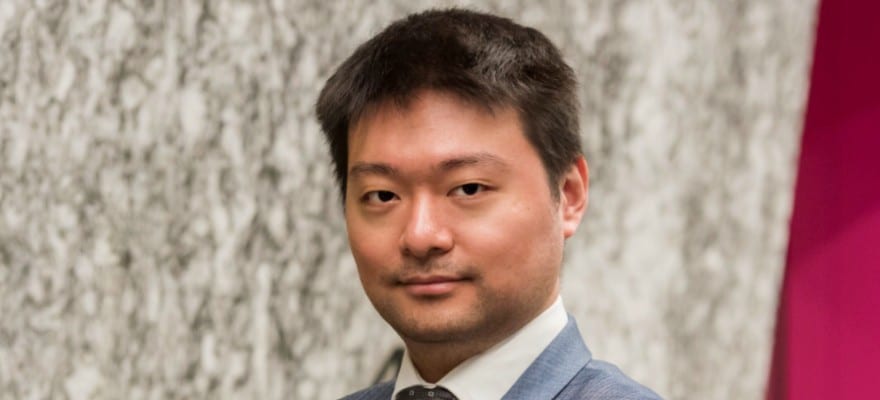
Evgeny Mashov, Head of the AFD
Firstly, brokers are now only able to offer leveraged trading of 50:1 to retail clients. That’s more than the maximum 30:1 leverage that ESMA’s regulation permits but it still puts a damper on brokers’ plans.
The reason for this is fairly straightforward; clients want high leverage. One of the main appeals of FX trading for retail clients, rightly or wrongly, is the ability to trade with huge sums of money that would otherwise be beyond their means.
That makes for a particularly unappealing proposition for any prospective client. If a broker has to take positions against its clients, then it is impossible for the broker to have the client’s interests at heart. This is because, in this scenario, the client’s loss is the broker’s gain and vice versa.
Heading Offshore
Just by reading the above regulations, one could deduce that Russian retail traders would head offshore. The extent to which they have is still somewhat surprising. Indeed, it could be viewed as a testament to how informed Russian traders are - they aren’t foolish enough to use brokers whose interests are diametrically opposed to theirs.
As noted, 1.75 percent of Russian retail traders use offshore brokers. That means, that of 400,000 retail traders, only 7000 trade with the eight brokers that have, thus far, received the stamp of Russian regulatory approval.
Amusingly, many of those traders are using the sister companies of brokers that are registered in Russia. Alpari, for example, will get Russian clients via its local website but then get users to sign contracts with one of its offshore, sister brokers.
Wrongheaded Regulation
All of this illustrates why Masharov was right to call for regulatory change. In Tuesday's press conference he asked that regulators enable brokers to start hedging against their clients’ positions.
That doesn’t seem partisan but entirely reasonable. Rather than protecting clients, as it was supposed to do, Russia’s current FX regulation is pushing clients to offshore brokers, many of which are unlikely to offer any sort of client protection.
The reason for this is that traders, rightly, don’t want to use brokers that are trading against them. Were that law to change, we would likely see a large number of Russian traders starting to use domestic brokers. Whether that will happen is unclear - we’ll just have to hope President Putin is a Finance Magnates reader.
With all of the buzz surrounding the European Securities and Markets Authority’s (ESMA) most recent exploits, regulatory news concerning other jurisdictions has been pushed to the side over the past couple of months.
At a press conference this Tuesday in the city of Yekaterinburg, almost a thousand miles east of Moscow, Evgeny Masharov, the head of the AFD, called for regulatory change. He claimed that only 1.75 percent of all forex traders in Russia use brokers that have the local authorities’ approval.
Generally one should take demands from groups such as the AFD with a pinch of salt. After all, the organization is made up of FX brokers who may be inclined to put their interests, and not necessarily their clients' needs, first.
In this case, however, Masharov seems to have a completely legitimate point. To understand why that is, it’s worth briefly looking at the situation of brokers in Russia and the legislation they must adhere to.
No Hedging, Minimum Leverage
In 2014, Russian president Vladimir Putin signed the country’s Forex Law. As the above sub-heading suggests, this brought about a number of significant changes to the Russian FX brokerage industry.
Evgeny Mashov, Head of the AFD
Firstly, brokers are now only able to offer leveraged trading of 50:1 to retail clients. That’s more than the maximum 30:1 leverage that ESMA’s regulation permits but it still puts a damper on brokers’ plans.
The reason for this is fairly straightforward; clients want high leverage. One of the main appeals of FX trading for retail clients, rightly or wrongly, is the ability to trade with huge sums of money that would otherwise be beyond their means.
That makes for a particularly unappealing proposition for any prospective client. If a broker has to take positions against its clients, then it is impossible for the broker to have the client’s interests at heart. This is because, in this scenario, the client’s loss is the broker’s gain and vice versa.
Heading Offshore
Just by reading the above regulations, one could deduce that Russian retail traders would head offshore. The extent to which they have is still somewhat surprising. Indeed, it could be viewed as a testament to how informed Russian traders are - they aren’t foolish enough to use brokers whose interests are diametrically opposed to theirs.
As noted, 1.75 percent of Russian retail traders use offshore brokers. That means, that of 400,000 retail traders, only 7000 trade with the eight brokers that have, thus far, received the stamp of Russian regulatory approval.
Amusingly, many of those traders are using the sister companies of brokers that are registered in Russia. Alpari, for example, will get Russian clients via its local website but then get users to sign contracts with one of its offshore, sister brokers.
Wrongheaded Regulation
All of this illustrates why Masharov was right to call for regulatory change. In Tuesday's press conference he asked that regulators enable brokers to start hedging against their clients’ positions.
That doesn’t seem partisan but entirely reasonable. Rather than protecting clients, as it was supposed to do, Russia’s current FX regulation is pushing clients to offshore brokers, many of which are unlikely to offer any sort of client protection.
The reason for this is that traders, rightly, don’t want to use brokers that are trading against them. Were that law to change, we would likely see a large number of Russian traders starting to use domestic brokers. Whether that will happen is unclear - we’ll just have to hope President Putin is a Finance Magnates reader.
CFTC Oversight Sees DraftKings Launch Prediction Markets Through CME Group
Featured Videos
How FYNXT is Transforming Brokerages with Modular Tech | Executive Interview with Stephen Miles
Join us for an exclusive interview with Stephen Miles, Chief Revenue Officer at FYNXT, recorded live at FMLS:25. In this conversation, Stephen breaks down how modular brokerage technology is driving growth, retention, and efficiency across the brokerage industry.
Learn how FYNXT's unified yet modular platform is giving brokers a competitive edge—powering faster onboarding, increased trading volumes, and dramatically improved IB performance.
🔑 What You'll Learn in This Video:
- The biggest challenges brokerages face going into 2026
- Why FYNXT’s modular platform is outperforming in-house builds
- How automation is transforming IB channels
- The real ROI: 11x LTV increases and reduced acquisition costs
👉 Don’t forget to like, comment, and subscribe.
#FYNXT #StephenMiles #FMLS2025 #BrokerageTechnology #ModularTech #FintechInterview #DigitalTransformation #FinancialMarkets #CROInterview #FintechInnovation #TradingTechnology #IndependentBrokers #FinanceLeaders
Join us for an exclusive interview with Stephen Miles, Chief Revenue Officer at FYNXT, recorded live at FMLS:25. In this conversation, Stephen breaks down how modular brokerage technology is driving growth, retention, and efficiency across the brokerage industry.
Learn how FYNXT's unified yet modular platform is giving brokers a competitive edge—powering faster onboarding, increased trading volumes, and dramatically improved IB performance.
🔑 What You'll Learn in This Video:
- The biggest challenges brokerages face going into 2026
- Why FYNXT’s modular platform is outperforming in-house builds
- How automation is transforming IB channels
- The real ROI: 11x LTV increases and reduced acquisition costs
👉 Don’t forget to like, comment, and subscribe.
#FYNXT #StephenMiles #FMLS2025 #BrokerageTechnology #ModularTech #FintechInterview #DigitalTransformation #FinancialMarkets #CROInterview #FintechInnovation #TradingTechnology #IndependentBrokers #FinanceLeaders
Join us for an exclusive interview with Stephen Miles, Chief Revenue Officer at FYNXT, recorded live at FMLS:25. In this conversation, Stephen breaks down how modular brokerage technology is driving growth, retention, and efficiency across the brokerage industry.
Learn how FYNXT's unified yet modular platform is giving brokers a competitive edge—powering faster onboarding, increased trading volumes, and dramatically improved IB performance.
🔑 What You'll Learn in This Video:
- The biggest challenges brokerages face going into 2026
- Why FYNXT’s modular platform is outperforming in-house builds
- How automation is transforming IB channels
- The real ROI: 11x LTV increases and reduced acquisition costs
👉 Don’t forget to like, comment, and subscribe.
#FYNXT #StephenMiles #FMLS2025 #BrokerageTechnology #ModularTech #FintechInterview #DigitalTransformation #FinancialMarkets #CROInterview #FintechInnovation #TradingTechnology #IndependentBrokers #FinanceLeaders
Join us for an exclusive interview with Stephen Miles, Chief Revenue Officer at FYNXT, recorded live at FMLS:25. In this conversation, Stephen breaks down how modular brokerage technology is driving growth, retention, and efficiency across the brokerage industry.
Learn how FYNXT's unified yet modular platform is giving brokers a competitive edge—powering faster onboarding, increased trading volumes, and dramatically improved IB performance.
🔑 What You'll Learn in This Video:
- The biggest challenges brokerages face going into 2026
- Why FYNXT’s modular platform is outperforming in-house builds
- How automation is transforming IB channels
- The real ROI: 11x LTV increases and reduced acquisition costs
👉 Don’t forget to like, comment, and subscribe.
#FYNXT #StephenMiles #FMLS2025 #BrokerageTechnology #ModularTech #FintechInterview #DigitalTransformation #FinancialMarkets #CROInterview #FintechInnovation #TradingTechnology #IndependentBrokers #FinanceLeaders
Executive Interview | Charlotte Bullock | Chief Product Officer, Bank of London | FMLS:25
In this interview, we sat down with Charlotte Bullock, Head of Product at The Bank of London, previously at SAP and now shaping product at one of the sector’s most ambitious new banking players.
Charlotte reflects on the Summit so far and talks about the culture inside fintech banks today. We look at the pressures that come with scaling, and how firms can hold onto the nimble approach that made them stand out early on.
We also cover the state of payments ahead of her appearance on the payments roundtable: the blockages financial firms face, the areas that still need fixing, and what a realistic solution looks like in 2026.
In this interview, we sat down with Charlotte Bullock, Head of Product at The Bank of London, previously at SAP and now shaping product at one of the sector’s most ambitious new banking players.
Charlotte reflects on the Summit so far and talks about the culture inside fintech banks today. We look at the pressures that come with scaling, and how firms can hold onto the nimble approach that made them stand out early on.
We also cover the state of payments ahead of her appearance on the payments roundtable: the blockages financial firms face, the areas that still need fixing, and what a realistic solution looks like in 2026.
In this interview, we sat down with Charlotte Bullock, Head of Product at The Bank of London, previously at SAP and now shaping product at one of the sector’s most ambitious new banking players.
Charlotte reflects on the Summit so far and talks about the culture inside fintech banks today. We look at the pressures that come with scaling, and how firms can hold onto the nimble approach that made them stand out early on.
We also cover the state of payments ahead of her appearance on the payments roundtable: the blockages financial firms face, the areas that still need fixing, and what a realistic solution looks like in 2026.
In this interview, we sat down with Charlotte Bullock, Head of Product at The Bank of London, previously at SAP and now shaping product at one of the sector’s most ambitious new banking players.
Charlotte reflects on the Summit so far and talks about the culture inside fintech banks today. We look at the pressures that come with scaling, and how firms can hold onto the nimble approach that made them stand out early on.
We also cover the state of payments ahead of her appearance on the payments roundtable: the blockages financial firms face, the areas that still need fixing, and what a realistic solution looks like in 2026.
In this interview, we sat down with Charlotte Bullock, Head of Product at The Bank of London, previously at SAP and now shaping product at one of the sector’s most ambitious new banking players.
Charlotte reflects on the Summit so far and talks about the culture inside fintech banks today. We look at the pressures that come with scaling, and how firms can hold onto the nimble approach that made them stand out early on.
We also cover the state of payments ahead of her appearance on the payments roundtable: the blockages financial firms face, the areas that still need fixing, and what a realistic solution looks like in 2026.
In this interview, we sat down with Charlotte Bullock, Head of Product at The Bank of London, previously at SAP and now shaping product at one of the sector’s most ambitious new banking players.
Charlotte reflects on the Summit so far and talks about the culture inside fintech banks today. We look at the pressures that come with scaling, and how firms can hold onto the nimble approach that made them stand out early on.
We also cover the state of payments ahead of her appearance on the payments roundtable: the blockages financial firms face, the areas that still need fixing, and what a realistic solution looks like in 2026.
In this conversation, we sit down with Drew Niv, CSO at ATFX Connect and one of the most influential figures in modern FX.
We speak about market structure, the institutional view on liquidity, and the sharp rise of prop trading, a sector Drew has been commenting on in recent months. Drew explains why he once dismissed prop trading, why his view changed, and what he now thinks the model means for brokers, clients and risk managers.
We explore subscription-fee dependency, the high reneging rate, and the long-term challenge: how brokers can build a more stable and honest version of the model. Drew also talks about the traffic advantage standalone prop firms have built and why brokers may still win in the long run if they take the right approach.
In this conversation, we sit down with Drew Niv, CSO at ATFX Connect and one of the most influential figures in modern FX.
We speak about market structure, the institutional view on liquidity, and the sharp rise of prop trading, a sector Drew has been commenting on in recent months. Drew explains why he once dismissed prop trading, why his view changed, and what he now thinks the model means for brokers, clients and risk managers.
We explore subscription-fee dependency, the high reneging rate, and the long-term challenge: how brokers can build a more stable and honest version of the model. Drew also talks about the traffic advantage standalone prop firms have built and why brokers may still win in the long run if they take the right approach.
In this conversation, we sit down with Drew Niv, CSO at ATFX Connect and one of the most influential figures in modern FX.
We speak about market structure, the institutional view on liquidity, and the sharp rise of prop trading, a sector Drew has been commenting on in recent months. Drew explains why he once dismissed prop trading, why his view changed, and what he now thinks the model means for brokers, clients and risk managers.
We explore subscription-fee dependency, the high reneging rate, and the long-term challenge: how brokers can build a more stable and honest version of the model. Drew also talks about the traffic advantage standalone prop firms have built and why brokers may still win in the long run if they take the right approach.
In this conversation, we sit down with Drew Niv, CSO at ATFX Connect and one of the most influential figures in modern FX.
We speak about market structure, the institutional view on liquidity, and the sharp rise of prop trading, a sector Drew has been commenting on in recent months. Drew explains why he once dismissed prop trading, why his view changed, and what he now thinks the model means for brokers, clients and risk managers.
We explore subscription-fee dependency, the high reneging rate, and the long-term challenge: how brokers can build a more stable and honest version of the model. Drew also talks about the traffic advantage standalone prop firms have built and why brokers may still win in the long run if they take the right approach.
In this conversation, we sit down with Drew Niv, CSO at ATFX Connect and one of the most influential figures in modern FX.
We speak about market structure, the institutional view on liquidity, and the sharp rise of prop trading, a sector Drew has been commenting on in recent months. Drew explains why he once dismissed prop trading, why his view changed, and what he now thinks the model means for brokers, clients and risk managers.
We explore subscription-fee dependency, the high reneging rate, and the long-term challenge: how brokers can build a more stable and honest version of the model. Drew also talks about the traffic advantage standalone prop firms have built and why brokers may still win in the long run if they take the right approach.
In this conversation, we sit down with Drew Niv, CSO at ATFX Connect and one of the most influential figures in modern FX.
We speak about market structure, the institutional view on liquidity, and the sharp rise of prop trading, a sector Drew has been commenting on in recent months. Drew explains why he once dismissed prop trading, why his view changed, and what he now thinks the model means for brokers, clients and risk managers.
We explore subscription-fee dependency, the high reneging rate, and the long-term challenge: how brokers can build a more stable and honest version of the model. Drew also talks about the traffic advantage standalone prop firms have built and why brokers may still win in the long run if they take the right approach.
Executive Interview | Remonda Z. Kirketerp Møller| CEO & Founder Muinmos | FMLS:25
In this interview, Remonda Z. Kirketerp Møller, founder of Muinmos, breaks down the state of AI in regtech and what responsible adoption really looks like for brokers. We talk about rising fragmentation, the pressures around compliance accuracy, and why most firms are still in the early stages of AI maturity.
Ramanda also shares insights on regulator sandboxes, shifting expectations around accountability, and the current reality of MiCA licensing and passporting in Europe.
A concise look at where compliance, onboarding, and AI-driven processes are heading next.
In this interview, Remonda Z. Kirketerp Møller, founder of Muinmos, breaks down the state of AI in regtech and what responsible adoption really looks like for brokers. We talk about rising fragmentation, the pressures around compliance accuracy, and why most firms are still in the early stages of AI maturity.
Ramanda also shares insights on regulator sandboxes, shifting expectations around accountability, and the current reality of MiCA licensing and passporting in Europe.
A concise look at where compliance, onboarding, and AI-driven processes are heading next.
In this interview, Remonda Z. Kirketerp Møller, founder of Muinmos, breaks down the state of AI in regtech and what responsible adoption really looks like for brokers. We talk about rising fragmentation, the pressures around compliance accuracy, and why most firms are still in the early stages of AI maturity.
Ramanda also shares insights on regulator sandboxes, shifting expectations around accountability, and the current reality of MiCA licensing and passporting in Europe.
A concise look at where compliance, onboarding, and AI-driven processes are heading next.
In this interview, Remonda Z. Kirketerp Møller, founder of Muinmos, breaks down the state of AI in regtech and what responsible adoption really looks like for brokers. We talk about rising fragmentation, the pressures around compliance accuracy, and why most firms are still in the early stages of AI maturity.
Ramanda also shares insights on regulator sandboxes, shifting expectations around accountability, and the current reality of MiCA licensing and passporting in Europe.
A concise look at where compliance, onboarding, and AI-driven processes are heading next.
In this interview, Remonda Z. Kirketerp Møller, founder of Muinmos, breaks down the state of AI in regtech and what responsible adoption really looks like for brokers. We talk about rising fragmentation, the pressures around compliance accuracy, and why most firms are still in the early stages of AI maturity.
Ramanda also shares insights on regulator sandboxes, shifting expectations around accountability, and the current reality of MiCA licensing and passporting in Europe.
A concise look at where compliance, onboarding, and AI-driven processes are heading next.
In this interview, Remonda Z. Kirketerp Møller, founder of Muinmos, breaks down the state of AI in regtech and what responsible adoption really looks like for brokers. We talk about rising fragmentation, the pressures around compliance accuracy, and why most firms are still in the early stages of AI maturity.
Ramanda also shares insights on regulator sandboxes, shifting expectations around accountability, and the current reality of MiCA licensing and passporting in Europe.
A concise look at where compliance, onboarding, and AI-driven processes are heading next.
In this conversation, we speak with Aydin Bonabi, CEO and co-founder of Surveill, a firm focused on fraud detection and AI-driven compliance tools for financial institutions.
We start with Aydin’s view of the Summit and the challenges brokers face as fraud tactics grow more complex. He explains how firms can stay ahead through real-time signals, data patterns, and early-stage detection.
We also talk about AI training and why compliance teams often struggle to keep models accurate, fair, and aligned with regulatory expectations. Aydin breaks down what “good” AI training looks like inside a financial environment, including the importance of clean data, domain expertise, and human oversight.
He closes with a clear message: fraud is scaling, and so must the tools that stop it.
In this conversation, we speak with Aydin Bonabi, CEO and co-founder of Surveill, a firm focused on fraud detection and AI-driven compliance tools for financial institutions.
We start with Aydin’s view of the Summit and the challenges brokers face as fraud tactics grow more complex. He explains how firms can stay ahead through real-time signals, data patterns, and early-stage detection.
We also talk about AI training and why compliance teams often struggle to keep models accurate, fair, and aligned with regulatory expectations. Aydin breaks down what “good” AI training looks like inside a financial environment, including the importance of clean data, domain expertise, and human oversight.
He closes with a clear message: fraud is scaling, and so must the tools that stop it.
In this conversation, we speak with Aydin Bonabi, CEO and co-founder of Surveill, a firm focused on fraud detection and AI-driven compliance tools for financial institutions.
We start with Aydin’s view of the Summit and the challenges brokers face as fraud tactics grow more complex. He explains how firms can stay ahead through real-time signals, data patterns, and early-stage detection.
We also talk about AI training and why compliance teams often struggle to keep models accurate, fair, and aligned with regulatory expectations. Aydin breaks down what “good” AI training looks like inside a financial environment, including the importance of clean data, domain expertise, and human oversight.
He closes with a clear message: fraud is scaling, and so must the tools that stop it.
In this conversation, we speak with Aydin Bonabi, CEO and co-founder of Surveill, a firm focused on fraud detection and AI-driven compliance tools for financial institutions.
We start with Aydin’s view of the Summit and the challenges brokers face as fraud tactics grow more complex. He explains how firms can stay ahead through real-time signals, data patterns, and early-stage detection.
We also talk about AI training and why compliance teams often struggle to keep models accurate, fair, and aligned with regulatory expectations. Aydin breaks down what “good” AI training looks like inside a financial environment, including the importance of clean data, domain expertise, and human oversight.
He closes with a clear message: fraud is scaling, and so must the tools that stop it.
In this conversation, we speak with Aydin Bonabi, CEO and co-founder of Surveill, a firm focused on fraud detection and AI-driven compliance tools for financial institutions.
We start with Aydin’s view of the Summit and the challenges brokers face as fraud tactics grow more complex. He explains how firms can stay ahead through real-time signals, data patterns, and early-stage detection.
We also talk about AI training and why compliance teams often struggle to keep models accurate, fair, and aligned with regulatory expectations. Aydin breaks down what “good” AI training looks like inside a financial environment, including the importance of clean data, domain expertise, and human oversight.
He closes with a clear message: fraud is scaling, and so must the tools that stop it.
In this conversation, we speak with Aydin Bonabi, CEO and co-founder of Surveill, a firm focused on fraud detection and AI-driven compliance tools for financial institutions.
We start with Aydin’s view of the Summit and the challenges brokers face as fraud tactics grow more complex. He explains how firms can stay ahead through real-time signals, data patterns, and early-stage detection.
We also talk about AI training and why compliance teams often struggle to keep models accurate, fair, and aligned with regulatory expectations. Aydin breaks down what “good” AI training looks like inside a financial environment, including the importance of clean data, domain expertise, and human oversight.
He closes with a clear message: fraud is scaling, and so must the tools that stop it.