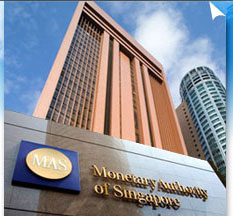
Monetary Authority Of Singapore Issues Consultation On Basel III Liquidity Risk
Sunday,01/09/2013|10:02GMTby
Andrew Saks McLeod
The Singaporean regulatory authorities have issued a detailed consultation paper relating to the implementation of the proposed Basel III rulings on liquidity. An emphasis has been placed on ensuring less reliance on FX Swaps.
The Monetary Authority of Singapore (MAS) has released a consultation paper today, which details the current progress made and considerations being discussed at government level regarding the local implementation of the Basel III Liquidity Rule.
Background
On January 6, 2013, the Group of Central Bank Governors and Heads of Supervision (GHOS) endorsed the Basel III Liquidity Rule - Liquidity Coverage Ratio (LCR) as the global minimum standard for liquidity risk.
The LCR framework is intended to go some way toward improving the short-term resilience of a bank's liquidity risk profile, by ensuring that a bank has an adequate stock of unencumbered high quality liquid assets (HQLA) that can be converted into cash at little or no loss of value, to meet its liquidity needs for a 30 calendar day liquidity stress scenario.
Incremental Implementation
Although, an international standard has been agreed on by the Group, with a full and detailed directive in place and publicly available via the Bank For International Settlements, the Singapore Regulatory Authority maintains its own timeline for implementation.
As such, the LCR requirement starts at 60% on January 1, 2015 and increases 10% annually to reach 100% by January 1, 2019. As a member of the Basel Committee of Banking Supervision (BCBS), Singapore will adopt Basel’s recommended implementation timeline. MAS is proposing to replace the existing MLA framework with the LCR framework for all banks and finance companies. The new framework will also be extended to merchant banks.
On this basis, MAS will be conducting a Quantitative Impact Study (MAS QIS) for all banks, merchant banks and financial institutions in Singapore, based on 28 June, 2013 positions, to analyze the potential impact resulting from the local implementation of LCR.
The existing Minimum Liquid Assets (MLA) requirement stipulates that every bank shall hold, at all times, a minimum percentage of its SGD-denominated qualifying liabilities in liquid assets.
The objective of the MLA is similar to the LCR, which is to ensure that banks hold sufficient liquid assets to meet their estimated cash outflows over a short-term horizon. In addition, allowing MLA assets to be drawn down during a liquidity crisis on notification to the MAS is also aligned within the intent of the LCR framework.
FX Swap Dependency Under Scrutiny
While the LCR requirements are calculated on a consolidated basis and reported in a common currency, the Basel liquidity standard also expects banks and their supervisors to closely monitor LCR by significant currency.
Singapore is a regional treasury center for many banks and their liabilities within the domestic financial markets are diversified in terms of currencies. U.S. Dollar (USD) is the dominant foreign currency for most financial institutions in Singapore and one-third of these financial institutions also have 3 or more other significant currencies.
A currency is considered “significant” if the aggregate liabilities denominated in that currency amount to 5% or more of the financial institution’s total liabilities.
As such, there is a need to impose LCR by significant currencies, on top of the consolidated currency LCR requirement, to ensure that financial institutions have sufficient liquid assets in the foreign currencies and are not overly-reliant on the FX swap markets to meet their foreign currency liquidity needs during a liquidity stress situation, as highlighted by the reduced FX swap market liquidity during the last financial crisis.
MAS proposes to impose a USD LCR requirement on all financial institutions in Singapore given that it is the next most significant currency in the banking industry besides SGD. The proposed LCR requirement for USD in Singapore will be set at 80%, allowing financial institutions to rely on external sources such as the FX swap market to some extent.
The regulator intends to monitor the market liquidity of the other non-USD foreign currencies, as well as the adequacy of each financial institution’s liquidity management of these currencies through its supervisory process. Bank-specific requirements will be imposed on a case-by-case basis if prudential concerns warrant them.
The Monetary Authority of Singapore (MAS) has released a consultation paper today, which details the current progress made and considerations being discussed at government level regarding the local implementation of the Basel III Liquidity Rule.
Background
On January 6, 2013, the Group of Central Bank Governors and Heads of Supervision (GHOS) endorsed the Basel III Liquidity Rule - Liquidity Coverage Ratio (LCR) as the global minimum standard for liquidity risk.
The LCR framework is intended to go some way toward improving the short-term resilience of a bank's liquidity risk profile, by ensuring that a bank has an adequate stock of unencumbered high quality liquid assets (HQLA) that can be converted into cash at little or no loss of value, to meet its liquidity needs for a 30 calendar day liquidity stress scenario.
Incremental Implementation
Although, an international standard has been agreed on by the Group, with a full and detailed directive in place and publicly available via the Bank For International Settlements, the Singapore Regulatory Authority maintains its own timeline for implementation.
As such, the LCR requirement starts at 60% on January 1, 2015 and increases 10% annually to reach 100% by January 1, 2019. As a member of the Basel Committee of Banking Supervision (BCBS), Singapore will adopt Basel’s recommended implementation timeline. MAS is proposing to replace the existing MLA framework with the LCR framework for all banks and finance companies. The new framework will also be extended to merchant banks.
On this basis, MAS will be conducting a Quantitative Impact Study (MAS QIS) for all banks, merchant banks and financial institutions in Singapore, based on 28 June, 2013 positions, to analyze the potential impact resulting from the local implementation of LCR.
The existing Minimum Liquid Assets (MLA) requirement stipulates that every bank shall hold, at all times, a minimum percentage of its SGD-denominated qualifying liabilities in liquid assets.
The objective of the MLA is similar to the LCR, which is to ensure that banks hold sufficient liquid assets to meet their estimated cash outflows over a short-term horizon. In addition, allowing MLA assets to be drawn down during a liquidity crisis on notification to the MAS is also aligned within the intent of the LCR framework.
FX Swap Dependency Under Scrutiny
While the LCR requirements are calculated on a consolidated basis and reported in a common currency, the Basel liquidity standard also expects banks and their supervisors to closely monitor LCR by significant currency.
Singapore is a regional treasury center for many banks and their liabilities within the domestic financial markets are diversified in terms of currencies. U.S. Dollar (USD) is the dominant foreign currency for most financial institutions in Singapore and one-third of these financial institutions also have 3 or more other significant currencies.
A currency is considered “significant” if the aggregate liabilities denominated in that currency amount to 5% or more of the financial institution’s total liabilities.
As such, there is a need to impose LCR by significant currencies, on top of the consolidated currency LCR requirement, to ensure that financial institutions have sufficient liquid assets in the foreign currencies and are not overly-reliant on the FX swap markets to meet their foreign currency liquidity needs during a liquidity stress situation, as highlighted by the reduced FX swap market liquidity during the last financial crisis.
MAS proposes to impose a USD LCR requirement on all financial institutions in Singapore given that it is the next most significant currency in the banking industry besides SGD. The proposed LCR requirement for USD in Singapore will be set at 80%, allowing financial institutions to rely on external sources such as the FX swap market to some extent.
The regulator intends to monitor the market liquidity of the other non-USD foreign currencies, as well as the adequacy of each financial institution’s liquidity management of these currencies through its supervisory process. Bank-specific requirements will be imposed on a case-by-case basis if prudential concerns warrant them.
Italy’s Consob Tightens Net on AI-Fueled Scams With Fresh Website Bans
FP Markets Winner Spotlight 🏆 | Global Broker of the Year 2025 #Trading #Broker #Innovation #Shorts
FP Markets Winner Spotlight 🏆 | Global Broker of the Year 2025 #Trading #Broker #Innovation #Shorts
FP Markets takes the spotlight as Global Broker of the Year 2025 at the Finance Magnates Awards.
Martin Stoilov, Head of Client Experience, shares that trust, innovation, and people played a key role in the company’s success, supported by a strong foundation of integrity and client-centricity.
Following this milestone, FP Markets continues to focus on growth, technology investment, and its core values of transparency and excellence.
👉 Be part of FM Awards 2026: https://awards.financemagnates.com/#nominate
FP Markets takes the spotlight as Global Broker of the Year 2025 at the Finance Magnates Awards.
Martin Stoilov, Head of Client Experience, shares that trust, innovation, and people played a key role in the company’s success, supported by a strong foundation of integrity and client-centricity.
Following this milestone, FP Markets continues to focus on growth, technology investment, and its core values of transparency and excellence.
👉 Be part of FM Awards 2026: https://awards.financemagnates.com/#nominate
In this video, we review @HolaPrimeMarketsOfficial, a multi-asset forex and CFDs broker offering different account types, trading platforms, and flexible trading conditions.
We cover the broker’s overall offering, including account options, trading environment, platforms like MT4 and MT5, and additional services such as managed accounts and fast withdrawals.
Watch the full video to see if Hola Prime Markets fits your trading needs.
📣 Stay up to date with the latest in finance and trading. Follow Finance Magnates for industry news, insights, and global event coverage.
Connect with us:
🔗 LinkedIn: /financemagnates
👍 Facebook: /financemagnates
📸 Instagram: https://www.instagram.com/financemagnates
🐦 X: https://x.com/financemagnates
🎥 TikTok: https://www.tiktok.com/tag/financemagnates
▶️ YouTube: /@financemagnates_official
#HolaPrime #ForexBroker #CFDTrading #FinanceMagnates #Trading #Forex #BrokerReview
In this video, we review @HolaPrimeMarketsOfficial, a multi-asset forex and CFDs broker offering different account types, trading platforms, and flexible trading conditions.
We cover the broker’s overall offering, including account options, trading environment, platforms like MT4 and MT5, and additional services such as managed accounts and fast withdrawals.
Watch the full video to see if Hola Prime Markets fits your trading needs.
📣 Stay up to date with the latest in finance and trading. Follow Finance Magnates for industry news, insights, and global event coverage.
Connect with us:
🔗 LinkedIn: /financemagnates
👍 Facebook: /financemagnates
📸 Instagram: https://www.instagram.com/financemagnates
🐦 X: https://x.com/financemagnates
🎥 TikTok: https://www.tiktok.com/tag/financemagnates
▶️ YouTube: /@financemagnates_official
#HolaPrime #ForexBroker #CFDTrading #FinanceMagnates #Trading #Forex #BrokerReview
Hola Prime Review: What You Need to Know | Full Breakdown by Finance Magnates
Hola Prime Review: What You Need to Know | Full Breakdown by Finance Magnates
In this video, we review @HolaPrime_Global, a proprietary trading firm offering evaluation programs and performance-based payouts in simulated market environments.
We cover how the challenge model works, including account types, profit splits (up to 95%), trading rules, and what it takes to reach a funded account. You’ll also learn about available platforms like MT4, MT5, cTrader, and more, along with insights into payouts, support, and trading conditions.
Watch the full video to see if Hola Prime fits your trading style.
📣 Stay up to date with the latest in finance and trading. Follow Finance Magnates for industry news, insights, and global event coverage.
Connect with us:
🔗 LinkedIn: /financemagnates
👍 Facebook: /financemagnates
📸 Instagram: https://www.instagram.com/financemagnates
🐦 X: https://x.com/financemagnates
🎥 TikTok: https://www.tiktok.com/tag/financemagnates
▶️ YouTube: /@financemagnates_official
#HolaPrime #PropFirm #Trading #FinanceMagnates #Forex #FuturesTrading #TradingReview #PropFirmReview
In this video, we review @HolaPrime_Global, a proprietary trading firm offering evaluation programs and performance-based payouts in simulated market environments.
We cover how the challenge model works, including account types, profit splits (up to 95%), trading rules, and what it takes to reach a funded account. You’ll also learn about available platforms like MT4, MT5, cTrader, and more, along with insights into payouts, support, and trading conditions.
Watch the full video to see if Hola Prime fits your trading style.
📣 Stay up to date with the latest in finance and trading. Follow Finance Magnates for industry news, insights, and global event coverage.
Connect with us:
🔗 LinkedIn: /financemagnates
👍 Facebook: /financemagnates
📸 Instagram: https://www.instagram.com/financemagnates
🐦 X: https://x.com/financemagnates
🎥 TikTok: https://www.tiktok.com/tag/financemagnates
▶️ YouTube: /@financemagnates_official
#HolaPrime #PropFirm #Trading #FinanceMagnates #Forex #FuturesTrading #TradingReview #PropFirmReview
Axi Winner Spotlight 🏆 | Global Most Innovative Broker 2025 #Innovation #Trading #Fintech #Broker
Axi Winner Spotlight 🏆 | Global Most Innovative Broker 2025 #Innovation #Trading #Fintech #Broker
Axi takes the spotlight at the Finance Magnates Awards, winning Global Most Innovative Broker 2025.
Olivia Xenofontos and Ivanna Openko share how the team will feel: proud, motivated, and ready to keep delivering.
They also describe the night as well-organized, focused, and enjoyable for all.
👉 Be part of FM Awards 2026.
Axi takes the spotlight at the Finance Magnates Awards, winning Global Most Innovative Broker 2025.
Olivia Xenofontos and Ivanna Openko share how the team will feel: proud, motivated, and ready to keep delivering.
They also describe the night as well-organized, focused, and enjoyable for all.
👉 Be part of FM Awards 2026.
Recognition that matters.
Built on transparency.
Driven by the industry.
The Finance Magnates Awards 2026.
Nominations are now open.
🔗 https://awards.financemagnates.com/?utm_source=SM&utm_medium=social&utm_campaign=recognition-matters
Recognition that matters.
Built on transparency.
Driven by the industry.
The Finance Magnates Awards 2026.
Nominations are now open.
🔗 https://awards.financemagnates.com/?utm_source=SM&utm_medium=social&utm_campaign=recognition-matters