The new rule requires financial services firms to verify their ASIC licenses with Google.
Such rules were first introduced in the UK.
Analysis
Google is one of the leading online advertising platforms where financial services companies run rampant campaigns. From Tuesday, the search engine giant has mandated the licensing verification of all financial services providers in Australia before advertising.
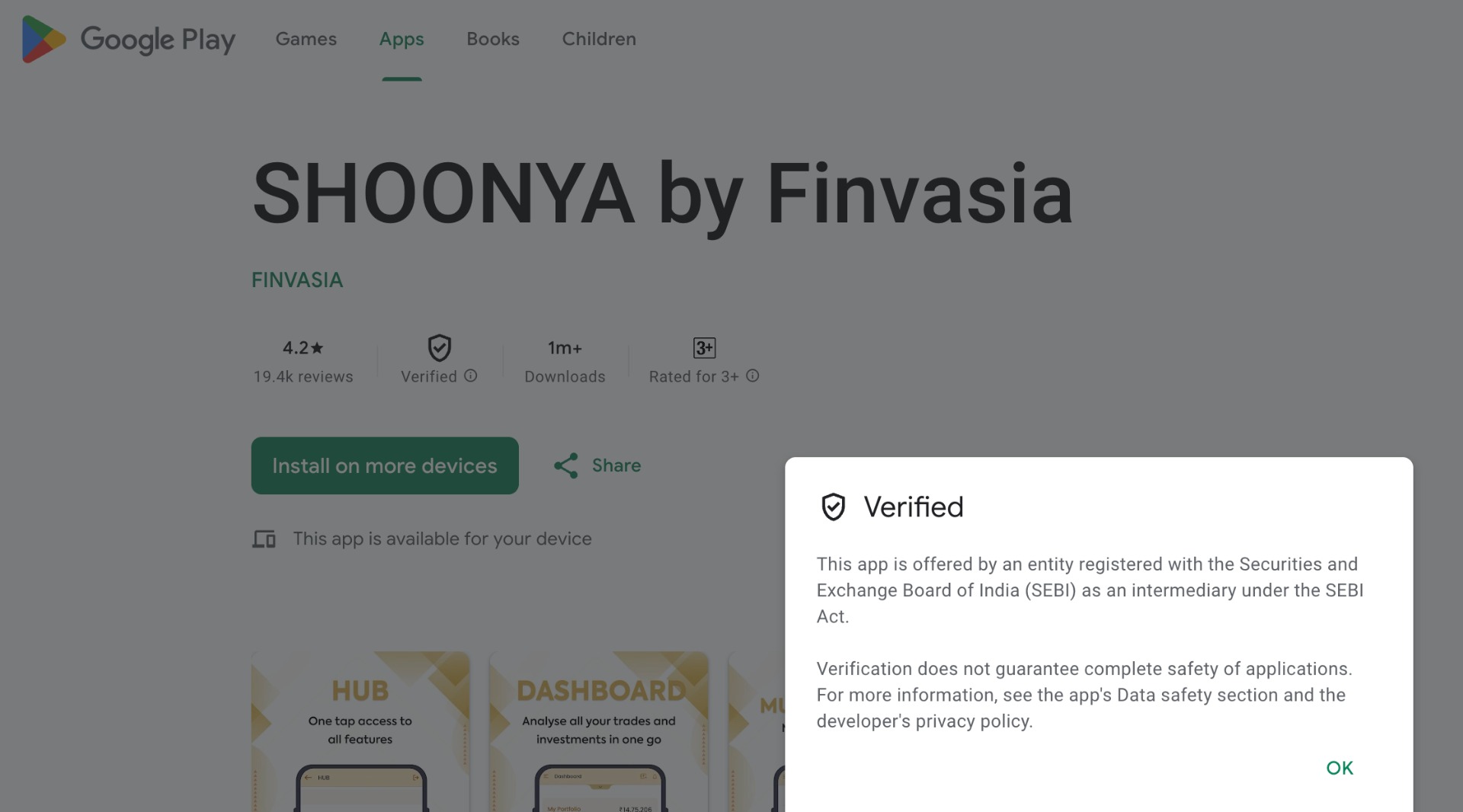
This means brokers and other financial services platforms need to verify their Australia Financial Services (AFS) license obtained from the Australian Securities & Investments Commission (ASIC) with Google.
Further, Aussie financial services platforms need to complete Google’s advertiser verification program before promoting their products and services.
The new policy has been introduced to curb rampant financial fraud executed with advertising.
Australians are also frequently targeted by scammers with investment frauds. In the first four months of 2022 alone, Aussies lost AU$158 million to investment scams, according to data collated by Scamwatch. This number, however, is only a fraction of the actual losses to scams.
“This measure creates a new layer of security against fraudsters and will help further safeguard our network from financial scams,” Google’s Government Affairs and Public Policy Senior Manager, Samantha Yorke, wrote in a blog post.
“This policy is just the latest step in our longstanding effort to tackle online fraud. We have robust policies in place to prohibit bad actors from deceiving people through tactics such as phishing, using clickbait, or providing misleading information about a product, service, or business.”
Additionally, the tech company is “closely coordinating with the appropriate Australian regulators” for ensuring the success of the new fraud-combating policy. On top of that, ASIC indicated it cooperated with Google in the development of this new policy.
A High-Risk Industry
Financial services, especially forex and CFDs trading, is considered a high-risk industry. Retail traders often indulge in speculative bets with the offered leverages.
While reputed regulators like ASIC have brought heavy curbs on leverages and marketing tactics, offshore brokers are still luring rookie traders with extremely high leverage levels.
“This policy is a great step forward in the protection of consumers as well as hopefully leveling the playing field for regulated firms so that they do not have to unfairly compete for clients with other firms who are not appropriately licensed,” Sophie Gerber, the Co-CEO and Founder of TRAction, told Finance Magnates.
Sophie Gerber, TRAction Fintech
Australia is the second market where Google has implemented the new financial services advertising policy. These rules were first introduced in the United Kingdom last September.
“Since we launched this policy in the UK, we’ve seen a pronounced decline in reports of ads promoting financial scams. The success of this program in the UK demonstrates that this is a meaningful and effective solution to safeguarding people online and gives us the confidence to expand verification to additional countries,” Yorke added.
A Private Watchdog?
Though Google can play a crucial role in blocking fraudulent financial services advertisement campaigns, the introduction of such rules by a private company might be problematic.
“There is certainly a concern when companies such as Google start becoming quasi-regulators by enforcing laws and regulations on their platforms,” Gerber said. “Regulators generally have oversight built into their terms of reference and operations (from other regulatory bodies and the government).”
Financial regulators operate in the public interest. In fact, the government in Australia has significant control over who is appointed as an ASIC commissioner, and how much public funding is made available to their operations.
“The question has to be asked – who is regulating Google? For now, they are just requiring verification of financial services licensing, will that in the future be expanded into implementing Google’s view of other elements of the financial services promotions rules in Australia, such as 'misleading and deceptive'? Is the department that will enforce such a policy separate from the google ads department so that the decision-making is not tainted by any economic concerns? How can we ever be sure, and who reviews/enforces that?” Gerber highlighted.
Necessary Regulatory Improvements
Australia has one of the most mature financial services industries and the reputation of ASIC is praised globally. However, there are still several aspects where the regulator can make improvements to curb fraud.
Gerber, who runs a regtech firm, pointed out that ASIC should mention the authorized websites for the regulated companies in its financial services registry, along with the flagging of fraudulent/fake websites. The regulators in the UK and Cyprus are already taking such measures.
“ASIC does not do this, and I haven’t seen any indication that they are intending to, when in fact this would be very helpful on many levels,” Gerber said.
“It would also be a very powerful integration for Google to use the information about a regulated organization’s verified website to prevent the use of any other domain name in advertising and also organic search results.
“At present, there doesn’t seem to be any way of preventing someone from creating a website and adopting an AFSL number, then listing an ad and perpetuating unlicensed/scam conduct in this way. We have certainly had a number of clients who have been subject to misuse of their AFSL number on websites, and this is something that is very difficult to curtail once it has started. Having ASIC and Google get involved in this type of prevention would enhance the benefits of their new ad policy exponentially.”
Google is one of the leading online advertising platforms where financial services companies run rampant campaigns. From Tuesday, the search engine giant has mandated the licensing verification of all financial services providers in Australia before advertising.
This means brokers and other financial services platforms need to verify their Australia Financial Services (AFS) license obtained from the Australian Securities & Investments Commission (ASIC) with Google.
Further, Aussie financial services platforms need to complete Google’s advertiser verification program before promoting their products and services.
The new policy has been introduced to curb rampant financial fraud executed with advertising.
Australians are also frequently targeted by scammers with investment frauds. In the first four months of 2022 alone, Aussies lost AU$158 million to investment scams, according to data collated by Scamwatch. This number, however, is only a fraction of the actual losses to scams.
“This measure creates a new layer of security against fraudsters and will help further safeguard our network from financial scams,” Google’s Government Affairs and Public Policy Senior Manager, Samantha Yorke, wrote in a blog post.
“This policy is just the latest step in our longstanding effort to tackle online fraud. We have robust policies in place to prohibit bad actors from deceiving people through tactics such as phishing, using clickbait, or providing misleading information about a product, service, or business.”
Additionally, the tech company is “closely coordinating with the appropriate Australian regulators” for ensuring the success of the new fraud-combating policy. On top of that, ASIC indicated it cooperated with Google in the development of this new policy.
A High-Risk Industry
Financial services, especially forex and CFDs trading, is considered a high-risk industry. Retail traders often indulge in speculative bets with the offered leverages.
While reputed regulators like ASIC have brought heavy curbs on leverages and marketing tactics, offshore brokers are still luring rookie traders with extremely high leverage levels.
“This policy is a great step forward in the protection of consumers as well as hopefully leveling the playing field for regulated firms so that they do not have to unfairly compete for clients with other firms who are not appropriately licensed,” Sophie Gerber, the Co-CEO and Founder of TRAction, told Finance Magnates.
Sophie Gerber, TRAction Fintech
Australia is the second market where Google has implemented the new financial services advertising policy. These rules were first introduced in the United Kingdom last September.
“Since we launched this policy in the UK, we’ve seen a pronounced decline in reports of ads promoting financial scams. The success of this program in the UK demonstrates that this is a meaningful and effective solution to safeguarding people online and gives us the confidence to expand verification to additional countries,” Yorke added.
A Private Watchdog?
Though Google can play a crucial role in blocking fraudulent financial services advertisement campaigns, the introduction of such rules by a private company might be problematic.
“There is certainly a concern when companies such as Google start becoming quasi-regulators by enforcing laws and regulations on their platforms,” Gerber said. “Regulators generally have oversight built into their terms of reference and operations (from other regulatory bodies and the government).”
Financial regulators operate in the public interest. In fact, the government in Australia has significant control over who is appointed as an ASIC commissioner, and how much public funding is made available to their operations.
“The question has to be asked – who is regulating Google? For now, they are just requiring verification of financial services licensing, will that in the future be expanded into implementing Google’s view of other elements of the financial services promotions rules in Australia, such as 'misleading and deceptive'? Is the department that will enforce such a policy separate from the google ads department so that the decision-making is not tainted by any economic concerns? How can we ever be sure, and who reviews/enforces that?” Gerber highlighted.
Necessary Regulatory Improvements
Australia has one of the most mature financial services industries and the reputation of ASIC is praised globally. However, there are still several aspects where the regulator can make improvements to curb fraud.
Gerber, who runs a regtech firm, pointed out that ASIC should mention the authorized websites for the regulated companies in its financial services registry, along with the flagging of fraudulent/fake websites. The regulators in the UK and Cyprus are already taking such measures.
“ASIC does not do this, and I haven’t seen any indication that they are intending to, when in fact this would be very helpful on many levels,” Gerber said.
“It would also be a very powerful integration for Google to use the information about a regulated organization’s verified website to prevent the use of any other domain name in advertising and also organic search results.
“At present, there doesn’t seem to be any way of preventing someone from creating a website and adopting an AFSL number, then listing an ad and perpetuating unlicensed/scam conduct in this way. We have certainly had a number of clients who have been subject to misuse of their AFSL number on websites, and this is something that is very difficult to curtail once it has started. Having ASIC and Google get involved in this type of prevention would enhance the benefits of their new ad policy exponentially.”
Arnab Shome is an electronics engineer-turned-financial editor. He holds a Bachelor of Technology from the National Institute of Technology, Agartala. He entered the retail trading industry about a decade ago, covering the cryptocurrency market for Finance Magnates, and later expanded his coverage to include forex and CFDs as well.
His work at Finance Magnates includes C-level interviews, data-driven analysis, opinion pieces, and scoops of industry exclusives. He also contributes to Finance Magnates’ quarterly industry report.
Area of coverage:
1. CFD broker-related news
2. Industry-related Regulatory updates and developments
3. New retail trading trends
4. Prop trading industry updates
5. Executive interviews
Education:
Bachelor of Technology - National Institute of Technology, Agartala (India)
Webull Spent Big to Hit Record Revenue, and the Bill Is in the Fine Print
FP Markets Winner Spotlight 🏆 | Global Broker of the Year 2025 #Trading #Broker #Innovation #Shorts
FP Markets Winner Spotlight 🏆 | Global Broker of the Year 2025 #Trading #Broker #Innovation #Shorts
FP Markets takes the spotlight as Global Broker of the Year 2025 at the Finance Magnates Awards.
Martin Stoilov, Head of Client Experience, shares that trust, innovation, and people played a key role in the company’s success, supported by a strong foundation of integrity and client-centricity.
Following this milestone, FP Markets continues to focus on growth, technology investment, and its core values of transparency and excellence.
👉 Be part of FM Awards 2026: https://awards.financemagnates.com/#nominate
FP Markets takes the spotlight as Global Broker of the Year 2025 at the Finance Magnates Awards.
Martin Stoilov, Head of Client Experience, shares that trust, innovation, and people played a key role in the company’s success, supported by a strong foundation of integrity and client-centricity.
Following this milestone, FP Markets continues to focus on growth, technology investment, and its core values of transparency and excellence.
👉 Be part of FM Awards 2026: https://awards.financemagnates.com/#nominate
In this video, we review @HolaPrimeMarketsOfficial, a multi-asset forex and CFDs broker offering different account types, trading platforms, and flexible trading conditions.
We cover the broker’s overall offering, including account options, trading environment, platforms like MT4 and MT5, and additional services such as managed accounts and fast withdrawals.
Watch the full video to see if Hola Prime Markets fits your trading needs.
📣 Stay up to date with the latest in finance and trading. Follow Finance Magnates for industry news, insights, and global event coverage.
Connect with us:
🔗 LinkedIn: /financemagnates
👍 Facebook: /financemagnates
📸 Instagram: https://www.instagram.com/financemagnates
🐦 X: https://x.com/financemagnates
🎥 TikTok: https://www.tiktok.com/tag/financemagnates
▶️ YouTube: /@financemagnates_official
#HolaPrime #ForexBroker #CFDTrading #FinanceMagnates #Trading #Forex #BrokerReview
In this video, we review @HolaPrimeMarketsOfficial, a multi-asset forex and CFDs broker offering different account types, trading platforms, and flexible trading conditions.
We cover the broker’s overall offering, including account options, trading environment, platforms like MT4 and MT5, and additional services such as managed accounts and fast withdrawals.
Watch the full video to see if Hola Prime Markets fits your trading needs.
📣 Stay up to date with the latest in finance and trading. Follow Finance Magnates for industry news, insights, and global event coverage.
Connect with us:
🔗 LinkedIn: /financemagnates
👍 Facebook: /financemagnates
📸 Instagram: https://www.instagram.com/financemagnates
🐦 X: https://x.com/financemagnates
🎥 TikTok: https://www.tiktok.com/tag/financemagnates
▶️ YouTube: /@financemagnates_official
#HolaPrime #ForexBroker #CFDTrading #FinanceMagnates #Trading #Forex #BrokerReview
Hola Prime Review: What You Need to Know | Full Breakdown by Finance Magnates
Hola Prime Review: What You Need to Know | Full Breakdown by Finance Magnates
In this video, we review @HolaPrime_Global, a proprietary trading firm offering evaluation programs and performance-based payouts in simulated market environments.
We cover how the challenge model works, including account types, profit splits (up to 95%), trading rules, and what it takes to reach a funded account. You’ll also learn about available platforms like MT4, MT5, cTrader, and more, along with insights into payouts, support, and trading conditions.
Watch the full video to see if Hola Prime fits your trading style.
📣 Stay up to date with the latest in finance and trading. Follow Finance Magnates for industry news, insights, and global event coverage.
Connect with us:
🔗 LinkedIn: /financemagnates
👍 Facebook: /financemagnates
📸 Instagram: https://www.instagram.com/financemagnates
🐦 X: https://x.com/financemagnates
🎥 TikTok: https://www.tiktok.com/tag/financemagnates
▶️ YouTube: /@financemagnates_official
#HolaPrime #PropFirm #Trading #FinanceMagnates #Forex #FuturesTrading #TradingReview #PropFirmReview
In this video, we review @HolaPrime_Global, a proprietary trading firm offering evaluation programs and performance-based payouts in simulated market environments.
We cover how the challenge model works, including account types, profit splits (up to 95%), trading rules, and what it takes to reach a funded account. You’ll also learn about available platforms like MT4, MT5, cTrader, and more, along with insights into payouts, support, and trading conditions.
Watch the full video to see if Hola Prime fits your trading style.
📣 Stay up to date with the latest in finance and trading. Follow Finance Magnates for industry news, insights, and global event coverage.
Connect with us:
🔗 LinkedIn: /financemagnates
👍 Facebook: /financemagnates
📸 Instagram: https://www.instagram.com/financemagnates
🐦 X: https://x.com/financemagnates
🎥 TikTok: https://www.tiktok.com/tag/financemagnates
▶️ YouTube: /@financemagnates_official
#HolaPrime #PropFirm #Trading #FinanceMagnates #Forex #FuturesTrading #TradingReview #PropFirmReview
Axi Winner Spotlight 🏆 | Global Most Innovative Broker 2025 #Innovation #Trading #Fintech #Broker
Axi Winner Spotlight 🏆 | Global Most Innovative Broker 2025 #Innovation #Trading #Fintech #Broker
Axi takes the spotlight at the Finance Magnates Awards, winning Global Most Innovative Broker 2025.
Olivia Xenofontos and Ivanna Openko share how the team will feel: proud, motivated, and ready to keep delivering.
They also describe the night as well-organized, focused, and enjoyable for all.
👉 Be part of FM Awards 2026.
Axi takes the spotlight at the Finance Magnates Awards, winning Global Most Innovative Broker 2025.
Olivia Xenofontos and Ivanna Openko share how the team will feel: proud, motivated, and ready to keep delivering.
They also describe the night as well-organized, focused, and enjoyable for all.
👉 Be part of FM Awards 2026.
Recognition that matters.
Built on transparency.
Driven by the industry.
The Finance Magnates Awards 2026.
Nominations are now open.
🔗 https://awards.financemagnates.com/?utm_source=SM&utm_medium=social&utm_campaign=recognition-matters
Recognition that matters.
Built on transparency.
Driven by the industry.
The Finance Magnates Awards 2026.
Nominations are now open.
🔗 https://awards.financemagnates.com/?utm_source=SM&utm_medium=social&utm_campaign=recognition-matters