Prop trading firms can equate success rates of challenges to retail brokers' profitable traders.
Regulating this industry is complicated due to a lack of international co-ordination.
The decision of the Commodity Futures Trading Commission (CFTC) to charge My Forex Funds with fraudulently taking over $300 million from customers hoping to become professional traders has prompted much debate about the future direction of prop trading.
Concerns around Prop Trading
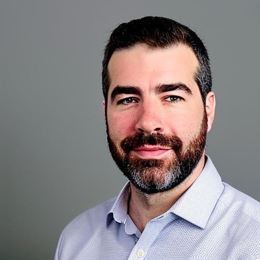
One key area concerns the separation of counterparties and third-party liquidity providers. This has prompted industry figures such as David Dombrowsky, the CEO and Founder of FX2 Funding, to suggest that there should be a conflict of interest in policies (possibly restricting trading desks to act as prop firms) and that transparency policies and audits would also be welcome developments.
David Dombrowsky, CEO and Founder of FX2 Funding
"Every prop firm that operates its own platform and is connected to liquidity providers functions in a similar way to a broker, who has the choice of either an A-book or a B-book model," explained Oliver Olejar, the COO at Lux Trading Firm. "It is very difficult to see inside the company and tell which model it uses. The only definitive way to check if you are engaging with an A-book is to have a confirmation from the liquidity provider or counterparty."
Verification Is Hard
Oliver Olejar, COO at Lux Trading Firm
While a trader may wish to verify each trade to ensure they are working with an A-book, it is practically impossible to do so, given the sheer volume and frequency of trades. Therefore, establishing trust becomes essential.
According to Martin Najat, the Co-Founder of City Traders Imperium, the situation with My Forex Funds may pave the way for heightened regulatory oversight of the sector.
Martin Najat, Co-founder of City Traders Imperium
"From the client's viewpoint, this is positive, as it would ensure a regulated and supervised environment for prop firms," he said. "On the flip side, it might also deter new entrants from stepping into the market, leading to reduced competition. As existing prop firms grapple with adhering to these regulatory norms, their competitive edge might also wane, which would potentially be passed onto the customer."
Global Regulations Are Not Aligned
If the CFTC's action against My Forex Funds were to lead to stricter regulations or even a ban on prop trading in the US, this could set a precedent for other countries, compelling them to re-evaluate and possibly reform their stance on this type of activity.
Olejar noted that even if the US took a definitive regulatory step, it is far from inevitable that other jurisdictions would follow suit, given the divergence between the US, Australia, and Europe in other areas, such as CFD trading.
"However, regardless of how the My Forex Funds case turns out, there is a growing sentiment among traders that prop trading should transition into a more regulated phase," he said. "Our expectation is that it will not be banned outright, but rather that we will see some regulatory measures introduced."
Prop Trading Business Model Is Itself a Challenge
As we have previously reported, regulating propriety trading is a challenging task for a variety of reasons. A further complicating factor is that not all prop firms are the same.
For example, The5ers doesn't forward trades to a retail broker but rather operates as a private equity fund with its own assets and its own pool account. Every trader that is classified and allowed to operate on its behalf is put on the pool account, where automated systems manage the risk policies of thousands of traders.
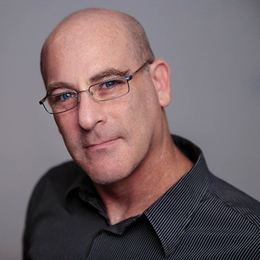
Gil Ben Hur, Founder and CEO of The5ers
"We cannot really show trade-by-trade ticketing information of how we go into the market as traders might expect to see," explained the Founder and CEO of The5ers, Gil Ben Hur. "Our traders never invest their own capital, and therefore, even if we could provide such information, we are not obligated to do so."
Even before My Forex Funds came to the attention of the CFTC, anyone could ask any regulated broker for proof of their liquidity providers. The majority have declined to disclose this information.
"This shows that even highly regulated brokers that serve millions of traders don't really have the capacity to prove how they make their trader's trades into the so-called 'true' market," added Ben Hur, who says that since traders are not risking their own capital, there is no obvious role for a regulator.
"The only regulation that I would see as being required here is in the initial phase when traders are being evaluated," he said. "It is important to ensure prop firms are not selling products that have no prospect of generating revenue for the trader, and we would welcome collaboration on a common set of guidelines to increase trust among traders."
In the meantime, all the firm's legal opinion indicates is that it is not subject to regulation in either the US, UK, or Israel.
Challenge Success Rate Can Be Key
On the sustainability of prop trading, Ben Hur reckons it offers a higher success rate than retail brokerages. "Traders subject to risk management are more consistent," he said. "Unfortunately, some firms manipulate systems to ensure traders fail to make back their fees in commission, but the concept of helping traders who don't have sufficient capital of their own to hone their skills is here to stay."
Prop firms do not need to hide behind the fact that they make money from failed evaluations, added Dombrowsky. "As long as their risk management strategies are efficient, they can maintain cash and profit to pay out to the minority of successful traders," he said. "It is really no different to how brokers work since most of them do in-house pricing and B-booking."
According to Olejar, the success rates for prop trading are in line with those for traditional brokers or individual traders, and the main problem is that many traders approach prop trading like gambling without effective risk management.
"Prop firms resemble retail brokers in many respects but offer increased leverage, which can amplify trader's greed and lead them to seek more gains with less effort," he said. "Although prop trading will likely undergo stricter regulation, risk-takers or gamblers will surely find offshore alternatives. It is a recurring cycle: first, a trading industry is unregulated, and after the regulation is introduced, those who want to gamble and take a lot of risk move offshore to locations with looser regulations. Such companies will always find a way to give gamblers what they want."
The decision of the Commodity Futures Trading Commission (CFTC) to charge My Forex Funds with fraudulently taking over $300 million from customers hoping to become professional traders has prompted much debate about the future direction of prop trading.
Concerns around Prop Trading
One key area concerns the separation of counterparties and third-party liquidity providers. This has prompted industry figures such as David Dombrowsky, the CEO and Founder of FX2 Funding, to suggest that there should be a conflict of interest in policies (possibly restricting trading desks to act as prop firms) and that transparency policies and audits would also be welcome developments.
David Dombrowsky, CEO and Founder of FX2 Funding
"Every prop firm that operates its own platform and is connected to liquidity providers functions in a similar way to a broker, who has the choice of either an A-book or a B-book model," explained Oliver Olejar, the COO at Lux Trading Firm. "It is very difficult to see inside the company and tell which model it uses. The only definitive way to check if you are engaging with an A-book is to have a confirmation from the liquidity provider or counterparty."
Verification Is Hard
Oliver Olejar, COO at Lux Trading Firm
While a trader may wish to verify each trade to ensure they are working with an A-book, it is practically impossible to do so, given the sheer volume and frequency of trades. Therefore, establishing trust becomes essential.
According to Martin Najat, the Co-Founder of City Traders Imperium, the situation with My Forex Funds may pave the way for heightened regulatory oversight of the sector.
Martin Najat, Co-founder of City Traders Imperium
"From the client's viewpoint, this is positive, as it would ensure a regulated and supervised environment for prop firms," he said. "On the flip side, it might also deter new entrants from stepping into the market, leading to reduced competition. As existing prop firms grapple with adhering to these regulatory norms, their competitive edge might also wane, which would potentially be passed onto the customer."
Global Regulations Are Not Aligned
If the CFTC's action against My Forex Funds were to lead to stricter regulations or even a ban on prop trading in the US, this could set a precedent for other countries, compelling them to re-evaluate and possibly reform their stance on this type of activity.
Olejar noted that even if the US took a definitive regulatory step, it is far from inevitable that other jurisdictions would follow suit, given the divergence between the US, Australia, and Europe in other areas, such as CFD trading.
"However, regardless of how the My Forex Funds case turns out, there is a growing sentiment among traders that prop trading should transition into a more regulated phase," he said. "Our expectation is that it will not be banned outright, but rather that we will see some regulatory measures introduced."
Prop Trading Business Model Is Itself a Challenge
As we have previously reported, regulating propriety trading is a challenging task for a variety of reasons. A further complicating factor is that not all prop firms are the same.
For example, The5ers doesn't forward trades to a retail broker but rather operates as a private equity fund with its own assets and its own pool account. Every trader that is classified and allowed to operate on its behalf is put on the pool account, where automated systems manage the risk policies of thousands of traders.
Gil Ben Hur, Founder and CEO of The5ers
"We cannot really show trade-by-trade ticketing information of how we go into the market as traders might expect to see," explained the Founder and CEO of The5ers, Gil Ben Hur. "Our traders never invest their own capital, and therefore, even if we could provide such information, we are not obligated to do so."
Even before My Forex Funds came to the attention of the CFTC, anyone could ask any regulated broker for proof of their liquidity providers. The majority have declined to disclose this information.
"This shows that even highly regulated brokers that serve millions of traders don't really have the capacity to prove how they make their trader's trades into the so-called 'true' market," added Ben Hur, who says that since traders are not risking their own capital, there is no obvious role for a regulator.
"The only regulation that I would see as being required here is in the initial phase when traders are being evaluated," he said. "It is important to ensure prop firms are not selling products that have no prospect of generating revenue for the trader, and we would welcome collaboration on a common set of guidelines to increase trust among traders."
In the meantime, all the firm's legal opinion indicates is that it is not subject to regulation in either the US, UK, or Israel.
Challenge Success Rate Can Be Key
On the sustainability of prop trading, Ben Hur reckons it offers a higher success rate than retail brokerages. "Traders subject to risk management are more consistent," he said. "Unfortunately, some firms manipulate systems to ensure traders fail to make back their fees in commission, but the concept of helping traders who don't have sufficient capital of their own to hone their skills is here to stay."
Prop firms do not need to hide behind the fact that they make money from failed evaluations, added Dombrowsky. "As long as their risk management strategies are efficient, they can maintain cash and profit to pay out to the minority of successful traders," he said. "It is really no different to how brokers work since most of them do in-house pricing and B-booking."
According to Olejar, the success rates for prop trading are in line with those for traditional brokers or individual traders, and the main problem is that many traders approach prop trading like gambling without effective risk management.
"Prop firms resemble retail brokers in many respects but offer increased leverage, which can amplify trader's greed and lead them to seek more gains with less effort," he said. "Although prop trading will likely undergo stricter regulation, risk-takers or gamblers will surely find offshore alternatives. It is a recurring cycle: first, a trading industry is unregulated, and after the regulation is introduced, those who want to gamble and take a lot of risk move offshore to locations with looser regulations. Such companies will always find a way to give gamblers what they want."
Paul Golden is an experienced freelance financial journalist with a strong institutional background. Over the past two decades, he has written for globally recognised financial publications, covering topics such as market structure, regulation, trading behaviour, and economic policy.
42% of Swiss Financial Firms Have No Digital Fraud Policy, FINMA Finds
FP Markets Winner Spotlight 🏆 | Global Broker of the Year 2025 #Trading #Broker #Innovation #Shorts
FP Markets Winner Spotlight 🏆 | Global Broker of the Year 2025 #Trading #Broker #Innovation #Shorts
FP Markets takes the spotlight as Global Broker of the Year 2025 at the Finance Magnates Awards.
Martin Stoilov, Head of Client Experience, shares that trust, innovation, and people played a key role in the company’s success, supported by a strong foundation of integrity and client-centricity.
Following this milestone, FP Markets continues to focus on growth, technology investment, and its core values of transparency and excellence.
👉 Be part of FM Awards 2026: https://awards.financemagnates.com/#nominate
FP Markets takes the spotlight as Global Broker of the Year 2025 at the Finance Magnates Awards.
Martin Stoilov, Head of Client Experience, shares that trust, innovation, and people played a key role in the company’s success, supported by a strong foundation of integrity and client-centricity.
Following this milestone, FP Markets continues to focus on growth, technology investment, and its core values of transparency and excellence.
👉 Be part of FM Awards 2026: https://awards.financemagnates.com/#nominate
In this video, we review @HolaPrimeMarketsOfficial, a multi-asset forex and CFDs broker offering different account types, trading platforms, and flexible trading conditions.
We cover the broker’s overall offering, including account options, trading environment, platforms like MT4 and MT5, and additional services such as managed accounts and fast withdrawals.
Watch the full video to see if Hola Prime Markets fits your trading needs.
📣 Stay up to date with the latest in finance and trading. Follow Finance Magnates for industry news, insights, and global event coverage.
Connect with us:
🔗 LinkedIn: /financemagnates
👍 Facebook: /financemagnates
📸 Instagram: https://www.instagram.com/financemagnates
🐦 X: https://x.com/financemagnates
🎥 TikTok: https://www.tiktok.com/tag/financemagnates
▶️ YouTube: /@financemagnates_official
#HolaPrime #ForexBroker #CFDTrading #FinanceMagnates #Trading #Forex #BrokerReview
In this video, we review @HolaPrimeMarketsOfficial, a multi-asset forex and CFDs broker offering different account types, trading platforms, and flexible trading conditions.
We cover the broker’s overall offering, including account options, trading environment, platforms like MT4 and MT5, and additional services such as managed accounts and fast withdrawals.
Watch the full video to see if Hola Prime Markets fits your trading needs.
📣 Stay up to date with the latest in finance and trading. Follow Finance Magnates for industry news, insights, and global event coverage.
Connect with us:
🔗 LinkedIn: /financemagnates
👍 Facebook: /financemagnates
📸 Instagram: https://www.instagram.com/financemagnates
🐦 X: https://x.com/financemagnates
🎥 TikTok: https://www.tiktok.com/tag/financemagnates
▶️ YouTube: /@financemagnates_official
#HolaPrime #ForexBroker #CFDTrading #FinanceMagnates #Trading #Forex #BrokerReview
Hola Prime Review: What You Need to Know | Full Breakdown by Finance Magnates
Hola Prime Review: What You Need to Know | Full Breakdown by Finance Magnates
In this video, we review @HolaPrime_Global, a proprietary trading firm offering evaluation programs and performance-based payouts in simulated market environments.
We cover how the challenge model works, including account types, profit splits (up to 95%), trading rules, and what it takes to reach a funded account. You’ll also learn about available platforms like MT4, MT5, cTrader, and more, along with insights into payouts, support, and trading conditions.
Watch the full video to see if Hola Prime fits your trading style.
📣 Stay up to date with the latest in finance and trading. Follow Finance Magnates for industry news, insights, and global event coverage.
Connect with us:
🔗 LinkedIn: /financemagnates
👍 Facebook: /financemagnates
📸 Instagram: https://www.instagram.com/financemagnates
🐦 X: https://x.com/financemagnates
🎥 TikTok: https://www.tiktok.com/tag/financemagnates
▶️ YouTube: /@financemagnates_official
#HolaPrime #PropFirm #Trading #FinanceMagnates #Forex #FuturesTrading #TradingReview #PropFirmReview
In this video, we review @HolaPrime_Global, a proprietary trading firm offering evaluation programs and performance-based payouts in simulated market environments.
We cover how the challenge model works, including account types, profit splits (up to 95%), trading rules, and what it takes to reach a funded account. You’ll also learn about available platforms like MT4, MT5, cTrader, and more, along with insights into payouts, support, and trading conditions.
Watch the full video to see if Hola Prime fits your trading style.
📣 Stay up to date with the latest in finance and trading. Follow Finance Magnates for industry news, insights, and global event coverage.
Connect with us:
🔗 LinkedIn: /financemagnates
👍 Facebook: /financemagnates
📸 Instagram: https://www.instagram.com/financemagnates
🐦 X: https://x.com/financemagnates
🎥 TikTok: https://www.tiktok.com/tag/financemagnates
▶️ YouTube: /@financemagnates_official
#HolaPrime #PropFirm #Trading #FinanceMagnates #Forex #FuturesTrading #TradingReview #PropFirmReview
Axi Winner Spotlight 🏆 | Global Most Innovative Broker 2025 #Innovation #Trading #Fintech #Broker
Axi Winner Spotlight 🏆 | Global Most Innovative Broker 2025 #Innovation #Trading #Fintech #Broker
Axi takes the spotlight at the Finance Magnates Awards, winning Global Most Innovative Broker 2025.
Olivia Xenofontos and Ivanna Openko share how the team will feel: proud, motivated, and ready to keep delivering.
They also describe the night as well-organized, focused, and enjoyable for all.
👉 Be part of FM Awards 2026.
Axi takes the spotlight at the Finance Magnates Awards, winning Global Most Innovative Broker 2025.
Olivia Xenofontos and Ivanna Openko share how the team will feel: proud, motivated, and ready to keep delivering.
They also describe the night as well-organized, focused, and enjoyable for all.
👉 Be part of FM Awards 2026.
Recognition that matters.
Built on transparency.
Driven by the industry.
The Finance Magnates Awards 2026.
Nominations are now open.
🔗 https://awards.financemagnates.com/?utm_source=SM&utm_medium=social&utm_campaign=recognition-matters
Recognition that matters.
Built on transparency.
Driven by the industry.
The Finance Magnates Awards 2026.
Nominations are now open.
🔗 https://awards.financemagnates.com/?utm_source=SM&utm_medium=social&utm_campaign=recognition-matters