XM’s newly licensed push into Kenya is built on a simple
thesis: a digitally savvy, regulation-conscious investor base is ready for more
sophisticated, locally embedded trading services, and will reward brokers that
show up on the ground rather than at a distance.
Singapore Summit: Meet the largest APAC brokers you know (and those you still don't!).
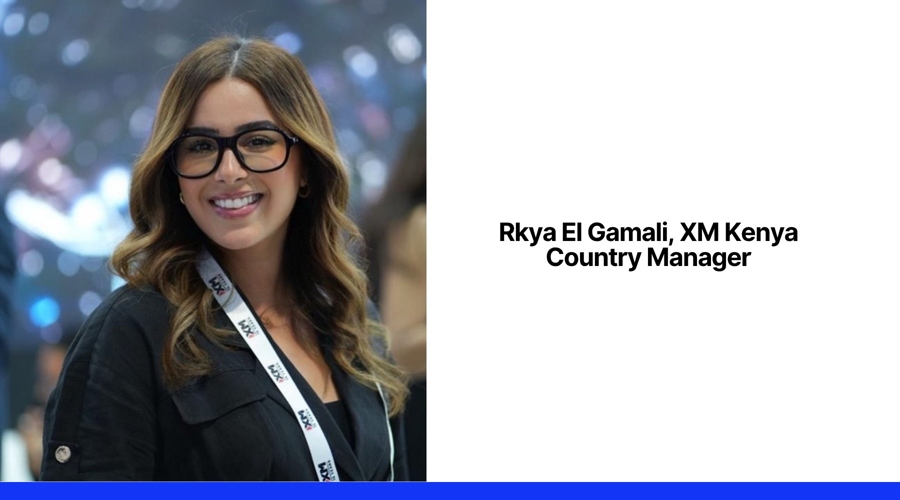
In an interview with Finance Magnates, Rkya El Gamali, XM’s country manager
for Kenya, laid out how the broker plans to turn its Capital Markets Authority
(CMA) license into a long-term franchise anchored in education, localization
and mobile-first infrastructure.
Kenya as a Top-Tier Priority
El Gamali framed Kenya as central to XM’s African strategy,
not just another market on a regional rollout map. “It's not just about the
market size. It's about the sophistication and the maturity of the Kenyan
investor. Timing is key here. So we're seeing a convergence between strong
digital infrastructure, increase in financial literacy and a growing demand for
regulated high quality uh financial services.”
Securing the CMA license earlier this year is, in her words,
“a major milestone for XM” and a deliberate bet on a stable, tech‑driven
financial ecosystem in East Africa. Kenya is “definitely
a top priority market,” she added, even as XM continues
to expand elsewhere on the continent, including South Africa and Nigeria, where
the broker has been present at recent trader expos and fairs.
A central plank of that bet is regulation
Regulation
Like any other industry with a high net worth, the financial services industry is tightly regulated to help curb illicit behavior and manipulation. Each asset class has its own set of protocols put in place to combat their respective forms of abuse.In the foreign exchange space, regulation is assumed by authorities in multiple jurisdictions, though ultimately lacking a binding international order. Who are the Industry’s Leading Regulators?Regulators such as the UK’s Financial Conduct Authority (
Like any other industry with a high net worth, the financial services industry is tightly regulated to help curb illicit behavior and manipulation. Each asset class has its own set of protocols put in place to combat their respective forms of abuse.In the foreign exchange space, regulation is assumed by authorities in multiple jurisdictions, though ultimately lacking a binding international order. Who are the Industry’s Leading Regulators?Regulators such as the UK’s Financial Conduct Authority (
Read this Term. XM already
operates under some of the most demanding frameworks globally – in Australia
and Cyprus among others – and El Gamali stressed that the firm brings the same
“by the book philosophy” into Africa.
Local Licenses Versus Offshore Models
That emphasis on trust is also how she draws a sharp line
between brokers licensed locally and those relying on offshore entities in
jurisdictions such as Seychelles or Comoros.
“A local license will fundamentally change how a broker is
perceived. It allows us uh to operate transparently within the country, engage
directly through different events for example build long-term partnerships with
clients, our consumers in general. So, in a market like Kenya where credibility
is essential, having a local regulatory presence is a clear differentiator
compared to offshore models.”
Read more: XM Secures Kenya CMA License Following Dubai Category 5 Approval
By contrast, offshore models may facilitate client
acquisition but do little to anchor a broker in the market it serves. “When you
have a local regulation, it’s not the same because you can get closer to the
market you are dealing with,” she argued.
Asked whether Kenya’s regulatory environment is prone to
abrupt shifts, a frequent complaint in emerging markets, El Gamali pushed back.
She described the regime as “pretty stable,” with no “crazy changes or sudden
changes” experienced so far, provided brokers commit to doing “everything by
the book” once they opt into licensing.
A Digitally Fluent, Mobile-Money Market
If regulation is the entry ticket, Kenya’s fintech
Fintech
Financial Technology (fintech) is defined as ay technology that is geared towards automating and enhancing the delivery and application of financial services. The origin of the term fintechs can be traced back to the 1990s where it was primarily used as a back-end system technology for renowned financial institutions. However, it has since grown outside the business sector with an increased focus upon consumer services.What Purpose Do Fintechs Serve?The main purpose of fintechs would be to suppl
Financial Technology (fintech) is defined as ay technology that is geared towards automating and enhancing the delivery and application of financial services. The origin of the term fintechs can be traced back to the 1990s where it was primarily used as a back-end system technology for renowned financial institutions. However, it has since grown outside the business sector with an increased focus upon consumer services.What Purpose Do Fintechs Serve?The main purpose of fintechs would be to suppl
Read this Term
infrastructure is the growth engine XM hopes to tap. El Gamali described Kenya
as one of the most advanced mobile money markets globally.”
“Mpesa is integrated
within our system. We have a simplified on boarding processes, and the mobile
first trading environments. Our all-in-one platform has literally been designed
to provide a smooth and intuitive journey reflected in strong global user
ratings. We integrate into existing financial habits.”
Throughout the discussion, El Gamali repeatedly returned to
a theme: every market, even within Africa, is different, and strategy must
start with listening rather than a global playbook.
That philosophy also shapes how XM views Kenya in relation
to more established hubs such as Dubai. Rather than ranking markets by size,
she cast them as distinct “doors that are opening,” each offering opportunities
as long as brokers stay close to their “people” and adapt to local needs.
Localization: Language, Education and Presence
If XM has a single answer to both opportunity and risk in
Kenya, it is localization. El Gamali described it as “rooted in our core
values,” visible in how the company adapts its social media, events and
educational content to each region.
Education is the centrepiece. XM offers “multiple
educational products tailored to different levels, from beginner to advanced
traders,” and sees a direct link between knowledge and confidence: “We believe
that an educated trader is a confident trader.”
“We care deeply about educating people. Which is why we
offer multiple educational products tailored to different levels. I mean from
beginner to advanced traders and uh sometimes you have a language barrier that
can be a problem.”
Continue reading: Capital.com Enters Kenya, Gains Local Licences and Appoints CEO
The goal, she said, is for clients to feel that XM “is not a
foreign platform but a local partner.”
“We believe that localization is really important. It allows
you to circulate your message on a more clear and concise ways. We believe that
an educated trader is a confident trader as well, and our local presence allows
us to deliver that education in a way that truly resonates.”
Competition and User Experience
XM’s CMA approval came as other international brokers, such
as Captal.com, also secured Kenyan licenses, prompting talk of a new wave of
regulated entrants. Yet El Gamali resisted framing the landscape in
conventional competitive terms.
She argued that XM differentiates itself through its product
set, its level of localized support and its commitment to building “long‑lasting
relationships” as a “local
partner” to its Kenyan community.
By leaning into local licensing, mobile‑money
integration and on‑the‑ground education, XM is betting
that a better‑than‑baseline user experience will
carve out what El Gamali called “a category
of your own” in a crowded market.
Measuring Success amid Global Uncertainty
Looking ahead two to three years, El Gamali defined success
less in terms of market share and more in terms of trust and continuity. “If our clients have peace of mind and the tools they need
to succeed, then we have succeeded,” she added. “We are here to stay, growing
alongside the Kenyan investors.”
That optimism extends to geopolitical risk. While
acknowledging that global tensions – including conflicts affecting oil prices –
have driven up costs at the pump in Kenya, she said these have not “directly
impacted” XM’s operations in the country so far.
XM’s newly licensed push into Kenya is built on a simple
thesis: a digitally savvy, regulation-conscious investor base is ready for more
sophisticated, locally embedded trading services, and will reward brokers that
show up on the ground rather than at a distance.
Singapore Summit: Meet the largest APAC brokers you know (and those you still don't!).
In an interview with Finance Magnates, Rkya El Gamali, XM’s country manager
for Kenya, laid out how the broker plans to turn its Capital Markets Authority
(CMA) license into a long-term franchise anchored in education, localization
and mobile-first infrastructure.
Kenya as a Top-Tier Priority
El Gamali framed Kenya as central to XM’s African strategy,
not just another market on a regional rollout map. “It's not just about the
market size. It's about the sophistication and the maturity of the Kenyan
investor. Timing is key here. So we're seeing a convergence between strong
digital infrastructure, increase in financial literacy and a growing demand for
regulated high quality uh financial services.”
Securing the CMA license earlier this year is, in her words,
“a major milestone for XM” and a deliberate bet on a stable, tech‑driven
financial ecosystem in East Africa. Kenya is “definitely
a top priority market,” she added, even as XM continues
to expand elsewhere on the continent, including South Africa and Nigeria, where
the broker has been present at recent trader expos and fairs.
A central plank of that bet is regulation
Regulation
Like any other industry with a high net worth, the financial services industry is tightly regulated to help curb illicit behavior and manipulation. Each asset class has its own set of protocols put in place to combat their respective forms of abuse.In the foreign exchange space, regulation is assumed by authorities in multiple jurisdictions, though ultimately lacking a binding international order. Who are the Industry’s Leading Regulators?Regulators such as the UK’s Financial Conduct Authority (
Like any other industry with a high net worth, the financial services industry is tightly regulated to help curb illicit behavior and manipulation. Each asset class has its own set of protocols put in place to combat their respective forms of abuse.In the foreign exchange space, regulation is assumed by authorities in multiple jurisdictions, though ultimately lacking a binding international order. Who are the Industry’s Leading Regulators?Regulators such as the UK’s Financial Conduct Authority (
Read this Term. XM already
operates under some of the most demanding frameworks globally – in Australia
and Cyprus among others – and El Gamali stressed that the firm brings the same
“by the book philosophy” into Africa.
Local Licenses Versus Offshore Models
That emphasis on trust is also how she draws a sharp line
between brokers licensed locally and those relying on offshore entities in
jurisdictions such as Seychelles or Comoros.
“A local license will fundamentally change how a broker is
perceived. It allows us uh to operate transparently within the country, engage
directly through different events for example build long-term partnerships with
clients, our consumers in general. So, in a market like Kenya where credibility
is essential, having a local regulatory presence is a clear differentiator
compared to offshore models.”
Read more: XM Secures Kenya CMA License Following Dubai Category 5 Approval
By contrast, offshore models may facilitate client
acquisition but do little to anchor a broker in the market it serves. “When you
have a local regulation, it’s not the same because you can get closer to the
market you are dealing with,” she argued.
Asked whether Kenya’s regulatory environment is prone to
abrupt shifts, a frequent complaint in emerging markets, El Gamali pushed back.
She described the regime as “pretty stable,” with no “crazy changes or sudden
changes” experienced so far, provided brokers commit to doing “everything by
the book” once they opt into licensing.
A Digitally Fluent, Mobile-Money Market
If regulation is the entry ticket, Kenya’s fintech
Fintech
Financial Technology (fintech) is defined as ay technology that is geared towards automating and enhancing the delivery and application of financial services. The origin of the term fintechs can be traced back to the 1990s where it was primarily used as a back-end system technology for renowned financial institutions. However, it has since grown outside the business sector with an increased focus upon consumer services.What Purpose Do Fintechs Serve?The main purpose of fintechs would be to suppl
Financial Technology (fintech) is defined as ay technology that is geared towards automating and enhancing the delivery and application of financial services. The origin of the term fintechs can be traced back to the 1990s where it was primarily used as a back-end system technology for renowned financial institutions. However, it has since grown outside the business sector with an increased focus upon consumer services.What Purpose Do Fintechs Serve?The main purpose of fintechs would be to suppl
Read this Term
infrastructure is the growth engine XM hopes to tap. El Gamali described Kenya
as one of the most advanced mobile money markets globally.”
“Mpesa is integrated
within our system. We have a simplified on boarding processes, and the mobile
first trading environments. Our all-in-one platform has literally been designed
to provide a smooth and intuitive journey reflected in strong global user
ratings. We integrate into existing financial habits.”
Throughout the discussion, El Gamali repeatedly returned to
a theme: every market, even within Africa, is different, and strategy must
start with listening rather than a global playbook.
That philosophy also shapes how XM views Kenya in relation
to more established hubs such as Dubai. Rather than ranking markets by size,
she cast them as distinct “doors that are opening,” each offering opportunities
as long as brokers stay close to their “people” and adapt to local needs.
Localization: Language, Education and Presence
If XM has a single answer to both opportunity and risk in
Kenya, it is localization. El Gamali described it as “rooted in our core
values,” visible in how the company adapts its social media, events and
educational content to each region.
Education is the centrepiece. XM offers “multiple
educational products tailored to different levels, from beginner to advanced
traders,” and sees a direct link between knowledge and confidence: “We believe
that an educated trader is a confident trader.”
“We care deeply about educating people. Which is why we
offer multiple educational products tailored to different levels. I mean from
beginner to advanced traders and uh sometimes you have a language barrier that
can be a problem.”
Continue reading: Capital.com Enters Kenya, Gains Local Licences and Appoints CEO
The goal, she said, is for clients to feel that XM “is not a
foreign platform but a local partner.”
“We believe that localization is really important. It allows
you to circulate your message on a more clear and concise ways. We believe that
an educated trader is a confident trader as well, and our local presence allows
us to deliver that education in a way that truly resonates.”
Competition and User Experience
XM’s CMA approval came as other international brokers, such
as Captal.com, also secured Kenyan licenses, prompting talk of a new wave of
regulated entrants. Yet El Gamali resisted framing the landscape in
conventional competitive terms.
She argued that XM differentiates itself through its product
set, its level of localized support and its commitment to building “long‑lasting
relationships” as a “local
partner” to its Kenyan community.
By leaning into local licensing, mobile‑money
integration and on‑the‑ground education, XM is betting
that a better‑than‑baseline user experience will
carve out what El Gamali called “a category
of your own” in a crowded market.
Measuring Success amid Global Uncertainty
Looking ahead two to three years, El Gamali defined success
less in terms of market share and more in terms of trust and continuity. “If our clients have peace of mind and the tools they need
to succeed, then we have succeeded,” she added. “We are here to stay, growing
alongside the Kenyan investors.”
That optimism extends to geopolitical risk. While
acknowledging that global tensions – including conflicts affecting oil prices –
have driven up costs at the pump in Kenya, she said these have not “directly
impacted” XM’s operations in the country so far.