ASEAN stocks are distributing massive dividends to the investors. But investors must be cautious, as some dividend basket strategies can be risky. Paul Golden weighs in.
He also explores the frustration of UK investors with share buybacks and the increased interest in defence stocks.
Flags of ASEAN country members
It’s Payback Time for Asian Stockholders…
For years, ASEAN has been framed almost exclusively as a growth story. Favourable demographics, rising consumption and the relocation of manufacturing have positioned Southeast Asia as one of the most dynamic emerging regions in the world.
But as the region’s economy matures, a new narrative is taking shape. ASEAN is no longer just about growth; it is increasingly becoming a compelling destination for dividend seekers.
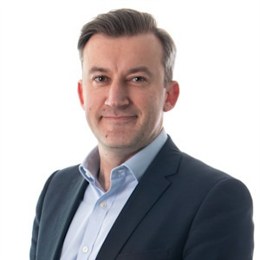
Miko Huang, Senior Manager, Equity Index Product Management APAC at London Stock Exchange Group
That is the view of Miko Huang, Senior Manager, Equity Index Product Management APAC at London Stock Exchange Group, who notes that the FTSE ASEAN Index, which captures the large- and mid-cap companies listed in the five ASEAN markets (Singapore, Malaysia, Indonesia, Thailand and the Philippines), has delivered a 10-year average dividend yield of 3.57%.
This exceeds the yields of many major global benchmarks, including the FTSE Asia Pacific ex Japan Australia and New Zealand Index (2.49%), the FTSE USA Index (1.68%), the FTSE Developed Europe Index (3.18%) and the FTSE Emerging Index (2.9%).
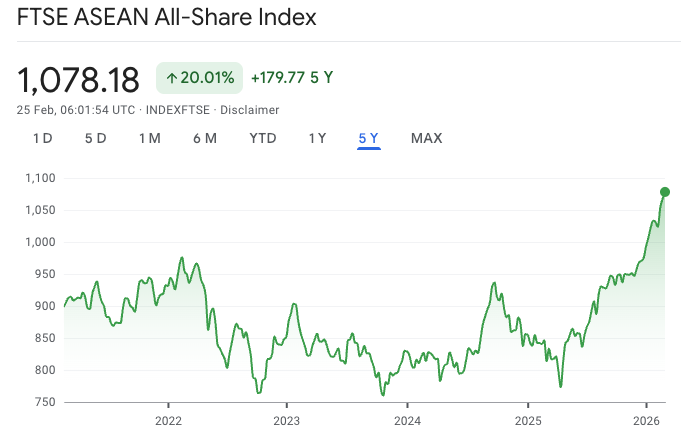
Over the last five years, the FTSE ASEAN Index has recorded steady growth in cash flow per share, and the region’s average dividend payout ratio during this period also stands out relative to global peers. The forward 12-month dividend yield remains attractive compared with other major markets worldwide, highlighting the region’s appeal for income-oriented investors.
FTSE ASEAN Index (Source: Google Finance)
As of the end of last year, more than 60% of the large- and mid-cap companies in the FTSE ASEAN Index offered dividend yields above 3%, reflecting a management culture that focuses on shareholder returns.
However, Huang cautions that not all dividend strategies are created equal. Traditional dividend approaches often focus on the highest-yielding stocks, which can lead to excessive portfolio concentration and above-average exposure to smaller companies or businesses with weakening fundamentals.
“Many dividend indices simply rank stocks by yield and pick the companies at the top of the ranking,” she says. “The problem with that approach is that very high yields are often a warning sign. They can come from smaller or distressed companies where the share price has already fallen sharply, creating what we call a ‘yield trap’. While the yield may appear attractive, it is often unsustainable, as the share price fall is an early indicator of a future dividend cut.”
…While Their UK Counterparts Are Frustrated by Buybacks
According to Computershare’s Q4 2025 UK Dividend Monitor, UK dividends fell 0.9% to £87.5 billion on a headline basis in 2025, while one-off special dividends of £2.9 billion were half the 10-year average.
Share buybacks reached a provisional £63.6 billion in 2025, more than double the 2019 level, while dividends have fallen by 13% over the same period. Share buybacks have slowed dividend growth by 3% per annum since 2019 by diverting cash to repurchases rather than distributions.
Mark Cleland, CEO of Governance Services at Computershare
Mark Cleland, CEO of Governance Services at Computershare, observes that for 2026 there are relatively few major growth drivers to push dividends higher. Declines in mining payouts are likely to slow further or stop altogether, banks are likely to continue to deliver modest growth, and energy payouts are likely to be flat.
Across the wider market, Computershare projects steady, low single-digit growth. Meanwhile, the dampening effect of share buybacks and the strong pound is set to continue (if sterling maintains its current rate), though the exchange rate effect will weaken as the year progresses.
“For Q1 2026, Next has already declared a very large payment of £3.60 per share, reflecting both very strong trading and associated cash generation, as well as some land disposals,” says Cleland. “This will ensure the Q1 2026 special dividend total easily exceeds Q1 2025, though we assume for now that the full year will be roughly flat, given the unpredictable nature of this form of payout.”
No Time to Be Squeamish About Defence Stocks
The phrase “buy when there is blood in the streets, even if the blood is your own” is a contrarian investment maxim frequently attributed to Baron Rothschild, who allegedly made a fortune buying during the panic following the Battle of Waterloo.
It means buying assets when market fear is at its highest, others are panic-selling, and prices are falling, even if your own investments are losing value.
Sadly, there has been blood in the streets in too many parts of the world recently. In particular, the conflict in Ukraine (and criticism of Europe’s commitment to its armed forces from members of the Trump administration) has focused attention on Europe’s ability to defend its borders.
Until relatively recently, investors were reluctant to buy defence stocks in large volumes, partly due to ethical concerns. But inflows rose significantly following Russia’s invasion of its south-west neighbour in 2022 and, after a brief lull, rose again when the US President made it clear that he expected NATO countries to make a more substantial contribution to the defence of the continent.
Hargreaves Lansdown’s December 2025 Sustainable Investor Survey recorded a sharp fall in the number of investors who excluded weapons from their allocations. Many European investors have re-evaluated how investing in defence stocks aligns with ESG commitments, leading defence sector-focused funds to reach an all-time high.
The European Commission’s ReArm Europe Plan/Readiness 2030, presented in March 2025, proposes leveraging over €800 billion in defence spending through national fiscal flexibility, a new €150 billion loan instrument (SAFE) for joint procurement, potential redirection of cohesion funds, and expanded European Investment Bank support.
Thematic European ETFs have also benefited, with $6.3 billion in positive net flows into global defence last year, accounting for 40% of all new money that moved into this sector in 2025. European defence was the next highest contributor to new flows, representing an additional 30%.
It’s Payback Time for Asian Stockholders…
For years, ASEAN has been framed almost exclusively as a growth story. Favourable demographics, rising consumption and the relocation of manufacturing have positioned Southeast Asia as one of the most dynamic emerging regions in the world.
But as the region’s economy matures, a new narrative is taking shape. ASEAN is no longer just about growth; it is increasingly becoming a compelling destination for dividend seekers.
Miko Huang, Senior Manager, Equity Index Product Management APAC at London Stock Exchange Group
That is the view of Miko Huang, Senior Manager, Equity Index Product Management APAC at London Stock Exchange Group, who notes that the FTSE ASEAN Index, which captures the large- and mid-cap companies listed in the five ASEAN markets (Singapore, Malaysia, Indonesia, Thailand and the Philippines), has delivered a 10-year average dividend yield of 3.57%.
This exceeds the yields of many major global benchmarks, including the FTSE Asia Pacific ex Japan Australia and New Zealand Index (2.49%), the FTSE USA Index (1.68%), the FTSE Developed Europe Index (3.18%) and the FTSE Emerging Index (2.9%).
Over the last five years, the FTSE ASEAN Index has recorded steady growth in cash flow per share, and the region’s average dividend payout ratio during this period also stands out relative to global peers. The forward 12-month dividend yield remains attractive compared with other major markets worldwide, highlighting the region’s appeal for income-oriented investors.
FTSE ASEAN Index (Source: Google Finance)
As of the end of last year, more than 60% of the large- and mid-cap companies in the FTSE ASEAN Index offered dividend yields above 3%, reflecting a management culture that focuses on shareholder returns.
However, Huang cautions that not all dividend strategies are created equal. Traditional dividend approaches often focus on the highest-yielding stocks, which can lead to excessive portfolio concentration and above-average exposure to smaller companies or businesses with weakening fundamentals.
“Many dividend indices simply rank stocks by yield and pick the companies at the top of the ranking,” she says. “The problem with that approach is that very high yields are often a warning sign. They can come from smaller or distressed companies where the share price has already fallen sharply, creating what we call a ‘yield trap’. While the yield may appear attractive, it is often unsustainable, as the share price fall is an early indicator of a future dividend cut.”
…While Their UK Counterparts Are Frustrated by Buybacks
According to Computershare’s Q4 2025 UK Dividend Monitor, UK dividends fell 0.9% to £87.5 billion on a headline basis in 2025, while one-off special dividends of £2.9 billion were half the 10-year average.
Share buybacks reached a provisional £63.6 billion in 2025, more than double the 2019 level, while dividends have fallen by 13% over the same period. Share buybacks have slowed dividend growth by 3% per annum since 2019 by diverting cash to repurchases rather than distributions.
Mark Cleland, CEO of Governance Services at Computershare
Mark Cleland, CEO of Governance Services at Computershare, observes that for 2026 there are relatively few major growth drivers to push dividends higher. Declines in mining payouts are likely to slow further or stop altogether, banks are likely to continue to deliver modest growth, and energy payouts are likely to be flat.
Across the wider market, Computershare projects steady, low single-digit growth. Meanwhile, the dampening effect of share buybacks and the strong pound is set to continue (if sterling maintains its current rate), though the exchange rate effect will weaken as the year progresses.
“For Q1 2026, Next has already declared a very large payment of £3.60 per share, reflecting both very strong trading and associated cash generation, as well as some land disposals,” says Cleland. “This will ensure the Q1 2026 special dividend total easily exceeds Q1 2025, though we assume for now that the full year will be roughly flat, given the unpredictable nature of this form of payout.”
No Time to Be Squeamish About Defence Stocks
The phrase “buy when there is blood in the streets, even if the blood is your own” is a contrarian investment maxim frequently attributed to Baron Rothschild, who allegedly made a fortune buying during the panic following the Battle of Waterloo.
It means buying assets when market fear is at its highest, others are panic-selling, and prices are falling, even if your own investments are losing value.
Sadly, there has been blood in the streets in too many parts of the world recently. In particular, the conflict in Ukraine (and criticism of Europe’s commitment to its armed forces from members of the Trump administration) has focused attention on Europe’s ability to defend its borders.
Until relatively recently, investors were reluctant to buy defence stocks in large volumes, partly due to ethical concerns. But inflows rose significantly following Russia’s invasion of its south-west neighbour in 2022 and, after a brief lull, rose again when the US President made it clear that he expected NATO countries to make a more substantial contribution to the defence of the continent.
Hargreaves Lansdown’s December 2025 Sustainable Investor Survey recorded a sharp fall in the number of investors who excluded weapons from their allocations. Many European investors have re-evaluated how investing in defence stocks aligns with ESG commitments, leading defence sector-focused funds to reach an all-time high.
The European Commission’s ReArm Europe Plan/Readiness 2030, presented in March 2025, proposes leveraging over €800 billion in defence spending through national fiscal flexibility, a new €150 billion loan instrument (SAFE) for joint procurement, potential redirection of cohesion funds, and expanded European Investment Bank support.
Thematic European ETFs have also benefited, with $6.3 billion in positive net flows into global defence last year, accounting for 40% of all new money that moved into this sector in 2025. European defence was the next highest contributor to new flows, representing an additional 30%.
Paul Golden is an experienced freelance financial journalist with a strong institutional background. Over the past two decades, he has written for globally recognised financial publications, covering topics such as market structure, regulation, trading behaviour, and economic policy.
Spotware Taps 11-Million-User Base To Route Leads to Participating CFD Brokers
Hola Prime Review: What You Need to Know | Full Breakdown by Finance Magnates
Hola Prime Review: What You Need to Know | Full Breakdown by Finance Magnates
In this video, we review @HolaPrime_Global, a proprietary trading firm offering evaluation programs and performance-based payouts in simulated market environments.
We cover how the challenge model works, including account types, profit splits (up to 95%), trading rules, and what it takes to reach a funded account. You’ll also learn about available platforms like MT4, MT5, cTrader, and more, along with insights into payouts, support, and trading conditions.
Watch the full video to see if Hola Prime fits your trading style.
📣 Stay up to date with the latest in finance and trading. Follow Finance Magnates for industry news, insights, and global event coverage.
Connect with us:
🔗 LinkedIn: /financemagnates
👍 Facebook: /financemagnates
📸 Instagram: https://www.instagram.com/financemagnates
🐦 X: https://x.com/financemagnates
🎥 TikTok: https://www.tiktok.com/tag/financemagnates
▶️ YouTube: /@financemagnates_official
#HolaPrime #PropFirm #Trading #FinanceMagnates #Forex #FuturesTrading #TradingReview #PropFirmReview
In this video, we review @HolaPrime_Global, a proprietary trading firm offering evaluation programs and performance-based payouts in simulated market environments.
We cover how the challenge model works, including account types, profit splits (up to 95%), trading rules, and what it takes to reach a funded account. You’ll also learn about available platforms like MT4, MT5, cTrader, and more, along with insights into payouts, support, and trading conditions.
Watch the full video to see if Hola Prime fits your trading style.
📣 Stay up to date with the latest in finance and trading. Follow Finance Magnates for industry news, insights, and global event coverage.
Connect with us:
🔗 LinkedIn: /financemagnates
👍 Facebook: /financemagnates
📸 Instagram: https://www.instagram.com/financemagnates
🐦 X: https://x.com/financemagnates
🎥 TikTok: https://www.tiktok.com/tag/financemagnates
▶️ YouTube: /@financemagnates_official
#HolaPrime #PropFirm #Trading #FinanceMagnates #Forex #FuturesTrading #TradingReview #PropFirmReview
Axi Winner Spotlight 🏆 | Global Most Innovative Broker 2025 #Innovation #Trading #Fintech #Broker
Axi Winner Spotlight 🏆 | Global Most Innovative Broker 2025 #Innovation #Trading #Fintech #Broker
Axi takes the spotlight at the Finance Magnates Awards, winning Global Most Innovative Broker 2025.
Olivia Xenofontos and Ivanna Openko share how the team will feel: proud, motivated, and ready to keep delivering.
They also describe the night as well-organized, focused, and enjoyable for all.
👉 Be part of FM Awards 2026.
Axi takes the spotlight at the Finance Magnates Awards, winning Global Most Innovative Broker 2025.
Olivia Xenofontos and Ivanna Openko share how the team will feel: proud, motivated, and ready to keep delivering.
They also describe the night as well-organized, focused, and enjoyable for all.
👉 Be part of FM Awards 2026.
Recognition that matters.
Built on transparency.
Driven by the industry.
The Finance Magnates Awards 2026.
Nominations are now open.
🔗 https://awards.financemagnates.com/?utm_source=SM&utm_medium=social&utm_campaign=recognition-matters
Recognition that matters.
Built on transparency.
Driven by the industry.
The Finance Magnates Awards 2026.
Nominations are now open.
🔗 https://awards.financemagnates.com/?utm_source=SM&utm_medium=social&utm_campaign=recognition-matters
Tickmill Winner Spotlight | Broker of the Year 2025 (LATAM) 🏆 | Finance Magnates Awards #Trading
Tickmill Winner Spotlight | Broker of the Year 2025 (LATAM) 🏆 | Finance Magnates Awards #Trading
What helped Tickmill stand out this year?
In this Winner Spotlight, Johnny Khalil, Executive Director at Tickmill Europe, shares how listening closely to clients and delivering strong trading conditions made the difference.
A big thank you to the community whose support continues to drive progress every day.
👉 Think your brand has what it takes? Nominate for the 2026 Finance Magnates Awards: https://awards.financemagnates.com/#nominate
What helped Tickmill stand out this year?
In this Winner Spotlight, Johnny Khalil, Executive Director at Tickmill Europe, shares how listening closely to clients and delivering strong trading conditions made the difference.
A big thank you to the community whose support continues to drive progress every day.
👉 Think your brand has what it takes? Nominate for the 2026 Finance Magnates Awards: https://awards.financemagnates.com/#nominate
CMC Markets’ Artur Delijergijevs on Metals Demand, Volatility, & Stable Execution
CMC Markets’ Artur Delijergijevs on Metals Demand, Volatility, & Stable Execution
In this exclusive Executive Interview, Finance Magnates speaks with Artur Delijergijevs, Head of Systematic Market Making at CMC Markets, about the current state of metals demand and market volatility.
Delijergijevs offers a desk-level view on:
- Metals Demand: Why metals are seeing the strongest demand from both retail and institutional clients right now.
- The Safe-Haven Debate: Questioning whether gold still fits the classic safe-haven definition given large daily price movements.
- Volatile Market Prep: How a market-making desk prepares its systems and pricing for stressed market conditions and high-impact economic events.
- Hybrid Execution: Why the best execution model combines electronic speed with human relationship support, especially during volatility.
- AI in Workflow: Where CMC Markets is integrating machine learning for risk management and pricing, and the limitations of AI during stressed markets.
- Dubai's Role: The strategic importance of Dubai’s location for covering global trading sessions across Asia, Europe, and the US.
Watch to understand how CMC Markets maintains stable pricing and reliable execution quality in high-volatility environments.
#CMCmarkets #forex #metals #gold #trading #volatility #MarketMaking #iFXDubai #FinanceMagnates #Finance #Fintech #Execution #AlgorithmicTrading #RiskManagement
In this exclusive Executive Interview, Finance Magnates speaks with Artur Delijergijevs, Head of Systematic Market Making at CMC Markets, about the current state of metals demand and market volatility.
Delijergijevs offers a desk-level view on:
- Metals Demand: Why metals are seeing the strongest demand from both retail and institutional clients right now.
- The Safe-Haven Debate: Questioning whether gold still fits the classic safe-haven definition given large daily price movements.
- Volatile Market Prep: How a market-making desk prepares its systems and pricing for stressed market conditions and high-impact economic events.
- Hybrid Execution: Why the best execution model combines electronic speed with human relationship support, especially during volatility.
- AI in Workflow: Where CMC Markets is integrating machine learning for risk management and pricing, and the limitations of AI during stressed markets.
- Dubai's Role: The strategic importance of Dubai’s location for covering global trading sessions across Asia, Europe, and the US.
Watch to understand how CMC Markets maintains stable pricing and reliable execution quality in high-volatility environments.
#CMCmarkets #forex #metals #gold #trading #volatility #MarketMaking #iFXDubai #FinanceMagnates #Finance #Fintech #Execution #AlgorithmicTrading #RiskManagement