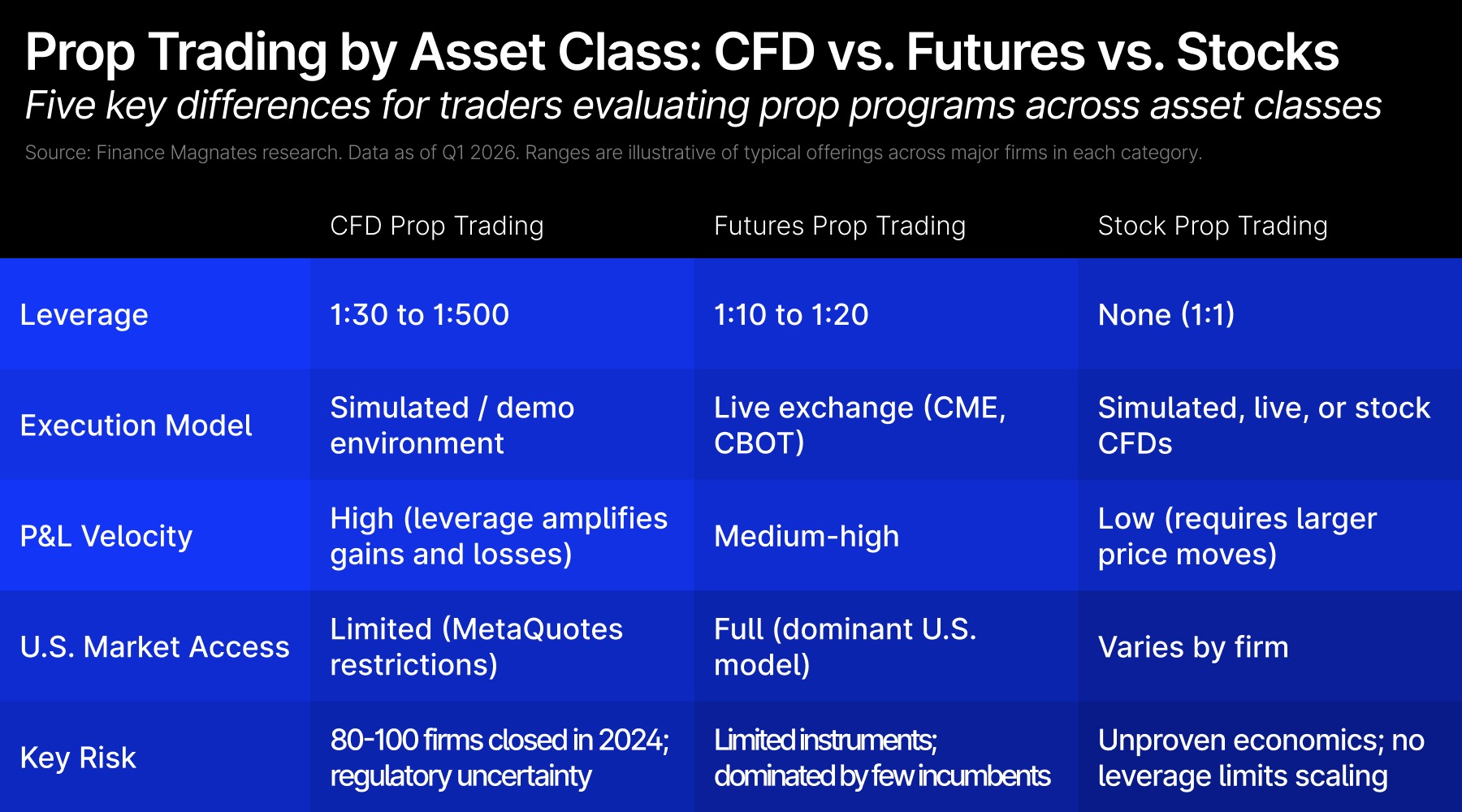
According to Finance Magnates Intelligence, up to 100 prop trading companies did not make it last year.
“I expect many more prop firms to close” in 2025, warned Justin Hertzberg, the CEO of FPFX.
While smaller players struggle, industry leaders are strengthening their positions through strategic acquisitions and diversification.
The prop
trading industry has just witnessed its most dramatic shake-up yet. Over the
past year, between 80 and 100 proprietary trading firms have shut down,
challenge pass rates have plummeted, and the average trader’s investment has
dropped by 50%. Yet, amid the chaos, a few dominant players are emerging
stronger than ever.
Even 100 Prop Firms Gone
in 2024
According
to estimates gathered by Finance Magnates Intelligence, between 80 and
100 proprietary trading firms may have disappeared from the market in 2024. This aligns with data presented by FunderPro mid-year, which estimated that the number had already reached around 50 firms at that time.
At the
heart of this upheaval is a single industry-altering event—MetaQuotes' decision
to step back from supporting prop firms. This move sent shockwaves through the
market, forcing traders and firms to rethink their strategies, diversify
platforms, and ultimately accelerate industry consolidation.
“I expect
many more prop firms to close, cease or halt operations and/or find themselves
on the wrong end of lawsuits and social media attacks,” Justin Hertzberg, the
CEO of FPFX warned.
Meanwhile,
pass rates have fallen, and payouts have tightened—suggesting
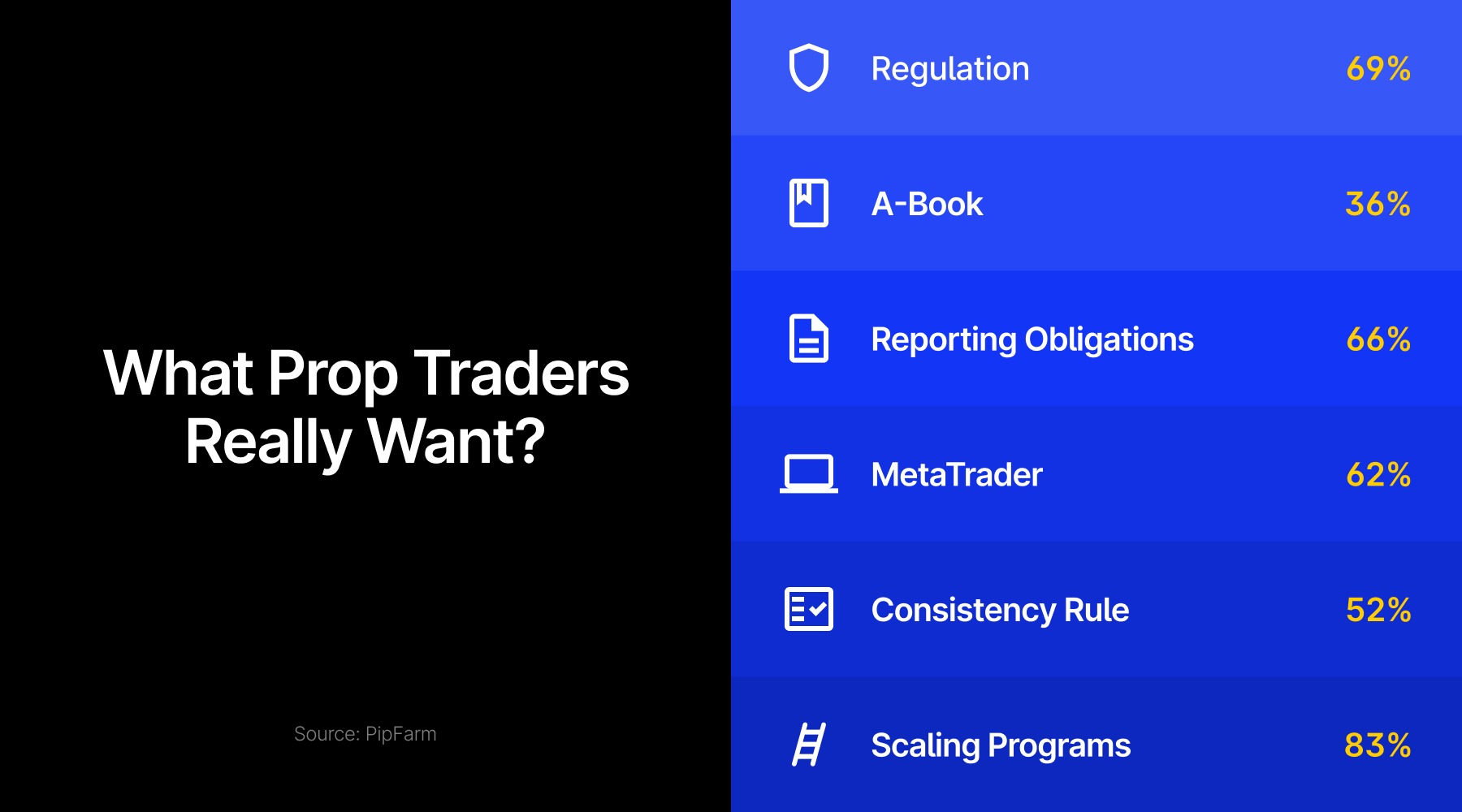
an industry favoring survival over speculation. The profile of the “average prop trading Joe” has changed, and we have the data:
Source: Finance Magnates Intelligence
Is prop
trading still the high-growth phenomenon it once was? Who are the winners and
losers in this shifting landscape? And what does this mean for retail traders?
The prop
trading industry has just witnessed its most dramatic shake-up yet. Over the
past year, between 80 and 100 proprietary trading firms have shut down,
challenge pass rates have plummeted, and the average trader’s investment has
dropped by 50%. Yet, amid the chaos, a few dominant players are emerging
stronger than ever.
Even 100 Prop Firms Gone
in 2024
According
to estimates gathered by Finance Magnates Intelligence, between 80 and
100 proprietary trading firms may have disappeared from the market in 2024. This aligns with data presented by FunderPro mid-year, which estimated that the number had already reached around 50 firms at that time.
At the
heart of this upheaval is a single industry-altering event—MetaQuotes' decision
to step back from supporting prop firms. This move sent shockwaves through the
market, forcing traders and firms to rethink their strategies, diversify
platforms, and ultimately accelerate industry consolidation.
“I expect
many more prop firms to close, cease or halt operations and/or find themselves
on the wrong end of lawsuits and social media attacks,” Justin Hertzberg, the
CEO of FPFX warned.
Meanwhile,
pass rates have fallen, and payouts have tightened—suggesting
an industry favoring survival over speculation. The profile of the “average prop trading Joe” has changed, and we have the data:
Source: Finance Magnates Intelligence
Is prop
trading still the high-growth phenomenon it once was? Who are the winners and
losers in this shifting landscape? And what does this mean for retail traders?
Damian's adventure with financial markets began at the Cracow University of Economics, where he obtained his MA in finance and accounting. Starting from the retail trader perspective, he collaborated with brokerage houses and financial portals in Poland as an independent editor and content manager. His adventure with Finance Magnates began in 2016, where he is working as a business intelligence analyst.
In this conversation, we sit down with Drew Niv, CSO at ATFX Connect and one of the most influential figures in modern FX.
We speak about market structure, the institutional view on liquidity, and the sharp rise of prop trading, a sector Drew has been commenting on in recent months. Drew explains why he once dismissed prop trading, why his view changed, and what he now thinks the model means for brokers, clients and risk managers.
We explore subscription-fee dependency, the high reneging rate, and the long-term challenge: how brokers can build a more stable and honest version of the model. Drew also talks about the traffic advantage standalone prop firms have built and why brokers may still win in the long run if they take the right approach.
In this conversation, we sit down with Drew Niv, CSO at ATFX Connect and one of the most influential figures in modern FX.
We speak about market structure, the institutional view on liquidity, and the sharp rise of prop trading, a sector Drew has been commenting on in recent months. Drew explains why he once dismissed prop trading, why his view changed, and what he now thinks the model means for brokers, clients and risk managers.
We explore subscription-fee dependency, the high reneging rate, and the long-term challenge: how brokers can build a more stable and honest version of the model. Drew also talks about the traffic advantage standalone prop firms have built and why brokers may still win in the long run if they take the right approach.
Executive Interview | Remonda Z. Kirketerp Møller| CEO & Founder Muinmos | FMLS:25
In this interview, Remonda Z. Kirketerp Møller, founder of Muinmos, breaks down the state of AI in regtech and what responsible adoption really looks like for brokers. We talk about rising fragmentation, the pressures around compliance accuracy, and why most firms are still in the early stages of AI maturity.
Ramanda also shares insights on regulator sandboxes, shifting expectations around accountability, and the current reality of MiCA licensing and passporting in Europe.
A concise look at where compliance, onboarding, and AI-driven processes are heading next.
In this interview, Remonda Z. Kirketerp Møller, founder of Muinmos, breaks down the state of AI in regtech and what responsible adoption really looks like for brokers. We talk about rising fragmentation, the pressures around compliance accuracy, and why most firms are still in the early stages of AI maturity.
Ramanda also shares insights on regulator sandboxes, shifting expectations around accountability, and the current reality of MiCA licensing and passporting in Europe.
A concise look at where compliance, onboarding, and AI-driven processes are heading next.
In this conversation, we speak with Aydin Bonabi, CEO and co-founder of Surveill, a firm focused on fraud detection and AI-driven compliance tools for financial institutions.
We start with Aydin’s view of the Summit and the challenges brokers face as fraud tactics grow more complex. He explains how firms can stay ahead through real-time signals, data patterns, and early-stage detection.
We also talk about AI training and why compliance teams often struggle to keep models accurate, fair, and aligned with regulatory expectations. Aydin breaks down what “good” AI training looks like inside a financial environment, including the importance of clean data, domain expertise, and human oversight.
He closes with a clear message: fraud is scaling, and so must the tools that stop it.
In this conversation, we speak with Aydin Bonabi, CEO and co-founder of Surveill, a firm focused on fraud detection and AI-driven compliance tools for financial institutions.
We start with Aydin’s view of the Summit and the challenges brokers face as fraud tactics grow more complex. He explains how firms can stay ahead through real-time signals, data patterns, and early-stage detection.
We also talk about AI training and why compliance teams often struggle to keep models accurate, fair, and aligned with regulatory expectations. Aydin breaks down what “good” AI training looks like inside a financial environment, including the importance of clean data, domain expertise, and human oversight.
He closes with a clear message: fraud is scaling, and so must the tools that stop it.
Exness expands its presence in Africa: Inside our interview with Paul Margarites in Cape Town
Finance Magnates met with Paul Margarites, Exness regional commercial director for Sub-Saharan Africa, during a visit to the firm’s office opening in Cape Town. In this talk, led by Andrea Badiola Mateos, Co-CEO at Finance Magnates, Paul shares views on the South African trading space, local user behavior, mobile trends, regulation, team growth, and how Exness plans to grow in more markets across the region. @Exness
Read the article at: https://www.financemagnates.com/thought-leadership/exness-expands-its-presence-in-africa-inside-our-interview-with-paul-margarites/
#exness #financemagnates #exnesstrading #CFDtrading #tradeonline #africanews #capetown
Finance Magnates met with Paul Margarites, Exness regional commercial director for Sub-Saharan Africa, during a visit to the firm’s office opening in Cape Town. In this talk, led by Andrea Badiola Mateos, Co-CEO at Finance Magnates, Paul shares views on the South African trading space, local user behavior, mobile trends, regulation, team growth, and how Exness plans to grow in more markets across the region. @Exness
Read the article at: https://www.financemagnates.com/thought-leadership/exness-expands-its-presence-in-africa-inside-our-interview-with-paul-margarites/
#exness #financemagnates #exnesstrading #CFDtrading #tradeonline #africanews #capetown
Executive Interview | Jas Shah | FMLS:25
Interview with Jas Shah
Builder | Adviser | Fintech Writer | Product Strategist
In this episode, Jonathan Fine sat down with Jas Shah, one of the most thoughtful voices in global fintech. Known for his work across advisory, product, stablecoins, and his widely read writing, Jas brings a rare combination of industry insight and plain-spoken clarity.
We talk about his first impression of the Summit, the projects that keep him busy today, and how they connect to the stablecoin panel he joined. Jas shares his view on the link between fintech, wealthtech and retail brokers, especially as firms like Revolut, eToro and Trading212 blur long-standing lines in the market.
We also explore what stablecoin adoption might look like for retail investment platforms, including a few product and UX angles that are not obvious at first glance.
To close, Jas explains how he thinks about writing, and how he approaches “shipping” pieces that spark debate across the industry.
Interview with Jas Shah
Builder | Adviser | Fintech Writer | Product Strategist
In this episode, Jonathan Fine sat down with Jas Shah, one of the most thoughtful voices in global fintech. Known for his work across advisory, product, stablecoins, and his widely read writing, Jas brings a rare combination of industry insight and plain-spoken clarity.
We talk about his first impression of the Summit, the projects that keep him busy today, and how they connect to the stablecoin panel he joined. Jas shares his view on the link between fintech, wealthtech and retail brokers, especially as firms like Revolut, eToro and Trading212 blur long-standing lines in the market.
We also explore what stablecoin adoption might look like for retail investment platforms, including a few product and UX angles that are not obvious at first glance.
To close, Jas explains how he thinks about writing, and how he approaches “shipping” pieces that spark debate across the industry.