
The company's core is formed by a big part of the team that co-founded FX Solutions, headed by former co-CEO Thomas Plaut and principle architect of the Global Trading Solutions (GTS) platform Ronald Andriulli.
The company has gained FCA authorisation only last week and its WorldWideMarkets UK website is already operational. While the company registered and regulated in the BVI named WorldWide Markets Ltd. will continue the firm's multi-asset brokerage business that includes US exchange traded stocks aside from forex and CFD offerings, the new FCA regulated company under the same brand will cater to professional clients.
Professional Clients Eligibility
In order to classify as a Professional Client or an Eligible Counter Party clients of the company will have to meet at least two of the three requirements under FCA regulations: to have carried out transactions in significant size on a given relevant market at an average frequency of 10 or more per quarter over the past year; to have an initial financial instrument portfolio including cash deposits and financial instruments size exceeding €500,000; or to have worked in the financial sector for at least a year in a professional position, which requires knowledge of the transactions envisaged after the account opening.
While the company is starting its UK business focusing on professional clients, there are no regulatory hurdles for it to later expand its offerings to retail traders as well. The only necessary conditions would be to register and contribute to the FCA's Investor Compensation Scheme.
Several of his former associates at FX Solutions have followed Mr Plaut to WWM, namely the principal architect of the company's Global Trading System (GTS) platform Ronald Andriulli. He is currently serving as Chief Technology Officer at WWM and is responsible for the development of the company's proprietary AlphaTrader platform.
WorldWideMarkets Online Trading Ltd will also offer white-label solutions through Currenex, and the above mentioned internally developed AlphaTrader platform. Mr Andriulli has been at the core behind the success of GTS PRO and FX Solutions - the platform has helped push FX Solutions LLC to become one of the fastest growing private companies for three consecutive years ranking amongst the top 500 fastest growing U.S. corporations as stated by Inc 500 magazine. At the time, according to Forex Magnates research, WWM's CEO Thomas Plaut was instrumental in securing $100 million in funding from U.S.-based private equity firm Francisco Partners.
Mr Plaut's other successful venture Financial Labs LLC, which he co-founded with Aaron Sokasian, who served as CEO, had been taken over by Bank of America (BoA) in 2006. The company was the first non-bank entity to engage in algorithmic trading through EBS' API, and according to information obtained by Forex Magnates reporters its trading activities were totaling close to $6 billion daily.
After the acquisition, Mr Sokasian was serving as Head of Quantitative strategies for FX and later on in the bank's Interest Rates division. He went on to head the development of Bank of America's FX algorithmic trading and several risk systems. Mr Sokasian has rejoined his former associate and started contributing with his risk management expertise to the newly formed WorldWideMarkets brokerage.
Comments on Risk-Management and its Effect on Dealing
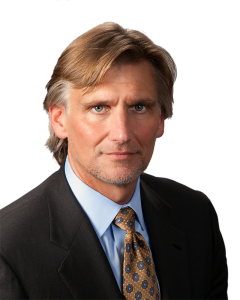
Thomas Plaut, Director,WorldWideMarkets Online Trading Ltd
After publication Forex Magnates reporters received comments from Mr. Plaut, he said “Our customers demand execution that is friction-free. That is why we do not run an A and B book risk management strategy. Dividing clients into winners, the A-book, and losers, the B-book, is a subjective risk management strategy based on anecdotal data which leads to poor economic performance for the client and the firm. This commonly used risk management strategy is at the crux of poor execution and asymmetrical slippage. We deploy a risk management strategy that creates a portfolio of currencies based on the net sum of all of our client’s exposure. The client’s individual trades become a small piece of a larger portfolio. The entire portfolio is analyzed in real time and assigned a dollar value-at-risk (VaR). If the dollar VaR is too great, corrective action is taken in the market place to bring the dollar VaR back to a satisfactory level. The A-book, B-book strategy creates a highly suspect class of traders whose trades need to be manually executed or flagged, and an underclass of traders, the B-book, whose trades can be ignored."
Mr. Plaut concluded with his perspective on what's important about risk-management as it applies to the customer experience,“Traders are routinely rotated in-and-out of the A and B books; consequently, a trader’s execution will vary wildly based on the profitability of his last few trades- these results are nothing more than random data. The B-book clients get good execution until they become A-book clients, and A-book clients get poor execution until they are placed back into the B-book. The bottom line is the A and B book risk management strategy treats traders differently based on historical trading results, or who they are as individuals, while the portfolio approach does not treat the individual traders differently from one another, it focuses on how their trades - post-execution - effects the entire portfolio of risk. At the end of the day, all that should matter to a trader is his effective-spread over a long series of trades. The effective spread includes re-quotes, rollovers, slippage and commissions. A single re-quote can turn a 1-pip published spread into a 25-pip effective spread. I have been on the receiving end of many 50-51 published spreads, only to be requoted 25-26 a millisecond later. I had to hit the 25 bid, which created an effective spread of 26-pips (25-51); however, the broker tried to tell me it was a 1-pip spread. Traders need to be careful not to fall prey to brokers who advertise ridiculously low published spreads and instead focus on the only spread that counts, which is the effective-spread. ‘Caveat emptor’ applies to the Forex markets as much as it does to buying a product or service.”
The company has gained FCA authorisation only last week and its WorldWideMarkets UK website is already operational. While the company registered and regulated in the BVI named WorldWide Markets Ltd. will continue the firm's multi-asset brokerage business that includes US exchange traded stocks aside from forex and CFD offerings, the new FCA regulated company under the same brand will cater to professional clients.
Professional Clients Eligibility
In order to classify as a Professional Client or an Eligible Counter Party clients of the company will have to meet at least two of the three requirements under FCA regulations: to have carried out transactions in significant size on a given relevant market at an average frequency of 10 or more per quarter over the past year; to have an initial financial instrument portfolio including cash deposits and financial instruments size exceeding €500,000; or to have worked in the financial sector for at least a year in a professional position, which requires knowledge of the transactions envisaged after the account opening.
While the company is starting its UK business focusing on professional clients, there are no regulatory hurdles for it to later expand its offerings to retail traders as well. The only necessary conditions would be to register and contribute to the FCA's Investor Compensation Scheme.
Several of his former associates at FX Solutions have followed Mr Plaut to WWM, namely the principal architect of the company's Global Trading System (GTS) platform Ronald Andriulli. He is currently serving as Chief Technology Officer at WWM and is responsible for the development of the company's proprietary AlphaTrader platform.
WorldWideMarkets Online Trading Ltd will also offer white-label solutions through Currenex, and the above mentioned internally developed AlphaTrader platform. Mr Andriulli has been at the core behind the success of GTS PRO and FX Solutions - the platform has helped push FX Solutions LLC to become one of the fastest growing private companies for three consecutive years ranking amongst the top 500 fastest growing U.S. corporations as stated by Inc 500 magazine. At the time, according to Forex Magnates research, WWM's CEO Thomas Plaut was instrumental in securing $100 million in funding from U.S.-based private equity firm Francisco Partners.
Mr Plaut's other successful venture Financial Labs LLC, which he co-founded with Aaron Sokasian, who served as CEO, had been taken over by Bank of America (BoA) in 2006. The company was the first non-bank entity to engage in algorithmic trading through EBS' API, and according to information obtained by Forex Magnates reporters its trading activities were totaling close to $6 billion daily.
After the acquisition, Mr Sokasian was serving as Head of Quantitative strategies for FX and later on in the bank's Interest Rates division. He went on to head the development of Bank of America's FX algorithmic trading and several risk systems. Mr Sokasian has rejoined his former associate and started contributing with his risk management expertise to the newly formed WorldWideMarkets brokerage.
Comments on Risk-Management and its Effect on Dealing
Thomas Plaut, Director,WorldWideMarkets Online Trading Ltd
After publication Forex Magnates reporters received comments from Mr. Plaut, he said “Our customers demand execution that is friction-free. That is why we do not run an A and B book risk management strategy. Dividing clients into winners, the A-book, and losers, the B-book, is a subjective risk management strategy based on anecdotal data which leads to poor economic performance for the client and the firm. This commonly used risk management strategy is at the crux of poor execution and asymmetrical slippage. We deploy a risk management strategy that creates a portfolio of currencies based on the net sum of all of our client’s exposure. The client’s individual trades become a small piece of a larger portfolio. The entire portfolio is analyzed in real time and assigned a dollar value-at-risk (VaR). If the dollar VaR is too great, corrective action is taken in the market place to bring the dollar VaR back to a satisfactory level. The A-book, B-book strategy creates a highly suspect class of traders whose trades need to be manually executed or flagged, and an underclass of traders, the B-book, whose trades can be ignored."
Mr. Plaut concluded with his perspective on what's important about risk-management as it applies to the customer experience,“Traders are routinely rotated in-and-out of the A and B books; consequently, a trader’s execution will vary wildly based on the profitability of his last few trades- these results are nothing more than random data. The B-book clients get good execution until they become A-book clients, and A-book clients get poor execution until they are placed back into the B-book. The bottom line is the A and B book risk management strategy treats traders differently based on historical trading results, or who they are as individuals, while the portfolio approach does not treat the individual traders differently from one another, it focuses on how their trades - post-execution - effects the entire portfolio of risk. At the end of the day, all that should matter to a trader is his effective-spread over a long series of trades. The effective spread includes re-quotes, rollovers, slippage and commissions. A single re-quote can turn a 1-pip published spread into a 25-pip effective spread. I have been on the receiving end of many 50-51 published spreads, only to be requoted 25-26 a millisecond later. I had to hit the 25 bid, which created an effective spread of 26-pips (25-51); however, the broker tried to tell me it was a 1-pip spread. Traders need to be careful not to fall prey to brokers who advertise ridiculously low published spreads and instead focus on the only spread that counts, which is the effective-spread. ‘Caveat emptor’ applies to the Forex markets as much as it does to buying a product or service.”
Retail Trading & Prop Firms in 2025: Five Defining Trends - And One Prediction for 2026
Featured Videos
Executive Interview | Charlotte Bullock | Chief Product Officer, Bank of London | FMLS:25
In this interview, we sat down with Charlotte Bullock, Head of Product at The Bank of London, previously at SAP and now shaping product at one of the sector’s most ambitious new banking players.
Charlotte reflects on the Summit so far and talks about the culture inside fintech banks today. We look at the pressures that come with scaling, and how firms can hold onto the nimble approach that made them stand out early on.
We also cover the state of payments ahead of her appearance on the payments roundtable: the blockages financial firms face, the areas that still need fixing, and what a realistic solution looks like in 2026.
In this interview, we sat down with Charlotte Bullock, Head of Product at The Bank of London, previously at SAP and now shaping product at one of the sector’s most ambitious new banking players.
Charlotte reflects on the Summit so far and talks about the culture inside fintech banks today. We look at the pressures that come with scaling, and how firms can hold onto the nimble approach that made them stand out early on.
We also cover the state of payments ahead of her appearance on the payments roundtable: the blockages financial firms face, the areas that still need fixing, and what a realistic solution looks like in 2026.
In this interview, we sat down with Charlotte Bullock, Head of Product at The Bank of London, previously at SAP and now shaping product at one of the sector’s most ambitious new banking players.
Charlotte reflects on the Summit so far and talks about the culture inside fintech banks today. We look at the pressures that come with scaling, and how firms can hold onto the nimble approach that made them stand out early on.
We also cover the state of payments ahead of her appearance on the payments roundtable: the blockages financial firms face, the areas that still need fixing, and what a realistic solution looks like in 2026.
In this interview, we sat down with Charlotte Bullock, Head of Product at The Bank of London, previously at SAP and now shaping product at one of the sector’s most ambitious new banking players.
Charlotte reflects on the Summit so far and talks about the culture inside fintech banks today. We look at the pressures that come with scaling, and how firms can hold onto the nimble approach that made them stand out early on.
We also cover the state of payments ahead of her appearance on the payments roundtable: the blockages financial firms face, the areas that still need fixing, and what a realistic solution looks like in 2026.
In this conversation, we sit down with Drew Niv, CSO at ATFX Connect and one of the most influential figures in modern FX.
We speak about market structure, the institutional view on liquidity, and the sharp rise of prop trading, a sector Drew has been commenting on in recent months. Drew explains why he once dismissed prop trading, why his view changed, and what he now thinks the model means for brokers, clients and risk managers.
We explore subscription-fee dependency, the high reneging rate, and the long-term challenge: how brokers can build a more stable and honest version of the model. Drew also talks about the traffic advantage standalone prop firms have built and why brokers may still win in the long run if they take the right approach.
In this conversation, we sit down with Drew Niv, CSO at ATFX Connect and one of the most influential figures in modern FX.
We speak about market structure, the institutional view on liquidity, and the sharp rise of prop trading, a sector Drew has been commenting on in recent months. Drew explains why he once dismissed prop trading, why his view changed, and what he now thinks the model means for brokers, clients and risk managers.
We explore subscription-fee dependency, the high reneging rate, and the long-term challenge: how brokers can build a more stable and honest version of the model. Drew also talks about the traffic advantage standalone prop firms have built and why brokers may still win in the long run if they take the right approach.
In this conversation, we sit down with Drew Niv, CSO at ATFX Connect and one of the most influential figures in modern FX.
We speak about market structure, the institutional view on liquidity, and the sharp rise of prop trading, a sector Drew has been commenting on in recent months. Drew explains why he once dismissed prop trading, why his view changed, and what he now thinks the model means for brokers, clients and risk managers.
We explore subscription-fee dependency, the high reneging rate, and the long-term challenge: how brokers can build a more stable and honest version of the model. Drew also talks about the traffic advantage standalone prop firms have built and why brokers may still win in the long run if they take the right approach.
In this conversation, we sit down with Drew Niv, CSO at ATFX Connect and one of the most influential figures in modern FX.
We speak about market structure, the institutional view on liquidity, and the sharp rise of prop trading, a sector Drew has been commenting on in recent months. Drew explains why he once dismissed prop trading, why his view changed, and what he now thinks the model means for brokers, clients and risk managers.
We explore subscription-fee dependency, the high reneging rate, and the long-term challenge: how brokers can build a more stable and honest version of the model. Drew also talks about the traffic advantage standalone prop firms have built and why brokers may still win in the long run if they take the right approach.
In this conversation, we sit down with Drew Niv, CSO at ATFX Connect and one of the most influential figures in modern FX.
We speak about market structure, the institutional view on liquidity, and the sharp rise of prop trading, a sector Drew has been commenting on in recent months. Drew explains why he once dismissed prop trading, why his view changed, and what he now thinks the model means for brokers, clients and risk managers.
We explore subscription-fee dependency, the high reneging rate, and the long-term challenge: how brokers can build a more stable and honest version of the model. Drew also talks about the traffic advantage standalone prop firms have built and why brokers may still win in the long run if they take the right approach.
In this conversation, we sit down with Drew Niv, CSO at ATFX Connect and one of the most influential figures in modern FX.
We speak about market structure, the institutional view on liquidity, and the sharp rise of prop trading, a sector Drew has been commenting on in recent months. Drew explains why he once dismissed prop trading, why his view changed, and what he now thinks the model means for brokers, clients and risk managers.
We explore subscription-fee dependency, the high reneging rate, and the long-term challenge: how brokers can build a more stable and honest version of the model. Drew also talks about the traffic advantage standalone prop firms have built and why brokers may still win in the long run if they take the right approach.
Executive Interview | Remonda Z. Kirketerp Møller| CEO & Founder Muinmos | FMLS:25
In this interview, Remonda Z. Kirketerp Møller, founder of Muinmos, breaks down the state of AI in regtech and what responsible adoption really looks like for brokers. We talk about rising fragmentation, the pressures around compliance accuracy, and why most firms are still in the early stages of AI maturity.
Ramanda also shares insights on regulator sandboxes, shifting expectations around accountability, and the current reality of MiCA licensing and passporting in Europe.
A concise look at where compliance, onboarding, and AI-driven processes are heading next.
In this interview, Remonda Z. Kirketerp Møller, founder of Muinmos, breaks down the state of AI in regtech and what responsible adoption really looks like for brokers. We talk about rising fragmentation, the pressures around compliance accuracy, and why most firms are still in the early stages of AI maturity.
Ramanda also shares insights on regulator sandboxes, shifting expectations around accountability, and the current reality of MiCA licensing and passporting in Europe.
A concise look at where compliance, onboarding, and AI-driven processes are heading next.
In this interview, Remonda Z. Kirketerp Møller, founder of Muinmos, breaks down the state of AI in regtech and what responsible adoption really looks like for brokers. We talk about rising fragmentation, the pressures around compliance accuracy, and why most firms are still in the early stages of AI maturity.
Ramanda also shares insights on regulator sandboxes, shifting expectations around accountability, and the current reality of MiCA licensing and passporting in Europe.
A concise look at where compliance, onboarding, and AI-driven processes are heading next.
In this interview, Remonda Z. Kirketerp Møller, founder of Muinmos, breaks down the state of AI in regtech and what responsible adoption really looks like for brokers. We talk about rising fragmentation, the pressures around compliance accuracy, and why most firms are still in the early stages of AI maturity.
Ramanda also shares insights on regulator sandboxes, shifting expectations around accountability, and the current reality of MiCA licensing and passporting in Europe.
A concise look at where compliance, onboarding, and AI-driven processes are heading next.
In this interview, Remonda Z. Kirketerp Møller, founder of Muinmos, breaks down the state of AI in regtech and what responsible adoption really looks like for brokers. We talk about rising fragmentation, the pressures around compliance accuracy, and why most firms are still in the early stages of AI maturity.
Ramanda also shares insights on regulator sandboxes, shifting expectations around accountability, and the current reality of MiCA licensing and passporting in Europe.
A concise look at where compliance, onboarding, and AI-driven processes are heading next.
In this interview, Remonda Z. Kirketerp Møller, founder of Muinmos, breaks down the state of AI in regtech and what responsible adoption really looks like for brokers. We talk about rising fragmentation, the pressures around compliance accuracy, and why most firms are still in the early stages of AI maturity.
Ramanda also shares insights on regulator sandboxes, shifting expectations around accountability, and the current reality of MiCA licensing and passporting in Europe.
A concise look at where compliance, onboarding, and AI-driven processes are heading next.
In this conversation, we speak with Aydin Bonabi, CEO and co-founder of Surveill, a firm focused on fraud detection and AI-driven compliance tools for financial institutions.
We start with Aydin’s view of the Summit and the challenges brokers face as fraud tactics grow more complex. He explains how firms can stay ahead through real-time signals, data patterns, and early-stage detection.
We also talk about AI training and why compliance teams often struggle to keep models accurate, fair, and aligned with regulatory expectations. Aydin breaks down what “good” AI training looks like inside a financial environment, including the importance of clean data, domain expertise, and human oversight.
He closes with a clear message: fraud is scaling, and so must the tools that stop it.
In this conversation, we speak with Aydin Bonabi, CEO and co-founder of Surveill, a firm focused on fraud detection and AI-driven compliance tools for financial institutions.
We start with Aydin’s view of the Summit and the challenges brokers face as fraud tactics grow more complex. He explains how firms can stay ahead through real-time signals, data patterns, and early-stage detection.
We also talk about AI training and why compliance teams often struggle to keep models accurate, fair, and aligned with regulatory expectations. Aydin breaks down what “good” AI training looks like inside a financial environment, including the importance of clean data, domain expertise, and human oversight.
He closes with a clear message: fraud is scaling, and so must the tools that stop it.
In this conversation, we speak with Aydin Bonabi, CEO and co-founder of Surveill, a firm focused on fraud detection and AI-driven compliance tools for financial institutions.
We start with Aydin’s view of the Summit and the challenges brokers face as fraud tactics grow more complex. He explains how firms can stay ahead through real-time signals, data patterns, and early-stage detection.
We also talk about AI training and why compliance teams often struggle to keep models accurate, fair, and aligned with regulatory expectations. Aydin breaks down what “good” AI training looks like inside a financial environment, including the importance of clean data, domain expertise, and human oversight.
He closes with a clear message: fraud is scaling, and so must the tools that stop it.
In this conversation, we speak with Aydin Bonabi, CEO and co-founder of Surveill, a firm focused on fraud detection and AI-driven compliance tools for financial institutions.
We start with Aydin’s view of the Summit and the challenges brokers face as fraud tactics grow more complex. He explains how firms can stay ahead through real-time signals, data patterns, and early-stage detection.
We also talk about AI training and why compliance teams often struggle to keep models accurate, fair, and aligned with regulatory expectations. Aydin breaks down what “good” AI training looks like inside a financial environment, including the importance of clean data, domain expertise, and human oversight.
He closes with a clear message: fraud is scaling, and so must the tools that stop it.
In this conversation, we speak with Aydin Bonabi, CEO and co-founder of Surveill, a firm focused on fraud detection and AI-driven compliance tools for financial institutions.
We start with Aydin’s view of the Summit and the challenges brokers face as fraud tactics grow more complex. He explains how firms can stay ahead through real-time signals, data patterns, and early-stage detection.
We also talk about AI training and why compliance teams often struggle to keep models accurate, fair, and aligned with regulatory expectations. Aydin breaks down what “good” AI training looks like inside a financial environment, including the importance of clean data, domain expertise, and human oversight.
He closes with a clear message: fraud is scaling, and so must the tools that stop it.
In this conversation, we speak with Aydin Bonabi, CEO and co-founder of Surveill, a firm focused on fraud detection and AI-driven compliance tools for financial institutions.
We start with Aydin’s view of the Summit and the challenges brokers face as fraud tactics grow more complex. He explains how firms can stay ahead through real-time signals, data patterns, and early-stage detection.
We also talk about AI training and why compliance teams often struggle to keep models accurate, fair, and aligned with regulatory expectations. Aydin breaks down what “good” AI training looks like inside a financial environment, including the importance of clean data, domain expertise, and human oversight.
He closes with a clear message: fraud is scaling, and so must the tools that stop it.
Exness expands its presence in Africa: Inside our interview with Paul Margarites in Cape Town
Finance Magnates met with Paul Margarites, Exness regional commercial director for Sub-Saharan Africa, during a visit to the firm’s office opening in Cape Town. In this talk, led by Andrea Badiola Mateos, Co-CEO at Finance Magnates, Paul shares views on the South African trading space, local user behavior, mobile trends, regulation, team growth, and how Exness plans to grow in more markets across the region. @Exness
Read the article at: https://www.financemagnates.com/thought-leadership/exness-expands-its-presence-in-africa-inside-our-interview-with-paul-margarites/
#exness #financemagnates #exnesstrading #CFDtrading #tradeonline #africanews #capetown
Finance Magnates met with Paul Margarites, Exness regional commercial director for Sub-Saharan Africa, during a visit to the firm’s office opening in Cape Town. In this talk, led by Andrea Badiola Mateos, Co-CEO at Finance Magnates, Paul shares views on the South African trading space, local user behavior, mobile trends, regulation, team growth, and how Exness plans to grow in more markets across the region. @Exness
Read the article at: https://www.financemagnates.com/thought-leadership/exness-expands-its-presence-in-africa-inside-our-interview-with-paul-margarites/
#exness #financemagnates #exnesstrading #CFDtrading #tradeonline #africanews #capetown
Finance Magnates met with Paul Margarites, Exness regional commercial director for Sub-Saharan Africa, during a visit to the firm’s office opening in Cape Town. In this talk, led by Andrea Badiola Mateos, Co-CEO at Finance Magnates, Paul shares views on the South African trading space, local user behavior, mobile trends, regulation, team growth, and how Exness plans to grow in more markets across the region. @Exness
Read the article at: https://www.financemagnates.com/thought-leadership/exness-expands-its-presence-in-africa-inside-our-interview-with-paul-margarites/
#exness #financemagnates #exnesstrading #CFDtrading #tradeonline #africanews #capetown
Finance Magnates met with Paul Margarites, Exness regional commercial director for Sub-Saharan Africa, during a visit to the firm’s office opening in Cape Town. In this talk, led by Andrea Badiola Mateos, Co-CEO at Finance Magnates, Paul shares views on the South African trading space, local user behavior, mobile trends, regulation, team growth, and how Exness plans to grow in more markets across the region. @Exness
Read the article at: https://www.financemagnates.com/thought-leadership/exness-expands-its-presence-in-africa-inside-our-interview-with-paul-margarites/
#exness #financemagnates #exnesstrading #CFDtrading #tradeonline #africanews #capetown
Finance Magnates met with Paul Margarites, Exness regional commercial director for Sub-Saharan Africa, during a visit to the firm’s office opening in Cape Town. In this talk, led by Andrea Badiola Mateos, Co-CEO at Finance Magnates, Paul shares views on the South African trading space, local user behavior, mobile trends, regulation, team growth, and how Exness plans to grow in more markets across the region. @Exness
Read the article at: https://www.financemagnates.com/thought-leadership/exness-expands-its-presence-in-africa-inside-our-interview-with-paul-margarites/
#exness #financemagnates #exnesstrading #CFDtrading #tradeonline #africanews #capetown
Finance Magnates met with Paul Margarites, Exness regional commercial director for Sub-Saharan Africa, during a visit to the firm’s office opening in Cape Town. In this talk, led by Andrea Badiola Mateos, Co-CEO at Finance Magnates, Paul shares views on the South African trading space, local user behavior, mobile trends, regulation, team growth, and how Exness plans to grow in more markets across the region. @Exness
Read the article at: https://www.financemagnates.com/thought-leadership/exness-expands-its-presence-in-africa-inside-our-interview-with-paul-margarites/
#exness #financemagnates #exnesstrading #CFDtrading #tradeonline #africanews #capetown