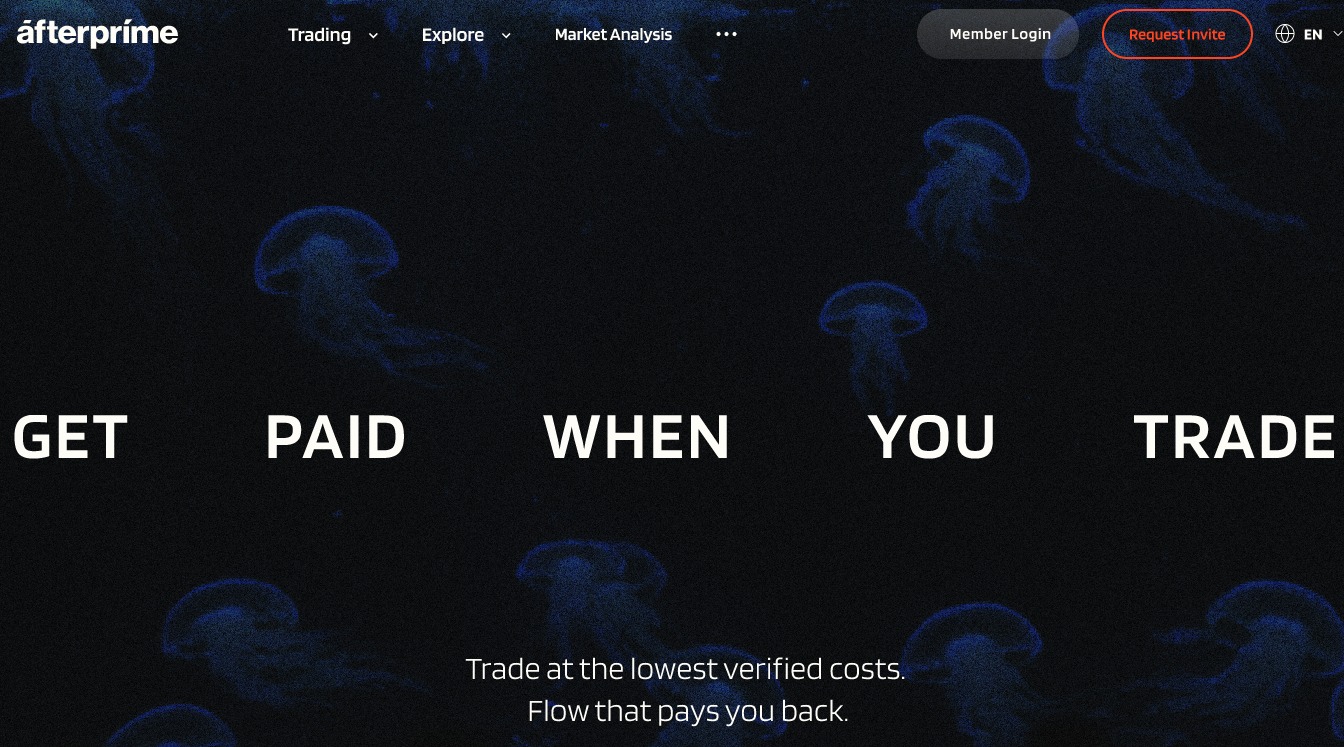
The Australia-based firm claims traders can earn up to $36,000 annually on top of zero-commission trading.
The idea relies on post-trade optimization to redistribute value captured from market spreads, not client funds.
Australian
brokerage Afterprime has launched what it calls the world's first
“pay-to-trade” model, where active forex traders can earn up to $3
per lot through “Flow Rewards” on top of zero-commission trading,
Finance Magnates has learned.
Afterprime 2.0 Pays You to
Trade
The firm,
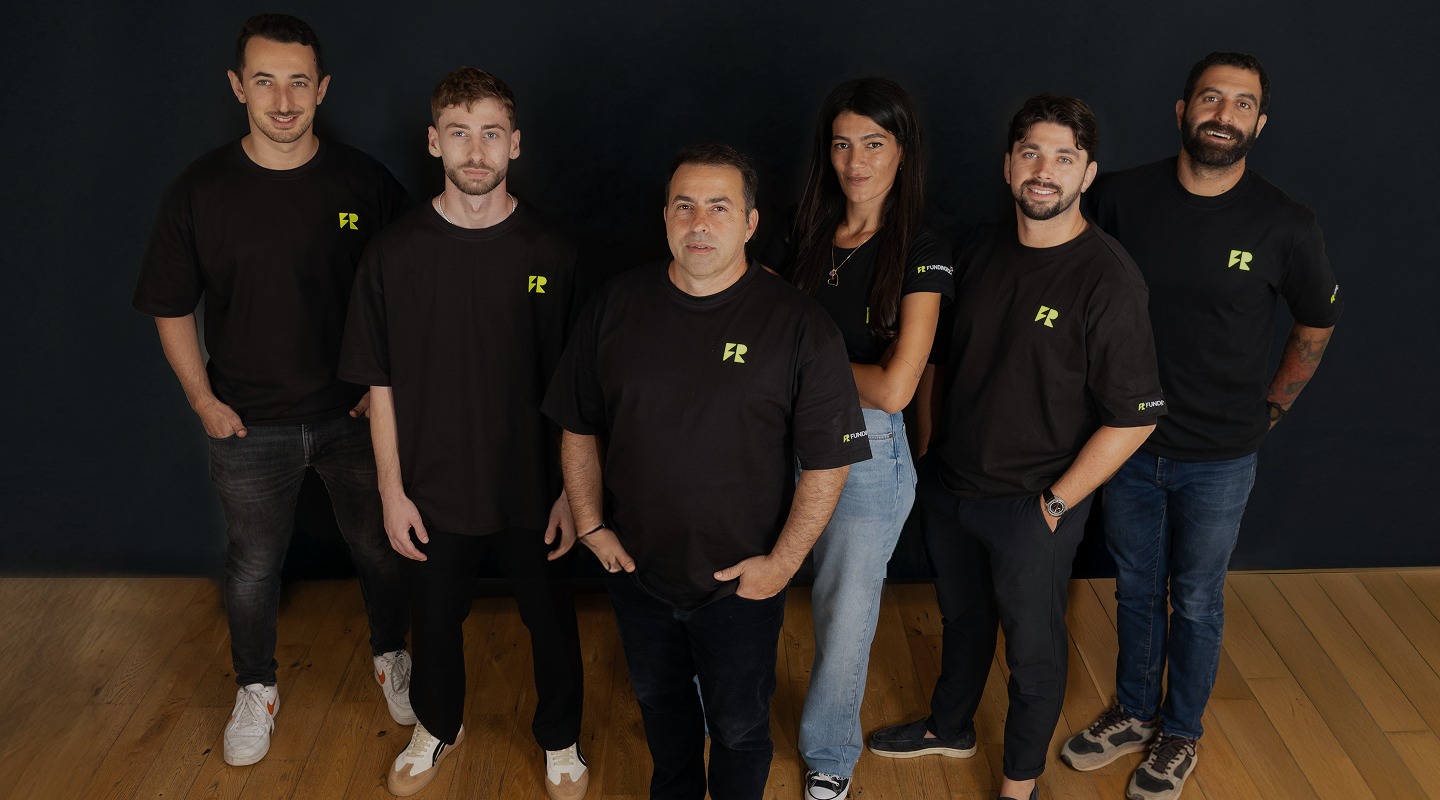
which emerged from Global Prime's founders Jeremy Kinstlinger and Elan Bension, states that traders handling 1,000 lots monthly could collect $36,000 annually, before factoring in cost savings.
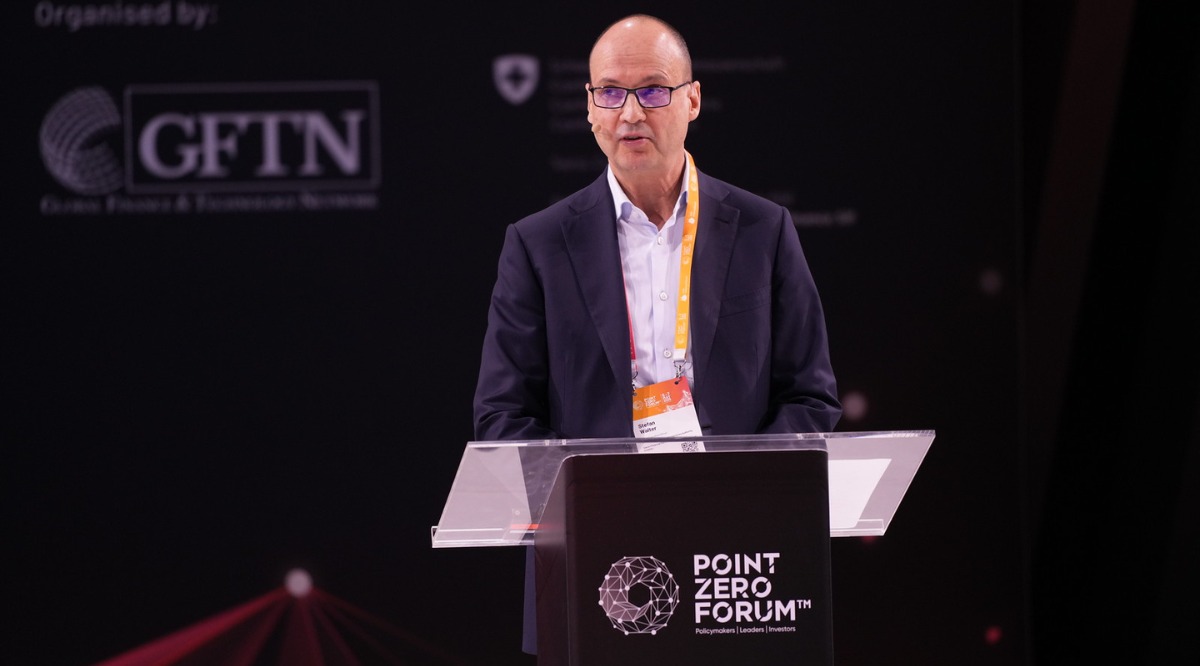
Jeremy Kinstlinger, one of the founders and Afterprime’s Director
“We
aggregate liquidity cleared through prime brokers with tier-one banks,
non-banks, and exchanges, and build our own order books to price tighter than
our LPs,” Kinstlinger, one of the founders and Afterprime’s
Director, explained in materials shared exclusively with FinanceMagnates.com.
“Unlike
B-book models that sit on risk and swing wildly with client losses, our
approach avoids directional risk and generates consistent yield across
pairs,” he added.
The company
cites independent data from ForexBenchmark, stating that Afterprime ranks as one
of the lowest-cost brokers, with average spreads of 0.54 pips compared with the
industry average of 1.98 pips.
Data seen
by FinanceMagnates.com shows, however, that the reward per lot can vary
significantly, ranging from $0.50 for the most popular pairs, such as EUR/USD,
to $1 for GBP/AUD, and up to $3 for NZD/CHF.
Revenue Model Challenges
Traditional Brokerage Structure
Afterprime's
business model hinges on post-trade optimization rather than traditional
commission structures or market-making activities. When a client executes a
trade, they receive their fill at the quoted price while Afterprime places
opposing resting orders in the market for short periods.
How does it work? For example, if a client buys 10 lots of
EUR/USD at 1.06500, Afterprime might simultaneously offer 10 lots to sell at
1.06501 across their liquidity provider network. If the market moves back down
and their order gets filled, they capture the one-pip spread while the client's
position remains unaffected.
“We
only rest orders for a few minutes, long enough to statistically capture part
of the spread across thousands of trades but not long enough to take on
directional risk,” the firm stated. “A portion of this yield is then
returned to clients as Flow Rewards.”
The
approach differs fundamentally from traditional rebate programs, which
typically return portions of commissions already paid by clients. Afterprime
claims their Flow Rewards come from market-captured spreads rather than
recycled client fees.
Selective Access Limits
Client Base
Sounds too
good to be true? In fact, there is a small catch. Unlike most retail brokers
that accept all applicants, Afterprime 2.0 operates on an invite-only basis,
targeting what they call “professional or semi-professional traders
running consistent, disciplined strategies.”
The firm
says it plans to approve only 10–20% of applications, explicitly avoiding
affiliate networks, bonus hunters, and high-churn accounts that dominate
traditional retail brokerage. This selective approach contrasts sharply with
industry norms where brokers typically pursue maximum account acquisition.
“Success
for us is defined by building a curated base of serious traders whose long-term
growth drives our growth, not by chasing churn or quick account blow-ups,”
the company stated.
Industry Barriers Present
Replication Challenges
Afterprime
argues that traditional B-book brokers face significant structural barriers to
replicating their model. The firm notes that many retail CFD brokers
internalize over 90% of client flow and profit directly from customer losses,
creating volatile earnings that make stable reward payments difficult.
The company
also points to regulatory constraints, claiming B-book brokers cannot access
prime brokerage services or build direct relationships with tier-one banks due
to risk profiles that prime brokers find unacceptable.
Afterprime
operates through a dual structure, with institutional arm Argamon providing
prime brokerage access and execution infrastructure while Afterprime handles
retail operations. This setup took 13 years to develop, according to company
materials.
While
Afterprime's cost leadership appears verified by third-party data, the
sustainability of paying traders remains unproven at scale. The model requires
consistent spread capture across thousands of trades while maintaining minimal
directional risk exposure.
The firm
acknowledges that certain types of trading flow could reduce or eliminate
rewards, specifically mentioning “latency arbitrage, stale quote sniping,
or aggressive strategies that cannot be hedged profitably.” Monthly reward
rates will be adjusted based on yield performance across currency pairs.
Afterprime
expects the broader industry to eventually adopt similar alignment-based models
as trader sophistication increases, though traditional B-book operations are
likely to persist given their profitability with less experienced retail
clients.
Better Innovation Than
Prop Trading?
According
to the founders of Afterprime 2.0, the only real innovation in the retail
trading market over the past two decades, apart from CFDs, has been prop
trading. Their proposal, however, aims to “rewrite the playbook.”
The
pay-to-trade model launches at a time when
prop firms have gained significant market share by offering profit-sharing
arrangements, though these typically require traders to risk their own capital
for evaluation periods before accessing firm funding.
“The casino
model isn’t going away,” Kinstlinger concluded. “B-book brokers and prop firms
will always exist. They’re marketing machines preying on get-rich-quick
gamblers.”
However, he
believes that most traders are becoming increasingly savvy, and such solutions
no longer satisfy them.
Australian
brokerage Afterprime has launched what it calls the world's first
“pay-to-trade” model, where active forex traders can earn up to $3
per lot through “Flow Rewards” on top of zero-commission trading,
Finance Magnates has learned.
Afterprime 2.0 Pays You to
Trade
The firm,
which emerged from Global Prime's founders Jeremy Kinstlinger and Elan Bension, states that traders handling 1,000 lots monthly could collect $36,000 annually, before factoring in cost savings.
Jeremy Kinstlinger, one of the founders and Afterprime’s Director
“We
aggregate liquidity cleared through prime brokers with tier-one banks,
non-banks, and exchanges, and build our own order books to price tighter than
our LPs,” Kinstlinger, one of the founders and Afterprime’s
Director, explained in materials shared exclusively with FinanceMagnates.com.
“Unlike
B-book models that sit on risk and swing wildly with client losses, our
approach avoids directional risk and generates consistent yield across
pairs,” he added.
The company
cites independent data from ForexBenchmark, stating that Afterprime ranks as one
of the lowest-cost brokers, with average spreads of 0.54 pips compared with the
industry average of 1.98 pips.
Data seen
by FinanceMagnates.com shows, however, that the reward per lot can vary
significantly, ranging from $0.50 for the most popular pairs, such as EUR/USD,
to $1 for GBP/AUD, and up to $3 for NZD/CHF.
Revenue Model Challenges
Traditional Brokerage Structure
Afterprime's
business model hinges on post-trade optimization rather than traditional
commission structures or market-making activities. When a client executes a
trade, they receive their fill at the quoted price while Afterprime places
opposing resting orders in the market for short periods.
How does it work? For example, if a client buys 10 lots of
EUR/USD at 1.06500, Afterprime might simultaneously offer 10 lots to sell at
1.06501 across their liquidity provider network. If the market moves back down
and their order gets filled, they capture the one-pip spread while the client's
position remains unaffected.
“We
only rest orders for a few minutes, long enough to statistically capture part
of the spread across thousands of trades but not long enough to take on
directional risk,” the firm stated. “A portion of this yield is then
returned to clients as Flow Rewards.”
The
approach differs fundamentally from traditional rebate programs, which
typically return portions of commissions already paid by clients. Afterprime
claims their Flow Rewards come from market-captured spreads rather than
recycled client fees.
Selective Access Limits
Client Base
Sounds too
good to be true? In fact, there is a small catch. Unlike most retail brokers
that accept all applicants, Afterprime 2.0 operates on an invite-only basis,
targeting what they call “professional or semi-professional traders
running consistent, disciplined strategies.”
The firm
says it plans to approve only 10–20% of applications, explicitly avoiding
affiliate networks, bonus hunters, and high-churn accounts that dominate
traditional retail brokerage. This selective approach contrasts sharply with
industry norms where brokers typically pursue maximum account acquisition.
“Success
for us is defined by building a curated base of serious traders whose long-term
growth drives our growth, not by chasing churn or quick account blow-ups,”
the company stated.
Industry Barriers Present
Replication Challenges
Afterprime
argues that traditional B-book brokers face significant structural barriers to
replicating their model. The firm notes that many retail CFD brokers
internalize over 90% of client flow and profit directly from customer losses,
creating volatile earnings that make stable reward payments difficult.
The company
also points to regulatory constraints, claiming B-book brokers cannot access
prime brokerage services or build direct relationships with tier-one banks due
to risk profiles that prime brokers find unacceptable.
Afterprime
operates through a dual structure, with institutional arm Argamon providing
prime brokerage access and execution infrastructure while Afterprime handles
retail operations. This setup took 13 years to develop, according to company
materials.
While
Afterprime's cost leadership appears verified by third-party data, the
sustainability of paying traders remains unproven at scale. The model requires
consistent spread capture across thousands of trades while maintaining minimal
directional risk exposure.
The firm
acknowledges that certain types of trading flow could reduce or eliminate
rewards, specifically mentioning “latency arbitrage, stale quote sniping,
or aggressive strategies that cannot be hedged profitably.” Monthly reward
rates will be adjusted based on yield performance across currency pairs.
Afterprime
expects the broader industry to eventually adopt similar alignment-based models
as trader sophistication increases, though traditional B-book operations are
likely to persist given their profitability with less experienced retail
clients.
Better Innovation Than
Prop Trading?
According
to the founders of Afterprime 2.0, the only real innovation in the retail
trading market over the past two decades, apart from CFDs, has been prop
trading. Their proposal, however, aims to “rewrite the playbook.”
The
pay-to-trade model launches at a time when
prop firms have gained significant market share by offering profit-sharing
arrangements, though these typically require traders to risk their own capital
for evaluation periods before accessing firm funding.
“The casino
model isn’t going away,” Kinstlinger concluded. “B-book brokers and prop firms
will always exist. They’re marketing machines preying on get-rich-quick
gamblers.”
However, he
believes that most traders are becoming increasingly savvy, and such solutions
no longer satisfy them.
Damian Chmiel is a Senior Analyst & Editor at Finance Magnates with more than 15 years of experience in the CFD and online trading industry. Active as both a trader and journalist since 2010, he focuses on broker coverage, fintech innovation, and regulatory developments across Europe, the Middle East, and Asia.
His work includes interviews with C-level leaders at major brokerages and fintech platforms, as well as co-authoring Finance Magnates’ quarterly industry benchmarking reports. Damian’s reporting is data-driven, market-aware, and grounded in direct industry engagement. His analysis and commentary have also been cited by external media outlets, including Investing.com, Binance, The Asset, Stockhead, and Dispatch.
Education:
MA in Finance and Accounting, Cracow University of Economics
Italy’s Consob Tightens Net on AI-Fueled Scams With Fresh Website Bans
FP Markets Winner Spotlight 🏆 | Global Broker of the Year 2025 #Trading #Broker #Innovation #Shorts
FP Markets Winner Spotlight 🏆 | Global Broker of the Year 2025 #Trading #Broker #Innovation #Shorts
FP Markets takes the spotlight as Global Broker of the Year 2025 at the Finance Magnates Awards.
Martin Stoilov, Head of Client Experience, shares that trust, innovation, and people played a key role in the company’s success, supported by a strong foundation of integrity and client-centricity.
Following this milestone, FP Markets continues to focus on growth, technology investment, and its core values of transparency and excellence.
👉 Be part of FM Awards 2026: https://awards.financemagnates.com/#nominate
FP Markets takes the spotlight as Global Broker of the Year 2025 at the Finance Magnates Awards.
Martin Stoilov, Head of Client Experience, shares that trust, innovation, and people played a key role in the company’s success, supported by a strong foundation of integrity and client-centricity.
Following this milestone, FP Markets continues to focus on growth, technology investment, and its core values of transparency and excellence.
👉 Be part of FM Awards 2026: https://awards.financemagnates.com/#nominate
In this video, we review @HolaPrimeMarketsOfficial, a multi-asset forex and CFDs broker offering different account types, trading platforms, and flexible trading conditions.
We cover the broker’s overall offering, including account options, trading environment, platforms like MT4 and MT5, and additional services such as managed accounts and fast withdrawals.
Watch the full video to see if Hola Prime Markets fits your trading needs.
📣 Stay up to date with the latest in finance and trading. Follow Finance Magnates for industry news, insights, and global event coverage.
Connect with us:
🔗 LinkedIn: /financemagnates
👍 Facebook: /financemagnates
📸 Instagram: https://www.instagram.com/financemagnates
🐦 X: https://x.com/financemagnates
🎥 TikTok: https://www.tiktok.com/tag/financemagnates
▶️ YouTube: /@financemagnates_official
#HolaPrime #ForexBroker #CFDTrading #FinanceMagnates #Trading #Forex #BrokerReview
In this video, we review @HolaPrimeMarketsOfficial, a multi-asset forex and CFDs broker offering different account types, trading platforms, and flexible trading conditions.
We cover the broker’s overall offering, including account options, trading environment, platforms like MT4 and MT5, and additional services such as managed accounts and fast withdrawals.
Watch the full video to see if Hola Prime Markets fits your trading needs.
📣 Stay up to date with the latest in finance and trading. Follow Finance Magnates for industry news, insights, and global event coverage.
Connect with us:
🔗 LinkedIn: /financemagnates
👍 Facebook: /financemagnates
📸 Instagram: https://www.instagram.com/financemagnates
🐦 X: https://x.com/financemagnates
🎥 TikTok: https://www.tiktok.com/tag/financemagnates
▶️ YouTube: /@financemagnates_official
#HolaPrime #ForexBroker #CFDTrading #FinanceMagnates #Trading #Forex #BrokerReview
Hola Prime Review: What You Need to Know | Full Breakdown by Finance Magnates
Hola Prime Review: What You Need to Know | Full Breakdown by Finance Magnates
In this video, we review @HolaPrime_Global, a proprietary trading firm offering evaluation programs and performance-based payouts in simulated market environments.
We cover how the challenge model works, including account types, profit splits (up to 95%), trading rules, and what it takes to reach a funded account. You’ll also learn about available platforms like MT4, MT5, cTrader, and more, along with insights into payouts, support, and trading conditions.
Watch the full video to see if Hola Prime fits your trading style.
📣 Stay up to date with the latest in finance and trading. Follow Finance Magnates for industry news, insights, and global event coverage.
Connect with us:
🔗 LinkedIn: /financemagnates
👍 Facebook: /financemagnates
📸 Instagram: https://www.instagram.com/financemagnates
🐦 X: https://x.com/financemagnates
🎥 TikTok: https://www.tiktok.com/tag/financemagnates
▶️ YouTube: /@financemagnates_official
#HolaPrime #PropFirm #Trading #FinanceMagnates #Forex #FuturesTrading #TradingReview #PropFirmReview
In this video, we review @HolaPrime_Global, a proprietary trading firm offering evaluation programs and performance-based payouts in simulated market environments.
We cover how the challenge model works, including account types, profit splits (up to 95%), trading rules, and what it takes to reach a funded account. You’ll also learn about available platforms like MT4, MT5, cTrader, and more, along with insights into payouts, support, and trading conditions.
Watch the full video to see if Hola Prime fits your trading style.
📣 Stay up to date with the latest in finance and trading. Follow Finance Magnates for industry news, insights, and global event coverage.
Connect with us:
🔗 LinkedIn: /financemagnates
👍 Facebook: /financemagnates
📸 Instagram: https://www.instagram.com/financemagnates
🐦 X: https://x.com/financemagnates
🎥 TikTok: https://www.tiktok.com/tag/financemagnates
▶️ YouTube: /@financemagnates_official
#HolaPrime #PropFirm #Trading #FinanceMagnates #Forex #FuturesTrading #TradingReview #PropFirmReview
Axi Winner Spotlight 🏆 | Global Most Innovative Broker 2025 #Innovation #Trading #Fintech #Broker
Axi Winner Spotlight 🏆 | Global Most Innovative Broker 2025 #Innovation #Trading #Fintech #Broker
Axi takes the spotlight at the Finance Magnates Awards, winning Global Most Innovative Broker 2025.
Olivia Xenofontos and Ivanna Openko share how the team will feel: proud, motivated, and ready to keep delivering.
They also describe the night as well-organized, focused, and enjoyable for all.
👉 Be part of FM Awards 2026.
Axi takes the spotlight at the Finance Magnates Awards, winning Global Most Innovative Broker 2025.
Olivia Xenofontos and Ivanna Openko share how the team will feel: proud, motivated, and ready to keep delivering.
They also describe the night as well-organized, focused, and enjoyable for all.
👉 Be part of FM Awards 2026.
Recognition that matters.
Built on transparency.
Driven by the industry.
The Finance Magnates Awards 2026.
Nominations are now open.
🔗 https://awards.financemagnates.com/?utm_source=SM&utm_medium=social&utm_campaign=recognition-matters
Recognition that matters.
Built on transparency.
Driven by the industry.
The Finance Magnates Awards 2026.
Nominations are now open.
🔗 https://awards.financemagnates.com/?utm_source=SM&utm_medium=social&utm_campaign=recognition-matters