The GBP has continued its unabated decline against several other currencies, due to mounting Brexit concerns and increased skepticism.
Bloomberg
In the second time in less than a year, the European Union (EU) is at odds over one of its members, this time with key players alleging that British participation brings too much bureaucracy for business. Given the complex structure of the EU, massive regulations have been demanded on goods and services in an attempt to create a single well working market in Europe, with varying levels of success.
Skeptics are disappointed in the decision of the UK to assert its right to set its own agenda across specific realms. This has come to the forefront in the form of immigration – their stance is an exit from the EU over immigration, given that the country sees this as the only way to reduce the flow of migrants into its borders.
However, a closer analysis suggests that the most valuable source of foreign direct investments (FDI) in the UK is in fact EU itself. Results from UK government research show that in 2014 other EU countries invested approximately £496 billion ($708 billion), which constitutes roughly half of all outside investments. Moreover, the British economy greatly relies on trade with EU – 45% of exports with a value of £230 billion ($329 billion) finish up in other EU member states.
Finally, nearly 53% of Great Britain's imported goods and services, worth £289 billion ($413 billion), are made up by EU bloc countries, highlighting the symbiotic role the two regions play for each other. This also does not quantify or take into account the large number of jobs that are reliant on trade, which stands to decline in the UK if a split is ultimately made.
According to data by the European Institute, nearly 3.4 million British jobs are estimated to be linked to exports to EU, which runs antithetical to its cause of preserving jobs, while stymieing the flow of immigrants.
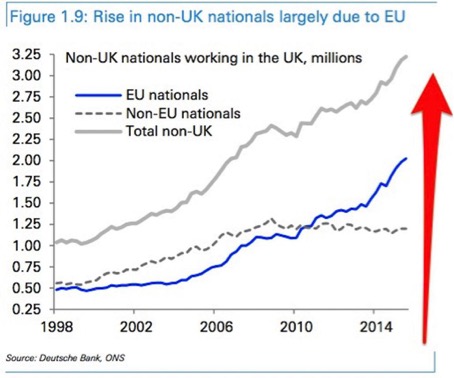
Of all matters currently facing the UK, migration seems to be the most arguable matter in the debate. EU membership is a commitment that grants migrants uncontrolled access to the jobs in UK – this is reflected by roughly 2 million EU citizens living and work in the UK.
However, to cut this bill, a Brexit may not be a tangible option because, in order to maintain unrestricted trade with the EU, the UK would still have to comply with these regulations. The UK is an exclusive contributor to the common budget of EU, last year the difference between received and contributed resources was -£8.5 billion ($12 billion). Brexit supporters overlook the insignificant value of the budget (about 1% of the union's GDP) and remain concerned about the fact that UK is a net contributor.
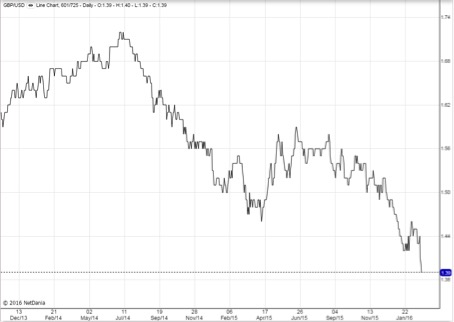
The pound sterling also experienced a downward tendency due to the growing Brexit risk. Indeed, the pound has not incurred such a staunch decline since the appointment of David Cameron - the other notable fall was recorded back in May 6, 2010, the day of the UK’s general election, which tumbled -1.72% to $1.4156. Since March 2009, the GBP has also undergone the largest decline against USD over this period, relative to all other major currencies.
Unfortunately for proponents of EU unity, a Brexit became a much more plausible reality after London's mayoral decision to back the UK’s departure from the bloc. Moreover, Moody's comment also boosted concerns about the predicted shift in the country's credit rating. Warnings about negative effects on the UK's credit ratings also came to the forefront today, with concerns for a Brexit reinforcing this trend, which could lead to a 'long stage of uncertain state', according to Moody's. Moody's has also given out a warning that a Brexit on June 23 could push down the current Aa1 rating. Investors are also showing signs of fear over Prime Minister's renewed negotiations with Brussels as well as for Boris Johnson's decision to support Britain's leaving.
In the second time in less than a year, the European Union (EU) is at odds over one of its members, this time with key players alleging that British participation brings too much bureaucracy for business. Given the complex structure of the EU, massive regulations have been demanded on goods and services in an attempt to create a single well working market in Europe, with varying levels of success.
Skeptics are disappointed in the decision of the UK to assert its right to set its own agenda across specific realms. This has come to the forefront in the form of immigration – their stance is an exit from the EU over immigration, given that the country sees this as the only way to reduce the flow of migrants into its borders.
However, a closer analysis suggests that the most valuable source of foreign direct investments (FDI) in the UK is in fact EU itself. Results from UK government research show that in 2014 other EU countries invested approximately £496 billion ($708 billion), which constitutes roughly half of all outside investments. Moreover, the British economy greatly relies on trade with EU – 45% of exports with a value of £230 billion ($329 billion) finish up in other EU member states.
Finally, nearly 53% of Great Britain's imported goods and services, worth £289 billion ($413 billion), are made up by EU bloc countries, highlighting the symbiotic role the two regions play for each other. This also does not quantify or take into account the large number of jobs that are reliant on trade, which stands to decline in the UK if a split is ultimately made.
According to data by the European Institute, nearly 3.4 million British jobs are estimated to be linked to exports to EU, which runs antithetical to its cause of preserving jobs, while stymieing the flow of immigrants.
Of all matters currently facing the UK, migration seems to be the most arguable matter in the debate. EU membership is a commitment that grants migrants uncontrolled access to the jobs in UK – this is reflected by roughly 2 million EU citizens living and work in the UK.
However, to cut this bill, a Brexit may not be a tangible option because, in order to maintain unrestricted trade with the EU, the UK would still have to comply with these regulations. The UK is an exclusive contributor to the common budget of EU, last year the difference between received and contributed resources was -£8.5 billion ($12 billion). Brexit supporters overlook the insignificant value of the budget (about 1% of the union's GDP) and remain concerned about the fact that UK is a net contributor.
The pound sterling also experienced a downward tendency due to the growing Brexit risk. Indeed, the pound has not incurred such a staunch decline since the appointment of David Cameron - the other notable fall was recorded back in May 6, 2010, the day of the UK’s general election, which tumbled -1.72% to $1.4156. Since March 2009, the GBP has also undergone the largest decline against USD over this period, relative to all other major currencies.
Unfortunately for proponents of EU unity, a Brexit became a much more plausible reality after London's mayoral decision to back the UK’s departure from the bloc. Moreover, Moody's comment also boosted concerns about the predicted shift in the country's credit rating. Warnings about negative effects on the UK's credit ratings also came to the forefront today, with concerns for a Brexit reinforcing this trend, which could lead to a 'long stage of uncertain state', according to Moody's. Moody's has also given out a warning that a Brexit on June 23 could push down the current Aa1 rating. Investors are also showing signs of fear over Prime Minister's renewed negotiations with Brussels as well as for Boris Johnson's decision to support Britain's leaving.
Sky Links Capital Adds LBMA Gold Fixing, Options and Weekend Trading
Featured Videos
FM Daily Brief – 9 June 2026
Today’s Tuesday, the 9th of June 2026, and these are our main stories: eToro’s customer assets climbed back above $20 billion, Prop trading model in prediction markets, and Leverate launched a new AI assistant for brokers and traders.
War Stories: Lessons from 20 Years in Markets (the pain, the pitfalls and the profits)
The trades that taught me the most aren't the ones that worked. They're the ones that didn't — or the ones I almost caught and didn't have the nerve to ride. In this session, I'll tell you about the Brexit miss, the SNB shocker that nearly handed me a 5400% return, the BoJ surprise that punched me in the gut, and a few wins along the way. Each story carries a lesson, but the lessons aren't the point. Everyone who trades long enough collects a portfolio of moments like these; what separates the people who stay in the game is what they do with them.
The Engine and the Fuel: How AI & Data Drives African Future
If AI is the engine, data is the fuel. Without quality, accessible data, AI cannot work well; and without the right mindset, data remains just numbers instead of insight. In this session, leading experts will explore how AI and data are democratizing opportunities for businesses and personal growth. Discover practical ways to make AI accessible today, anticipate its transformative impact on African markets, and learn actionable steps to prepare for what's next. Let's talk about:
-How AI and data drive business efficiency and innovation in trading and fintech
-AI tools to elevate trading or business strategies
-How to access and maximise the power of data and AI
-Emerging AI and data trends in Africa and their economic ripple effects
If AI is the engine, data is the fuel. Without quality, accessible data, AI cannot work well; and without the right mindset, data remains just numbers instead of insight. In this session, leading experts will explore how AI and data are democratizing opportunities for businesses and personal growth. Discover practical ways to make AI accessible today, anticipate its transformative impact on African markets, and learn actionable steps to prepare for what's next. Let's talk about:
-How AI and data drive business efficiency and innovation in trading and fintech
-AI tools to elevate trading or business strategies
-How to access and maximise the power of data and AI
-Emerging AI and data trends in Africa and their economic ripple effects
If AI is the engine, data is the fuel. Without quality, accessible data, AI cannot work well; and without the right mindset, data remains just numbers instead of insight. In this session, leading experts will explore how AI and data are democratizing opportunities for businesses and personal growth. Discover practical ways to make AI accessible today, anticipate its transformative impact on African markets, and learn actionable steps to prepare for what's next. Let's talk about:
-How AI and data drive business efficiency and innovation in trading and fintech
-AI tools to elevate trading or business strategies
-How to access and maximise the power of data and AI
-Emerging AI and data trends in Africa and their economic ripple effects
If AI is the engine, data is the fuel. Without quality, accessible data, AI cannot work well; and without the right mindset, data remains just numbers instead of insight. In this session, leading experts will explore how AI and data are democratizing opportunities for businesses and personal growth. Discover practical ways to make AI accessible today, anticipate its transformative impact on African markets, and learn actionable steps to prepare for what's next. Let's talk about:
-How AI and data drive business efficiency and innovation in trading and fintech
-AI tools to elevate trading or business strategies
-How to access and maximise the power of data and AI
-Emerging AI and data trends in Africa and their economic ripple effects
If AI is the engine, data is the fuel. Without quality, accessible data, AI cannot work well; and without the right mindset, data remains just numbers instead of insight. In this session, leading experts will explore how AI and data are democratizing opportunities for businesses and personal growth. Discover practical ways to make AI accessible today, anticipate its transformative impact on African markets, and learn actionable steps to prepare for what's next. Let's talk about:
-How AI and data drive business efficiency and innovation in trading and fintech
-AI tools to elevate trading or business strategies
-How to access and maximise the power of data and AI
-Emerging AI and data trends in Africa and their economic ripple effects
If AI is the engine, data is the fuel. Without quality, accessible data, AI cannot work well; and without the right mindset, data remains just numbers instead of insight. In this session, leading experts will explore how AI and data are democratizing opportunities for businesses and personal growth. Discover practical ways to make AI accessible today, anticipate its transformative impact on African markets, and learn actionable steps to prepare for what's next. Let's talk about:
-How AI and data drive business efficiency and innovation in trading and fintech
-AI tools to elevate trading or business strategies
-How to access and maximise the power of data and AI
-Emerging AI and data trends in Africa and their economic ripple effects
Inside My Best Trade with Jimmy Moyaha
Most market post-mortems describe what happened to prices. Few describe what happened in the trading room while the position was open: the entry conviction, the moments that tested it, and the exit decision that closed the book.
This session brings one seasoned trader to the stage for an unfiltered account of the position that still defines how they think about markets.
Attendees will walk away with:
-A first-hand account of how a conviction trade is built, from thesis and entry through position management and exit
-Understanding of what turns a market observation into a live position, and what holds it when conditions shift
-Insight into how timing, execution quality, and market structure shaped the final result
-Perspective on what the trade revealed about edge, risk tolerance, and when to hold through a position moving against you
-Clarity on what separates a well-built trade from a well-timed one
Most market post-mortems describe what happened to prices. Few describe what happened in the trading room while the position was open: the entry conviction, the moments that tested it, and the exit decision that closed the book.
This session brings one seasoned trader to the stage for an unfiltered account of the position that still defines how they think about markets.
Attendees will walk away with:
-A first-hand account of how a conviction trade is built, from thesis and entry through position management and exit
-Understanding of what turns a market observation into a live position, and what holds it when conditions shift
-Insight into how timing, execution quality, and market structure shaped the final result
-Perspective on what the trade revealed about edge, risk tolerance, and when to hold through a position moving against you
-Clarity on what separates a well-built trade from a well-timed one
Most market post-mortems describe what happened to prices. Few describe what happened in the trading room while the position was open: the entry conviction, the moments that tested it, and the exit decision that closed the book.
This session brings one seasoned trader to the stage for an unfiltered account of the position that still defines how they think about markets.
Attendees will walk away with:
-A first-hand account of how a conviction trade is built, from thesis and entry through position management and exit
-Understanding of what turns a market observation into a live position, and what holds it when conditions shift
-Insight into how timing, execution quality, and market structure shaped the final result
-Perspective on what the trade revealed about edge, risk tolerance, and when to hold through a position moving against you
-Clarity on what separates a well-built trade from a well-timed one
Most market post-mortems describe what happened to prices. Few describe what happened in the trading room while the position was open: the entry conviction, the moments that tested it, and the exit decision that closed the book.
This session brings one seasoned trader to the stage for an unfiltered account of the position that still defines how they think about markets.
Attendees will walk away with:
-A first-hand account of how a conviction trade is built, from thesis and entry through position management and exit
-Understanding of what turns a market observation into a live position, and what holds it when conditions shift
-Insight into how timing, execution quality, and market structure shaped the final result
-Perspective on what the trade revealed about edge, risk tolerance, and when to hold through a position moving against you
-Clarity on what separates a well-built trade from a well-timed one
Most market post-mortems describe what happened to prices. Few describe what happened in the trading room while the position was open: the entry conviction, the moments that tested it, and the exit decision that closed the book.
This session brings one seasoned trader to the stage for an unfiltered account of the position that still defines how they think about markets.
Attendees will walk away with:
-A first-hand account of how a conviction trade is built, from thesis and entry through position management and exit
-Understanding of what turns a market observation into a live position, and what holds it when conditions shift
-Insight into how timing, execution quality, and market structure shaped the final result
-Perspective on what the trade revealed about edge, risk tolerance, and when to hold through a position moving against you
-Clarity on what separates a well-built trade from a well-timed one
Most market post-mortems describe what happened to prices. Few describe what happened in the trading room while the position was open: the entry conviction, the moments that tested it, and the exit decision that closed the book.
This session brings one seasoned trader to the stage for an unfiltered account of the position that still defines how they think about markets.
Attendees will walk away with:
-A first-hand account of how a conviction trade is built, from thesis and entry through position management and exit
-Understanding of what turns a market observation into a live position, and what holds it when conditions shift
-Insight into how timing, execution quality, and market structure shaped the final result
-Perspective on what the trade revealed about edge, risk tolerance, and when to hold through a position moving against you
-Clarity on what separates a well-built trade from a well-timed one
Agentic Inequality: Democratizing Financial Access Through AI & Blockchain
As crypto and CFD trading continue to expand across Africa, access to advanced tools and market insights remains uneven. This session explores how AI and blockchain can bridge that gap by empowering informal traders and underserved communities to participate more effectively in digital financial markets. The discussion will focus on practical applications of technology to improve accessibility, education, and investment outcomes in both formal and informal sectors.
In this discussion, we will explore:
-The role of AI in democratizing access to trading tools, insights, and strategy development
-How crypto and blockchain can enable broader participation beyond traditional financial systems
-Addressing access barriers: infrastructure, education, and affordability in underserved communities
-Opportunities for brokers and platforms to tap into the informal trading economy
As crypto and CFD trading continue to expand across Africa, access to advanced tools and market insights remains uneven. This session explores how AI and blockchain can bridge that gap by empowering informal traders and underserved communities to participate more effectively in digital financial markets. The discussion will focus on practical applications of technology to improve accessibility, education, and investment outcomes in both formal and informal sectors.
In this discussion, we will explore:
-The role of AI in democratizing access to trading tools, insights, and strategy development
-How crypto and blockchain can enable broader participation beyond traditional financial systems
-Addressing access barriers: infrastructure, education, and affordability in underserved communities
-Opportunities for brokers and platforms to tap into the informal trading economy
As crypto and CFD trading continue to expand across Africa, access to advanced tools and market insights remains uneven. This session explores how AI and blockchain can bridge that gap by empowering informal traders and underserved communities to participate more effectively in digital financial markets. The discussion will focus on practical applications of technology to improve accessibility, education, and investment outcomes in both formal and informal sectors.
In this discussion, we will explore:
-The role of AI in democratizing access to trading tools, insights, and strategy development
-How crypto and blockchain can enable broader participation beyond traditional financial systems
-Addressing access barriers: infrastructure, education, and affordability in underserved communities
-Opportunities for brokers and platforms to tap into the informal trading economy
As crypto and CFD trading continue to expand across Africa, access to advanced tools and market insights remains uneven. This session explores how AI and blockchain can bridge that gap by empowering informal traders and underserved communities to participate more effectively in digital financial markets. The discussion will focus on practical applications of technology to improve accessibility, education, and investment outcomes in both formal and informal sectors.
In this discussion, we will explore:
-The role of AI in democratizing access to trading tools, insights, and strategy development
-How crypto and blockchain can enable broader participation beyond traditional financial systems
-Addressing access barriers: infrastructure, education, and affordability in underserved communities
-Opportunities for brokers and platforms to tap into the informal trading economy
As crypto and CFD trading continue to expand across Africa, access to advanced tools and market insights remains uneven. This session explores how AI and blockchain can bridge that gap by empowering informal traders and underserved communities to participate more effectively in digital financial markets. The discussion will focus on practical applications of technology to improve accessibility, education, and investment outcomes in both formal and informal sectors.
In this discussion, we will explore:
-The role of AI in democratizing access to trading tools, insights, and strategy development
-How crypto and blockchain can enable broader participation beyond traditional financial systems
-Addressing access barriers: infrastructure, education, and affordability in underserved communities
-Opportunities for brokers and platforms to tap into the informal trading economy
As crypto and CFD trading continue to expand across Africa, access to advanced tools and market insights remains uneven. This session explores how AI and blockchain can bridge that gap by empowering informal traders and underserved communities to participate more effectively in digital financial markets. The discussion will focus on practical applications of technology to improve accessibility, education, and investment outcomes in both formal and informal sectors.
In this discussion, we will explore:
-The role of AI in democratizing access to trading tools, insights, and strategy development
-How crypto and blockchain can enable broader participation beyond traditional financial systems
-Addressing access barriers: infrastructure, education, and affordability in underserved communities
-Opportunities for brokers and platforms to tap into the informal trading economy