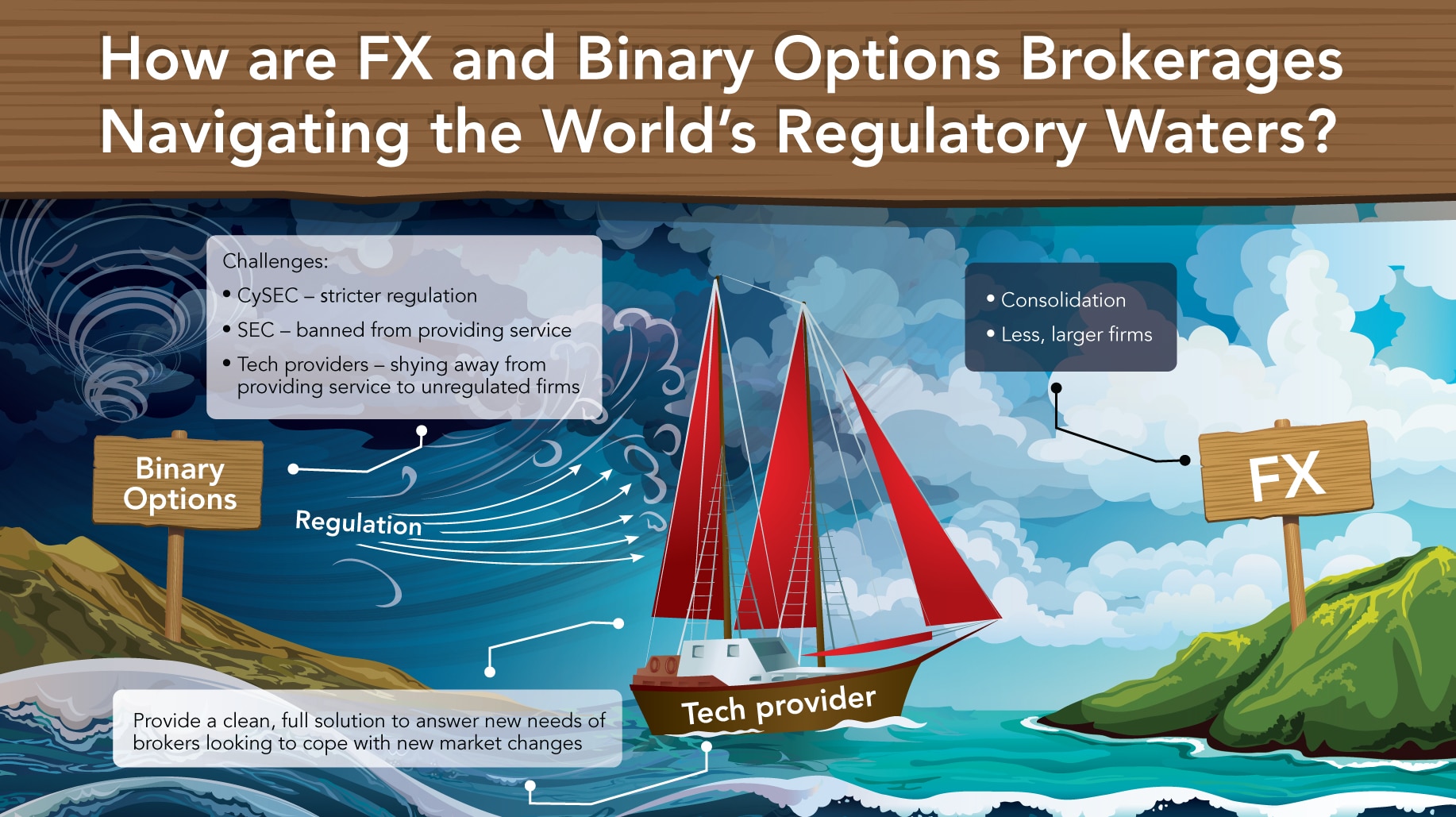
A look at what lies ahead as the sector becomes more competitive, regulation gets stricter and acquisition costs rise.
Finance Magnates
We’ve been saying this for some time now. We predicted it more than a year ago and we are now seeing the changes in the financial trading industry take place. The sector is becoming much more competitive, regulation is getting stricter and acquisition costs are rising.
Brokers are consistently looking for ways to cope with these changes and manage their businesses to succeed in a market that promises to be entirely different in a few years from now.
The most concerning part of it all is that the changes are far from over and those brokers who fail to see the big picture and take action to refocus, will see themselves forced out of the market.
Let’s first take a glance at what is happening in the binary options and FX markets in the EU:
In recent months, there have been impactful changes in regulation throughout the European Union and in particular in CySEC, a hub for many binary options and Forex companies.
Rules regarding the operation of call centers have become stricter. Regulators across the globe are systematically targeting binary options companies, who are finding it increasingly difficult to maintain a competitive edge and grow.
The pressure currently being experienced by financial trading brokers is causing the structure of the brokerages and the entire landscape of the industry to shift dramatically.
What about the binary options market in the US?
The US has banned binary options companies from doing business within their borders, however, some companies have continued to operate outside of the framework of the law.
Rumors have begun circulating during the past few weeks about investigations being opened by the SEC, as an effort to establish a stricter enforcement of the field and crack down on unregulated binary options brokerages.
There are several key trend changes which are just the tip of the iceberg.
We saw this phenomenon in the gaming industry a few years ago as US authorities, in an attempt to clamp down on internet gambling, arrested the heads of several gaming companies upon their arrival in the US. How long will it be before binary options brokers have to think twice before visiting the US?
With the above mentioned changes taking effect, what will be of the financial trading market?
Trend change #1: Non-regulated companies will exit the market, after finding it increasingly difficult to acquire traders’ trust and cope with regulators’ clamp downs.
Trend change #2: We have been seeing, and will continue to see consolidation amongst brokers. We will see less, but bigger players dominate the market.
Trend change #3: in order to hedge their risk, binary options companies have begun exploring the possibility to expand or completely shift their business models to Forex. Brokers can use their existing call centers, marketing departments, providers, etc and add a suite of products to target a new breed of investors interested in Forex
Trend change #4: Binary options companies will be forced to change their methods of operation and will soon have to stop operating under the market maker license as they have been doing in the past.
Trend change #5: According to the latest consultation paper released by CySEC, call centers will be required to operate from within the EU, or else hold €1,000,000 of their own funds as security. This new guideline will affect binary options and forex brokerages dramatically and will make it impossible to continue to operate for some.
For those brokerages who decide to continue to operate from outside the EU, tech providers can help them compensate for the added expense by lowering their operating expenses with automation tools. Stable and efficient automation tools that assist in the conversion and retention process not only increase their C&R rates, but also decrease the number of sales personnel required to operate their business.
Trend change #6: Technology providers are becoming more cautions and shying away from providing services to unregulated brokers, especially those operating in the US without a license.
Trend change #7: Tech providers are adapting their suite of products to serve brokers who are shifting their business models from binary options unto FX.
These changes are only the tip of the iceberg. We will continue to hear a lot more about these changes in the upcoming weeks and months.
As brokerages try to adapt and cope with these changes, it is the responsibility of tech providers to develop on-going, clean solutions in the form of automation and regulated products, as well as solutions to help them make the switch from binary options to FX.
As the market continues to evolve, the role of tech providers becomes more and more crucial for brokerages trying to compete and succeed in this changing and challenging market.
We’ve been saying this for some time now. We predicted it more than a year ago and we are now seeing the changes in the financial trading industry take place. The sector is becoming much more competitive, regulation is getting stricter and acquisition costs are rising.
Brokers are consistently looking for ways to cope with these changes and manage their businesses to succeed in a market that promises to be entirely different in a few years from now.
The most concerning part of it all is that the changes are far from over and those brokers who fail to see the big picture and take action to refocus, will see themselves forced out of the market.
Let’s first take a glance at what is happening in the binary options and FX markets in the EU:
In recent months, there have been impactful changes in regulation throughout the European Union and in particular in CySEC, a hub for many binary options and Forex companies.
Rules regarding the operation of call centers have become stricter. Regulators across the globe are systematically targeting binary options companies, who are finding it increasingly difficult to maintain a competitive edge and grow.
The pressure currently being experienced by financial trading brokers is causing the structure of the brokerages and the entire landscape of the industry to shift dramatically.
What about the binary options market in the US?
The US has banned binary options companies from doing business within their borders, however, some companies have continued to operate outside of the framework of the law.
Rumors have begun circulating during the past few weeks about investigations being opened by the SEC, as an effort to establish a stricter enforcement of the field and crack down on unregulated binary options brokerages.
There are several key trend changes which are just the tip of the iceberg.
We saw this phenomenon in the gaming industry a few years ago as US authorities, in an attempt to clamp down on internet gambling, arrested the heads of several gaming companies upon their arrival in the US. How long will it be before binary options brokers have to think twice before visiting the US?
With the above mentioned changes taking effect, what will be of the financial trading market?
Trend change #1: Non-regulated companies will exit the market, after finding it increasingly difficult to acquire traders’ trust and cope with regulators’ clamp downs.
Trend change #2: We have been seeing, and will continue to see consolidation amongst brokers. We will see less, but bigger players dominate the market.
Trend change #3: in order to hedge their risk, binary options companies have begun exploring the possibility to expand or completely shift their business models to Forex. Brokers can use their existing call centers, marketing departments, providers, etc and add a suite of products to target a new breed of investors interested in Forex
Trend change #4: Binary options companies will be forced to change their methods of operation and will soon have to stop operating under the market maker license as they have been doing in the past.
Trend change #5: According to the latest consultation paper released by CySEC, call centers will be required to operate from within the EU, or else hold €1,000,000 of their own funds as security. This new guideline will affect binary options and forex brokerages dramatically and will make it impossible to continue to operate for some.
For those brokerages who decide to continue to operate from outside the EU, tech providers can help them compensate for the added expense by lowering their operating expenses with automation tools. Stable and efficient automation tools that assist in the conversion and retention process not only increase their C&R rates, but also decrease the number of sales personnel required to operate their business.
Trend change #6: Technology providers are becoming more cautions and shying away from providing services to unregulated brokers, especially those operating in the US without a license.
Trend change #7: Tech providers are adapting their suite of products to serve brokers who are shifting their business models from binary options unto FX.
These changes are only the tip of the iceberg. We will continue to hear a lot more about these changes in the upcoming weeks and months.
As brokerages try to adapt and cope with these changes, it is the responsibility of tech providers to develop on-going, clean solutions in the form of automation and regulated products, as well as solutions to help them make the switch from binary options to FX.
As the market continues to evolve, the role of tech providers becomes more and more crucial for brokerages trying to compete and succeed in this changing and challenging market.
Sami Mana is General Manager at Leverate, a technology solutions provider for the Forex and Binary Options industry. Sami is responsible for oversight of the company’s direction and plays a leading role in directing cross-company projects. Sami Mana is Chief of Staff at Leverate, a technology solutions provider for the Forex and Binary Options industry. Sami is responsible for oversight of the company’s direction and plays a leading role in directing cross-company projects.
Citadel Securities’ UK Market-Making Profit Falls 38% as Parent Injects $100 Million
Featured Videos
FXCM UK Holds $110m in Client Money; IG CEO Questions Prediction Market Volumes
FXCM UK Holds $110m in Client Money; IG CEO Questions Prediction Market Volumes
FXCM UK Holds $110m in Client Money; IG CEO Questions Prediction Market Volumes
FXCM UK Holds $110m in Client Money; IG CEO Questions Prediction Market Volumes
Today’s financial news recap covers FXCM's UK arm holds $110 million in client money ahead of its sale to Trade Nation, Citadel Securities' UK profit falls 38 per cent, and Kraken secures its final Dubai crypto licence.
Finance Magnates Daily Recap brings you the latest news from forex and CFD brokers, fintech, payments, cryptocurrency, digital assets, trading platforms, financial regulation and global markets.
Get the key company news, executive moves, deals, regulatory updates and market developments of the day, in just a few minutes. New episodes published every weekday.
Read more: https://www.financemagnates.com
#FinanceMagnates #ForexNews #FintechNews
Today’s financial news recap covers FXCM's UK arm holds $110 million in client money ahead of its sale to Trade Nation, Citadel Securities' UK profit falls 38 per cent, and Kraken secures its final Dubai crypto licence.
Finance Magnates Daily Recap brings you the latest news from forex and CFD brokers, fintech, payments, cryptocurrency, digital assets, trading platforms, financial regulation and global markets.
Get the key company news, executive moves, deals, regulatory updates and market developments of the day, in just a few minutes. New episodes published every weekday.
Read more: https://www.financemagnates.com
#FinanceMagnates #ForexNews #FintechNews
Today’s financial news recap covers FXCM's UK arm holds $110 million in client money ahead of its sale to Trade Nation, Citadel Securities' UK profit falls 38 per cent, and Kraken secures its final Dubai crypto licence.
Finance Magnates Daily Recap brings you the latest news from forex and CFD brokers, fintech, payments, cryptocurrency, digital assets, trading platforms, financial regulation and global markets.
Get the key company news, executive moves, deals, regulatory updates and market developments of the day, in just a few minutes. New episodes published every weekday.
Read more: https://www.financemagnates.com
#FinanceMagnates #ForexNews #FintechNews
Today’s financial news recap covers FXCM's UK arm holds $110 million in client money ahead of its sale to Trade Nation, Citadel Securities' UK profit falls 38 per cent, and Kraken secures its final Dubai crypto licence.
Finance Magnates Daily Recap brings you the latest news from forex and CFD brokers, fintech, payments, cryptocurrency, digital assets, trading platforms, financial regulation and global markets.
Get the key company news, executive moves, deals, regulatory updates and market developments of the day, in just a few minutes. New episodes published every weekday.
Read more: https://www.financemagnates.com
#FinanceMagnates #ForexNews #FintechNews
Today’s financial news recap covers AvaTrade agrees to acquire most of FXCM, NAGA secures eight million dollars in new financing, and Wise seeks a tax settlement in the UK.
Finance Magnates Daily Recap brings you the latest news from forex and CFD brokers, fintech, payments, cryptocurrency, digital assets, trading platforms, financial regulation and global markets.
Get the key company news, executive moves, deals, regulatory updates and market developments of the day, in just a few minutes. New episodes published every weekday.
Read more: https://www.financemagnates.com
#FinanceMagnates #ForexNews #FintechNews
Today’s financial news recap covers AvaTrade agrees to acquire most of FXCM, NAGA secures eight million dollars in new financing, and Wise seeks a tax settlement in the UK.
Finance Magnates Daily Recap brings you the latest news from forex and CFD brokers, fintech, payments, cryptocurrency, digital assets, trading platforms, financial regulation and global markets.
Get the key company news, executive moves, deals, regulatory updates and market developments of the day, in just a few minutes. New episodes published every weekday.
Read more: https://www.financemagnates.com
#FinanceMagnates #ForexNews #FintechNews
Today’s financial news recap covers AvaTrade agrees to acquire most of FXCM, NAGA secures eight million dollars in new financing, and Wise seeks a tax settlement in the UK.
Finance Magnates Daily Recap brings you the latest news from forex and CFD brokers, fintech, payments, cryptocurrency, digital assets, trading platforms, financial regulation and global markets.
Get the key company news, executive moves, deals, regulatory updates and market developments of the day, in just a few minutes. New episodes published every weekday.
Read more: https://www.financemagnates.com
#FinanceMagnates #ForexNews #FintechNews
Today’s financial news recap covers AvaTrade agrees to acquire most of FXCM, NAGA secures eight million dollars in new financing, and Wise seeks a tax settlement in the UK.
Finance Magnates Daily Recap brings you the latest news from forex and CFD brokers, fintech, payments, cryptocurrency, digital assets, trading platforms, financial regulation and global markets.
Get the key company news, executive moves, deals, regulatory updates and market developments of the day, in just a few minutes. New episodes published every weekday.
Read more: https://www.financemagnates.com
#FinanceMagnates #ForexNews #FintechNews
Today’s financial news recap covers AvaTrade agrees to acquire most of FXCM, NAGA secures eight million dollars in new financing, and Wise seeks a tax settlement in the UK.
Finance Magnates Daily Recap brings you the latest news from forex and CFD brokers, fintech, payments, cryptocurrency, digital assets, trading platforms, financial regulation and global markets.
Get the key company news, executive moves, deals, regulatory updates and market developments of the day, in just a few minutes. New episodes published every weekday.
Read more: https://www.financemagnates.com
#FinanceMagnates #ForexNews #FintechNews
Today’s financial news recap covers AvaTrade agrees to acquire most of FXCM, NAGA secures eight million dollars in new financing, and Wise seeks a tax settlement in the UK.
Finance Magnates Daily Recap brings you the latest news from forex and CFD brokers, fintech, payments, cryptocurrency, digital assets, trading platforms, financial regulation and global markets.
Get the key company news, executive moves, deals, regulatory updates and market developments of the day, in just a few minutes. New episodes published every weekday.
Read more: https://www.financemagnates.com
#FinanceMagnates #ForexNews #FintechNews
XTB Adds Overnight US Stock Trading; Nasdaq Ventures Invests in One Trading
XTB Adds Overnight US Stock Trading; Nasdaq Ventures Invests in One Trading
XTB Adds Overnight US Stock Trading; Nasdaq Ventures Invests in One Trading
XTB Adds Overnight US Stock Trading; Nasdaq Ventures Invests in One Trading
XTB Adds Overnight US Stock Trading; Nasdaq Ventures Invests in One Trading
XTB Adds Overnight US Stock Trading; Nasdaq Ventures Invests in One Trading
Today’s financial news recap covers XTB expands overnight US stock trading, Fortrade reports higher revenue, Nasdaq backs One Trading, and Vest Labs raises 13 million dollars.
Finance Magnates Daily Recap brings you the latest news from forex and CFD brokers, fintech, payments, cryptocurrency, digital assets, trading platforms, financial regulation and global markets.
Get the key company news, executive moves, deals, regulatory updates and market developments of the day, in just a few minutes. New episodes published every weekday.
Read more: https://www.financemagnates.com
#FinanceMagnates #ForexNews #FintechNews
Today’s financial news recap covers XTB expands overnight US stock trading, Fortrade reports higher revenue, Nasdaq backs One Trading, and Vest Labs raises 13 million dollars.
Finance Magnates Daily Recap brings you the latest news from forex and CFD brokers, fintech, payments, cryptocurrency, digital assets, trading platforms, financial regulation and global markets.
Get the key company news, executive moves, deals, regulatory updates and market developments of the day, in just a few minutes. New episodes published every weekday.
Read more: https://www.financemagnates.com
#FinanceMagnates #ForexNews #FintechNews
Today’s financial news recap covers XTB expands overnight US stock trading, Fortrade reports higher revenue, Nasdaq backs One Trading, and Vest Labs raises 13 million dollars.
Finance Magnates Daily Recap brings you the latest news from forex and CFD brokers, fintech, payments, cryptocurrency, digital assets, trading platforms, financial regulation and global markets.
Get the key company news, executive moves, deals, regulatory updates and market developments of the day, in just a few minutes. New episodes published every weekday.
Read more: https://www.financemagnates.com
#FinanceMagnates #ForexNews #FintechNews
Today’s financial news recap covers XTB expands overnight US stock trading, Fortrade reports higher revenue, Nasdaq backs One Trading, and Vest Labs raises 13 million dollars.
Finance Magnates Daily Recap brings you the latest news from forex and CFD brokers, fintech, payments, cryptocurrency, digital assets, trading platforms, financial regulation and global markets.
Get the key company news, executive moves, deals, regulatory updates and market developments of the day, in just a few minutes. New episodes published every weekday.
Read more: https://www.financemagnates.com
#FinanceMagnates #ForexNews #FintechNews
Today’s financial news recap covers XTB expands overnight US stock trading, Fortrade reports higher revenue, Nasdaq backs One Trading, and Vest Labs raises 13 million dollars.
Finance Magnates Daily Recap brings you the latest news from forex and CFD brokers, fintech, payments, cryptocurrency, digital assets, trading platforms, financial regulation and global markets.
Get the key company news, executive moves, deals, regulatory updates and market developments of the day, in just a few minutes. New episodes published every weekday.
Read more: https://www.financemagnates.com
#FinanceMagnates #ForexNews #FintechNews
Today’s financial news recap covers XTB expands overnight US stock trading, Fortrade reports higher revenue, Nasdaq backs One Trading, and Vest Labs raises 13 million dollars.
Finance Magnates Daily Recap brings you the latest news from forex and CFD brokers, fintech, payments, cryptocurrency, digital assets, trading platforms, financial regulation and global markets.
Get the key company news, executive moves, deals, regulatory updates and market developments of the day, in just a few minutes. New episodes published every weekday.
Read more: https://www.financemagnates.com
#FinanceMagnates #ForexNews #FintechNews
CMC Founder Downplays Volatility Hit; Devexperts Names CEO
CMC Founder Downplays Volatility Hit; Devexperts Names CEO
CMC Founder Downplays Volatility Hit; Devexperts Names CEO
CMC Founder Downplays Volatility Hit; Devexperts Names CEO
CMC Founder Downplays Volatility Hit; Devexperts Names CEO
CMC Founder Downplays Volatility Hit; Devexperts Names CEO
Today’s financial news recap covers low volatility pressures brokers, Devexperts names a new CEO, Saxo cuts onboarding time, and OKX reaches a 25 billion dollar valuation.
Finance Magnates Daily Recap brings you the latest news from forex and CFD brokers, fintech, payments, cryptocurrency, digital assets, trading platforms, financial regulation and global markets.
Get the key company news, executive moves, deals, regulatory updates and market developments of the day, in just a few minutes. New episodes published every weekday.
Read more: https://www.financemagnates.com
#FinanceMagnates #ForexNews #FintechNews
Today’s financial news recap covers low volatility pressures brokers, Devexperts names a new CEO, Saxo cuts onboarding time, and OKX reaches a 25 billion dollar valuation.
Finance Magnates Daily Recap brings you the latest news from forex and CFD brokers, fintech, payments, cryptocurrency, digital assets, trading platforms, financial regulation and global markets.
Get the key company news, executive moves, deals, regulatory updates and market developments of the day, in just a few minutes. New episodes published every weekday.
Read more: https://www.financemagnates.com
#FinanceMagnates #ForexNews #FintechNews
Today’s financial news recap covers low volatility pressures brokers, Devexperts names a new CEO, Saxo cuts onboarding time, and OKX reaches a 25 billion dollar valuation.
Finance Magnates Daily Recap brings you the latest news from forex and CFD brokers, fintech, payments, cryptocurrency, digital assets, trading platforms, financial regulation and global markets.
Get the key company news, executive moves, deals, regulatory updates and market developments of the day, in just a few minutes. New episodes published every weekday.
Read more: https://www.financemagnates.com
#FinanceMagnates #ForexNews #FintechNews
Today’s financial news recap covers low volatility pressures brokers, Devexperts names a new CEO, Saxo cuts onboarding time, and OKX reaches a 25 billion dollar valuation.
Finance Magnates Daily Recap brings you the latest news from forex and CFD brokers, fintech, payments, cryptocurrency, digital assets, trading platforms, financial regulation and global markets.
Get the key company news, executive moves, deals, regulatory updates and market developments of the day, in just a few minutes. New episodes published every weekday.
Read more: https://www.financemagnates.com
#FinanceMagnates #ForexNews #FintechNews
Today’s financial news recap covers low volatility pressures brokers, Devexperts names a new CEO, Saxo cuts onboarding time, and OKX reaches a 25 billion dollar valuation.
Finance Magnates Daily Recap brings you the latest news from forex and CFD brokers, fintech, payments, cryptocurrency, digital assets, trading platforms, financial regulation and global markets.
Get the key company news, executive moves, deals, regulatory updates and market developments of the day, in just a few minutes. New episodes published every weekday.
Read more: https://www.financemagnates.com
#FinanceMagnates #ForexNews #FintechNews
Today’s financial news recap covers low volatility pressures brokers, Devexperts names a new CEO, Saxo cuts onboarding time, and OKX reaches a 25 billion dollar valuation.
Finance Magnates Daily Recap brings you the latest news from forex and CFD brokers, fintech, payments, cryptocurrency, digital assets, trading platforms, financial regulation and global markets.
Get the key company news, executive moves, deals, regulatory updates and market developments of the day, in just a few minutes. New episodes published every weekday.
Read more: https://www.financemagnates.com
#FinanceMagnates #ForexNews #FintechNews
Today’s financial news recap covers Trade Nation buys FXCM's UK client book, Trading 212 reports higher revenue, the CFTC's move to allow perpetual index futures.
Finance Magnates Daily Recap brings you the latest news from forex and CFD brokers, fintech, payments, cryptocurrency, digital assets, trading platforms, financial regulation and global markets.
Get the key company news, executive moves, deals, regulatory updates and market developments of the day, in just a few minutes. New episodes published every weekday.
Read more: https://www.financemagnates.com
#FinanceMagnates #ForexNews #FintechNews
Today’s financial news recap covers Trade Nation buys FXCM's UK client book, Trading 212 reports higher revenue, the CFTC's move to allow perpetual index futures.
Finance Magnates Daily Recap brings you the latest news from forex and CFD brokers, fintech, payments, cryptocurrency, digital assets, trading platforms, financial regulation and global markets.
Get the key company news, executive moves, deals, regulatory updates and market developments of the day, in just a few minutes. New episodes published every weekday.
Read more: https://www.financemagnates.com
#FinanceMagnates #ForexNews #FintechNews
Today’s financial news recap covers Trade Nation buys FXCM's UK client book, Trading 212 reports higher revenue, the CFTC's move to allow perpetual index futures.
Finance Magnates Daily Recap brings you the latest news from forex and CFD brokers, fintech, payments, cryptocurrency, digital assets, trading platforms, financial regulation and global markets.
Get the key company news, executive moves, deals, regulatory updates and market developments of the day, in just a few minutes. New episodes published every weekday.
Read more: https://www.financemagnates.com
#FinanceMagnates #ForexNews #FintechNews
Today’s financial news recap covers Trade Nation buys FXCM's UK client book, Trading 212 reports higher revenue, the CFTC's move to allow perpetual index futures.
Finance Magnates Daily Recap brings you the latest news from forex and CFD brokers, fintech, payments, cryptocurrency, digital assets, trading platforms, financial regulation and global markets.
Get the key company news, executive moves, deals, regulatory updates and market developments of the day, in just a few minutes. New episodes published every weekday.
Read more: https://www.financemagnates.com
#FinanceMagnates #ForexNews #FintechNews
Today’s financial news recap covers Trade Nation buys FXCM's UK client book, Trading 212 reports higher revenue, the CFTC's move to allow perpetual index futures.
Finance Magnates Daily Recap brings you the latest news from forex and CFD brokers, fintech, payments, cryptocurrency, digital assets, trading platforms, financial regulation and global markets.
Get the key company news, executive moves, deals, regulatory updates and market developments of the day, in just a few minutes. New episodes published every weekday.
Read more: https://www.financemagnates.com
#FinanceMagnates #ForexNews #FintechNews
Today’s financial news recap covers Trade Nation buys FXCM's UK client book, Trading 212 reports higher revenue, the CFTC's move to allow perpetual index futures.
Finance Magnates Daily Recap brings you the latest news from forex and CFD brokers, fintech, payments, cryptocurrency, digital assets, trading platforms, financial regulation and global markets.
Get the key company news, executive moves, deals, regulatory updates and market developments of the day, in just a few minutes. New episodes published every weekday.
Read more: https://www.financemagnates.com
#FinanceMagnates #ForexNews #FintechNews