The 22% decline from May highs contrasts sharply with sector peers, including Plus500, which posted gains on strong trading updates.
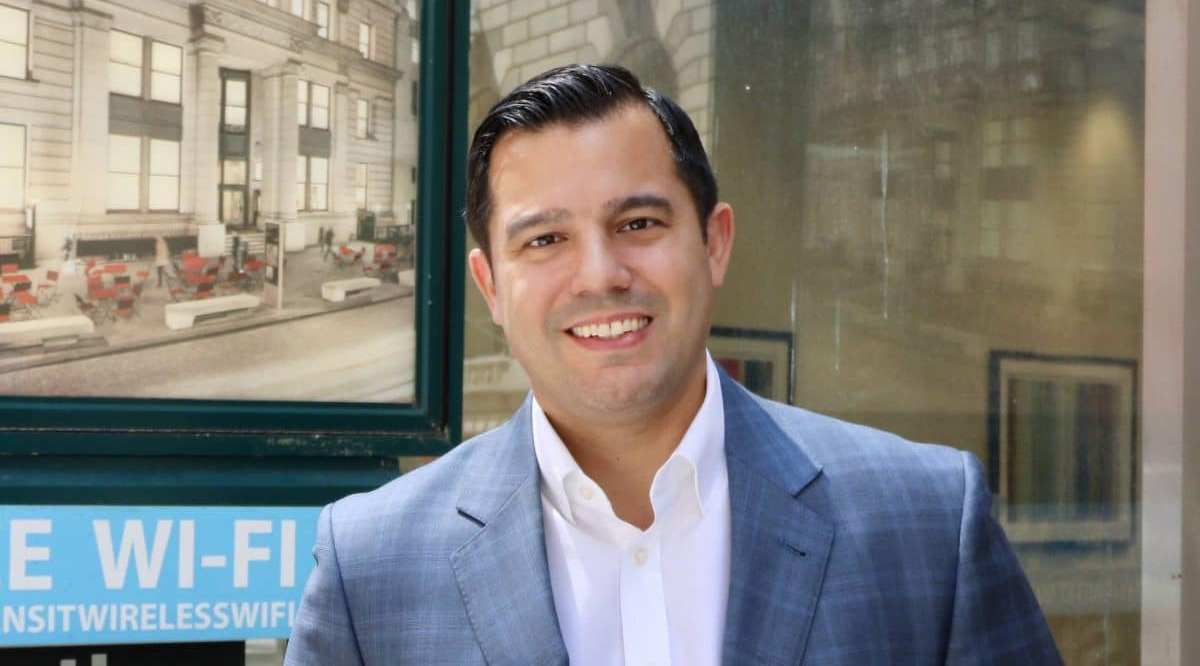
Omar Arnaout, CEO of XTB
XTB shares
dropped 3.8% during Monday's trading session on the Warsaw Stock Exchange (WSE:
XTB), hitting their lowest levels since April as the Polish online brokerage
extended its losing streak to five consecutive sessions.
XTB Extends Decline to
Five Sessions on Technical Break
The stock
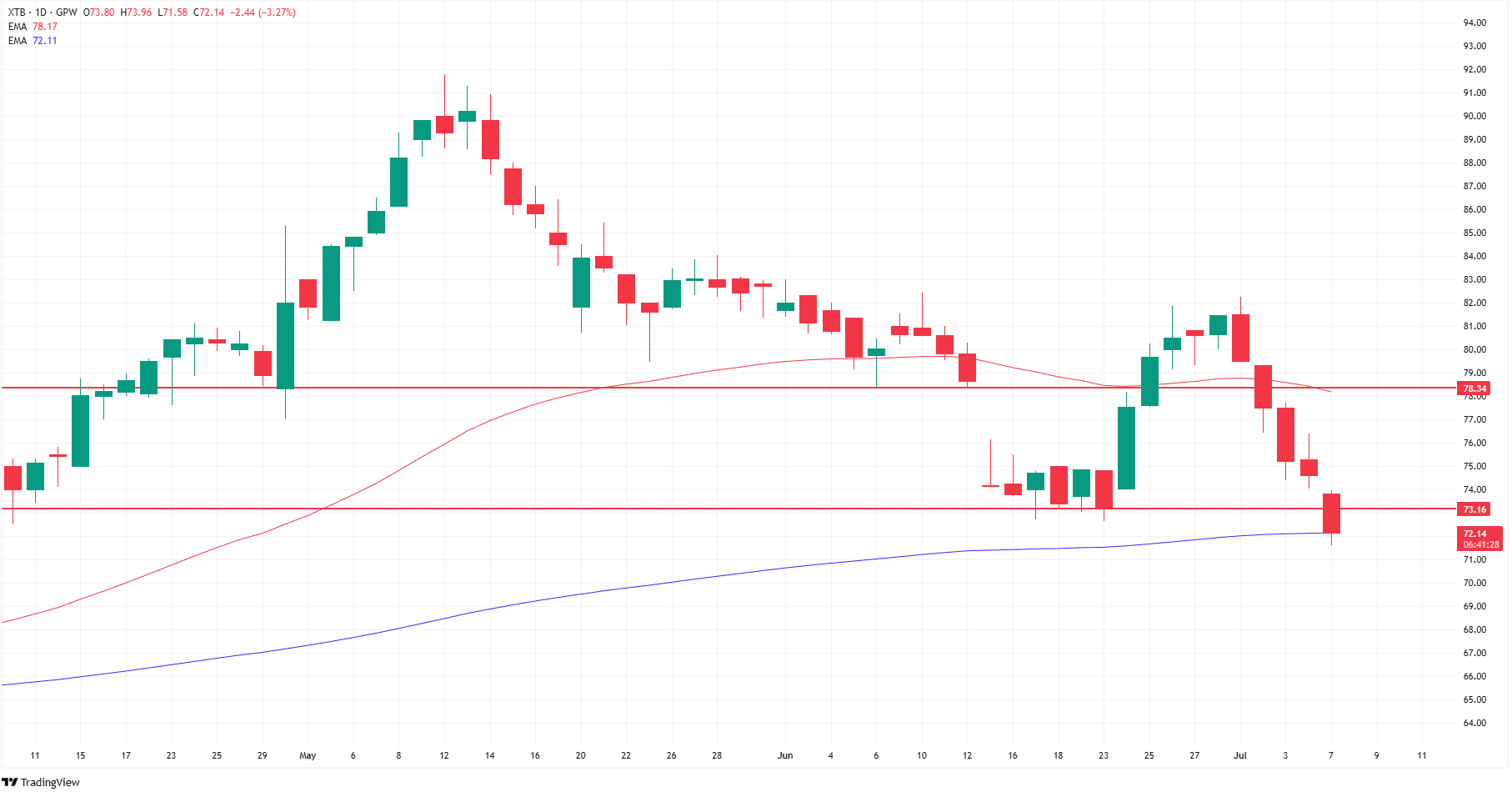
fell below its 200-day exponential moving average of 64 zloty, a key technical
indicator that traders watch closely. XTB hasn't spent much time below this
level in recent years, with the last extended period occurring between August
and October 2023.
From this
year's May highs near 92 zloty, XTB shares have now declined roughly 22%,
breaking through two important support levels at 78 zloty and 73 zloty that
were established by local lows in June.
XTB share price today. Source: Tradingview.com
The selloff
appears isolated to XTB rather than reflecting broader sector weakness. Other
publicly traded CFD brokers posted gains Monday, with Plus500 rising 1.8% to
333.4 pence after releasing a trading update for the first half of 2025. CMC
Markets climbed 1.2% to 252 pence.
No clear
catalyst explains XTB's recent decline. The company hasn't released any new
reports, with its next earnings update scheduled for August covering
second-quarter and first-half 2025 results. Online discussions among retail
investors mention institutional capital flows, but no concrete developments
have emerged.
Analyst
coverage remains sparse, with the most recent recommendation coming from Polish
Nobel Securities on February 11, 2025, setting a target price of 70 zloty.
mBank took a more pessimistic view in late January, recommending a sell rating
with a target price just under 69 zloty.
The decline
comes despite XTB's continued product expansion efforts. FinanceMagnates.com
reported last week that the firm added IKZE retirement investment accounts to
its Polish offering. In mid-June, XTB increased the number of supported
cryptocurrencies in its e-wallet to 19, positioning itself to compete with
Revolut.
“We are entering a period that will be the first serious test for eWallet,” said Omar Arnaout, XTB's CEO. “The vacation time and foreign travel is a moment when our users will certainly use this solution more intensively.”
XTB
currently trades at 72.24 zloty, with a market capitalization of approximately
8.58 billion zloty. The stock has gained 86% in the past year but remains down
7.47% over the past week.
XTB shares
dropped 3.8% during Monday's trading session on the Warsaw Stock Exchange (WSE:
XTB), hitting their lowest levels since April as the Polish online brokerage
extended its losing streak to five consecutive sessions.
XTB Extends Decline to
Five Sessions on Technical Break
The stock
fell below its 200-day exponential moving average of 64 zloty, a key technical
indicator that traders watch closely. XTB hasn't spent much time below this
level in recent years, with the last extended period occurring between August
and October 2023.
From this
year's May highs near 92 zloty, XTB shares have now declined roughly 22%,
breaking through two important support levels at 78 zloty and 73 zloty that
were established by local lows in June.
XTB share price today. Source: Tradingview.com
The selloff
appears isolated to XTB rather than reflecting broader sector weakness. Other
publicly traded CFD brokers posted gains Monday, with Plus500 rising 1.8% to
333.4 pence after releasing a trading update for the first half of 2025. CMC
Markets climbed 1.2% to 252 pence.
No clear
catalyst explains XTB's recent decline. The company hasn't released any new
reports, with its next earnings update scheduled for August covering
second-quarter and first-half 2025 results. Online discussions among retail
investors mention institutional capital flows, but no concrete developments
have emerged.
Analyst
coverage remains sparse, with the most recent recommendation coming from Polish
Nobel Securities on February 11, 2025, setting a target price of 70 zloty.
mBank took a more pessimistic view in late January, recommending a sell rating
with a target price just under 69 zloty.
The decline
comes despite XTB's continued product expansion efforts. FinanceMagnates.com
reported last week that the firm added IKZE retirement investment accounts to
its Polish offering. In mid-June, XTB increased the number of supported
cryptocurrencies in its e-wallet to 19, positioning itself to compete with
Revolut.
“We are entering a period that will be the first serious test for eWallet,” said Omar Arnaout, XTB's CEO. “The vacation time and foreign travel is a moment when our users will certainly use this solution more intensively.”
XTB
currently trades at 72.24 zloty, with a market capitalization of approximately
8.58 billion zloty. The stock has gained 86% in the past year but remains down
7.47% over the past week.
Damian Chmiel is a Senior Analyst & Editor at Finance Magnates with more than 15 years of experience in the CFD and online trading industry. Active as both a trader and journalist since 2010, he focuses on broker coverage, fintech innovation, and regulatory developments across Europe, the Middle East, and Asia.
His work includes interviews with C-level leaders at major brokerages and fintech platforms, as well as co-authoring Finance Magnates’ quarterly industry benchmarking reports. Damian’s reporting is data-driven, market-aware, and grounded in direct industry engagement. His analysis and commentary have also been cited by external media outlets, including Investing.com, Binance, The Asset, Stockhead, and Dispatch.
Education:
MA in Finance and Accounting, Cracow University of Economics
Retail Traders Can Now Access Prediction Markets Through Binance Wallet
FP Markets Winner Spotlight 🏆 | Global Broker of the Year 2025 #Trading #Broker #Innovation #Shorts
FP Markets Winner Spotlight 🏆 | Global Broker of the Year 2025 #Trading #Broker #Innovation #Shorts
FP Markets takes the spotlight as Global Broker of the Year 2025 at the Finance Magnates Awards.
Martin Stoilov, Head of Client Experience, shares that trust, innovation, and people played a key role in the company’s success, supported by a strong foundation of integrity and client-centricity.
Following this milestone, FP Markets continues to focus on growth, technology investment, and its core values of transparency and excellence.
👉 Be part of FM Awards 2026: https://awards.financemagnates.com/#nominate
FP Markets takes the spotlight as Global Broker of the Year 2025 at the Finance Magnates Awards.
Martin Stoilov, Head of Client Experience, shares that trust, innovation, and people played a key role in the company’s success, supported by a strong foundation of integrity and client-centricity.
Following this milestone, FP Markets continues to focus on growth, technology investment, and its core values of transparency and excellence.
👉 Be part of FM Awards 2026: https://awards.financemagnates.com/#nominate
In this video, we review @HolaPrimeMarketsOfficial, a multi-asset forex and CFDs broker offering different account types, trading platforms, and flexible trading conditions.
We cover the broker’s overall offering, including account options, trading environment, platforms like MT4 and MT5, and additional services such as managed accounts and fast withdrawals.
Watch the full video to see if Hola Prime Markets fits your trading needs.
📣 Stay up to date with the latest in finance and trading. Follow Finance Magnates for industry news, insights, and global event coverage.
Connect with us:
🔗 LinkedIn: /financemagnates
👍 Facebook: /financemagnates
📸 Instagram: https://www.instagram.com/financemagnates
🐦 X: https://x.com/financemagnates
🎥 TikTok: https://www.tiktok.com/tag/financemagnates
▶️ YouTube: /@financemagnates_official
#HolaPrime #ForexBroker #CFDTrading #FinanceMagnates #Trading #Forex #BrokerReview
In this video, we review @HolaPrimeMarketsOfficial, a multi-asset forex and CFDs broker offering different account types, trading platforms, and flexible trading conditions.
We cover the broker’s overall offering, including account options, trading environment, platforms like MT4 and MT5, and additional services such as managed accounts and fast withdrawals.
Watch the full video to see if Hola Prime Markets fits your trading needs.
📣 Stay up to date with the latest in finance and trading. Follow Finance Magnates for industry news, insights, and global event coverage.
Connect with us:
🔗 LinkedIn: /financemagnates
👍 Facebook: /financemagnates
📸 Instagram: https://www.instagram.com/financemagnates
🐦 X: https://x.com/financemagnates
🎥 TikTok: https://www.tiktok.com/tag/financemagnates
▶️ YouTube: /@financemagnates_official
#HolaPrime #ForexBroker #CFDTrading #FinanceMagnates #Trading #Forex #BrokerReview
Hola Prime Review: What You Need to Know | Full Breakdown by Finance Magnates
Hola Prime Review: What You Need to Know | Full Breakdown by Finance Magnates
In this video, we review @HolaPrime_Global, a proprietary trading firm offering evaluation programs and performance-based payouts in simulated market environments.
We cover how the challenge model works, including account types, profit splits (up to 95%), trading rules, and what it takes to reach a funded account. You’ll also learn about available platforms like MT4, MT5, cTrader, and more, along with insights into payouts, support, and trading conditions.
Watch the full video to see if Hola Prime fits your trading style.
📣 Stay up to date with the latest in finance and trading. Follow Finance Magnates for industry news, insights, and global event coverage.
Connect with us:
🔗 LinkedIn: /financemagnates
👍 Facebook: /financemagnates
📸 Instagram: https://www.instagram.com/financemagnates
🐦 X: https://x.com/financemagnates
🎥 TikTok: https://www.tiktok.com/tag/financemagnates
▶️ YouTube: /@financemagnates_official
#HolaPrime #PropFirm #Trading #FinanceMagnates #Forex #FuturesTrading #TradingReview #PropFirmReview
In this video, we review @HolaPrime_Global, a proprietary trading firm offering evaluation programs and performance-based payouts in simulated market environments.
We cover how the challenge model works, including account types, profit splits (up to 95%), trading rules, and what it takes to reach a funded account. You’ll also learn about available platforms like MT4, MT5, cTrader, and more, along with insights into payouts, support, and trading conditions.
Watch the full video to see if Hola Prime fits your trading style.
📣 Stay up to date with the latest in finance and trading. Follow Finance Magnates for industry news, insights, and global event coverage.
Connect with us:
🔗 LinkedIn: /financemagnates
👍 Facebook: /financemagnates
📸 Instagram: https://www.instagram.com/financemagnates
🐦 X: https://x.com/financemagnates
🎥 TikTok: https://www.tiktok.com/tag/financemagnates
▶️ YouTube: /@financemagnates_official
#HolaPrime #PropFirm #Trading #FinanceMagnates #Forex #FuturesTrading #TradingReview #PropFirmReview
Axi Winner Spotlight 🏆 | Global Most Innovative Broker 2025 #Innovation #Trading #Fintech #Broker
Axi Winner Spotlight 🏆 | Global Most Innovative Broker 2025 #Innovation #Trading #Fintech #Broker
Axi takes the spotlight at the Finance Magnates Awards, winning Global Most Innovative Broker 2025.
Olivia Xenofontos and Ivanna Openko share how the team will feel: proud, motivated, and ready to keep delivering.
They also describe the night as well-organized, focused, and enjoyable for all.
👉 Be part of FM Awards 2026.
Axi takes the spotlight at the Finance Magnates Awards, winning Global Most Innovative Broker 2025.
Olivia Xenofontos and Ivanna Openko share how the team will feel: proud, motivated, and ready to keep delivering.
They also describe the night as well-organized, focused, and enjoyable for all.
👉 Be part of FM Awards 2026.
Recognition that matters.
Built on transparency.
Driven by the industry.
The Finance Magnates Awards 2026.
Nominations are now open.
🔗 https://awards.financemagnates.com/?utm_source=SM&utm_medium=social&utm_campaign=recognition-matters
Recognition that matters.
Built on transparency.
Driven by the industry.
The Finance Magnates Awards 2026.
Nominations are now open.
🔗 https://awards.financemagnates.com/?utm_source=SM&utm_medium=social&utm_campaign=recognition-matters