UK Treasury Plans to Criminalise All Benchmark Fixing LIBOR-Led by Example
Wednesday,01/10/2014|13:30GMTby
George Tchetvertakov
After the horse has already bolted, the UK Treasury begins a consultation into closing the barn door.
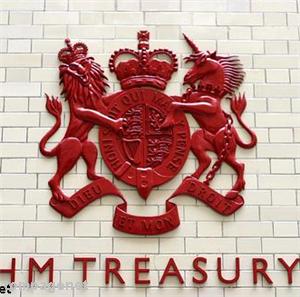
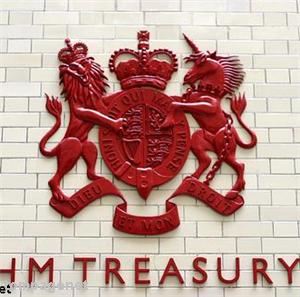
The UK Treasury is considering applying the same criminal consequences that apply to LIBOR rates to other benchmark rates in the financial markets.
The government agency is consulting on extending the new market manipulation legislation onto benchmark rates such as the Sterling Overnight Index Average (SONIA) and Repurchase Overnight Index Average (RONIA) rates. Both are reference rates for overnight index Swaps. Other benchmarks considered for inclusion are the WM/Reuters 4pm London Fix, a core foreign Exchange benchmark for institutional traders; and ISDAFix, the principal global benchmark for swap rates.
Commodity market benchmarks considered for inclusion are the London Gold Fixing, the LBMA Silver Price rates and the ICE Brent futures contract, the world's most-traded crude oil future. As with the new LIBOR offences, making false or misleading statements in relation to these rates would carry prison sentences of up to seven years and unlimited fines.
Parallel to the Treasury’s announcement, the Economic Secretary Andrea Leadsom said: "The integrity of the City matters to the economy of Britain." Adding, "Ensuring that the key rates that underpin financial markets are robust, and that anyone who seeks to manipulate them is subject to the full force of the law, is vital. That's why the government is determined to deal with abuses, tackle the unacceptable behaviour of the few and ensure that markets are fair for the many who depend on them."
Bombastic and ironic words to be sure, at a time when the British government is pushing forward with astute austerity measures forced by large-scale bank bailouts. A large portion of those bailouts rescued insolvent firms at a large expense to the taxpayer. Private losses were nationalised and public profits were privatised with the benefits going to the 'few' while the costs to 'many'.
Review and Reflect
The Fair and Effective Markets Review, a joint initiative by the Treasury, Bank of England and Financial Conduct Authority (FCA), is a key part of the consultation process according to the Treasury with the report’s publication expected in June 2015. The consultation is open for public submissions with the summary: "This consultation seeks views on which additional major financial benchmarks should be brought into the regulatory framework originally implemented for LIBOR."
Despite the Fair and Effective Markets Review expected to be completed only as late as mid-2015, Her Majesty's Treasury is committed to enforcing the proposed changes by the end of this year with consultations ending on October 23rd.
To date, not a single employee of any firm has been charged with a criminal offence relating to price fixing of any market, despite dozens of confirmed cases of market manipulation between multiple banks involving dozens of individuals. To what extent this latest proposed extension of legislative powers aids accountability and deters market manipulation among gargantuan financial intermediaries is up for debate.
The UK Treasury is considering applying the same criminal consequences that apply to LIBOR rates to other benchmark rates in the financial markets.
The government agency is consulting on extending the new market manipulation legislation onto benchmark rates such as the Sterling Overnight Index Average (SONIA) and Repurchase Overnight Index Average (RONIA) rates. Both are reference rates for overnight index Swaps. Other benchmarks considered for inclusion are the WM/Reuters 4pm London Fix, a core foreign Exchange benchmark for institutional traders; and ISDAFix, the principal global benchmark for swap rates.
Commodity market benchmarks considered for inclusion are the London Gold Fixing, the LBMA Silver Price rates and the ICE Brent futures contract, the world's most-traded crude oil future. As with the new LIBOR offences, making false or misleading statements in relation to these rates would carry prison sentences of up to seven years and unlimited fines.
Parallel to the Treasury’s announcement, the Economic Secretary Andrea Leadsom said: "The integrity of the City matters to the economy of Britain." Adding, "Ensuring that the key rates that underpin financial markets are robust, and that anyone who seeks to manipulate them is subject to the full force of the law, is vital. That's why the government is determined to deal with abuses, tackle the unacceptable behaviour of the few and ensure that markets are fair for the many who depend on them."
Bombastic and ironic words to be sure, at a time when the British government is pushing forward with astute austerity measures forced by large-scale bank bailouts. A large portion of those bailouts rescued insolvent firms at a large expense to the taxpayer. Private losses were nationalised and public profits were privatised with the benefits going to the 'few' while the costs to 'many'.
Review and Reflect
The Fair and Effective Markets Review, a joint initiative by the Treasury, Bank of England and Financial Conduct Authority (FCA), is a key part of the consultation process according to the Treasury with the report’s publication expected in June 2015. The consultation is open for public submissions with the summary: "This consultation seeks views on which additional major financial benchmarks should be brought into the regulatory framework originally implemented for LIBOR."
Despite the Fair and Effective Markets Review expected to be completed only as late as mid-2015, Her Majesty's Treasury is committed to enforcing the proposed changes by the end of this year with consultations ending on October 23rd.
To date, not a single employee of any firm has been charged with a criminal offence relating to price fixing of any market, despite dozens of confirmed cases of market manipulation between multiple banks involving dozens of individuals. To what extent this latest proposed extension of legislative powers aids accountability and deters market manipulation among gargantuan financial intermediaries is up for debate.
Cyprus Is the EU’s CFD Broker Hub, and Its Youth Are the Bloc’s Most Online
FP Markets Winner Spotlight 🏆 | Global Broker of the Year 2025 #Trading #Broker #Innovation #Shorts
FP Markets Winner Spotlight 🏆 | Global Broker of the Year 2025 #Trading #Broker #Innovation #Shorts
FP Markets takes the spotlight as Global Broker of the Year 2025 at the Finance Magnates Awards.
Martin Stoilov, Head of Client Experience, shares that trust, innovation, and people played a key role in the company’s success, supported by a strong foundation of integrity and client-centricity.
Following this milestone, FP Markets continues to focus on growth, technology investment, and its core values of transparency and excellence.
👉 Be part of FM Awards 2026: https://awards.financemagnates.com/#nominate
FP Markets takes the spotlight as Global Broker of the Year 2025 at the Finance Magnates Awards.
Martin Stoilov, Head of Client Experience, shares that trust, innovation, and people played a key role in the company’s success, supported by a strong foundation of integrity and client-centricity.
Following this milestone, FP Markets continues to focus on growth, technology investment, and its core values of transparency and excellence.
👉 Be part of FM Awards 2026: https://awards.financemagnates.com/#nominate
In this video, we review @HolaPrimeMarketsOfficial, a multi-asset forex and CFDs broker offering different account types, trading platforms, and flexible trading conditions.
We cover the broker’s overall offering, including account options, trading environment, platforms like MT4 and MT5, and additional services such as managed accounts and fast withdrawals.
Watch the full video to see if Hola Prime Markets fits your trading needs.
📣 Stay up to date with the latest in finance and trading. Follow Finance Magnates for industry news, insights, and global event coverage.
Connect with us:
🔗 LinkedIn: /financemagnates
👍 Facebook: /financemagnates
📸 Instagram: https://www.instagram.com/financemagnates
🐦 X: https://x.com/financemagnates
🎥 TikTok: https://www.tiktok.com/tag/financemagnates
▶️ YouTube: /@financemagnates_official
#HolaPrime #ForexBroker #CFDTrading #FinanceMagnates #Trading #Forex #BrokerReview
In this video, we review @HolaPrimeMarketsOfficial, a multi-asset forex and CFDs broker offering different account types, trading platforms, and flexible trading conditions.
We cover the broker’s overall offering, including account options, trading environment, platforms like MT4 and MT5, and additional services such as managed accounts and fast withdrawals.
Watch the full video to see if Hola Prime Markets fits your trading needs.
📣 Stay up to date with the latest in finance and trading. Follow Finance Magnates for industry news, insights, and global event coverage.
Connect with us:
🔗 LinkedIn: /financemagnates
👍 Facebook: /financemagnates
📸 Instagram: https://www.instagram.com/financemagnates
🐦 X: https://x.com/financemagnates
🎥 TikTok: https://www.tiktok.com/tag/financemagnates
▶️ YouTube: /@financemagnates_official
#HolaPrime #ForexBroker #CFDTrading #FinanceMagnates #Trading #Forex #BrokerReview
Hola Prime Review: What You Need to Know | Full Breakdown by Finance Magnates
Hola Prime Review: What You Need to Know | Full Breakdown by Finance Magnates
In this video, we review @HolaPrime_Global, a proprietary trading firm offering evaluation programs and performance-based payouts in simulated market environments.
We cover how the challenge model works, including account types, profit splits (up to 95%), trading rules, and what it takes to reach a funded account. You’ll also learn about available platforms like MT4, MT5, cTrader, and more, along with insights into payouts, support, and trading conditions.
Watch the full video to see if Hola Prime fits your trading style.
📣 Stay up to date with the latest in finance and trading. Follow Finance Magnates for industry news, insights, and global event coverage.
Connect with us:
🔗 LinkedIn: /financemagnates
👍 Facebook: /financemagnates
📸 Instagram: https://www.instagram.com/financemagnates
🐦 X: https://x.com/financemagnates
🎥 TikTok: https://www.tiktok.com/tag/financemagnates
▶️ YouTube: /@financemagnates_official
#HolaPrime #PropFirm #Trading #FinanceMagnates #Forex #FuturesTrading #TradingReview #PropFirmReview
In this video, we review @HolaPrime_Global, a proprietary trading firm offering evaluation programs and performance-based payouts in simulated market environments.
We cover how the challenge model works, including account types, profit splits (up to 95%), trading rules, and what it takes to reach a funded account. You’ll also learn about available platforms like MT4, MT5, cTrader, and more, along with insights into payouts, support, and trading conditions.
Watch the full video to see if Hola Prime fits your trading style.
📣 Stay up to date with the latest in finance and trading. Follow Finance Magnates for industry news, insights, and global event coverage.
Connect with us:
🔗 LinkedIn: /financemagnates
👍 Facebook: /financemagnates
📸 Instagram: https://www.instagram.com/financemagnates
🐦 X: https://x.com/financemagnates
🎥 TikTok: https://www.tiktok.com/tag/financemagnates
▶️ YouTube: /@financemagnates_official
#HolaPrime #PropFirm #Trading #FinanceMagnates #Forex #FuturesTrading #TradingReview #PropFirmReview
Axi Winner Spotlight 🏆 | Global Most Innovative Broker 2025 #Innovation #Trading #Fintech #Broker
Axi Winner Spotlight 🏆 | Global Most Innovative Broker 2025 #Innovation #Trading #Fintech #Broker
Axi takes the spotlight at the Finance Magnates Awards, winning Global Most Innovative Broker 2025.
Olivia Xenofontos and Ivanna Openko share how the team will feel: proud, motivated, and ready to keep delivering.
They also describe the night as well-organized, focused, and enjoyable for all.
👉 Be part of FM Awards 2026.
Axi takes the spotlight at the Finance Magnates Awards, winning Global Most Innovative Broker 2025.
Olivia Xenofontos and Ivanna Openko share how the team will feel: proud, motivated, and ready to keep delivering.
They also describe the night as well-organized, focused, and enjoyable for all.
👉 Be part of FM Awards 2026.
Recognition that matters.
Built on transparency.
Driven by the industry.
The Finance Magnates Awards 2026.
Nominations are now open.
🔗 https://awards.financemagnates.com/?utm_source=SM&utm_medium=social&utm_campaign=recognition-matters
Recognition that matters.
Built on transparency.
Driven by the industry.
The Finance Magnates Awards 2026.
Nominations are now open.
🔗 https://awards.financemagnates.com/?utm_source=SM&utm_medium=social&utm_campaign=recognition-matters