Singapore's billionaire Oei blames Goldman Sachs for various fraudulent conducts, wrongfully leading him to place two currency options trades worth $100M, which resulted in the loss of tens of millions.
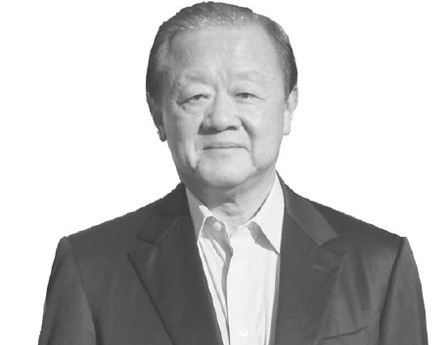
A major Singaporean investor, named Oei Hong Leong, whose net worth hovers around the billion dollar mark, has sued Goldman Sachs Group over two currency options trades that netted losses of $34 million for the investor.
The complaint refers to trading costs incurred by Mr. Oei, $34 million of which resulted allegedly by fraud, misrepresentation and misinformation pertaining to two trades in currency options on the Brazilian Real (BRL) and Japanese Yen (JPY) pair that had been solicited by Goldman Sachs, valued at $50 million each, as per the filing.
The complaint was filed to the Supreme Court of the State of New York this morning, by Mr. Oei’s counsel. It names Goldman Sachs Group, Inc., the New York City-based parent corporation for global investment banking, securities and investment management firm, as the defendant. Representing Mr. Oei are McNulty Law Firm, together with local counsel Alan Friedman of Jersey City, NJ firm Bagolie Friedman.
According to the complaint filed today, Mr. Oei had business with Goldman Sachs since 2001, but had retracted most of his funds following a $28,500,000 loss associated with a 2011 trade. In 2012, Gary Cohn, the President and COO of Goldman Sachs, traveled to Singapore with other high level executives in order to meet Mr. Oei and persuade him to resume trading with the firm. As reinforcement, even the former US ambassador to Singapore had been invited to the gathering which was aimed at winning back Mr. Oei as a customer, Mr. McNaulty told Forex Magnates.
Mr. McNaulty further described how Goldman Sachs, through Gary Cohn, assured Mr. Oei that his money will be treated in the best way possible should he decide to renew his business with the firm. Shortly after Mr. Oei agreed to resume trading activities with Goldman Sachs, he was recommended two currency option trades involving the BRL and JPY pair.
Goldman Sachs' Misleading Counsel?
According to the complaint, Goldman Sachs employees have made reckless and false statements regarding Mr. Oei’s business, following which he had realized two currency option trades for $50 million each.
Just a day after he entered into these two trades, Mr. Oei claims to have learned that the strike prices Goldman Sachs used were the worst prices of the day. Furthermore, he later learned that a second strike price offered for his trade was actually the worst of the year. Also, no voice logs were made, which is contrary to Hong Kong regulations, according to the complaint.
Mr. Oei then instructed Goldman Sachs to immediately unwind these trades at cost or better, but he was provided with an unwind price only five days later, on May 21, 2013, when he learned that Goldman Sachs wanted $18,000,000 to unwind these two trades which would result in him incurring an $8,000,000 net loss.
Mr. Oei cancelled loss-bearing unwind order and claimed, according to Mr. McNulty, that as market maker or counterparty to the trade, Goldman Sachs should be willing to make good on these trades by reimbursing the client for the costs incurred, in addition or in accordance to any alleged wrongdoing cited in the filed complaint. On May 24, 2013, Goldman Sachs provided Mr. Oei with a "Sensitivity Analysis" which confirmed that the two trades he had entered into were illiquid on favorable terms.
The Singapore Magnate Seeks Compensation
According to the official press release from McNaulty law firm, on June 10, 2013, when Goldman Sachs belatedly provided Mr. Oei with a written trade confirmation, he refused to sign it as it referenced the two strike prices which by now he knew were unfair and much worse than he could have reasonably anticipated.
According to Forex Magnates' research, this may have been a key legal deciding factor, as the billionaire tycoon implied that something didn't seem right when he refused to sign the subsequent paperwork that followed the suspected trades in question.
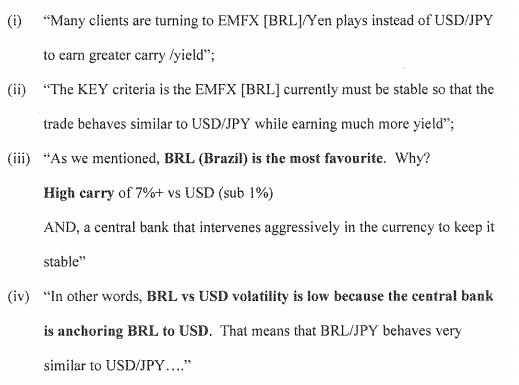
The press release and filings go on to say that eventually after six margin calls, on June 17, 2013, Mr. Oei unwound the two BRL/JPY trades at a loss of over $34,000,000. An excerpt from the complaint is provided below depicting alleged comparisons of the two currency pairs:
The complaint sets out causes of action alleging fraudulent misrepresentation, breach of fiduciary duty, corporate malfeasance, fraudulent inducement, unjust enrichment and aiding and abetting of fraudulent conduct. Mr. Oei seeks compensatory and punitive damages in this action.
While Mr. McNulty of the Los Angeles-based McNulty Law Firm is lead counsel for Mr. Oei, Alan Friedman of the Jersey City, NJ firm Bagolie Friedman is local counsel for Mr. Oei in New York. A full copy of the filed complaint, including the 197 allegations summarized as part of the filing and was posted on the McNaulty group website.
Oei Hong Leong
Mr. Oei is ranked as the 32 richest person in Singapore according to the Forbes List, which also estimates his net worth at $745 million as of August 2013. Mr. Oei, had previously successfully settled with Citigroup after he claimed Citigroup failed to execute orders for $600 million in U.S. 30-year treasury bonds in November, that were placed to covered call options he had written, as told to the media and based on a case involving Mr. Oei vs Citigroup filed in a high court in Singapore.
Forex Magnates reached out to the Goldman Sach legal department, concerning the complaint filed today that was posted by McNaulty's website and dated December 4th, 2013 (today), but to no avail as of publication.
A major Singaporean investor, named Oei Hong Leong, whose net worth hovers around the billion dollar mark, has sued Goldman Sachs Group over two currency options trades that netted losses of $34 million for the investor.
The complaint refers to trading costs incurred by Mr. Oei, $34 million of which resulted allegedly by fraud, misrepresentation and misinformation pertaining to two trades in currency options on the Brazilian Real (BRL) and Japanese Yen (JPY) pair that had been solicited by Goldman Sachs, valued at $50 million each, as per the filing.
The complaint was filed to the Supreme Court of the State of New York this morning, by Mr. Oei’s counsel. It names Goldman Sachs Group, Inc., the New York City-based parent corporation for global investment banking, securities and investment management firm, as the defendant. Representing Mr. Oei are McNulty Law Firm, together with local counsel Alan Friedman of Jersey City, NJ firm Bagolie Friedman.
According to the complaint filed today, Mr. Oei had business with Goldman Sachs since 2001, but had retracted most of his funds following a $28,500,000 loss associated with a 2011 trade. In 2012, Gary Cohn, the President and COO of Goldman Sachs, traveled to Singapore with other high level executives in order to meet Mr. Oei and persuade him to resume trading with the firm. As reinforcement, even the former US ambassador to Singapore had been invited to the gathering which was aimed at winning back Mr. Oei as a customer, Mr. McNaulty told Forex Magnates.
Mr. McNaulty further described how Goldman Sachs, through Gary Cohn, assured Mr. Oei that his money will be treated in the best way possible should he decide to renew his business with the firm. Shortly after Mr. Oei agreed to resume trading activities with Goldman Sachs, he was recommended two currency option trades involving the BRL and JPY pair.
Goldman Sachs' Misleading Counsel?
According to the complaint, Goldman Sachs employees have made reckless and false statements regarding Mr. Oei’s business, following which he had realized two currency option trades for $50 million each.
Just a day after he entered into these two trades, Mr. Oei claims to have learned that the strike prices Goldman Sachs used were the worst prices of the day. Furthermore, he later learned that a second strike price offered for his trade was actually the worst of the year. Also, no voice logs were made, which is contrary to Hong Kong regulations, according to the complaint.
Mr. Oei then instructed Goldman Sachs to immediately unwind these trades at cost or better, but he was provided with an unwind price only five days later, on May 21, 2013, when he learned that Goldman Sachs wanted $18,000,000 to unwind these two trades which would result in him incurring an $8,000,000 net loss.
Mr. Oei cancelled loss-bearing unwind order and claimed, according to Mr. McNulty, that as market maker or counterparty to the trade, Goldman Sachs should be willing to make good on these trades by reimbursing the client for the costs incurred, in addition or in accordance to any alleged wrongdoing cited in the filed complaint. On May 24, 2013, Goldman Sachs provided Mr. Oei with a "Sensitivity Analysis" which confirmed that the two trades he had entered into were illiquid on favorable terms.
The Singapore Magnate Seeks Compensation
According to the official press release from McNaulty law firm, on June 10, 2013, when Goldman Sachs belatedly provided Mr. Oei with a written trade confirmation, he refused to sign it as it referenced the two strike prices which by now he knew were unfair and much worse than he could have reasonably anticipated.
According to Forex Magnates' research, this may have been a key legal deciding factor, as the billionaire tycoon implied that something didn't seem right when he refused to sign the subsequent paperwork that followed the suspected trades in question.
The press release and filings go on to say that eventually after six margin calls, on June 17, 2013, Mr. Oei unwound the two BRL/JPY trades at a loss of over $34,000,000. An excerpt from the complaint is provided below depicting alleged comparisons of the two currency pairs:
The complaint sets out causes of action alleging fraudulent misrepresentation, breach of fiduciary duty, corporate malfeasance, fraudulent inducement, unjust enrichment and aiding and abetting of fraudulent conduct. Mr. Oei seeks compensatory and punitive damages in this action.
While Mr. McNulty of the Los Angeles-based McNulty Law Firm is lead counsel for Mr. Oei, Alan Friedman of the Jersey City, NJ firm Bagolie Friedman is local counsel for Mr. Oei in New York. A full copy of the filed complaint, including the 197 allegations summarized as part of the filing and was posted on the McNaulty group website.
Oei Hong Leong
Mr. Oei is ranked as the 32 richest person in Singapore according to the Forbes List, which also estimates his net worth at $745 million as of August 2013. Mr. Oei, had previously successfully settled with Citigroup after he claimed Citigroup failed to execute orders for $600 million in U.S. 30-year treasury bonds in November, that were placed to covered call options he had written, as told to the media and based on a case involving Mr. Oei vs Citigroup filed in a high court in Singapore.
Forex Magnates reached out to the Goldman Sach legal department, concerning the complaint filed today that was posted by McNaulty's website and dated December 4th, 2013 (today), but to no avail as of publication.
Italy’s Consob Tightens Net on AI-Fueled Scams With Fresh Website Bans
Featured Videos
FP Markets Winner Spotlight 🏆 | Global Broker of the Year 2025 #Trading #Broker #Innovation #Shorts
FP Markets Winner Spotlight 🏆 | Global Broker of the Year 2025 #Trading #Broker #Innovation #Shorts
FP Markets Winner Spotlight 🏆 | Global Broker of the Year 2025 #Trading #Broker #Innovation #Shorts
FP Markets Winner Spotlight 🏆 | Global Broker of the Year 2025 #Trading #Broker #Innovation #Shorts
FP Markets takes the spotlight as Global Broker of the Year 2025 at the Finance Magnates Awards.
Martin Stoilov, Head of Client Experience, shares that trust, innovation, and people played a key role in the company’s success, supported by a strong foundation of integrity and client-centricity.
Following this milestone, FP Markets continues to focus on growth, technology investment, and its core values of transparency and excellence.
👉 Be part of FM Awards 2026: https://awards.financemagnates.com/#nominate
FP Markets takes the spotlight as Global Broker of the Year 2025 at the Finance Magnates Awards.
Martin Stoilov, Head of Client Experience, shares that trust, innovation, and people played a key role in the company’s success, supported by a strong foundation of integrity and client-centricity.
Following this milestone, FP Markets continues to focus on growth, technology investment, and its core values of transparency and excellence.
👉 Be part of FM Awards 2026: https://awards.financemagnates.com/#nominate
FP Markets takes the spotlight as Global Broker of the Year 2025 at the Finance Magnates Awards.
Martin Stoilov, Head of Client Experience, shares that trust, innovation, and people played a key role in the company’s success, supported by a strong foundation of integrity and client-centricity.
Following this milestone, FP Markets continues to focus on growth, technology investment, and its core values of transparency and excellence.
👉 Be part of FM Awards 2026: https://awards.financemagnates.com/#nominate
FP Markets takes the spotlight as Global Broker of the Year 2025 at the Finance Magnates Awards.
Martin Stoilov, Head of Client Experience, shares that trust, innovation, and people played a key role in the company’s success, supported by a strong foundation of integrity and client-centricity.
Following this milestone, FP Markets continues to focus on growth, technology investment, and its core values of transparency and excellence.
👉 Be part of FM Awards 2026: https://awards.financemagnates.com/#nominate
In this video, we review @HolaPrimeMarketsOfficial, a multi-asset forex and CFDs broker offering different account types, trading platforms, and flexible trading conditions.
We cover the broker’s overall offering, including account options, trading environment, platforms like MT4 and MT5, and additional services such as managed accounts and fast withdrawals.
Watch the full video to see if Hola Prime Markets fits your trading needs.
📣 Stay up to date with the latest in finance and trading. Follow Finance Magnates for industry news, insights, and global event coverage.
Connect with us:
🔗 LinkedIn: /financemagnates
👍 Facebook: /financemagnates
📸 Instagram: https://www.instagram.com/financemagnates
🐦 X: https://x.com/financemagnates
🎥 TikTok: https://www.tiktok.com/tag/financemagnates
▶️ YouTube: /@financemagnates_official
#HolaPrime #ForexBroker #CFDTrading #FinanceMagnates #Trading #Forex #BrokerReview
In this video, we review @HolaPrimeMarketsOfficial, a multi-asset forex and CFDs broker offering different account types, trading platforms, and flexible trading conditions.
We cover the broker’s overall offering, including account options, trading environment, platforms like MT4 and MT5, and additional services such as managed accounts and fast withdrawals.
Watch the full video to see if Hola Prime Markets fits your trading needs.
📣 Stay up to date with the latest in finance and trading. Follow Finance Magnates for industry news, insights, and global event coverage.
Connect with us:
🔗 LinkedIn: /financemagnates
👍 Facebook: /financemagnates
📸 Instagram: https://www.instagram.com/financemagnates
🐦 X: https://x.com/financemagnates
🎥 TikTok: https://www.tiktok.com/tag/financemagnates
▶️ YouTube: /@financemagnates_official
#HolaPrime #ForexBroker #CFDTrading #FinanceMagnates #Trading #Forex #BrokerReview
In this video, we review @HolaPrimeMarketsOfficial, a multi-asset forex and CFDs broker offering different account types, trading platforms, and flexible trading conditions.
We cover the broker’s overall offering, including account options, trading environment, platforms like MT4 and MT5, and additional services such as managed accounts and fast withdrawals.
Watch the full video to see if Hola Prime Markets fits your trading needs.
📣 Stay up to date with the latest in finance and trading. Follow Finance Magnates for industry news, insights, and global event coverage.
Connect with us:
🔗 LinkedIn: /financemagnates
👍 Facebook: /financemagnates
📸 Instagram: https://www.instagram.com/financemagnates
🐦 X: https://x.com/financemagnates
🎥 TikTok: https://www.tiktok.com/tag/financemagnates
▶️ YouTube: /@financemagnates_official
#HolaPrime #ForexBroker #CFDTrading #FinanceMagnates #Trading #Forex #BrokerReview
In this video, we review @HolaPrimeMarketsOfficial, a multi-asset forex and CFDs broker offering different account types, trading platforms, and flexible trading conditions.
We cover the broker’s overall offering, including account options, trading environment, platforms like MT4 and MT5, and additional services such as managed accounts and fast withdrawals.
Watch the full video to see if Hola Prime Markets fits your trading needs.
📣 Stay up to date with the latest in finance and trading. Follow Finance Magnates for industry news, insights, and global event coverage.
Connect with us:
🔗 LinkedIn: /financemagnates
👍 Facebook: /financemagnates
📸 Instagram: https://www.instagram.com/financemagnates
🐦 X: https://x.com/financemagnates
🎥 TikTok: https://www.tiktok.com/tag/financemagnates
▶️ YouTube: /@financemagnates_official
#HolaPrime #ForexBroker #CFDTrading #FinanceMagnates #Trading #Forex #BrokerReview
In this video, we review @HolaPrimeMarketsOfficial, a multi-asset forex and CFDs broker offering different account types, trading platforms, and flexible trading conditions.
We cover the broker’s overall offering, including account options, trading environment, platforms like MT4 and MT5, and additional services such as managed accounts and fast withdrawals.
Watch the full video to see if Hola Prime Markets fits your trading needs.
📣 Stay up to date with the latest in finance and trading. Follow Finance Magnates for industry news, insights, and global event coverage.
Connect with us:
🔗 LinkedIn: /financemagnates
👍 Facebook: /financemagnates
📸 Instagram: https://www.instagram.com/financemagnates
🐦 X: https://x.com/financemagnates
🎥 TikTok: https://www.tiktok.com/tag/financemagnates
▶️ YouTube: /@financemagnates_official
#HolaPrime #ForexBroker #CFDTrading #FinanceMagnates #Trading #Forex #BrokerReview
In this video, we review @HolaPrimeMarketsOfficial, a multi-asset forex and CFDs broker offering different account types, trading platforms, and flexible trading conditions.
We cover the broker’s overall offering, including account options, trading environment, platforms like MT4 and MT5, and additional services such as managed accounts and fast withdrawals.
Watch the full video to see if Hola Prime Markets fits your trading needs.
📣 Stay up to date with the latest in finance and trading. Follow Finance Magnates for industry news, insights, and global event coverage.
Connect with us:
🔗 LinkedIn: /financemagnates
👍 Facebook: /financemagnates
📸 Instagram: https://www.instagram.com/financemagnates
🐦 X: https://x.com/financemagnates
🎥 TikTok: https://www.tiktok.com/tag/financemagnates
▶️ YouTube: /@financemagnates_official
#HolaPrime #ForexBroker #CFDTrading #FinanceMagnates #Trading #Forex #BrokerReview
Hola Prime Review: What You Need to Know | Full Breakdown by Finance Magnates
Hola Prime Review: What You Need to Know | Full Breakdown by Finance Magnates
Hola Prime Review: What You Need to Know | Full Breakdown by Finance Magnates
Hola Prime Review: What You Need to Know | Full Breakdown by Finance Magnates
Hola Prime Review: What You Need to Know | Full Breakdown by Finance Magnates
Hola Prime Review: What You Need to Know | Full Breakdown by Finance Magnates
In this video, we review @HolaPrime_Global, a proprietary trading firm offering evaluation programs and performance-based payouts in simulated market environments.
We cover how the challenge model works, including account types, profit splits (up to 95%), trading rules, and what it takes to reach a funded account. You’ll also learn about available platforms like MT4, MT5, cTrader, and more, along with insights into payouts, support, and trading conditions.
Watch the full video to see if Hola Prime fits your trading style.
📣 Stay up to date with the latest in finance and trading. Follow Finance Magnates for industry news, insights, and global event coverage.
Connect with us:
🔗 LinkedIn: /financemagnates
👍 Facebook: /financemagnates
📸 Instagram: https://www.instagram.com/financemagnates
🐦 X: https://x.com/financemagnates
🎥 TikTok: https://www.tiktok.com/tag/financemagnates
▶️ YouTube: /@financemagnates_official
#HolaPrime #PropFirm #Trading #FinanceMagnates #Forex #FuturesTrading #TradingReview #PropFirmReview
In this video, we review @HolaPrime_Global, a proprietary trading firm offering evaluation programs and performance-based payouts in simulated market environments.
We cover how the challenge model works, including account types, profit splits (up to 95%), trading rules, and what it takes to reach a funded account. You’ll also learn about available platforms like MT4, MT5, cTrader, and more, along with insights into payouts, support, and trading conditions.
Watch the full video to see if Hola Prime fits your trading style.
📣 Stay up to date with the latest in finance and trading. Follow Finance Magnates for industry news, insights, and global event coverage.
Connect with us:
🔗 LinkedIn: /financemagnates
👍 Facebook: /financemagnates
📸 Instagram: https://www.instagram.com/financemagnates
🐦 X: https://x.com/financemagnates
🎥 TikTok: https://www.tiktok.com/tag/financemagnates
▶️ YouTube: /@financemagnates_official
#HolaPrime #PropFirm #Trading #FinanceMagnates #Forex #FuturesTrading #TradingReview #PropFirmReview
In this video, we review @HolaPrime_Global, a proprietary trading firm offering evaluation programs and performance-based payouts in simulated market environments.
We cover how the challenge model works, including account types, profit splits (up to 95%), trading rules, and what it takes to reach a funded account. You’ll also learn about available platforms like MT4, MT5, cTrader, and more, along with insights into payouts, support, and trading conditions.
Watch the full video to see if Hola Prime fits your trading style.
📣 Stay up to date with the latest in finance and trading. Follow Finance Magnates for industry news, insights, and global event coverage.
Connect with us:
🔗 LinkedIn: /financemagnates
👍 Facebook: /financemagnates
📸 Instagram: https://www.instagram.com/financemagnates
🐦 X: https://x.com/financemagnates
🎥 TikTok: https://www.tiktok.com/tag/financemagnates
▶️ YouTube: /@financemagnates_official
#HolaPrime #PropFirm #Trading #FinanceMagnates #Forex #FuturesTrading #TradingReview #PropFirmReview
In this video, we review @HolaPrime_Global, a proprietary trading firm offering evaluation programs and performance-based payouts in simulated market environments.
We cover how the challenge model works, including account types, profit splits (up to 95%), trading rules, and what it takes to reach a funded account. You’ll also learn about available platforms like MT4, MT5, cTrader, and more, along with insights into payouts, support, and trading conditions.
Watch the full video to see if Hola Prime fits your trading style.
📣 Stay up to date with the latest in finance and trading. Follow Finance Magnates for industry news, insights, and global event coverage.
Connect with us:
🔗 LinkedIn: /financemagnates
👍 Facebook: /financemagnates
📸 Instagram: https://www.instagram.com/financemagnates
🐦 X: https://x.com/financemagnates
🎥 TikTok: https://www.tiktok.com/tag/financemagnates
▶️ YouTube: /@financemagnates_official
#HolaPrime #PropFirm #Trading #FinanceMagnates #Forex #FuturesTrading #TradingReview #PropFirmReview
In this video, we review @HolaPrime_Global, a proprietary trading firm offering evaluation programs and performance-based payouts in simulated market environments.
We cover how the challenge model works, including account types, profit splits (up to 95%), trading rules, and what it takes to reach a funded account. You’ll also learn about available platforms like MT4, MT5, cTrader, and more, along with insights into payouts, support, and trading conditions.
Watch the full video to see if Hola Prime fits your trading style.
📣 Stay up to date with the latest in finance and trading. Follow Finance Magnates for industry news, insights, and global event coverage.
Connect with us:
🔗 LinkedIn: /financemagnates
👍 Facebook: /financemagnates
📸 Instagram: https://www.instagram.com/financemagnates
🐦 X: https://x.com/financemagnates
🎥 TikTok: https://www.tiktok.com/tag/financemagnates
▶️ YouTube: /@financemagnates_official
#HolaPrime #PropFirm #Trading #FinanceMagnates #Forex #FuturesTrading #TradingReview #PropFirmReview
In this video, we review @HolaPrime_Global, a proprietary trading firm offering evaluation programs and performance-based payouts in simulated market environments.
We cover how the challenge model works, including account types, profit splits (up to 95%), trading rules, and what it takes to reach a funded account. You’ll also learn about available platforms like MT4, MT5, cTrader, and more, along with insights into payouts, support, and trading conditions.
Watch the full video to see if Hola Prime fits your trading style.
📣 Stay up to date with the latest in finance and trading. Follow Finance Magnates for industry news, insights, and global event coverage.
Connect with us:
🔗 LinkedIn: /financemagnates
👍 Facebook: /financemagnates
📸 Instagram: https://www.instagram.com/financemagnates
🐦 X: https://x.com/financemagnates
🎥 TikTok: https://www.tiktok.com/tag/financemagnates
▶️ YouTube: /@financemagnates_official
#HolaPrime #PropFirm #Trading #FinanceMagnates #Forex #FuturesTrading #TradingReview #PropFirmReview
Axi Winner Spotlight 🏆 | Global Most Innovative Broker 2025 #Innovation #Trading #Fintech #Broker
Axi Winner Spotlight 🏆 | Global Most Innovative Broker 2025 #Innovation #Trading #Fintech #Broker
Axi Winner Spotlight 🏆 | Global Most Innovative Broker 2025 #Innovation #Trading #Fintech #Broker
Axi Winner Spotlight 🏆 | Global Most Innovative Broker 2025 #Innovation #Trading #Fintech #Broker
Axi Winner Spotlight 🏆 | Global Most Innovative Broker 2025 #Innovation #Trading #Fintech #Broker
Axi Winner Spotlight 🏆 | Global Most Innovative Broker 2025 #Innovation #Trading #Fintech #Broker
Axi takes the spotlight at the Finance Magnates Awards, winning Global Most Innovative Broker 2025.
Olivia Xenofontos and Ivanna Openko share how the team will feel: proud, motivated, and ready to keep delivering.
They also describe the night as well-organized, focused, and enjoyable for all.
👉 Be part of FM Awards 2026.
Axi takes the spotlight at the Finance Magnates Awards, winning Global Most Innovative Broker 2025.
Olivia Xenofontos and Ivanna Openko share how the team will feel: proud, motivated, and ready to keep delivering.
They also describe the night as well-organized, focused, and enjoyable for all.
👉 Be part of FM Awards 2026.
Axi takes the spotlight at the Finance Magnates Awards, winning Global Most Innovative Broker 2025.
Olivia Xenofontos and Ivanna Openko share how the team will feel: proud, motivated, and ready to keep delivering.
They also describe the night as well-organized, focused, and enjoyable for all.
👉 Be part of FM Awards 2026.
Axi takes the spotlight at the Finance Magnates Awards, winning Global Most Innovative Broker 2025.
Olivia Xenofontos and Ivanna Openko share how the team will feel: proud, motivated, and ready to keep delivering.
They also describe the night as well-organized, focused, and enjoyable for all.
👉 Be part of FM Awards 2026.
Axi takes the spotlight at the Finance Magnates Awards, winning Global Most Innovative Broker 2025.
Olivia Xenofontos and Ivanna Openko share how the team will feel: proud, motivated, and ready to keep delivering.
They also describe the night as well-organized, focused, and enjoyable for all.
👉 Be part of FM Awards 2026.
Axi takes the spotlight at the Finance Magnates Awards, winning Global Most Innovative Broker 2025.
Olivia Xenofontos and Ivanna Openko share how the team will feel: proud, motivated, and ready to keep delivering.
They also describe the night as well-organized, focused, and enjoyable for all.
👉 Be part of FM Awards 2026.
Recognition that matters.
Built on transparency.
Driven by the industry.
The Finance Magnates Awards 2026.
Nominations are now open.
🔗 https://awards.financemagnates.com/?utm_source=SM&utm_medium=social&utm_campaign=recognition-matters
Recognition that matters.
Built on transparency.
Driven by the industry.
The Finance Magnates Awards 2026.
Nominations are now open.
🔗 https://awards.financemagnates.com/?utm_source=SM&utm_medium=social&utm_campaign=recognition-matters
Recognition that matters.
Built on transparency.
Driven by the industry.
The Finance Magnates Awards 2026.
Nominations are now open.
🔗 https://awards.financemagnates.com/?utm_source=SM&utm_medium=social&utm_campaign=recognition-matters
Recognition that matters.
Built on transparency.
Driven by the industry.
The Finance Magnates Awards 2026.
Nominations are now open.
🔗 https://awards.financemagnates.com/?utm_source=SM&utm_medium=social&utm_campaign=recognition-matters
Recognition that matters.
Built on transparency.
Driven by the industry.
The Finance Magnates Awards 2026.
Nominations are now open.
🔗 https://awards.financemagnates.com/?utm_source=SM&utm_medium=social&utm_campaign=recognition-matters
Recognition that matters.
Built on transparency.
Driven by the industry.
The Finance Magnates Awards 2026.
Nominations are now open.
🔗 https://awards.financemagnates.com/?utm_source=SM&utm_medium=social&utm_campaign=recognition-matters