>
Karachi Cotton Association Demands 'New Cotton Futures Contract To Be Un-Spun'
Karachi Cotton Association Demands 'New Cotton Futures Contract To Be Un-Spun'
Tuesday,28/05/2013|17:56GMTby
Adil Siddiqui
The world’s fourth largest cotton producer is launching its own futures contract for participant’s to trade on-shore, however a leading industry association thinks otherwise and believes the exchange has got it all wrong.
Pakistan, one the largest producers of cotton, is witnessing internal disputes between the country's commodity exchange and the main cotton association. The Karachi Cotton Association (KCA) has condemned the Pakistan Mercantile Exchanges' (PMEX) intention to launch a domestic cotton futures contract. The pre-partition association says that PMEX has misunderstood the product and 'it is not suited to Pakistani participants' to manage and mitigate risk.
The contract which will mimic the cotton futures contract on the CME which is cash settled and delivered, however the crucial element that the KCA is concerned about is the delivery aspect, PMEX's contract will not be deliverable.
2013 has been a pleasant year for cotton, prices are up 14% since the start of 2012, making it one of the best performing commodities this year, the ICE futures contract is trading at 81.57 cents to a pound.
The Booming Cotton Market
Cotton and cotton products contribute to about 10% of the country’s GDP and 55% to the foreign exchange earnings of the country (according to World Bank). Pakistan is the 4th largest producer according to the US Department of Agriculture and is among the top 5 nations who import and consume the product.
Pakistan's first commodity exchange, the National Commodity Exchange Limited, was established in 2005 as the first automated trading venue for commodity traders in Pakistan. The exchange was later changed to the current, Pakistan Mercantile Exchange, offering a diverse list of products including Gold, Silver, Oil, Rice, Sugar as well as other commodities.
Corporates and professionals who need to hedge their exposure in Pakistan will benefit from the establishment of the PMEX as long as the exchange offers contracts that compete with internal venues or the OTC markets, nonetheless it is a sign that things moving on the right direction.
"My clients use CFDs and futures to hedge their exposure, they are forced to execute with foreign firms on foreign exchanges (trading venues). The new cotton contract is a definite development” said Naveed Siddiqui, CEO of Mathamax Markets a research consultancy firm based in Lahore.
Pakistan is a member of Goldman Sachs Next-Eleven (N-11), a group of nations where the bank feels economic growth and development is imminent. A nation of 150 million plus, means the South Asian nation has huge potential for consumer based goods, Pakistan’s middle class is rising with a former World Bank official; Shahid Javed Burki, estimating there to be around 25% of the population who are classified as middle class.
Best Performing Stock Index in 2000
The country's benchmark stock index, KSE100 was one if the best performing indices at the turn of the century (2000), the index started in 1991 with a base figure of 1,000 and in 2001 it was priced at 1,770 points as the country was facing a period of economic glory. Over the next four years it had skyrocketed to 9,989 points. It then reached to 12,285 in February 2007 however due to internal & external factors the index has been unable to trade in a consistent fashion and erratic moves have been regular over the last decade.
Rahat Mansoor A UK based trader
Govt Restrictions for FX Transfers
FX has been a tradable asset class among Pakistani investors for a lengthy period, with the markets taking shape from the 80's. FX is not regulated as an asset class however Pakistan based investors who wish to trade with overseas counterparts do so at their own discretion. Since the last five years traders were faced with restrictions set by the country’s central bank, the State Bank of Pakistan, when transferring funds overseas, the Pakistan People’s Party government restricted individuals from sending funds to any corporates outside the country. Investors welcome the new government and hope for change and stability.
Post Election Bull-Run
The local stock market has experienced a post-election rally and the benchmark stock index reached a record high of 21,168 points, trading volumes have been modest as investors gradually build up positions on the expectation of a stable market, daily trade volume averaged $155 million this week.
Rahat Mansoor A UK based Pakistani expat who used to provide financial services in Karachi pre-2009 said in a comment to Forex Magnates: “The government’s decision to amend money transfer rules had a major effect on the domestic FX industry; traders were forced to use unconventional methods and these lead local players to get involved in cash handling practises. Businesses suffered a 30% to 40% drop in trading volumes.”
We estimate there to be in excess of 300 mid-sized introducing brokers across the country, with 25 to 40 players having significant trade volume and client numbers.
PMEX is expected to launch a range of currency futures contracts in the next few years, adding to its current selection of precious melts contracts which can be an alternative for traders in the OTC derivatives market.
MetaQuotes Steps In
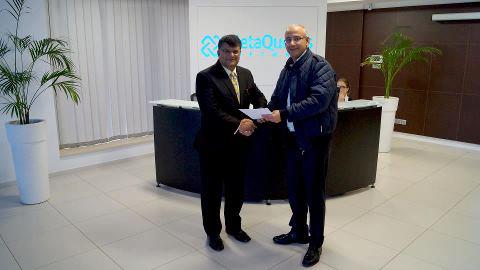
A senior professional from the banking and broking sector, Nazish Lutfi who runs a financial markets training institute was appointed country head to promote MetaQuotes products such as MT4 & MT5 in the country, several domestic brokers such as BMA and AKD offer online trading platforms however most platforms lack functionality and advance features that the likes of MT5 and PFSOFT's PROTRADER offer.
"We were pleased to sign the agreement with MetaQuotes Software Corp. – the largest software designing company in the trading field" said Nazish Lutfi, founder and CEO of ISMAR Financial in the official press briefing.
MetaQuotes in Pakistan
"Our company ISMAR (Institute of Securities, Management & Research) exists since 2005 proving itself as a financial training and consultancy firm of international standing. ISMAR team consists of highly qualified professionals (analysts, consultants and trainers) having extensive experience in finance and investment” added Mr Lutfi.
Pakistan, one the largest producers of cotton, is witnessing internal disputes between the country's commodity exchange and the main cotton association. The Karachi Cotton Association (KCA) has condemned the Pakistan Mercantile Exchanges' (PMEX) intention to launch a domestic cotton futures contract. The pre-partition association says that PMEX has misunderstood the product and 'it is not suited to Pakistani participants' to manage and mitigate risk.
The contract which will mimic the cotton futures contract on the CME which is cash settled and delivered, however the crucial element that the KCA is concerned about is the delivery aspect, PMEX's contract will not be deliverable.
2013 has been a pleasant year for cotton, prices are up 14% since the start of 2012, making it one of the best performing commodities this year, the ICE futures contract is trading at 81.57 cents to a pound.
The Booming Cotton Market
Cotton and cotton products contribute to about 10% of the country’s GDP and 55% to the foreign exchange earnings of the country (according to World Bank). Pakistan is the 4th largest producer according to the US Department of Agriculture and is among the top 5 nations who import and consume the product.
Pakistan's first commodity exchange, the National Commodity Exchange Limited, was established in 2005 as the first automated trading venue for commodity traders in Pakistan. The exchange was later changed to the current, Pakistan Mercantile Exchange, offering a diverse list of products including Gold, Silver, Oil, Rice, Sugar as well as other commodities.
Corporates and professionals who need to hedge their exposure in Pakistan will benefit from the establishment of the PMEX as long as the exchange offers contracts that compete with internal venues or the OTC markets, nonetheless it is a sign that things moving on the right direction.
"My clients use CFDs and futures to hedge their exposure, they are forced to execute with foreign firms on foreign exchanges (trading venues). The new cotton contract is a definite development” said Naveed Siddiqui, CEO of Mathamax Markets a research consultancy firm based in Lahore.
Pakistan is a member of Goldman Sachs Next-Eleven (N-11), a group of nations where the bank feels economic growth and development is imminent. A nation of 150 million plus, means the South Asian nation has huge potential for consumer based goods, Pakistan’s middle class is rising with a former World Bank official; Shahid Javed Burki, estimating there to be around 25% of the population who are classified as middle class.
Best Performing Stock Index in 2000
The country's benchmark stock index, KSE100 was one if the best performing indices at the turn of the century (2000), the index started in 1991 with a base figure of 1,000 and in 2001 it was priced at 1,770 points as the country was facing a period of economic glory. Over the next four years it had skyrocketed to 9,989 points. It then reached to 12,285 in February 2007 however due to internal & external factors the index has been unable to trade in a consistent fashion and erratic moves have been regular over the last decade.
Rahat Mansoor A UK based trader
Govt Restrictions for FX Transfers
FX has been a tradable asset class among Pakistani investors for a lengthy period, with the markets taking shape from the 80's. FX is not regulated as an asset class however Pakistan based investors who wish to trade with overseas counterparts do so at their own discretion. Since the last five years traders were faced with restrictions set by the country’s central bank, the State Bank of Pakistan, when transferring funds overseas, the Pakistan People’s Party government restricted individuals from sending funds to any corporates outside the country. Investors welcome the new government and hope for change and stability.
Post Election Bull-Run
The local stock market has experienced a post-election rally and the benchmark stock index reached a record high of 21,168 points, trading volumes have been modest as investors gradually build up positions on the expectation of a stable market, daily trade volume averaged $155 million this week.
Rahat Mansoor A UK based Pakistani expat who used to provide financial services in Karachi pre-2009 said in a comment to Forex Magnates: “The government’s decision to amend money transfer rules had a major effect on the domestic FX industry; traders were forced to use unconventional methods and these lead local players to get involved in cash handling practises. Businesses suffered a 30% to 40% drop in trading volumes.”
We estimate there to be in excess of 300 mid-sized introducing brokers across the country, with 25 to 40 players having significant trade volume and client numbers.
PMEX is expected to launch a range of currency futures contracts in the next few years, adding to its current selection of precious melts contracts which can be an alternative for traders in the OTC derivatives market.
MetaQuotes Steps In
A senior professional from the banking and broking sector, Nazish Lutfi who runs a financial markets training institute was appointed country head to promote MetaQuotes products such as MT4 & MT5 in the country, several domestic brokers such as BMA and AKD offer online trading platforms however most platforms lack functionality and advance features that the likes of MT5 and PFSOFT's PROTRADER offer.
"We were pleased to sign the agreement with MetaQuotes Software Corp. – the largest software designing company in the trading field" said Nazish Lutfi, founder and CEO of ISMAR Financial in the official press briefing.
MetaQuotes in Pakistan
"Our company ISMAR (Institute of Securities, Management & Research) exists since 2005 proving itself as a financial training and consultancy firm of international standing. ISMAR team consists of highly qualified professionals (analysts, consultants and trainers) having extensive experience in finance and investment” added Mr Lutfi.
XTB Catches Up on Overnight US Stock Trading, Adds Hungarian Tax Account
Featured Videos
XTB Adds Overnight US Stock Trading; Nasdaq Ventures Invests in One Trading
XTB Adds Overnight US Stock Trading; Nasdaq Ventures Invests in One Trading
XTB Adds Overnight US Stock Trading; Nasdaq Ventures Invests in One Trading
XTB Adds Overnight US Stock Trading; Nasdaq Ventures Invests in One Trading
Today’s financial news recap covers XTB expands overnight US stock trading, Fortrade reports higher revenue, Nasdaq backs One Trading, and Vest Labs raises 13 million dollars.
Finance Magnates Daily Recap brings you the latest news from forex and CFD brokers, fintech, payments, cryptocurrency, digital assets, trading platforms, financial regulation and global markets.
Get the key company news, executive moves, deals, regulatory updates and market developments of the day, in just a few minutes. New episodes published every weekday.
Read more: https://www.financemagnates.com
#FinanceMagnates #ForexNews #FintechNews
Today’s financial news recap covers XTB expands overnight US stock trading, Fortrade reports higher revenue, Nasdaq backs One Trading, and Vest Labs raises 13 million dollars.
Finance Magnates Daily Recap brings you the latest news from forex and CFD brokers, fintech, payments, cryptocurrency, digital assets, trading platforms, financial regulation and global markets.
Get the key company news, executive moves, deals, regulatory updates and market developments of the day, in just a few minutes. New episodes published every weekday.
Read more: https://www.financemagnates.com
#FinanceMagnates #ForexNews #FintechNews
Today’s financial news recap covers XTB expands overnight US stock trading, Fortrade reports higher revenue, Nasdaq backs One Trading, and Vest Labs raises 13 million dollars.
Finance Magnates Daily Recap brings you the latest news from forex and CFD brokers, fintech, payments, cryptocurrency, digital assets, trading platforms, financial regulation and global markets.
Get the key company news, executive moves, deals, regulatory updates and market developments of the day, in just a few minutes. New episodes published every weekday.
Read more: https://www.financemagnates.com
#FinanceMagnates #ForexNews #FintechNews
Today’s financial news recap covers XTB expands overnight US stock trading, Fortrade reports higher revenue, Nasdaq backs One Trading, and Vest Labs raises 13 million dollars.
Finance Magnates Daily Recap brings you the latest news from forex and CFD brokers, fintech, payments, cryptocurrency, digital assets, trading platforms, financial regulation and global markets.
Get the key company news, executive moves, deals, regulatory updates and market developments of the day, in just a few minutes. New episodes published every weekday.
Read more: https://www.financemagnates.com
#FinanceMagnates #ForexNews #FintechNews
CMC Founder Downplays Volatility Hit; Devexperts Names CEO
CMC Founder Downplays Volatility Hit; Devexperts Names CEO
CMC Founder Downplays Volatility Hit; Devexperts Names CEO
CMC Founder Downplays Volatility Hit; Devexperts Names CEO
CMC Founder Downplays Volatility Hit; Devexperts Names CEO
CMC Founder Downplays Volatility Hit; Devexperts Names CEO
Today’s financial news recap covers low volatility pressures brokers, Devexperts names a new CEO, Saxo cuts onboarding time, and OKX reaches a 25 billion dollar valuation.
Finance Magnates Daily Recap brings you the latest news from forex and CFD brokers, fintech, payments, cryptocurrency, digital assets, trading platforms, financial regulation and global markets.
Get the key company news, executive moves, deals, regulatory updates and market developments of the day, in just a few minutes. New episodes published every weekday.
Read more: https://www.financemagnates.com
#FinanceMagnates #ForexNews #FintechNews
Today’s financial news recap covers low volatility pressures brokers, Devexperts names a new CEO, Saxo cuts onboarding time, and OKX reaches a 25 billion dollar valuation.
Finance Magnates Daily Recap brings you the latest news from forex and CFD brokers, fintech, payments, cryptocurrency, digital assets, trading platforms, financial regulation and global markets.
Get the key company news, executive moves, deals, regulatory updates and market developments of the day, in just a few minutes. New episodes published every weekday.
Read more: https://www.financemagnates.com
#FinanceMagnates #ForexNews #FintechNews
Today’s financial news recap covers low volatility pressures brokers, Devexperts names a new CEO, Saxo cuts onboarding time, and OKX reaches a 25 billion dollar valuation.
Finance Magnates Daily Recap brings you the latest news from forex and CFD brokers, fintech, payments, cryptocurrency, digital assets, trading platforms, financial regulation and global markets.
Get the key company news, executive moves, deals, regulatory updates and market developments of the day, in just a few minutes. New episodes published every weekday.
Read more: https://www.financemagnates.com
#FinanceMagnates #ForexNews #FintechNews
Today’s financial news recap covers low volatility pressures brokers, Devexperts names a new CEO, Saxo cuts onboarding time, and OKX reaches a 25 billion dollar valuation.
Finance Magnates Daily Recap brings you the latest news from forex and CFD brokers, fintech, payments, cryptocurrency, digital assets, trading platforms, financial regulation and global markets.
Get the key company news, executive moves, deals, regulatory updates and market developments of the day, in just a few minutes. New episodes published every weekday.
Read more: https://www.financemagnates.com
#FinanceMagnates #ForexNews #FintechNews
Today’s financial news recap covers low volatility pressures brokers, Devexperts names a new CEO, Saxo cuts onboarding time, and OKX reaches a 25 billion dollar valuation.
Finance Magnates Daily Recap brings you the latest news from forex and CFD brokers, fintech, payments, cryptocurrency, digital assets, trading platforms, financial regulation and global markets.
Get the key company news, executive moves, deals, regulatory updates and market developments of the day, in just a few minutes. New episodes published every weekday.
Read more: https://www.financemagnates.com
#FinanceMagnates #ForexNews #FintechNews
Today’s financial news recap covers low volatility pressures brokers, Devexperts names a new CEO, Saxo cuts onboarding time, and OKX reaches a 25 billion dollar valuation.
Finance Magnates Daily Recap brings you the latest news from forex and CFD brokers, fintech, payments, cryptocurrency, digital assets, trading platforms, financial regulation and global markets.
Get the key company news, executive moves, deals, regulatory updates and market developments of the day, in just a few minutes. New episodes published every weekday.
Read more: https://www.financemagnates.com
#FinanceMagnates #ForexNews #FintechNews
Today’s financial news recap covers Trade Nation buys FXCM's UK client book, Trading 212 reports higher revenue, the CFTC's move to allow perpetual index futures.
Finance Magnates Daily Recap brings you the latest news from forex and CFD brokers, fintech, payments, cryptocurrency, digital assets, trading platforms, financial regulation and global markets.
Get the key company news, executive moves, deals, regulatory updates and market developments of the day, in just a few minutes. New episodes published every weekday.
Read more: https://www.financemagnates.com
#FinanceMagnates #ForexNews #FintechNews
Today’s financial news recap covers Trade Nation buys FXCM's UK client book, Trading 212 reports higher revenue, the CFTC's move to allow perpetual index futures.
Finance Magnates Daily Recap brings you the latest news from forex and CFD brokers, fintech, payments, cryptocurrency, digital assets, trading platforms, financial regulation and global markets.
Get the key company news, executive moves, deals, regulatory updates and market developments of the day, in just a few minutes. New episodes published every weekday.
Read more: https://www.financemagnates.com
#FinanceMagnates #ForexNews #FintechNews
Today’s financial news recap covers Trade Nation buys FXCM's UK client book, Trading 212 reports higher revenue, the CFTC's move to allow perpetual index futures.
Finance Magnates Daily Recap brings you the latest news from forex and CFD brokers, fintech, payments, cryptocurrency, digital assets, trading platforms, financial regulation and global markets.
Get the key company news, executive moves, deals, regulatory updates and market developments of the day, in just a few minutes. New episodes published every weekday.
Read more: https://www.financemagnates.com
#FinanceMagnates #ForexNews #FintechNews
Today’s financial news recap covers Trade Nation buys FXCM's UK client book, Trading 212 reports higher revenue, the CFTC's move to allow perpetual index futures.
Finance Magnates Daily Recap brings you the latest news from forex and CFD brokers, fintech, payments, cryptocurrency, digital assets, trading platforms, financial regulation and global markets.
Get the key company news, executive moves, deals, regulatory updates and market developments of the day, in just a few minutes. New episodes published every weekday.
Read more: https://www.financemagnates.com
#FinanceMagnates #ForexNews #FintechNews
Today’s financial news recap covers Trade Nation buys FXCM's UK client book, Trading 212 reports higher revenue, the CFTC's move to allow perpetual index futures.
Finance Magnates Daily Recap brings you the latest news from forex and CFD brokers, fintech, payments, cryptocurrency, digital assets, trading platforms, financial regulation and global markets.
Get the key company news, executive moves, deals, regulatory updates and market developments of the day, in just a few minutes. New episodes published every weekday.
Read more: https://www.financemagnates.com
#FinanceMagnates #ForexNews #FintechNews
Today’s financial news recap covers Trade Nation buys FXCM's UK client book, Trading 212 reports higher revenue, the CFTC's move to allow perpetual index futures.
Finance Magnates Daily Recap brings you the latest news from forex and CFD brokers, fintech, payments, cryptocurrency, digital assets, trading platforms, financial regulation and global markets.
Get the key company news, executive moves, deals, regulatory updates and market developments of the day, in just a few minutes. New episodes published every weekday.
Read more: https://www.financemagnates.com
#FinanceMagnates #ForexNews #FintechNews
Your career isn’t a linear path.
Your career isn’t a linear path.
Your career isn’t a linear path.
Your career isn’t a linear path.
Your career isn’t a linear path.
Your career isn’t a linear path.
Roles change. Career goals change. Sometimes you want a completely new challenge.
But the skills and knowledge you build along the way can stay with you and give you something to build on.
For Jeff Patterson, that continued growth is key to long-term career development.
You bring the skills. FM Academy helps you build the knowledge.
#FMAcademy #FinanceMagnates #FinanceCareers #ProfessionalDevelopment #Fintech
Roles change. Career goals change. Sometimes you want a completely new challenge.
But the skills and knowledge you build along the way can stay with you and give you something to build on.
For Jeff Patterson, that continued growth is key to long-term career development.
You bring the skills. FM Academy helps you build the knowledge.
#FMAcademy #FinanceMagnates #FinanceCareers #ProfessionalDevelopment #Fintech
Roles change. Career goals change. Sometimes you want a completely new challenge.
But the skills and knowledge you build along the way can stay with you and give you something to build on.
For Jeff Patterson, that continued growth is key to long-term career development.
You bring the skills. FM Academy helps you build the knowledge.
#FMAcademy #FinanceMagnates #FinanceCareers #ProfessionalDevelopment #Fintech
Roles change. Career goals change. Sometimes you want a completely new challenge.
But the skills and knowledge you build along the way can stay with you and give you something to build on.
For Jeff Patterson, that continued growth is key to long-term career development.
You bring the skills. FM Academy helps you build the knowledge.
#FMAcademy #FinanceMagnates #FinanceCareers #ProfessionalDevelopment #Fintech
Roles change. Career goals change. Sometimes you want a completely new challenge.
But the skills and knowledge you build along the way can stay with you and give you something to build on.
For Jeff Patterson, that continued growth is key to long-term career development.
You bring the skills. FM Academy helps you build the knowledge.
#FMAcademy #FinanceMagnates #FinanceCareers #ProfessionalDevelopment #Fintech
Roles change. Career goals change. Sometimes you want a completely new challenge.
But the skills and knowledge you build along the way can stay with you and give you something to build on.
For Jeff Patterson, that continued growth is key to long-term career development.
You bring the skills. FM Academy helps you build the knowledge.
#FMAcademy #FinanceMagnates #FinanceCareers #ProfessionalDevelopment #Fintech
IG Group Tech Chiefs Exit; Pepperstone Revenue Grows
IG Group Tech Chiefs Exit; Pepperstone Revenue Grows
IG Group Tech Chiefs Exit; Pepperstone Revenue Grows
IG Group Tech Chiefs Exit; Pepperstone Revenue Grows
IG Group Tech Chiefs Exit; Pepperstone Revenue Grows
IG Group Tech Chiefs Exit; Pepperstone Revenue Grows
Today’s financial news recap covers IG Group loses two technology chiefs, Pepperstone reports double-digit growth, and eToro backs a euro stablecoin.
Finance Magnates Daily Recap brings you the latest news from forex and CFD brokers, fintech, payments, cryptocurrency, digital assets, trading platforms, financial regulation and global markets.
Get the key company news, executive moves, deals, regulatory updates and market developments of the day, in just a few minutes. New episodes published every weekday.
Read more: https://www.financemagnates.com
#FinanceMagnates #ForexNews #FintechNews
Today’s financial news recap covers IG Group loses two technology chiefs, Pepperstone reports double-digit growth, and eToro backs a euro stablecoin.
Finance Magnates Daily Recap brings you the latest news from forex and CFD brokers, fintech, payments, cryptocurrency, digital assets, trading platforms, financial regulation and global markets.
Get the key company news, executive moves, deals, regulatory updates and market developments of the day, in just a few minutes. New episodes published every weekday.
Read more: https://www.financemagnates.com
#FinanceMagnates #ForexNews #FintechNews
Today’s financial news recap covers IG Group loses two technology chiefs, Pepperstone reports double-digit growth, and eToro backs a euro stablecoin.
Finance Magnates Daily Recap brings you the latest news from forex and CFD brokers, fintech, payments, cryptocurrency, digital assets, trading platforms, financial regulation and global markets.
Get the key company news, executive moves, deals, regulatory updates and market developments of the day, in just a few minutes. New episodes published every weekday.
Read more: https://www.financemagnates.com
#FinanceMagnates #ForexNews #FintechNews
Today’s financial news recap covers IG Group loses two technology chiefs, Pepperstone reports double-digit growth, and eToro backs a euro stablecoin.
Finance Magnates Daily Recap brings you the latest news from forex and CFD brokers, fintech, payments, cryptocurrency, digital assets, trading platforms, financial regulation and global markets.
Get the key company news, executive moves, deals, regulatory updates and market developments of the day, in just a few minutes. New episodes published every weekday.
Read more: https://www.financemagnates.com
#FinanceMagnates #ForexNews #FintechNews
Today’s financial news recap covers IG Group loses two technology chiefs, Pepperstone reports double-digit growth, and eToro backs a euro stablecoin.
Finance Magnates Daily Recap brings you the latest news from forex and CFD brokers, fintech, payments, cryptocurrency, digital assets, trading platforms, financial regulation and global markets.
Get the key company news, executive moves, deals, regulatory updates and market developments of the day, in just a few minutes. New episodes published every weekday.
Read more: https://www.financemagnates.com
#FinanceMagnates #ForexNews #FintechNews
Today’s financial news recap covers IG Group loses two technology chiefs, Pepperstone reports double-digit growth, and eToro backs a euro stablecoin.
Finance Magnates Daily Recap brings you the latest news from forex and CFD brokers, fintech, payments, cryptocurrency, digital assets, trading platforms, financial regulation and global markets.
Get the key company news, executive moves, deals, regulatory updates and market developments of the day, in just a few minutes. New episodes published every weekday.
Read more: https://www.financemagnates.com
#FinanceMagnates #ForexNews #FintechNews