Hong Kong is considered one of the most expensive places to live.
Thus, the average retail trader here has a deep pocket, cPattern data shows.
Hong Kong might be a part of the People's Republic of China, but it operates as a 'special administrative region' with different rules and laws. In the 1970s, it became one of the 'Asian tigers' when the country began implementing a policy of opening China to the world. As a result, the island is now one of the world's largest financial centers. And, although according to local regulations, contracts for difference (CFDs) cannot be traded locally, data aggregated by Finance Magnates still shows that a vast number of individual investors operate on the island.
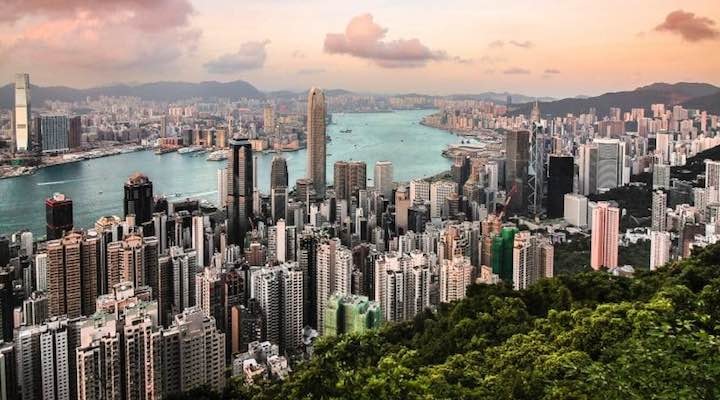
Hong Kong Has the Most Skyscrapers and Seaports in the World
Back in the 19th century, the Chinese island was inhabited mainly by fishermen. In 1842, after the end of the war between China and Great Britain, it fell into the hands of the British kingdom. Finally, in 1898, an agreement was signed giving a 99-year 'lease' of this land to Britons, which expired in 1997.
But before that, back in 1984, the terms under which Hong Kong would revert to China were agreed upon. The authorities pledged to leave the local administration autonomy until 2047: excluding the armed forces and foreign policy matters.
Thanks to the British presence on the island and the local authorities' actions to open China to foreign investors, Hong Kong quickly grew to be one of the largest financial centers in the world. It is worth mentioning that it has the most seaports in the world and a record number of skyscrapers.
Over 7 million people currently inhabit the island of 1110 square kilometers. The administrative region is considered one of the most expensive places to live in the world in terms of housing costs.
In terms of the Human Development Index (HDI), which measures the quality of life in selected countries (in terms of life expectancy, education and per capita profit ratios), Hong Kong ranks fourth, just behind Norway, Ireland and Switzerland.
CFD Trading Banned, but Hong Kong Is a Home to Many Retail Traders
As befits one of the financial capitals of the world, independent trading and investing are very popular among Hong Kong citizens. However, the local Securities Financial Commission (SFC) does not allow trading based on contracts for difference (CFDs), so the traders can only use listed products. Among these, Lorenzo Vignati, the Associate Research Director at Investment Trends, lists warrants, CBBCs, futures, listed debt securities, options and margin FX.
As he notes, the country's current number of active individual investors has shrunk from 2020 levels, when the pandemic triggered above-average market volatility and encouraged more people to invest.
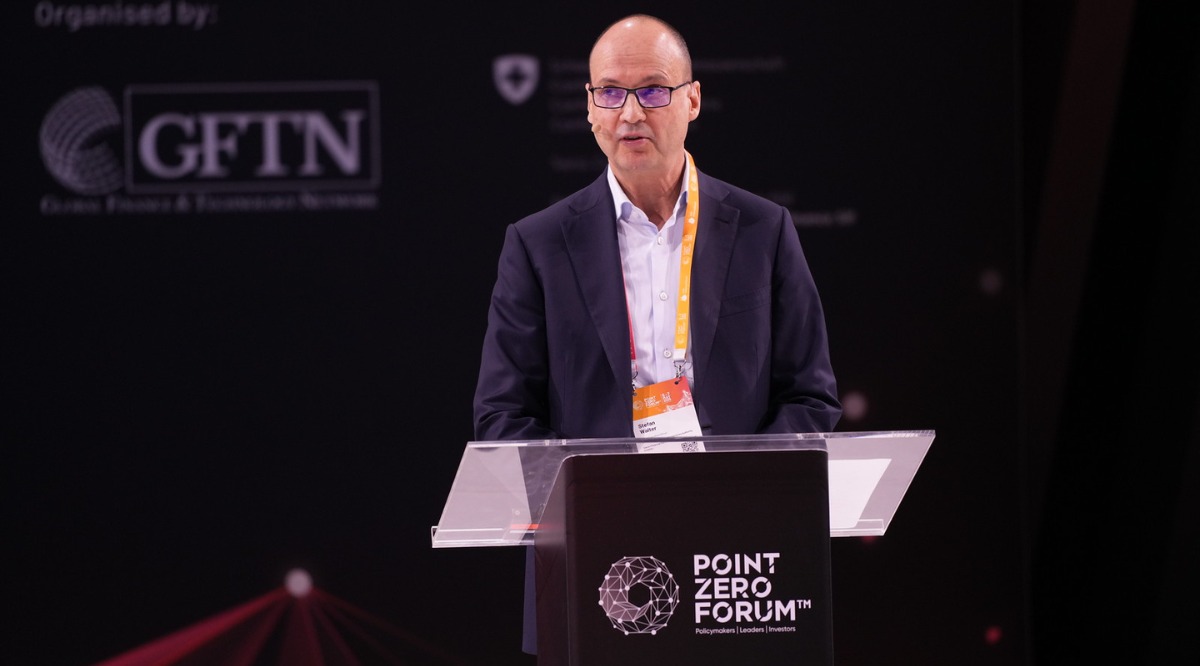
Lorenzo Vignati, Associate Research Director at Investment Trends
"Similar to other markets, dormancy rates started creeping up back to pre-pandemic levels resulting in an estimated 185,000 unique individuals placing a listed derivative trade in the 12 months to December 2021, and intend to continue trading, (down 12% from 2020). Of note, the research highlights most dormant traders are open to reactivate, and better education on risk management can help brokers unlock those opportunities," Vignati commented.
Despite these restrictions on CFD markets, Hong Kong still has a sizeable individual investor base interested in other products. Significantly, while the SFC does not allow local brokers to offer CFDs, there is no ban at present on using foreign brokers' services. This gateway enables potentially interested parties to provide their products and instruments to local traders.
Hong Kong Traders Deposit a Lot When Compared to Other Countries
A local Hong Kong trader can be an attractive client also due to the average value of deposits made each month, calculated in US dollars. According to the data made available to Finance Magnates by cPattern, the average value of monthly deposits between 2021 and 2022 (data available for the period from October 2021 to February 2022) amounted to over 13 thousand dollars.
Furthermore, the data show that on average, investors withdraw almost twice as much money per month as they deposit ($7,115). As for the average value of individual deposits, it reaches almost $1,500. With the above values, the ratio of the first deposit realized in a new account (FTD) seems relatively low, amounting to less than $600. This may indicate the conservativeness of Hong Kong investors at the beginning of their trading adventure or new trading platform, or it may be due to the limited time span of available data.
Hong Kong might be a part of the People's Republic of China, but it operates as a 'special administrative region' with different rules and laws. In the 1970s, it became one of the 'Asian tigers' when the country began implementing a policy of opening China to the world. As a result, the island is now one of the world's largest financial centers. And, although according to local regulations, contracts for difference (CFDs) cannot be traded locally, data aggregated by Finance Magnates still shows that a vast number of individual investors operate on the island.
Hong Kong Has the Most Skyscrapers and Seaports in the World
Back in the 19th century, the Chinese island was inhabited mainly by fishermen. In 1842, after the end of the war between China and Great Britain, it fell into the hands of the British kingdom. Finally, in 1898, an agreement was signed giving a 99-year 'lease' of this land to Britons, which expired in 1997.
But before that, back in 1984, the terms under which Hong Kong would revert to China were agreed upon. The authorities pledged to leave the local administration autonomy until 2047: excluding the armed forces and foreign policy matters.
Thanks to the British presence on the island and the local authorities' actions to open China to foreign investors, Hong Kong quickly grew to be one of the largest financial centers in the world. It is worth mentioning that it has the most seaports in the world and a record number of skyscrapers.
Over 7 million people currently inhabit the island of 1110 square kilometers. The administrative region is considered one of the most expensive places to live in the world in terms of housing costs.
In terms of the Human Development Index (HDI), which measures the quality of life in selected countries (in terms of life expectancy, education and per capita profit ratios), Hong Kong ranks fourth, just behind Norway, Ireland and Switzerland.
CFD Trading Banned, but Hong Kong Is a Home to Many Retail Traders
As befits one of the financial capitals of the world, independent trading and investing are very popular among Hong Kong citizens. However, the local Securities Financial Commission (SFC) does not allow trading based on contracts for difference (CFDs), so the traders can only use listed products. Among these, Lorenzo Vignati, the Associate Research Director at Investment Trends, lists warrants, CBBCs, futures, listed debt securities, options and margin FX.
As he notes, the country's current number of active individual investors has shrunk from 2020 levels, when the pandemic triggered above-average market volatility and encouraged more people to invest.
Lorenzo Vignati, Associate Research Director at Investment Trends
"Similar to other markets, dormancy rates started creeping up back to pre-pandemic levels resulting in an estimated 185,000 unique individuals placing a listed derivative trade in the 12 months to December 2021, and intend to continue trading, (down 12% from 2020). Of note, the research highlights most dormant traders are open to reactivate, and better education on risk management can help brokers unlock those opportunities," Vignati commented.
Despite these restrictions on CFD markets, Hong Kong still has a sizeable individual investor base interested in other products. Significantly, while the SFC does not allow local brokers to offer CFDs, there is no ban at present on using foreign brokers' services. This gateway enables potentially interested parties to provide their products and instruments to local traders.
Hong Kong Traders Deposit a Lot When Compared to Other Countries
A local Hong Kong trader can be an attractive client also due to the average value of deposits made each month, calculated in US dollars. According to the data made available to Finance Magnates by cPattern, the average value of monthly deposits between 2021 and 2022 (data available for the period from October 2021 to February 2022) amounted to over 13 thousand dollars.
Furthermore, the data show that on average, investors withdraw almost twice as much money per month as they deposit ($7,115). As for the average value of individual deposits, it reaches almost $1,500. With the above values, the ratio of the first deposit realized in a new account (FTD) seems relatively low, amounting to less than $600. This may indicate the conservativeness of Hong Kong investors at the beginning of their trading adventure or new trading platform, or it may be due to the limited time span of available data.
Damian Chmiel is a Senior Analyst & Editor at Finance Magnates with more than 15 years of experience in the CFD and online trading industry. Active as both a trader and journalist since 2010, he focuses on broker coverage, fintech innovation, and regulatory developments across Europe, the Middle East, and Asia.
His work includes interviews with C-level leaders at major brokerages and fintech platforms, as well as co-authoring Finance Magnates’ quarterly industry benchmarking reports. Damian’s reporting is data-driven, market-aware, and grounded in direct industry engagement. His analysis and commentary have also been cited by external media outlets, including Investing.com, Binance, The Asset, Stockhead, and Dispatch.
Education:
MA in Finance and Accounting, Cracow University of Economics
Italy’s Consob Tightens Net on AI-Fueled Scams With Fresh Website Bans
FP Markets Winner Spotlight 🏆 | Global Broker of the Year 2025 #Trading #Broker #Innovation #Shorts
FP Markets Winner Spotlight 🏆 | Global Broker of the Year 2025 #Trading #Broker #Innovation #Shorts
FP Markets takes the spotlight as Global Broker of the Year 2025 at the Finance Magnates Awards.
Martin Stoilov, Head of Client Experience, shares that trust, innovation, and people played a key role in the company’s success, supported by a strong foundation of integrity and client-centricity.
Following this milestone, FP Markets continues to focus on growth, technology investment, and its core values of transparency and excellence.
👉 Be part of FM Awards 2026: https://awards.financemagnates.com/#nominate
FP Markets takes the spotlight as Global Broker of the Year 2025 at the Finance Magnates Awards.
Martin Stoilov, Head of Client Experience, shares that trust, innovation, and people played a key role in the company’s success, supported by a strong foundation of integrity and client-centricity.
Following this milestone, FP Markets continues to focus on growth, technology investment, and its core values of transparency and excellence.
👉 Be part of FM Awards 2026: https://awards.financemagnates.com/#nominate
In this video, we review @HolaPrimeMarketsOfficial, a multi-asset forex and CFDs broker offering different account types, trading platforms, and flexible trading conditions.
We cover the broker’s overall offering, including account options, trading environment, platforms like MT4 and MT5, and additional services such as managed accounts and fast withdrawals.
Watch the full video to see if Hola Prime Markets fits your trading needs.
📣 Stay up to date with the latest in finance and trading. Follow Finance Magnates for industry news, insights, and global event coverage.
Connect with us:
🔗 LinkedIn: /financemagnates
👍 Facebook: /financemagnates
📸 Instagram: https://www.instagram.com/financemagnates
🐦 X: https://x.com/financemagnates
🎥 TikTok: https://www.tiktok.com/tag/financemagnates
▶️ YouTube: /@financemagnates_official
#HolaPrime #ForexBroker #CFDTrading #FinanceMagnates #Trading #Forex #BrokerReview
In this video, we review @HolaPrimeMarketsOfficial, a multi-asset forex and CFDs broker offering different account types, trading platforms, and flexible trading conditions.
We cover the broker’s overall offering, including account options, trading environment, platforms like MT4 and MT5, and additional services such as managed accounts and fast withdrawals.
Watch the full video to see if Hola Prime Markets fits your trading needs.
📣 Stay up to date with the latest in finance and trading. Follow Finance Magnates for industry news, insights, and global event coverage.
Connect with us:
🔗 LinkedIn: /financemagnates
👍 Facebook: /financemagnates
📸 Instagram: https://www.instagram.com/financemagnates
🐦 X: https://x.com/financemagnates
🎥 TikTok: https://www.tiktok.com/tag/financemagnates
▶️ YouTube: /@financemagnates_official
#HolaPrime #ForexBroker #CFDTrading #FinanceMagnates #Trading #Forex #BrokerReview
Hola Prime Review: What You Need to Know | Full Breakdown by Finance Magnates
Hola Prime Review: What You Need to Know | Full Breakdown by Finance Magnates
In this video, we review @HolaPrime_Global, a proprietary trading firm offering evaluation programs and performance-based payouts in simulated market environments.
We cover how the challenge model works, including account types, profit splits (up to 95%), trading rules, and what it takes to reach a funded account. You’ll also learn about available platforms like MT4, MT5, cTrader, and more, along with insights into payouts, support, and trading conditions.
Watch the full video to see if Hola Prime fits your trading style.
📣 Stay up to date with the latest in finance and trading. Follow Finance Magnates for industry news, insights, and global event coverage.
Connect with us:
🔗 LinkedIn: /financemagnates
👍 Facebook: /financemagnates
📸 Instagram: https://www.instagram.com/financemagnates
🐦 X: https://x.com/financemagnates
🎥 TikTok: https://www.tiktok.com/tag/financemagnates
▶️ YouTube: /@financemagnates_official
#HolaPrime #PropFirm #Trading #FinanceMagnates #Forex #FuturesTrading #TradingReview #PropFirmReview
In this video, we review @HolaPrime_Global, a proprietary trading firm offering evaluation programs and performance-based payouts in simulated market environments.
We cover how the challenge model works, including account types, profit splits (up to 95%), trading rules, and what it takes to reach a funded account. You’ll also learn about available platforms like MT4, MT5, cTrader, and more, along with insights into payouts, support, and trading conditions.
Watch the full video to see if Hola Prime fits your trading style.
📣 Stay up to date with the latest in finance and trading. Follow Finance Magnates for industry news, insights, and global event coverage.
Connect with us:
🔗 LinkedIn: /financemagnates
👍 Facebook: /financemagnates
📸 Instagram: https://www.instagram.com/financemagnates
🐦 X: https://x.com/financemagnates
🎥 TikTok: https://www.tiktok.com/tag/financemagnates
▶️ YouTube: /@financemagnates_official
#HolaPrime #PropFirm #Trading #FinanceMagnates #Forex #FuturesTrading #TradingReview #PropFirmReview
Axi Winner Spotlight 🏆 | Global Most Innovative Broker 2025 #Innovation #Trading #Fintech #Broker
Axi Winner Spotlight 🏆 | Global Most Innovative Broker 2025 #Innovation #Trading #Fintech #Broker
Axi takes the spotlight at the Finance Magnates Awards, winning Global Most Innovative Broker 2025.
Olivia Xenofontos and Ivanna Openko share how the team will feel: proud, motivated, and ready to keep delivering.
They also describe the night as well-organized, focused, and enjoyable for all.
👉 Be part of FM Awards 2026.
Axi takes the spotlight at the Finance Magnates Awards, winning Global Most Innovative Broker 2025.
Olivia Xenofontos and Ivanna Openko share how the team will feel: proud, motivated, and ready to keep delivering.
They also describe the night as well-organized, focused, and enjoyable for all.
👉 Be part of FM Awards 2026.
Recognition that matters.
Built on transparency.
Driven by the industry.
The Finance Magnates Awards 2026.
Nominations are now open.
🔗 https://awards.financemagnates.com/?utm_source=SM&utm_medium=social&utm_campaign=recognition-matters
Recognition that matters.
Built on transparency.
Driven by the industry.
The Finance Magnates Awards 2026.
Nominations are now open.
🔗 https://awards.financemagnates.com/?utm_source=SM&utm_medium=social&utm_campaign=recognition-matters