
Illustrating how powerful the trend has been is one of the latest takeover deals by social media giant Facebook, which acquired a startup venture named Oculus VR founded by Palmer Luckey. The company launched a Kickstarter campaign to secure funding for the development of their first product - virtual reality goggles for "immersive gaming" dubbed the Oculus Rift. The firm received $2.4 million through crowdfunding and was acquired by Facebook a couple of months later for the lofty sum of $2 billion.
What Is Peer-to-Peer Lending?
The concept behind peer-to-peer lending is to provide the opportunity to worthy borrowers to get funding from "peers" who have the funds available to provide credit to institutions. And the best part of it - it doesn't have to happen through a financial intermediary like a bank. The loans are instead transacted online through several peer-to-peer lending platforms. Recently, P2P lending firm, Zopa hit a milestone, announcing that it had achieved $1 billion of total loans transacted on its platform since launching in 2005.
While crowdfunding has been the way to go for brave new ventures which are just starting their business but have already come up with a unique product, in a parallel world, already established businesses have the opportunity to raise funds in a different way.
The main difference between peer-to-peer lending and crowdfunding is that it represents a way for the company not to give away any equity, but instead pay interest on the funds which are borrowed, just like with a loan from a banking institution. For an established business which has the collateral to put up, this can be the most viable opportunity for obtaining additional capital, as interest rates can be lower than those offered by traditional institutions.
The Cleveland Federal Reserve's Study
The Federal Reserve Bank of Cleveland has released a new study dubbed "Peer-to-Peer Lending Is Poised to Grow," which outlines the perspectives for this rapidly growing trend in lending. While the paper itself focuses its attention mainly on the consumer side of this still relatively new segment, the trends in the business lending side of this business largely coincide.
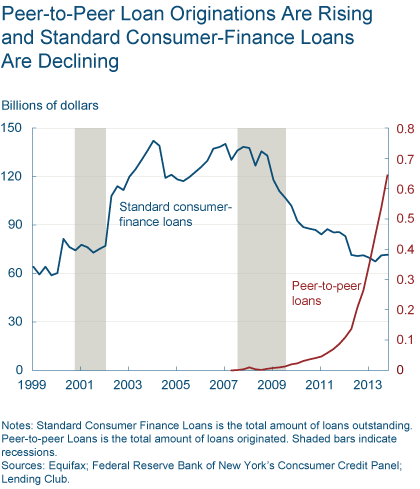
Senior research economist at the Research Department of the Federal Reserve Bank of Cleveland, Yuliya Demyanyk, and research analyst Daniel Kolliner, have come up with a paper revealing the perspectives for the peer-to-peer (P2P) lending sector. With the main focus being on consumer and not on business lending, according to the paper the sector has been growing by an average pace of 84% per quarter since the second quarter of 2007 when the official "great recession" started. Throughout the same period, conventional consumer-finance lending has been shrinking by an average of 2% per quarter.
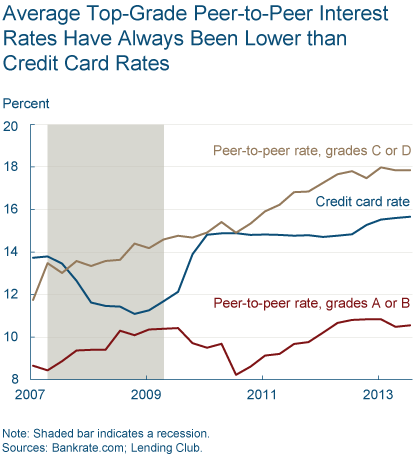
Consumer peer-to-peer loans are categorized by grades from A to D, depeding on the creditworthiness of the borrower. About 50 percent of loans are classified to borrowers with grades “A” or “B”. They have been consistently getting much better rates than regular consumer financing like credit cards. For those individuals and businesses which have good credit and solid collateral, the FED study finds that "interest rates have a strong negative correlation with the credit card interest rates, meaning that when banks increase their interest rates, peer-to-peer lenders decrease theirs."
Major Players in the Industry
Peer-to-peer business lending is a viable alternative to traditional financing, with different companies offering up to £3 million in the UK. The maximum amount one can apply for with UK-based peer-to-peer lending company, Funding Circle, is up to £1, while Thincats can secure you up to £3 million, repayable over terms of up to 5 years.
With the business originating in the UK back in 2005, US companies which provide P2P business lending have been limited to providing up to $100,000, with Lending Club and Prosper being the major players in the United States. The former company is also the biggest player globally, sporting on its website as to having distributed close to $5 billion in loans.
It's worth highlighting that depending on the size of the loan that a company is after, some form of security or collateral will be required. This can vary from a personal guarantee to a particular asset or assets of the business, also depending on the platform and the country from where the firm is applying for such funding.
As part of its mandate to regulate consumer credit, the UK's Financial Conduct Authority (FCA) is also responsible for regulating peer-to-peer lending. A new regulated activity is being introduced, giving the UK watchdog the responsibility to protect consumers borrowing money, however for now, business borrowers do not fall into this category.
Basing its decision on the Securities Act of 1933, the Securities and Exchange Commission (SEC) has mandated peer-to-peer companies to register their offerings as securities in 2008.
Illustrating how powerful the trend has been is one of the latest takeover deals by social media giant Facebook, which acquired a startup venture named Oculus VR founded by Palmer Luckey. The company launched a Kickstarter campaign to secure funding for the development of their first product - virtual reality goggles for "immersive gaming" dubbed the Oculus Rift. The firm received $2.4 million through crowdfunding and was acquired by Facebook a couple of months later for the lofty sum of $2 billion.
What Is Peer-to-Peer Lending?
The concept behind peer-to-peer lending is to provide the opportunity to worthy borrowers to get funding from "peers" who have the funds available to provide credit to institutions. And the best part of it - it doesn't have to happen through a financial intermediary like a bank. The loans are instead transacted online through several peer-to-peer lending platforms. Recently, P2P lending firm, Zopa hit a milestone, announcing that it had achieved $1 billion of total loans transacted on its platform since launching in 2005.
While crowdfunding has been the way to go for brave new ventures which are just starting their business but have already come up with a unique product, in a parallel world, already established businesses have the opportunity to raise funds in a different way.
The main difference between peer-to-peer lending and crowdfunding is that it represents a way for the company not to give away any equity, but instead pay interest on the funds which are borrowed, just like with a loan from a banking institution. For an established business which has the collateral to put up, this can be the most viable opportunity for obtaining additional capital, as interest rates can be lower than those offered by traditional institutions.
The Cleveland Federal Reserve's Study
The Federal Reserve Bank of Cleveland has released a new study dubbed "Peer-to-Peer Lending Is Poised to Grow," which outlines the perspectives for this rapidly growing trend in lending. While the paper itself focuses its attention mainly on the consumer side of this still relatively new segment, the trends in the business lending side of this business largely coincide.
Senior research economist at the Research Department of the Federal Reserve Bank of Cleveland, Yuliya Demyanyk, and research analyst Daniel Kolliner, have come up with a paper revealing the perspectives for the peer-to-peer (P2P) lending sector. With the main focus being on consumer and not on business lending, according to the paper the sector has been growing by an average pace of 84% per quarter since the second quarter of 2007 when the official "great recession" started. Throughout the same period, conventional consumer-finance lending has been shrinking by an average of 2% per quarter.
Consumer peer-to-peer loans are categorized by grades from A to D, depeding on the creditworthiness of the borrower. About 50 percent of loans are classified to borrowers with grades “A” or “B”. They have been consistently getting much better rates than regular consumer financing like credit cards. For those individuals and businesses which have good credit and solid collateral, the FED study finds that "interest rates have a strong negative correlation with the credit card interest rates, meaning that when banks increase their interest rates, peer-to-peer lenders decrease theirs."
Major Players in the Industry
Peer-to-peer business lending is a viable alternative to traditional financing, with different companies offering up to £3 million in the UK. The maximum amount one can apply for with UK-based peer-to-peer lending company, Funding Circle, is up to £1, while Thincats can secure you up to £3 million, repayable over terms of up to 5 years.
With the business originating in the UK back in 2005, US companies which provide P2P business lending have been limited to providing up to $100,000, with Lending Club and Prosper being the major players in the United States. The former company is also the biggest player globally, sporting on its website as to having distributed close to $5 billion in loans.
It's worth highlighting that depending on the size of the loan that a company is after, some form of security or collateral will be required. This can vary from a personal guarantee to a particular asset or assets of the business, also depending on the platform and the country from where the firm is applying for such funding.
As part of its mandate to regulate consumer credit, the UK's Financial Conduct Authority (FCA) is also responsible for regulating peer-to-peer lending. A new regulated activity is being introduced, giving the UK watchdog the responsibility to protect consumers borrowing money, however for now, business borrowers do not fall into this category.
Basing its decision on the Securities Act of 1933, the Securities and Exchange Commission (SEC) has mandated peer-to-peer companies to register their offerings as securities in 2008.
iFOREX Adds Saudi and South Korean Equity CFDs as IPO Is Delayed
Featured Videos
Executive Interview | Charlotte Bullock | Chief Product Officer, Bank of London | FMLS:25
In this interview, we sat down with Charlotte Bullock, Head of Product at The Bank of London, previously at SAP and now shaping product at one of the sector’s most ambitious new banking players.
Charlotte reflects on the Summit so far and talks about the culture inside fintech banks today. We look at the pressures that come with scaling, and how firms can hold onto the nimble approach that made them stand out early on.
We also cover the state of payments ahead of her appearance on the payments roundtable: the blockages financial firms face, the areas that still need fixing, and what a realistic solution looks like in 2026.
In this interview, we sat down with Charlotte Bullock, Head of Product at The Bank of London, previously at SAP and now shaping product at one of the sector’s most ambitious new banking players.
Charlotte reflects on the Summit so far and talks about the culture inside fintech banks today. We look at the pressures that come with scaling, and how firms can hold onto the nimble approach that made them stand out early on.
We also cover the state of payments ahead of her appearance on the payments roundtable: the blockages financial firms face, the areas that still need fixing, and what a realistic solution looks like in 2026.
In this interview, we sat down with Charlotte Bullock, Head of Product at The Bank of London, previously at SAP and now shaping product at one of the sector’s most ambitious new banking players.
Charlotte reflects on the Summit so far and talks about the culture inside fintech banks today. We look at the pressures that come with scaling, and how firms can hold onto the nimble approach that made them stand out early on.
We also cover the state of payments ahead of her appearance on the payments roundtable: the blockages financial firms face, the areas that still need fixing, and what a realistic solution looks like in 2026.
In this interview, we sat down with Charlotte Bullock, Head of Product at The Bank of London, previously at SAP and now shaping product at one of the sector’s most ambitious new banking players.
Charlotte reflects on the Summit so far and talks about the culture inside fintech banks today. We look at the pressures that come with scaling, and how firms can hold onto the nimble approach that made them stand out early on.
We also cover the state of payments ahead of her appearance on the payments roundtable: the blockages financial firms face, the areas that still need fixing, and what a realistic solution looks like in 2026.
In this conversation, we sit down with Drew Niv, CSO at ATFX Connect and one of the most influential figures in modern FX.
We speak about market structure, the institutional view on liquidity, and the sharp rise of prop trading, a sector Drew has been commenting on in recent months. Drew explains why he once dismissed prop trading, why his view changed, and what he now thinks the model means for brokers, clients and risk managers.
We explore subscription-fee dependency, the high reneging rate, and the long-term challenge: how brokers can build a more stable and honest version of the model. Drew also talks about the traffic advantage standalone prop firms have built and why brokers may still win in the long run if they take the right approach.
In this conversation, we sit down with Drew Niv, CSO at ATFX Connect and one of the most influential figures in modern FX.
We speak about market structure, the institutional view on liquidity, and the sharp rise of prop trading, a sector Drew has been commenting on in recent months. Drew explains why he once dismissed prop trading, why his view changed, and what he now thinks the model means for brokers, clients and risk managers.
We explore subscription-fee dependency, the high reneging rate, and the long-term challenge: how brokers can build a more stable and honest version of the model. Drew also talks about the traffic advantage standalone prop firms have built and why brokers may still win in the long run if they take the right approach.
In this conversation, we sit down with Drew Niv, CSO at ATFX Connect and one of the most influential figures in modern FX.
We speak about market structure, the institutional view on liquidity, and the sharp rise of prop trading, a sector Drew has been commenting on in recent months. Drew explains why he once dismissed prop trading, why his view changed, and what he now thinks the model means for brokers, clients and risk managers.
We explore subscription-fee dependency, the high reneging rate, and the long-term challenge: how brokers can build a more stable and honest version of the model. Drew also talks about the traffic advantage standalone prop firms have built and why brokers may still win in the long run if they take the right approach.
In this conversation, we sit down with Drew Niv, CSO at ATFX Connect and one of the most influential figures in modern FX.
We speak about market structure, the institutional view on liquidity, and the sharp rise of prop trading, a sector Drew has been commenting on in recent months. Drew explains why he once dismissed prop trading, why his view changed, and what he now thinks the model means for brokers, clients and risk managers.
We explore subscription-fee dependency, the high reneging rate, and the long-term challenge: how brokers can build a more stable and honest version of the model. Drew also talks about the traffic advantage standalone prop firms have built and why brokers may still win in the long run if they take the right approach.
In this conversation, we sit down with Drew Niv, CSO at ATFX Connect and one of the most influential figures in modern FX.
We speak about market structure, the institutional view on liquidity, and the sharp rise of prop trading, a sector Drew has been commenting on in recent months. Drew explains why he once dismissed prop trading, why his view changed, and what he now thinks the model means for brokers, clients and risk managers.
We explore subscription-fee dependency, the high reneging rate, and the long-term challenge: how brokers can build a more stable and honest version of the model. Drew also talks about the traffic advantage standalone prop firms have built and why brokers may still win in the long run if they take the right approach.
In this conversation, we sit down with Drew Niv, CSO at ATFX Connect and one of the most influential figures in modern FX.
We speak about market structure, the institutional view on liquidity, and the sharp rise of prop trading, a sector Drew has been commenting on in recent months. Drew explains why he once dismissed prop trading, why his view changed, and what he now thinks the model means for brokers, clients and risk managers.
We explore subscription-fee dependency, the high reneging rate, and the long-term challenge: how brokers can build a more stable and honest version of the model. Drew also talks about the traffic advantage standalone prop firms have built and why brokers may still win in the long run if they take the right approach.
Executive Interview | Remonda Z. Kirketerp Møller| CEO & Founder Muinmos | FMLS:25
In this interview, Remonda Z. Kirketerp Møller, founder of Muinmos, breaks down the state of AI in regtech and what responsible adoption really looks like for brokers. We talk about rising fragmentation, the pressures around compliance accuracy, and why most firms are still in the early stages of AI maturity.
Ramanda also shares insights on regulator sandboxes, shifting expectations around accountability, and the current reality of MiCA licensing and passporting in Europe.
A concise look at where compliance, onboarding, and AI-driven processes are heading next.
In this interview, Remonda Z. Kirketerp Møller, founder of Muinmos, breaks down the state of AI in regtech and what responsible adoption really looks like for brokers. We talk about rising fragmentation, the pressures around compliance accuracy, and why most firms are still in the early stages of AI maturity.
Ramanda also shares insights on regulator sandboxes, shifting expectations around accountability, and the current reality of MiCA licensing and passporting in Europe.
A concise look at where compliance, onboarding, and AI-driven processes are heading next.
In this interview, Remonda Z. Kirketerp Møller, founder of Muinmos, breaks down the state of AI in regtech and what responsible adoption really looks like for brokers. We talk about rising fragmentation, the pressures around compliance accuracy, and why most firms are still in the early stages of AI maturity.
Ramanda also shares insights on regulator sandboxes, shifting expectations around accountability, and the current reality of MiCA licensing and passporting in Europe.
A concise look at where compliance, onboarding, and AI-driven processes are heading next.
In this interview, Remonda Z. Kirketerp Møller, founder of Muinmos, breaks down the state of AI in regtech and what responsible adoption really looks like for brokers. We talk about rising fragmentation, the pressures around compliance accuracy, and why most firms are still in the early stages of AI maturity.
Ramanda also shares insights on regulator sandboxes, shifting expectations around accountability, and the current reality of MiCA licensing and passporting in Europe.
A concise look at where compliance, onboarding, and AI-driven processes are heading next.
In this interview, Remonda Z. Kirketerp Møller, founder of Muinmos, breaks down the state of AI in regtech and what responsible adoption really looks like for brokers. We talk about rising fragmentation, the pressures around compliance accuracy, and why most firms are still in the early stages of AI maturity.
Ramanda also shares insights on regulator sandboxes, shifting expectations around accountability, and the current reality of MiCA licensing and passporting in Europe.
A concise look at where compliance, onboarding, and AI-driven processes are heading next.
In this interview, Remonda Z. Kirketerp Møller, founder of Muinmos, breaks down the state of AI in regtech and what responsible adoption really looks like for brokers. We talk about rising fragmentation, the pressures around compliance accuracy, and why most firms are still in the early stages of AI maturity.
Ramanda also shares insights on regulator sandboxes, shifting expectations around accountability, and the current reality of MiCA licensing and passporting in Europe.
A concise look at where compliance, onboarding, and AI-driven processes are heading next.
In this conversation, we speak with Aydin Bonabi, CEO and co-founder of Surveill, a firm focused on fraud detection and AI-driven compliance tools for financial institutions.
We start with Aydin’s view of the Summit and the challenges brokers face as fraud tactics grow more complex. He explains how firms can stay ahead through real-time signals, data patterns, and early-stage detection.
We also talk about AI training and why compliance teams often struggle to keep models accurate, fair, and aligned with regulatory expectations. Aydin breaks down what “good” AI training looks like inside a financial environment, including the importance of clean data, domain expertise, and human oversight.
He closes with a clear message: fraud is scaling, and so must the tools that stop it.
In this conversation, we speak with Aydin Bonabi, CEO and co-founder of Surveill, a firm focused on fraud detection and AI-driven compliance tools for financial institutions.
We start with Aydin’s view of the Summit and the challenges brokers face as fraud tactics grow more complex. He explains how firms can stay ahead through real-time signals, data patterns, and early-stage detection.
We also talk about AI training and why compliance teams often struggle to keep models accurate, fair, and aligned with regulatory expectations. Aydin breaks down what “good” AI training looks like inside a financial environment, including the importance of clean data, domain expertise, and human oversight.
He closes with a clear message: fraud is scaling, and so must the tools that stop it.
In this conversation, we speak with Aydin Bonabi, CEO and co-founder of Surveill, a firm focused on fraud detection and AI-driven compliance tools for financial institutions.
We start with Aydin’s view of the Summit and the challenges brokers face as fraud tactics grow more complex. He explains how firms can stay ahead through real-time signals, data patterns, and early-stage detection.
We also talk about AI training and why compliance teams often struggle to keep models accurate, fair, and aligned with regulatory expectations. Aydin breaks down what “good” AI training looks like inside a financial environment, including the importance of clean data, domain expertise, and human oversight.
He closes with a clear message: fraud is scaling, and so must the tools that stop it.
In this conversation, we speak with Aydin Bonabi, CEO and co-founder of Surveill, a firm focused on fraud detection and AI-driven compliance tools for financial institutions.
We start with Aydin’s view of the Summit and the challenges brokers face as fraud tactics grow more complex. He explains how firms can stay ahead through real-time signals, data patterns, and early-stage detection.
We also talk about AI training and why compliance teams often struggle to keep models accurate, fair, and aligned with regulatory expectations. Aydin breaks down what “good” AI training looks like inside a financial environment, including the importance of clean data, domain expertise, and human oversight.
He closes with a clear message: fraud is scaling, and so must the tools that stop it.
In this conversation, we speak with Aydin Bonabi, CEO and co-founder of Surveill, a firm focused on fraud detection and AI-driven compliance tools for financial institutions.
We start with Aydin’s view of the Summit and the challenges brokers face as fraud tactics grow more complex. He explains how firms can stay ahead through real-time signals, data patterns, and early-stage detection.
We also talk about AI training and why compliance teams often struggle to keep models accurate, fair, and aligned with regulatory expectations. Aydin breaks down what “good” AI training looks like inside a financial environment, including the importance of clean data, domain expertise, and human oversight.
He closes with a clear message: fraud is scaling, and so must the tools that stop it.
In this conversation, we speak with Aydin Bonabi, CEO and co-founder of Surveill, a firm focused on fraud detection and AI-driven compliance tools for financial institutions.
We start with Aydin’s view of the Summit and the challenges brokers face as fraud tactics grow more complex. He explains how firms can stay ahead through real-time signals, data patterns, and early-stage detection.
We also talk about AI training and why compliance teams often struggle to keep models accurate, fair, and aligned with regulatory expectations. Aydin breaks down what “good” AI training looks like inside a financial environment, including the importance of clean data, domain expertise, and human oversight.
He closes with a clear message: fraud is scaling, and so must the tools that stop it.
Exness expands its presence in Africa: Inside our interview with Paul Margarites in Cape Town
Finance Magnates met with Paul Margarites, Exness regional commercial director for Sub-Saharan Africa, during a visit to the firm’s office opening in Cape Town. In this talk, led by Andrea Badiola Mateos, Co-CEO at Finance Magnates, Paul shares views on the South African trading space, local user behavior, mobile trends, regulation, team growth, and how Exness plans to grow in more markets across the region. @Exness
Read the article at: https://www.financemagnates.com/thought-leadership/exness-expands-its-presence-in-africa-inside-our-interview-with-paul-margarites/
#exness #financemagnates #exnesstrading #CFDtrading #tradeonline #africanews #capetown
Finance Magnates met with Paul Margarites, Exness regional commercial director for Sub-Saharan Africa, during a visit to the firm’s office opening in Cape Town. In this talk, led by Andrea Badiola Mateos, Co-CEO at Finance Magnates, Paul shares views on the South African trading space, local user behavior, mobile trends, regulation, team growth, and how Exness plans to grow in more markets across the region. @Exness
Read the article at: https://www.financemagnates.com/thought-leadership/exness-expands-its-presence-in-africa-inside-our-interview-with-paul-margarites/
#exness #financemagnates #exnesstrading #CFDtrading #tradeonline #africanews #capetown
Finance Magnates met with Paul Margarites, Exness regional commercial director for Sub-Saharan Africa, during a visit to the firm’s office opening in Cape Town. In this talk, led by Andrea Badiola Mateos, Co-CEO at Finance Magnates, Paul shares views on the South African trading space, local user behavior, mobile trends, regulation, team growth, and how Exness plans to grow in more markets across the region. @Exness
Read the article at: https://www.financemagnates.com/thought-leadership/exness-expands-its-presence-in-africa-inside-our-interview-with-paul-margarites/
#exness #financemagnates #exnesstrading #CFDtrading #tradeonline #africanews #capetown
Finance Magnates met with Paul Margarites, Exness regional commercial director for Sub-Saharan Africa, during a visit to the firm’s office opening in Cape Town. In this talk, led by Andrea Badiola Mateos, Co-CEO at Finance Magnates, Paul shares views on the South African trading space, local user behavior, mobile trends, regulation, team growth, and how Exness plans to grow in more markets across the region. @Exness
Read the article at: https://www.financemagnates.com/thought-leadership/exness-expands-its-presence-in-africa-inside-our-interview-with-paul-margarites/
#exness #financemagnates #exnesstrading #CFDtrading #tradeonline #africanews #capetown
Finance Magnates met with Paul Margarites, Exness regional commercial director for Sub-Saharan Africa, during a visit to the firm’s office opening in Cape Town. In this talk, led by Andrea Badiola Mateos, Co-CEO at Finance Magnates, Paul shares views on the South African trading space, local user behavior, mobile trends, regulation, team growth, and how Exness plans to grow in more markets across the region. @Exness
Read the article at: https://www.financemagnates.com/thought-leadership/exness-expands-its-presence-in-africa-inside-our-interview-with-paul-margarites/
#exness #financemagnates #exnesstrading #CFDtrading #tradeonline #africanews #capetown
Finance Magnates met with Paul Margarites, Exness regional commercial director for Sub-Saharan Africa, during a visit to the firm’s office opening in Cape Town. In this talk, led by Andrea Badiola Mateos, Co-CEO at Finance Magnates, Paul shares views on the South African trading space, local user behavior, mobile trends, regulation, team growth, and how Exness plans to grow in more markets across the region. @Exness
Read the article at: https://www.financemagnates.com/thought-leadership/exness-expands-its-presence-in-africa-inside-our-interview-with-paul-margarites/
#exness #financemagnates #exnesstrading #CFDtrading #tradeonline #africanews #capetown