Regulatory restrictions may force Europe's retail FX/CFD brokers to adapt business models.
Concerns over CFD risks may push the market towards more institutional trading.
The retail
FX/CFD industry in Europe is facing a significant shift, and 92% of surveyed
companies are concerned about their future due to increasing regulatory
restrictions. A recent report by Acuiti titled "Retail Revolution"
delves into the potential impact of these changes and how the industry responds.
The report
suggested that companies might shift from their current instruments to
"listed derivatives." Despite being "muted" in recent years,
they may gain significance due to their more regulated nature and lower
counterparty risk.
The Changing Landscape of
Retail FX/CFD Trading in Europe
Contracts
for Difference, or CFDs, have been a popular retail trading product in Europe,
with an estimated market size of $3.2 billion in 2023. However, regulators
across the continent have grown increasingly concerned about the risks posed to
retail investors.
Across Europe,
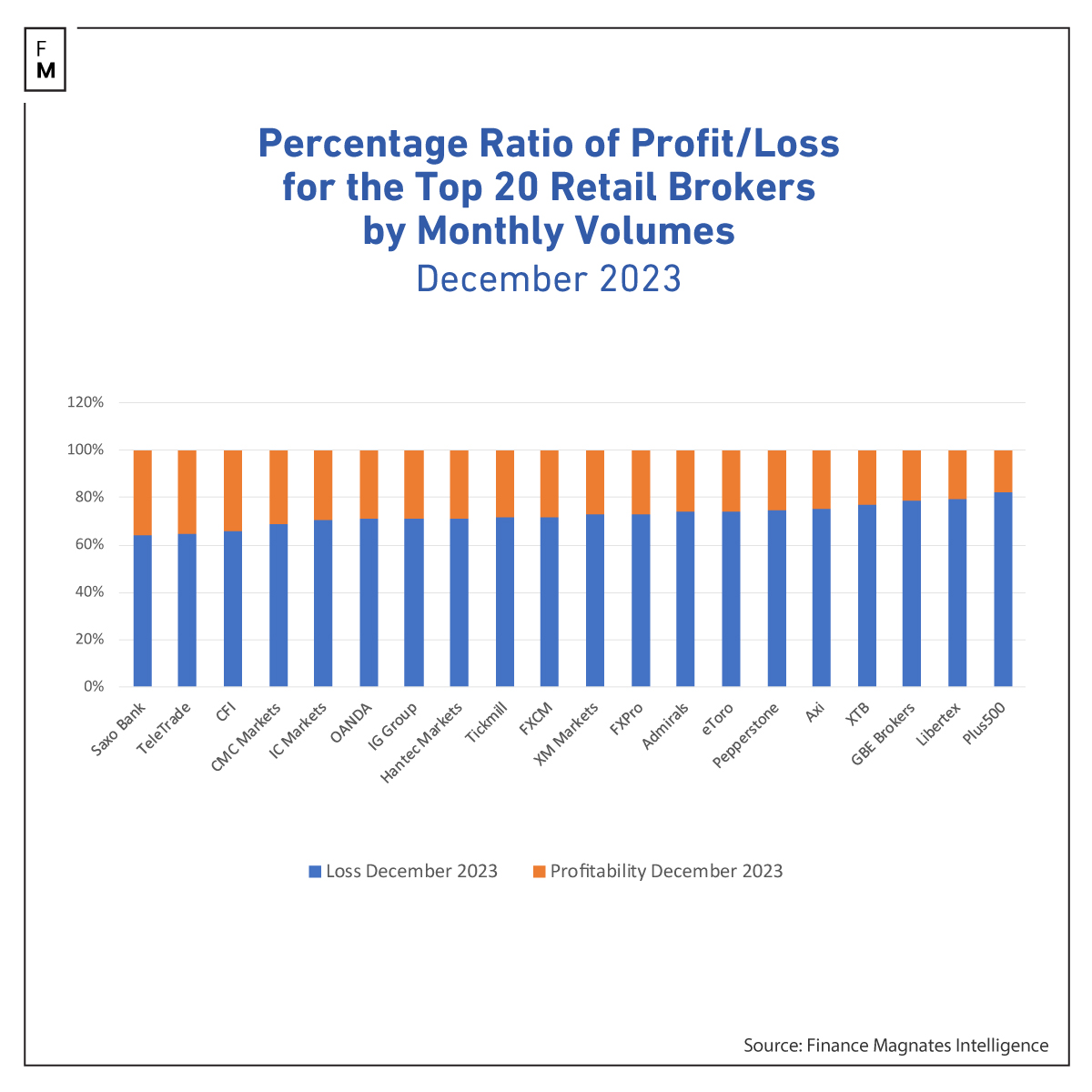
retail brokers are required to disclose the percentage of clients who lost
money trading CFDs over the past 12 months, which typically ranges from 70% to
80%. Studies have shown that the average retail investor lost €2680 trading
CFDs between June 2017 and June 2018. Most recent studies conducted by Finance Magnates Intelligenceconfirm those findings.
Regulatory
concerns have led to intensified regulatory actions, which in turn have alarmed
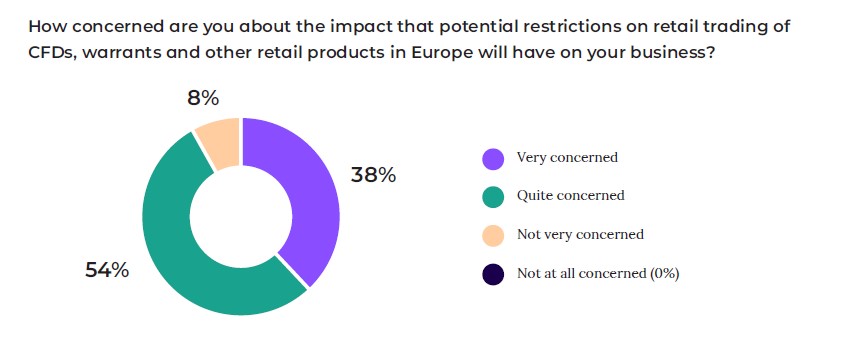
FX/CFD brokers and retail trading firms. 38% of those surveyed expressed that they are "very concerned" about their future, while 54% are "quite
concerned." Consequently, 9 out of 10 brokers fear that excessive
regulations may adversely affect their businesses.
Source: Acuiti
Industry Response and
Opportunities
The Acuiti
report surveyed 72 firms in the European market to understand how retail
brokers are responding to the challenges posed by regulatory restrictions. Over
two-thirds of retail brokers said 76-100% of their revenues come from retail
trading, highlighting the significant impact any restrictions would have on
their businesses.
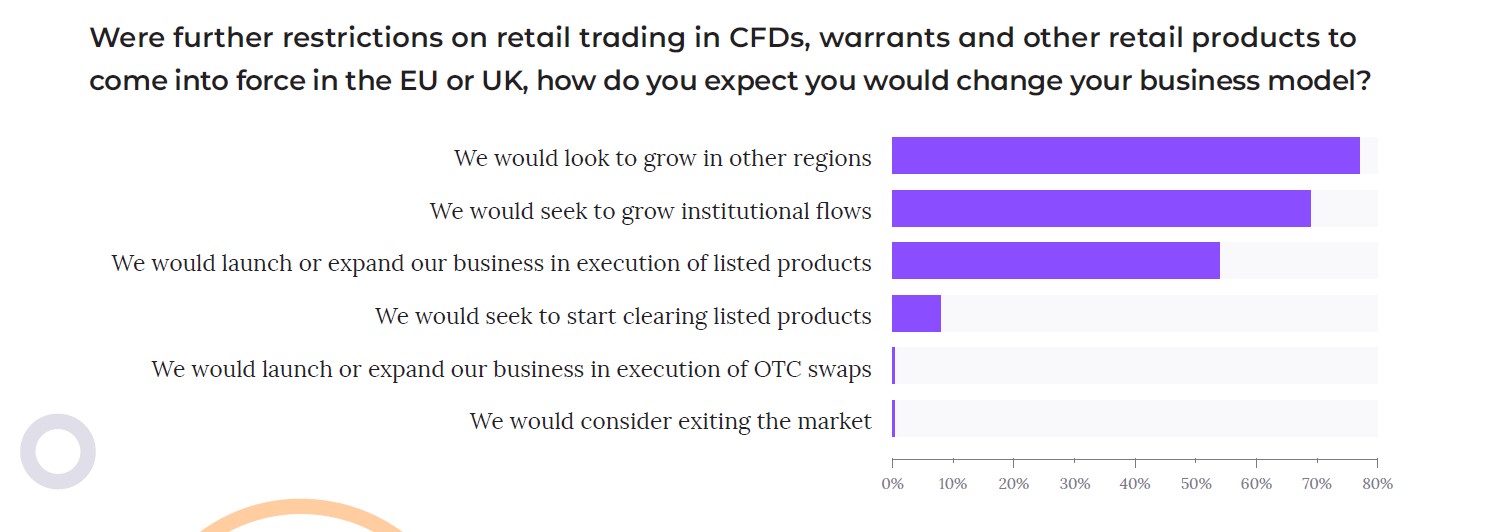
Most retail brokers plan to expand into other regions, target institutional flows, and grow their listed futures and options offerings to mitigate potential revenue losses.
Source: Acuiti
"There are several examples globally of brokers who initially focused on retail and subsequently became major players in institutional markets," said Will Mitting, the Founder of Acuiti. "In Europe, there is the potential for significant numbers of brokers to enter the institutional market over the next three years."
In fact,
over half of the respondents believe restrictions on retail products would positively
impact listed derivatives markets in Europe and overall competition.
Source: Acuiti
However,
some structural changes are needed for Europe to capitalize on the retail
trading opportunity in listed markets fully. Retail investors cited the need
for more education and concerns about higher trading costs, particularly market
data charges.
For the
institutional sell-side, the influx of retail flow into listed markets presents
both opportunities and threats. Proprietary trading firms predict it would
improve liquidity, provide greater opportunities, and boost revenues, with less
than 10% thinking it would increase volatility.
However,
incumbent brokers seem to underestimate the competitive threat posed by
ambitious and tech-savvy retail brokers entering the institutional space.
The Future of Retail
Trading in Europe
The
industry is at an inflection point as European regulators continue to clamp
down on risky retail products like CFDs. Retail brokers are being forced to
adapt their business models, with many setting their sights on institutional
markets and the potential growth in listed derivatives.
"Regulators
in Europe are only going one way with regards to retail trading of CFDs,"
noted one retail broker interviewed for the Acuiti study.
This
shifting landscape will likely bring the institutional and retail markets
closer together, potentially providing a significant boost to Europe's listed
derivative volumes, which have lagged behind the retail-driven growth seen in
US options markets in recent years.
"Should retail trading shift to listed derivatives markets, the overall market available to institutional brokers will grow. However, there will also be major disruption as the retail firms bring fresh competition to the markets. Our view based on this research is that the institutional incumbents underestimate the extent of the potential disruption," Mitting added.
While
challenges remain in terms of market structure, costs, and education, the
retail trading revolution in Europe seems poised to shake up the status quo. As
one participant put it: "Ultimately, regulatory actions may well force
institutional and retail markets closer together, with listed derivatives
markets in Europe set for a significant boost."
The retail
FX/CFD industry in Europe is facing a significant shift, and 92% of surveyed
companies are concerned about their future due to increasing regulatory
restrictions. A recent report by Acuiti titled "Retail Revolution"
delves into the potential impact of these changes and how the industry responds.
The report
suggested that companies might shift from their current instruments to
"listed derivatives." Despite being "muted" in recent years,
they may gain significance due to their more regulated nature and lower
counterparty risk.
The Changing Landscape of
Retail FX/CFD Trading in Europe
Contracts
for Difference, or CFDs, have been a popular retail trading product in Europe,
with an estimated market size of $3.2 billion in 2023. However, regulators
across the continent have grown increasingly concerned about the risks posed to
retail investors.
Across Europe,
retail brokers are required to disclose the percentage of clients who lost
money trading CFDs over the past 12 months, which typically ranges from 70% to
80%. Studies have shown that the average retail investor lost €2680 trading
CFDs between June 2017 and June 2018. Most recent studies conducted by Finance Magnates Intelligenceconfirm those findings.
Regulatory
concerns have led to intensified regulatory actions, which in turn have alarmed
FX/CFD brokers and retail trading firms. 38% of those surveyed expressed that they are "very concerned" about their future, while 54% are "quite
concerned." Consequently, 9 out of 10 brokers fear that excessive
regulations may adversely affect their businesses.
Source: Acuiti
Industry Response and
Opportunities
The Acuiti
report surveyed 72 firms in the European market to understand how retail
brokers are responding to the challenges posed by regulatory restrictions. Over
two-thirds of retail brokers said 76-100% of their revenues come from retail
trading, highlighting the significant impact any restrictions would have on
their businesses.
Most retail brokers plan to expand into other regions, target institutional flows, and grow their listed futures and options offerings to mitigate potential revenue losses.
Source: Acuiti
"There are several examples globally of brokers who initially focused on retail and subsequently became major players in institutional markets," said Will Mitting, the Founder of Acuiti. "In Europe, there is the potential for significant numbers of brokers to enter the institutional market over the next three years."
In fact,
over half of the respondents believe restrictions on retail products would positively
impact listed derivatives markets in Europe and overall competition.
Source: Acuiti
However,
some structural changes are needed for Europe to capitalize on the retail
trading opportunity in listed markets fully. Retail investors cited the need
for more education and concerns about higher trading costs, particularly market
data charges.
For the
institutional sell-side, the influx of retail flow into listed markets presents
both opportunities and threats. Proprietary trading firms predict it would
improve liquidity, provide greater opportunities, and boost revenues, with less
than 10% thinking it would increase volatility.
However,
incumbent brokers seem to underestimate the competitive threat posed by
ambitious and tech-savvy retail brokers entering the institutional space.
The Future of Retail
Trading in Europe
The
industry is at an inflection point as European regulators continue to clamp
down on risky retail products like CFDs. Retail brokers are being forced to
adapt their business models, with many setting their sights on institutional
markets and the potential growth in listed derivatives.
"Regulators
in Europe are only going one way with regards to retail trading of CFDs,"
noted one retail broker interviewed for the Acuiti study.
This
shifting landscape will likely bring the institutional and retail markets
closer together, potentially providing a significant boost to Europe's listed
derivative volumes, which have lagged behind the retail-driven growth seen in
US options markets in recent years.
"Should retail trading shift to listed derivatives markets, the overall market available to institutional brokers will grow. However, there will also be major disruption as the retail firms bring fresh competition to the markets. Our view based on this research is that the institutional incumbents underestimate the extent of the potential disruption," Mitting added.
While
challenges remain in terms of market structure, costs, and education, the
retail trading revolution in Europe seems poised to shake up the status quo. As
one participant put it: "Ultimately, regulatory actions may well force
institutional and retail markets closer together, with listed derivatives
markets in Europe set for a significant boost."
Damian Chmiel is a Senior Analyst & Editor at Finance Magnates with more than 15 years of experience in the CFD and online trading industry. Active as both a trader and journalist since 2010, he focuses on broker coverage, fintech innovation, and regulatory developments across Europe, the Middle East, and Asia.
His work includes interviews with C-level leaders at major brokerages and fintech platforms, as well as co-authoring Finance Magnates’ quarterly industry benchmarking reports. Damian’s reporting is data-driven, market-aware, and grounded in direct industry engagement. His analysis and commentary have also been cited by external media outlets, including Investing.com, Binance, The Asset, Stockhead, and Dispatch.
Education:
MA in Finance and Accounting, Cracow University of Economics
Retail Traders Can Now Access Prediction Markets Through Binance Wallet
FP Markets Winner Spotlight 🏆 | Global Broker of the Year 2025 #Trading #Broker #Innovation #Shorts
FP Markets Winner Spotlight 🏆 | Global Broker of the Year 2025 #Trading #Broker #Innovation #Shorts
FP Markets takes the spotlight as Global Broker of the Year 2025 at the Finance Magnates Awards.
Martin Stoilov, Head of Client Experience, shares that trust, innovation, and people played a key role in the company’s success, supported by a strong foundation of integrity and client-centricity.
Following this milestone, FP Markets continues to focus on growth, technology investment, and its core values of transparency and excellence.
👉 Be part of FM Awards 2026: https://awards.financemagnates.com/#nominate
FP Markets takes the spotlight as Global Broker of the Year 2025 at the Finance Magnates Awards.
Martin Stoilov, Head of Client Experience, shares that trust, innovation, and people played a key role in the company’s success, supported by a strong foundation of integrity and client-centricity.
Following this milestone, FP Markets continues to focus on growth, technology investment, and its core values of transparency and excellence.
👉 Be part of FM Awards 2026: https://awards.financemagnates.com/#nominate
In this video, we review @HolaPrimeMarketsOfficial, a multi-asset forex and CFDs broker offering different account types, trading platforms, and flexible trading conditions.
We cover the broker’s overall offering, including account options, trading environment, platforms like MT4 and MT5, and additional services such as managed accounts and fast withdrawals.
Watch the full video to see if Hola Prime Markets fits your trading needs.
📣 Stay up to date with the latest in finance and trading. Follow Finance Magnates for industry news, insights, and global event coverage.
Connect with us:
🔗 LinkedIn: /financemagnates
👍 Facebook: /financemagnates
📸 Instagram: https://www.instagram.com/financemagnates
🐦 X: https://x.com/financemagnates
🎥 TikTok: https://www.tiktok.com/tag/financemagnates
▶️ YouTube: /@financemagnates_official
#HolaPrime #ForexBroker #CFDTrading #FinanceMagnates #Trading #Forex #BrokerReview
In this video, we review @HolaPrimeMarketsOfficial, a multi-asset forex and CFDs broker offering different account types, trading platforms, and flexible trading conditions.
We cover the broker’s overall offering, including account options, trading environment, platforms like MT4 and MT5, and additional services such as managed accounts and fast withdrawals.
Watch the full video to see if Hola Prime Markets fits your trading needs.
📣 Stay up to date with the latest in finance and trading. Follow Finance Magnates for industry news, insights, and global event coverage.
Connect with us:
🔗 LinkedIn: /financemagnates
👍 Facebook: /financemagnates
📸 Instagram: https://www.instagram.com/financemagnates
🐦 X: https://x.com/financemagnates
🎥 TikTok: https://www.tiktok.com/tag/financemagnates
▶️ YouTube: /@financemagnates_official
#HolaPrime #ForexBroker #CFDTrading #FinanceMagnates #Trading #Forex #BrokerReview
Hola Prime Review: What You Need to Know | Full Breakdown by Finance Magnates
Hola Prime Review: What You Need to Know | Full Breakdown by Finance Magnates
In this video, we review @HolaPrime_Global, a proprietary trading firm offering evaluation programs and performance-based payouts in simulated market environments.
We cover how the challenge model works, including account types, profit splits (up to 95%), trading rules, and what it takes to reach a funded account. You’ll also learn about available platforms like MT4, MT5, cTrader, and more, along with insights into payouts, support, and trading conditions.
Watch the full video to see if Hola Prime fits your trading style.
📣 Stay up to date with the latest in finance and trading. Follow Finance Magnates for industry news, insights, and global event coverage.
Connect with us:
🔗 LinkedIn: /financemagnates
👍 Facebook: /financemagnates
📸 Instagram: https://www.instagram.com/financemagnates
🐦 X: https://x.com/financemagnates
🎥 TikTok: https://www.tiktok.com/tag/financemagnates
▶️ YouTube: /@financemagnates_official
#HolaPrime #PropFirm #Trading #FinanceMagnates #Forex #FuturesTrading #TradingReview #PropFirmReview
In this video, we review @HolaPrime_Global, a proprietary trading firm offering evaluation programs and performance-based payouts in simulated market environments.
We cover how the challenge model works, including account types, profit splits (up to 95%), trading rules, and what it takes to reach a funded account. You’ll also learn about available platforms like MT4, MT5, cTrader, and more, along with insights into payouts, support, and trading conditions.
Watch the full video to see if Hola Prime fits your trading style.
📣 Stay up to date with the latest in finance and trading. Follow Finance Magnates for industry news, insights, and global event coverage.
Connect with us:
🔗 LinkedIn: /financemagnates
👍 Facebook: /financemagnates
📸 Instagram: https://www.instagram.com/financemagnates
🐦 X: https://x.com/financemagnates
🎥 TikTok: https://www.tiktok.com/tag/financemagnates
▶️ YouTube: /@financemagnates_official
#HolaPrime #PropFirm #Trading #FinanceMagnates #Forex #FuturesTrading #TradingReview #PropFirmReview
Axi Winner Spotlight 🏆 | Global Most Innovative Broker 2025 #Innovation #Trading #Fintech #Broker
Axi Winner Spotlight 🏆 | Global Most Innovative Broker 2025 #Innovation #Trading #Fintech #Broker
Axi takes the spotlight at the Finance Magnates Awards, winning Global Most Innovative Broker 2025.
Olivia Xenofontos and Ivanna Openko share how the team will feel: proud, motivated, and ready to keep delivering.
They also describe the night as well-organized, focused, and enjoyable for all.
👉 Be part of FM Awards 2026.
Axi takes the spotlight at the Finance Magnates Awards, winning Global Most Innovative Broker 2025.
Olivia Xenofontos and Ivanna Openko share how the team will feel: proud, motivated, and ready to keep delivering.
They also describe the night as well-organized, focused, and enjoyable for all.
👉 Be part of FM Awards 2026.
Recognition that matters.
Built on transparency.
Driven by the industry.
The Finance Magnates Awards 2026.
Nominations are now open.
🔗 https://awards.financemagnates.com/?utm_source=SM&utm_medium=social&utm_campaign=recognition-matters
Recognition that matters.
Built on transparency.
Driven by the industry.
The Finance Magnates Awards 2026.
Nominations are now open.
🔗 https://awards.financemagnates.com/?utm_source=SM&utm_medium=social&utm_campaign=recognition-matters