Sector maintains European dominance despite 5% decline as quarterly activity shows sharp contrast.
“Key initiatives to keep an eye on in the UK’s fintech scene in the next few months include the FCA’s partnership with Nvidia,” KPMG commented.
Britain's
fintech sector pulled in $7.2 billion during the first six months of 2025,
marking a modest 5% drop from the $7.6 billion raised in the same period last
year.
The
numbers, released in KPMG's Pulse of Fintech report, paint a picture of an
industry still grappling with macroeconomic headwinds and
geopolitical uncertainty that have dampened investor appetite since the heady
days of 2021.
Despite
the year-over-year decline, UK fintech companies completed 216 deals -
slightly up from 198 transactions in the first half of 2024. But the devil's in
the quarterly details: the first quarter saw a robust $5.2 billion across 125
deals, while the second quarter dropped dramatically to just $2
billion spread across 91 transactions.
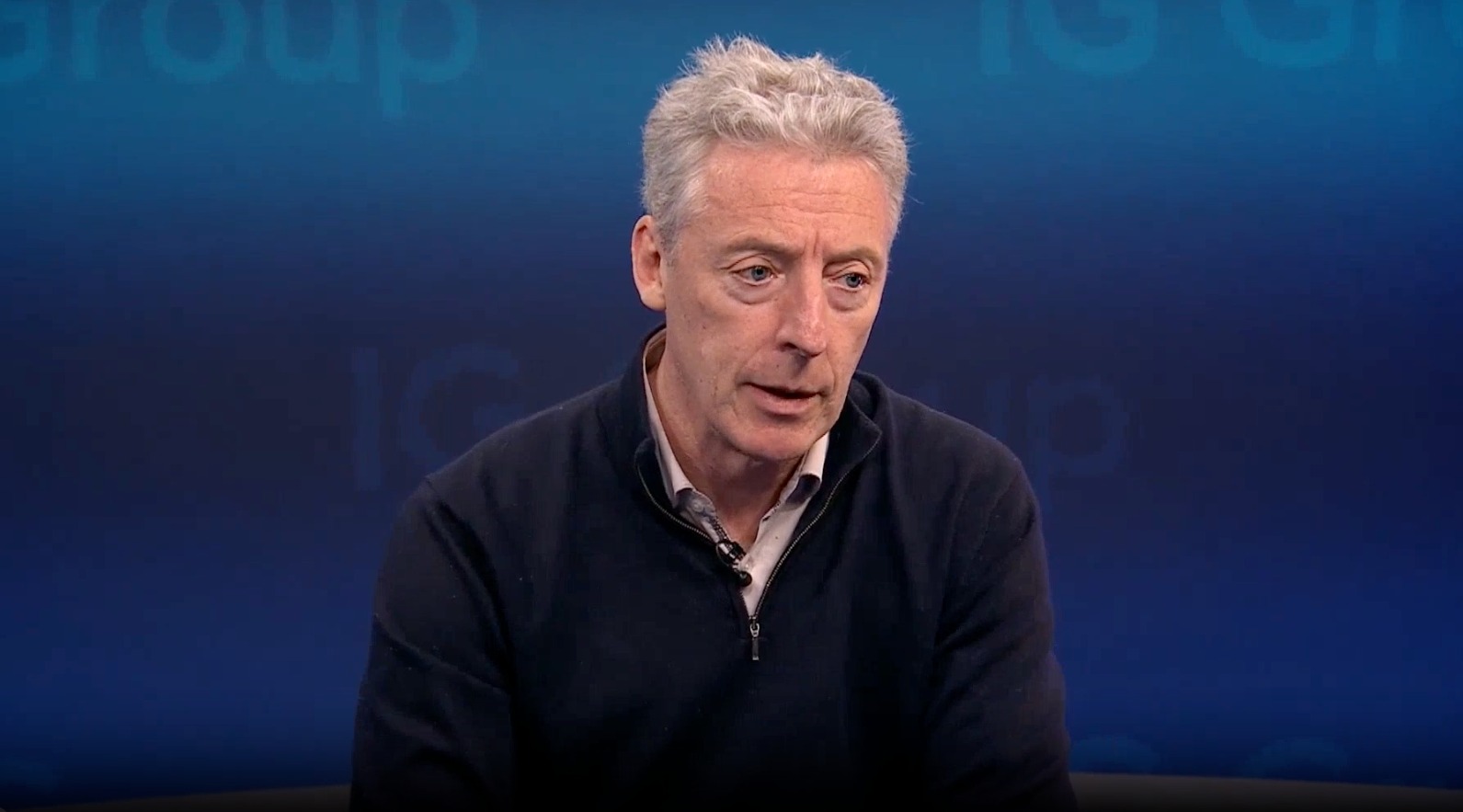
Roberto Napolitano, Chief Marketing Officer at Innovate Finance
“The UK is
still leading in terms of capital investment in fintech after the US,” Roberto
Napolitano, Chief Marketing Officer at Innovate Finance, said when talking
to Finance Magnates' Jonathan Fine at FMLS:24.
Big Deals Drive Numbers In
The UK’s Fintech Sector
Several blockbuster
transactions helped prop up the overall figures. BlackRock's $3.1 billion
acquisition of private markets data provider Preqin dominated the landscape,
while cross-border payments company Rapyd Financial Network and wealth
management technology platform FNZ each secured $500 million funding rounds.
The UK continues
to outpace the entire rest of Europe, the Middle East, and Africa
combined when it comes to fintech investment. While other regions struggled,
EMEA actually grew from $11.1 billion in the second half of 2024 to $13.7
billion in the first half of this year.
Hannah Dobson, Partner and UK Head of Fintech at KPMG UK, Source: KPMG
"Although
UK fintech investment experienced a slight decline in the first half of the
year compared to 2024, it is encouraging to observe the continued resilience of
the UK fintech sector despite the challenging macroeconomic environment,"
said Hannah Dobson, KPMG UK's partner and head of fintech.
In a
separate report from recruitment firm Morgan McKinley and analytics company
Vacancysoft, it was noted that UK
fintech hiring is expected to rise by 32%, driven mainly by compliance and
cybersecurity needs.
Market Shows Caution
The numbers
tell a story of investor caution that's become familiar across financial
markets. Geopolitical tensions, market volatility, and broader concerns
about global economic growth have all contributed to what KPMG describes as a
more subdued investment environment.
Current
investment levels remain well below the pandemic-era peaks of 2021,
when cheap money and digital transformation drove valuations to record heights.
The contrast is particularly stark in the second quarter's performance,
suggesting investors are taking a wait-and-see approach to new deals.
Looking
ahead, Dobson highlighted the Financial Conduct Authority's partnership with
Nvidia as a key development to watch. The new regulatory sandbox will
let banks experiment with computing and AI software for testing purposes before
full deployment.
“Key
initiatives to keep an eye on in the UK’s fintech scene in the next few months
include the FCA’s partnership with Nvidia. The new sandbox will allow banks to
tinker with computing and AI enterprise software, primarily for testing and
research prior to deployment,” Dobson added.
The UK's
modest decline sits within a broader global fintech funding landscape that hit
$44.7 billion across 2,216 deals worldwide - the
slowest first half since 2020. While venture capital funding held steady at
$23.4 billion, merger and acquisition activity fell sharply from
$26.7 billion to $19.9 billion, and private equity investment dropped from $4.4
billion to just $1.3 billion.
The
Americas still led overall investment with $27 billion, though that represented
a significant decline from $35.7 billion in the same period last year.
Asia-Pacific saw an even steeper drop, falling from $7.3 billion to $3.9
billion.
Despite the
overall cooling, certain subsectors remained hot. Cryptocurrency companies
attracted $8.3 billion - already approaching the $10.7 billion raised in all of
2024. Artificial intelligence fintech drew $7.2 billion, while regulatory
technology companies also maintained strong momentum.
The figures
suggest the UK fintech sector is navigating the current environment better than
many global peers, though the sharp quarterly contrast indicates the
path forward remains uncertain as economic and geopolitical pressures continue
to weigh on investor confidence.
Britain's
fintech sector pulled in $7.2 billion during the first six months of 2025,
marking a modest 5% drop from the $7.6 billion raised in the same period last
year.
The
numbers, released in KPMG's Pulse of Fintech report, paint a picture of an
industry still grappling with macroeconomic headwinds and
geopolitical uncertainty that have dampened investor appetite since the heady
days of 2021.
Despite
the year-over-year decline, UK fintech companies completed 216 deals -
slightly up from 198 transactions in the first half of 2024. But the devil's in
the quarterly details: the first quarter saw a robust $5.2 billion across 125
deals, while the second quarter dropped dramatically to just $2
billion spread across 91 transactions.
Roberto Napolitano, Chief Marketing Officer at Innovate Finance
“The UK is
still leading in terms of capital investment in fintech after the US,” Roberto
Napolitano, Chief Marketing Officer at Innovate Finance, said when talking
to Finance Magnates' Jonathan Fine at FMLS:24.
Big Deals Drive Numbers In
The UK’s Fintech Sector
Several blockbuster
transactions helped prop up the overall figures. BlackRock's $3.1 billion
acquisition of private markets data provider Preqin dominated the landscape,
while cross-border payments company Rapyd Financial Network and wealth
management technology platform FNZ each secured $500 million funding rounds.
The UK continues
to outpace the entire rest of Europe, the Middle East, and Africa
combined when it comes to fintech investment. While other regions struggled,
EMEA actually grew from $11.1 billion in the second half of 2024 to $13.7
billion in the first half of this year.
Hannah Dobson, Partner and UK Head of Fintech at KPMG UK, Source: KPMG
"Although
UK fintech investment experienced a slight decline in the first half of the
year compared to 2024, it is encouraging to observe the continued resilience of
the UK fintech sector despite the challenging macroeconomic environment,"
said Hannah Dobson, KPMG UK's partner and head of fintech.
In a
separate report from recruitment firm Morgan McKinley and analytics company
Vacancysoft, it was noted that UK
fintech hiring is expected to rise by 32%, driven mainly by compliance and
cybersecurity needs.
Market Shows Caution
The numbers
tell a story of investor caution that's become familiar across financial
markets. Geopolitical tensions, market volatility, and broader concerns
about global economic growth have all contributed to what KPMG describes as a
more subdued investment environment.
Current
investment levels remain well below the pandemic-era peaks of 2021,
when cheap money and digital transformation drove valuations to record heights.
The contrast is particularly stark in the second quarter's performance,
suggesting investors are taking a wait-and-see approach to new deals.
Looking
ahead, Dobson highlighted the Financial Conduct Authority's partnership with
Nvidia as a key development to watch. The new regulatory sandbox will
let banks experiment with computing and AI software for testing purposes before
full deployment.
“Key
initiatives to keep an eye on in the UK’s fintech scene in the next few months
include the FCA’s partnership with Nvidia. The new sandbox will allow banks to
tinker with computing and AI enterprise software, primarily for testing and
research prior to deployment,” Dobson added.
The UK's
modest decline sits within a broader global fintech funding landscape that hit
$44.7 billion across 2,216 deals worldwide - the
slowest first half since 2020. While venture capital funding held steady at
$23.4 billion, merger and acquisition activity fell sharply from
$26.7 billion to $19.9 billion, and private equity investment dropped from $4.4
billion to just $1.3 billion.
The
Americas still led overall investment with $27 billion, though that represented
a significant decline from $35.7 billion in the same period last year.
Asia-Pacific saw an even steeper drop, falling from $7.3 billion to $3.9
billion.
Despite the
overall cooling, certain subsectors remained hot. Cryptocurrency companies
attracted $8.3 billion - already approaching the $10.7 billion raised in all of
2024. Artificial intelligence fintech drew $7.2 billion, while regulatory
technology companies also maintained strong momentum.
The figures
suggest the UK fintech sector is navigating the current environment better than
many global peers, though the sharp quarterly contrast indicates the
path forward remains uncertain as economic and geopolitical pressures continue
to weigh on investor confidence.
Damian Chmiel is a Senior Analyst & Editor at Finance Magnates with more than 15 years of experience in the CFD and online trading industry. Active as both a trader and journalist since 2010, he focuses on broker coverage, fintech innovation, and regulatory developments across Europe, the Middle East, and Asia.
His work includes interviews with C-level leaders at major brokerages and fintech platforms, as well as co-authoring Finance Magnates’ quarterly industry benchmarking reports. Damian’s reporting is data-driven, market-aware, and grounded in direct industry engagement. His analysis and commentary have also been cited by external media outlets, including Investing.com, Binance, The Asset, Stockhead, and Dispatch.
Education:
MA in Finance and Accounting, Cracow University of Economics
Polymarket Replaces Bridged USDC Aiming for a U.S. Relaunch
FP Markets Winner Spotlight 🏆 | Global Broker of the Year 2025 #Trading #Broker #Innovation #Shorts
FP Markets Winner Spotlight 🏆 | Global Broker of the Year 2025 #Trading #Broker #Innovation #Shorts
FP Markets takes the spotlight as Global Broker of the Year 2025 at the Finance Magnates Awards.
Martin Stoilov, Head of Client Experience, shares that trust, innovation, and people played a key role in the company’s success, supported by a strong foundation of integrity and client-centricity.
Following this milestone, FP Markets continues to focus on growth, technology investment, and its core values of transparency and excellence.
👉 Be part of FM Awards 2026: https://awards.financemagnates.com/#nominate
FP Markets takes the spotlight as Global Broker of the Year 2025 at the Finance Magnates Awards.
Martin Stoilov, Head of Client Experience, shares that trust, innovation, and people played a key role in the company’s success, supported by a strong foundation of integrity and client-centricity.
Following this milestone, FP Markets continues to focus on growth, technology investment, and its core values of transparency and excellence.
👉 Be part of FM Awards 2026: https://awards.financemagnates.com/#nominate
In this video, we review @HolaPrimeMarketsOfficial, a multi-asset forex and CFDs broker offering different account types, trading platforms, and flexible trading conditions.
We cover the broker’s overall offering, including account options, trading environment, platforms like MT4 and MT5, and additional services such as managed accounts and fast withdrawals.
Watch the full video to see if Hola Prime Markets fits your trading needs.
📣 Stay up to date with the latest in finance and trading. Follow Finance Magnates for industry news, insights, and global event coverage.
Connect with us:
🔗 LinkedIn: /financemagnates
👍 Facebook: /financemagnates
📸 Instagram: https://www.instagram.com/financemagnates
🐦 X: https://x.com/financemagnates
🎥 TikTok: https://www.tiktok.com/tag/financemagnates
▶️ YouTube: /@financemagnates_official
#HolaPrime #ForexBroker #CFDTrading #FinanceMagnates #Trading #Forex #BrokerReview
In this video, we review @HolaPrimeMarketsOfficial, a multi-asset forex and CFDs broker offering different account types, trading platforms, and flexible trading conditions.
We cover the broker’s overall offering, including account options, trading environment, platforms like MT4 and MT5, and additional services such as managed accounts and fast withdrawals.
Watch the full video to see if Hola Prime Markets fits your trading needs.
📣 Stay up to date with the latest in finance and trading. Follow Finance Magnates for industry news, insights, and global event coverage.
Connect with us:
🔗 LinkedIn: /financemagnates
👍 Facebook: /financemagnates
📸 Instagram: https://www.instagram.com/financemagnates
🐦 X: https://x.com/financemagnates
🎥 TikTok: https://www.tiktok.com/tag/financemagnates
▶️ YouTube: /@financemagnates_official
#HolaPrime #ForexBroker #CFDTrading #FinanceMagnates #Trading #Forex #BrokerReview
Hola Prime Review: What You Need to Know | Full Breakdown by Finance Magnates
Hola Prime Review: What You Need to Know | Full Breakdown by Finance Magnates
In this video, we review @HolaPrime_Global, a proprietary trading firm offering evaluation programs and performance-based payouts in simulated market environments.
We cover how the challenge model works, including account types, profit splits (up to 95%), trading rules, and what it takes to reach a funded account. You’ll also learn about available platforms like MT4, MT5, cTrader, and more, along with insights into payouts, support, and trading conditions.
Watch the full video to see if Hola Prime fits your trading style.
📣 Stay up to date with the latest in finance and trading. Follow Finance Magnates for industry news, insights, and global event coverage.
Connect with us:
🔗 LinkedIn: /financemagnates
👍 Facebook: /financemagnates
📸 Instagram: https://www.instagram.com/financemagnates
🐦 X: https://x.com/financemagnates
🎥 TikTok: https://www.tiktok.com/tag/financemagnates
▶️ YouTube: /@financemagnates_official
#HolaPrime #PropFirm #Trading #FinanceMagnates #Forex #FuturesTrading #TradingReview #PropFirmReview
In this video, we review @HolaPrime_Global, a proprietary trading firm offering evaluation programs and performance-based payouts in simulated market environments.
We cover how the challenge model works, including account types, profit splits (up to 95%), trading rules, and what it takes to reach a funded account. You’ll also learn about available platforms like MT4, MT5, cTrader, and more, along with insights into payouts, support, and trading conditions.
Watch the full video to see if Hola Prime fits your trading style.
📣 Stay up to date with the latest in finance and trading. Follow Finance Magnates for industry news, insights, and global event coverage.
Connect with us:
🔗 LinkedIn: /financemagnates
👍 Facebook: /financemagnates
📸 Instagram: https://www.instagram.com/financemagnates
🐦 X: https://x.com/financemagnates
🎥 TikTok: https://www.tiktok.com/tag/financemagnates
▶️ YouTube: /@financemagnates_official
#HolaPrime #PropFirm #Trading #FinanceMagnates #Forex #FuturesTrading #TradingReview #PropFirmReview
Axi Winner Spotlight 🏆 | Global Most Innovative Broker 2025 #Innovation #Trading #Fintech #Broker
Axi Winner Spotlight 🏆 | Global Most Innovative Broker 2025 #Innovation #Trading #Fintech #Broker
Axi takes the spotlight at the Finance Magnates Awards, winning Global Most Innovative Broker 2025.
Olivia Xenofontos and Ivanna Openko share how the team will feel: proud, motivated, and ready to keep delivering.
They also describe the night as well-organized, focused, and enjoyable for all.
👉 Be part of FM Awards 2026.
Axi takes the spotlight at the Finance Magnates Awards, winning Global Most Innovative Broker 2025.
Olivia Xenofontos and Ivanna Openko share how the team will feel: proud, motivated, and ready to keep delivering.
They also describe the night as well-organized, focused, and enjoyable for all.
👉 Be part of FM Awards 2026.
Recognition that matters.
Built on transparency.
Driven by the industry.
The Finance Magnates Awards 2026.
Nominations are now open.
🔗 https://awards.financemagnates.com/?utm_source=SM&utm_medium=social&utm_campaign=recognition-matters
Recognition that matters.
Built on transparency.
Driven by the industry.
The Finance Magnates Awards 2026.
Nominations are now open.
🔗 https://awards.financemagnates.com/?utm_source=SM&utm_medium=social&utm_campaign=recognition-matters