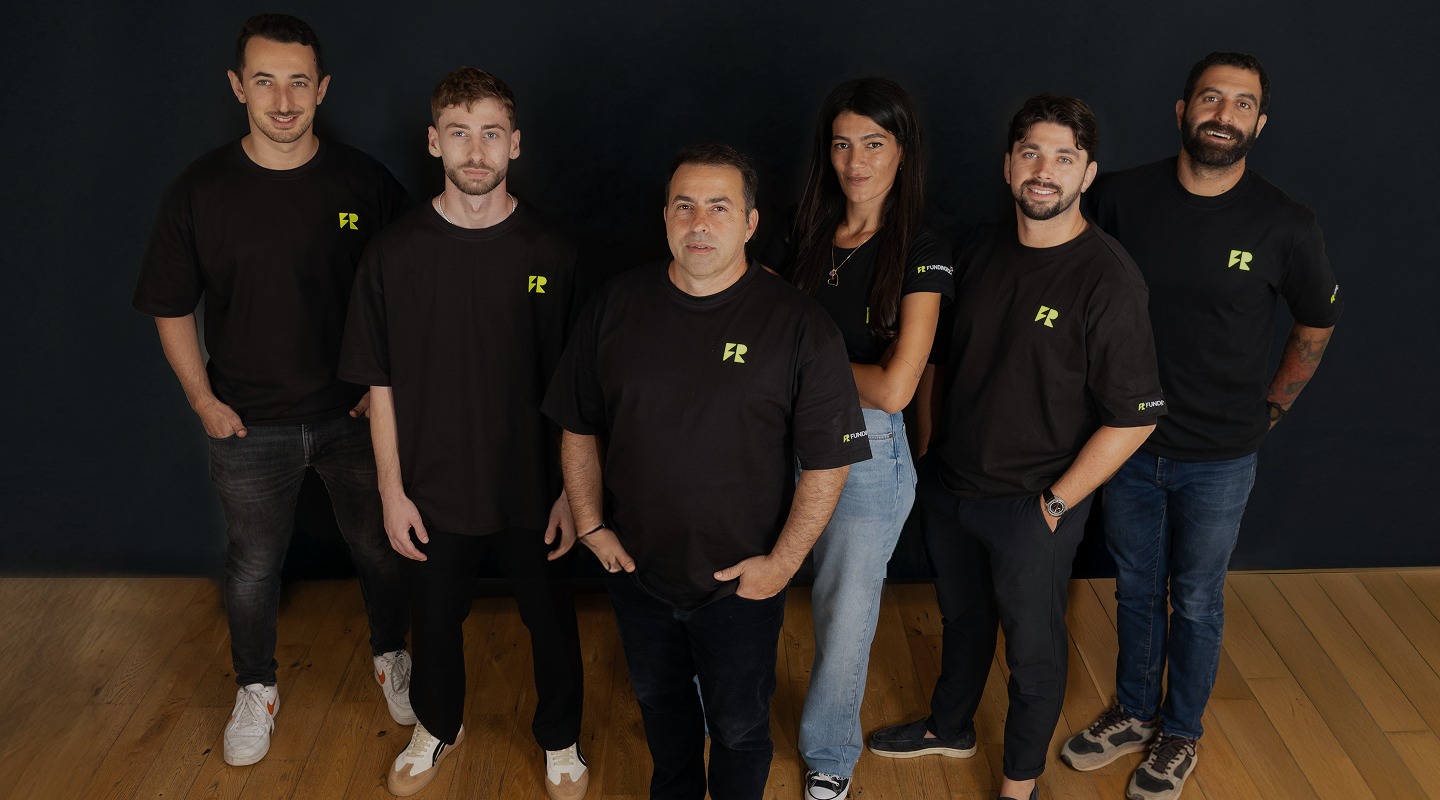
Revolut launched a secondary share sale, allowing employees to sell stakes 70% higher than $45 billion last year.
The British fintech is simultaneously exploring US banking acquisitions and faced a $123,000 compliance fine in Australia.
British
fintech Revolut has started allowing employees to sell shares at a
$75 billion valuation, marking a significant jump from last year's $45
billion price tag as the company weighs acquisition opportunities
in the United States.
Revolut Launches $75
Billion Secondary Share Sale as Growth Plans Take Shape
The
secondary share sale values each share at $1,381.06, according to an internal
memo seen by Bloomberg. Staff can sell up to 20% of their holdings in the
transaction, which has already attracted interest from both new and existing
investors.
The latest
valuation puts Revolut above the market capitalization of traditional lender
Barclays, though the comparison involves private versus public market
pricing. For Revolut, the sale continues a pattern of using secondary
transactions to provide employee liquidity while avoiding the public
markets.
“As
part of our commitment to our employees, we regularly provide
opportunities for them to gain liquidity,” a Revolut spokesperson
said. “An employee secondary share sale is currently in process,
and we won't be commenting further until it is complete.”
US Banking License in
Focus
The share
sale comes as Revolut explores its next major expansion push. The
company has been talking to investment bankers about potentially acquiring
a US lender to fast-track its American growth, rather than going through the
lengthy process of applying for its own banking license.
Revolut shelved
a US banking license application in 2021 and has since operated through
partner banks. Now, with President Donald Trump's administration signaling
a more accommodating stance toward financial deregulation,
the company sees an opening.
The fintech
plans to launch US savings products in the coming weeks and has ramped up
marketing spending, including offering free subway rides to New Yorkers.
Getting a banking license through acquisition would let Revolut offer
loans and other services directly to American customers.
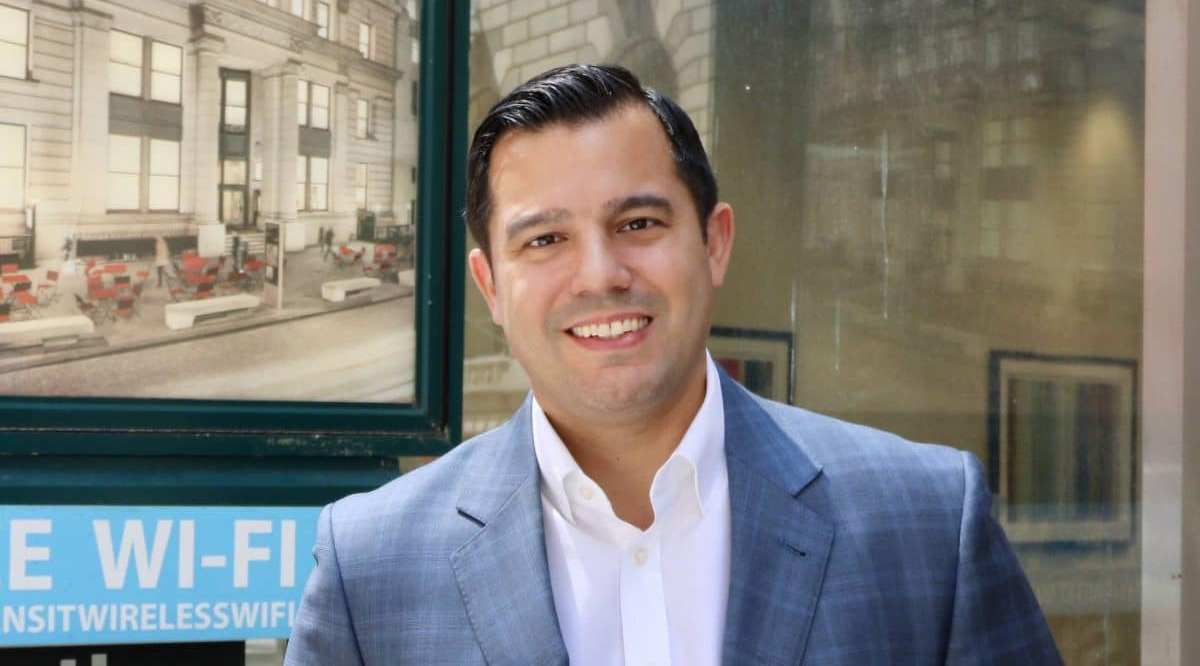
Nikolay Storonsky, CEO of Revolut, seems to be aiming for wide-ranging European expansion (Revolut).
The US push
reflects lessons learned from Revolut's
protracted UK licensing process. The company spent more than three
years securing its British banking permit and remains under strict
regulatory oversight even now.
Chief
Executive Nik Storonsky acknowledged the misstep, saying, “For a long time
I wanted to be as less regulated as possible, it was the completely
wrong decision.”
The penalty
highlights the compliance burden facing fintechs as they expand
across multiple jurisdictions. Revolut self-reported the violations and
cooperated with regulators, according to AUSTRAC.
Brendan Thomas, the CEO of AUSTRAC
“These
are the real-life consequences of failures to report,” said AUSTRAC
CEO Brendan Thomas. “Remittance services are attractive to money
launderers and other types of criminals because they can move funds cheaply and
quickly across borders.”
The
Australian fine represents a relatively small cost for Revolut, which
reported £3.1 billion in revenue last year, up 72%. The company now serves
more than 60 million customers globally, surpassing HSBC's customer count
in 2024.
The
secondary sale reflects broader trends in the private fintech market. With
IPO activity remaining sluggish, companies like Stripe have turned to
employee share sales to provide liquidity. Stripe completed a similar
transaction in February at a $91.5 billion valuation.
Molten
Ventures, which holds Revolut as its largest position at just over 10% of
its portfolio, saw its shares gain as much as 5.7% after news of the secondary
sale broke.
For
Revolut, the $75 billion price tag represents validation of its rapid growth
strategy, even as regulatory challenges persist across its global
operations.
British
fintech Revolut has started allowing employees to sell shares at a
$75 billion valuation, marking a significant jump from last year's $45
billion price tag as the company weighs acquisition opportunities
in the United States.
Revolut Launches $75
Billion Secondary Share Sale as Growth Plans Take Shape
The
secondary share sale values each share at $1,381.06, according to an internal
memo seen by Bloomberg. Staff can sell up to 20% of their holdings in the
transaction, which has already attracted interest from both new and existing
investors.
The latest
valuation puts Revolut above the market capitalization of traditional lender
Barclays, though the comparison involves private versus public market
pricing. For Revolut, the sale continues a pattern of using secondary
transactions to provide employee liquidity while avoiding the public
markets.
“As
part of our commitment to our employees, we regularly provide
opportunities for them to gain liquidity,” a Revolut spokesperson
said. “An employee secondary share sale is currently in process,
and we won't be commenting further until it is complete.”
US Banking License in
Focus
The share
sale comes as Revolut explores its next major expansion push. The
company has been talking to investment bankers about potentially acquiring
a US lender to fast-track its American growth, rather than going through the
lengthy process of applying for its own banking license.
Revolut shelved
a US banking license application in 2021 and has since operated through
partner banks. Now, with President Donald Trump's administration signaling
a more accommodating stance toward financial deregulation,
the company sees an opening.
The fintech
plans to launch US savings products in the coming weeks and has ramped up
marketing spending, including offering free subway rides to New Yorkers.
Getting a banking license through acquisition would let Revolut offer
loans and other services directly to American customers.
Nikolay Storonsky, CEO of Revolut, seems to be aiming for wide-ranging European expansion (Revolut).
The US push
reflects lessons learned from Revolut's
protracted UK licensing process. The company spent more than three
years securing its British banking permit and remains under strict
regulatory oversight even now.
Chief
Executive Nik Storonsky acknowledged the misstep, saying, “For a long time
I wanted to be as less regulated as possible, it was the completely
wrong decision.”
The penalty
highlights the compliance burden facing fintechs as they expand
across multiple jurisdictions. Revolut self-reported the violations and
cooperated with regulators, according to AUSTRAC.
Brendan Thomas, the CEO of AUSTRAC
“These
are the real-life consequences of failures to report,” said AUSTRAC
CEO Brendan Thomas. “Remittance services are attractive to money
launderers and other types of criminals because they can move funds cheaply and
quickly across borders.”
The
Australian fine represents a relatively small cost for Revolut, which
reported £3.1 billion in revenue last year, up 72%. The company now serves
more than 60 million customers globally, surpassing HSBC's customer count
in 2024.
The
secondary sale reflects broader trends in the private fintech market. With
IPO activity remaining sluggish, companies like Stripe have turned to
employee share sales to provide liquidity. Stripe completed a similar
transaction in February at a $91.5 billion valuation.
Molten
Ventures, which holds Revolut as its largest position at just over 10% of
its portfolio, saw its shares gain as much as 5.7% after news of the secondary
sale broke.
For
Revolut, the $75 billion price tag represents validation of its rapid growth
strategy, even as regulatory challenges persist across its global
operations.
Damian Chmiel is a Senior Analyst & Editor at Finance Magnates with more than 15 years of experience in the CFD and online trading industry. Active as both a trader and journalist since 2010, he focuses on broker coverage, fintech innovation, and regulatory developments across Europe, the Middle East, and Asia.
His work includes interviews with C-level leaders at major brokerages and fintech platforms, as well as co-authoring Finance Magnates’ quarterly industry benchmarking reports. Damian’s reporting is data-driven, market-aware, and grounded in direct industry engagement. His analysis and commentary have also been cited by external media outlets, including Investing.com, Binance, The Asset, Stockhead, and Dispatch.
Education:
MA in Finance and Accounting, Cracow University of Economics
Polymarket Replaces Bridged USDC Aiming for a U.S. Relaunch
FP Markets Winner Spotlight 🏆 | Global Broker of the Year 2025 #Trading #Broker #Innovation #Shorts
FP Markets Winner Spotlight 🏆 | Global Broker of the Year 2025 #Trading #Broker #Innovation #Shorts
FP Markets takes the spotlight as Global Broker of the Year 2025 at the Finance Magnates Awards.
Martin Stoilov, Head of Client Experience, shares that trust, innovation, and people played a key role in the company’s success, supported by a strong foundation of integrity and client-centricity.
Following this milestone, FP Markets continues to focus on growth, technology investment, and its core values of transparency and excellence.
👉 Be part of FM Awards 2026: https://awards.financemagnates.com/#nominate
FP Markets takes the spotlight as Global Broker of the Year 2025 at the Finance Magnates Awards.
Martin Stoilov, Head of Client Experience, shares that trust, innovation, and people played a key role in the company’s success, supported by a strong foundation of integrity and client-centricity.
Following this milestone, FP Markets continues to focus on growth, technology investment, and its core values of transparency and excellence.
👉 Be part of FM Awards 2026: https://awards.financemagnates.com/#nominate
In this video, we review @HolaPrimeMarketsOfficial, a multi-asset forex and CFDs broker offering different account types, trading platforms, and flexible trading conditions.
We cover the broker’s overall offering, including account options, trading environment, platforms like MT4 and MT5, and additional services such as managed accounts and fast withdrawals.
Watch the full video to see if Hola Prime Markets fits your trading needs.
📣 Stay up to date with the latest in finance and trading. Follow Finance Magnates for industry news, insights, and global event coverage.
Connect with us:
🔗 LinkedIn: /financemagnates
👍 Facebook: /financemagnates
📸 Instagram: https://www.instagram.com/financemagnates
🐦 X: https://x.com/financemagnates
🎥 TikTok: https://www.tiktok.com/tag/financemagnates
▶️ YouTube: /@financemagnates_official
#HolaPrime #ForexBroker #CFDTrading #FinanceMagnates #Trading #Forex #BrokerReview
In this video, we review @HolaPrimeMarketsOfficial, a multi-asset forex and CFDs broker offering different account types, trading platforms, and flexible trading conditions.
We cover the broker’s overall offering, including account options, trading environment, platforms like MT4 and MT5, and additional services such as managed accounts and fast withdrawals.
Watch the full video to see if Hola Prime Markets fits your trading needs.
📣 Stay up to date with the latest in finance and trading. Follow Finance Magnates for industry news, insights, and global event coverage.
Connect with us:
🔗 LinkedIn: /financemagnates
👍 Facebook: /financemagnates
📸 Instagram: https://www.instagram.com/financemagnates
🐦 X: https://x.com/financemagnates
🎥 TikTok: https://www.tiktok.com/tag/financemagnates
▶️ YouTube: /@financemagnates_official
#HolaPrime #ForexBroker #CFDTrading #FinanceMagnates #Trading #Forex #BrokerReview
Hola Prime Review: What You Need to Know | Full Breakdown by Finance Magnates
Hola Prime Review: What You Need to Know | Full Breakdown by Finance Magnates
In this video, we review @HolaPrime_Global, a proprietary trading firm offering evaluation programs and performance-based payouts in simulated market environments.
We cover how the challenge model works, including account types, profit splits (up to 95%), trading rules, and what it takes to reach a funded account. You’ll also learn about available platforms like MT4, MT5, cTrader, and more, along with insights into payouts, support, and trading conditions.
Watch the full video to see if Hola Prime fits your trading style.
📣 Stay up to date with the latest in finance and trading. Follow Finance Magnates for industry news, insights, and global event coverage.
Connect with us:
🔗 LinkedIn: /financemagnates
👍 Facebook: /financemagnates
📸 Instagram: https://www.instagram.com/financemagnates
🐦 X: https://x.com/financemagnates
🎥 TikTok: https://www.tiktok.com/tag/financemagnates
▶️ YouTube: /@financemagnates_official
#HolaPrime #PropFirm #Trading #FinanceMagnates #Forex #FuturesTrading #TradingReview #PropFirmReview
In this video, we review @HolaPrime_Global, a proprietary trading firm offering evaluation programs and performance-based payouts in simulated market environments.
We cover how the challenge model works, including account types, profit splits (up to 95%), trading rules, and what it takes to reach a funded account. You’ll also learn about available platforms like MT4, MT5, cTrader, and more, along with insights into payouts, support, and trading conditions.
Watch the full video to see if Hola Prime fits your trading style.
📣 Stay up to date with the latest in finance and trading. Follow Finance Magnates for industry news, insights, and global event coverage.
Connect with us:
🔗 LinkedIn: /financemagnates
👍 Facebook: /financemagnates
📸 Instagram: https://www.instagram.com/financemagnates
🐦 X: https://x.com/financemagnates
🎥 TikTok: https://www.tiktok.com/tag/financemagnates
▶️ YouTube: /@financemagnates_official
#HolaPrime #PropFirm #Trading #FinanceMagnates #Forex #FuturesTrading #TradingReview #PropFirmReview
Axi Winner Spotlight 🏆 | Global Most Innovative Broker 2025 #Innovation #Trading #Fintech #Broker
Axi Winner Spotlight 🏆 | Global Most Innovative Broker 2025 #Innovation #Trading #Fintech #Broker
Axi takes the spotlight at the Finance Magnates Awards, winning Global Most Innovative Broker 2025.
Olivia Xenofontos and Ivanna Openko share how the team will feel: proud, motivated, and ready to keep delivering.
They also describe the night as well-organized, focused, and enjoyable for all.
👉 Be part of FM Awards 2026.
Axi takes the spotlight at the Finance Magnates Awards, winning Global Most Innovative Broker 2025.
Olivia Xenofontos and Ivanna Openko share how the team will feel: proud, motivated, and ready to keep delivering.
They also describe the night as well-organized, focused, and enjoyable for all.
👉 Be part of FM Awards 2026.
Recognition that matters.
Built on transparency.
Driven by the industry.
The Finance Magnates Awards 2026.
Nominations are now open.
🔗 https://awards.financemagnates.com/?utm_source=SM&utm_medium=social&utm_campaign=recognition-matters
Recognition that matters.
Built on transparency.
Driven by the industry.
The Finance Magnates Awards 2026.
Nominations are now open.
🔗 https://awards.financemagnates.com/?utm_source=SM&utm_medium=social&utm_campaign=recognition-matters