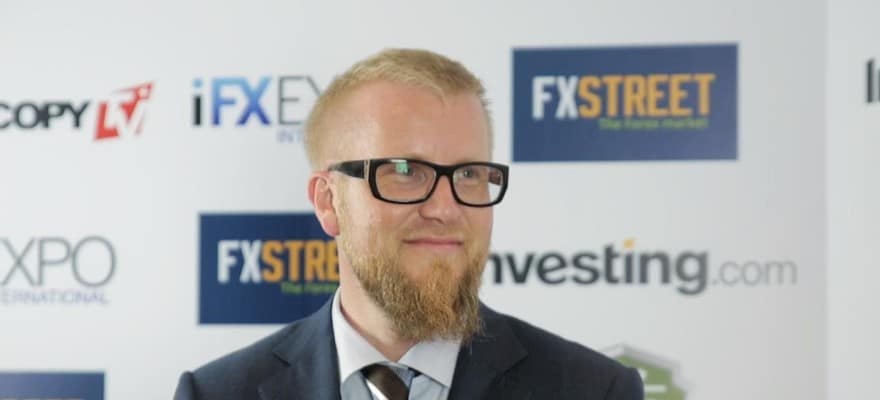
Saxo Bank's former Global Head of FX says the companies can change the foreign exchange world for the better
Kurt vom Scheidt
Treating clients well and wanting them to succeed is a concept that is, alas, alien to many people working in the retail trading industry. Despite a series of scandals over the past decade, a number of brokers continue to churn-and-burn traders instead of looking to develop longer term relationships with them.
One man that’s hoping to change that is Kurt vom Scheidt. After eleven years with Danish powerhouse Saxo Bank, four of which were spent as Global Head of FX, vom Scheidt is now working as an advisor to three firms; Chasing Returns, FX Prime AG and FairXchange.
Speaking to Finance Magnates last week, vom Scheidt said that his decision to work with those three companies was driven by a desire to instil some change in the wider foreign exchange trading world.
“These companies each have their own niches, directions, and appropriate target client segments,” said vom Scheidt. “But a common denominator is that they all offer products and services that can concurrently improve bottom line profitability for both retail brokers and their underlying clients. Pursuit of mutually beneficial outcomes and goals has always been what motivates me to get out of bed in the morning and what keeps me up at night; hence my excitement to be working with these firms to help formulate and deliver on their objectives.”
Developing the code
This isn’t the first time that vom Scheidt has made an effort to reshape the foreign exchange industry. Along with a group of other senior executives, he was a part of the London Foreign Exchange Joint Standing Committee which helped develop the FX Global Code - a set of principles for FX market participants that were published in 2017.
The only retail brokerage representative on the committee, vom Scheidt contributed directly to several of the principles pertaining to execution. Amongst other things, those rules state that firms should be clear about client order handling, including whether they are acting as agent or principal, and clarify what last look practices are acceptable.
“There was constructive debate over a number of issues,” said vom Scheidt, “but everyone collaborated well to achieve the shared goal of creating a more detailed code that identifies good global practices and helps promote a fair and effective market that is more transparent, and therefore sustainable.”
Making better traders
It is this drive for sustainability that seems to have guided vom Scheidt’s decision to work with the firms he is now advising. Though, as noted, each one provides a different service, they could all lead to a more successful base of traders in both the retail and institutional worlds.
Chasing Returns, for instance, is a company that, using behavioural psychology, hopes to reveal traders’ own biases to them and, with that information at hand, guide them to make better decisions.
Finally, FX Prime AG provides market access to aggregated liquidity and execution services particularly for non-linear fx products, such us as options, swaps and NDFs, which remain less electronified.
Having said all of this, transparency may be good in practice but, for better or worse, the fact that so many brokers seem opposed to it would seem to indicate that it could hurt revenues. Why then, I asked vom Scheidt, is the openness, that the three companies he is advising promote, good for the retail trading industry?
“A business that wants to succeed should strive to provide their clients with products and services that are transparent and mutually beneficial,” he replied. “I find it difficult to think of a business, in any industry globally, that has not achieved its aspirations when its teams focus on those underpinnings. The fact is that when clients achieve better profitability outcomes, they are more likely to stay with their service provider for a longer period of time, so higher lifetime client value is obtained by helping clients realize better individual performance.”
A guiding hand
Philosophy is certainly a good reason to get involved with a company but, unfortunately for us, there aren’t many businesses willing to pay people to sit around all day discussing the merits of their ideas.
Thus, vom Scheidt will be performing a range of tasks for the three firms he is now working with. That might mean helping them develop new products, providing guidance on how to break into specific markets and giving advice on running a business to ensure it continues to succeed as it scales upwards.
“We are delighted that Kurt is joining our advisory board to work more closely with us - he will be a huge influence,” Chasing Returns CEO Ann Hunt told Finance Magnates. “Kurt has been a fan of the Chasing Returns philosophy and our tools since we met and together we plan to accelerate the necessary changes in the industry to support client retention, and adherence to the highest standards for duty of care to traders.”
More regulation
Ann Hunt
In many ways the changes that Hunt mentioned, and which both she and vom Scheidt are advocating for, are already being forced upon brokers by regulatory changes. The European Securities and Markets Authority’s product intervention measures, which were implemented in August of last year, were framed by the regulator as a means of protecting retail traders.
That many national regulators have made those measures permanent would suggest that authorities are not going to tamper down their treatment of retail brokers any time soon. And, in vom Scheidt’s view, there could be even more regulatory scrutiny heading our way.
That’s something which most brokers, who tend to find most regulation incommodious, probably don’t want to hear. For vom Scheidt and his new colleagues, on the other hand, it could be good news.
Regulatory changes which push for greater transparency fit with the ethos of the three companies that the former Saxo Bank man is now advising. As such, if more similar rules are made law, those three firms could see accompanying success.
Whether that happens or not, it is refreshing to see a leading figure in the industry making a push to create a better-informed, data-driven dialogue between market participants which, in turn, should lead to improved outcomes for customers. It is, lest we forget, those people who ensure brokers get paid at the end of each month.
Treating clients well and wanting them to succeed is a concept that is, alas, alien to many people working in the retail trading industry. Despite a series of scandals over the past decade, a number of brokers continue to churn-and-burn traders instead of looking to develop longer term relationships with them.
One man that’s hoping to change that is Kurt vom Scheidt. After eleven years with Danish powerhouse Saxo Bank, four of which were spent as Global Head of FX, vom Scheidt is now working as an advisor to three firms; Chasing Returns, FX Prime AG and FairXchange.
Speaking to Finance Magnates last week, vom Scheidt said that his decision to work with those three companies was driven by a desire to instil some change in the wider foreign exchange trading world.
“These companies each have their own niches, directions, and appropriate target client segments,” said vom Scheidt. “But a common denominator is that they all offer products and services that can concurrently improve bottom line profitability for both retail brokers and their underlying clients. Pursuit of mutually beneficial outcomes and goals has always been what motivates me to get out of bed in the morning and what keeps me up at night; hence my excitement to be working with these firms to help formulate and deliver on their objectives.”
Developing the code
This isn’t the first time that vom Scheidt has made an effort to reshape the foreign exchange industry. Along with a group of other senior executives, he was a part of the London Foreign Exchange Joint Standing Committee which helped develop the FX Global Code - a set of principles for FX market participants that were published in 2017.
The only retail brokerage representative on the committee, vom Scheidt contributed directly to several of the principles pertaining to execution. Amongst other things, those rules state that firms should be clear about client order handling, including whether they are acting as agent or principal, and clarify what last look practices are acceptable.
“There was constructive debate over a number of issues,” said vom Scheidt, “but everyone collaborated well to achieve the shared goal of creating a more detailed code that identifies good global practices and helps promote a fair and effective market that is more transparent, and therefore sustainable.”
Making better traders
It is this drive for sustainability that seems to have guided vom Scheidt’s decision to work with the firms he is now advising. Though, as noted, each one provides a different service, they could all lead to a more successful base of traders in both the retail and institutional worlds.
Chasing Returns, for instance, is a company that, using behavioural psychology, hopes to reveal traders’ own biases to them and, with that information at hand, guide them to make better decisions.
Finally, FX Prime AG provides market access to aggregated liquidity and execution services particularly for non-linear fx products, such us as options, swaps and NDFs, which remain less electronified.
Having said all of this, transparency may be good in practice but, for better or worse, the fact that so many brokers seem opposed to it would seem to indicate that it could hurt revenues. Why then, I asked vom Scheidt, is the openness, that the three companies he is advising promote, good for the retail trading industry?
“A business that wants to succeed should strive to provide their clients with products and services that are transparent and mutually beneficial,” he replied. “I find it difficult to think of a business, in any industry globally, that has not achieved its aspirations when its teams focus on those underpinnings. The fact is that when clients achieve better profitability outcomes, they are more likely to stay with their service provider for a longer period of time, so higher lifetime client value is obtained by helping clients realize better individual performance.”
A guiding hand
Philosophy is certainly a good reason to get involved with a company but, unfortunately for us, there aren’t many businesses willing to pay people to sit around all day discussing the merits of their ideas.
Thus, vom Scheidt will be performing a range of tasks for the three firms he is now working with. That might mean helping them develop new products, providing guidance on how to break into specific markets and giving advice on running a business to ensure it continues to succeed as it scales upwards.
“We are delighted that Kurt is joining our advisory board to work more closely with us - he will be a huge influence,” Chasing Returns CEO Ann Hunt told Finance Magnates. “Kurt has been a fan of the Chasing Returns philosophy and our tools since we met and together we plan to accelerate the necessary changes in the industry to support client retention, and adherence to the highest standards for duty of care to traders.”
More regulation
Ann Hunt
In many ways the changes that Hunt mentioned, and which both she and vom Scheidt are advocating for, are already being forced upon brokers by regulatory changes. The European Securities and Markets Authority’s product intervention measures, which were implemented in August of last year, were framed by the regulator as a means of protecting retail traders.
That many national regulators have made those measures permanent would suggest that authorities are not going to tamper down their treatment of retail brokers any time soon. And, in vom Scheidt’s view, there could be even more regulatory scrutiny heading our way.
That’s something which most brokers, who tend to find most regulation incommodious, probably don’t want to hear. For vom Scheidt and his new colleagues, on the other hand, it could be good news.
Regulatory changes which push for greater transparency fit with the ethos of the three companies that the former Saxo Bank man is now advising. As such, if more similar rules are made law, those three firms could see accompanying success.
Whether that happens or not, it is refreshing to see a leading figure in the industry making a push to create a better-informed, data-driven dialogue between market participants which, in turn, should lead to improved outcomes for customers. It is, lest we forget, those people who ensure brokers get paid at the end of each month.
EBC Financial’s UK CEO David Barrett Steps Down After Six Years
Featured Videos
FP Markets Winner Spotlight 🏆 | Global Broker of the Year 2025 #Trading #Broker #Innovation #Shorts
FP Markets Winner Spotlight 🏆 | Global Broker of the Year 2025 #Trading #Broker #Innovation #Shorts
FP Markets Winner Spotlight 🏆 | Global Broker of the Year 2025 #Trading #Broker #Innovation #Shorts
FP Markets Winner Spotlight 🏆 | Global Broker of the Year 2025 #Trading #Broker #Innovation #Shorts
FP Markets takes the spotlight as Global Broker of the Year 2025 at the Finance Magnates Awards.
Martin Stoilov, Head of Client Experience, shares that trust, innovation, and people played a key role in the company’s success, supported by a strong foundation of integrity and client-centricity.
Following this milestone, FP Markets continues to focus on growth, technology investment, and its core values of transparency and excellence.
👉 Be part of FM Awards 2026: https://awards.financemagnates.com/#nominate
FP Markets takes the spotlight as Global Broker of the Year 2025 at the Finance Magnates Awards.
Martin Stoilov, Head of Client Experience, shares that trust, innovation, and people played a key role in the company’s success, supported by a strong foundation of integrity and client-centricity.
Following this milestone, FP Markets continues to focus on growth, technology investment, and its core values of transparency and excellence.
👉 Be part of FM Awards 2026: https://awards.financemagnates.com/#nominate
FP Markets takes the spotlight as Global Broker of the Year 2025 at the Finance Magnates Awards.
Martin Stoilov, Head of Client Experience, shares that trust, innovation, and people played a key role in the company’s success, supported by a strong foundation of integrity and client-centricity.
Following this milestone, FP Markets continues to focus on growth, technology investment, and its core values of transparency and excellence.
👉 Be part of FM Awards 2026: https://awards.financemagnates.com/#nominate
FP Markets takes the spotlight as Global Broker of the Year 2025 at the Finance Magnates Awards.
Martin Stoilov, Head of Client Experience, shares that trust, innovation, and people played a key role in the company’s success, supported by a strong foundation of integrity and client-centricity.
Following this milestone, FP Markets continues to focus on growth, technology investment, and its core values of transparency and excellence.
👉 Be part of FM Awards 2026: https://awards.financemagnates.com/#nominate
In this video, we review @HolaPrimeMarketsOfficial, a multi-asset forex and CFDs broker offering different account types, trading platforms, and flexible trading conditions.
We cover the broker’s overall offering, including account options, trading environment, platforms like MT4 and MT5, and additional services such as managed accounts and fast withdrawals.
Watch the full video to see if Hola Prime Markets fits your trading needs.
📣 Stay up to date with the latest in finance and trading. Follow Finance Magnates for industry news, insights, and global event coverage.
Connect with us:
🔗 LinkedIn: /financemagnates
👍 Facebook: /financemagnates
📸 Instagram: https://www.instagram.com/financemagnates
🐦 X: https://x.com/financemagnates
🎥 TikTok: https://www.tiktok.com/tag/financemagnates
▶️ YouTube: /@financemagnates_official
#HolaPrime #ForexBroker #CFDTrading #FinanceMagnates #Trading #Forex #BrokerReview
In this video, we review @HolaPrimeMarketsOfficial, a multi-asset forex and CFDs broker offering different account types, trading platforms, and flexible trading conditions.
We cover the broker’s overall offering, including account options, trading environment, platforms like MT4 and MT5, and additional services such as managed accounts and fast withdrawals.
Watch the full video to see if Hola Prime Markets fits your trading needs.
📣 Stay up to date with the latest in finance and trading. Follow Finance Magnates for industry news, insights, and global event coverage.
Connect with us:
🔗 LinkedIn: /financemagnates
👍 Facebook: /financemagnates
📸 Instagram: https://www.instagram.com/financemagnates
🐦 X: https://x.com/financemagnates
🎥 TikTok: https://www.tiktok.com/tag/financemagnates
▶️ YouTube: /@financemagnates_official
#HolaPrime #ForexBroker #CFDTrading #FinanceMagnates #Trading #Forex #BrokerReview
In this video, we review @HolaPrimeMarketsOfficial, a multi-asset forex and CFDs broker offering different account types, trading platforms, and flexible trading conditions.
We cover the broker’s overall offering, including account options, trading environment, platforms like MT4 and MT5, and additional services such as managed accounts and fast withdrawals.
Watch the full video to see if Hola Prime Markets fits your trading needs.
📣 Stay up to date with the latest in finance and trading. Follow Finance Magnates for industry news, insights, and global event coverage.
Connect with us:
🔗 LinkedIn: /financemagnates
👍 Facebook: /financemagnates
📸 Instagram: https://www.instagram.com/financemagnates
🐦 X: https://x.com/financemagnates
🎥 TikTok: https://www.tiktok.com/tag/financemagnates
▶️ YouTube: /@financemagnates_official
#HolaPrime #ForexBroker #CFDTrading #FinanceMagnates #Trading #Forex #BrokerReview
In this video, we review @HolaPrimeMarketsOfficial, a multi-asset forex and CFDs broker offering different account types, trading platforms, and flexible trading conditions.
We cover the broker’s overall offering, including account options, trading environment, platforms like MT4 and MT5, and additional services such as managed accounts and fast withdrawals.
Watch the full video to see if Hola Prime Markets fits your trading needs.
📣 Stay up to date with the latest in finance and trading. Follow Finance Magnates for industry news, insights, and global event coverage.
Connect with us:
🔗 LinkedIn: /financemagnates
👍 Facebook: /financemagnates
📸 Instagram: https://www.instagram.com/financemagnates
🐦 X: https://x.com/financemagnates
🎥 TikTok: https://www.tiktok.com/tag/financemagnates
▶️ YouTube: /@financemagnates_official
#HolaPrime #ForexBroker #CFDTrading #FinanceMagnates #Trading #Forex #BrokerReview
In this video, we review @HolaPrimeMarketsOfficial, a multi-asset forex and CFDs broker offering different account types, trading platforms, and flexible trading conditions.
We cover the broker’s overall offering, including account options, trading environment, platforms like MT4 and MT5, and additional services such as managed accounts and fast withdrawals.
Watch the full video to see if Hola Prime Markets fits your trading needs.
📣 Stay up to date with the latest in finance and trading. Follow Finance Magnates for industry news, insights, and global event coverage.
Connect with us:
🔗 LinkedIn: /financemagnates
👍 Facebook: /financemagnates
📸 Instagram: https://www.instagram.com/financemagnates
🐦 X: https://x.com/financemagnates
🎥 TikTok: https://www.tiktok.com/tag/financemagnates
▶️ YouTube: /@financemagnates_official
#HolaPrime #ForexBroker #CFDTrading #FinanceMagnates #Trading #Forex #BrokerReview
In this video, we review @HolaPrimeMarketsOfficial, a multi-asset forex and CFDs broker offering different account types, trading platforms, and flexible trading conditions.
We cover the broker’s overall offering, including account options, trading environment, platforms like MT4 and MT5, and additional services such as managed accounts and fast withdrawals.
Watch the full video to see if Hola Prime Markets fits your trading needs.
📣 Stay up to date with the latest in finance and trading. Follow Finance Magnates for industry news, insights, and global event coverage.
Connect with us:
🔗 LinkedIn: /financemagnates
👍 Facebook: /financemagnates
📸 Instagram: https://www.instagram.com/financemagnates
🐦 X: https://x.com/financemagnates
🎥 TikTok: https://www.tiktok.com/tag/financemagnates
▶️ YouTube: /@financemagnates_official
#HolaPrime #ForexBroker #CFDTrading #FinanceMagnates #Trading #Forex #BrokerReview
Hola Prime Review: What You Need to Know | Full Breakdown by Finance Magnates
Hola Prime Review: What You Need to Know | Full Breakdown by Finance Magnates
Hola Prime Review: What You Need to Know | Full Breakdown by Finance Magnates
Hola Prime Review: What You Need to Know | Full Breakdown by Finance Magnates
Hola Prime Review: What You Need to Know | Full Breakdown by Finance Magnates
Hola Prime Review: What You Need to Know | Full Breakdown by Finance Magnates
In this video, we review @HolaPrime_Global, a proprietary trading firm offering evaluation programs and performance-based payouts in simulated market environments.
We cover how the challenge model works, including account types, profit splits (up to 95%), trading rules, and what it takes to reach a funded account. You’ll also learn about available platforms like MT4, MT5, cTrader, and more, along with insights into payouts, support, and trading conditions.
Watch the full video to see if Hola Prime fits your trading style.
📣 Stay up to date with the latest in finance and trading. Follow Finance Magnates for industry news, insights, and global event coverage.
Connect with us:
🔗 LinkedIn: /financemagnates
👍 Facebook: /financemagnates
📸 Instagram: https://www.instagram.com/financemagnates
🐦 X: https://x.com/financemagnates
🎥 TikTok: https://www.tiktok.com/tag/financemagnates
▶️ YouTube: /@financemagnates_official
#HolaPrime #PropFirm #Trading #FinanceMagnates #Forex #FuturesTrading #TradingReview #PropFirmReview
In this video, we review @HolaPrime_Global, a proprietary trading firm offering evaluation programs and performance-based payouts in simulated market environments.
We cover how the challenge model works, including account types, profit splits (up to 95%), trading rules, and what it takes to reach a funded account. You’ll also learn about available platforms like MT4, MT5, cTrader, and more, along with insights into payouts, support, and trading conditions.
Watch the full video to see if Hola Prime fits your trading style.
📣 Stay up to date with the latest in finance and trading. Follow Finance Magnates for industry news, insights, and global event coverage.
Connect with us:
🔗 LinkedIn: /financemagnates
👍 Facebook: /financemagnates
📸 Instagram: https://www.instagram.com/financemagnates
🐦 X: https://x.com/financemagnates
🎥 TikTok: https://www.tiktok.com/tag/financemagnates
▶️ YouTube: /@financemagnates_official
#HolaPrime #PropFirm #Trading #FinanceMagnates #Forex #FuturesTrading #TradingReview #PropFirmReview
In this video, we review @HolaPrime_Global, a proprietary trading firm offering evaluation programs and performance-based payouts in simulated market environments.
We cover how the challenge model works, including account types, profit splits (up to 95%), trading rules, and what it takes to reach a funded account. You’ll also learn about available platforms like MT4, MT5, cTrader, and more, along with insights into payouts, support, and trading conditions.
Watch the full video to see if Hola Prime fits your trading style.
📣 Stay up to date with the latest in finance and trading. Follow Finance Magnates for industry news, insights, and global event coverage.
Connect with us:
🔗 LinkedIn: /financemagnates
👍 Facebook: /financemagnates
📸 Instagram: https://www.instagram.com/financemagnates
🐦 X: https://x.com/financemagnates
🎥 TikTok: https://www.tiktok.com/tag/financemagnates
▶️ YouTube: /@financemagnates_official
#HolaPrime #PropFirm #Trading #FinanceMagnates #Forex #FuturesTrading #TradingReview #PropFirmReview
In this video, we review @HolaPrime_Global, a proprietary trading firm offering evaluation programs and performance-based payouts in simulated market environments.
We cover how the challenge model works, including account types, profit splits (up to 95%), trading rules, and what it takes to reach a funded account. You’ll also learn about available platforms like MT4, MT5, cTrader, and more, along with insights into payouts, support, and trading conditions.
Watch the full video to see if Hola Prime fits your trading style.
📣 Stay up to date with the latest in finance and trading. Follow Finance Magnates for industry news, insights, and global event coverage.
Connect with us:
🔗 LinkedIn: /financemagnates
👍 Facebook: /financemagnates
📸 Instagram: https://www.instagram.com/financemagnates
🐦 X: https://x.com/financemagnates
🎥 TikTok: https://www.tiktok.com/tag/financemagnates
▶️ YouTube: /@financemagnates_official
#HolaPrime #PropFirm #Trading #FinanceMagnates #Forex #FuturesTrading #TradingReview #PropFirmReview
In this video, we review @HolaPrime_Global, a proprietary trading firm offering evaluation programs and performance-based payouts in simulated market environments.
We cover how the challenge model works, including account types, profit splits (up to 95%), trading rules, and what it takes to reach a funded account. You’ll also learn about available platforms like MT4, MT5, cTrader, and more, along with insights into payouts, support, and trading conditions.
Watch the full video to see if Hola Prime fits your trading style.
📣 Stay up to date with the latest in finance and trading. Follow Finance Magnates for industry news, insights, and global event coverage.
Connect with us:
🔗 LinkedIn: /financemagnates
👍 Facebook: /financemagnates
📸 Instagram: https://www.instagram.com/financemagnates
🐦 X: https://x.com/financemagnates
🎥 TikTok: https://www.tiktok.com/tag/financemagnates
▶️ YouTube: /@financemagnates_official
#HolaPrime #PropFirm #Trading #FinanceMagnates #Forex #FuturesTrading #TradingReview #PropFirmReview
In this video, we review @HolaPrime_Global, a proprietary trading firm offering evaluation programs and performance-based payouts in simulated market environments.
We cover how the challenge model works, including account types, profit splits (up to 95%), trading rules, and what it takes to reach a funded account. You’ll also learn about available platforms like MT4, MT5, cTrader, and more, along with insights into payouts, support, and trading conditions.
Watch the full video to see if Hola Prime fits your trading style.
📣 Stay up to date with the latest in finance and trading. Follow Finance Magnates for industry news, insights, and global event coverage.
Connect with us:
🔗 LinkedIn: /financemagnates
👍 Facebook: /financemagnates
📸 Instagram: https://www.instagram.com/financemagnates
🐦 X: https://x.com/financemagnates
🎥 TikTok: https://www.tiktok.com/tag/financemagnates
▶️ YouTube: /@financemagnates_official
#HolaPrime #PropFirm #Trading #FinanceMagnates #Forex #FuturesTrading #TradingReview #PropFirmReview
Axi Winner Spotlight 🏆 | Global Most Innovative Broker 2025 #Innovation #Trading #Fintech #Broker
Axi Winner Spotlight 🏆 | Global Most Innovative Broker 2025 #Innovation #Trading #Fintech #Broker
Axi Winner Spotlight 🏆 | Global Most Innovative Broker 2025 #Innovation #Trading #Fintech #Broker
Axi Winner Spotlight 🏆 | Global Most Innovative Broker 2025 #Innovation #Trading #Fintech #Broker
Axi Winner Spotlight 🏆 | Global Most Innovative Broker 2025 #Innovation #Trading #Fintech #Broker
Axi Winner Spotlight 🏆 | Global Most Innovative Broker 2025 #Innovation #Trading #Fintech #Broker
Axi takes the spotlight at the Finance Magnates Awards, winning Global Most Innovative Broker 2025.
Olivia Xenofontos and Ivanna Openko share how the team will feel: proud, motivated, and ready to keep delivering.
They also describe the night as well-organized, focused, and enjoyable for all.
👉 Be part of FM Awards 2026.
Axi takes the spotlight at the Finance Magnates Awards, winning Global Most Innovative Broker 2025.
Olivia Xenofontos and Ivanna Openko share how the team will feel: proud, motivated, and ready to keep delivering.
They also describe the night as well-organized, focused, and enjoyable for all.
👉 Be part of FM Awards 2026.
Axi takes the spotlight at the Finance Magnates Awards, winning Global Most Innovative Broker 2025.
Olivia Xenofontos and Ivanna Openko share how the team will feel: proud, motivated, and ready to keep delivering.
They also describe the night as well-organized, focused, and enjoyable for all.
👉 Be part of FM Awards 2026.
Axi takes the spotlight at the Finance Magnates Awards, winning Global Most Innovative Broker 2025.
Olivia Xenofontos and Ivanna Openko share how the team will feel: proud, motivated, and ready to keep delivering.
They also describe the night as well-organized, focused, and enjoyable for all.
👉 Be part of FM Awards 2026.
Axi takes the spotlight at the Finance Magnates Awards, winning Global Most Innovative Broker 2025.
Olivia Xenofontos and Ivanna Openko share how the team will feel: proud, motivated, and ready to keep delivering.
They also describe the night as well-organized, focused, and enjoyable for all.
👉 Be part of FM Awards 2026.
Axi takes the spotlight at the Finance Magnates Awards, winning Global Most Innovative Broker 2025.
Olivia Xenofontos and Ivanna Openko share how the team will feel: proud, motivated, and ready to keep delivering.
They also describe the night as well-organized, focused, and enjoyable for all.
👉 Be part of FM Awards 2026.
Recognition that matters.
Built on transparency.
Driven by the industry.
The Finance Magnates Awards 2026.
Nominations are now open.
🔗 https://awards.financemagnates.com/?utm_source=SM&utm_medium=social&utm_campaign=recognition-matters
Recognition that matters.
Built on transparency.
Driven by the industry.
The Finance Magnates Awards 2026.
Nominations are now open.
🔗 https://awards.financemagnates.com/?utm_source=SM&utm_medium=social&utm_campaign=recognition-matters
Recognition that matters.
Built on transparency.
Driven by the industry.
The Finance Magnates Awards 2026.
Nominations are now open.
🔗 https://awards.financemagnates.com/?utm_source=SM&utm_medium=social&utm_campaign=recognition-matters
Recognition that matters.
Built on transparency.
Driven by the industry.
The Finance Magnates Awards 2026.
Nominations are now open.
🔗 https://awards.financemagnates.com/?utm_source=SM&utm_medium=social&utm_campaign=recognition-matters
Recognition that matters.
Built on transparency.
Driven by the industry.
The Finance Magnates Awards 2026.
Nominations are now open.
🔗 https://awards.financemagnates.com/?utm_source=SM&utm_medium=social&utm_campaign=recognition-matters
Recognition that matters.
Built on transparency.
Driven by the industry.
The Finance Magnates Awards 2026.
Nominations are now open.
🔗 https://awards.financemagnates.com/?utm_source=SM&utm_medium=social&utm_campaign=recognition-matters