We spoke with the Head of RoboMarkets’ Tied Agent in Spain, to get a deeper insight into the firm’s operations.
robomarkets
RoboMarkets is an investment firm based in Cyprus. It offers investment services throughout Europe and provides traders who work in the financial markets access to its proprietary trading platforms.
Earlier this year in June, Finance Magnates reported that the company’s tied agent in Spain had been approved by Spanish regulator La Comisión Nacional del Mercado de Valores.
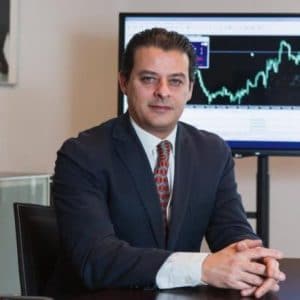
We caught up with Alfonso Franco, the Head of RoboMarkets’ Tied Agent in Spain to get a deeper insight into the firm’s operations in Spain. We also checked-in to see how the broker views the recently implemented European Union regulations regarding contracts for differences (CFDs).
Firstly please explain what your current role at RoboMarkets is and how you got into the financial industry?
We recently reported that RoboMarkets' tied agency in Spain, which you will run, was approved. What is the role of the tied agency for RoboMarkets?
From the moment of its creation, RoboMarkets has been providing its services for European clients, including traders from Spain. Having evaluated the current marketing situation, we have come to the conclusion that Spain is a fast growing market with great possibilities. This is why the decision has been adopted, and we have made crucial steps forward by opening a company office in Madrid in order to establish a closer relationship with our Spanish clients and to provide them with the high-quality service they seek.
How will RoboMarkets approach to the Spanish Region clientele change with this new tied agent office launch?
The new status provides us with the possibility to officially provide investment services and technical support on behalf of RoboMarkets. For our clients, it's important to deal with a licensed company that is under the supervision of financial authority rather than an unregulated entity. Our team in Spain, which consists of experienced professionals, offer great support on all trading issues and can work with progressive solutions and services. Even now we provide our clients with 24/7 client support, and our trading conditions are one of the most achievement-oriented on the market. We also conduct educational webinars in Spanish and much more.
What might this expansion add to the future of RoboMarkets? Is this part of a longer strategic decision for RoboMarkets?
Yes, RoboMarkets is an important and well established European broker, and we have clients in almost all the countries of the EU and EEA. Now we are in the process of the realization of our ambitious strategic plans to create a global broker. Based on the latest technologies and proprietary research we have expanded our product line, increased the quality of the access to the financial markets and improved the conditions for all of our European clients. It is exactly for this reason that during the last several months RoboMarkets has opened offices in different European countries, in order to facilitate and work more effectively on the local markets. As they say: “Think globally but act locally!”
New regulations in Europe are causing a lot of firms to rethink their business structure. How does RoboMarkets view the new restrictions and provisions?
Over the last years, the Forex industry has been developing very actively, as the online-trading industry is becoming more and more popular. More and more new companies, which provide broker services, appear on the market. Very often, these companies have neither technical possibilities, nor experienced staff, which would be sufficiently qualified to provide adequate service levels for the traders. The new restrictions and rules, which are now in force in Europe, contribute to a much higher transparency of the market, and this is a great opportunity for us to strengthen our positions.
We presume that a part of the small-scale and less known players will filter out over time and, in the end, the long overdue consolidation will finally take place. The additional restrictions and regulations are beneficial for the industry as a whole, since the trust in the licensed brokers, those with a responsible approach to the compliance and such procedures, grows. The “new reality,” which we have found ourselves in, expands the horizons of growth and opportunities to secure the achieved success for RoboMarkets.
This is really a global phenomenon, and it has significantly developed in Spain. More and more of our clients often show interest in the cryptocurrency trading market and shift their focus from the traditional trading instruments to the digital assets. We have reason to believe that the cryptocurrency market has a promising future both in Spain and in the rest of the world. RoboMarkets was one of the first brokers to have offered its clients cryptocurrencies as trading instruments, and now we have more than 25 available for trading. We are constantly improving our offers of cryptocurrency assets, and it is safe to say that our trading conditions are one of the most commercially viable on the market. The awards that we have received also confirm this – "Best Crypto Broker in Europe" (GBM) and "Most Innovative Multi-Asset Broker 2018" (London Forex Show).
It is also important to note that now that we observe a clear shift of the interest from the traders from the cryptocurrency exchange markets to trading via regulated brokers. The work of cryptocurrency platforms is not regulated in any way, and these platforms are not able to provide the adequate level of the safety of investments. Their trading conditions and platforms also leave much to be desired. Therefore here we can see several favorable opportunities for growth, and we have certain advantages which will be surely appreciated by experienced traders.
What do you think your industry’s biggest challenges will be five years from now?
This industry is constantly changing, after all, it is considered to be innovative, and therefore it should match this status. We expect further steps from the regulatory authorities directed at the protection of the interests of our clients. Transparency and accurate functioning of the online-trading and investment market cater to the needs of all of its participants.
I also expect the new investment products and opportunities in the sphere of online-trading to appear along with the technological achievements and the development of the advanced and modernized platforms and services. With the course of time, these factors will be playing a more and more important role. It will occur in parallel with the consolidation of the industry, because the expenses associated with “entering” this industry will only be growing, at least in Europe.
RoboMarkets is an investment firm based in Cyprus. It offers investment services throughout Europe and provides traders who work in the financial markets access to its proprietary trading platforms.
Earlier this year in June, Finance Magnates reported that the company’s tied agent in Spain had been approved by Spanish regulator La Comisión Nacional del Mercado de Valores.
We caught up with Alfonso Franco, the Head of RoboMarkets’ Tied Agent in Spain to get a deeper insight into the firm’s operations in Spain. We also checked-in to see how the broker views the recently implemented European Union regulations regarding contracts for differences (CFDs).
Firstly please explain what your current role at RoboMarkets is and how you got into the financial industry?
We recently reported that RoboMarkets' tied agency in Spain, which you will run, was approved. What is the role of the tied agency for RoboMarkets?
From the moment of its creation, RoboMarkets has been providing its services for European clients, including traders from Spain. Having evaluated the current marketing situation, we have come to the conclusion that Spain is a fast growing market with great possibilities. This is why the decision has been adopted, and we have made crucial steps forward by opening a company office in Madrid in order to establish a closer relationship with our Spanish clients and to provide them with the high-quality service they seek.
How will RoboMarkets approach to the Spanish Region clientele change with this new tied agent office launch?
The new status provides us with the possibility to officially provide investment services and technical support on behalf of RoboMarkets. For our clients, it's important to deal with a licensed company that is under the supervision of financial authority rather than an unregulated entity. Our team in Spain, which consists of experienced professionals, offer great support on all trading issues and can work with progressive solutions and services. Even now we provide our clients with 24/7 client support, and our trading conditions are one of the most achievement-oriented on the market. We also conduct educational webinars in Spanish and much more.
What might this expansion add to the future of RoboMarkets? Is this part of a longer strategic decision for RoboMarkets?
Yes, RoboMarkets is an important and well established European broker, and we have clients in almost all the countries of the EU and EEA. Now we are in the process of the realization of our ambitious strategic plans to create a global broker. Based on the latest technologies and proprietary research we have expanded our product line, increased the quality of the access to the financial markets and improved the conditions for all of our European clients. It is exactly for this reason that during the last several months RoboMarkets has opened offices in different European countries, in order to facilitate and work more effectively on the local markets. As they say: “Think globally but act locally!”
New regulations in Europe are causing a lot of firms to rethink their business structure. How does RoboMarkets view the new restrictions and provisions?
Over the last years, the Forex industry has been developing very actively, as the online-trading industry is becoming more and more popular. More and more new companies, which provide broker services, appear on the market. Very often, these companies have neither technical possibilities, nor experienced staff, which would be sufficiently qualified to provide adequate service levels for the traders. The new restrictions and rules, which are now in force in Europe, contribute to a much higher transparency of the market, and this is a great opportunity for us to strengthen our positions.
We presume that a part of the small-scale and less known players will filter out over time and, in the end, the long overdue consolidation will finally take place. The additional restrictions and regulations are beneficial for the industry as a whole, since the trust in the licensed brokers, those with a responsible approach to the compliance and such procedures, grows. The “new reality,” which we have found ourselves in, expands the horizons of growth and opportunities to secure the achieved success for RoboMarkets.
This is really a global phenomenon, and it has significantly developed in Spain. More and more of our clients often show interest in the cryptocurrency trading market and shift their focus from the traditional trading instruments to the digital assets. We have reason to believe that the cryptocurrency market has a promising future both in Spain and in the rest of the world. RoboMarkets was one of the first brokers to have offered its clients cryptocurrencies as trading instruments, and now we have more than 25 available for trading. We are constantly improving our offers of cryptocurrency assets, and it is safe to say that our trading conditions are one of the most commercially viable on the market. The awards that we have received also confirm this – "Best Crypto Broker in Europe" (GBM) and "Most Innovative Multi-Asset Broker 2018" (London Forex Show).
It is also important to note that now that we observe a clear shift of the interest from the traders from the cryptocurrency exchange markets to trading via regulated brokers. The work of cryptocurrency platforms is not regulated in any way, and these platforms are not able to provide the adequate level of the safety of investments. Their trading conditions and platforms also leave much to be desired. Therefore here we can see several favorable opportunities for growth, and we have certain advantages which will be surely appreciated by experienced traders.
What do you think your industry’s biggest challenges will be five years from now?
This industry is constantly changing, after all, it is considered to be innovative, and therefore it should match this status. We expect further steps from the regulatory authorities directed at the protection of the interests of our clients. Transparency and accurate functioning of the online-trading and investment market cater to the needs of all of its participants.
I also expect the new investment products and opportunities in the sphere of online-trading to appear along with the technological achievements and the development of the advanced and modernized platforms and services. With the course of time, these factors will be playing a more and more important role. It will occur in parallel with the consolidation of the industry, because the expenses associated with “entering” this industry will only be growing, at least in Europe.
After Nearly Two Decades, Sam Irwin Follows Former IG CEO to Crypto.com
Featured Videos
Executive Interview | Charlotte Bullock | Chief Product Officer, Bank of London | FMLS:25
In this interview, we sat down with Charlotte Bullock, Head of Product at The Bank of London, previously at SAP and now shaping product at one of the sector’s most ambitious new banking players.
Charlotte reflects on the Summit so far and talks about the culture inside fintech banks today. We look at the pressures that come with scaling, and how firms can hold onto the nimble approach that made them stand out early on.
We also cover the state of payments ahead of her appearance on the payments roundtable: the blockages financial firms face, the areas that still need fixing, and what a realistic solution looks like in 2026.
In this interview, we sat down with Charlotte Bullock, Head of Product at The Bank of London, previously at SAP and now shaping product at one of the sector’s most ambitious new banking players.
Charlotte reflects on the Summit so far and talks about the culture inside fintech banks today. We look at the pressures that come with scaling, and how firms can hold onto the nimble approach that made them stand out early on.
We also cover the state of payments ahead of her appearance on the payments roundtable: the blockages financial firms face, the areas that still need fixing, and what a realistic solution looks like in 2026.
In this interview, we sat down with Charlotte Bullock, Head of Product at The Bank of London, previously at SAP and now shaping product at one of the sector’s most ambitious new banking players.
Charlotte reflects on the Summit so far and talks about the culture inside fintech banks today. We look at the pressures that come with scaling, and how firms can hold onto the nimble approach that made them stand out early on.
We also cover the state of payments ahead of her appearance on the payments roundtable: the blockages financial firms face, the areas that still need fixing, and what a realistic solution looks like in 2026.
In this interview, we sat down with Charlotte Bullock, Head of Product at The Bank of London, previously at SAP and now shaping product at one of the sector’s most ambitious new banking players.
Charlotte reflects on the Summit so far and talks about the culture inside fintech banks today. We look at the pressures that come with scaling, and how firms can hold onto the nimble approach that made them stand out early on.
We also cover the state of payments ahead of her appearance on the payments roundtable: the blockages financial firms face, the areas that still need fixing, and what a realistic solution looks like in 2026.
In this conversation, we sit down with Drew Niv, CSO at ATFX Connect and one of the most influential figures in modern FX.
We speak about market structure, the institutional view on liquidity, and the sharp rise of prop trading, a sector Drew has been commenting on in recent months. Drew explains why he once dismissed prop trading, why his view changed, and what he now thinks the model means for brokers, clients and risk managers.
We explore subscription-fee dependency, the high reneging rate, and the long-term challenge: how brokers can build a more stable and honest version of the model. Drew also talks about the traffic advantage standalone prop firms have built and why brokers may still win in the long run if they take the right approach.
In this conversation, we sit down with Drew Niv, CSO at ATFX Connect and one of the most influential figures in modern FX.
We speak about market structure, the institutional view on liquidity, and the sharp rise of prop trading, a sector Drew has been commenting on in recent months. Drew explains why he once dismissed prop trading, why his view changed, and what he now thinks the model means for brokers, clients and risk managers.
We explore subscription-fee dependency, the high reneging rate, and the long-term challenge: how brokers can build a more stable and honest version of the model. Drew also talks about the traffic advantage standalone prop firms have built and why brokers may still win in the long run if they take the right approach.
In this conversation, we sit down with Drew Niv, CSO at ATFX Connect and one of the most influential figures in modern FX.
We speak about market structure, the institutional view on liquidity, and the sharp rise of prop trading, a sector Drew has been commenting on in recent months. Drew explains why he once dismissed prop trading, why his view changed, and what he now thinks the model means for brokers, clients and risk managers.
We explore subscription-fee dependency, the high reneging rate, and the long-term challenge: how brokers can build a more stable and honest version of the model. Drew also talks about the traffic advantage standalone prop firms have built and why brokers may still win in the long run if they take the right approach.
In this conversation, we sit down with Drew Niv, CSO at ATFX Connect and one of the most influential figures in modern FX.
We speak about market structure, the institutional view on liquidity, and the sharp rise of prop trading, a sector Drew has been commenting on in recent months. Drew explains why he once dismissed prop trading, why his view changed, and what he now thinks the model means for brokers, clients and risk managers.
We explore subscription-fee dependency, the high reneging rate, and the long-term challenge: how brokers can build a more stable and honest version of the model. Drew also talks about the traffic advantage standalone prop firms have built and why brokers may still win in the long run if they take the right approach.
In this conversation, we sit down with Drew Niv, CSO at ATFX Connect and one of the most influential figures in modern FX.
We speak about market structure, the institutional view on liquidity, and the sharp rise of prop trading, a sector Drew has been commenting on in recent months. Drew explains why he once dismissed prop trading, why his view changed, and what he now thinks the model means for brokers, clients and risk managers.
We explore subscription-fee dependency, the high reneging rate, and the long-term challenge: how brokers can build a more stable and honest version of the model. Drew also talks about the traffic advantage standalone prop firms have built and why brokers may still win in the long run if they take the right approach.
In this conversation, we sit down with Drew Niv, CSO at ATFX Connect and one of the most influential figures in modern FX.
We speak about market structure, the institutional view on liquidity, and the sharp rise of prop trading, a sector Drew has been commenting on in recent months. Drew explains why he once dismissed prop trading, why his view changed, and what he now thinks the model means for brokers, clients and risk managers.
We explore subscription-fee dependency, the high reneging rate, and the long-term challenge: how brokers can build a more stable and honest version of the model. Drew also talks about the traffic advantage standalone prop firms have built and why brokers may still win in the long run if they take the right approach.
Executive Interview | Remonda Z. Kirketerp Møller| CEO & Founder Muinmos | FMLS:25
In this interview, Remonda Z. Kirketerp Møller, founder of Muinmos, breaks down the state of AI in regtech and what responsible adoption really looks like for brokers. We talk about rising fragmentation, the pressures around compliance accuracy, and why most firms are still in the early stages of AI maturity.
Ramanda also shares insights on regulator sandboxes, shifting expectations around accountability, and the current reality of MiCA licensing and passporting in Europe.
A concise look at where compliance, onboarding, and AI-driven processes are heading next.
In this interview, Remonda Z. Kirketerp Møller, founder of Muinmos, breaks down the state of AI in regtech and what responsible adoption really looks like for brokers. We talk about rising fragmentation, the pressures around compliance accuracy, and why most firms are still in the early stages of AI maturity.
Ramanda also shares insights on regulator sandboxes, shifting expectations around accountability, and the current reality of MiCA licensing and passporting in Europe.
A concise look at where compliance, onboarding, and AI-driven processes are heading next.
In this interview, Remonda Z. Kirketerp Møller, founder of Muinmos, breaks down the state of AI in regtech and what responsible adoption really looks like for brokers. We talk about rising fragmentation, the pressures around compliance accuracy, and why most firms are still in the early stages of AI maturity.
Ramanda also shares insights on regulator sandboxes, shifting expectations around accountability, and the current reality of MiCA licensing and passporting in Europe.
A concise look at where compliance, onboarding, and AI-driven processes are heading next.
In this interview, Remonda Z. Kirketerp Møller, founder of Muinmos, breaks down the state of AI in regtech and what responsible adoption really looks like for brokers. We talk about rising fragmentation, the pressures around compliance accuracy, and why most firms are still in the early stages of AI maturity.
Ramanda also shares insights on regulator sandboxes, shifting expectations around accountability, and the current reality of MiCA licensing and passporting in Europe.
A concise look at where compliance, onboarding, and AI-driven processes are heading next.
In this interview, Remonda Z. Kirketerp Møller, founder of Muinmos, breaks down the state of AI in regtech and what responsible adoption really looks like for brokers. We talk about rising fragmentation, the pressures around compliance accuracy, and why most firms are still in the early stages of AI maturity.
Ramanda also shares insights on regulator sandboxes, shifting expectations around accountability, and the current reality of MiCA licensing and passporting in Europe.
A concise look at where compliance, onboarding, and AI-driven processes are heading next.
In this interview, Remonda Z. Kirketerp Møller, founder of Muinmos, breaks down the state of AI in regtech and what responsible adoption really looks like for brokers. We talk about rising fragmentation, the pressures around compliance accuracy, and why most firms are still in the early stages of AI maturity.
Ramanda also shares insights on regulator sandboxes, shifting expectations around accountability, and the current reality of MiCA licensing and passporting in Europe.
A concise look at where compliance, onboarding, and AI-driven processes are heading next.
In this conversation, we speak with Aydin Bonabi, CEO and co-founder of Surveill, a firm focused on fraud detection and AI-driven compliance tools for financial institutions.
We start with Aydin’s view of the Summit and the challenges brokers face as fraud tactics grow more complex. He explains how firms can stay ahead through real-time signals, data patterns, and early-stage detection.
We also talk about AI training and why compliance teams often struggle to keep models accurate, fair, and aligned with regulatory expectations. Aydin breaks down what “good” AI training looks like inside a financial environment, including the importance of clean data, domain expertise, and human oversight.
He closes with a clear message: fraud is scaling, and so must the tools that stop it.
In this conversation, we speak with Aydin Bonabi, CEO and co-founder of Surveill, a firm focused on fraud detection and AI-driven compliance tools for financial institutions.
We start with Aydin’s view of the Summit and the challenges brokers face as fraud tactics grow more complex. He explains how firms can stay ahead through real-time signals, data patterns, and early-stage detection.
We also talk about AI training and why compliance teams often struggle to keep models accurate, fair, and aligned with regulatory expectations. Aydin breaks down what “good” AI training looks like inside a financial environment, including the importance of clean data, domain expertise, and human oversight.
He closes with a clear message: fraud is scaling, and so must the tools that stop it.
In this conversation, we speak with Aydin Bonabi, CEO and co-founder of Surveill, a firm focused on fraud detection and AI-driven compliance tools for financial institutions.
We start with Aydin’s view of the Summit and the challenges brokers face as fraud tactics grow more complex. He explains how firms can stay ahead through real-time signals, data patterns, and early-stage detection.
We also talk about AI training and why compliance teams often struggle to keep models accurate, fair, and aligned with regulatory expectations. Aydin breaks down what “good” AI training looks like inside a financial environment, including the importance of clean data, domain expertise, and human oversight.
He closes with a clear message: fraud is scaling, and so must the tools that stop it.
In this conversation, we speak with Aydin Bonabi, CEO and co-founder of Surveill, a firm focused on fraud detection and AI-driven compliance tools for financial institutions.
We start with Aydin’s view of the Summit and the challenges brokers face as fraud tactics grow more complex. He explains how firms can stay ahead through real-time signals, data patterns, and early-stage detection.
We also talk about AI training and why compliance teams often struggle to keep models accurate, fair, and aligned with regulatory expectations. Aydin breaks down what “good” AI training looks like inside a financial environment, including the importance of clean data, domain expertise, and human oversight.
He closes with a clear message: fraud is scaling, and so must the tools that stop it.
In this conversation, we speak with Aydin Bonabi, CEO and co-founder of Surveill, a firm focused on fraud detection and AI-driven compliance tools for financial institutions.
We start with Aydin’s view of the Summit and the challenges brokers face as fraud tactics grow more complex. He explains how firms can stay ahead through real-time signals, data patterns, and early-stage detection.
We also talk about AI training and why compliance teams often struggle to keep models accurate, fair, and aligned with regulatory expectations. Aydin breaks down what “good” AI training looks like inside a financial environment, including the importance of clean data, domain expertise, and human oversight.
He closes with a clear message: fraud is scaling, and so must the tools that stop it.
In this conversation, we speak with Aydin Bonabi, CEO and co-founder of Surveill, a firm focused on fraud detection and AI-driven compliance tools for financial institutions.
We start with Aydin’s view of the Summit and the challenges brokers face as fraud tactics grow more complex. He explains how firms can stay ahead through real-time signals, data patterns, and early-stage detection.
We also talk about AI training and why compliance teams often struggle to keep models accurate, fair, and aligned with regulatory expectations. Aydin breaks down what “good” AI training looks like inside a financial environment, including the importance of clean data, domain expertise, and human oversight.
He closes with a clear message: fraud is scaling, and so must the tools that stop it.
Exness expands its presence in Africa: Inside our interview with Paul Margarites in Cape Town
Finance Magnates met with Paul Margarites, Exness regional commercial director for Sub-Saharan Africa, during a visit to the firm’s office opening in Cape Town. In this talk, led by Andrea Badiola Mateos, Co-CEO at Finance Magnates, Paul shares views on the South African trading space, local user behavior, mobile trends, regulation, team growth, and how Exness plans to grow in more markets across the region. @Exness
Read the article at: https://www.financemagnates.com/thought-leadership/exness-expands-its-presence-in-africa-inside-our-interview-with-paul-margarites/
#exness #financemagnates #exnesstrading #CFDtrading #tradeonline #africanews #capetown
Finance Magnates met with Paul Margarites, Exness regional commercial director for Sub-Saharan Africa, during a visit to the firm’s office opening in Cape Town. In this talk, led by Andrea Badiola Mateos, Co-CEO at Finance Magnates, Paul shares views on the South African trading space, local user behavior, mobile trends, regulation, team growth, and how Exness plans to grow in more markets across the region. @Exness
Read the article at: https://www.financemagnates.com/thought-leadership/exness-expands-its-presence-in-africa-inside-our-interview-with-paul-margarites/
#exness #financemagnates #exnesstrading #CFDtrading #tradeonline #africanews #capetown
Finance Magnates met with Paul Margarites, Exness regional commercial director for Sub-Saharan Africa, during a visit to the firm’s office opening in Cape Town. In this talk, led by Andrea Badiola Mateos, Co-CEO at Finance Magnates, Paul shares views on the South African trading space, local user behavior, mobile trends, regulation, team growth, and how Exness plans to grow in more markets across the region. @Exness
Read the article at: https://www.financemagnates.com/thought-leadership/exness-expands-its-presence-in-africa-inside-our-interview-with-paul-margarites/
#exness #financemagnates #exnesstrading #CFDtrading #tradeonline #africanews #capetown
Finance Magnates met with Paul Margarites, Exness regional commercial director for Sub-Saharan Africa, during a visit to the firm’s office opening in Cape Town. In this talk, led by Andrea Badiola Mateos, Co-CEO at Finance Magnates, Paul shares views on the South African trading space, local user behavior, mobile trends, regulation, team growth, and how Exness plans to grow in more markets across the region. @Exness
Read the article at: https://www.financemagnates.com/thought-leadership/exness-expands-its-presence-in-africa-inside-our-interview-with-paul-margarites/
#exness #financemagnates #exnesstrading #CFDtrading #tradeonline #africanews #capetown
Finance Magnates met with Paul Margarites, Exness regional commercial director for Sub-Saharan Africa, during a visit to the firm’s office opening in Cape Town. In this talk, led by Andrea Badiola Mateos, Co-CEO at Finance Magnates, Paul shares views on the South African trading space, local user behavior, mobile trends, regulation, team growth, and how Exness plans to grow in more markets across the region. @Exness
Read the article at: https://www.financemagnates.com/thought-leadership/exness-expands-its-presence-in-africa-inside-our-interview-with-paul-margarites/
#exness #financemagnates #exnesstrading #CFDtrading #tradeonline #africanews #capetown
Finance Magnates met with Paul Margarites, Exness regional commercial director for Sub-Saharan Africa, during a visit to the firm’s office opening in Cape Town. In this talk, led by Andrea Badiola Mateos, Co-CEO at Finance Magnates, Paul shares views on the South African trading space, local user behavior, mobile trends, regulation, team growth, and how Exness plans to grow in more markets across the region. @Exness
Read the article at: https://www.financemagnates.com/thought-leadership/exness-expands-its-presence-in-africa-inside-our-interview-with-paul-margarites/
#exness #financemagnates #exnesstrading #CFDtrading #tradeonline #africanews #capetown