Exchanges are the optimal way to trade crypto, which one is the best for you?
Finance Magnates
Exchanges are the beating heart of cryptocurrency trading, and already have a daily trading volume of billions of dollars. For retail crypto traders, these exchanges are the most common (and often the only) marketplace in which they can trade coins in a convenient and safe manner. This article is intended to serve as a guidebook for choosing the right exchange.
There are a few kinds of cryptocurrency exchanges.
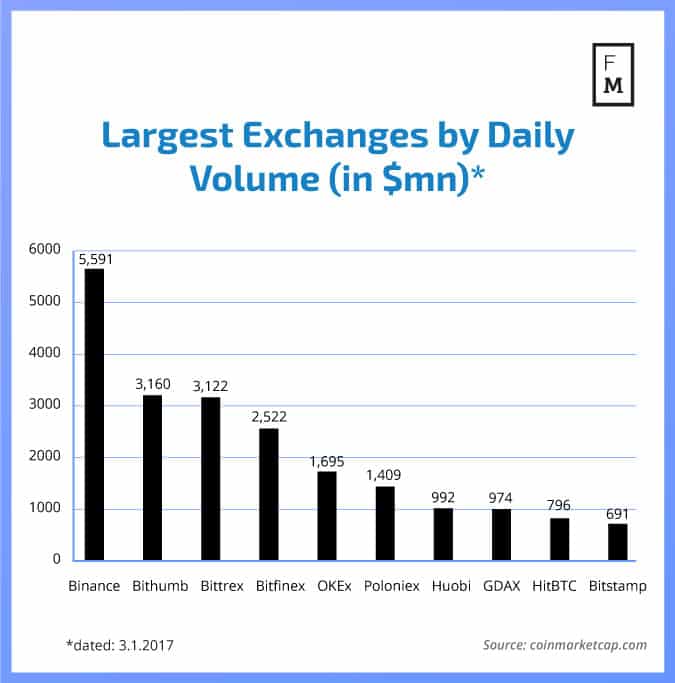
The most common kind of cryptocurrency exchange are trading platforms like Bittrex, Bitfinex, and Bitstamp. These exchanges charge fees for each transaction processed on their networks, although fees vary by the type of trade and the amount traded.
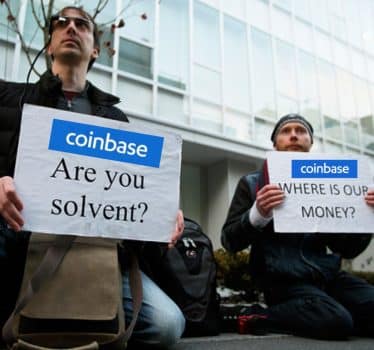
Cryptocurrency broker platforms sell cryptocurrency at the price set by an individual broker, usually the market price of a particular coin, plus a premium. The popular Coinbase app is the largest Bitcoin broker in the world.
Direct trading exchanges allow users to buy and sell cryptocurrency directly to other crypto holders. Users involved in a trade agree on their own prices, and many platforms that facilitate P2P crypto exchanges make use of some sort of system for publicizing a user’s reputation when it comes to being trustworthy.
As there is no middleman to mediate this kind of exchange, no fees are assessed. However, this kind of exchange is regarded as being somewhat risky, as you must trust the other party involved in the trade to carry out their end of the deal.
Cryptocurrency-based hedge funds(i.e. the one run by Pantera Capital), a fairly new phenomenon, are arguably one of the safer ways to invest in cryptocurrency. They are professionally managed funds comprised of a pool of various digital assets.
Many of them have a rather high financial barrier for entry, but investors can use services like Iconomi’s Digital Asset Arrays to make their own crypto funds.
Source: Finance Magnates
How to Choose an Exchange
When you, as a cryptocurrency trader, use an exchange, you are giving that exchange a high level of trust. You trust that an exchange will safely store your funds for short periods of time, and that the exchange will protect your privacy. You trust that an exchange will offer help if something goes wrong within a reasonable amount of time, and that an exchange is actively working to guard itself against hackers and technical problems.
Unfortunately, not every exchange is worthy of its traders’ trust. Most cryptocurrencies are at least somewhat difficult to trace, and therefore, funds lost through technical errors or criminal attacks are nearly impossible to recover. The best way to protect yourself in the crypto space is to arm yourself with information. Here’s what you should know about an exchange before deciding to make use of it.
Headquarters, CEOs, and employees:
Check and see what kind of basic information is available about an exchange. Any legitimate, above-ground organization should have no issues with disclosing where it is headquartered, as well as who its CEO is and employees are. The absence of this kind of information could indicate that an exchange’s operators may not want to have any public ties to the exchange’s activity--this should be a red flag.
It is very important to know whether or not an exchange has been hacked in the past, as well as how the exchange responded in the aftermath of an attack. If cryptocurrency was stolen, did the exchange reimburse affected users? How long did it take? Did the exchange take steps to improve the security of its network?
Researching what kind of security features an exchange makes use of is also important when choosing which exchange to trust your cryptocurrency with. At the very least, any exchange should offer its users:
2FA (two-factor authentication) for logins
PGP-encrypted email communication
Email and SMS alerts
An exchange should store most of its users' funds offline, in cold storage. Additionally, an exchange should undergo regular financial audits to show proof of reserve, and security audits to show that its platform is well-guarded against attacks and technical problems.
Customer service across the crypto trading industry is notoriously slow and ineffective. All the same, knowing what your options are in terms of customer support is absolutely necessary. Does the exchange offer help through email tickets, live chat, or a hotline? On average, how long does the exchange take to respond to requests for help?
Completely understand the frustration around our overwhelmed support team, we are doing everything humanly possible to scale out the team, our user growth rates continue to defy projections. #apologies
If you are concerned about privacy, make sure that you know what kind of identity verification is needed from you in order to deposit, trade, and withdraw cryptocurrency from an exchange. Some exchanges require nothing more than an email address; others ask that you upload a scan of a photo ID before you will be allowed to withdraw your funds.
The decentralized nature of the very new world of cryptocurrency means that our peers are often the best resource that we have. What are the most common complaints that an exchange has received? If an exchange has received a myriad of reports of service outages, if there are multiple reddit threads about missing funds or blocked accounts, make sure that you think twice before deciding to use it.
Source: @T3naciousC
Trading fees:
On a typical exchange, fees generally range from 0.1% to 0.25%, changing depending on how much cryptocurrency is traded and what kind of trade (maker or taker) is being made.
Unfortunately, there is often a correlation in the cryptocurrency exchange industry between ease-of-use and higher fees. For example, buying Bitcoin on the popular Coinbase app will cost you an additional 1.5%.
Not every cryptocurrency is available on every exchange. Therefore, it’s important to find out which exchanges support the cryptocurrency that you would like to trade.
Once you’ve discovered where to find a particular cryptocurrency, use CoinMarketCap to check and see if that coin has been traded at a high volume. The higher the trading volume, the higher the liquidity, and the less time it will take for trades to be executed.
.@hitbtc Please add BCH pairs. Bitcoin Cash is meant to be a means of exchange -- unlike BTC which is designed to be digital gold. . . which crumbles when you use it.
Adding BCH pairs will greatly help liquidity problems.
— Jason Elliott (@OnWindowly) December 26, 2017
Trading options:
What are the different kinds of trades offered on an exchange? This is a question that may only affect more experienced crypto traders who are looking for a flexible platform, or who may want to engage in margin or derivatives trading.
At the very least, however, it may be important to know whether or not an exchange offers Stop-Loss orders, which automatically sell cryptocurrency when it goes below a certain valuation.
Ease of use:
Some exchange’s interfaces are more complicated than others. When trading cryptocurrency, it is imperative that you know exactly what you are doing; mistakes can be costly and irreversible. The best way to find out whether an exchange is easy to use is to see what other users have had to say about it, or to sign up for a basic account and see for yourself.
While the law enforcement agencies of the world have been making moves to ensure that cryptocurrency exchanges are in compliance with federal laws, some criminals see exchanges as opportunities to quickly acquire and steal cryptocurrency or launder money.
Taking a few minutes to research an exchange’s reputation should be your first (and perhaps best) line of defense. Members of the crypto community who encounter problems with crypto infrastructure (i.e. wallets and exchanges) tend to be very vocal about their issues. If there are tons of reports about an exchange losing funds or blocking access to accounts, stay away.
I am officially seeking donations to defend myself against Bitfinex's frivolous lawsuit, rather than showing their numbers they seek to silence me.
I appreciate all the support you all have given me.
15kYzB3h8ASNoJf4NyVJ4X3ub5TzcMcgBWhttps://t.co/LFyAGGw8X6
— Bitfinex'ed #DontGetTethered (@Bitfinexed) December 4, 2017
Cause for Concern
An exchange engaging in atypical behavior for the industry should arouse suspicions. Any exchange or other company asking to hold onto your funds for a fixed or indefinite period of time, promising some sort of return in exchange, should be thoroughly scrutinized.
For example, a Japanese Ripple exchange operator was arrested in October for stealing about $12,000 from users. He was collecting XRP tokens from users in exchange for IOUs, even though his exchange had no way to pay users back. The operator, named Yuki Takenaka, was allegedly able to collect the funds by saying that his exchange was commission-free, according to the Japan Times.
Storing Cryptocurrency on an Exchange
Cryptocurrency exchanges are largely considered to be the least secure place to store your coins on any kind of long-term basis. Of course, it is necessary to deposit your coins onto an exchange in order to use that exchange. However, exchanges are generally much more likely to be hacked than crypto wallets (as long as the wallet is properly used and secured). So, it is best to take your coins off an exchange if you do not need them there for immediate trading.
When searching for the right way to store your coins, be sure to choose a reputable wallet. If you are storing altcoins, the best choice is often to download the altcoin’s wallet directly from its website. Some altcoins can also be stored in paper or hardware wallets. In any case, there are plenty of fake or scam wallets on the web, so be sure to thoroughly vet your choices.
Exchanges are the beating heart of cryptocurrency trading, and already have a daily trading volume of billions of dollars. For retail crypto traders, these exchanges are the most common (and often the only) marketplace in which they can trade coins in a convenient and safe manner. This article is intended to serve as a guidebook for choosing the right exchange.
There are a few kinds of cryptocurrency exchanges.
The most common kind of cryptocurrency exchange are trading platforms like Bittrex, Bitfinex, and Bitstamp. These exchanges charge fees for each transaction processed on their networks, although fees vary by the type of trade and the amount traded.
Cryptocurrency broker platforms sell cryptocurrency at the price set by an individual broker, usually the market price of a particular coin, plus a premium. The popular Coinbase app is the largest Bitcoin broker in the world.
Direct trading exchanges allow users to buy and sell cryptocurrency directly to other crypto holders. Users involved in a trade agree on their own prices, and many platforms that facilitate P2P crypto exchanges make use of some sort of system for publicizing a user’s reputation when it comes to being trustworthy.
As there is no middleman to mediate this kind of exchange, no fees are assessed. However, this kind of exchange is regarded as being somewhat risky, as you must trust the other party involved in the trade to carry out their end of the deal.
Cryptocurrency-based hedge funds(i.e. the one run by Pantera Capital), a fairly new phenomenon, are arguably one of the safer ways to invest in cryptocurrency. They are professionally managed funds comprised of a pool of various digital assets.
Many of them have a rather high financial barrier for entry, but investors can use services like Iconomi’s Digital Asset Arrays to make their own crypto funds.
Source: Finance Magnates
How to Choose an Exchange
When you, as a cryptocurrency trader, use an exchange, you are giving that exchange a high level of trust. You trust that an exchange will safely store your funds for short periods of time, and that the exchange will protect your privacy. You trust that an exchange will offer help if something goes wrong within a reasonable amount of time, and that an exchange is actively working to guard itself against hackers and technical problems.
Unfortunately, not every exchange is worthy of its traders’ trust. Most cryptocurrencies are at least somewhat difficult to trace, and therefore, funds lost through technical errors or criminal attacks are nearly impossible to recover. The best way to protect yourself in the crypto space is to arm yourself with information. Here’s what you should know about an exchange before deciding to make use of it.
Headquarters, CEOs, and employees:
Check and see what kind of basic information is available about an exchange. Any legitimate, above-ground organization should have no issues with disclosing where it is headquartered, as well as who its CEO is and employees are. The absence of this kind of information could indicate that an exchange’s operators may not want to have any public ties to the exchange’s activity--this should be a red flag.
It is very important to know whether or not an exchange has been hacked in the past, as well as how the exchange responded in the aftermath of an attack. If cryptocurrency was stolen, did the exchange reimburse affected users? How long did it take? Did the exchange take steps to improve the security of its network?
Researching what kind of security features an exchange makes use of is also important when choosing which exchange to trust your cryptocurrency with. At the very least, any exchange should offer its users:
2FA (two-factor authentication) for logins
PGP-encrypted email communication
Email and SMS alerts
An exchange should store most of its users' funds offline, in cold storage. Additionally, an exchange should undergo regular financial audits to show proof of reserve, and security audits to show that its platform is well-guarded against attacks and technical problems.
Customer service across the crypto trading industry is notoriously slow and ineffective. All the same, knowing what your options are in terms of customer support is absolutely necessary. Does the exchange offer help through email tickets, live chat, or a hotline? On average, how long does the exchange take to respond to requests for help?
Completely understand the frustration around our overwhelmed support team, we are doing everything humanly possible to scale out the team, our user growth rates continue to defy projections. #apologies
If you are concerned about privacy, make sure that you know what kind of identity verification is needed from you in order to deposit, trade, and withdraw cryptocurrency from an exchange. Some exchanges require nothing more than an email address; others ask that you upload a scan of a photo ID before you will be allowed to withdraw your funds.
The decentralized nature of the very new world of cryptocurrency means that our peers are often the best resource that we have. What are the most common complaints that an exchange has received? If an exchange has received a myriad of reports of service outages, if there are multiple reddit threads about missing funds or blocked accounts, make sure that you think twice before deciding to use it.
Source: @T3naciousC
Trading fees:
On a typical exchange, fees generally range from 0.1% to 0.25%, changing depending on how much cryptocurrency is traded and what kind of trade (maker or taker) is being made.
Unfortunately, there is often a correlation in the cryptocurrency exchange industry between ease-of-use and higher fees. For example, buying Bitcoin on the popular Coinbase app will cost you an additional 1.5%.
Not every cryptocurrency is available on every exchange. Therefore, it’s important to find out which exchanges support the cryptocurrency that you would like to trade.
Once you’ve discovered where to find a particular cryptocurrency, use CoinMarketCap to check and see if that coin has been traded at a high volume. The higher the trading volume, the higher the liquidity, and the less time it will take for trades to be executed.
.@hitbtc Please add BCH pairs. Bitcoin Cash is meant to be a means of exchange -- unlike BTC which is designed to be digital gold. . . which crumbles when you use it.
Adding BCH pairs will greatly help liquidity problems.
— Jason Elliott (@OnWindowly) December 26, 2017
Trading options:
What are the different kinds of trades offered on an exchange? This is a question that may only affect more experienced crypto traders who are looking for a flexible platform, or who may want to engage in margin or derivatives trading.
At the very least, however, it may be important to know whether or not an exchange offers Stop-Loss orders, which automatically sell cryptocurrency when it goes below a certain valuation.
Ease of use:
Some exchange’s interfaces are more complicated than others. When trading cryptocurrency, it is imperative that you know exactly what you are doing; mistakes can be costly and irreversible. The best way to find out whether an exchange is easy to use is to see what other users have had to say about it, or to sign up for a basic account and see for yourself.
While the law enforcement agencies of the world have been making moves to ensure that cryptocurrency exchanges are in compliance with federal laws, some criminals see exchanges as opportunities to quickly acquire and steal cryptocurrency or launder money.
Taking a few minutes to research an exchange’s reputation should be your first (and perhaps best) line of defense. Members of the crypto community who encounter problems with crypto infrastructure (i.e. wallets and exchanges) tend to be very vocal about their issues. If there are tons of reports about an exchange losing funds or blocking access to accounts, stay away.
I am officially seeking donations to defend myself against Bitfinex's frivolous lawsuit, rather than showing their numbers they seek to silence me.
I appreciate all the support you all have given me.
15kYzB3h8ASNoJf4NyVJ4X3ub5TzcMcgBWhttps://t.co/LFyAGGw8X6
— Bitfinex'ed #DontGetTethered (@Bitfinexed) December 4, 2017
Cause for Concern
An exchange engaging in atypical behavior for the industry should arouse suspicions. Any exchange or other company asking to hold onto your funds for a fixed or indefinite period of time, promising some sort of return in exchange, should be thoroughly scrutinized.
For example, a Japanese Ripple exchange operator was arrested in October for stealing about $12,000 from users. He was collecting XRP tokens from users in exchange for IOUs, even though his exchange had no way to pay users back. The operator, named Yuki Takenaka, was allegedly able to collect the funds by saying that his exchange was commission-free, according to the Japan Times.
Storing Cryptocurrency on an Exchange
Cryptocurrency exchanges are largely considered to be the least secure place to store your coins on any kind of long-term basis. Of course, it is necessary to deposit your coins onto an exchange in order to use that exchange. However, exchanges are generally much more likely to be hacked than crypto wallets (as long as the wallet is properly used and secured). So, it is best to take your coins off an exchange if you do not need them there for immediate trading.
When searching for the right way to store your coins, be sure to choose a reputable wallet. If you are storing altcoins, the best choice is often to download the altcoin’s wallet directly from its website. Some altcoins can also be stored in paper or hardware wallets. In any case, there are plenty of fake or scam wallets on the web, so be sure to thoroughly vet your choices.
Rachel is a self-taught crypto geek and a passionate writer. She believes in the power that the written word has to educate, connect and empower individuals to make positive and powerful financial choices. She is the Podcast Host and a Cryptocurrency Editor at Finance Magnates.
Binance Launches Retail AI Assistant, Repackages Existing Trading Tools
Featured Videos
AvaTrade to Acquire Most of FXCM; NAGA Raises $8M
AvaTrade to Acquire Most of FXCM; NAGA Raises $8M
AvaTrade to Acquire Most of FXCM; NAGA Raises $8M
AvaTrade to Acquire Most of FXCM; NAGA Raises $8M
Today’s financial news recap covers AvaTrade agrees to acquire most of FXCM, NAGA secures eight million dollars in new financing, and Wise seeks a tax settlement in the UK.
Finance Magnates Daily Recap brings you the latest news from forex and CFD brokers, fintech, payments, cryptocurrency, digital assets, trading platforms, financial regulation and global markets.
Get the key company news, executive moves, deals, regulatory updates and market developments of the day, in just a few minutes. New episodes published every weekday.
Read more: https://www.financemagnates.com
#FinanceMagnates #ForexNews #FintechNews
Today’s financial news recap covers AvaTrade agrees to acquire most of FXCM, NAGA secures eight million dollars in new financing, and Wise seeks a tax settlement in the UK.
Finance Magnates Daily Recap brings you the latest news from forex and CFD brokers, fintech, payments, cryptocurrency, digital assets, trading platforms, financial regulation and global markets.
Get the key company news, executive moves, deals, regulatory updates and market developments of the day, in just a few minutes. New episodes published every weekday.
Read more: https://www.financemagnates.com
#FinanceMagnates #ForexNews #FintechNews
Today’s financial news recap covers AvaTrade agrees to acquire most of FXCM, NAGA secures eight million dollars in new financing, and Wise seeks a tax settlement in the UK.
Finance Magnates Daily Recap brings you the latest news from forex and CFD brokers, fintech, payments, cryptocurrency, digital assets, trading platforms, financial regulation and global markets.
Get the key company news, executive moves, deals, regulatory updates and market developments of the day, in just a few minutes. New episodes published every weekday.
Read more: https://www.financemagnates.com
#FinanceMagnates #ForexNews #FintechNews
Today’s financial news recap covers AvaTrade agrees to acquire most of FXCM, NAGA secures eight million dollars in new financing, and Wise seeks a tax settlement in the UK.
Finance Magnates Daily Recap brings you the latest news from forex and CFD brokers, fintech, payments, cryptocurrency, digital assets, trading platforms, financial regulation and global markets.
Get the key company news, executive moves, deals, regulatory updates and market developments of the day, in just a few minutes. New episodes published every weekday.
Read more: https://www.financemagnates.com
#FinanceMagnates #ForexNews #FintechNews
XTB Adds Overnight US Stock Trading; Nasdaq Ventures Invests in One Trading
XTB Adds Overnight US Stock Trading; Nasdaq Ventures Invests in One Trading
XTB Adds Overnight US Stock Trading; Nasdaq Ventures Invests in One Trading
XTB Adds Overnight US Stock Trading; Nasdaq Ventures Invests in One Trading
XTB Adds Overnight US Stock Trading; Nasdaq Ventures Invests in One Trading
XTB Adds Overnight US Stock Trading; Nasdaq Ventures Invests in One Trading
Today’s financial news recap covers XTB expands overnight US stock trading, Fortrade reports higher revenue, Nasdaq backs One Trading, and Vest Labs raises 13 million dollars.
Finance Magnates Daily Recap brings you the latest news from forex and CFD brokers, fintech, payments, cryptocurrency, digital assets, trading platforms, financial regulation and global markets.
Get the key company news, executive moves, deals, regulatory updates and market developments of the day, in just a few minutes. New episodes published every weekday.
Read more: https://www.financemagnates.com
#FinanceMagnates #ForexNews #FintechNews
Today’s financial news recap covers XTB expands overnight US stock trading, Fortrade reports higher revenue, Nasdaq backs One Trading, and Vest Labs raises 13 million dollars.
Finance Magnates Daily Recap brings you the latest news from forex and CFD brokers, fintech, payments, cryptocurrency, digital assets, trading platforms, financial regulation and global markets.
Get the key company news, executive moves, deals, regulatory updates and market developments of the day, in just a few minutes. New episodes published every weekday.
Read more: https://www.financemagnates.com
#FinanceMagnates #ForexNews #FintechNews
Today’s financial news recap covers XTB expands overnight US stock trading, Fortrade reports higher revenue, Nasdaq backs One Trading, and Vest Labs raises 13 million dollars.
Finance Magnates Daily Recap brings you the latest news from forex and CFD brokers, fintech, payments, cryptocurrency, digital assets, trading platforms, financial regulation and global markets.
Get the key company news, executive moves, deals, regulatory updates and market developments of the day, in just a few minutes. New episodes published every weekday.
Read more: https://www.financemagnates.com
#FinanceMagnates #ForexNews #FintechNews
Today’s financial news recap covers XTB expands overnight US stock trading, Fortrade reports higher revenue, Nasdaq backs One Trading, and Vest Labs raises 13 million dollars.
Finance Magnates Daily Recap brings you the latest news from forex and CFD brokers, fintech, payments, cryptocurrency, digital assets, trading platforms, financial regulation and global markets.
Get the key company news, executive moves, deals, regulatory updates and market developments of the day, in just a few minutes. New episodes published every weekday.
Read more: https://www.financemagnates.com
#FinanceMagnates #ForexNews #FintechNews
Today’s financial news recap covers XTB expands overnight US stock trading, Fortrade reports higher revenue, Nasdaq backs One Trading, and Vest Labs raises 13 million dollars.
Finance Magnates Daily Recap brings you the latest news from forex and CFD brokers, fintech, payments, cryptocurrency, digital assets, trading platforms, financial regulation and global markets.
Get the key company news, executive moves, deals, regulatory updates and market developments of the day, in just a few minutes. New episodes published every weekday.
Read more: https://www.financemagnates.com
#FinanceMagnates #ForexNews #FintechNews
Today’s financial news recap covers XTB expands overnight US stock trading, Fortrade reports higher revenue, Nasdaq backs One Trading, and Vest Labs raises 13 million dollars.
Finance Magnates Daily Recap brings you the latest news from forex and CFD brokers, fintech, payments, cryptocurrency, digital assets, trading platforms, financial regulation and global markets.
Get the key company news, executive moves, deals, regulatory updates and market developments of the day, in just a few minutes. New episodes published every weekday.
Read more: https://www.financemagnates.com
#FinanceMagnates #ForexNews #FintechNews
CMC Founder Downplays Volatility Hit; Devexperts Names CEO
CMC Founder Downplays Volatility Hit; Devexperts Names CEO
CMC Founder Downplays Volatility Hit; Devexperts Names CEO
CMC Founder Downplays Volatility Hit; Devexperts Names CEO
CMC Founder Downplays Volatility Hit; Devexperts Names CEO
CMC Founder Downplays Volatility Hit; Devexperts Names CEO
Today’s financial news recap covers low volatility pressures brokers, Devexperts names a new CEO, Saxo cuts onboarding time, and OKX reaches a 25 billion dollar valuation.
Finance Magnates Daily Recap brings you the latest news from forex and CFD brokers, fintech, payments, cryptocurrency, digital assets, trading platforms, financial regulation and global markets.
Get the key company news, executive moves, deals, regulatory updates and market developments of the day, in just a few minutes. New episodes published every weekday.
Read more: https://www.financemagnates.com
#FinanceMagnates #ForexNews #FintechNews
Today’s financial news recap covers low volatility pressures brokers, Devexperts names a new CEO, Saxo cuts onboarding time, and OKX reaches a 25 billion dollar valuation.
Finance Magnates Daily Recap brings you the latest news from forex and CFD brokers, fintech, payments, cryptocurrency, digital assets, trading platforms, financial regulation and global markets.
Get the key company news, executive moves, deals, regulatory updates and market developments of the day, in just a few minutes. New episodes published every weekday.
Read more: https://www.financemagnates.com
#FinanceMagnates #ForexNews #FintechNews
Today’s financial news recap covers low volatility pressures brokers, Devexperts names a new CEO, Saxo cuts onboarding time, and OKX reaches a 25 billion dollar valuation.
Finance Magnates Daily Recap brings you the latest news from forex and CFD brokers, fintech, payments, cryptocurrency, digital assets, trading platforms, financial regulation and global markets.
Get the key company news, executive moves, deals, regulatory updates and market developments of the day, in just a few minutes. New episodes published every weekday.
Read more: https://www.financemagnates.com
#FinanceMagnates #ForexNews #FintechNews
Today’s financial news recap covers low volatility pressures brokers, Devexperts names a new CEO, Saxo cuts onboarding time, and OKX reaches a 25 billion dollar valuation.
Finance Magnates Daily Recap brings you the latest news from forex and CFD brokers, fintech, payments, cryptocurrency, digital assets, trading platforms, financial regulation and global markets.
Get the key company news, executive moves, deals, regulatory updates and market developments of the day, in just a few minutes. New episodes published every weekday.
Read more: https://www.financemagnates.com
#FinanceMagnates #ForexNews #FintechNews
Today’s financial news recap covers low volatility pressures brokers, Devexperts names a new CEO, Saxo cuts onboarding time, and OKX reaches a 25 billion dollar valuation.
Finance Magnates Daily Recap brings you the latest news from forex and CFD brokers, fintech, payments, cryptocurrency, digital assets, trading platforms, financial regulation and global markets.
Get the key company news, executive moves, deals, regulatory updates and market developments of the day, in just a few minutes. New episodes published every weekday.
Read more: https://www.financemagnates.com
#FinanceMagnates #ForexNews #FintechNews
Today’s financial news recap covers low volatility pressures brokers, Devexperts names a new CEO, Saxo cuts onboarding time, and OKX reaches a 25 billion dollar valuation.
Finance Magnates Daily Recap brings you the latest news from forex and CFD brokers, fintech, payments, cryptocurrency, digital assets, trading platforms, financial regulation and global markets.
Get the key company news, executive moves, deals, regulatory updates and market developments of the day, in just a few minutes. New episodes published every weekday.
Read more: https://www.financemagnates.com
#FinanceMagnates #ForexNews #FintechNews
Today’s financial news recap covers Trade Nation buys FXCM's UK client book, Trading 212 reports higher revenue, the CFTC's move to allow perpetual index futures.
Finance Magnates Daily Recap brings you the latest news from forex and CFD brokers, fintech, payments, cryptocurrency, digital assets, trading platforms, financial regulation and global markets.
Get the key company news, executive moves, deals, regulatory updates and market developments of the day, in just a few minutes. New episodes published every weekday.
Read more: https://www.financemagnates.com
#FinanceMagnates #ForexNews #FintechNews
Today’s financial news recap covers Trade Nation buys FXCM's UK client book, Trading 212 reports higher revenue, the CFTC's move to allow perpetual index futures.
Finance Magnates Daily Recap brings you the latest news from forex and CFD brokers, fintech, payments, cryptocurrency, digital assets, trading platforms, financial regulation and global markets.
Get the key company news, executive moves, deals, regulatory updates and market developments of the day, in just a few minutes. New episodes published every weekday.
Read more: https://www.financemagnates.com
#FinanceMagnates #ForexNews #FintechNews
Today’s financial news recap covers Trade Nation buys FXCM's UK client book, Trading 212 reports higher revenue, the CFTC's move to allow perpetual index futures.
Finance Magnates Daily Recap brings you the latest news from forex and CFD brokers, fintech, payments, cryptocurrency, digital assets, trading platforms, financial regulation and global markets.
Get the key company news, executive moves, deals, regulatory updates and market developments of the day, in just a few minutes. New episodes published every weekday.
Read more: https://www.financemagnates.com
#FinanceMagnates #ForexNews #FintechNews
Today’s financial news recap covers Trade Nation buys FXCM's UK client book, Trading 212 reports higher revenue, the CFTC's move to allow perpetual index futures.
Finance Magnates Daily Recap brings you the latest news from forex and CFD brokers, fintech, payments, cryptocurrency, digital assets, trading platforms, financial regulation and global markets.
Get the key company news, executive moves, deals, regulatory updates and market developments of the day, in just a few minutes. New episodes published every weekday.
Read more: https://www.financemagnates.com
#FinanceMagnates #ForexNews #FintechNews
Today’s financial news recap covers Trade Nation buys FXCM's UK client book, Trading 212 reports higher revenue, the CFTC's move to allow perpetual index futures.
Finance Magnates Daily Recap brings you the latest news from forex and CFD brokers, fintech, payments, cryptocurrency, digital assets, trading platforms, financial regulation and global markets.
Get the key company news, executive moves, deals, regulatory updates and market developments of the day, in just a few minutes. New episodes published every weekday.
Read more: https://www.financemagnates.com
#FinanceMagnates #ForexNews #FintechNews
Today’s financial news recap covers Trade Nation buys FXCM's UK client book, Trading 212 reports higher revenue, the CFTC's move to allow perpetual index futures.
Finance Magnates Daily Recap brings you the latest news from forex and CFD brokers, fintech, payments, cryptocurrency, digital assets, trading platforms, financial regulation and global markets.
Get the key company news, executive moves, deals, regulatory updates and market developments of the day, in just a few minutes. New episodes published every weekday.
Read more: https://www.financemagnates.com
#FinanceMagnates #ForexNews #FintechNews
Your career isn’t a linear path.
Your career isn’t a linear path.
Your career isn’t a linear path.
Your career isn’t a linear path.
Your career isn’t a linear path.
Your career isn’t a linear path.
Roles change. Career goals change. Sometimes you want a completely new challenge.
But the skills and knowledge you build along the way can stay with you and give you something to build on.
For Jeff Patterson, that continued growth is key to long-term career development.
You bring the skills. FM Academy helps you build the knowledge.
#FMAcademy #FinanceMagnates #FinanceCareers #ProfessionalDevelopment #Fintech
Roles change. Career goals change. Sometimes you want a completely new challenge.
But the skills and knowledge you build along the way can stay with you and give you something to build on.
For Jeff Patterson, that continued growth is key to long-term career development.
You bring the skills. FM Academy helps you build the knowledge.
#FMAcademy #FinanceMagnates #FinanceCareers #ProfessionalDevelopment #Fintech
Roles change. Career goals change. Sometimes you want a completely new challenge.
But the skills and knowledge you build along the way can stay with you and give you something to build on.
For Jeff Patterson, that continued growth is key to long-term career development.
You bring the skills. FM Academy helps you build the knowledge.
#FMAcademy #FinanceMagnates #FinanceCareers #ProfessionalDevelopment #Fintech
Roles change. Career goals change. Sometimes you want a completely new challenge.
But the skills and knowledge you build along the way can stay with you and give you something to build on.
For Jeff Patterson, that continued growth is key to long-term career development.
You bring the skills. FM Academy helps you build the knowledge.
#FMAcademy #FinanceMagnates #FinanceCareers #ProfessionalDevelopment #Fintech
Roles change. Career goals change. Sometimes you want a completely new challenge.
But the skills and knowledge you build along the way can stay with you and give you something to build on.
For Jeff Patterson, that continued growth is key to long-term career development.
You bring the skills. FM Academy helps you build the knowledge.
#FMAcademy #FinanceMagnates #FinanceCareers #ProfessionalDevelopment #Fintech
Roles change. Career goals change. Sometimes you want a completely new challenge.
But the skills and knowledge you build along the way can stay with you and give you something to build on.
For Jeff Patterson, that continued growth is key to long-term career development.
You bring the skills. FM Academy helps you build the knowledge.
#FMAcademy #FinanceMagnates #FinanceCareers #ProfessionalDevelopment #Fintech