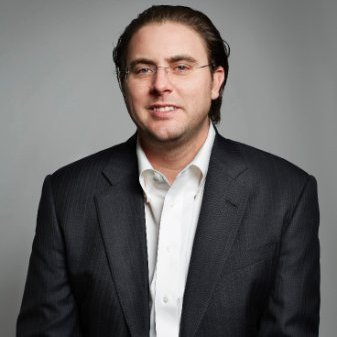
Jacob Loveless, CEO of Lucera, gives his insider take on the firm's unique offering and collocated infrastructure suite.
FM
Financial firms and brokers worldwide are looking for an edge in a cutthroat industry. With an increased reliance on networking in such global hubs such as London, Tokyo and New York, firms such as Lucera have redefined the playing field with its software-defined approach.
Finance Magnates spoke with Jacob Loveless, CEO of Lucera, for his insider take on the firm's unique offering and collocated infrastructure suite. In addition, he touches on the FX industry and the nature of performance in the face of such traumatic events such as the Swiss National Bank (SNB) decision earlier this year to abandon its currency peg with the euro.
Finally, Mr. Lucera portends the future for technology in the FX and financial services industry, identifying potential headwinds and tailwinds for innovation and progress. His full length interview can be read below.
Can you tell me about Lucera and the company’s genesis?
Lucera specializes in on-demand, collocated infrastructure services exclusively for financial services companies. We broke off of Cantor Fitzgerald back in 2013, having subsequently launched with our matching products and connectivity service products. If you look at 2013 and the beginning of 2014, we spent a lot of time licensing our matching engines.
We run our matching engines for foreign exchange (FX) as a service. For example, if you want an ECN matching system for spot FX, you come to us and we deploy it all, delivering a fully functional FX marketplace. We have eight of these running between NY and London and a lot of connectivity across a multitude of locales. We accomplish this with our own network – a software-defined network (SDN) - and that resonates with clients. We have banks and large hedge funds for clients, all utilizing our software.
Jacob Loveless, CEO, Lucera
What makes the software-defined network so unique and attractive for clients?
We have had a software-defined network since 2006. Having run my networks exclusively as a SDN, I did not realize the full benefits until we started working with hedge fund and banking clients. In terms of advantages, the wait time is essentially abolished and if you want to connect to 10 ECNs tomorrow, we can do this in 10 minutes – no down time, no scheduling, only software. That’s a radical shift for most clients with legacy network systems running in hardware.
What we saw with our larger clients is that this became the dominant mechanic – that time to market became the strongest value of the SDN for our clients.
Typically banking clients adhere to a mean onboarding times of about 45 days. However, Lucera did 97% of our connectivity in less than two days and 76% in one day.
We’re also changing the rules of networking, because our unit economics are so different, in that everything is month-to-month and we don't charge bandwidth ever.
So now we’ve elevated the network to the application and business level. If you have 50 customers, each connecting to two application services each, then you have 100 Logical Flows. So simple.
How does Lucera cater to the FX market and what makes the company competitive on this front?
We run the densest fiber in NY4, meaning, we have more cross connects terminating in the Lucera cage in NY4 than any other cage in the facility.
FX has a breath of connectivity problems inherent with its execution and it’s always changing. However, the market is finding new liquidity sources and venues on a quarterly or monthly basis. As a result, we’re are seeing more and more entrants into spot FX, a lot of movement from liquidity and market makers and trading shops dabbling with FX.
Dipping your toes in the water doesn't mean connecting to one place but rather 30-40 places nowadays. Ultimately, clients come to us because we run one connection to Lucera and you can speed it up and a good start to the year, which is why we’re seeing an acceleration of our business on all fronts.
At Lucera, we’ve been very lucky, we have a phenomenal team, the conditions were right, the timing was right. I don't hire employees anymore, rather they hire each other. It's mostly word-of-mouth, it’s all networking and it works here at Lucera. Teamwork is an important thing and “A” players like to work with “A” players. It's the technical problem, the mission, the direction – that’s what attracts talent. You need to pay them a professional wage, but money is not the primary motivating factor for the “A” players with superlative talent.
If you think about it, besides Lucera, where else can you go for working on one of largest software defined networks with performance requirements that don’t exist anywhere else? Where else can you walk in day one and make impactful changes to running mission-critical systems? In my experience: true superlative engineers want to see their products making peoples’ lives better, and that's how we have an impact on humanity.
Why don't other firms utilize the software-defined approach you touched on?
The reality is that we built our software ourselves almost 10 years ago. Today, we can talk about it in terms of cost. Lucera’s SDN equipment now costs about $100,000, which is roughly a factor of four below trading networking equipment. But that’s the second piece of equipment; the first one cost three million dollars because it didn’t work. There was tremendous capital put into R&D over that 10-year lifecycle. Now we can continue to push down unit costs, but first you have to get it working. I think that kind of investment, both in terms of time and money, is very difficult for most companies to stomach.
On the outside looking in, individuals simply cannot buy this technology yet. You have to build it internally and that is a long tail of tears. Building software-based networking equipment is very complicated and we are hypersensitive to latency.
Eventually, it will happen at some point, and what is happening in open source community will eventually make its way onto Wall Street. However, that's years away and the problem is that teams working on open software for software-defined networks and the people tackling that are in the tech industry – and they are not focused on Wall Street or FX, but rather on virtualization or switching problems.
Fundamentally, why doesn't someone else do it? Because building it yourself takes time and effort. Lucera wouldn't exist unless we came out of a decade of building from Cantor. Economically, we couldn't have existed – firms adhere to a budget and talent constraints and it’s hard to combine everything in the right conditions. Small teams with well-defined missions tend to work well, but for a big bank it’s hard to pull this off. It’s simply hard to acquire and retain this kind of talent.
How do you see the industry evolving or growing over the next few years and what is the next step for Lucera?
It’s interesting that we’re actually seeing a lot of growth in Chicago. In FX, that's not what I expected. We service future and equities there but as much as I’m surprised to see FX growth, I’m not quite sure why there is. I think it has something to do with the need of commodities markets, and commodities and FX are sister and stepsister. There are other things at play as well with volatility increasing in the last few months and traditional Chicago futures trading looking for new asset classes to permeate.
I also think the snap Swiss National Bank (SNB) decision earlier this year was a wake-up call for a lot of firms in bad as well as good ways, such as there actually is a market in FX and volatility.
In terms of Lucera moving forward, I think I am confined to the executive view, i.e., I have a three months and three years focus and nothing in the middle. Given the growth of connecting and success of our products, we will grow regionally for sure. The next logical place is Asia, probably Tokyo, TY3, etc., followed by Frankfurt and Geneva, maybe Brazil.
We will try to find effective ways to scale that platform globally. We have some great long-fiber partners. Three years from now I think we will see the complete product, I know we’ll see firms offering electronic services in an on-demand capacity. If you are the best in trading and settlement, you will offer that as a service. You will also see a lot more cooperation amongst the community and a trading stack will be one.
We have a financial services industry that is just now starting to adapt an on-demand court infrastructure services. Before Lucera, maybe a handful of telecoms were utilizing this, but looking at any other industry except for healthcare, you have seen this adoption at least five or six years ago. Even with oil and gas companies you have seen this, sharing an infrastructure. Facing a headwind within this industry, we move slower and change is scary. At the end of the day, the infrastructure has to be better. Ultimately, as an industry, we have to be better in three key areas:
Better Performance – and I do not mean simply moving bits faster, or trading faster, though certainly that's important, but you have to have stability. The SNB event fundamentally had a lot of places where you had bad failure modes. From an infrastructure standpoint, those failure modes were brought on because we had a system that was designed and implemented in a period of low volatility.
For me, from an infrastructure standpoint, I see the world as pre-Lehman and post-Lehman, i.e., you have a much different view. It just happens, you think the world works one way and you design a system and you are cost sensitive because you have low margins, revenues, interest rates, etc. You don't want to build a system that runs at 3% capacity, but then you get this 30-year event and you need something running at 90% capacity.
Reliability – we tend to forget about the reliability of software. For example, look at the Apollo mission source code. You can write reliable source code, it’s expensive and time-consuming, but it’s really important. We’re not building software that runs a space shuttle; nobody will die, but we’re part of our customers’ trading systems. We might lose someone’s livelihood, so you need to make it rock solid and you have to have telemetry and the ability to implement it. Rushing something out the door is always a bad move and you want to be really methodical.
Security Requirements – these are long and expensive to implement; however, if you nail those things, then any internal headwinds for this business can fall apart. We love talking to security teams. The right companies building the right systems will be the successful players.
Financial firms and brokers worldwide are looking for an edge in a cutthroat industry. With an increased reliance on networking in such global hubs such as London, Tokyo and New York, firms such as Lucera have redefined the playing field with its software-defined approach.
Finance Magnates spoke with Jacob Loveless, CEO of Lucera, for his insider take on the firm's unique offering and collocated infrastructure suite. In addition, he touches on the FX industry and the nature of performance in the face of such traumatic events such as the Swiss National Bank (SNB) decision earlier this year to abandon its currency peg with the euro.
Finally, Mr. Lucera portends the future for technology in the FX and financial services industry, identifying potential headwinds and tailwinds for innovation and progress. His full length interview can be read below.
Can you tell me about Lucera and the company’s genesis?
Lucera specializes in on-demand, collocated infrastructure services exclusively for financial services companies. We broke off of Cantor Fitzgerald back in 2013, having subsequently launched with our matching products and connectivity service products. If you look at 2013 and the beginning of 2014, we spent a lot of time licensing our matching engines.
We run our matching engines for foreign exchange (FX) as a service. For example, if you want an ECN matching system for spot FX, you come to us and we deploy it all, delivering a fully functional FX marketplace. We have eight of these running between NY and London and a lot of connectivity across a multitude of locales. We accomplish this with our own network – a software-defined network (SDN) - and that resonates with clients. We have banks and large hedge funds for clients, all utilizing our software.
Jacob Loveless, CEO, Lucera
What makes the software-defined network so unique and attractive for clients?
We have had a software-defined network since 2006. Having run my networks exclusively as a SDN, I did not realize the full benefits until we started working with hedge fund and banking clients. In terms of advantages, the wait time is essentially abolished and if you want to connect to 10 ECNs tomorrow, we can do this in 10 minutes – no down time, no scheduling, only software. That’s a radical shift for most clients with legacy network systems running in hardware.
What we saw with our larger clients is that this became the dominant mechanic – that time to market became the strongest value of the SDN for our clients.
Typically banking clients adhere to a mean onboarding times of about 45 days. However, Lucera did 97% of our connectivity in less than two days and 76% in one day.
We’re also changing the rules of networking, because our unit economics are so different, in that everything is month-to-month and we don't charge bandwidth ever.
So now we’ve elevated the network to the application and business level. If you have 50 customers, each connecting to two application services each, then you have 100 Logical Flows. So simple.
How does Lucera cater to the FX market and what makes the company competitive on this front?
We run the densest fiber in NY4, meaning, we have more cross connects terminating in the Lucera cage in NY4 than any other cage in the facility.
FX has a breath of connectivity problems inherent with its execution and it’s always changing. However, the market is finding new liquidity sources and venues on a quarterly or monthly basis. As a result, we’re are seeing more and more entrants into spot FX, a lot of movement from liquidity and market makers and trading shops dabbling with FX.
Dipping your toes in the water doesn't mean connecting to one place but rather 30-40 places nowadays. Ultimately, clients come to us because we run one connection to Lucera and you can speed it up and a good start to the year, which is why we’re seeing an acceleration of our business on all fronts.
At Lucera, we’ve been very lucky, we have a phenomenal team, the conditions were right, the timing was right. I don't hire employees anymore, rather they hire each other. It's mostly word-of-mouth, it’s all networking and it works here at Lucera. Teamwork is an important thing and “A” players like to work with “A” players. It's the technical problem, the mission, the direction – that’s what attracts talent. You need to pay them a professional wage, but money is not the primary motivating factor for the “A” players with superlative talent.
If you think about it, besides Lucera, where else can you go for working on one of largest software defined networks with performance requirements that don’t exist anywhere else? Where else can you walk in day one and make impactful changes to running mission-critical systems? In my experience: true superlative engineers want to see their products making peoples’ lives better, and that's how we have an impact on humanity.
Why don't other firms utilize the software-defined approach you touched on?
The reality is that we built our software ourselves almost 10 years ago. Today, we can talk about it in terms of cost. Lucera’s SDN equipment now costs about $100,000, which is roughly a factor of four below trading networking equipment. But that’s the second piece of equipment; the first one cost three million dollars because it didn’t work. There was tremendous capital put into R&D over that 10-year lifecycle. Now we can continue to push down unit costs, but first you have to get it working. I think that kind of investment, both in terms of time and money, is very difficult for most companies to stomach.
On the outside looking in, individuals simply cannot buy this technology yet. You have to build it internally and that is a long tail of tears. Building software-based networking equipment is very complicated and we are hypersensitive to latency.
Eventually, it will happen at some point, and what is happening in open source community will eventually make its way onto Wall Street. However, that's years away and the problem is that teams working on open software for software-defined networks and the people tackling that are in the tech industry – and they are not focused on Wall Street or FX, but rather on virtualization or switching problems.
Fundamentally, why doesn't someone else do it? Because building it yourself takes time and effort. Lucera wouldn't exist unless we came out of a decade of building from Cantor. Economically, we couldn't have existed – firms adhere to a budget and talent constraints and it’s hard to combine everything in the right conditions. Small teams with well-defined missions tend to work well, but for a big bank it’s hard to pull this off. It’s simply hard to acquire and retain this kind of talent.
How do you see the industry evolving or growing over the next few years and what is the next step for Lucera?
It’s interesting that we’re actually seeing a lot of growth in Chicago. In FX, that's not what I expected. We service future and equities there but as much as I’m surprised to see FX growth, I’m not quite sure why there is. I think it has something to do with the need of commodities markets, and commodities and FX are sister and stepsister. There are other things at play as well with volatility increasing in the last few months and traditional Chicago futures trading looking for new asset classes to permeate.
I also think the snap Swiss National Bank (SNB) decision earlier this year was a wake-up call for a lot of firms in bad as well as good ways, such as there actually is a market in FX and volatility.
In terms of Lucera moving forward, I think I am confined to the executive view, i.e., I have a three months and three years focus and nothing in the middle. Given the growth of connecting and success of our products, we will grow regionally for sure. The next logical place is Asia, probably Tokyo, TY3, etc., followed by Frankfurt and Geneva, maybe Brazil.
We will try to find effective ways to scale that platform globally. We have some great long-fiber partners. Three years from now I think we will see the complete product, I know we’ll see firms offering electronic services in an on-demand capacity. If you are the best in trading and settlement, you will offer that as a service. You will also see a lot more cooperation amongst the community and a trading stack will be one.
We have a financial services industry that is just now starting to adapt an on-demand court infrastructure services. Before Lucera, maybe a handful of telecoms were utilizing this, but looking at any other industry except for healthcare, you have seen this adoption at least five or six years ago. Even with oil and gas companies you have seen this, sharing an infrastructure. Facing a headwind within this industry, we move slower and change is scary. At the end of the day, the infrastructure has to be better. Ultimately, as an industry, we have to be better in three key areas:
Better Performance – and I do not mean simply moving bits faster, or trading faster, though certainly that's important, but you have to have stability. The SNB event fundamentally had a lot of places where you had bad failure modes. From an infrastructure standpoint, those failure modes were brought on because we had a system that was designed and implemented in a period of low volatility.
For me, from an infrastructure standpoint, I see the world as pre-Lehman and post-Lehman, i.e., you have a much different view. It just happens, you think the world works one way and you design a system and you are cost sensitive because you have low margins, revenues, interest rates, etc. You don't want to build a system that runs at 3% capacity, but then you get this 30-year event and you need something running at 90% capacity.
Reliability – we tend to forget about the reliability of software. For example, look at the Apollo mission source code. You can write reliable source code, it’s expensive and time-consuming, but it’s really important. We’re not building software that runs a space shuttle; nobody will die, but we’re part of our customers’ trading systems. We might lose someone’s livelihood, so you need to make it rock solid and you have to have telemetry and the ability to implement it. Rushing something out the door is always a bad move and you want to be really methodical.
Security Requirements – these are long and expensive to implement; however, if you nail those things, then any internal headwinds for this business can fall apart. We love talking to security teams. The right companies building the right systems will be the successful players.
Former Finalto Trading CEO Andrew Biggs Joins IG to Lead Trading Operations
Featured Videos
FP Markets Winner Spotlight 🏆 | Global Broker of the Year 2025 #Trading #Broker #Innovation #Shorts
FP Markets Winner Spotlight 🏆 | Global Broker of the Year 2025 #Trading #Broker #Innovation #Shorts
FP Markets Winner Spotlight 🏆 | Global Broker of the Year 2025 #Trading #Broker #Innovation #Shorts
FP Markets Winner Spotlight 🏆 | Global Broker of the Year 2025 #Trading #Broker #Innovation #Shorts
FP Markets takes the spotlight as Global Broker of the Year 2025 at the Finance Magnates Awards.
Martin Stoilov, Head of Client Experience, shares that trust, innovation, and people played a key role in the company’s success, supported by a strong foundation of integrity and client-centricity.
Following this milestone, FP Markets continues to focus on growth, technology investment, and its core values of transparency and excellence.
👉 Be part of FM Awards 2026: https://awards.financemagnates.com/#nominate
FP Markets takes the spotlight as Global Broker of the Year 2025 at the Finance Magnates Awards.
Martin Stoilov, Head of Client Experience, shares that trust, innovation, and people played a key role in the company’s success, supported by a strong foundation of integrity and client-centricity.
Following this milestone, FP Markets continues to focus on growth, technology investment, and its core values of transparency and excellence.
👉 Be part of FM Awards 2026: https://awards.financemagnates.com/#nominate
FP Markets takes the spotlight as Global Broker of the Year 2025 at the Finance Magnates Awards.
Martin Stoilov, Head of Client Experience, shares that trust, innovation, and people played a key role in the company’s success, supported by a strong foundation of integrity and client-centricity.
Following this milestone, FP Markets continues to focus on growth, technology investment, and its core values of transparency and excellence.
👉 Be part of FM Awards 2026: https://awards.financemagnates.com/#nominate
FP Markets takes the spotlight as Global Broker of the Year 2025 at the Finance Magnates Awards.
Martin Stoilov, Head of Client Experience, shares that trust, innovation, and people played a key role in the company’s success, supported by a strong foundation of integrity and client-centricity.
Following this milestone, FP Markets continues to focus on growth, technology investment, and its core values of transparency and excellence.
👉 Be part of FM Awards 2026: https://awards.financemagnates.com/#nominate
In this video, we review @HolaPrimeMarketsOfficial, a multi-asset forex and CFDs broker offering different account types, trading platforms, and flexible trading conditions.
We cover the broker’s overall offering, including account options, trading environment, platforms like MT4 and MT5, and additional services such as managed accounts and fast withdrawals.
Watch the full video to see if Hola Prime Markets fits your trading needs.
📣 Stay up to date with the latest in finance and trading. Follow Finance Magnates for industry news, insights, and global event coverage.
Connect with us:
🔗 LinkedIn: /financemagnates
👍 Facebook: /financemagnates
📸 Instagram: https://www.instagram.com/financemagnates
🐦 X: https://x.com/financemagnates
🎥 TikTok: https://www.tiktok.com/tag/financemagnates
▶️ YouTube: /@financemagnates_official
#HolaPrime #ForexBroker #CFDTrading #FinanceMagnates #Trading #Forex #BrokerReview
In this video, we review @HolaPrimeMarketsOfficial, a multi-asset forex and CFDs broker offering different account types, trading platforms, and flexible trading conditions.
We cover the broker’s overall offering, including account options, trading environment, platforms like MT4 and MT5, and additional services such as managed accounts and fast withdrawals.
Watch the full video to see if Hola Prime Markets fits your trading needs.
📣 Stay up to date with the latest in finance and trading. Follow Finance Magnates for industry news, insights, and global event coverage.
Connect with us:
🔗 LinkedIn: /financemagnates
👍 Facebook: /financemagnates
📸 Instagram: https://www.instagram.com/financemagnates
🐦 X: https://x.com/financemagnates
🎥 TikTok: https://www.tiktok.com/tag/financemagnates
▶️ YouTube: /@financemagnates_official
#HolaPrime #ForexBroker #CFDTrading #FinanceMagnates #Trading #Forex #BrokerReview
In this video, we review @HolaPrimeMarketsOfficial, a multi-asset forex and CFDs broker offering different account types, trading platforms, and flexible trading conditions.
We cover the broker’s overall offering, including account options, trading environment, platforms like MT4 and MT5, and additional services such as managed accounts and fast withdrawals.
Watch the full video to see if Hola Prime Markets fits your trading needs.
📣 Stay up to date with the latest in finance and trading. Follow Finance Magnates for industry news, insights, and global event coverage.
Connect with us:
🔗 LinkedIn: /financemagnates
👍 Facebook: /financemagnates
📸 Instagram: https://www.instagram.com/financemagnates
🐦 X: https://x.com/financemagnates
🎥 TikTok: https://www.tiktok.com/tag/financemagnates
▶️ YouTube: /@financemagnates_official
#HolaPrime #ForexBroker #CFDTrading #FinanceMagnates #Trading #Forex #BrokerReview
In this video, we review @HolaPrimeMarketsOfficial, a multi-asset forex and CFDs broker offering different account types, trading platforms, and flexible trading conditions.
We cover the broker’s overall offering, including account options, trading environment, platforms like MT4 and MT5, and additional services such as managed accounts and fast withdrawals.
Watch the full video to see if Hola Prime Markets fits your trading needs.
📣 Stay up to date with the latest in finance and trading. Follow Finance Magnates for industry news, insights, and global event coverage.
Connect with us:
🔗 LinkedIn: /financemagnates
👍 Facebook: /financemagnates
📸 Instagram: https://www.instagram.com/financemagnates
🐦 X: https://x.com/financemagnates
🎥 TikTok: https://www.tiktok.com/tag/financemagnates
▶️ YouTube: /@financemagnates_official
#HolaPrime #ForexBroker #CFDTrading #FinanceMagnates #Trading #Forex #BrokerReview
In this video, we review @HolaPrimeMarketsOfficial, a multi-asset forex and CFDs broker offering different account types, trading platforms, and flexible trading conditions.
We cover the broker’s overall offering, including account options, trading environment, platforms like MT4 and MT5, and additional services such as managed accounts and fast withdrawals.
Watch the full video to see if Hola Prime Markets fits your trading needs.
📣 Stay up to date with the latest in finance and trading. Follow Finance Magnates for industry news, insights, and global event coverage.
Connect with us:
🔗 LinkedIn: /financemagnates
👍 Facebook: /financemagnates
📸 Instagram: https://www.instagram.com/financemagnates
🐦 X: https://x.com/financemagnates
🎥 TikTok: https://www.tiktok.com/tag/financemagnates
▶️ YouTube: /@financemagnates_official
#HolaPrime #ForexBroker #CFDTrading #FinanceMagnates #Trading #Forex #BrokerReview
In this video, we review @HolaPrimeMarketsOfficial, a multi-asset forex and CFDs broker offering different account types, trading platforms, and flexible trading conditions.
We cover the broker’s overall offering, including account options, trading environment, platforms like MT4 and MT5, and additional services such as managed accounts and fast withdrawals.
Watch the full video to see if Hola Prime Markets fits your trading needs.
📣 Stay up to date with the latest in finance and trading. Follow Finance Magnates for industry news, insights, and global event coverage.
Connect with us:
🔗 LinkedIn: /financemagnates
👍 Facebook: /financemagnates
📸 Instagram: https://www.instagram.com/financemagnates
🐦 X: https://x.com/financemagnates
🎥 TikTok: https://www.tiktok.com/tag/financemagnates
▶️ YouTube: /@financemagnates_official
#HolaPrime #ForexBroker #CFDTrading #FinanceMagnates #Trading #Forex #BrokerReview
Hola Prime Review: What You Need to Know | Full Breakdown by Finance Magnates
Hola Prime Review: What You Need to Know | Full Breakdown by Finance Magnates
Hola Prime Review: What You Need to Know | Full Breakdown by Finance Magnates
Hola Prime Review: What You Need to Know | Full Breakdown by Finance Magnates
Hola Prime Review: What You Need to Know | Full Breakdown by Finance Magnates
Hola Prime Review: What You Need to Know | Full Breakdown by Finance Magnates
In this video, we review @HolaPrime_Global, a proprietary trading firm offering evaluation programs and performance-based payouts in simulated market environments.
We cover how the challenge model works, including account types, profit splits (up to 95%), trading rules, and what it takes to reach a funded account. You’ll also learn about available platforms like MT4, MT5, cTrader, and more, along with insights into payouts, support, and trading conditions.
Watch the full video to see if Hola Prime fits your trading style.
📣 Stay up to date with the latest in finance and trading. Follow Finance Magnates for industry news, insights, and global event coverage.
Connect with us:
🔗 LinkedIn: /financemagnates
👍 Facebook: /financemagnates
📸 Instagram: https://www.instagram.com/financemagnates
🐦 X: https://x.com/financemagnates
🎥 TikTok: https://www.tiktok.com/tag/financemagnates
▶️ YouTube: /@financemagnates_official
#HolaPrime #PropFirm #Trading #FinanceMagnates #Forex #FuturesTrading #TradingReview #PropFirmReview
In this video, we review @HolaPrime_Global, a proprietary trading firm offering evaluation programs and performance-based payouts in simulated market environments.
We cover how the challenge model works, including account types, profit splits (up to 95%), trading rules, and what it takes to reach a funded account. You’ll also learn about available platforms like MT4, MT5, cTrader, and more, along with insights into payouts, support, and trading conditions.
Watch the full video to see if Hola Prime fits your trading style.
📣 Stay up to date with the latest in finance and trading. Follow Finance Magnates for industry news, insights, and global event coverage.
Connect with us:
🔗 LinkedIn: /financemagnates
👍 Facebook: /financemagnates
📸 Instagram: https://www.instagram.com/financemagnates
🐦 X: https://x.com/financemagnates
🎥 TikTok: https://www.tiktok.com/tag/financemagnates
▶️ YouTube: /@financemagnates_official
#HolaPrime #PropFirm #Trading #FinanceMagnates #Forex #FuturesTrading #TradingReview #PropFirmReview
In this video, we review @HolaPrime_Global, a proprietary trading firm offering evaluation programs and performance-based payouts in simulated market environments.
We cover how the challenge model works, including account types, profit splits (up to 95%), trading rules, and what it takes to reach a funded account. You’ll also learn about available platforms like MT4, MT5, cTrader, and more, along with insights into payouts, support, and trading conditions.
Watch the full video to see if Hola Prime fits your trading style.
📣 Stay up to date with the latest in finance and trading. Follow Finance Magnates for industry news, insights, and global event coverage.
Connect with us:
🔗 LinkedIn: /financemagnates
👍 Facebook: /financemagnates
📸 Instagram: https://www.instagram.com/financemagnates
🐦 X: https://x.com/financemagnates
🎥 TikTok: https://www.tiktok.com/tag/financemagnates
▶️ YouTube: /@financemagnates_official
#HolaPrime #PropFirm #Trading #FinanceMagnates #Forex #FuturesTrading #TradingReview #PropFirmReview
In this video, we review @HolaPrime_Global, a proprietary trading firm offering evaluation programs and performance-based payouts in simulated market environments.
We cover how the challenge model works, including account types, profit splits (up to 95%), trading rules, and what it takes to reach a funded account. You’ll also learn about available platforms like MT4, MT5, cTrader, and more, along with insights into payouts, support, and trading conditions.
Watch the full video to see if Hola Prime fits your trading style.
📣 Stay up to date with the latest in finance and trading. Follow Finance Magnates for industry news, insights, and global event coverage.
Connect with us:
🔗 LinkedIn: /financemagnates
👍 Facebook: /financemagnates
📸 Instagram: https://www.instagram.com/financemagnates
🐦 X: https://x.com/financemagnates
🎥 TikTok: https://www.tiktok.com/tag/financemagnates
▶️ YouTube: /@financemagnates_official
#HolaPrime #PropFirm #Trading #FinanceMagnates #Forex #FuturesTrading #TradingReview #PropFirmReview
In this video, we review @HolaPrime_Global, a proprietary trading firm offering evaluation programs and performance-based payouts in simulated market environments.
We cover how the challenge model works, including account types, profit splits (up to 95%), trading rules, and what it takes to reach a funded account. You’ll also learn about available platforms like MT4, MT5, cTrader, and more, along with insights into payouts, support, and trading conditions.
Watch the full video to see if Hola Prime fits your trading style.
📣 Stay up to date with the latest in finance and trading. Follow Finance Magnates for industry news, insights, and global event coverage.
Connect with us:
🔗 LinkedIn: /financemagnates
👍 Facebook: /financemagnates
📸 Instagram: https://www.instagram.com/financemagnates
🐦 X: https://x.com/financemagnates
🎥 TikTok: https://www.tiktok.com/tag/financemagnates
▶️ YouTube: /@financemagnates_official
#HolaPrime #PropFirm #Trading #FinanceMagnates #Forex #FuturesTrading #TradingReview #PropFirmReview
In this video, we review @HolaPrime_Global, a proprietary trading firm offering evaluation programs and performance-based payouts in simulated market environments.
We cover how the challenge model works, including account types, profit splits (up to 95%), trading rules, and what it takes to reach a funded account. You’ll also learn about available platforms like MT4, MT5, cTrader, and more, along with insights into payouts, support, and trading conditions.
Watch the full video to see if Hola Prime fits your trading style.
📣 Stay up to date with the latest in finance and trading. Follow Finance Magnates for industry news, insights, and global event coverage.
Connect with us:
🔗 LinkedIn: /financemagnates
👍 Facebook: /financemagnates
📸 Instagram: https://www.instagram.com/financemagnates
🐦 X: https://x.com/financemagnates
🎥 TikTok: https://www.tiktok.com/tag/financemagnates
▶️ YouTube: /@financemagnates_official
#HolaPrime #PropFirm #Trading #FinanceMagnates #Forex #FuturesTrading #TradingReview #PropFirmReview
Axi Winner Spotlight 🏆 | Global Most Innovative Broker 2025 #Innovation #Trading #Fintech #Broker
Axi Winner Spotlight 🏆 | Global Most Innovative Broker 2025 #Innovation #Trading #Fintech #Broker
Axi Winner Spotlight 🏆 | Global Most Innovative Broker 2025 #Innovation #Trading #Fintech #Broker
Axi Winner Spotlight 🏆 | Global Most Innovative Broker 2025 #Innovation #Trading #Fintech #Broker
Axi Winner Spotlight 🏆 | Global Most Innovative Broker 2025 #Innovation #Trading #Fintech #Broker
Axi Winner Spotlight 🏆 | Global Most Innovative Broker 2025 #Innovation #Trading #Fintech #Broker
Axi takes the spotlight at the Finance Magnates Awards, winning Global Most Innovative Broker 2025.
Olivia Xenofontos and Ivanna Openko share how the team will feel: proud, motivated, and ready to keep delivering.
They also describe the night as well-organized, focused, and enjoyable for all.
👉 Be part of FM Awards 2026.
Axi takes the spotlight at the Finance Magnates Awards, winning Global Most Innovative Broker 2025.
Olivia Xenofontos and Ivanna Openko share how the team will feel: proud, motivated, and ready to keep delivering.
They also describe the night as well-organized, focused, and enjoyable for all.
👉 Be part of FM Awards 2026.
Axi takes the spotlight at the Finance Magnates Awards, winning Global Most Innovative Broker 2025.
Olivia Xenofontos and Ivanna Openko share how the team will feel: proud, motivated, and ready to keep delivering.
They also describe the night as well-organized, focused, and enjoyable for all.
👉 Be part of FM Awards 2026.
Axi takes the spotlight at the Finance Magnates Awards, winning Global Most Innovative Broker 2025.
Olivia Xenofontos and Ivanna Openko share how the team will feel: proud, motivated, and ready to keep delivering.
They also describe the night as well-organized, focused, and enjoyable for all.
👉 Be part of FM Awards 2026.
Axi takes the spotlight at the Finance Magnates Awards, winning Global Most Innovative Broker 2025.
Olivia Xenofontos and Ivanna Openko share how the team will feel: proud, motivated, and ready to keep delivering.
They also describe the night as well-organized, focused, and enjoyable for all.
👉 Be part of FM Awards 2026.
Axi takes the spotlight at the Finance Magnates Awards, winning Global Most Innovative Broker 2025.
Olivia Xenofontos and Ivanna Openko share how the team will feel: proud, motivated, and ready to keep delivering.
They also describe the night as well-organized, focused, and enjoyable for all.
👉 Be part of FM Awards 2026.
Recognition that matters.
Built on transparency.
Driven by the industry.
The Finance Magnates Awards 2026.
Nominations are now open.
🔗 https://awards.financemagnates.com/?utm_source=SM&utm_medium=social&utm_campaign=recognition-matters
Recognition that matters.
Built on transparency.
Driven by the industry.
The Finance Magnates Awards 2026.
Nominations are now open.
🔗 https://awards.financemagnates.com/?utm_source=SM&utm_medium=social&utm_campaign=recognition-matters
Recognition that matters.
Built on transparency.
Driven by the industry.
The Finance Magnates Awards 2026.
Nominations are now open.
🔗 https://awards.financemagnates.com/?utm_source=SM&utm_medium=social&utm_campaign=recognition-matters
Recognition that matters.
Built on transparency.
Driven by the industry.
The Finance Magnates Awards 2026.
Nominations are now open.
🔗 https://awards.financemagnates.com/?utm_source=SM&utm_medium=social&utm_campaign=recognition-matters
Recognition that matters.
Built on transparency.
Driven by the industry.
The Finance Magnates Awards 2026.
Nominations are now open.
🔗 https://awards.financemagnates.com/?utm_source=SM&utm_medium=social&utm_campaign=recognition-matters
Recognition that matters.
Built on transparency.
Driven by the industry.
The Finance Magnates Awards 2026.
Nominations are now open.
🔗 https://awards.financemagnates.com/?utm_source=SM&utm_medium=social&utm_campaign=recognition-matters