Cryptocurrency miners see revenue drop 28% as operational challenges persist.
Stalled Bitcoin prices in Q3 and higher mining difficulty led to a net loss of $6M.
The publicly
listed Bitcoin (BTC) miner from Wall Street and London’s City, Argo Blockchain (NASDAQ:
ARBK, LSE: ARB) reported a net loss of $6.3 million in the third quarter as the
cryptocurrency mining company grappled with challenging market conditions and
reduced mining margins.
Wall Street Bitcoin Miner
Argo's Profits Vanish as Bitcoin Blues Bite
Revenue
fell to $7.5 million in Q3, down 28% from $10.4 million in
the same period last year. The company mined 123 Bitcoin during the
quarter, averaging 1.3 BTC per day.
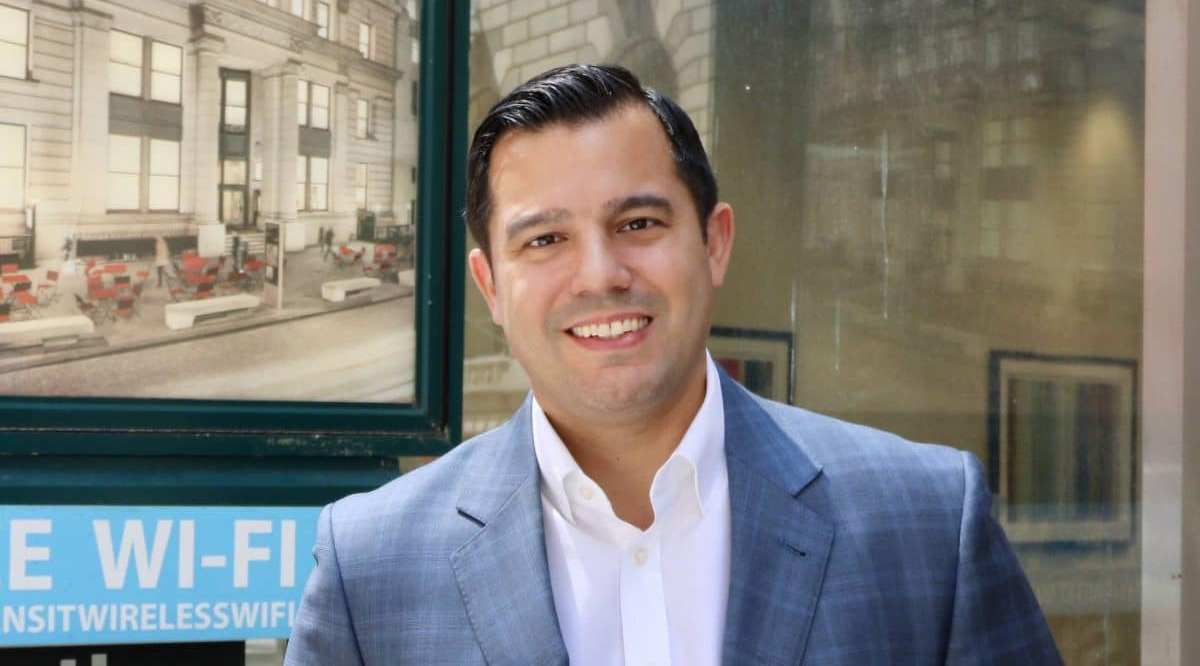
Thomas Chippas, Argo. Source: LinkedIn
Mining
margins contracted
significantly to 8% from 58% in the year-ago period when the company
benefited from power credits due to economic curtailments. Adjusted EBITDA
swung to negative $2.1 million compared to positive $2.4 million last year.
“The
third quarter was a difficult quarter for BTC miners, including Argo,”
said CEO Thomas Chippas. “It is positive that we have seen improvement in
BTC mining economics in October, and that this has continued into
November.”
The results
come after a
better-than-expected first half of 2024. Despite a nearly 50% decline in
the number of mined cryptocurrencies during that period, the company managed to
increase its revenues by approximately 18%.
For the year-to-date period, the results are increasingly deteriorating. The net loss now exceeds $39 million, compared to $26 million reported during the same period last year.
The company
ended the quarter with $2.5 million in cash and four Bitcoin. During Q3, Argo
reduced its debt by $12.4 million, including fully repaying a
loan from Galaxy Digital.
In early
August, the company reported that
it had repaid the last $18 million out of a total $35 million debt owed to an
entity owned by Mark Novogratz, a prominent figure in the cryptocurrency space.
The loan was intended to save the Bitcoin Wall Street miner from collapse
during its most challenging period and help stabilize its operations.
“Successfully
repaying $35 million of high-interest rate debt ahead of schedule is a
testament to Argo's financial discipline,” Argo’s CEO said in August. “We
remain committed to optimizing our capital structure and driving long-term
value for our shareholders.”
In a
significant operational update, Argo disclosed that Galaxy Digital will not
renew its hosting agreement at the Helios facility beyond December 28, 2024.
The company is currently in discussions regarding the miners at that
facility.
High-Performance Computing
Looking
ahead, Argo is exploring diversification opportunities, including a potential
expansion at its Baie-Comeau facility through a partnership with BE Global
Development Limited to provide high-performance computing (HPC) solutions for
AI applications.
“The High-Performance
Computing hosting opportunity at our Baie Comeau facility is exciting and
demonstrates our ability to diversify our capabilities beyond BTC into the
growing AI computational market,” added Chippas. “At this juncture for the
industry, we are keenly focused on growth opportunities that play to our deep
expertise.”
Argo
Blockchain is among several Wall Street mining firms exploring new revenue
streams by focusing on HPC and AI. This strategic shift aims to diversify
operations and leverage the increasing demand for computational power in the AI
sector. Matthew Sigel, head of digital assets research at investment management
firm VanEck, estimates that this
pivot could unlock $38 billion in value for mining companies by 2027.
The publicly
listed Bitcoin (BTC) miner from Wall Street and London’s City, Argo Blockchain (NASDAQ:
ARBK, LSE: ARB) reported a net loss of $6.3 million in the third quarter as the
cryptocurrency mining company grappled with challenging market conditions and
reduced mining margins.
Wall Street Bitcoin Miner
Argo's Profits Vanish as Bitcoin Blues Bite
Revenue
fell to $7.5 million in Q3, down 28% from $10.4 million in
the same period last year. The company mined 123 Bitcoin during the
quarter, averaging 1.3 BTC per day.
Thomas Chippas, Argo. Source: LinkedIn
Mining
margins contracted
significantly to 8% from 58% in the year-ago period when the company
benefited from power credits due to economic curtailments. Adjusted EBITDA
swung to negative $2.1 million compared to positive $2.4 million last year.
“The
third quarter was a difficult quarter for BTC miners, including Argo,”
said CEO Thomas Chippas. “It is positive that we have seen improvement in
BTC mining economics in October, and that this has continued into
November.”
The results
come after a
better-than-expected first half of 2024. Despite a nearly 50% decline in
the number of mined cryptocurrencies during that period, the company managed to
increase its revenues by approximately 18%.
For the year-to-date period, the results are increasingly deteriorating. The net loss now exceeds $39 million, compared to $26 million reported during the same period last year.
The company
ended the quarter with $2.5 million in cash and four Bitcoin. During Q3, Argo
reduced its debt by $12.4 million, including fully repaying a
loan from Galaxy Digital.
In early
August, the company reported that
it had repaid the last $18 million out of a total $35 million debt owed to an
entity owned by Mark Novogratz, a prominent figure in the cryptocurrency space.
The loan was intended to save the Bitcoin Wall Street miner from collapse
during its most challenging period and help stabilize its operations.
“Successfully
repaying $35 million of high-interest rate debt ahead of schedule is a
testament to Argo's financial discipline,” Argo’s CEO said in August. “We
remain committed to optimizing our capital structure and driving long-term
value for our shareholders.”
In a
significant operational update, Argo disclosed that Galaxy Digital will not
renew its hosting agreement at the Helios facility beyond December 28, 2024.
The company is currently in discussions regarding the miners at that
facility.
High-Performance Computing
Looking
ahead, Argo is exploring diversification opportunities, including a potential
expansion at its Baie-Comeau facility through a partnership with BE Global
Development Limited to provide high-performance computing (HPC) solutions for
AI applications.
“The High-Performance
Computing hosting opportunity at our Baie Comeau facility is exciting and
demonstrates our ability to diversify our capabilities beyond BTC into the
growing AI computational market,” added Chippas. “At this juncture for the
industry, we are keenly focused on growth opportunities that play to our deep
expertise.”
Argo
Blockchain is among several Wall Street mining firms exploring new revenue
streams by focusing on HPC and AI. This strategic shift aims to diversify
operations and leverage the increasing demand for computational power in the AI
sector. Matthew Sigel, head of digital assets research at investment management
firm VanEck, estimates that this
pivot could unlock $38 billion in value for mining companies by 2027.
Damian Chmiel is a Senior Analyst & Editor at Finance Magnates with more than 15 years of experience in the CFD and online trading industry. Active as both a trader and journalist since 2010, he focuses on broker coverage, fintech innovation, and regulatory developments across Europe, the Middle East, and Asia.
His work includes interviews with C-level leaders at major brokerages and fintech platforms, as well as co-authoring Finance Magnates’ quarterly industry benchmarking reports. Damian’s reporting is data-driven, market-aware, and grounded in direct industry engagement. His analysis and commentary have also been cited by external media outlets, including Investing.com, Binance, The Asset, Stockhead, and Dispatch.
Education:
MA in Finance and Accounting, Cracow University of Economics
Kraken Steps Up Speed Race with New Equinix Colocation Service for Crypto Traders
FP Markets Winner Spotlight 🏆 | Global Broker of the Year 2025 #Trading #Broker #Innovation #Shorts
FP Markets Winner Spotlight 🏆 | Global Broker of the Year 2025 #Trading #Broker #Innovation #Shorts
FP Markets takes the spotlight as Global Broker of the Year 2025 at the Finance Magnates Awards.
Martin Stoilov, Head of Client Experience, shares that trust, innovation, and people played a key role in the company’s success, supported by a strong foundation of integrity and client-centricity.
Following this milestone, FP Markets continues to focus on growth, technology investment, and its core values of transparency and excellence.
👉 Be part of FM Awards 2026: https://awards.financemagnates.com/#nominate
FP Markets takes the spotlight as Global Broker of the Year 2025 at the Finance Magnates Awards.
Martin Stoilov, Head of Client Experience, shares that trust, innovation, and people played a key role in the company’s success, supported by a strong foundation of integrity and client-centricity.
Following this milestone, FP Markets continues to focus on growth, technology investment, and its core values of transparency and excellence.
👉 Be part of FM Awards 2026: https://awards.financemagnates.com/#nominate
In this video, we review @HolaPrimeMarketsOfficial, a multi-asset forex and CFDs broker offering different account types, trading platforms, and flexible trading conditions.
We cover the broker’s overall offering, including account options, trading environment, platforms like MT4 and MT5, and additional services such as managed accounts and fast withdrawals.
Watch the full video to see if Hola Prime Markets fits your trading needs.
📣 Stay up to date with the latest in finance and trading. Follow Finance Magnates for industry news, insights, and global event coverage.
Connect with us:
🔗 LinkedIn: /financemagnates
👍 Facebook: /financemagnates
📸 Instagram: https://www.instagram.com/financemagnates
🐦 X: https://x.com/financemagnates
🎥 TikTok: https://www.tiktok.com/tag/financemagnates
▶️ YouTube: /@financemagnates_official
#HolaPrime #ForexBroker #CFDTrading #FinanceMagnates #Trading #Forex #BrokerReview
In this video, we review @HolaPrimeMarketsOfficial, a multi-asset forex and CFDs broker offering different account types, trading platforms, and flexible trading conditions.
We cover the broker’s overall offering, including account options, trading environment, platforms like MT4 and MT5, and additional services such as managed accounts and fast withdrawals.
Watch the full video to see if Hola Prime Markets fits your trading needs.
📣 Stay up to date with the latest in finance and trading. Follow Finance Magnates for industry news, insights, and global event coverage.
Connect with us:
🔗 LinkedIn: /financemagnates
👍 Facebook: /financemagnates
📸 Instagram: https://www.instagram.com/financemagnates
🐦 X: https://x.com/financemagnates
🎥 TikTok: https://www.tiktok.com/tag/financemagnates
▶️ YouTube: /@financemagnates_official
#HolaPrime #ForexBroker #CFDTrading #FinanceMagnates #Trading #Forex #BrokerReview
Hola Prime Review: What You Need to Know | Full Breakdown by Finance Magnates
Hola Prime Review: What You Need to Know | Full Breakdown by Finance Magnates
In this video, we review @HolaPrime_Global, a proprietary trading firm offering evaluation programs and performance-based payouts in simulated market environments.
We cover how the challenge model works, including account types, profit splits (up to 95%), trading rules, and what it takes to reach a funded account. You’ll also learn about available platforms like MT4, MT5, cTrader, and more, along with insights into payouts, support, and trading conditions.
Watch the full video to see if Hola Prime fits your trading style.
📣 Stay up to date with the latest in finance and trading. Follow Finance Magnates for industry news, insights, and global event coverage.
Connect with us:
🔗 LinkedIn: /financemagnates
👍 Facebook: /financemagnates
📸 Instagram: https://www.instagram.com/financemagnates
🐦 X: https://x.com/financemagnates
🎥 TikTok: https://www.tiktok.com/tag/financemagnates
▶️ YouTube: /@financemagnates_official
#HolaPrime #PropFirm #Trading #FinanceMagnates #Forex #FuturesTrading #TradingReview #PropFirmReview
In this video, we review @HolaPrime_Global, a proprietary trading firm offering evaluation programs and performance-based payouts in simulated market environments.
We cover how the challenge model works, including account types, profit splits (up to 95%), trading rules, and what it takes to reach a funded account. You’ll also learn about available platforms like MT4, MT5, cTrader, and more, along with insights into payouts, support, and trading conditions.
Watch the full video to see if Hola Prime fits your trading style.
📣 Stay up to date with the latest in finance and trading. Follow Finance Magnates for industry news, insights, and global event coverage.
Connect with us:
🔗 LinkedIn: /financemagnates
👍 Facebook: /financemagnates
📸 Instagram: https://www.instagram.com/financemagnates
🐦 X: https://x.com/financemagnates
🎥 TikTok: https://www.tiktok.com/tag/financemagnates
▶️ YouTube: /@financemagnates_official
#HolaPrime #PropFirm #Trading #FinanceMagnates #Forex #FuturesTrading #TradingReview #PropFirmReview
Axi Winner Spotlight 🏆 | Global Most Innovative Broker 2025 #Innovation #Trading #Fintech #Broker
Axi Winner Spotlight 🏆 | Global Most Innovative Broker 2025 #Innovation #Trading #Fintech #Broker
Axi takes the spotlight at the Finance Magnates Awards, winning Global Most Innovative Broker 2025.
Olivia Xenofontos and Ivanna Openko share how the team will feel: proud, motivated, and ready to keep delivering.
They also describe the night as well-organized, focused, and enjoyable for all.
👉 Be part of FM Awards 2026.
Axi takes the spotlight at the Finance Magnates Awards, winning Global Most Innovative Broker 2025.
Olivia Xenofontos and Ivanna Openko share how the team will feel: proud, motivated, and ready to keep delivering.
They also describe the night as well-organized, focused, and enjoyable for all.
👉 Be part of FM Awards 2026.
Recognition that matters.
Built on transparency.
Driven by the industry.
The Finance Magnates Awards 2026.
Nominations are now open.
🔗 https://awards.financemagnates.com/?utm_source=SM&utm_medium=social&utm_campaign=recognition-matters
Recognition that matters.
Built on transparency.
Driven by the industry.
The Finance Magnates Awards 2026.
Nominations are now open.
🔗 https://awards.financemagnates.com/?utm_source=SM&utm_medium=social&utm_campaign=recognition-matters