Poland will regulate crypto with the EU's MiCA laws, granting KNF new powers.
The local market watchdog is set to obtain the ability to block crypto accounts.
poland
The
cryptocurrency market in Poland is set to face increased oversight as the
government moves to implement the European Union's Markets in Crypto-Assets
(MiCA) regulation into domestic legislation. The draft law, which aims to
regulate and supervise the issuance, trading, and provision of cryptocurrency services, will grant the Komisja Nadzoru Finansowego (KNF) new
powers, including the ability to block crypto accounts.
KNF to Gain Power to Block
Cryptocurrency Accounts in Poland
Under the
proposed legislation, the KNF will have the authority to independently block
the accounts of cryptocurrency holders for 96 hours (4 days) if there is suspicion that a transaction may be linked to the commission of a crime. With the consent of the prosecutor's office, this initial blocking period can be extended for up to six months.
"In
the event of a suspicion that a transaction may be linked to the commission of
a crime, the KNF will be able to independently block the accounts of
cryptocurrency holders,” Izabela Deryło, a tax expert associated with the
Warsaw office of law firm Wolf Theiss, explained the implications of this new
power to Business Insider.
The
announcement of these new measures has caused concern among cryptocurrency
investors in Poland, as the rationale for account blockades remains unclear.
Experts point out that the lack of clarity surrounding the grounds for blocking
accounts could lead to uncertainty and potential misuse of this power.
"This is another regulation that is causing considerable controversy, following an attempt a few years ago to push through very unfavorable rules for taxing cryptocurrencies," Arkadiusz Jóźwiak, a cryptocurrency trader, analyst, and Editor-in-Chief of the financial portal Comparic, tells Finance Magnates. "Given the aversion that the KNF has shown towards cryptocurrencies so far, the ability to preemptively block accounts based on mere suspicions may, unfortunately, be excessively used and abused."
Although the Polish government and the Financial Supervision Authority (KNF) claim they are implementing new regulations in accordance with the European MiCA requirements, the European legislation does not mention the preventative blocking of cryptocurrencies on user accounts. This "addition" was introduced locally, and Poland is known for such solutions. A similar situation occurred in 2018 when ESMA restricted FX/CFD trading. At that time, the KNF also introduced its modification to European rules.
New Authority in the Hands
of the KNF by This Year
News that
Poland is moving to regulate cryptocurrencies, which will be under the direct
supervision of the KNF, started to emerge early this year. According to these
reports, in the second quarter of 2024, the government plans to introduce
regulations that will enable the regulator not only to block accounts but also
to impose financial penalties on companies operating in the cryptocurrency
market. This initiative follows the adoption of MiCA regulations introduced
in the European Union.
The official statement highlighted that the
introduction of this new legislation is driven by the necessity to establish a
legal framework for the proper operation of cryptocurrency markets. It aims to
ensure effective supervision and protection of investors by equipping the KNF
with the necessary tools to achieve these objectives.
The initial
efforts to regulate the cryptocurrency market in Poland began in 2020. In the
years that followed, the digital asset market in the country has operated
without a detailed legal structure, with only its taxation aspect being clearly
defined. During this period, the KNF consistently cautioned investors about the
high risks linked to investments in digital assets.
With the
newest developments, Poland is set to become part of the expanding list of
European nations where the local regulatory bodies govern the cryptocurrency
market. This group includes the UK's Financial Conduct Authority, which issued
new guidelines in November during a period of turmoil in crypto marketing.
Poland Crypto Market vs Europe
According
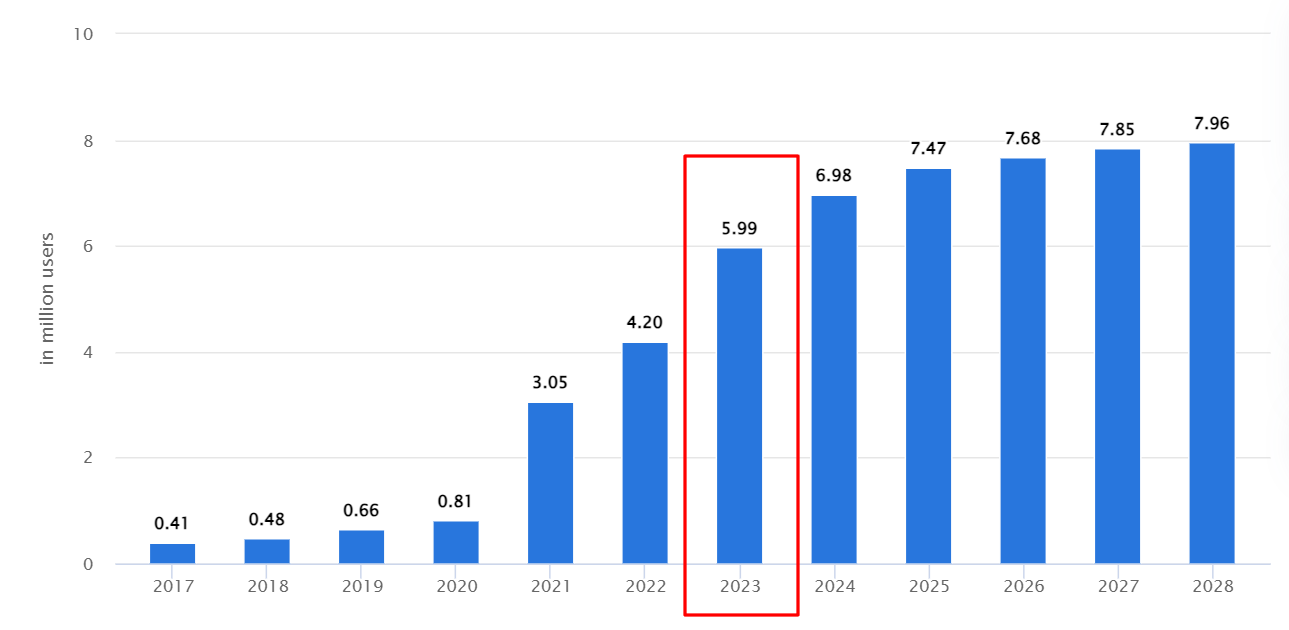
to data from Statista, 6 million Polish citizens, representing 15% of
the population, used cryptocurrencies last year. In 2024, the number is forecasted to increase by an additional million.
Source: Statista Market Insights
In comparison, the same source notes
that Europe had 141 million cryptocurrency users in 2023, meaning 4% of them
were from Poland. France saw 12.5 million people trading in cryptocurrencies,
while Germany had 15 million users.
Cryptocurrencies
are hugely popular in Poland, but due to an unfavorable regulatory climate, no
major local cryptocurrency exchanges currently operate in the country. Just a
decade ago, there were many of them, including the Polish BitBay, which was
once among Europe's largest crypto exchanges. Eventually, it rebranded to Zonda
and moved its operations outside of Poland. The Kanga Exchange, still active in the Polish market, is relatively small, and although it promotes itself as Polish, its headquarters are also located abroad.
However,
cryptocurrency ATMs and physical crypto exchange offices are booming in
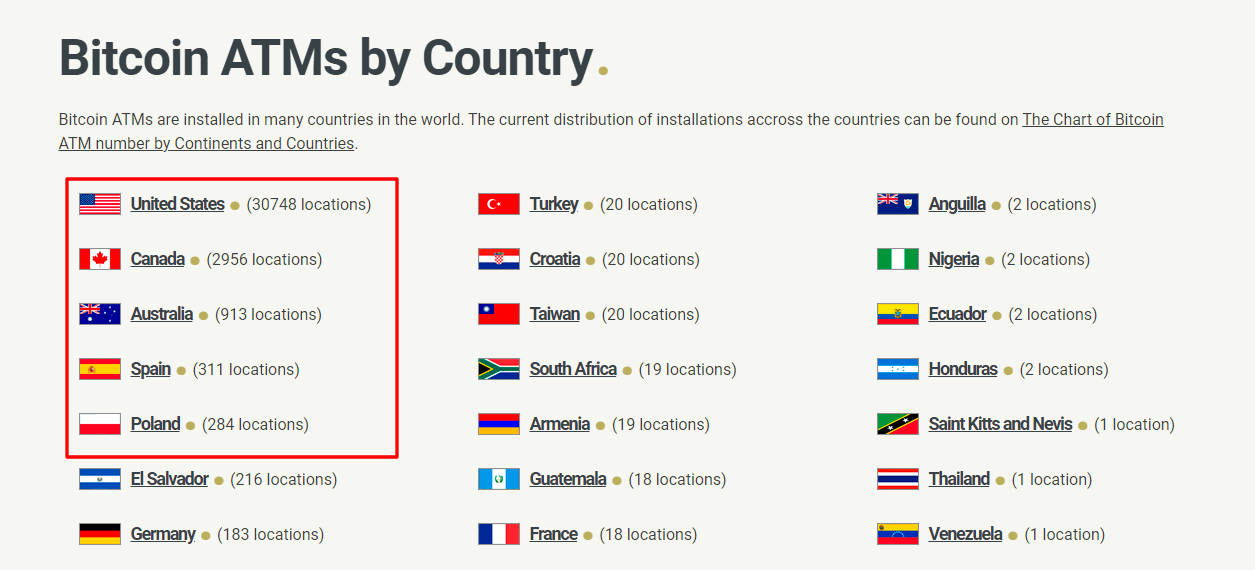
popularity. The country ranks fifth worldwide in the number of cryptocurrency
ATMs, with just around 300 devices.
Source: Coinatmradar.com
Clear
regulations introduced by the MiCA and implemented in their local version by
the KNF could clarify the regulatory situation and increase the chances of a
new exchange emerging in the local market. This is particularly significant
considering the millions of potential clients at stake.
The
cryptocurrency market in Poland is set to face increased oversight as the
government moves to implement the European Union's Markets in Crypto-Assets
(MiCA) regulation into domestic legislation. The draft law, which aims to
regulate and supervise the issuance, trading, and provision of cryptocurrency services, will grant the Komisja Nadzoru Finansowego (KNF) new
powers, including the ability to block crypto accounts.
KNF to Gain Power to Block
Cryptocurrency Accounts in Poland
Under the
proposed legislation, the KNF will have the authority to independently block
the accounts of cryptocurrency holders for 96 hours (4 days) if there is suspicion that a transaction may be linked to the commission of a crime. With the consent of the prosecutor's office, this initial blocking period can be extended for up to six months.
"In
the event of a suspicion that a transaction may be linked to the commission of
a crime, the KNF will be able to independently block the accounts of
cryptocurrency holders,” Izabela Deryło, a tax expert associated with the
Warsaw office of law firm Wolf Theiss, explained the implications of this new
power to Business Insider.
The
announcement of these new measures has caused concern among cryptocurrency
investors in Poland, as the rationale for account blockades remains unclear.
Experts point out that the lack of clarity surrounding the grounds for blocking
accounts could lead to uncertainty and potential misuse of this power.
"This is another regulation that is causing considerable controversy, following an attempt a few years ago to push through very unfavorable rules for taxing cryptocurrencies," Arkadiusz Jóźwiak, a cryptocurrency trader, analyst, and Editor-in-Chief of the financial portal Comparic, tells Finance Magnates. "Given the aversion that the KNF has shown towards cryptocurrencies so far, the ability to preemptively block accounts based on mere suspicions may, unfortunately, be excessively used and abused."
Although the Polish government and the Financial Supervision Authority (KNF) claim they are implementing new regulations in accordance with the European MiCA requirements, the European legislation does not mention the preventative blocking of cryptocurrencies on user accounts. This "addition" was introduced locally, and Poland is known for such solutions. A similar situation occurred in 2018 when ESMA restricted FX/CFD trading. At that time, the KNF also introduced its modification to European rules.
New Authority in the Hands
of the KNF by This Year
News that
Poland is moving to regulate cryptocurrencies, which will be under the direct
supervision of the KNF, started to emerge early this year. According to these
reports, in the second quarter of 2024, the government plans to introduce
regulations that will enable the regulator not only to block accounts but also
to impose financial penalties on companies operating in the cryptocurrency
market. This initiative follows the adoption of MiCA regulations introduced
in the European Union.
The official statement highlighted that the
introduction of this new legislation is driven by the necessity to establish a
legal framework for the proper operation of cryptocurrency markets. It aims to
ensure effective supervision and protection of investors by equipping the KNF
with the necessary tools to achieve these objectives.
The initial
efforts to regulate the cryptocurrency market in Poland began in 2020. In the
years that followed, the digital asset market in the country has operated
without a detailed legal structure, with only its taxation aspect being clearly
defined. During this period, the KNF consistently cautioned investors about the
high risks linked to investments in digital assets.
With the
newest developments, Poland is set to become part of the expanding list of
European nations where the local regulatory bodies govern the cryptocurrency
market. This group includes the UK's Financial Conduct Authority, which issued
new guidelines in November during a period of turmoil in crypto marketing.
Poland Crypto Market vs Europe
According
to data from Statista, 6 million Polish citizens, representing 15% of
the population, used cryptocurrencies last year. In 2024, the number is forecasted to increase by an additional million.
Source: Statista Market Insights
In comparison, the same source notes
that Europe had 141 million cryptocurrency users in 2023, meaning 4% of them
were from Poland. France saw 12.5 million people trading in cryptocurrencies,
while Germany had 15 million users.
Cryptocurrencies
are hugely popular in Poland, but due to an unfavorable regulatory climate, no
major local cryptocurrency exchanges currently operate in the country. Just a
decade ago, there were many of them, including the Polish BitBay, which was
once among Europe's largest crypto exchanges. Eventually, it rebranded to Zonda
and moved its operations outside of Poland. The Kanga Exchange, still active in the Polish market, is relatively small, and although it promotes itself as Polish, its headquarters are also located abroad.
However,
cryptocurrency ATMs and physical crypto exchange offices are booming in
popularity. The country ranks fifth worldwide in the number of cryptocurrency
ATMs, with just around 300 devices.
Source: Coinatmradar.com
Clear
regulations introduced by the MiCA and implemented in their local version by
the KNF could clarify the regulatory situation and increase the chances of a
new exchange emerging in the local market. This is particularly significant
considering the millions of potential clients at stake.
Damian Chmiel is a Senior Analyst & Editor at Finance Magnates with more than 15 years of experience in the CFD and online trading industry. Active as both a trader and journalist since 2010, he focuses on broker coverage, fintech innovation, and regulatory developments across Europe, the Middle East, and Asia.
His work includes interviews with C-level leaders at major brokerages and fintech platforms, as well as co-authoring Finance Magnates’ quarterly industry benchmarking reports. Damian’s reporting is data-driven, market-aware, and grounded in direct industry engagement. His analysis and commentary have also been cited by external media outlets, including Investing.com, Binance, The Asset, Stockhead, and Dispatch.
Education:
MA in Finance and Accounting, Cracow University of Economics
Kraken Steps Up Speed Race with New Equinix Colocation Service for Crypto Traders
FP Markets Winner Spotlight 🏆 | Global Broker of the Year 2025 #Trading #Broker #Innovation #Shorts
FP Markets Winner Spotlight 🏆 | Global Broker of the Year 2025 #Trading #Broker #Innovation #Shorts
FP Markets takes the spotlight as Global Broker of the Year 2025 at the Finance Magnates Awards.
Martin Stoilov, Head of Client Experience, shares that trust, innovation, and people played a key role in the company’s success, supported by a strong foundation of integrity and client-centricity.
Following this milestone, FP Markets continues to focus on growth, technology investment, and its core values of transparency and excellence.
👉 Be part of FM Awards 2026: https://awards.financemagnates.com/#nominate
FP Markets takes the spotlight as Global Broker of the Year 2025 at the Finance Magnates Awards.
Martin Stoilov, Head of Client Experience, shares that trust, innovation, and people played a key role in the company’s success, supported by a strong foundation of integrity and client-centricity.
Following this milestone, FP Markets continues to focus on growth, technology investment, and its core values of transparency and excellence.
👉 Be part of FM Awards 2026: https://awards.financemagnates.com/#nominate
In this video, we review @HolaPrimeMarketsOfficial, a multi-asset forex and CFDs broker offering different account types, trading platforms, and flexible trading conditions.
We cover the broker’s overall offering, including account options, trading environment, platforms like MT4 and MT5, and additional services such as managed accounts and fast withdrawals.
Watch the full video to see if Hola Prime Markets fits your trading needs.
📣 Stay up to date with the latest in finance and trading. Follow Finance Magnates for industry news, insights, and global event coverage.
Connect with us:
🔗 LinkedIn: /financemagnates
👍 Facebook: /financemagnates
📸 Instagram: https://www.instagram.com/financemagnates
🐦 X: https://x.com/financemagnates
🎥 TikTok: https://www.tiktok.com/tag/financemagnates
▶️ YouTube: /@financemagnates_official
#HolaPrime #ForexBroker #CFDTrading #FinanceMagnates #Trading #Forex #BrokerReview
In this video, we review @HolaPrimeMarketsOfficial, a multi-asset forex and CFDs broker offering different account types, trading platforms, and flexible trading conditions.
We cover the broker’s overall offering, including account options, trading environment, platforms like MT4 and MT5, and additional services such as managed accounts and fast withdrawals.
Watch the full video to see if Hola Prime Markets fits your trading needs.
📣 Stay up to date with the latest in finance and trading. Follow Finance Magnates for industry news, insights, and global event coverage.
Connect with us:
🔗 LinkedIn: /financemagnates
👍 Facebook: /financemagnates
📸 Instagram: https://www.instagram.com/financemagnates
🐦 X: https://x.com/financemagnates
🎥 TikTok: https://www.tiktok.com/tag/financemagnates
▶️ YouTube: /@financemagnates_official
#HolaPrime #ForexBroker #CFDTrading #FinanceMagnates #Trading #Forex #BrokerReview
Hola Prime Review: What You Need to Know | Full Breakdown by Finance Magnates
Hola Prime Review: What You Need to Know | Full Breakdown by Finance Magnates
In this video, we review @HolaPrime_Global, a proprietary trading firm offering evaluation programs and performance-based payouts in simulated market environments.
We cover how the challenge model works, including account types, profit splits (up to 95%), trading rules, and what it takes to reach a funded account. You’ll also learn about available platforms like MT4, MT5, cTrader, and more, along with insights into payouts, support, and trading conditions.
Watch the full video to see if Hola Prime fits your trading style.
📣 Stay up to date with the latest in finance and trading. Follow Finance Magnates for industry news, insights, and global event coverage.
Connect with us:
🔗 LinkedIn: /financemagnates
👍 Facebook: /financemagnates
📸 Instagram: https://www.instagram.com/financemagnates
🐦 X: https://x.com/financemagnates
🎥 TikTok: https://www.tiktok.com/tag/financemagnates
▶️ YouTube: /@financemagnates_official
#HolaPrime #PropFirm #Trading #FinanceMagnates #Forex #FuturesTrading #TradingReview #PropFirmReview
In this video, we review @HolaPrime_Global, a proprietary trading firm offering evaluation programs and performance-based payouts in simulated market environments.
We cover how the challenge model works, including account types, profit splits (up to 95%), trading rules, and what it takes to reach a funded account. You’ll also learn about available platforms like MT4, MT5, cTrader, and more, along with insights into payouts, support, and trading conditions.
Watch the full video to see if Hola Prime fits your trading style.
📣 Stay up to date with the latest in finance and trading. Follow Finance Magnates for industry news, insights, and global event coverage.
Connect with us:
🔗 LinkedIn: /financemagnates
👍 Facebook: /financemagnates
📸 Instagram: https://www.instagram.com/financemagnates
🐦 X: https://x.com/financemagnates
🎥 TikTok: https://www.tiktok.com/tag/financemagnates
▶️ YouTube: /@financemagnates_official
#HolaPrime #PropFirm #Trading #FinanceMagnates #Forex #FuturesTrading #TradingReview #PropFirmReview
Axi Winner Spotlight 🏆 | Global Most Innovative Broker 2025 #Innovation #Trading #Fintech #Broker
Axi Winner Spotlight 🏆 | Global Most Innovative Broker 2025 #Innovation #Trading #Fintech #Broker
Axi takes the spotlight at the Finance Magnates Awards, winning Global Most Innovative Broker 2025.
Olivia Xenofontos and Ivanna Openko share how the team will feel: proud, motivated, and ready to keep delivering.
They also describe the night as well-organized, focused, and enjoyable for all.
👉 Be part of FM Awards 2026.
Axi takes the spotlight at the Finance Magnates Awards, winning Global Most Innovative Broker 2025.
Olivia Xenofontos and Ivanna Openko share how the team will feel: proud, motivated, and ready to keep delivering.
They also describe the night as well-organized, focused, and enjoyable for all.
👉 Be part of FM Awards 2026.
Recognition that matters.
Built on transparency.
Driven by the industry.
The Finance Magnates Awards 2026.
Nominations are now open.
🔗 https://awards.financemagnates.com/?utm_source=SM&utm_medium=social&utm_campaign=recognition-matters
Recognition that matters.
Built on transparency.
Driven by the industry.
The Finance Magnates Awards 2026.
Nominations are now open.
🔗 https://awards.financemagnates.com/?utm_source=SM&utm_medium=social&utm_campaign=recognition-matters